


The reporting that sparked this guide
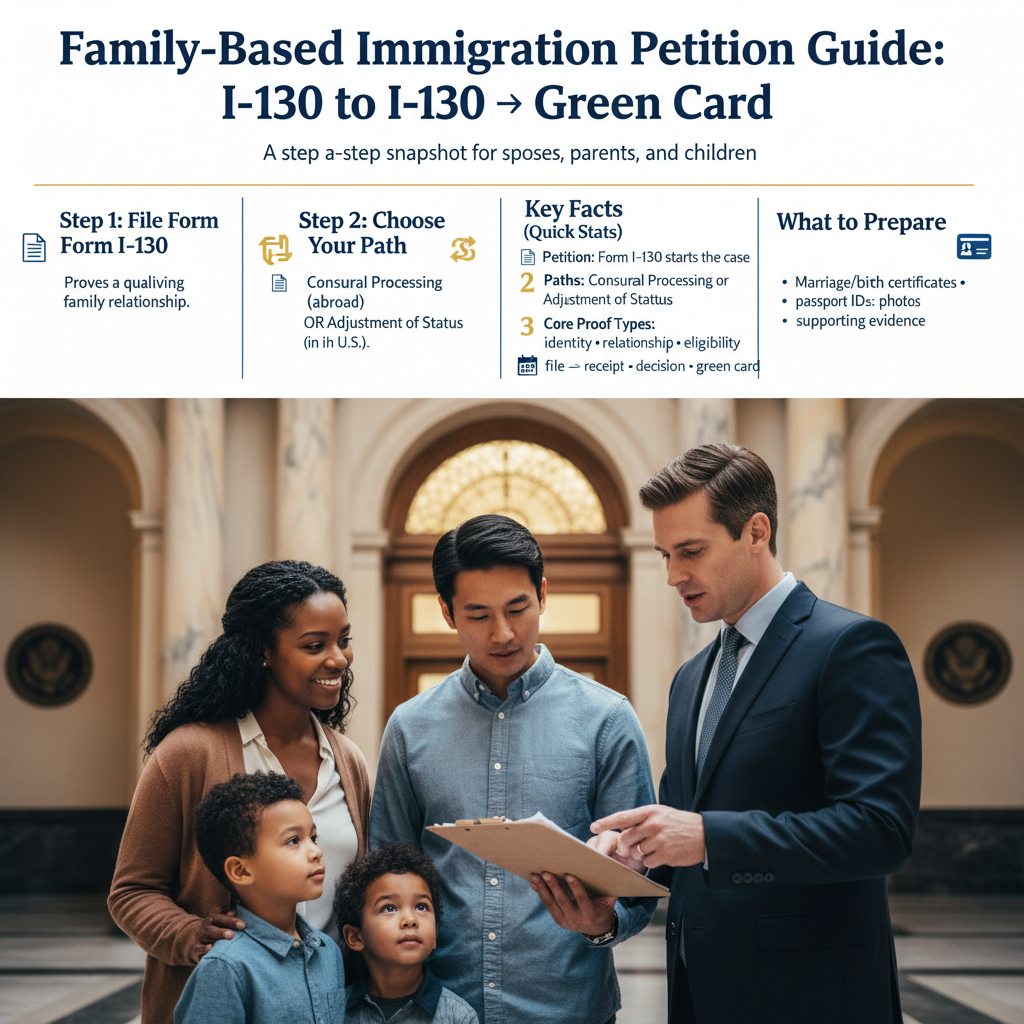
Family immigration is back in the headlines—and many families are searching for clear, step-by-step instructions amid shifting processing times and policy updates. The news coverage that prompted this practical guide can be found here: Family-Based Immigration Petition Guide (Immigration).
Need Help? Our Orlando immigration team is ready to assist. Call +1 786-791-3106 for a free consultation, or message us online. Se Habla Español.
What This News Means for Immigrants in Orlando and Across Florida
Why this news is showing up now
Family-based immigration is “trending” because more families are filing—and monitoring—cases at the same time. Several real-world factors drive this:
- Processing time volatility: USCIS processing times have been uneven across form types and local field offices. Many families are checking updates frequently on the USCIS Processing Times page.
- High demand for immediate-relative cases: U.S. citizens sponsoring spouses, parents, and unmarried children under 21 often expect faster timelines, but “faster” can still mean many months.
- More mixed-status families seeking clarity: Questions about unlawful presence, prior immigration violations, and Adjustment of Status eligibility continue to drive urgent consultations.
- Consular backlogs and travel planning: Families using consular processing track appointment availability and requirements through the U.S. Department of State.
Reminder: “Trending” does not necessarily mean the law changed overnight. Often, it means more people are affected, and the same legal rules are being applied to more cases—creating more confusion and more delays.
How it can affect Florida residents
Florida is home to a large immigrant population and many binational families. For Central Florida residents—especially along the I-4 corridor (Orlando, Kissimmee, Sanford, and surrounding areas)—this news matters because:
- Local field office scheduling impacts timelines: The Orlando-area interview schedule can affect how quickly Form I-485 cases move.
- Travel and work authorization decisions: Many applicants must decide whether to file for work and travel documents while a green card case is pending.
- Higher risk for mistakes in DIY filings: Small errors (wrong fees, missing evidence, inconsistent addresses) can trigger RFEs, delays, or denials.
If your case is in Orlando, understanding how the family-petition process works from start to finish can help you avoid delays and plan for realistic timelines.
What Family-Based Immigration Petition Guide Is (and Why It Matters)
A plain-English definition
A family-based immigration petition is the legal process where a qualifying family member (the “petitioner”) asks the U.S. government to recognize a real family relationship so the relative (the “beneficiary”) can apply for a green card (lawful permanent residence).
Most family cases begin with Form I-130 (Petition for Alien Relative). After the I-130 is approved, the beneficiary typically:
- applies for a green card inside the U.S. through Adjustment of Status using Form I-485, or
- applies for an immigrant visa abroad through consular processing (National Visa Center + U.S. embassy/consulate).
Why it matters: your strategy—Form I-485 vs. consular processing—can affect risk, timing, ability to work/travel, and whether waivers are needed.
Key terms you need to know
- Immediate Relative: Spouse of a U.S. citizen, unmarried child under 21 of a U.S. citizen, or parent of a U.S. citizen (petitioner must be 21+). No annual visa caps.
- Family Preference Category: Certain relatives of U.S. citizens and lawful permanent residents (LPRs) subject to annual visa limits and waiting lines.
- Priority Date: The date USCIS receives the petition (often the Form I-130 filing date). It determines your place in line for capped categories.
- Visa Bulletin: Department of State monthly chart showing which Priority Date is “current.” (See the U.S. Department of State.)
- Adjustment of Status: Applying for a green card from inside the U.S. (usually with Form I-485).
- Consular Processing: Applying for an immigrant visa abroad after I-130 approval through the National Visa Center (NVC).
- RFE: Request for Evidence—USCIS asks for more documents. Not a denial, but it can add months.
- NOID: Notice of Intent to Deny—USCIS is leaning toward denial and gives a chance to respond.
- Unlawful Presence: Time in the U.S. without authorized stay; may trigger 3- or 10-year bars if you depart.
Important: Not every family relationship qualifies, and not every beneficiary can safely use the same process. A correct plan at the start can prevent costly setbacks later.
Current Immigration Law: The Foundation
Family-based immigration is governed primarily by the Immigration and Nationality Act (INA) and implementing regulations in Title 8 of the Code of Federal Regulations (8 C.F.R.). USCIS policy guidance also shapes how officers review evidence and make decisions.
Federal requirements
Key legal foundations include:
- INA § 201(b): Defines “immediate relatives” of U.S. citizens (not subject to numerical limits).
- INA § 203(a): Establishes family-based preference categories and annual caps.
- INA § 204: Governs the petition process (including Form I-130).
- INA § 245: Governs Adjustment of Status (including eligibility and bars).
- INA § 212(a): Lists inadmissibility grounds (health, criminal, fraud/misrepresentation, unlawful presence, public charge rules as applicable, etc.).
Common USCIS forms in family cases include:
- Form I-130 (Petition for Alien Relative)
- Form I-485 (Application to Register Permanent Residence or Adjust Status)
- Form I-864 (Affidavit of Support)
- Form I-765 (Work permit, if eligible)
- Form I-131 (Advance Parole travel document, if eligible)
- Form I-693 (Medical exam and vaccination record)
For official instructions, fees, and updates, use the USCIS official website and the USCIS Forms page.
Warning: Immigration forms and fees change. Always confirm the current edition date, filing address, and filing fee before submitting.
Florida-specific considerations
Immigration law is federal, so the eligibility rules are the same in Florida as in other states. However, Florida residents often face practical, local considerations:
- Local interview logistics: The Orlando USCIS Field Office may schedule interviews based on workload and staffing, impacting timelines for Form I-485.
- Document access: Some families need records from other states/countries; planning ahead matters if you’re in Orange County or elsewhere in Central Florida and need certified copies, translations, or apostilles.
- Removal proceedings: If a family member is in immigration court, coordination with the Executive Office for Immigration Review may be necessary. Court posture can change strategy dramatically.
If your case is in Orlando and you have any prior immigration history (overstays, prior entries, prior petitions, arrests, or orders), it’s especially important to screen for risks before choosing between Adjustment of Status and consular processing.
How to File a Family-Based Petition: A Complete Step-by-Step Guide
Below is a practical roadmap from “we want to start” to “green card approved.” Your exact steps will depend on whether the beneficiary is inside the U.S. and eligible for Adjustment of Status, or outside the U.S. and using consular processing.
1) Confirm the qualifying relationship and the correct category
Start by identifying the petitioner’s status (U.S. citizen or lawful permanent resident) and the beneficiary’s relationship. This determines whether you are an immediate relative case or a preference category case—affecting the Priority Date wait.
Documents to gather:
- Petitioner’s proof of status: U.S. passport, naturalization certificate, certificate of citizenship, or green card
- Relationship proof:
- Spouse: marriage certificate, divorce decrees/annulments for any prior marriages
- Parent/child: birth certificate showing parent names; adoption documents if applicable
- Step-relationships: marriage certificate + child’s birth certificate + timing proof (step-relationship before child turned 18)
- Government-issued IDs (both parties)
- Name-change documents (if any)
Important: If you cannot prove the legal relationship with civil documents, the case may be denied even if the relationship is real.
2) Choose the right path: Adjustment of Status vs. consular processing
Your next decision is strategic:
- Adjustment of Status (AOS): beneficiary is in the U.S. and eligible to file Form I-485.
- Consular processing: beneficiary is outside the U.S. (or not eligible for AOS) and will interview at a U.S. consulate abroad.
Factors to evaluate include lawful entry, overstays, unlawful presence, prior removal orders, and whether a waiver may be required.
Documents to gather:
- Passport biographic page (beneficiary)
- I-94 record (if applicable) and entry documents (visa, admission stamp)
- Any prior USCIS notices (I-797), prior petitions, and decisions
- Any immigration court documents (NTA, hearing notices, orders) if applicable
- Travel history and address history
Warning: If the beneficiary has significant unlawful presence, leaving the U.S. for consular processing can trigger a 3- or 10-year bar. Get legal advice before departing.
3) Prepare and file the petition package (usually Form I-130)
Most family cases start with Form I-130. The goal is to prove:
- the petitioner is eligible to file, and
- the relationship is legally valid (and, for spouses, that the marriage is bona fide).
Documents to gather (typical I-130 package):
- Completed Form I-130 and any required supplements
- Filing fee (verify current fee on USCIS official website)
- Petitioner’s proof of citizenship/LPR status
- Beneficiary’s passport ID page
- Certified civil documents (birth/marriage certificates) + certified English translations if needed
- For marriage-based cases (bona fide evidence), examples:
- Joint lease/mortgage, joint bank accounts, joint insurance
- Utility bills at same address
- Photos across time with family/friends
- Travel itineraries, messages/call logs (selected, organized)
- Affidavits from people who know the relationship (when helpful)
Reminder: Organization matters. Officers are more likely to understand your case when evidence is labeled, chronological, and consistent across forms.
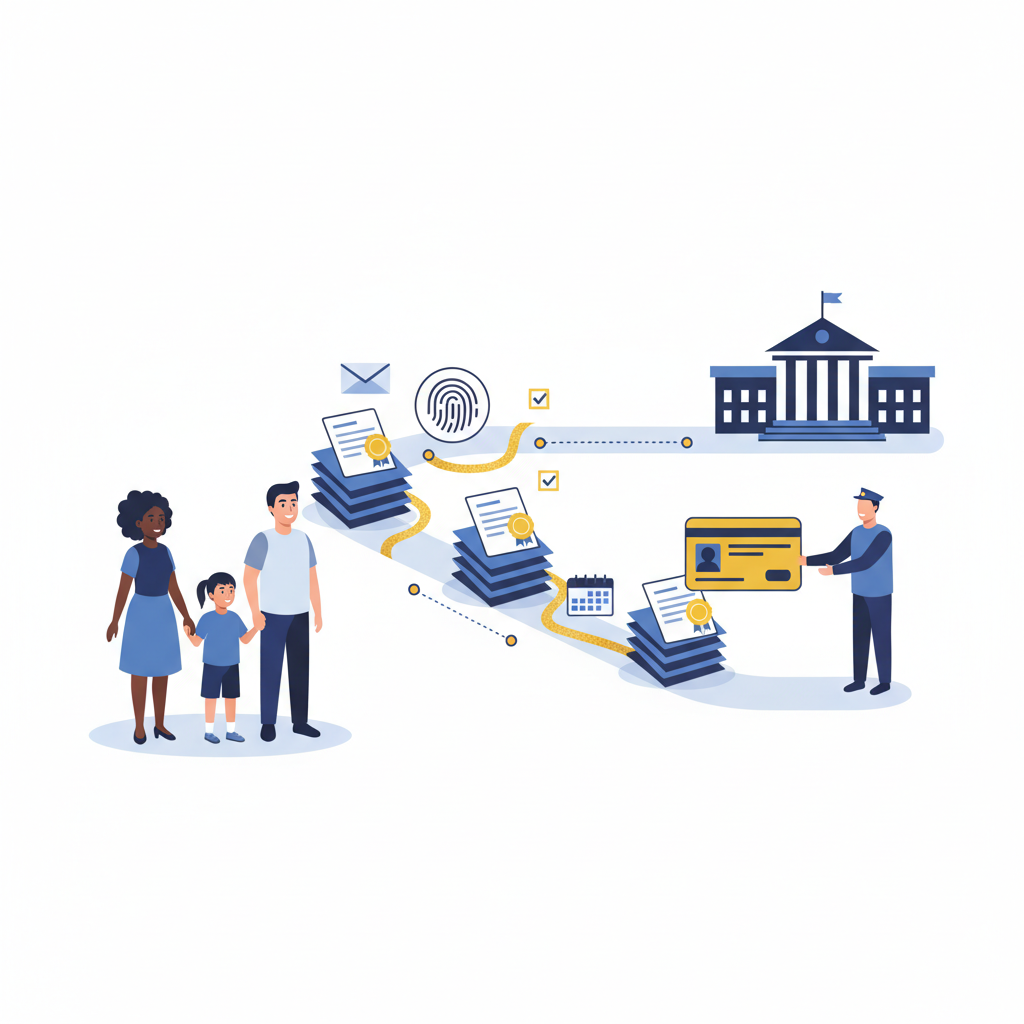
4) Track receipt notices, biometrics, and respond to RFEs quickly
After filing, USCIS issues a receipt notice (Form I-797). For many cases, USCIS schedules biometrics (fingerprints/photo) and may issue an RFE if something is missing or unclear.
Documents to gather and keep accessible:
- USCIS receipt notices (I-797) for every form filed
- Biometrics appointment notice
- Government ID for biometrics appointment
- RFE notice (if issued) and a complete, organized response packet
Important: Always respond by the deadline on the RFE. Missing an RFE deadline can lead to denial.
For Central Florida residents, plan ahead for travel time and scheduling for biometrics and any local appointments along the I-4 corridor.
5) If eligible, file Form I-485 (Adjustment of Status) and supporting forms
If the beneficiary is eligible to adjust status, the green card application is Form I-485. Many applicants also file:
- Form I-765 (work authorization), and
- Form I-131 (Advance Parole for travel).
You must also submit a financial sponsorship package using Form I-864 (Affidavit of Support) in most family-based cases.
Documents to gather (typical I-485 package):
- Completed Form I-485
- Copy of I-130 receipt/approval (depending on whether filing concurrently)
- Proof of lawful entry (I-94, admission stamp)
- Birth certificate + translation if needed
- Two passport-style photos (if required by current instructions)
- Form I-693 medical exam (follow current USCIS rules on timing and submission)
- Form I-864 with:
- Most recent federal tax return (and W-2/1099s)
- Pay stubs and employment verification letter
- Proof of U.S. domicile (if relevant)
- Joint sponsor documents (if needed)
- If filing: Form I-765 and Form I-131 with supporting ID documents
Warning: Do not travel internationally while an AOS case is pending unless you have a valid Advance Parole document (or another status that permits travel without abandoning AOS). Traveling without the right document can be treated as abandoning Form I-485.
6) Prepare for the interview (Orlando USCIS Field Office) or NVC/consular interview
Many marriage-based Adjustment of Status cases require an in-person interview. If your case is in Orlando, your interview may be scheduled at the Orlando USCIS Field Office depending on jurisdiction and workload.
For consular processing, after I-130 approval the case moves to the National Visa Center (NVC) for document collection and fee payments, then to the U.S. consulate for interview scheduling.
Documents to gather (interview readiness):
- Interview notice
- Passports and government-issued IDs
- Original civil documents (birth/marriage/divorce certificates)
- Updated relationship evidence (for spouses): new lease, bank statements, photos, insurance, children’s birth certificates
- Updated financial documents for Form I-864 (recent pay stubs, new job letter, newest tax return if available)
- For consular processing: police certificates and any country-specific documents required by the consulate/NVC
Important: Consistency is crucial. Your forms, supporting documents, and interview answers should align on dates, addresses, and prior marriages.
7) Decision, green card production, and the first 90 days after approval
After the interview (or after final review), USCIS may approve, issue an RFE, or deny. If approved, the beneficiary becomes a lawful permanent resident and will receive the green card by mail.
If the marriage is less than two years old on the date of approval, the beneficiary typically receives conditional residence (a 2-year green card), and later must file to remove conditions.
Documents to keep after approval:
- Approval notice
- Green card (front/back copies stored securely)
- Social Security card updates (if applicable)
- All filing copies and evidence binder
Reminder: If you receive a conditional green card, you must plan ahead for the 90-day window before the card expires to file the petition to remove conditions (typically Form I-751 for marriage-based cases).
Need Help? Our Orlando immigration team is ready to assist. Call +1 786-791-3106 for a free consultation, or message us online. Se Habla Español.
Practical Steps You Can Take Today
Whether you’re just starting or you already filed, these actions can reduce delays and improve the clarity of your case.
Actionable checklist
- Create a shared folder (digital + paper) for every immigration document and receipt notice.
- Order certified copies of birth/marriage/divorce records early; request long-form birth certificates when available.
- Prepare a relationship timeline (for spouse cases): how you met, key dates, living history, trips, and major events.
- Gather financial evidence for Form I-864 now: tax returns, W-2/1099, pay stubs, employment letter.
- Check your category and Priority Date (if preference category) and track the Visa Bulletin monthly via the U.S. Department of State.
- Review your full immigration history and request FOIA records if there were prior filings, entries, or encounters (when appropriate).
- Confirm current form editions and instructions on the USCIS Forms page.
Document preparation guidance
- Translations: Any foreign-language document should include a full English translation with a translator certification (follow USCIS instructions).
- Consistency audit: Make sure names, dates, and addresses match across passports, IDs, leases, tax records, and forms.
- Evidence labeling: Use an index, tabs, and short cover letters to explain what each exhibit proves.
Timeline expectations (realistic planning)
Timelines vary by category, location, and case complexity. Use the USCIS Processing Times tool for current estimates, and plan for:
- Several months for many Form I-130 petitions (sometimes longer).
- Additional months for Form I-485 review, biometrics, and interview scheduling.
- Extra time if USCIS issues an RFE or if the case requires waivers or additional security checks.
Important: If you move, update USCIS promptly (address changes can cause missed notices and denials).
How Imigrar Helps Immigrants in Orlando
Imigrar is an immigration law firm based in Orlando, Florida, serving clients nationwide. Our mission is to Keep Families Together. We help families choose the safest strategy, prepare strong filings, and respond effectively to USCIS requests—while keeping you informed at every stage.
- Case screening for eligibility issues (unlawful presence, prior denials, prior orders, misrepresentation concerns)
- Complete preparation of Form I-130, Form I-485, Form I-864, and supporting evidence
- Interview preparation for the Orlando USCIS Field Office
- Consular processing support (NVC document collection and interview readiness)
- RFE/NOID response strategy and case strengthening
We offer a free consultation. Call +1 786-791-3106 or message us online. Se Habla Español.
Need Help? Our Orlando immigration team is ready to assist. Call +1 786-791-3106 for a free consultation, or message us online. Se Habla Español.
Frequently Asked Questions
Q: Who is eligible to file a family-based petition?
A: Generally, U.S. citizens and lawful permanent residents can petition certain relatives. U.S. citizens can petition spouses, children (married or unmarried), parents (if the citizen is 21+), and siblings. LPRs can typically petition spouses and unmarried children. Eligibility also depends on proving the relationship with valid civil documents and meeting all filing requirements for Form I-130.
Q: Can I file Form I-130 if the beneficiary is undocumented?
A: Yes, in many situations you can still file Form I-130 to establish the relationship. However, whether the beneficiary can get a green card inside the U.S. through Adjustment of Status (using Form I-485) depends on factors like lawful entry, status violations, and potential bars. Warning: In some cases, leaving the U.S. for consular processing can trigger unlawful presence bars—get individualized legal advice before choosing a path.
Q: How long does a family petition take in 2026?
A: It depends on the relationship category, the beneficiary’s location, and USCIS workload. Immediate relative cases (U.S. citizen spouse/parent/child under 21) are not subject to annual caps, but processing still takes time. Preference categories can take significantly longer due to visa limits and the Priority Date queue. Check your form type and location on the USCIS Processing Times page and monitor the Visa Bulletin through the U.S. Department of State.
Q: What documents are most important for a strong marriage-based case?
A: USCIS looks for evidence that the marriage is real and not just for immigration benefits. Strong evidence includes joint lease/mortgage, joint bank statements, shared insurance, utility bills at the same address, children’s birth certificates (if applicable), and photos across time with family and friends. Bring originals to the interview and keep updated evidence for the months after filing.
Q: How much does it cost to file a family-based green card case?
A: Costs include USCIS filing fees (which vary by form and can change), medical exam fees for Form I-693, translation costs, and any attorney fees if you choose representation. Always verify current USCIS fees and form editions at the USCIS Forms page and the USCIS official website. If consular processing applies, there are Department of State/NVC fees as well.
Q: What happens if USCIS denies the petition or the I-485?
A: The next steps depend on what was denied and why. A denial may come after an RFE or a NOID, or it may be based on eligibility, missing evidence, or inadmissibility issues. Sometimes you can refile with stronger evidence; other times you may be able to file a motion or appeal. If the beneficiary is in removal proceedings, strategy must be coordinated with immigration court and the Executive Office for Immigration Review. Important: Denials can have serious consequences—consult an attorney promptly to protect deadlines and options.
Q: Do we have to attend an interview at the Orlando USCIS Field Office?
A: Many Form I-485 family cases—especially marriage-based—are scheduled for interviews, but USCIS can waive interviews in some situations. If your case is in Orlando, the interview may be at the Orlando USCIS Field Office. For Central Florida residents in Orange County and surrounding counties, plan for scheduling flexibility and bring well-organized originals and updated evidence.
Q: Is there a key deadline I should not miss after getting a 2-year green card?
A: Yes. If you receive conditional residence through marriage, you generally must file to remove conditions during the 90-day window before the card expires. Missing that window can place status at risk. Mark your calendar early and begin collecting ongoing relationship evidence well before filing.
Common Mistakes (and How to Avoid Them)
Mistake #1: Filing without a strategy for unlawful presence or prior immigration history
Many families file Form I-130 quickly, assuming the rest will be simple. But if the beneficiary has unlawful presence, prior removal, or misrepresentation issues, the “next step” may require waivers or a different process. How to avoid it: Get a full screening before choosing Adjustment of Status vs. consular processing—especially if travel outside the U.S. is involved.
Mistake #2: Weak or disorganized relationship evidence in marriage cases
Submitting a stack of photos without context, or inconsistent documents with different addresses, can trigger an RFE or interview concerns. How to avoid it: Provide a clear evidence index, choose representative documents across time, and ensure all addresses/dates match your forms.
Mistake #3: Missing deadlines or failing to respond correctly to an RFE/NOID
USCIS deadlines are strict. A late or incomplete response can lead to denial. How to avoid it: Track every notice, calendar deadlines immediately, and respond with a complete, well-labeled packet. If the request is complex, seek legal help right away.
Reminder: Some deadlines in immigration practice can be extremely short depending on the notice type and posture. When in doubt, act immediately.
Need Help? Our Orlando immigration team is ready to assist. Call +1 786-791-3106 for a free consultation, or message us online. Se Habla Español.
Closing: Start Your Family Petition with a Clear Plan
Family-based immigration can be straightforward when the facts are clean—and extremely risky when there are prior immigration issues, unlawful presence, or missing documents. The best outcomes usually come from doing two things early: (1) choosing the correct strategy, and (2) submitting a well-organized, well-supported filing.
If your case is in Orlando, if you live in Orange County or anywhere along the I-4 corridor, or if you’re filing from anywhere in the U.S., Imigrar can help you move forward with confidence.
Need help now? Call +1 786-791-3106 for a free consultation or message us online. Se Habla Español.


