


The reporting that sparked this guide
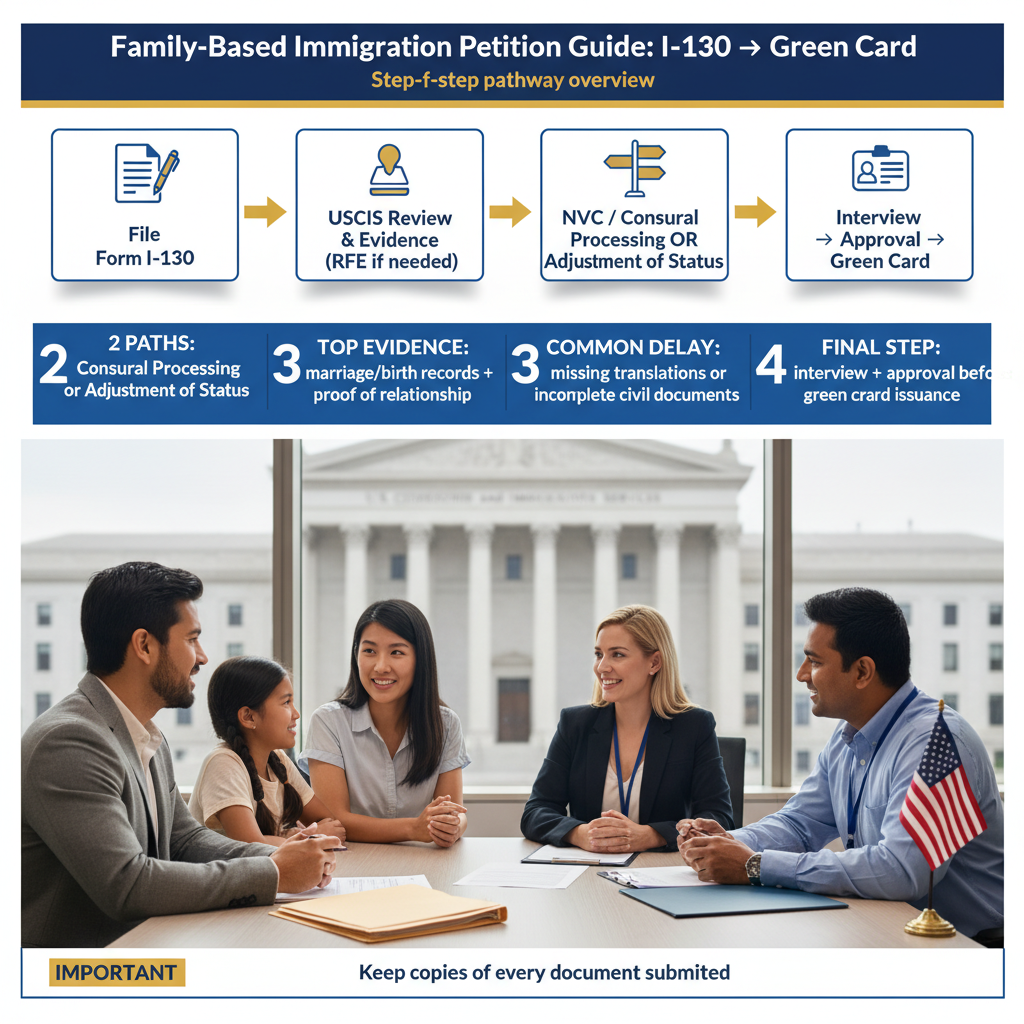
Family immigration questions are trending again, and much of the recent coverage is pointing families back to the basics—how to file correctly, what evidence is required, and what to expect after you submit. This step-by-step guide was inspired by: Family-Based Immigration Petition Guide (Immigration).
Need Help? Our Orlando immigration team is ready to assist. Call +1 786-791-3106 for a free consultation, or message us online. Se Habla Español.
What This News Means for Immigrants in Orlando and Across Florida
Why this news is showing up now
Family-based immigration is “always” relevant, but it tends to surge in the news when:
- Processing times fluctuate and backlogs grow or shrink (people want updated expectations).
- USCIS updates forms, fees, or filing addresses (small changes can cause big delays).
- The Department of State releases monthly Visa Bulletin movement (affecting Priority Date timing for many families).
- More families seek lawful status options amid changing enforcement priorities and travel realities.
Reminder: A family petition is not just “a form.” It is a legal strategy that must match your relationship, immigration history, and where the beneficiary is located (inside or outside the U.S.).
How it can affect Florida residents
For Central Florida residents, family-based cases often involve:
- Filing and interview logistics tied to the Orlando USCIS Field Office (for many Adjustment of Status cases).
- Travel concerns for beneficiaries who may need consular interviews abroad.
- Time-sensitive planning around work authorization, school, and caregiving responsibilities.
- Households where mixed immigration status makes “one mistake” very costly.
If your case is in Orlando or anywhere along the I-4 corridor (Orlando–Kissimmee–Lakeland–Tampa), careful planning can reduce delays—especially when USCIS issues Requests for Evidence (RFEs) due to missing relationship documents or financial sponsorship proof.
What Family-Based Immigration Petition Guide Is (and Why It Matters)
A plain-English definition
A “family-based immigration petition” is the process where a qualifying U.S. citizen or lawful permanent resident (green card holder) asks the U.S. government to recognize a real, eligible family relationship—and then helps the family member apply for a green card (lawful permanent residence).
In most cases, the petition starts with Form I-130 (Petition for Alien Relative). The rest of the process depends on:
- Whether the beneficiary is inside the U.S. and eligible for Adjustment of Status using Form I-485, or
- Whether the beneficiary will process through a U.S. consulate abroad (consular processing).
Key terms you need to know
- Immediate Relative: Certain relatives of U.S. citizens (spouse, unmarried child under 21, parent of a U.S. citizen 21+). No annual visa cap—often faster.
- Family Preference Category: Relatives subject to annual limits (e.g., F1, F2A, F2B, F3, F4). Timing depends on the Visa Bulletin and your Priority Date.
- Priority Date: Usually the date USCIS receives Form I-130. It’s your place in line for preference categories.
- Adjustment of Status: Applying for a green card from inside the U.S., typically with Form I-485.
- Consular Processing: Completing the immigrant visa process through the National Visa Center (NVC) and a U.S. consulate abroad.
- Affidavit of Support: Financial sponsorship, usually Form I-864, showing the petitioner (and sometimes a joint sponsor) meets income requirements.
- RFE (Request for Evidence): USCIS request for missing/unclear documents. Responding correctly and on time is critical.
- Notice of Intent to Deny (NOID): A serious warning that USCIS plans to deny unless you overcome specific concerns with evidence and legal argument.
Important: Choosing the wrong process (AOS vs. consular) or filing too early/late can trigger delays, denials, or even unlawful presence problems.
Current Immigration Law: The Foundation
Family-based immigration is primarily governed by federal law under the Immigration and Nationality Act (INA), including:
- INA § 201(b) (Immediate relatives of U.S. citizens)
- INA § 203(a) (Family-sponsored preference categories)
- INA § 204 (Petitioning procedures, including family petitions)
- INA § 245 (Adjustment of status rules)
- INA § 212(a) (Inadmissibility grounds—health, criminal, immigration violations, public charge-related rules, etc.)
- INA § 213A (Affidavit of Support requirements)
Official starting points: USCIS official website, USCIS Forms, and the U.S. Department of State (for Visa Bulletin and consular processing).
Federal requirements
Most family-based cases require:
- A qualifying relationship proven with civil documents and real-life evidence.
- A petitioner who is a U.S. citizen or green card holder (depending on category).
- A beneficiary who is admissible to the U.S. (or eligible for a waiver).
- Correct forms and fees (commonly Form I-130, Form I-485, Form I-864, and sometimes Form I-765, Form I-131).
- Biometrics appointment, and often an interview.
Warning: Criminal history, prior deportation/removal, misrepresentation, unlawful entry, and unlawful presence can drastically change your options. In these cases, you may need waivers (for example, Form I-601 or Form I-601A) or a different strategy.
Florida-specific considerations
Florida does not create the rules for federal immigration benefits, but your location affects logistics and risk:
- The Orlando USCIS Field Office may conduct interviews for Adjustment of Status cases filed by residents in Orange County and surrounding areas.
- For Central Florida residents, travel planning matters—missing biometrics or interviews can cause denials.
- State-level interactions (traffic stops, arrests, and court matters) can create immigration consequences. If you have any criminal charge, consult immigration counsel before pleading.
To check time estimates, use: USCIS Processing Times.
Need Help? Our Orlando immigration team is ready to assist. Call +1 786-791-3106 for a free consultation, or message us online. Se Habla Español.
How to File a Family Petition: A Complete Step-by-Step Guide
Below is a practical roadmap that covers the most common family-based pathways. Your exact steps depend on whether you are an immediate relative, a preference category, and whether you are filing inside the U.S. or through a consulate.
1) Confirm the correct family category and strategy (AOS vs. consular)
Start by identifying (1) who the petitioner is, (2) the relationship, and (3) where the beneficiary is located.
- U.S. citizen petitioner: can petition spouse, children (married/unmarried), parents, and siblings (with category rules).
- LPR petitioner: can petition spouse and unmarried children (with category rules).
Next, choose the processing path:
- Adjustment of Status (inside the U.S.): usually uses Form I-485.
- Consular processing (outside the U.S.): typically involves NVC + a consular interview.
Important: If the beneficiary entered without inspection (EWI), has unlawful presence, or has removal history, the “right” strategy may involve waivers and careful timing—do not assume you can simply file Form I-485.
Documents to gather for this step:
- Petitioner proof of status (U.S. passport, birth certificate, naturalization certificate, or green card)
- Beneficiary passport biographic page (if available)
- Entry documents (I-94, visa stamp, admission record) if the beneficiary entered lawfully
- Prior immigration documents (notices, prior filings, removal orders) if any
- Marriage/divorce records if relevant to eligibility
2) Prepare and file Form I-130 (and Form I-130A for spouses)
Form I-130 establishes the qualifying relationship. For spousal cases, you generally also submit Form I-130A (Supplemental Information for Spouse Beneficiary).
Your goal is to prove two things:
- The relationship is legally valid (e.g., a legal marriage), and
- The relationship is genuine (especially in marriage cases).
Documents commonly required for this step:
- Government-issued IDs for petitioner and beneficiary
- Birth certificates (especially for parent/child petitions)
- Marriage certificate (for spousal cases)
- Proof of termination of prior marriages (divorce decrees, death certificates)
- Passport-style photos (if required by instructions)
- Relationship evidence (examples below)
Strong relationship evidence (marriage-based):
- Joint lease/mortgage, joint bank accounts, insurance policies
- Utility bills to same address, mail showing shared residence
- Photos over time with family/friends, travel itineraries
- Birth certificates of children together (if applicable)
- Affidavits from people who know your relationship (when appropriate)
Reminder: Use the latest edition of forms and follow USCIS instructions carefully. Always verify on USCIS Forms.
3) Track your receipt, biometrics, and Priority Date
After filing, USCIS issues receipt notices. For preference categories, your Priority Date controls when a visa becomes available. For immediate relatives of U.S. citizens, visas are generally immediately available—but processing still takes time.
If you are in a preference category, you (or your attorney) should monitor the Visa Bulletin and USCIS filing charts. The Visa Bulletin is posted on the U.S. Department of State website.
Documents to keep organized for this step:
- USCIS receipt notices (I-797) for every filing
- Copy of the full submission packet (everything you sent)
- Any RFE/NOID letters and your response proof
- Address change confirmations (if you move)
Warning: Missing a USCIS notice because you moved can lead to missed biometrics/interviews and denial. Update your address promptly and keep proof.
4) Complete the green card stage: Form I-485 (AOS) or NVC/consulate (abroad)
This is where the beneficiary actually applies for permanent residence.
If filing inside the U.S. (AOS):
- File Form I-485 when eligible (visa available and you meet statutory requirements).
- Often file Form I-765 (work permit) and Form I-131 (advance parole) with the AOS package when allowed.
- Undergo biometrics and possibly an interview at the Orlando USCIS Field Office if your case is in Orlando.
If processing abroad (consular):
- After I-130 approval, the case typically goes to the National Visa Center (NVC).
- You pay fees, submit civil/financial documents, then attend a consular interview.
- After approval, the beneficiary enters the U.S. with an immigrant visa and becomes a permanent resident.
Documents commonly required for this step (AOS):
- Form I-485 and supporting evidence
- Proof of lawful entry (I-94) when required
- Medical exam results (typically Form I-693) in a sealed envelope from a USCIS civil surgeon
- Police/court records for any arrests/charges (certified dispositions)
- Two passport-style photos (as required)
- Form I-864 Affidavit of Support + tax returns, W-2s/1099s, pay stubs, employment letter
Documents commonly required for this step (consular/NVC):
- Birth certificate, marriage certificate, divorce/death records
- Passport biographic page
- Police certificates (country-specific rules apply)
- Military records (if applicable)
- Financial sponsorship: Form I-864 + tax documents
- Medical exam per consulate instructions
Important: Travel before advance parole approval (for most AOS applicants) can be treated as abandoning the application. Get legal advice before traveling.
5) Respond correctly to RFEs/NOIDs and prepare for the interview
Many delays happen here. USCIS may issue an RFE for missing documents, unclear translations, insufficient relationship proof, or financial sponsorship issues.
Interview preparation matters most in marriage cases and in any case with prior immigration violations or arrests.
Documents to prepare for interview/RFE stage:
- Updated relationship evidence (new lease, new bank statements, new photos)
- Updated proof of income (recent pay stubs, job letter)
- Original civil documents (bring originals to interview when instructed)
- Certified court dispositions for any incidents
- Copies of every filing, receipt, and USCIS notice
Reminder: RFE deadlines are strict. If you miss the deadline, USCIS can deny the case. Some situations require urgent legal action well before the due date.
6) Decision, green card issuance, and next steps (conditions, renewals, citizenship)
If approved, the beneficiary becomes a lawful permanent resident. In some marriage-based cases where the marriage is less than two years old at the time of approval/entry, the beneficiary may receive conditional residence and later must file to remove conditions.
After approval, keep planning:
- Maintain permanent resident status (avoid long trips and certain criminal issues).
- Update Social Security and employment eligibility as needed.
- Consider citizenship eligibility timelines when appropriate.
Documents to keep after approval:
- Approval notices
- Green card copy (front/back)
- Stamped immigrant visa packet (if consular) and entry proof
- All prior immigration filings (long-term recordkeeping helps future cases)
Need Help? Our Orlando immigration team is ready to assist. Call +1 786-791-3106 for a free consultation, or message us online. Se Habla Español.
Practical Steps You Can Take Today
If you want your family petition to move as smoothly as possible, focus on building a clean, well-documented file from day one.
Actionable checklist (do this now)
- Create a shared folder (digital + physical) for civil documents, receipts, and notices.
- Order certified copies of birth/marriage/divorce records early (some countries take time).
- Collect 12 months of relationship proof (especially for marriage cases): joint bills, bank statements, lease, insurance.
- Pull tax transcripts and confirm the sponsor meets income rules for Form I-864. If not, identify a joint sponsor early.
- Check your immigration history: prior visas, entries, overstays, prior petitions, prior removal proceedings.
- Check for criminal records—even dismissed charges matter; get certified dispositions.
- Track deadlines and plan for appointment attendance (biometrics/interview) across Orange County and the I-4 corridor.
Document preparation guidance
- Translations: Any non-English document should include a complete English translation with a proper translator certification.
- Consistency: Names, dates, and addresses should match across documents; explain differences with evidence.
- Quality: Provide clear scans/photocopies. Illegible documents often trigger RFEs.
- Evidence timeline: For marriages, aim to show your relationship over time—not just wedding-day photos.
Timeline expectations (real-world planning)
Timelines vary by category and workload. Use USCIS Processing Times as a reference point and plan for changes.
- Form I-130: can take months to over a year depending on category and service center.
- Adjustment of Status (Form I-485): often many months; interviews may be scheduled at the local field office (e.g., Orlando).
- Consular processing: adds NVC document review and consulate scheduling time.
Reminder: Some benefits have time-sensitive windows. For example, certain filings require careful timing around a visa availability chart or a 90-day window related to travel/intent concerns in specific scenarios. Your facts matter.
How Imigrar Helps Immigrants in Orlando
At Imigrar, our mission is to Keep Families Together. We help families in Orlando, across Central Florida, and nationwide with family-based immigration—from straightforward petitions to complex cases involving inadmissibility, prior denials, or removal history.
Our support typically includes:
- Case strategy: choosing between Adjustment of Status and consular processing, and identifying risks early.
- Document planning: building a “relationship proof” system that reduces RFEs.
- Form preparation and filing: Form I-130, Form I-485, Form I-864, Form I-765, Form I-131, and related filings.
- Interview preparation: what to bring, how to answer, and how to present evidence clearly.
- RFE/NOID responses and denial troubleshooting.
Se Habla Español. We offer a free consultation to help you understand your options before you file.
Need Help? Our Orlando immigration team is ready to assist. Call +1 786-791-3106 for a free consultation, or message us online. Se Habla Español.
Frequently Asked Questions
Q: Who can file a family-based petition using Form I-130?
A: Generally, a U.S. citizen or lawful permanent resident can file Form I-130 for qualifying relatives. U.S. citizens can petition spouses, children, parents (if the U.S. citizen is 21+), and siblings. Green card holders can petition spouses and unmarried children. The best category depends on the exact relationship and marital status of the beneficiary.
Q: Can I file Form I-130 and Form I-485 together?
A: Sometimes. This is called “concurrent filing” and is common for immediate relatives of U.S. citizens who are physically in the U.S. and eligible for Adjustment of Status. For preference categories, you usually must wait until your Priority Date is current based on the Visa Bulletin and USCIS chart selection. If you are unsure, consult counsel before filing to avoid rejection or wasted fees.
Q: How does my current immigration status affect a family petition?
A: It can affect eligibility for Adjustment of Status and whether a waiver is needed. For example, certain overstays may be forgiven for immediate relatives of U.S. citizens in AOS cases, but unlawful entry or prior removal can block AOS and require consular processing and/or waivers. Warning: Leaving the U.S. after accruing unlawful presence can trigger bars to reentry—get legal advice before traveling.
Q: How long will my case take in Orlando or Central Florida?
A: Timing depends on the category, USCIS workload, and whether an interview is required at the Orlando USCIS Field Office. Use the official tool at USCIS Processing Times to estimate your stage. Preference categories can take longer due to visa caps and Priority Date backlogs.
Q: What documents are most important to avoid an RFE?
A: The most common “must-have” items include: correct civil documents (birth/marriage/divorce records), strong relationship evidence (especially for marriage cases), and complete financial sponsorship proof with Form I-864 and supporting tax/income documents. Also ensure translations are complete and properly certified.
Q: How much does a family-based petition cost?
A: Costs include USCIS filing fees (which vary by form and can change), medical exam fees (set by the civil surgeon), and any costs for translations, document procurement, and travel. Always confirm current form fees and editions directly on USCIS Forms and consider legal fees based on case complexity (prior denials, waivers, removal history, or criminal issues typically increase work).
Q: What happens if my petition is denied?
A: A denial is not always the end, but your options depend on why it was denied. You may be able to refile with stronger evidence, file a motion/appeal where appropriate, or pursue a different pathway (including waivers in some cases). Important: If the denial affects your lawful status, you may face removal proceedings. If you are placed in immigration court, the forum is the immigration court system under EOIR; see Executive Office for Immigration Review for general information. Get legal advice quickly after a denial—deadlines can be short, sometimes as little as 30 days for certain post-decision options.
Common Mistakes (and How to Avoid Them)
Mistake #1: Filing the right forms with the wrong strategy
Many families assume everyone can file Form I-485 inside the U.S. That is not always true—especially with unlawful entry, prior removal, or certain immigration violations.
How to avoid it: Confirm eligibility for Adjustment of Status before filing, and if consular processing is required, plan for NVC and interview steps early.
Mistake #2: Weak relationship evidence (especially for marriage cases)
USCIS looks for real-life proof. A marriage certificate alone is not enough to show a bona fide marriage.
How to avoid it: Provide a well-organized evidence packet showing shared life: finances, housing, insurance, photos over time, and consistent addresses.
Mistake #3: Missing deadlines or ignoring an RFE/NOID
USCIS deadlines are strict. If you do not respond properly, USCIS can deny the case.
How to avoid it: Calendar every deadline immediately, keep copies of everything, and respond with a structured, documented package. If you have limited time, consult counsel right away—do not wait until the final week.
Additional Official Resources (Start Here)
For accurate, up-to-date government guidance, use these official resources:
- USCIS official website
- USCIS Forms
- USCIS Processing Times
- U.S. Department of State
- Executive Office for Immigration Review
Reminder: Government websites provide general rules. Your specific facts—entries, exits, prior filings, arrests, and family history—determine the safest path.
Orlando & Central Florida Notes: Local Logistics That Matter
If your case is in Orlando, plan for practical details that can make or break a timeline:
- The Orlando USCIS Field Office may schedule your interview with limited rescheduling flexibility.
- For Central Florida residents, commuting along the I-4 corridor can be unpredictable—arrive early and bring every original document requested.
- Orange County address changes can affect where notices and interview scheduling go—update USCIS promptly if you move.
Important: If you miss an appointment, USCIS may treat the application as abandoned. Keep proof of all notices and any rescheduling requests.

Closing: Get a Clear Plan to Keep Your Family Together
Family-based immigration can be straightforward when done correctly—but small mistakes can cause months of delay or a denial. If you want a clear, step-by-step plan tailored to your situation (including Priority Date strategy, Adjustment of Status eligibility, and document preparation), Imigrar is here to help.
Need Help? Our Orlando immigration team is ready to assist. Call +1 786-791-3106 for a free consultation, or message us online. Se Habla Español.
Se Habla Español. Imigrar (Orlando, Florida; serving clients nationwide). Phone: +1 786-791-3106. Tagline: Keep Families Together.
Legal information disclaimer: This article provides general information, not legal advice. Every case is different. Consult a qualified immigration attorney for advice about your situation.


