


At Imigrar, our mission is simple: Keep Families Together. In a world of complex immigration laws, the path to uniting with your loved ones in the United States can seem daunting. This comprehensive guide aims to demystify the family-based immigration petition process, providing clarity, practical advice, and actionable steps for families in Orlando, across Florida, and nationwide.
Need Help? Our Orlando immigration team is ready to assist. Call +1 786-791-3106 for a free consultation, or message us online. Se Habla Español.
The reporting that sparked this guide
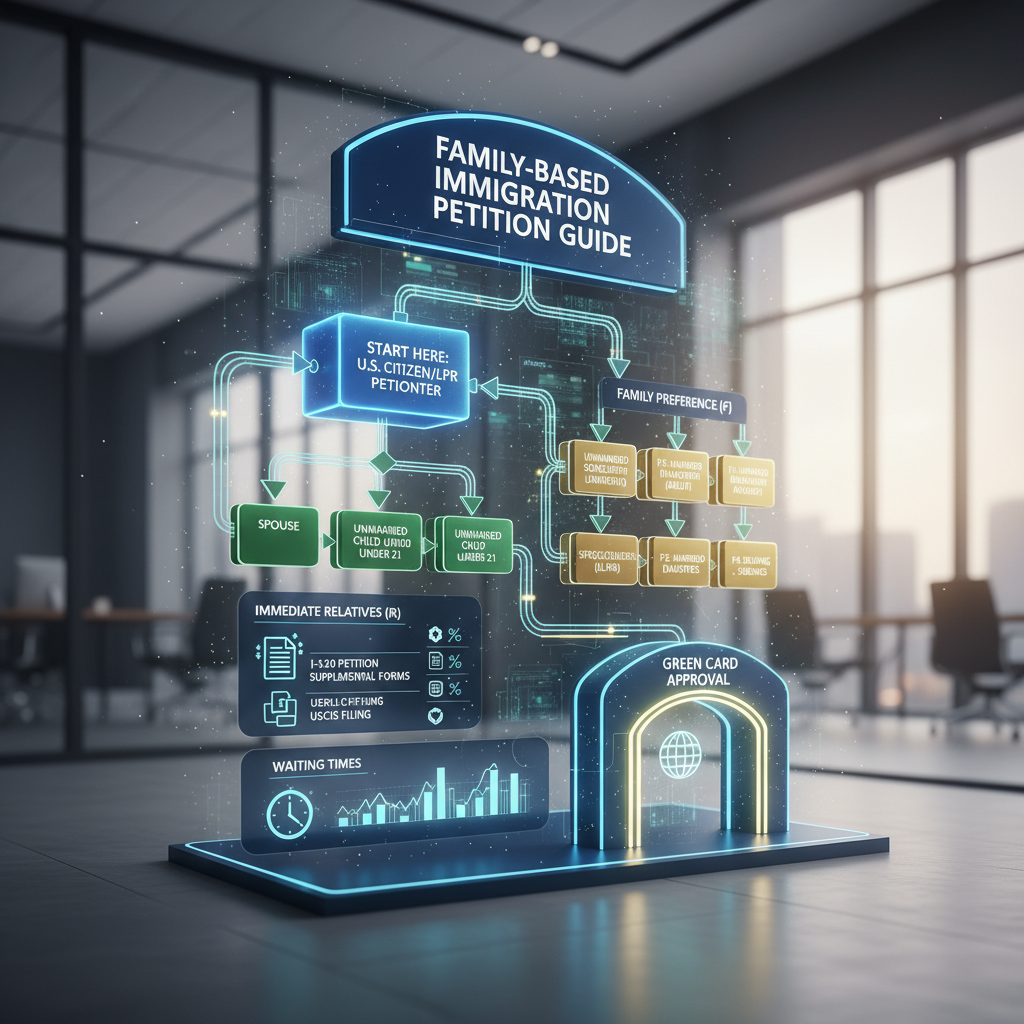
The constant flow of information regarding immigration law, policy changes, and processing updates can be overwhelming. As of 2026-04-11, news outlets continue to highlight the critical role of family reunification in the U.S. immigration system. This guide is inspired by the ongoing public interest and recent discussions around the complexities of bringing family members to the United States, as seen in reporting such as: Family-Based Immigration Petition Guide (Immigration).
While specific policy shifts are always a part of the immigration landscape, the core mechanisms of family-based petitions remain a cornerstone. Our goal is to provide a timeless, step-by-step resource that empowers you with the knowledge needed to navigate this essential process, regardless of daily headlines.
What This News Means for Immigrants in Orlando and Across Florida
The ongoing discussions and constant relevance of family-based immigration are not just abstract legal concepts; they directly impact countless individuals and families striving to build a life together in the United States. For immigrants in Orlando and throughout Florida, understanding the nuances of these petitions is paramount.
Why this news is showing up now
Family-based immigration is a perennially relevant topic because it forms the bedrock of our nation's immigration system, allowing U.S. citizens and lawful permanent residents (LPRs) to sponsor eligible relatives. Recent years have seen increased attention to issues such as processing backlogs, visa availability, and evolving administrative policies at U.S. Citizenship and Immigration Services (USCIS) and the Department of State. These factors collectively contribute to the continuous public and media interest in how families can legally unite. The emphasis on "Keep Families Together" is more than just a tagline for us; it's a reflection of the fundamental human desire for family unity that drives this entire category of immigration.
How it can affect Florida residents
Florida is home to one of the largest and most diverse immigrant populations in the United States. This means that a significant number of families across the state, from Miami to Jacksonville, and especially here in Central Florida, rely on family-based petitions to bring their loved ones to the U.S. For residents of Orlando and surrounding Orange County, understanding the latest information on family petitions can directly influence their ability to sponsor parents, spouses, children, or siblings. Longer processing times, changes in required documentation, or adjustments to fee structures can have a profound impact on financial planning, family separation, and overall peace of mind. Moreover, Florida’s robust economy and growing communities are often supported by immigrant families, making efficient and transparent family immigration processes vital for the state's continued prosperity. Timely and accurate information, therefore, empowers Florida residents to make informed decisions and navigate their immigration journey with confidence.
What Family-Based Immigration Is (and Why It Matters)
Family-based immigration is the cornerstone of the U.S. immigration system, allowing U.S. citizens and lawful permanent residents (LPRs) to sponsor certain eligible family members for a green card, which grants them permanent residency in the United States. This pathway is crucial for maintaining family unity and is a fundamental component of American values.
A plain-English definition
At its heart, family-based immigration is simply the process by which a qualifying relative who is either a U.S. citizen or a green card holder asks the U.S. government to allow their eligible family member to come to live permanently in the United States. The sponsoring relative (the Petitioner) files a petition with USCIS on behalf of their foreign national family member (the Beneficiary). Once approved, and a visa becomes available, the Beneficiary can apply for a green card, either from within the U.S. through Adjustment of Status or from abroad through Consular Processing.
This process matters immensely because it provides a legal, structured pathway for families to reunite, build new lives, and contribute to American society. It's about more than just paperwork; it's about keeping families together and fostering strong communities, a principle Imigrar deeply believes in.
Key terms you need to know
Navigating family-based immigration requires understanding specific terminology. Here are some essential terms:
- Petitioner: The U.S. citizen or lawful permanent resident (green card holder) who files the immigration petition for their family member.
- Beneficiary: The foreign national family member for whom the petition is filed, seeking to immigrate to the U.S.
- Immediate Relatives: This is a special category of family members that includes spouses of U.S. citizens, unmarried children under 21 of U.S. citizens, and parents of U.S. citizens (if the U.S. citizen is 21 or older). There are an unlimited number of visas available for Immediate Relatives, meaning they do not have to wait for a visa to become available based on a Priority Date.
- Family Preference Categories: These categories include other family relationships that are subject to annual visa limits, meaning there can be a waiting period before a visa becomes available. These categories are:
- First Preference (F1): Unmarried sons and daughters (21 years or older) of U.S. citizens.
- Second Preference (F2A): Spouses and unmarried children (under 21) of lawful permanent residents.
- Second Preference (F2B): Unmarried sons and daughters (21 years or older) of lawful permanent residents.
- Third Preference (F3): Married sons and daughters of U.S. citizens.
- Fourth Preference (F4): Brothers and sisters of U.S. citizens (if the U.S. citizen is 21 or older).
- Priority Date: The date USCIS receives a properly filed Form I-130 petition. This date determines a Beneficiary's place in the visa queue for Family Preference Categories. For Immediate Relatives, the Priority Date is always current.
- Visa Bulletin: A monthly publication by the U.S. Department of State that summarizes the availability of immigrant visas for the upcoming month. It indicates which Priority Dates are current for each Family Preference Category, allowing Beneficiaries to move forward with their green card application. You can find the latest Visa Bulletin on the U.S. Department of State website.
- Adjustment of Status (AOS): The process of applying for a green card from *within* the United States. Generally available to Beneficiaries who are already in the U.S. legally and have an immediately available visa (either as an Immediate Relative or if their Priority Date is current).
- Consular Processing: The process of applying for an immigrant visa from *outside* the United States through a U.S. embassy or consulate in the Beneficiary's home country. This path is for Beneficiaries who are not eligible for Adjustment of Status or who prefer to apply from abroad.
- Affidavit of Support (Form I-864): A legally binding document filed by the Petitioner (and sometimes a joint sponsor) to demonstrate that they have sufficient financial resources to support the Beneficiary and prevent them from becoming a public charge in the U.S.
Current Immigration Law: The Foundation
The framework for family-based immigration is primarily established by the Immigration and Nationality Act (INA), specifically Sections 201 and 203. These sections define who can petition for whom and how many visas are allocated annually to different family categories. Understanding these foundational laws is crucial for anyone embarking on this journey.
Federal requirements
Under federal law, the ability to petition for a family member hinges on two main factors: the immigration status of the Petitioner and the relationship between the Petitioner and the Beneficiary. Only U.S. citizens and lawful permanent residents (LPRs) can file family-based petitions. The types of relationships that qualify are strictly defined by the INA:
- U.S. Citizens can petition for:
- Spouses (Immediate Relative)
- Unmarried children under 21 (Immediate Relative)
- Parents (if the U.S. citizen is 21 or older) (Immediate Relative)
- Unmarried sons and daughters 21 or older (First Preference - F1)
- Married sons and daughters of any age (Third Preference - F3)
- Brothers and sisters (if the U.S. citizen is 21 or older) (Fourth Preference - F4)
- Lawful Permanent Residents (Green Card Holders) can petition for:
- Spouses (Second Preference - F2A)
- Unmarried children under 21 (Second Preference - F2A)
- Unmarried sons and daughters 21 or older (Second Preference - F2B)
Important: There are no petitions for grandparents, aunts, uncles, or cousins under current family-based immigration law. The relationship must be direct and verifiable.
Another critical federal requirement is the financial sponsorship, demonstrated through Form I-864, Affidavit of Support. The Petitioner must show they can support the Beneficiary at 125% of the federal poverty guidelines for their household size. If the Petitioner’s income is insufficient, a joint sponsor may be required. This ensures that the immigrant will not become a "public charge" and rely on government assistance.
All petitions are filed with USCIS, and processing times can vary significantly. You can always check the official website for forms and updates: USCIS official website.
Florida-specific considerations
While immigration law is federal, the practicalities of navigating the system often involve local resources and considerations. For residents of Central Florida, the primary point of contact for many in-person services related to family petitions will be the Orlando USCIS Field Office. This office handles interviews for Adjustment of Status applicants residing in the area, as well as naturalization interviews and other services. Understanding the local office's procedures and typical processing pace can be beneficial.
Florida's diverse population means that many family petitions involve translation services for documents. Ensuring all foreign language documents are accompanied by certified English translations is a critical step, and a common pitfall if overlooked. For those along the I-4 corridor or in Orange County, access to reputable translation services and legal counsel is readily available. Imigrar, located in Orlando, is well-versed in the specific needs and challenges faced by Florida residents seeking to unite their families, offering assistance in both English and Spanish (Se Habla Español).
Required USCIS forms for family petitions include, but are not limited to:
- Form I-130, Petition for Alien Relative
- Form I-130A, Supplemental Information for Spouse Beneficiary
- Form I-485, Application to Register Permanent Residence or Adjust Status (if applying from within the U.S.)
- Form I-864, Affidavit of Support
- Form I-693, Report of Medical Examination and Vaccination Record (for Adjustment of Status)
- Form DS-260, Immigrant Visa Application (Online) (for Consular Processing)
- Form I-765, Application for Employment Authorization (optional, for Adjustment of Status)
- Form I-131, Application for Travel Document (optional, for Adjustment of Status)
Always refer to USCIS Forms for the most current versions and instructions.

How to File a Family Petition: A Complete Step-by-Step Guide
The process of filing a family petition can be intricate, with multiple stages and requirements. This detailed step-by-step guide will walk you through the journey, highlighting key considerations and necessary documents at each phase. Our goal is to make this complex process as clear and manageable as possible, helping you on your way to Keep Families Together.
1) Determine Eligibility and Category
Before any forms are filed, the first crucial step is to accurately determine if both the Petitioner and the Beneficiary meet the eligibility requirements, and to identify the correct family preference category. This decision dictates the forms you’ll file, the processing times, and the overall strategy for your case.
- Petitioner's Status: The Petitioner must be either a U.S. citizen or a lawful permanent resident (LPR). Proof of this status (e.g., U.S. birth certificate, naturalization certificate, U.S. passport, or green card) is fundamental.
- Relationship: The relationship between the Petitioner and the Beneficiary must fall into one of the categories recognized by immigration law (spouse, child, parent, sibling). The nature of this relationship (e.g., married vs. unmarried, age of child) will determine if the Beneficiary is an Immediate Relative or falls into a Family Preference Category.
- Immediate Relative vs. Preference Category:
- Immediate Relatives (spouses, unmarried children under 21, and parents of U.S. citizens) do not face visa backlogs and can apply for a green card as soon as their Form I-130 is approved (or even concurrently in some cases if already in the U.S. legally).
- Family Preference Categories (all other qualifying relatives) are subject to annual visa limits and often involve a waiting period based on their Priority Date and the Visa Bulletin.
Required Documents (for initial eligibility assessment):
- Petitioner's Proof of Status: Copy of U.S. birth certificate, naturalization certificate, U.S. passport, or front and back of green card.
- Proof of Relationship:
- For spouses: Marriage certificate, divorce decrees (if applicable for either party), birth certificates (for children, if any).
- For children: Beneficiary's birth certificate showing parentage.
- For parents: Petitioner's birth certificate showing parentage.
- For siblings: Petitioner's and Beneficiary's birth certificates showing common parent(s).
2) File Form I-130, Petition for Alien Relative
Once eligibility is confirmed, the Petitioner initiates the process by filing Form I-130, Petition for Alien Relative, with USCIS. This form formally establishes the qualifying relationship between the Petitioner and the Beneficiary. Accompanying this form will be various supporting documents and the required filing fee.
- Completing the Form: Fill out Form I-130 accurately and completely. If sponsoring a spouse, also complete Form I-130A, Supplemental Information for Spouse Beneficiary.
- Filing Location: The mailing address for Form I-130 depends on the type of petition, the Petitioner's residence, and whether it's filed concurrently with Form I-485. Always check the official USCIS instructions for the correct "Direct Filing Addresses."
- Filing Fee: Pay the current USCIS filing fee for Form I-130. Fee waivers are rarely available for this form.
Required Documents (to submit with Form I-130):
- Completed and signed Form I-130 (and Form I-130A, if applicable).
- Copy of Petitioner's proof of U.S. citizenship or LPR status (e.g., U.S. passport, birth certificate, naturalization certificate, green card).
- Proof of the qualifying relationship (e.g., marriage certificate, birth certificates, adoption decrees).
- Proof of termination of prior marriages for both Petitioner and Beneficiary (e.g., divorce decrees, death certificates), if applicable.
- Two passport-style photos of the Petitioner and two of the Beneficiary (if filing concurrently with Form I-485, otherwise photos are typically requested later for consular processing).
- Copy of the Beneficiary's passport biographic page (if available).
- Form G-1145, E-Notification of Application/Petition Acceptance (optional, for email/text notifications).
- Any other relevant supporting documents like name change certificates, affidavits from third parties, etc.
- All foreign language documents must be accompanied by a complete English translation and a translator's certification.
Warning: Incomplete or inaccurate petitions are a leading cause of delays or denials. Double-check everything, or seek legal assistance from a firm like Imigrar.
3) Wait for I-130 Approval and Priority Date to Become Current
After filing Form I-130, USCIS will send a receipt notice (Form I-797C, Notice of Action) confirming they received your petition. This notice will contain your Priority Date. The next phase involves waiting for USCIS to process and approve the petition, and for a visa to become available if the Beneficiary is in a Family Preference Category.
- I-130 Processing: USCIS processing times vary significantly based on the service center and the specific type of petition. You can monitor average processing times on the USCIS Processing Times website.
- I-130 Approval: If approved, USCIS will send an approval notice (Form I-797, Notice of Action). For Immediate Relatives, this generally means the Beneficiary can proceed to the next step.
- Visa Availability (for Preference Categories): For Family Preference Categories, after I-130 approval, the case is transferred to the National Visa Center (NVC). The NVC will hold the petition until the Beneficiary's Priority Date becomes current, as indicated in the Visa Bulletin. This waiting period can range from a few years to over a decade, depending on the category and country of chargeability.
Required Documents (at this stage):
- I-797C, Notice of Action (Receipt Notice)
- I-797, Notice of Action (Approval Notice)
- Regularly check the Visa Bulletin if the Beneficiary is in a preference category.
Confused by the Visa Bulletin or USCIS Processing Times? Our experienced Orlando immigration attorneys can help you understand your specific timeline. Call +1 786-791-3106 for guidance, or reach out online. Se Habla Español.


