


At Imigrar, we understand that nothing is more important than family. Our mission, "Keep Families Together," is at the heart of everything we do, especially when it comes to navigating the intricate process of family-based immigration petitions. For many, this is the most hopeful path to securing a future in the United States, allowing loved ones to reunite and build new lives together.
Need Help? Our Orlando immigration team is ready to assist. Call +1 786-791-3106 for a free consultation, or message us online. Se Habla Español.
The reporting that sparked this guide
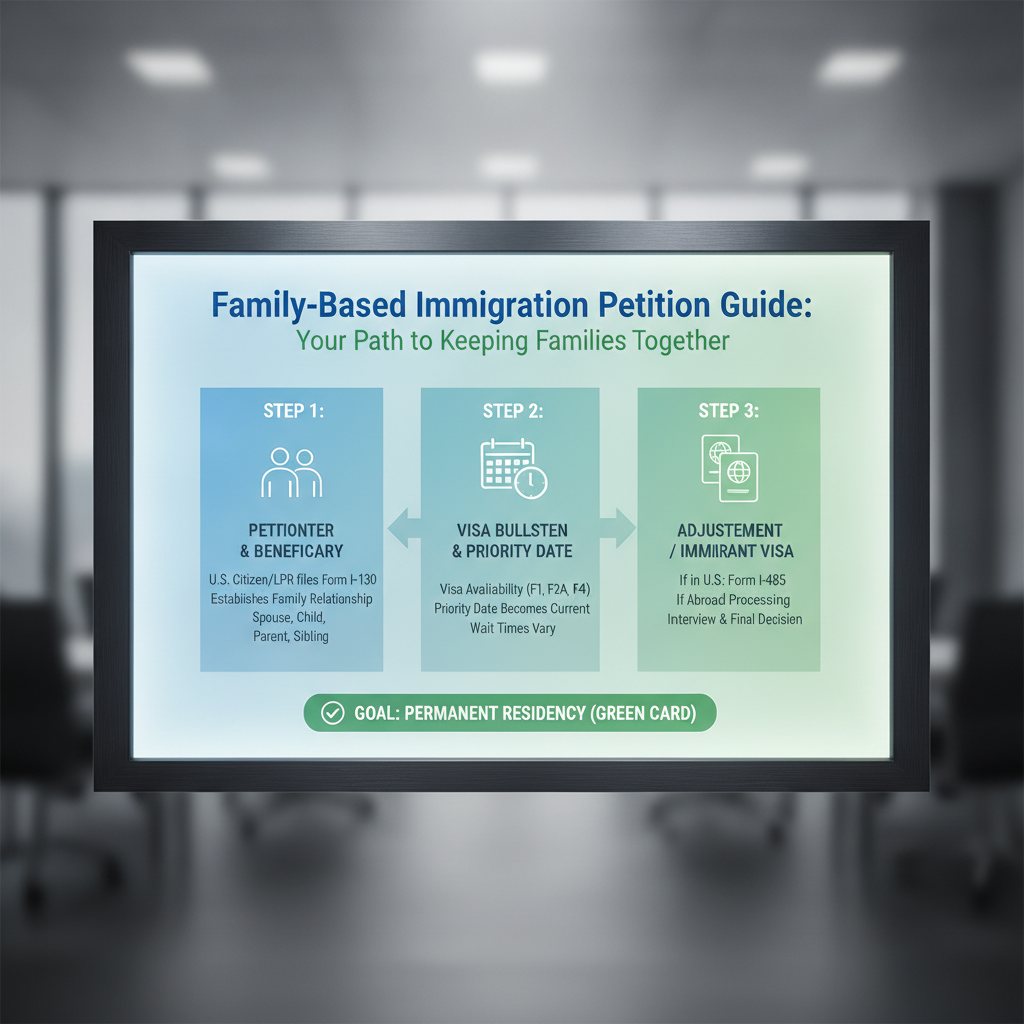
The constant stream of news surrounding immigration law, particularly the processes that allow families to unite, underscores the enduring importance of accurate, accessible information. Whether it's changes in policy, processing times, or simply clarification of existing regulations, staying informed is critical for anyone embarking on this journey. This comprehensive guide is inspired by the ongoing public interest and discussions around family petitions, aiming to demystify the process for you and your loved ones.
Family-Based Immigration Petition Guide (Immigration)
What This News Means for Immigrants in Orlando and Across Florida
Why this news is showing up now
Family-based immigration is not a new concept, but it's one that consistently generates news and discussion. The reason it’s trending now, and always will be, is simple: it’s the cornerstone of legal immigration to the United States. Every year, millions of families seek to reunite, making the family petition process one of the most frequently utilized pathways. Updates from U.S. Citizenship and Immigration Services (USCIS), policy adjustments, and evolving processing times are always newsworthy for those whose lives depend on these processes. Furthermore, with ongoing debates about immigration reform, the foundational aspects of family reunification often come under scrutiny, leading to increased public interest and a demand for clarity.
As an immigration law firm based in Orlando, Florida, Imigrar observes these trends closely. We see firsthand the impact of these discussions on our clients, who are often anxious about the future of their loved ones. Our goal is to provide a steady, reliable source of information that cuts through the noise and offers practical guidance.
How it can affect Florida residents
Florida is home to one of the largest and most diverse immigrant populations in the United States. From the vibrant Cuban and Puerto Rican communities in South Florida to the growing Central and South American populations throughout the I-4 corridor, including Orlando, family ties are incredibly strong. This means that news and guides about family-based immigration directly impact hundreds of thousands of Florida residents who are either U.S. citizens or lawful permanent residents (Green Card holders) seeking to sponsor their relatives, or beneficiaries hoping to join their family here.
- Increased Clarity: A clear, step-by-step guide can alleviate anxiety for those in Orlando and surrounding counties like Orange, Seminole, and Osceola, who might feel overwhelmed by the complexity of immigration law.
- Local Impact: Understanding the process helps families in Central Florida prepare for interactions with the Orlando USCIS Field Office, particularly for interviews and biometrics appointments.
- Planning for the Future: For many Floridians, securing a family petition is a critical step in long-term financial and social planning, affecting everything from housing to employment.
- Avoiding Scams: Unfortunately, the complexity of immigration law can attract unscrupulous individuals. Reliable information empowers Florida residents to identify and avoid fraudulent services.
At Imigrar, we are committed to serving our Florida community by ensuring that every family has the resources and legal support they need to navigate this journey successfully.
What Family-Based Immigration Is (and Why It Matters)
A plain-English definition
At its core, family-based immigration is a legal process that allows eligible U.S. citizens and lawful permanent residents (Green Card holders) to sponsor certain family members to come to live permanently in the United States. The goal is simple: to keep families together. This process ultimately leads to the sponsored family member receiving a Green Card, granting them the right to live and work permanently in the U.S.
It matters immensely because it is the primary way for families to reunite across international borders. Without this pathway, countless families would remain separated, unable to share in each other's lives or contribute to American society together. For many, it represents the promise of a better future, stability, and the fundamental human right to be with loved ones.
Key terms you need to know
Understanding these key terms will help you navigate the family petition process:
- Petitioner: The U.S. citizen or lawful permanent resident (Green Card holder) who files the immigration petition on behalf of their relative.
- Beneficiary: The foreign national family member who is being sponsored to immigrate to the U.S.
- Immediate Relative: A specific category of family members who do not have to wait for a visa to become available. This includes spouses of U.S. citizens, unmarried children under 21 of U.S. citizens, and parents of U.S. citizens (if the U.S. citizen is 21 or older).
- Preference Categories: Categories for family members who are not "immediate relatives." These categories have annual limits on the number of visas issued, meaning beneficiaries typically face a waiting period. These include:
- First Preference (F1): Unmarried sons and daughters (21 years of age or older) of U.S. citizens.
- Second Preference (F2A): Spouses and children (unmarried, under 21) of lawful permanent residents.
- Second Preference (F2B): Unmarried sons and daughters (21 years of age or older) of lawful permanent residents.
- Third Preference (F3): Married sons and daughters of U.S. citizens.
- Fourth Preference (F4): Brothers and sisters of U.S. citizens (if the U.S. citizen is 21 or older).
- Priority Date: The date USCIS officially receives your Form I-130 petition. This date determines your place in line for a visa, especially for preference categories.
- Visa Bulletin: A monthly publication from the U.S. Department of State that lists when preference category visas are available for specific countries and priority dates. You cannot proceed with your Green Card application until your priority date is "current." U.S. Department of State Visa Bulletin
- Adjustment of Status (AOS): The process of applying for a Green Card while physically present in the United States. This is typically for beneficiaries who entered the U.S. legally and meet other eligibility requirements.
- Consular Processing: The process of applying for an immigrant visa (which becomes a Green Card upon entry) through a U.S. embassy or consulate abroad. This is for beneficiaries who are outside the United States or who are ineligible for Adjustment of Status.
- Affidavit of Support (Form I-864): A legally binding document signed by the petitioner, promising to financially support the beneficiary if they become a public charge. This is a critical component of nearly all family-based petitions.
Considering a family petition? Don't navigate the complexities alone. Imigrar offers expert guidance for families in Orlando, Central Florida, and nationwide. Call +1 786-791-3106 for a free consultation. Se Habla Español.
Current Immigration Law: The Foundation
Family-based immigration is primarily governed by the Immigration and Nationality Act (INA), a complex body of law that dictates who can immigrate, under what conditions, and through what processes. The INA establishes the various categories of relatives eligible for sponsorship and sets the annual limits for most of these categories.
Federal requirements
The core federal requirements for family-based immigration revolve around proving a legitimate family relationship and ensuring the beneficiary will not become a "public charge" in the United States. Key statutes and regulations include:
- Immigration and Nationality Act (INA) Sections 201, 203, 204: These sections define who qualifies as an immediate relative, establish the preference categories, and outline the petitioning process.
- INA Section 212(a): This section details the grounds of inadmissibility, which are reasons a person might be denied entry or a Green Card, such as certain health issues, criminal history, or immigration violations.
- INA Section 213A: This section mandates the Affidavit of Support (Form I-864), ensuring that sponsors can financially support their family members above the poverty line.
All family-based petitions begin with the filing of Form I-130, Petition for Alien Relative, by the U.S. citizen or lawful permanent resident petitioner. This form establishes the qualifying relationship between the petitioner and the beneficiary. Subsequent forms depend on whether the beneficiary is adjusting status in the U.S. or undergoing consular processing abroad.
Important: The petitioner must be at least 18 years old to file the Affidavit of Support, and at least 21 years old to petition for a parent or a sibling.
You can find all official forms and detailed instructions on the USCIS official website.
Florida-specific considerations
While immigration law is federal, the practical application often has local nuances. For Central Florida residents, understanding the local context can be beneficial:
- Orlando USCIS Field Office: If your case involves an Adjustment of Status, you will likely have your biometrics appointment and interview at the Orlando USCIS Field Office. This office serves a vast area, including Orange County, Seminole County, Osceola County, and surrounding regions. Familiarity with the office’s procedures and common interview questions can be advantageous.
- Diverse Population: Florida's diverse population means that interpreters are frequently needed for interviews. USCIS provides interpreters, but having your own trusted interpreter (who is not the petitioner or a witness) can sometimes be helpful, though not typically allowed for USCIS interviews unless specifically requested and approved.
- Legal Support: Given the large immigrant community, Orlando has many immigration attorneys. Choosing a reputable firm like Imigrar, with strong local ties and a deep understanding of the community's needs, is crucial. Our team is well-versed in the specific challenges and opportunities facing immigrants in Florida.
Reminder: State laws do not directly impact federal immigration benefits, but they can affect related matters such as obtaining state IDs, driver’s licenses, or professional licenses after receiving a Green Card.
How to Secure Your Family's Future: A Complete Step-by-Step Guide
Navigating the family-based immigration process can feel overwhelming, but breaking it down into manageable steps makes it more approachable. Here’s a comprehensive guide to help you understand the journey.
1) Determine Eligibility and Category
Before filing any forms, you must first determine if you (the petitioner) are eligible to sponsor your relative (the beneficiary) and which immigration category they fall into. This is the most crucial first step, as it dictates the entire process and timeline.
- Who can petition?
- U.S. Citizens can petition for: spouses, unmarried children under 21, unmarried sons/daughters 21 or older, married sons/daughters of any age, and brothers/sisters (if the U.S. citizen is 21 or older), and parents (if the U.S. citizen is 21 or older).
- Lawful Permanent Residents (Green Card holders) can petition for: spouses, and unmarried children of any age.
- What is the relationship? Gather documents to prove your relationship (e.g., marriage certificates, birth certificates).
- Immediate Relative vs. Preference Category: This distinction is vital because immediate relatives do not have a visa waiting period, while preference categories do.
- Immediate Relatives: Spouses of U.S. citizens, unmarried children under 21 of U.S. citizens, and parents of U.S. citizens (if the U.S. citizen is 21 or older).
- Preference Categories: All other eligible family relationships (F1, F2A, F2B, F3, F4).
Required Documents for Step 1 (for your records – not yet filed):
- Proof of petitioner's U.S. citizenship (U.S. birth certificate, passport, naturalization certificate) or Green Card (front and back).
- Birth certificates for both petitioner and beneficiary.
- Marriage certificates (if petitioning for a spouse or married child).
- Divorce decrees or death certificates for any prior marriages of both petitioner and beneficiary.
- Any other documents proving the qualifying relationship.
2) File Form I-130, Petition for Alien Relative
Once you’ve established eligibility, the petitioner files Form I-130 with USCIS. This form officially establishes the family relationship between the petitioner and the beneficiary.
- Complete Form I-130: Fill out every section accurately. Any missing information or errors can cause significant delays.
- Gather Supporting Documents: Attach all required evidence proving the relationship.
- Pay Filing Fees: Submit the correct filing fee to USCIS. Check the USCIS Forms page for current fees.
- Submit to USCIS: Mail the complete package to the designated USCIS Lockbox facility.
Required Documents for Step 2 (to be filed with Form I-130):
- Completed and signed Form I-130.
- Proof of petitioner's U.S. citizenship or Green Card (copy of passport, birth certificate, naturalization certificate, or Green Card front and back).
- Proof of relationship (e.g., marriage certificate, birth certificate for parent-child, sibling birth certificates).
- For spouses: evidence of a bona fide marriage (joint bank accounts, leases, utility bills, photos, affidavits from friends/family).
- Any previous marriage termination documents (divorce decrees, death certificates) for both petitioner and beneficiary.
- Passport-style photos of both petitioner and beneficiary (check USCIS requirements for size and background).
- Filing fee (check USCIS website for current amount).
Timeline Expectation: USCIS processing times for Form I-130 vary significantly by office and category. You can check current processing times on the USCIS Processing Times page. It can range from several months to over a year.
3) Visa Availability (for Preference Categories) & Priority Date Becomes Current
If the beneficiary is an Immediate Relative, they can move directly to Step 4 once the Form I-130 is approved. There is no visa waiting period.
If the beneficiary is in a Preference Category, they must wait for their Priority Date to become "current" according to the monthly Visa Bulletin published by the U.S. Department of State. The Priority Date is the date USCIS received your Form I-130.
- Monitor the Visa Bulletin: Regularly check the Visa Bulletin. When your priority date is earlier than the "cut-off date" listed for your category and country of chargeability, your visa number is available.
- Receive Notification: Once the priority date is current, the National Visa Center (NVC) will contact you (if consular processing) or you may be eligible to file Form I-485 (if adjusting status).
Warning: Waiting periods can be many years, sometimes even decades, depending on the preference category and the beneficiary's country of origin.
4) Adjustment of Status (AOS) or Consular Processing
This step determines where the Green Card application will be finalized: either within the U.S. (Adjustment of Status) or at a U.S. embassy or consulate abroad (Consular Processing).
Option A: Adjustment of Status (if beneficiary is in the U.S.)
If the beneficiary is physically present in the U.S. and entered legally, they might be eligible to file Form I-485, Application to Register Permanent Residence or Adjust Status. For Immediate Relatives, this can often be filed concurrently with Form I-130, or after the I-130 is approved. For Preference Categories, it can only be filed when the priority date is current.
- File Form I-485: Complete and submit the application package to USCIS.
- File Supporting Forms: Typically, you will also file Form I-765 (Application for Employment Authorization) and Form I-131 (Application for Travel Document) concurrently. This allows the beneficiary to work and travel while the Green Card application is pending.
- Medical Examination: Schedule a medical exam with a USCIS-approved civil surgeon and submit Form I-693, Report of Medical Examination and Vaccination Record.
- Biometrics Appointment: Attend a biometrics appointment at a local Application Support Center (ASC) for fingerprints and photos. For Central Florida residents, this will likely be at the Orlando ASC.
Required Documents for Adjustment of Status (with Form I-485):
- Completed and signed Form I-485.
- Copy of the approved Form I-130 (or filed concurrently).
- Two passport-style photos of the beneficiary.
- Copy of beneficiary's birth certificate.
- Copy of beneficiary's passport biographic page and visa stamp.
- Copy of Form I-94 (Arrival/Departure Record).
- Completed and signed Form I-693 (Medical Examination) in a sealed envelope.
- Form I-864, Affidavit of Support, signed by the petitioner, with supporting financial documents (tax returns, W-2s, employment verification letters).
- Police clearances (if applicable).
- Filing fees for Form I-485, Form I-765, Form I-131 (check USCIS website for current fees).
- Optional: Form I-765 (Employment Authorization) and Form I-131 (Travel Document) if desired.
Option B: Consular Processing (if beneficiary is outside the U.S. or ineligible for AOS)
If the beneficiary is outside the U.S. or cannot adjust status, their case will be sent to the National Visa Center (NVC) after Form I-130 is approved and the priority date (if applicable) is current.
- NVC Processing: The NVC will send instructions to the petitioner and beneficiary to submit immigrant visa application forms (Form DS-260, Immigrant Visa Application) and supporting documents, along with fees.
- Affidavit of Support: The petitioner files Form I-864, Affidavit of Support, with the NVC.
- Civil Documents: The beneficiary gathers all required civil documents (birth certificates, marriage certificates, police certificates, etc.) and submits them to the NVC.
- Interview Scheduling: Once all documents are approved by the NVC, an interview will be scheduled at the U.S. embassy or consulate in the beneficiary's home country.
- Medical Examination: The beneficiary must undergo a medical examination with a panel physician approved by the embassy/consulate.
Required Documents for Consular Processing (to NVC and at interview):
- Completed and signed Form DS-260 (online).
- Scanned copies of the beneficiary's birth certificate, marriage certificate (if applicable), police certificates from all countries lived in.
- Petitioner's Form I-864, Affidavit of Support, with supporting financial documents.
- Passport-style photos of the beneficiary.
- Beneficiary's valid passport.
- Medical examination results from an approved panel physician.
- NVC and Immigrant Visa fees.
5) Interview and Decision
This is a critical step where a USCIS officer (for AOS) or a Consular Officer (for Consular Processing) reviews your application and conducts an interview.
- Preparation: Thoroughly review your application, bring all original documents (even if copies were submitted), and be prepared to answer questions about your relationship, immigration history, and eligibility.
- Interview: The officer will verify the information in your application and ensure you meet all legal requirements. For spouses, they will assess the bona fides of the marriage.
- Decision: If approved, the officer will typically inform you on the spot (for AOS). For consular processing, the visa will be stamped in the beneficiary's passport.
Important: Honesty and consistency are paramount during the interview. Any discrepancies could lead to delays or denial.
6) Green Card Issuance
Congratulations! If your application is approved:
- Adjustment of Status: You will receive your physical Green Card in the mail, typically within a few weeks of approval.
- Consular Processing: The beneficiary will receive an immigrant visa in their passport. They must then travel to the U.S. before the visa expires. Upon entry, they become a lawful permanent resident, and their physical Green Card will be mailed to their U.S. address. An Immigrant Visa Fee (USCIS Immigrant Fee) must be paid before the Green Card is produced.
Reminder: Green Cards are valid for 10 years, unless it's a conditional Green Card (valid for 2 years) for marriages less than two years old at the time of approval. Conditional Green Cards require filing Form I-751 to remove conditions within the 90-day window before expiration.

Practical Steps You Can Take Today
Starting the family-based immigration process can feel like a monumental task, but taking proactive steps can make it much smoother. Here’s an actionable checklist:
Actionable Checklist:
- Gather Core Documents: Start collecting birth certificates, marriage certificates, divorce decrees, passports, and any other foundational identity documents for both the petitioner and beneficiary. Ensure they are current and valid.
- Financial Review: Assess the petitioner's financial eligibility. Can they meet the income requirements for the Affidavit of Support (Form I-864)? Gather tax returns (last three years), W-2s, and pay stubs. If income is insufficient, identify potential joint sponsors.
- Proof of Relationship: Compile evidence proving the authenticity of the relationship. For spouses, this means joint bank statements, leases, utility bills, photos, and affidavits. For other relatives, ensure birth certificates clearly link the family tree.
- Organize Everything: Create a dedicated binder or digital folder for all immigration documents. Label clearly and keep originals safe, submitting only copies unless specifically requested.
- Research Processing Times: Check the USCIS Processing Times page for an estimate of how long your specific petition (e.g., Form I-130 for your category and


