


The reporting that sparked this guide
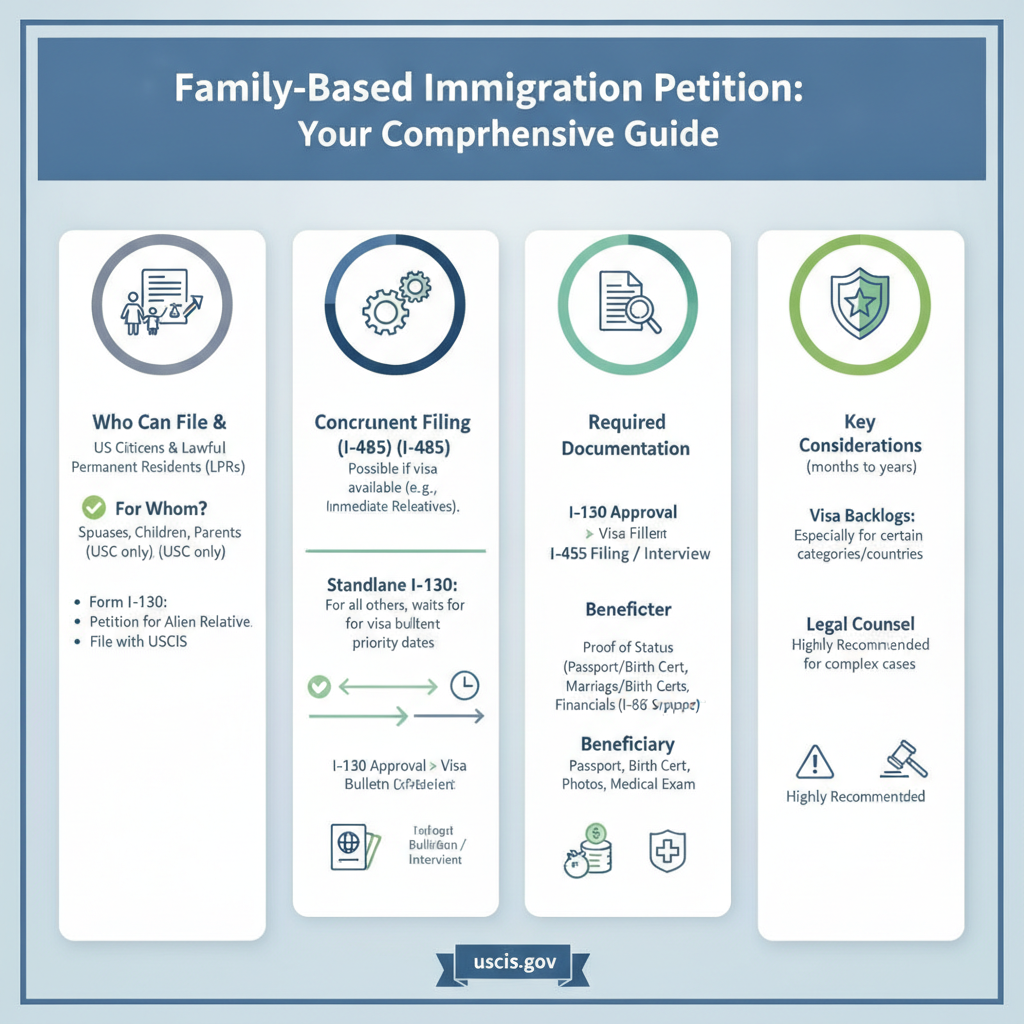
The continuous public interest and evolving discussions around family reunification in the U.S. immigration system are regularly highlighted by major news outlets. This guide is inspired by the ongoing coverage of Family-Based Immigration Petition Guide (Immigration), which consistently underscores the importance of clear, accessible information for families navigating these critical processes.
What This News Means for Immigrants in Orlando and Across Florida
Family-based immigration remains the cornerstone of the U.S. immigration system, a pathway for millions to reunite with loved ones and build new lives. For families in Orlando, Central Florida, and across the nation, understanding the intricacies of these petitions is not just helpful—it's essential for achieving their American dream. The constant news cycle around immigration laws and policies, even when not announcing dramatic changes, serves as a crucial reminder of the ongoing need for accurate, up-to-date guidance.
Why this news is showing up now
The topic of family-based immigration is perennially relevant because it directly impacts countless lives. Every day, families are initiating the process, waiting for updates, or facing new challenges. While there might not be a single new policy announcement driving this particular "news," the continuous discussion stems from several factors:
- High Volume of Petitions: Millions of family-based petitions are filed and processed annually by U.S. Citizenship and Immigration Services (USCIS). This constant flow naturally generates ongoing interest and inquiries.
- Evolving Processing Times: USCIS processing times fluctuate due to various factors, including resource allocation, policy adjustments, and global events. These changes are always newsworthy for those awaiting decisions.
- Policy Discussions: Immigration reform is a recurring theme in national politics. Even without new laws, discussions around potential changes to visa categories, eligibility, or processing methods keep family immigration in the spotlight.
- Community Impact: Family reunification has profound economic, social, and cultural impacts on communities nationwide, including vibrant areas like Orlando. Local stories and experiences continually highlight the importance of these pathways.
- Technological Updates: USCIS frequently updates its online systems, forms, and guidance, prompting new articles and guides to help applicants navigate these changes.
In essence, the "news" around family-based immigration is less about a single event and more about the enduring, dynamic nature of a system that is always in motion, affecting real families every moment.
How it can affect Florida residents
Florida, especially the Orlando metropolitan area, is a diverse hub for immigrants from across the globe. For residents of the Sunshine State, the nuances of family-based immigration are particularly impactful:
- High Immigrant Population: Florida has one of the largest immigrant populations in the U.S. This means a significant number of families are either petitioners or beneficiaries, making the process highly relevant to a large segment of the population.
- Local Resources and Support: While federal law governs immigration, local resources, support networks, and legal services are vital. Understanding the process helps Florida residents identify and utilize these resources effectively.
- Economic Contribution: Immigrant families contribute significantly to Florida's economy, from small businesses to major industries like tourism and agriculture. The ability to reunite families strengthens these contributions.
- Community Integration: Successful family reunification leads to greater community integration, allowing new Floridians to establish roots, contribute to local society, and thrive.
- Access to Information: With a large Spanish-speaking population, clear, bilingual information is paramount. Firms like Imigrar, which offers services in English and Spanish, are crucial for ensuring all Floridians have access to the guidance they need.
For Central Florida residents, navigating the Orlando USCIS Field Office, understanding local document requirements (like certified translations often needed for foreign documents), and finding reliable legal counsel are key steps. The ongoing conversation about family petitions reinforces the need for diligent preparation and expert guidance right here in our community.
Need Help? Our Orlando immigration team is ready to assist. Call +1 786-791-3106 for a free consultation, or message us online. Se Habla Español.
What Family-Based Immigration Is (and Why It Matters)
Family-based immigration is the pathway for U.S. citizens and lawful permanent residents (Green Card holders) to sponsor certain eligible family members to immigrate to the United States. This fundamental pillar of U.S. immigration law is designed to promote family unity, allowing loved ones to live together legally in the U.S.
A plain-English definition
In simple terms, family-based immigration is when a U.S. citizen or Green Card holder (the "sponsor" or "petitioner") asks the U.S. government to allow a close relative (the "beneficiary") to come and live permanently in the United States. It's a formal request that, if approved, can lead to the relative receiving a Green Card, granting them lawful permanent resident status.
This process is divided into two main categories: "Immediate Relatives" and "Family Preference Categories." Immediate Relatives have an uncapped number of visas available each year, meaning no waiting line based on country of origin. Family Preference Categories, however, have annual numerical limits, which often results in significant waiting times.
Key terms you need to know
Navigating family immigration requires understanding specific terminology. Here are some crucial terms:
- Petitioner: The U.S. citizen or lawful permanent resident who files the immigration petition on behalf of their relative.
- Beneficiary: The foreign national relative for whom the petition is filed, seeking to immigrate to the U.S.
- Immediate Relative: This category includes spouses of U.S. citizens, unmarried children under 21 of U.S. citizens, and parents of U.S. citizens (if the U.S. citizen is 21 or older). There are no annual numerical limits for Immediate Relatives, meaning no visa backlog.
- Preference Categories: These are other family relationships that are subject to annual numerical limitations, leading to potential waiting lists. They include:
- First Preference (F1): Unmarried sons and daughters (21 years of age or older) of U.S. citizens.
- Second Preference (F2A): Spouses and unmarried children (under 21 years of age) of lawful permanent residents.
- Second Preference (F2B): Unmarried sons and daughters (21 years of age or older) of lawful permanent residents.
- Third Preference (F3): Married sons and daughters of U.S. citizens.
- Fourth Preference (F4): Brothers and sisters of U.S. citizens (if the U.S. citizen is 21 or older).
- Priority Date: The date USCIS officially receives your properly filed Form I-130 petition. This date establishes your place in line for a visa in the preference categories. For Immediate Relatives, the priority date is not relevant for visa availability.
- Visa Bulletin: A monthly publication from the U.S. Department of State that summarizes the availability of immigrant visas for the upcoming month. It indicates which Priority Dates are current for each preference category and country of chargeability. You can find the latest Visa Bulletin here.
- Adjustment of Status (AoS): The process of applying for a Green Card while physically present in the United States. This is generally available to beneficiaries who entered the U.S. lawfully and whose visa category is current.
- Consular Processing: The process of applying for an immigrant visa at a U.S. embassy or consulate abroad. This is for beneficiaries who are outside the U.S. or ineligible for Adjustment of Status.
- Affidavit of Support (Form I-864): A legally binding document signed by the petitioner (and sometimes a joint sponsor) promising to financially support the immigrant beneficiary. This ensures the immigrant will not become a "public charge."
- Public Charge: A term used in immigration law to describe an individual who is likely to become primarily dependent on the government for subsistence. The Affidavit of Support aims to prevent this.
- Conditional Green Card: Issued to spouses of U.S. citizens or Green Card holders if their marriage is less than two years old at the time the Green Card is approved. This card is valid for two years, after which the couple must file Form I-751, Petition to Remove Conditions on Residence, to prove the marriage is bona fide and remove the conditions.
Current Immigration Law: The Foundation for Family Petitions
The legal framework for family-based immigration is primarily established by the Immigration and Nationality Act (INA), specifically sections 201, 203, and 204. These sections define who can sponsor whom, the categories of family-based visas, and the petitioning process. Understanding these legal underpinnings is crucial for any successful family petition.
Federal requirements
At the federal level, the U.S. government sets specific requirements for both the petitioner and the beneficiary:
Petitioner Requirements:
- Citizenship or Lawful Permanent Resident Status: The petitioner must be a U.S. citizen or a lawful permanent resident (Green Card holder). The specific relationship determines eligibility for different categories.
- Age: For sponsoring parents or siblings, the U.S. citizen petitioner must be at least 21 years old. There is no age requirement for sponsoring a spouse or child, though practical considerations usually mean the petitioner is an adult.
- Domicile: The petitioner must have a domicile in the United States or intend to establish one before the beneficiary immigrates.
- Financial Sponsorship (Affidavit of Support): The petitioner must demonstrate the financial ability to support the beneficiary at 125% of the federal poverty guidelines. This is done through Form I-864, Affidavit of Support. If the petitioner's income is insufficient, a joint sponsor may be required.
Beneficiary Requirements:
- Qualifying Relationship: The beneficiary must have a qualifying family relationship to the petitioner as defined by the INA (e.g., spouse, child, parent, sibling). This relationship must be proven with robust documentation.
- Admissibility: The beneficiary must be "admissible" to the United States. This means they must not fall under any grounds of inadmissibility, such as certain criminal convictions, health issues, prior immigration violations, or security concerns. If grounds of inadmissibility exist, a waiver might be available, which adds complexity to the case.
- Current Visa: For preference categories, the beneficiary's Priority Date must be current according to the latest U.S. Department of State Visa Bulletin.
The primary forms involved in this process are:
- Form I-130, Petition for Alien Relative: This is the initial form filed by the U.S. citizen or LPR petitioner to establish the qualifying relationship with the foreign national beneficiary.
- Form I-485, Application to Register Permanent Residence or Adjust Status: Filed by the beneficiary if they are eligible to adjust their status to a lawful permanent resident while in the U.S.
- Form DS-260, Immigrant Visa Application: Used for beneficiaries undergoing Consular Processing abroad.
- Form I-864, Affidavit of Support Under Section 213A of the INA: Filed by the petitioner to demonstrate financial support.
For detailed information and the latest versions of all forms, always refer to the USCIS Forms page on the USCIS official website.
Florida-specific considerations
While immigration law is federal, certain aspects touch upon state-level considerations for Florida residents:
- Local USCIS Offices: For those undergoing Adjustment of Status, the Orlando USCIS Field Office (located on Technology Drive) handles interviews for residents of Central Florida, including Orange County. Understanding the local office's procedures, typical interview styles, and specific document requests can be beneficial.
- Community Resources: Florida has a robust network of community organizations that provide support to immigrant families, from language assistance to social services. Knowing these local resources can be invaluable during the immigration journey.
- Driver's Licenses and State IDs: Once a Green Card is obtained, Florida residents can apply for a Florida driver's license or state ID through the Florida Department of Highway Safety and Motor Vehicles (FLHSMV), integrating them further into the community.
- Cultural Competency: Florida's diverse population means that legal services, like Imigrar, often have multilingual staff (Se Habla Español) and cultural competency, which is crucial for effective communication and client support.
- Accessibility: For clients along the I-4 corridor or in surrounding counties, proximity to legal counsel in Orlando is a practical advantage, allowing for in-person consultations and easier document submission.
Important: No state in the U.S. can create its own immigration laws that contradict federal statutes. However, state policies can affect how immigrants integrate into society post-arrival.
Confused by the legal jargon? Our experienced Orlando immigration attorneys can demystify the process for you. Call +1 786-791-3106 today for a free consultation. Se Habla Español.
How to File a Family-Based Immigration Petition: A Complete Step-by-Step Guide
Filing a family-based immigration petition is a multi-stage process that requires meticulous attention to detail and a thorough understanding of U.S. immigration law. This comprehensive guide outlines the typical steps involved.
1) Determine Eligibility and Category
Before any forms are filed, the petitioner must confirm their eligibility to sponsor and identify the correct immigration category for their relative.
- Petitioner's Status: Are you a U.S. citizen or a lawful permanent resident (Green Card holder)? This determines who you can sponsor.
- U.S. Citizens can petition for: spouses, unmarried children (under 21), unmarried sons/daughters (21+), married sons/daughters, parents (if the citizen is 21+), and siblings (if the citizen is 21+).
- LPRs can petition for: spouses, and unmarried children/sons/daughters.
- Beneficiary's Relationship: Confirm the exact legal relationship (e.g., biological child, adopted child, stepchild, spouse, parent, sibling).
- Immediate Relative vs. Preference Category: This is critical for understanding potential waiting times.
- Immediate Relatives (spouses, unmarried children under 21, and parents of U.S. citizens) do not have numerical limits.
- Preference Categories (all other qualifying family relationships) are subject to annual limits and may involve long waiting periods based on the Visa Bulletin.
Required Documents for Step 1 (for initial assessment):
- Petitioner's proof of U.S. citizenship (e.g., U.S. birth certificate, naturalization certificate, U.S. passport) or Green Card (Form I-551).
- Beneficiary's birth certificate.
- Marriage certificate (if applicable).
- Divorce decrees or death certificates for any previous marriages of either party (if applicable).
- Adoption decrees (if applicable).
2) File Form I-130, Petition for Alien Relative
This is the first formal step, where the U.S. citizen or LPR petitioner establishes the qualifying family relationship with the beneficiary to USCIS.
- Complete Form I-130: Fill out the form accurately and completely. Ensure all questions are answered, and pay close attention to biographical information.
- Gather Supporting Documents: Collect all evidence proving the relationship. The type of evidence varies significantly depending on the relationship (e.g., marriage certificates, birth certificates, photos, affidavits, joint financial documents).
- Prepare Filing Fee: As of the latest update, the filing fee for Form I-130 is $535 (subject to change; always check USCIS fees page). This must be paid by check, money order, or credit card (via Form G-1450).
- Mail the Petition: Send the completed Form I-130, all supporting documents, and the filing fee to the appropriate USCIS Lockbox facility. The mailing address depends on where you live and the type of petition.
Required Documents for Step 2 (Form I-130):
- Completed and signed Form I-130.
- Proof of U.S. citizenship or LPR status for the petitioner (e.g., copy of birth certificate, naturalization certificate, U.S. passport, or Green Card front and back).
- Proof of the qualifying relationship (e.g., certified copy of marriage certificate for spouses, birth certificate for children/parents, adoption decree for adopted children).
- If sponsoring a spouse, evidence of a bona fide marriage (e.g., joint bank statements, utility bills, leases, photos, affidavits from friends/family).
- Photocopies of any divorce decrees or death certificates for previous marriages of both petitioner and beneficiary.
- Two passport-style photos of the petitioner and two of the beneficiary (if filing concurrently with Form I-485, otherwise not required for initial I-130).
- G-1145, E-Notification of Application/Petition Acceptance (optional, to receive e-mail/text notification).
Reminder: All documents not in English must be accompanied by a certified English translation.
3) Wait for Petition Approval and Priority Date to Become Current
After filing Form I-130, USCIS will send a receipt notice (Form I-797C). This notice will contain your Priority Date. For Immediate Relatives, the process moves forward once the I-130 is approved. For Preference Categories, you enter a waiting line.
- Form I-130 Processing: USCIS reviews the petition to ensure the relationship is legitimate. This can take several months to over a year. You can check average USCIS Processing Times online.
- Petition Approval: If approved, USCIS sends an approval notice (Form I-797).
- Monitor the Visa Bulletin: If you are in a Preference Category, you must regularly check the U.S. Department of State Visa Bulletin. Your Priority Date must be "current" before you can proceed with the Green Card application. This waiting period can range from a few years to over a decade, depending on the category and country of origin.
4) Apply for Green Card: Adjustment of Status or Consular Processing
Once the Form I-130 is approved and a visa is available (for preference categories), the beneficiary can apply for their Green Card. This is done either through Adjustment of Status (if in the U.S.) or Consular Processing (if outside the U.S. or ineligible for AoS).
Option A: Adjustment of Status (AoS) - If Beneficiary is in the U.S.
If the beneficiary is physically present in the U.S. and meets certain eligibility criteria (e.g., entered lawfully, maintains valid nonimmigrant status or is an Immediate Relative), they can file an application to adjust their status.
- File Form I-485: The beneficiary files Form I-485, Application to Register Permanent Residence or Adjust Status. This can sometimes be filed concurrently with Form I-130 if the beneficiary is an Immediate Relative of a U.S. citizen.
- Supporting Forms:
- Form I-765, Application for Employment Authorization: Allows the beneficiary to work while their Green Card application is pending.
- Form I-131, Application for Travel Document (Advance Parole): Allows the beneficiary to travel internationally while their Green Card application is pending without abandoning it.
- Form I-864, Affidavit of Support: Filed by the petitioner (and potentially a joint sponsor) to demonstrate financial support.
- Form I-693, Report of Medical Examination and Vaccination Record: Completed by a USCIS-approved civil surgeon.
- Filing Fees: Each form has its own fee. The Form I-485 fee generally includes biometrics. The I-765 and I-131 fees are often waived if filed concurrently with Form I-485.
- Mail Application: Send all forms and supporting documents to the appropriate USCIS Lockbox facility.
Required Documents for Step 4 (Adjustment of Status):
- Completed and signed Form I-485, I-765 (optional), I-131 (optional), I-864.
- Copy of the Form I-130 approval notice (if not filed concurrently).
- Beneficiary's birth certificate (with certified English translation).
- Copy of beneficiary's passport biographic page.
- Copy of beneficiary's visa page (if applicable).
- Copy of beneficiary's Form I-94, Arrival/Departure Record.
- Two passport-style photos of the beneficiary.
- Form I-693, sealed by the civil surgeon.
- Police clearances (if required by USCIS).
- Petitioner's tax returns and employment letters for Form I-864.
- Any other documents requested by USCIS.
Option B: Consular Processing - If Beneficiary is Outside the U.S.
If the beneficiary is outside the U.S. or ineligible for Adjustment of Status, their case will be forwarded to the National Visa Center (NVC) for Consular Processing.
- NVC Processing: After Form I-130 approval, the NVC will contact the petitioner and beneficiary with instructions to submit additional documents and fees.
- Pay Fees: Immigrant Visa Application Processing Fee and Affidavit of Support Fee.
- Submit Documents: Electronically submit Form DS-260, Immigrant Visa Application, and upload all required civil documents (birth certificates, marriage certificates, police certificates, etc.) and financial documents (Form I-864, tax returns).
- NVC Review: The NVC reviews all submitted documents. Once complete, they will schedule an interview at the appropriate U.S. embassy or consulate in the beneficiary's home country.
Required Documents for Step 4 (Consular Processing):
- Completed and submitted Form DS-260 for each applicant.
- Copy of Form I-130 approval notice.
- Beneficiary's birth certificate (with certified English translation).
- Marriage certificate (if applicable).
- Divorce decrees/death certificates (if applicable).
- Police certificates from all countries where the beneficiary lived for 6+ months after age 16.
- Passport valid for at least six months beyond the intended date of entry.
- Two passport-style photos.
- Form I-864 with all supporting financial documents (tax transcripts, employment letters, pay stubs).
- Military records (if applicable).
- Court and prison records (if applicable).
5) Attend Biometrics Appointment and Interview
Both Adjustment of Status and Consular Processing involve a biometrics appointment and an interview.
- Biometrics: USCIS will send an appointment notice for fingerprints, photos, and signature (for AoS applicants). This is usually scheduled at a local Application Support Center (ASC) in Orlando for Central Florida residents. For consular processing, biometrics are typically taken at the embassy/consulate on the interview day.
- Interview:
- Adjustment of Status: The beneficiary (and petitioner for spousal cases) will attend an interview at a USCIS Field Office (e.g., Orlando USCIS Field Office). An officer will review the application, verify information, and assess the legitimacy of the relationship.
- Consular Processing: The beneficiary attends an interview at the designated U.S. embassy or consulate abroad. They will meet with a Consular Officer who will make a final determination on visa eligibility.
Required Documents for Step 5 (Interview):
- All original documents that were submitted as photocopies (birth certificates, marriage certificates, passports, etc.).
- Interview appointment notice.
- Any additional documents requested by USCIS or the NVC.
- For spousal interviews: recent joint documents, photos, and proof of ongoing marriage.
- Important: Bring English translations for any foreign documents.
6) Receive Decision and Green Card
The final step is receiving a decision on the Green Card application.
- Approval: If approved, the beneficiary will receive either a physical Green Card by mail (for AoS) or an immigrant visa stamp in their passport (for Consular Processing).
- For Consular Processing, the immigrant visa allows entry into the U.S., and the Green Card is mailed after entry.
- Denial: If denied, USCIS or the Consular Officer will provide a reason. Depending on the reason, it may be possible to appeal the decision, refile the petition, or seek other immigration options. This is where legal counsel is crucial.
7) Post-Approval and Conditional Green Cards
For spouses and children of U.S. citizens/LPRs whose marriage was less than two years old at the time of Green Card approval, a Conditional Green Card is issued.
- Conditional Status: This Green Card is valid for only two years.
- Remove Conditions: Within the 90-day window before the conditional Green Card expires, the couple must file Form I-751, Petition to Remove Conditions on Residence. This form requires substantial


