


At Imigrar, our mission is to Keep Families Together. We understand that the journey to reunite with loved ones in the United States can be filled with hope, anticipation, and often, complex legal hurdles. This comprehensive guide is designed to empower you with the knowledge and steps needed to navigate the family-based immigration petition process successfully.
Today is June 1, 2026, and the landscape of immigration law is constantly evolving. While the core principles of family-based immigration remain steadfast, understanding the current requirements, timelines, and potential pitfalls is crucial for success.
The reporting that sparked this guide
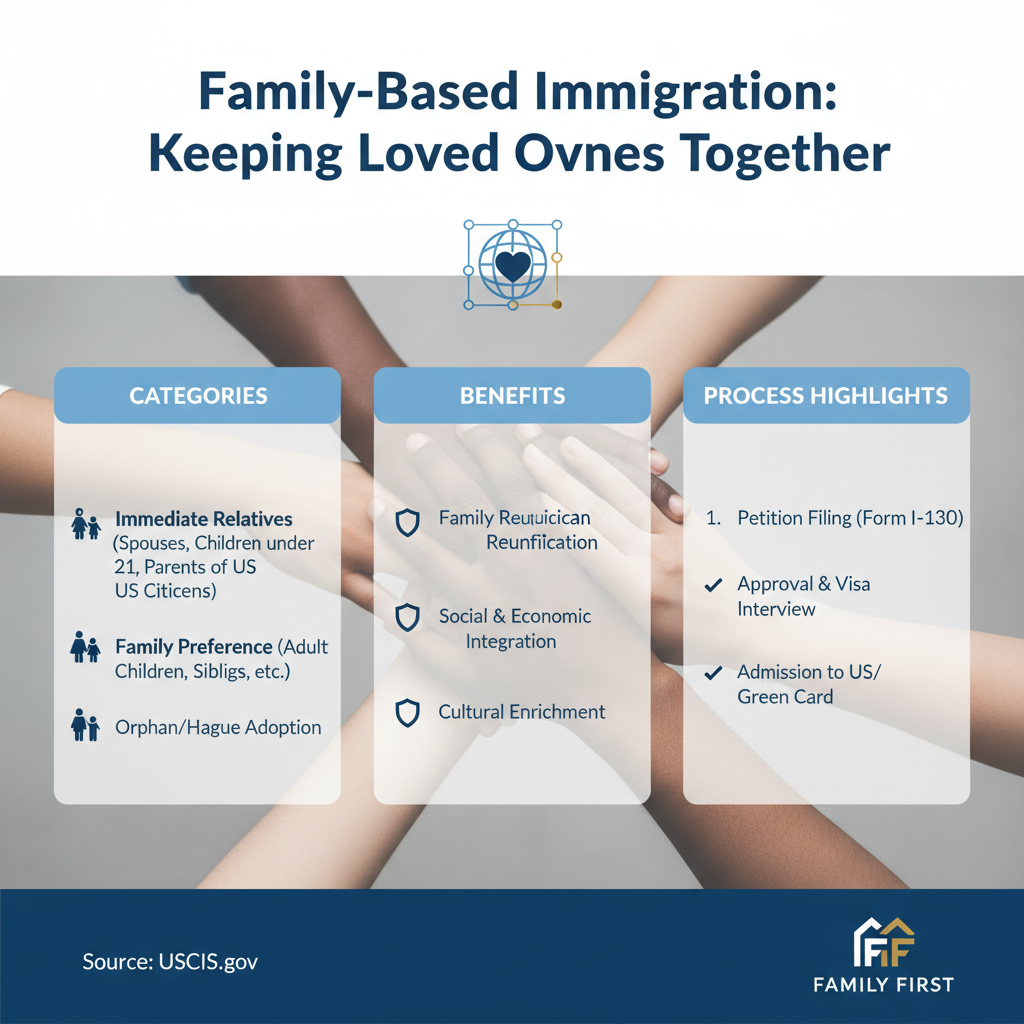
The continuous conversation around immigration law, particularly regarding family reunification, consistently highlights the need for clear, accessible information. The general interest in a Family-Based Immigration Petition Guide (Immigration) underscores the critical role this pathway plays in countless lives. News reports frequently cover policy adjustments, processing delays, or success stories, all of which bring family petitions into the spotlight and emphasize the importance of a well-prepared application.
What This News Means for Immigrants in Orlando and Across Florida
For families living in Orlando, Central Florida, and across the Sunshine State, understanding family-based immigration is not just theoretical—it's profoundly personal. Florida is home to a vibrant and diverse immigrant community, making family reunification a top priority for many residents.
Why this news is showing up now
Family-based immigration is a cornerstone of the U.S. immigration system, and it's almost always "news" because it directly impacts millions of people. While there may not be one single breaking story today, the topic frequently resurfaces due to several factors:
- Policy Discussions: Lawmakers often debate potential reforms, which can affect eligibility, processing times, or even the categories of relatives who can be sponsored.
- Processing Updates: USCIS and the Department of State regularly update processing times, which can cause anxiety or relief for families awaiting decisions.
- Public Interest: There's a constant public and media interest in how immigration policies affect real families, particularly in states with large immigrant populations like Florida.
- Ongoing Need for Clarity: The sheer complexity of the process means there's always a demand for clear, actionable guides, especially as forms and procedures are periodically updated.
How it can affect Florida residents
Florida, with its extensive coastline and diverse economy, has long been a destination for immigrants from around the globe. For those residing in Orlando, Miami, Tampa, or anywhere along the I-4 corridor, family-based immigration is a vital pathway to keeping loved ones together. Specifically, this focus on family petitions means:
- Local Impact: Many Central Florida residents will interact directly with the Orlando USCIS Field Office for interviews or biometrics appointments. Understanding the process streamlines these local interactions.
- Community Support: A clear guide helps not only individual families but also the network of community organizations and legal aid groups in Florida that support immigrants.
- Economic and Social Integration: Successfully reuniting families contributes to the social fabric and economic vitality of Florida's communities. Newcomers often fill labor gaps, start businesses, and enrich cultural life.
- Avoiding Scams: With increased attention on immigration, unfortunately, opportunities for fraud also rise. A reliable guide helps Floridians discern accurate information from misleading advice.
Need Help? Our Orlando immigration team is ready to assist. Navigating family petitions can be daunting, but you don't have to do it alone. Call +1 786-791-3106 for a free consultation, or message us online. Se Habla Español.
What Family-Based Immigration Is (and Why It Matters)
Family-based immigration is the primary way U.S. citizens and lawful permanent residents (Green Card holders) can help eligible family members obtain immigrant visas (Green Cards) to live permanently in the United States. It is founded on the principle of family unity, allowing individuals to sponsor their relatives to join them in the U.S.
A plain-English definition
Simply put, family-based immigration allows a U.S. citizen or a Green Card holder (the **Petitioner**) to file an application with U.S. Citizenship and Immigration Services (**USCIS**) on behalf of a qualifying foreign national family member (the **Beneficiary**). If approved, this petition establishes the legal relationship needed for the **Beneficiary** to apply for an immigrant visa (if abroad) or **Adjustment of Status** (if already in the U.S.), ultimately leading to a Green Card.
Key terms you need to know
Understanding these terms is crucial for navigating the process:
- Petitioner: The U.S. citizen or Lawful Permanent Resident (LPR) who files the immigration petition for their family member.
- Beneficiary: The foreign national family member who is being petitioned for.
- Immediate Relative: This category includes spouses of U.S. citizens, unmarried children under 21 of U.S. citizens, and parents of U.S. citizens (if the U.S. citizen is 21 or older). There is no annual limit on the number of visas for Immediate Relatives, meaning they do not have to wait for a visa to become available once the petition is approved.
- Preference Categories: These are other family relationships that are subject to annual numerical limits, leading to waiting periods. They include:
- First Preference (F1): Unmarried sons and daughters (21 years of age or older) of U.S. citizens.
- Second Preference (F2A): Spouses and children (unmarried, under 21) of Lawful Permanent Residents.
- Second Preference (F2B): Unmarried sons and daughters (21 years of age or older) of Lawful Permanent Residents.
- Third Preference (F3): Married sons and daughters of U.S. citizens.
- Fourth Preference (F4): Brothers and sisters of U.S. citizens (if the U.S. citizen is 21 or older).
- Priority Date: For **Preference Categories**, this is the date **USCIS** receives your properly filed **Form I-130** petition. This date determines your place in the visa queue.
- Visa Bulletin: A monthly publication by the U.S. Department of State that shows when **Preference Category** visas become available based on the **Priority Date** and country of chargeability. **Immediate Relatives** do not need a **Visa Bulletin**.
- Adjustment of Status (AOS): The process of applying for a Green Card while physically present in the United States. This is typically available to beneficiaries who entered the U.S. legally and meet certain eligibility requirements.
- Consular Processing: The process of applying for an immigrant visa at a U.S. embassy or consulate in the beneficiary's home country (or another country if eligible). This is for beneficiaries who are outside the U.S.
Current Immigration Law: The Foundation
The framework for family-based immigration is primarily established by the Immigration and Nationality Act (**INA**), specifically Sections 201 and 203. These sections define who can petition for whom and how visas are allocated.
Federal requirements
The **INA** sets forth the core requirements that apply nationwide:
- Petitioner Status: The **Petitioner** must be either a U.S. citizen or a Lawful Permanent Resident (Green Card holder). Proof of this status (e.g., U.S. passport, birth certificate, naturalization certificate, Green Card) is essential.
- Qualifying Relationship: There must be a legitimate family relationship between the **Petitioner** and **Beneficiary** as defined by law. This requires submitting documentation like birth certificates, marriage certificates, and adoption decrees.
- Financial Sponsorship: The **Petitioner** must demonstrate the financial ability to support the **Beneficiary** by signing an **Affidavit of Support** (**Form I-864**). This ensures the immigrant will not become a public charge. The **Petitioner** must meet 125% of the federal poverty guidelines for their household size.
- Admissibility: The **Beneficiary** must be admissible to the U.S., meaning they must not have certain criminal records, serious health conditions, or past immigration violations that would make them ineligible for a Green Card.
You can find all official forms and detailed instructions on the USCIS Forms page. The primary form for initiating the process is **Form I-130, Petition for Alien Relative**.
Florida-specific considerations
While U.S. immigration law is federal, applying it in Florida involves local considerations:
- USCIS Field Offices: For **Adjustment of Status** cases, interviews typically take place at the **USCIS** Field Office with jurisdiction over your residence. For Central Florida residents, this is usually the Orlando USCIS Field Office. Proximity means understanding local procedures and potential interview backlogs.
- Local Legal Expertise: Given Florida's diverse population, having an immigration attorney in Orlando who is familiar with the local **USCIS** office and specific challenges faced by Florida residents can be invaluable.
- State Resources: While Florida does not have its own immigration laws, state services and resources (e.g., driver's licenses, social services) may require proof of legal immigration status, making a smooth family petition process even more critical for integration.
For more detailed information on federal immigration policies, always refer to the USCIS official website.

How to File a Family-Based Immigration Petition: A Complete Step-by-Step Guide
The family-based immigration process can be lengthy and involves multiple stages. Here is a detailed guide to help you understand each step:
1) Determine Eligibility and Category
Before filing anything, it’s crucial to confirm that you, as the **Petitioner**, are eligible to sponsor your family member (the **Beneficiary**) and to identify the correct visa category. This will dictate your waiting period and filing strategy.
- U.S. Citizen Petitioner: Can petition for a spouse, unmarried child under 21 (**Immediate Relative**), unmarried son/daughter 21 or older (F1), married son/daughter of any age (F3), and parent (if the U.S. citizen is 21 or older) (**Immediate Relative**), and brother/sister (if the U.S. citizen is 21 or older) (F4).
- Lawful Permanent Resident (LPR) Petitioner: Can petition for a spouse (F2A), and unmarried son/daughter of any age (F2A or F2B depending on age). LPRs cannot petition for parents or siblings.
Required Documents (for initial eligibility assessment):
- Proof of Petitioner’s U.S. citizenship (e.g., U.S. passport, birth certificate, naturalization certificate) or LPR status (Green Card, Form I-551).
- Proof of the familial relationship (e.g., birth certificates for parent-child, marriage certificates for spouses, adoption decrees for adopted children).
- Any previous divorce decrees or death certificates to prove termination of prior marriages for both **Petitioner** and **Beneficiary**, if applicable.
2) File Form I-130, Petition for Alien Relative
This is the foundational step. The **Petitioner** files **Form I-130** with **USCIS** to establish the qualifying family relationship with the **Beneficiary**. This form proves to the government that a legitimate familial bond exists.
- Completing the Form: Fill out **Form I-130** accurately and completely. Ensure all questions are answered, and pay close attention to details, as errors can cause delays or denials.
- Filing Location: The mailing address for **Form I-130** depends on where you live and whether you are filing concurrently with **Form I-485** or if the **Beneficiary** is outside the U.S. Always check the USCIS website for the most current filing addresses.
- Filing Fee: As of June 2026, the fee for **Form I-130** is typically $675 (if filing online) or $625 (if filing by mail). Fees can change, so verify on the official **USCIS** site. Payment can be made by money order, personal check, cashier’s check, or credit card (**Form G-1450**).
Required Documents (with Form I-130):
- Completed and signed **Form I-130**.
- Copy of **Petitioner's** proof of U.S. citizenship or LPR status.
- Copy of **Beneficiary's** birth certificate.
- Proof of relationship (e.g., marriage certificate, birth certificates of children, adoption decrees).
- Passport-style photos for both **Petitioner** and **Beneficiary** (if required for the specific category/filing).
- Any required supporting documentation (e.g., divorce decrees, death certificates for previous spouses).
- Filing fee.
Important: All foreign language documents must be accompanied by a complete English translation certified by a translator. The translator must attest that they are competent to translate and that the translation is accurate.
3) Wait for I-130 Approval and Priority Date
After filing, **USCIS** will send a **Form I-797C, Notice of Action**, acknowledging receipt of your petition. This notice contains your **receipt number**, which you can use to track your case online at USCIS Case Status Online.
- For Immediate Relatives: Once **Form I-130** is approved, the **Beneficiary** can generally proceed to the next step without waiting for a visa to become available, as visas are immediately available.
- For Preference Categories: The date **USCIS** received your **Form I-130** becomes your **Priority Date**. You must wait for your **Priority Date** to become current according to the **Visa Bulletin** before the **Beneficiary** can apply for a Green Card. This waiting period can range from several months to many years, depending on the category and the **Beneficiary's** country of birth. You can monitor the monthly Visa Bulletin published by the U.S. Department of State.
Required Documents (at this stage):
- **Form I-797C, Notice of Action** (Receipt Notice).
- **Form I-797, Approval Notice** (once the I-130 is approved).
Confused about your visa category or Priority Date? Imigrar's experienced Orlando immigration lawyers can clarify your situation and help you understand your options. Call us today for a free consultation at +1 786-791-3106. Se Habla Español.
4) Apply for Green Card (Adjustment of Status or Consular Processing)
Once the **Form I-130** is approved and (if applicable) the **Priority Date** is current, the **Beneficiary** can apply for a Green Card. The method depends on whether the **Beneficiary** is in the U.S. or abroad.
A. Adjustment of Status (AOS) - If Beneficiary is in the U.S.
If the **Beneficiary** is present in the U.S. and meets eligibility criteria (e.g., entered legally, **Immediate Relative** or **Priority Date** is current for a **Preference Category**), they can file **Form I-485, Application to Register Permanent Residence or Adjust Status**, with **USCIS**. This is often filed concurrently with **Form I-130** for **Immediate Relatives**.
Required Documents (with Form I-485):
- Completed and signed **Form I-485**.
- Copy of **Form I-797, I-130 Approval Notice**.
- Two U.S. passport-style photos.
- Copy of government-issued photo identification.
- Copy of birth certificate.
- Copy of passport pages with non-immigrant visa (if applicable).
- Copy of **Form I-94, Arrival/Departure Record**.
- Form I-864, Affidavit of Support, from the **Petitioner** (and any joint sponsors).
- **Form I-693, Report of Medical Examination and Vaccination Record** (in a sealed envelope from a USCIS-approved civil surgeon).
- **Form I-765, Application for Employment Authorization** (**EAD**) (optional, allows work authorization while I-485 is pending).
- **Form I-131, Application for Travel Document** (**Advance Parole**) (optional, allows travel outside U.S. while I-485 is pending).
- Certified copies of court and police records (if any criminal history).
- Filing fees for **Form I-485**, **biometrics**, and optional **Form I-765** and **Form I-131** (Note: these are often bundled into one fee for I-485).
B. Consular Processing - If Beneficiary is outside the U.S.
If the **Beneficiary** is outside the U.S. or ineligible for **Adjustment of Status**, their case will be processed through a U.S. embassy or consulate in their home country. After **Form I-130** approval, **USCIS** forwards the case to the National Visa Center (**NVC**), a division of the U.S. Department of State.
NVC Stage:
- The **NVC** will send instructions to the **Petitioner** and **Beneficiary** to pay fees and submit required civil documents (birth certificates, marriage certificates, police certificates, etc.) and financial documents (**Form I-864**).
- The **Beneficiary** will complete **Form DS-260, Immigrant Visa Application**.
Required Documents (for NVC/Consular Processing):
- Completed **Form DS-260**.
- Copy of **Form I-797, I-130 Approval Notice**.
- Passport valid for at least six months beyond the intended date of entry to the U.S.
- Two U.S. passport-style photos.
- Birth certificate.
- Marriage certificate (if applicable).
- Police certificates from all countries where the **Beneficiary** has lived for 6+ months since age 16.
- Court and prison records (if any criminal history).
- Military records (if applicable).
- **Form I-864, Affidavit of Support**, and supporting financial documents from the **Petitioner**.
- Medical examination results from an authorized panel physician in the **Beneficiary's** country.
5) Attend Biometrics Appointment and Interview
After filing for **Adjustment of Status** or completing the **NVC** stage for **Consular Processing**, the next steps typically involve biometrics and an interview.
- Biometrics Appointment: For **Adjustment of Status** applicants in the U.S., **USCIS** will send a notice for a **biometrics** appointment at an Application Support Center (ASC). This involves capturing fingerprints, photos, and a signature for background checks. For Orlando residents, this would likely be at the local ASC.
- Interview:
- Adjustment of Status: **USCIS** will schedule an interview at a local field office (e.g., Orlando USCIS Field Office). Both the **Petitioner** and **Beneficiary** are typically required to attend. The officer will review the application, verify documents, and ask questions to confirm the legitimacy of the relationship and eligibility.
- Consular Processing: The **Beneficiary** will attend an interview at the designated U.S. embassy or consulate abroad. The consular officer will review the application and documents and conduct an interview to determine eligibility for the immigrant visa.
Required Documents (for Interview):
- Appointment notice.
- Valid passport.
- Originals of ALL documents submitted with the petition and application (birth certificates, marriage certificates, divorce decrees, etc.).
- **Form I-797, Approval Notices**.
- Any additional evidence requested by the interviewing officer or to prove the legitimacy of the relationship (


