


At Imigrar, our mission is simple: "Keep Families Together." We understand that for many, the dream of U.S. residency is deeply intertwined with the desire to unite with loved ones. Family-based immigration is the cornerstone of this dream, offering pathways for U.S. citizens and Lawful Permanent Residents (LPRs) to sponsor their relatives for green cards.
However, navigating the complexities of U.S. immigration law can be daunting. From understanding eligibility criteria to meticulously preparing documentation and adhering to strict timelines, every step requires precision and a deep understanding of the legal framework. This comprehensive guide is designed to demystify the family-based immigration petition process, providing you with the knowledge and actionable steps you need to pursue family reunification.
The reporting that sparked this guide
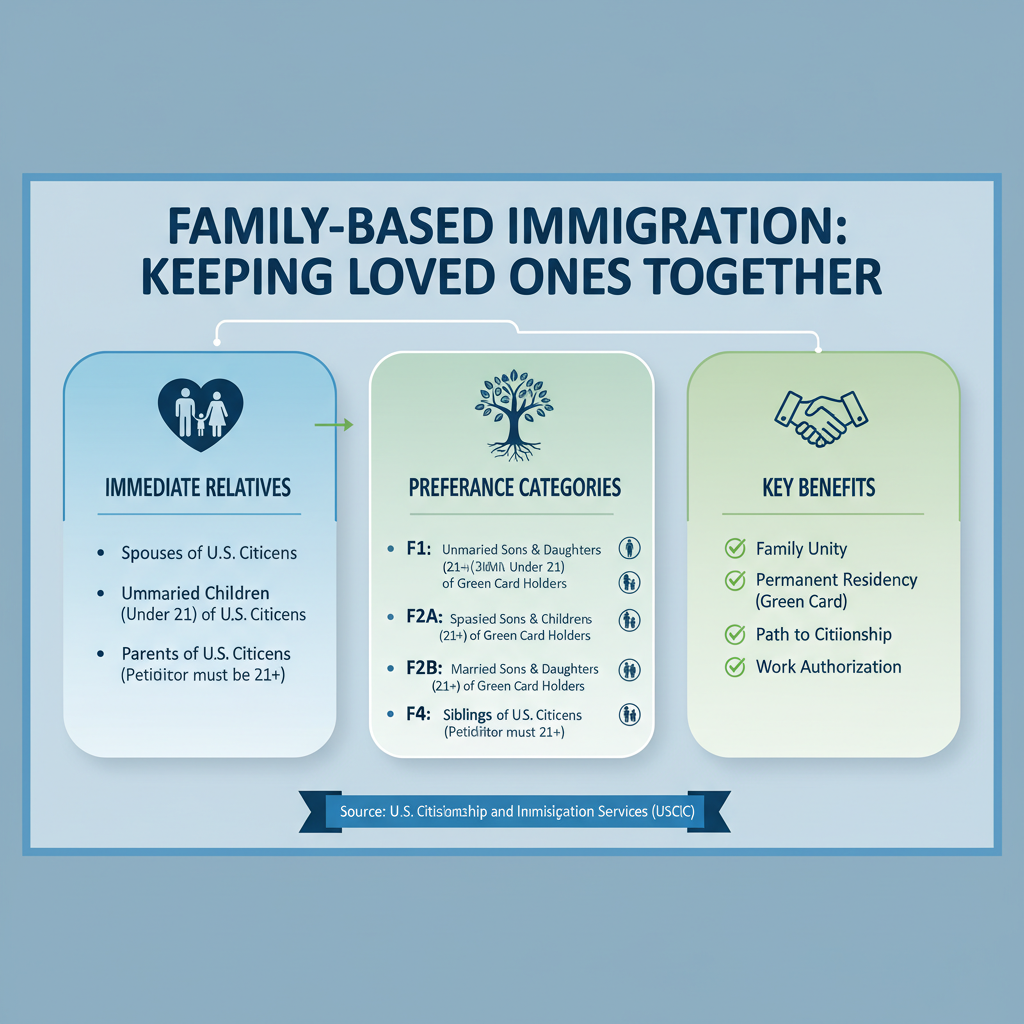
The constant evolution and enduring significance of U.S. immigration policy mean that news regarding family petitions is always relevant. Our commitment to keeping you informed is driven by ongoing discussions and updates in the field. This guide draws upon the foundational principles of family immigration law, which frequently appear in public discourse and news reports concerning the U.S. immigration system.
Family-Based Immigration Petition Guide (Immigration)What This News Means for Immigrants in Orlando and Across Florida
The principles of family-based immigration are not new; they are a bedrock of U.S. immigration law. The news and public discourse surrounding immigration often highlight the challenges and opportunities within these established pathways. For immigrants and their families in Orlando and across Florida, staying informed about these processes is paramount.
Why this news is showing up now
Family-based immigration is a perennial topic in the news for several reasons. Firstly, it represents the largest category of legal immigration to the United States, meaning millions of people are directly affected annually. Policy discussions, processing backlogs at USCIS (U.S. Citizenship and Immigration Services) and NVC (National Visa Center), and judicial interpretations of existing laws frequently bring family petitions into the spotlight. Furthermore, shifts in global events, economic pressures, or humanitarian crises can impact processing times and policy priorities, making the news cycle on immigration consistently active. For a firm like Imigrar, dedicated to keeping families together, these discussions underscore the critical need for clear, accurate information and expert legal guidance.
How it can affect Florida residents
Florida, with its vibrant and diverse population, is home to a significant number of immigrants and their families. The state's proximity to Latin America and the Caribbean, coupled with its robust economy, makes it a destination for many seeking new opportunities and family reunification. Consequently, changes or even just the consistent application of family-based immigration laws have a profound impact on Floridians. For residents in Orlando, Tampa, Miami, and across the I-4 corridor, understanding the nuances of these petitions is not merely academic—it's deeply personal. Long processing times can mean years of separation, while efficient navigation of the system can bring families together sooner. The Orlando USCIS Field Office and local immigration courts are constantly processing these cases, directly affecting thousands of families in Central Florida. Timely and accurate legal advice, especially for those navigating the system from Orange County or surrounding areas, can make all the difference in achieving successful outcomes.
What Family-Based Immigration Petitions Are (and Why It Matters)
Family-based immigration forms the backbone of the U.S. legal immigration system, embodying the nation's commitment to family unity. It allows U.S. citizens and Lawful Permanent Residents (LPRs) to sponsor certain eligible relatives for a green card, granting them permanent residency in the United States.
A plain-English definition
At its core, a family-based immigration petition is a formal request to the U.S. government to allow a foreign national family member to become a permanent resident. The process begins when a U.S. citizen or LPR, known as the **petitioner**, files a petition for their eligible relative, known as the **beneficiary**. If approved, this petition establishes a valid family relationship, which is the first crucial step toward the beneficiary obtaining a **Green Card** (permanent resident card) and living legally in the U.S.
Key terms you need to know
Navigating the immigration process requires understanding specific terminology. Here are some key terms:
- Petitioner: The U.S. citizen or Lawful Permanent Resident who files the immigration petition for their relative.
- Beneficiary: The foreign national family member for whom the petition is filed.
- Green Card: Formally known as a Permanent Resident Card, it proves that you are authorized to live and work permanently in the United States.
- Immediate Relatives: This category includes spouses of U.S. citizens, unmarried children under 21 of U.S. citizens, and parents of U.S. citizens (if the citizen is 21 or older). This is a highly favorable category because there are no annual numerical limits (visa quotas), meaning once the petition is approved, a visa is generally immediately available.
- Family Preference Categories: These categories are for other family relationships and are subject to annual numerical limits. This means there's often a waiting line for a visa to become available. These categories include:
- First Preference (F1): Unmarried sons and daughters (21 or older) of U.S. citizens.
- Second Preference (F2A): Spouses and unmarried children (under 21) of Lawful Permanent Residents.
- Second Preference (F2B): Unmarried sons and daughters (21 or older) of Lawful Permanent Residents.
- Third Preference (F3): Married sons and daughters of U.S. citizens.
- Fourth Preference (F4): Brothers and sisters of U.S. citizens (if the citizen is 21 or older).
- Priority Date: The date USCIS receives your correctly filed **Form I-130**. This date is critically important for beneficiaries in the Family Preference Categories, as it determines their place in the visa queue.
- Visa Bulletin: A monthly publication by the U.S. Department of State that summarizes the availability of immigrant visas for the upcoming month. It indicates which **Priority Dates** are "current" for each preference category and country, meaning beneficiaries with that priority date or earlier can move forward with their application. You can find the latest bulletin at the U.S. Department of State website.
- Adjustment of Status (AOS): The process of applying for a green card from within the United States. This is generally available if the beneficiary entered the U.S. legally and meets other eligibility criteria.
- Consular Processing: The process of applying for an immigrant visa at a U.S. embassy or consulate in the beneficiary's home country (or another country where they have residency). This path is for beneficiaries who are outside the U.S. or ineligible for Adjustment of Status.
Understanding these terms is the first step toward navigating the often-complex journey of family-based immigration. The process matters immensely because it offers the legal framework for families to reunite, build new lives, and contribute to the fabric of American society.
Need Help? The intricacies of family immigration can be overwhelming. Our Orlando immigration team at Imigrar is here to simplify the process for you. Call +1 786-791-3106 for a free consultation, or message us online. Se Habla Español.
Current Immigration Law: The Foundation
The legal framework for family-based immigration is primarily enshrined in the Immigration and Nationality Act (INA). This comprehensive federal statute dictates who can petition for whom, the types of visas available, and the requirements for obtaining permanent residency. Understanding these foundational laws is crucial for any family embarking on this journey.
Federal requirements
The INA establishes two primary categories for family-based immigration: Immediate Relatives and Family Preference Categories. The distinction is critical because it dictates whether a visa is immediately available or if the beneficiary must wait in a queue.
- Immediate Relatives (INA §201(b)(2)(A)(i)): This category is reserved for close family members of U.S. citizens and is not subject to annual numerical limits. This means once the petition is approved, an immigrant visa is generally available right away.
- Spouses of U.S. citizens.
- Unmarried children under 21 of U.S. citizens.
- Parents of U.S. citizens (if the U.S. citizen is 21 or older).
For immediate relatives, the focus is on proving the bona fide (genuine) nature of the relationship and ensuring the beneficiary is admissible to the U.S.
- Family Preference Categories (INA §203(a)): These categories are for other qualifying relatives of U.S. citizens and Lawful Permanent Residents. Unlike immediate relatives, these categories are subject to annual numerical limits, leading to waiting lists based on a **Priority Date**. The availability of visas is published monthly in the Visa Bulletin by the U.S. Department of State.
- First Preference (F1): Unmarried sons and daughters (21 or older) of U.S. citizens.
- Second Preference (F2A): Spouses and unmarried children (under 21) of Lawful Permanent Residents.
- Second Preference (F2B): Unmarried sons and daughters (21 or older) of Lawful Permanent Residents.
- Third Preference (F3): Married sons and daughters of U.S. citizens.
- Fourth Preference (F4): Brothers and sisters of U.S. citizens (if the U.S. citizen is 21 or older).
Petitioners for these categories must also demonstrate a bona fide relationship and meet financial sponsorship requirements by filing Form I-864, Affidavit of Support.
All petitioners must be U.S. citizens or Lawful Permanent Residents and must demonstrate the ability to financially support the beneficiary(ies) at 125% of the federal poverty guidelines, preventing them from becoming a "public charge." Beneficiaries, in turn, must be admissible to the U.S., meaning they must not have certain criminal records, communicable diseases, or other grounds of inadmissibility. Waivers may be available for some grounds, but these are complex and require expert legal guidance.
The primary form to initiate a family-based petition is Form I-130, Petition for Alien Relative. This form is filed with USCIS official website to establish the qualifying family relationship. Depending on whether the beneficiary is inside or outside the U.S., and if a visa is immediately available, subsequent forms will include Form I-485 (Application to Register Permanent Residence or Adjust Status) for those in the U.S., or Form DS-260 (Immigrant Visa and Alien Registration Application) for those undergoing Consular Processing abroad.
Florida-specific considerations
While immigration law is federal, its application has local implications. For Florida residents, particularly those in Central Florida like Orlando, the processing of family petitions is handled by the USCIS National Benefits Center, and if an interview is required for **Adjustment of Status**, it will likely occur at the Orlando USCIS Field Office located at 6680 Corporate Centre Blvd, Orlando, FL 32822. Understanding the procedures and typical wait times at this local office can be beneficial.
The diverse demographic makeup of Florida means that many families are actively engaged in the family petition process. This often leads to unique challenges, such as navigating document requirements from various countries, handling complex family structures, or addressing prior immigration histories. An Orlando-based immigration law firm like Imigrar understands these local nuances and can provide tailored advice, whether your family is from Latin America, the Caribbean, or any other part of the world, ensuring your case is prepared to meet federal standards and local expectations.

How to File a Family-Based Immigration Petition: A Complete Step-by-Step Guide
The family-based immigration process, while complex, follows a structured path. Here is a detailed step-by-step guide to help you understand what to expect.
1) Determine Eligibility and Category
Before filing any forms, the first crucial step is to determine if you (the petitioner) are eligible to sponsor your relative (the beneficiary) and under which category. This will dictate the forms you file, the documents you need, and the potential timeline.
- Petitioner's Status: Are you a U.S. Citizen or a Lawful Permanent Resident (Green Card holder)? Your status determines who you can sponsor.
- Relationship: What is your exact relationship to the beneficiary (spouse, child, parent, sibling)?
- Beneficiary's Status: Is the beneficiary currently in the U.S. or abroad? If in the U.S., how did they enter, and what is their current immigration status?
Immediate Relatives (spouses, unmarried children under 21, and parents of U.S. citizens) have visas immediately available. Family Preference Categories (other relatives) are subject to annual quotas and can involve long waiting periods. Accurately identifying the category is paramount.
Required Documents for Eligibility Assessment:
- Petitioner's proof of U.S. citizenship (U.S. birth certificate, naturalization certificate, unexpired U.S. passport) or LPR status (copy of Green Card, Form I-551).
- Proof of relationship:
- For spouses: Marriage certificate, divorce decrees from prior marriages (if applicable), joint documents (bank statements, utility bills, photos) to prove a bona fide marriage.
- For children: Beneficiary's birth certificate showing petitioner as parent, marriage certificate of parents (if child born in wedlock), adoption decrees (if applicable).
- For parents: Petitioner's birth certificate showing beneficiary as parent, marriage certificate of parents (if applicable).
- For siblings: Petitioner's and beneficiary's birth certificates showing common parent(s), marriage certificates/divorce decrees of parents (if applicable).
- Beneficiary's birth certificate and passport biographical page.
2) File Form I-130, Petition for Alien Relative
This is the foundational step for all family-based petitions. The purpose of Form I-130 is to establish the bona fide family relationship between the petitioner and the beneficiary. It is filed by the U.S. citizen or LPR petitioner with USCIS.
- Preparation: Complete Form I-130 thoroughly and accurately. Any errors can lead to delays or Requests for Evidence (RFEs).
- Evidence: Gather all supporting documents to prove your relationship, as identified in Step 1. These typically include birth certificates, marriage certificates, and other civil documents. For spouses, extensive evidence of a genuine marriage is required.
- Filing Fee: Pay the required USCIS filing fee. Check the USCIS fee schedule for the most current amount.
- Submission: Mail the completed form, supporting documents, and fee to the appropriate USCIS Lockbox facility. The specific address depends on your location and the type of form. Always check the USCIS Forms page for current filing instructions.
Required Documents for Form I-130 Filing:
- Completed and signed Form I-130.
- Copy of petitioner's proof of U.S. citizenship or LPR status.
- Copy of beneficiary's birth certificate.
- Proof of relationship (e.g., marriage certificate, birth certificate) – all necessary civil documents.
- For spouses: Evidence of bona fide marriage (e.g., joint bank statements, utility bills, leases, photos, affidavits from friends/family).
- Passport-style photos for both petitioner and beneficiary (check specific USCIS instructions for current requirements).
- G-1145, E-Notification of Application/Petition Acceptance (optional, for email/text notifications).
- Applicable filing fee.
3) Wait for I-130 Approval and Priority Date
After filing, USCIS will send a **Form I-797C**, Notice of Action, acknowledging receipt of your petition. This notice will contain your **Priority Date**. For Immediate Relatives, a visa is generally available once the I-130 is approved. For Family Preference Categories, the **Priority Date** is crucial for tracking your place in the waiting line via the Visa Bulletin.
- Processing: USCIS will review your petition. This can take several months, sometimes over a year, depending on the service center and caseload. You can check estimated processing times on the USCIS Processing Times website.
- Requests for Evidence (RFEs): USCIS may send an RFE if they need more information or clarification. Respond promptly and comprehensively to avoid delays or denial.
- Approval: If approved, you will receive a **Form I-797**, Approval Notice. This signifies that USCIS recognizes the qualifying family relationship.
Required Documents (after filing):
- Form I-797C (Receipt Notice) – keep this safe.
- Any RFEs received and your responses.
- Form I-797 (Approval Notice) – essential for the next steps.
4) Apply for Permanent Residency (Adjustment of Status or Consular Processing)
Once the Form I-130 is approved and an immigrant visa number is available (i.e., your **Priority Date** is current for preference categories, or you are an immediate relative), the beneficiary can apply for permanent residency. The path depends on whether the beneficiary is in the U.S. or abroad.
A. Adjustment of Status (for beneficiaries in the U.S.)
If the beneficiary is physically present in the United States and entered legally, they might be eligible to "adjust" their status to a Lawful Permanent Resident without leaving the country. This typically involves filing Form I-485, Application to Register Permanent Residence or Adjust Status.
- Concurrent Filing: Immediate Relatives can often file Form I-130 and Form I-485 concurrently. For preference categories, Form I-485 can only be filed when the **Priority Date** is current according to the Visa Bulletin.
- Supporting Applications: Beneficiaries often file **Form I-765** (Application for Employment Authorization) and **Form I-131** (Application for Travel Document, also known as Advance Parole) concurrently with Form I-485. This allows them to work and travel internationally while the green card application is pending.
- Biometrics: USCIS will schedule a biometrics appointment (fingerprints, photos) for identity verification and background checks.
- Medical Exam: The beneficiary must undergo a medical examination by a USCIS-approved civil surgeon and submit **Form I-693**, Report of Medical Examination and Vaccination Record.


