


The journey to reunite with family in the United States can feel overwhelming, filled with complex forms, strict deadlines, and often, lengthy waiting periods. At Imigrar, we understand that nothing is more important than keeping families together. This comprehensive guide aims to demystify the family-based immigration petition process, providing clarity and actionable steps for individuals and families in Orlando, across Florida, and nationwide.
Today, 2026-07-21, the topic of family-based immigration remains a cornerstone of U.S. immigration policy, constantly evolving and impacting countless lives. Understanding the nuances of this process is crucial for anyone hoping to bring a loved one to the U.S. or adjust their status.
NEWS SOURCE REFERENCE SECTION
The reporting that sparked this guide: Family-Based Immigration Petition Guide (Immigration)
What This News Means for Immigrants in Orlando and Across Florida
Family-based immigration is a perennial topic in immigration news, reflecting its fundamental role in the U.S. legal system and its profound impact on communities. While there might not be a single "breaking news" event, the continuous flow of information, updates, and discussions around family petitions underscores their enduring relevance and complexity. For potential petitioners and beneficiaries, this means the need for accurate, up-to-date guidance is constant.
Why this news is showing up now
Family-based immigration is always "news" because it's the primary way many individuals gain legal permanent residency in the U.S. The U.S. Citizenship and Immigration Services (USCIS) and the U.S. Department of State regularly update forms, processing procedures, and visa bulletin dates, which directly affect families. Furthermore, political discourse and legislative proposals often touch upon family reunification, keeping it in the public and media spotlight. For families in 2026, understanding the current processing times, fee structures, and regulatory requirements is as critical as ever.
How it can affect Florida residents
Florida, with its diverse population and significant immigrant communities, is profoundly affected by family-based immigration policies. Many families in Orlando, Miami, Tampa, and across the state rely on these pathways to unite with spouses, children, parents, and siblings. For Central Florida residents, understanding the process means being able to navigate the local USCIS Field Office in Orlando effectively, prepare for potential interviews, and ensure all state-specific requirements (like obtaining certain state-issued documents) are met. The success of these petitions directly impacts the social and economic fabric of communities throughout Orange County and along the I-4 corridor. Access to reliable legal advice is paramount to avoid pitfalls that could lead to delays or denials, especially in a state with such a large number of applicants.
Need Help? Our Orlando immigration team is ready to assist. Call +1 786-791-3106 for a free consultation, or message us online. Se Habla Español.
What Family-Based Immigration Petitions Are (and Why They Matter)
At its heart, a family-based immigration petition is a formal request to the U.S. government to allow a foreign national to immigrate to the United States based on their relationship with a U.S. citizen or lawful permanent resident (green card holder). These petitions are the foundation for millions of individuals to obtain lawful permanent resident status, commonly known as a green card.
Why do they matter? Because they are the primary legal avenue for families to live together in the U.S. The ability to reunite with loved ones is a fundamental human desire, and these petitions provide a structured, legal pathway to achieve that. For many, it's the difference between being separated by continents and building a life together in a new country. They reinforce the principle of family unity, which has long been a core value of U.S. immigration law.
A plain-English definition
Simply put, a family-based immigration petition is a way for a U.S. citizen or a lawful permanent resident (the "sponsor" or "petitioner") to ask the U.S. government to allow a specific relative (the "beneficiary") to come to or remain in the U.S. permanently. If approved, the beneficiary can apply for a green card, which grants them the right to live and work in the U.S. indefinitely.
Key terms you need to know
- Petitioner: The U.S. citizen or lawful permanent resident who files the immigration petition on behalf of their relative. They are also known as the sponsor.
- Beneficiary: The foreign national relative who is seeking to immigrate to the U.S. based on the petition filed by the petitioner.
- Form I-130, Petition for Alien Relative: This is the initial form filed by the petitioner to establish the qualifying relationship between themselves and the beneficiary. It's the first step in almost all family-based immigration cases. You can find this and other forms on the USCIS Forms page.
- Immediate Relative: This category includes spouses of U.S. citizens, unmarried children under 21 of U.S. citizens, and parents of U.S. citizens (if the U.S. citizen is 21 or older). There are an unlimited number of visas available for immediate relatives, meaning they do not have to wait for a visa number to become available once the petition is approved.
- Preference Categories: These categories are for other family relationships, where the number of visas issued each year is limited by law. This means beneficiaries in these categories must often wait for a visa number to become available according to their Priority Date. These include:
- First Preference (F1): Unmarried sons and daughters (21 years or older) of U.S. citizens.
- Second Preference (F2A): Spouses and unmarried children (under 21) of lawful permanent residents.
- Second Preference (F2B): Unmarried sons and daughters (21 years or older) of lawful permanent residents.
- Third Preference (F3): Married sons and daughters of U.S. citizens.
- Fourth Preference (F4): Brothers and sisters of U.S. citizens (if the U.S. citizen is 21 or older).
- Priority Date: This is the date USCIS receives your properly filed Form I-130 petition. For preference categories, this date determines your place in the visa queue. When your priority date becomes "current" on the Visa Bulletin, a visa number is available, and you can proceed with your application.
- Adjustment of Status (AOS): The process for eligible foreign nationals already in the U.S. to apply for a green card without leaving the country. This typically involves filing Form I-485, Application to Register Permanent Residence or Adjust Status.
- Consular Processing: The process for foreign nationals living outside the U.S. (or those ineligible for Adjustment of Status) to apply for an immigrant visa at a U.S. embassy or consulate in their home country.
- Affidavit of Support (Form I-864): A legally binding document signed by the petitioner (and sometimes a joint sponsor) to show they can financially support the beneficiary(ies) and ensure they will not become a public charge in the U.S.
Current Immigration Law: The Foundation
Family-based immigration is firmly rooted in the Immigration and Nationality Act (INA). Specifically, sections 201, 203, and 204 of the INA define who is eligible to immigrate based on family relationships and establish the preference categories and annual visa limits. The INA sets the framework for who can petition, for whom, and under what conditions. These laws are administered primarily by USCIS official website within the Department of Homeland Security and the U.S. Department of State.
Federal requirements
The core federal requirements for family-based petitions include:
- Qualifying Relationship: The petitioner must be a U.S. citizen or lawful permanent resident and must establish a valid family relationship with the beneficiary as defined by the INA (e.g., spouse, child, parent, sibling). This is proven through documents like birth certificates, marriage certificates, and divorce decrees.
- Petitioner's Status: The petitioner must maintain their U.S. citizenship or lawful permanent resident status throughout the petition process.
- Financial Sponsorship: The petitioner must demonstrate the financial ability to support the beneficiary at 125% above the federal poverty guidelines. This is primarily done through Form I-864, Affidavit of Support. If the petitioner's income is insufficient, a joint sponsor may be required.
- Admissibility of Beneficiary: The beneficiary must be admissible to the U.S. This means they must not have certain criminal records, past immigration violations, or health-related issues that would make them ineligible for a green card. Medical examinations (documented on Form I-693) are required.
- Proper Documentation: All forms must be accurately completed and submitted with all required supporting documents, including birth certificates, marriage certificates, passports, and photographs.
Florida-specific considerations
While immigration law is federal, certain aspects can have local implications for Florida residents:
- USCIS Field Offices: For those undergoing Adjustment of Status, interviews may take place at a local USCIS Field Office. For Central Florida residents, the Orlando USCIS Field Office typically handles these interviews. Knowing the specific procedures and potential wait times for this office can be crucial.
- Local Resources: Immigrant communities in Orlando and surrounding areas like Kissimmee and Sanford often have access to local non-profit organizations and community services that can provide support, language assistance, or referrals.
- Documentation: Obtaining Florida-specific documents, such as certified birth certificates from the Florida Department of Health or marriage licenses from Orange County, is a common step for petitioners and beneficiaries residing here.
- Legal Expertise: Navigating the federal system from Florida benefits greatly from attorneys who are not only expert in immigration law but also familiar with local resources and procedures. Imigrar, based in Orlando, offers this crucial combination.
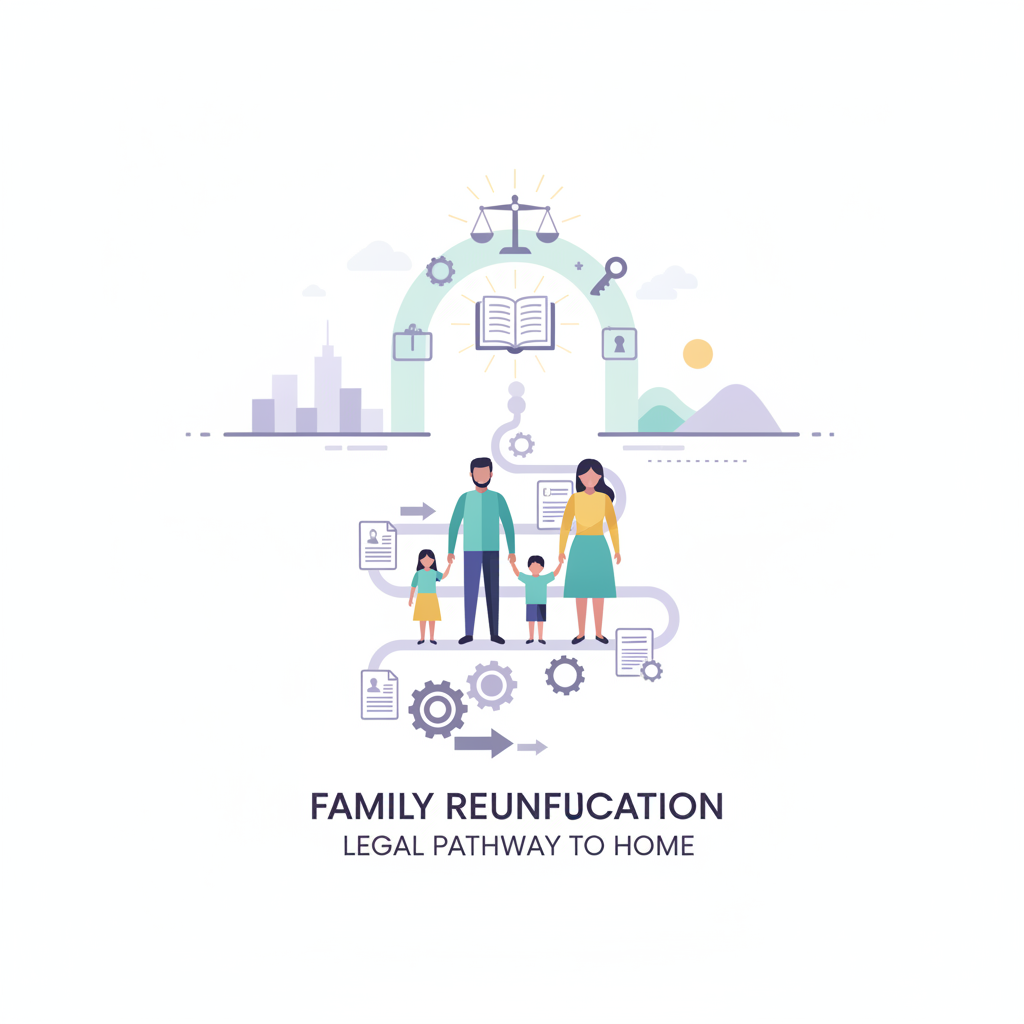
How to Petition for a Family Member: A Complete Step-by-Step Guide
The family-based immigration process can be lengthy and complex, but breaking it down into manageable steps makes it easier to understand. Here's a comprehensive guide:
1) Determine Eligibility and Category
Before filing anything, it's essential to confirm that a qualifying relationship exists and to identify the correct visa category. This step determines the forms you’ll file, the fees you’ll pay, and the potential waiting time.
Action:
- Petitioner Status: Are you a U.S. citizen or a lawful permanent resident? Your status dictates who you can petition for. U.S. citizens can petition for spouses, children, parents, and siblings. Lawful permanent residents can only petition for spouses and unmarried children.
- Relationship: What is your exact relationship to the beneficiary? (e.g., spouse, unmarried child under 21, married child, parent, sibling).
- Beneficiary's Current Location: Is the beneficiary currently in the U.S. or abroad? This will determine whether they pursue Adjustment of Status or Consular Processing later.
- Visa Category: Based on the above, identify if the beneficiary is an Immediate Relative (unlimited visas) or falls into a Preference Category (limited visas, subject to the Visa Bulletin).
Required Documents for Eligibility Assessment (for your records):
- Your (petitioner's) proof of U.S. citizenship (e.g., U.S. birth certificate, naturalization certificate, U.S. passport) or lawful permanent resident status (e.g., green card - Form I-551).
- Proof of your relationship to the beneficiary (e.g., beneficiary's birth certificate showing your name, marriage certificate, adoption decree).
- Any documents proving termination of prior marriages (divorce decrees, death certificates) for both petitioner and beneficiary, if applicable.
2) File Form I-130, Petition for Alien Relative
This is the crucial first step. The U.S. citizen or LPR petitioner files Form I-130 with USCIS to establish the legal family relationship. This form must be completed accurately and thoroughly, as errors can lead to delays or requests for evidence (RFEs).
Action:
- Complete Form I-130 carefully.
- Gather all supporting documentation as specified in the form instructions.
- Pay the filing fee.
- Mail the complete package to the correct USCIS lockbox facility. You can find filing addresses on the USCIS website for Form I-130.
Required Documents to Submit with Form I-130:
- Completed and signed Form I-130.
- Proof of U.S. citizenship or LPR status for the petitioner (copy of birth certificate, passport, naturalization certificate, or green card).
- Proof of relationship:
- For spouse: Marriage certificate, proof of bona fide marriage (e.g., joint bank statements, leases, photos, affidavits from friends/family).
- For child: Child's birth certificate showing parent's name.
- For parent: Petitioner's birth certificate showing parent's name.
- For sibling: Petitioner's and sibling's birth certificates showing common parent(s).
- Passport-style photos for both petitioner and beneficiary (if required by specific instructions for your filing location).
- Copy of beneficiary's birth certificate.
- Copies of all divorce decrees or death certificates for any prior marriages of both petitioner and beneficiary, if applicable.
- G-1145, E-Notification of Application/Petition Acceptance (optional, for email/text notifications).
- Appropriate filing fee (check USCIS website for current fees).
Important: Always make copies of everything you send to USCIS for your records.
3) Wait for USCIS Approval and Priority Date
After filing, USCIS will send a receipt notice (Form I-797C), acknowledging they received your petition. This notice contains your Priority Date. For Immediate Relatives, the wait is primarily for processing the petition. For Preference Categories, the wait can be significantly longer, depending on the beneficiary's country of origin and the specific category, as they must wait for a visa number to become available based on their priority date.
Action:
- Monitor your mail for notices from USCIS.
- Check USCIS Processing Times online using your receipt number for an estimate.
- For Preference Categories, regularly check the Visa Bulletin on the U.S. Department of State website to see when your priority date becomes current.
- Respond promptly to any Requests for Evidence (RFEs) from USCIS.
Reminder: If you move, promptly update your address with USCIS using Form AR-11 and online change of address tool.
4) Adjustment of Status (AOS) or Consular Processing
Once the Form I-130 is approved and a visa number is available (if applicable), the beneficiary can apply for their green card. The path depends on whether they are in the U.S. or abroad.
A) Adjustment of Status (for beneficiaries in the U.S.)
If the beneficiary is in the U.S. and eligible to adjust their status (e.g., they entered legally and are an Immediate Relative, or their priority date is current for a preference category), they will file Form I-485.
Action:
- File Form I-485, Application to Register Permanent Residence or Adjust Status.
- Simultaneously file Form I-765, Application for Employment Authorization (EAD) and Form I-131, Application for Travel Document (Advance Parole) if you wish to work and travel while your green card application is pending.
- Obtain a medical examination from a USCIS-approved civil surgeon (Form I-693).
- Gather all supporting documents.
- Pay filing fees.
- Mail the complete package to the correct USCIS lockbox.
Required Documents to Submit with Form I-485 (and concurrent filings):
- Completed and signed Form I-485, Form I-765, Form I-131.
- Copy of the Form I-797C approval notice for the Form I-130.
- Birth certificate of the beneficiary.
- Copy of passport pages with nonimmigrant visa and admission stamp (Form I-94 record).
- Two passport-style photos of the beneficiary.
- Medical examination report (Form I-693) in a sealed envelope.
- Form I-864, Affidavit of Support, from the petitioner (and any joint sponsor) with supporting financial documents (tax returns, W-2s, employment letters).
- Police clearances (if required).
- Certified translations for any foreign language documents.
- Appropriate filing fees.
B) Consular Processing (for beneficiaries outside the U.S. or ineligible for AOS)
If the beneficiary is outside the U.S. or cannot adjust status, their case will be handled by the National Visa Center (NVC) and a U.S. embassy or consulate abroad.
Action:
- Once USCIS approves the Form I-130, they forward it to the National Visa Center (NVC).
- The NVC will instruct the petitioner and beneficiary to pay fees, submit the Affidavit of Support (Form I-864) and supporting financial documents, and submit civil documents (birth certificates, marriage certificates, police certificates) through the Consular Electronic Application Center (CEAC).
- Once all documents are accepted and a visa number is available, the NVC will schedule an interview at the appropriate U.S. embassy or consulate.
Required Documents for NVC Stage (submitted digitally):
- Scanned copies of all civil documents (birth certificates, marriage certificates, police certificates, etc.).
- Completed DS-260, Immigrant Visa Application.
- Form I-864, Affidavit of Support, with financial evidence.
- Petitioner's proof of U.S. citizenship or LPR status.
5) Attend Interviews (if required)
Most family-based green card applicants will have an interview. For Adjustment of Status, this happens at a USCIS Field Office (like the Orlando USCIS Field Office). For Consular Processing, it's at a U.S. embassy or consulate abroad.
Action:
- Prepare thoroughly for the interview. Review all submitted forms and documents.
- Gather all original documents (even if you submitted copies) to bring to the interview.
- Be truthful and consistent in your answers.
- For spousal petitions, be prepared to answer questions about the bona fides of your marriage.
Required Documents to Bring to Interview:
- Interview appointment notice.
- Originals of all documents previously submitted (birth certificates, marriage certificates, passports, divorce decrees, etc.).
- New passport-style photos.
- Any updated financial documents (pay stubs, employment letters).
- For spousal petitions, additional evidence of a bona fide marriage (e.g., joint utility bills, bank statements, photos, children's birth certificates).
- Medical exam results (


