


The journey to unite families across borders is a cornerstone of U.S. immigration law. For countless individuals in Orlando, throughout Florida, and nationwide, the dream of bringing loved ones to the United States is deeply personal and incredibly significant. At Imigrar, we understand that desire to "Keep Families Together" isn't just a tagline—it's the driving force behind everything we do.
Navigating the intricacies of family-based immigration petitions can feel overwhelming. With ever-evolving policies, complex forms, and lengthy waiting periods, it’s easy to feel lost. This comprehensive guide aims to demystify the process, offering clear, actionable steps and expert insights to help you and your family on this vital journey.
The reporting that sparked this guide
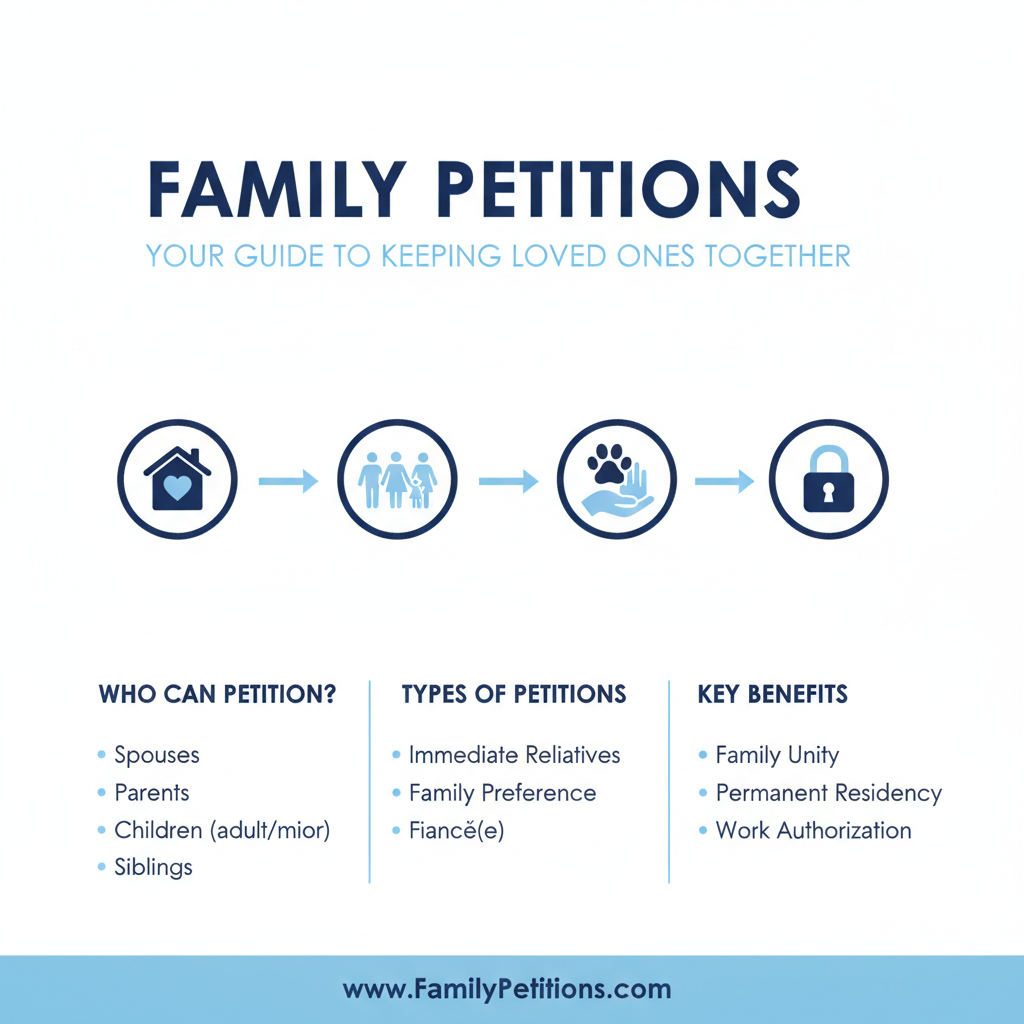
Family-Based Immigration Petition Guide (Immigration)
What This News Means for Immigrants in Orlando and Across Florida
Recent discussions and news coverage around immigration law consistently highlight the importance and often the challenges of family-based petitions. For many, the ability to sponsor a spouse, child, parent, or sibling is the primary path to legal residency in the United States. Understanding the current landscape is crucial for anyone considering this path.
Why this news is showing up now
The topic of family-based immigration is perennially newsworthy for several reasons. Firstly, it represents the largest category of legal immigration to the United States, meaning millions of individuals are directly impacted. Secondly, processing times for these petitions can be extensive, often leading to public discourse about efficiency and backlogs. Economic and social shifts, global events, and changes in presidential administrations frequently trigger policy reviews, debates, and adjustments that directly affect family immigration. For instance, recent administrations have often focused on either streamlining family reunification or, conversely, tightening eligibility requirements, keeping the topic in the spotlight. Furthermore, the ongoing recovery and adjustments post-pandemic have significantly impacted USCIS operations, leading to discussions about processing backlogs and digital transformation efforts. These factors combined mean that families are constantly seeking up-to-date information, making comprehensive guides like this more vital than ever.
How it can affect Florida residents
Florida, with its incredibly diverse population and vibrant immigrant communities, is particularly affected by developments in family-based immigration. Central Florida, including Orlando and surrounding Orange County, is a melting pot where families from Latin America, the Caribbean, Europe, and Asia have established deep roots. News about changes to visa availability, processing times, or legal requirements directly impacts thousands of families living along the I-4 corridor and throughout the state. For instance, if visa bulletins show retrogression for certain countries, it can add years to the wait for a family member in Miami, Tampa, or Orlando. The Orlando USCIS Field Office is a key touchpoint for many local applicants undergoing interviews for Adjustment of Status. Understanding the current legal framework and potential changes allows Florida residents to plan more effectively, gather necessary documents, and seek timely legal counsel. The state's large immigrant population also means a higher demand for family-based services, making it imperative for local residents to be well-informed and prepared for potential delays or specific regional processing nuances.
Need Help? Our Orlando immigration team is ready to assist. Call +1 786-791-3106 for a free consultation, or message us online. Se Habla Español.
What Family-Based Immigration Is (and Why It Matters)
Family-based immigration is a pathway for U.S. citizens and lawful permanent residents (green card holders) to sponsor certain eligible family members to come to or remain in the United States permanently. It is founded on the principle of family reunification, a core tenet of U.S. immigration policy, aiming to "Keep Families Together."
A plain-English definition
Simply put, family-based immigration is the process by which a person who is already a U.S. citizen or a permanent resident (someone with a green card) can ask the U.S. government to allow certain relatives to get a green card themselves. This allows family members to live, work, and study permanently in the United States. It's the primary way for families to legally reunite and build new lives together in America.
Key terms you need to know
Understanding the following terms is essential for navigating the family petition process:
- Petitioner: The U.S. citizen or lawful permanent resident who files the immigration petition on behalf of a family member.
- Beneficiary: The foreign national family member for whom the petition is filed, seeking to immigrate to the U.S.
- Immediate Relative: This is a special category for spouses of U.S. citizens, unmarried children under 21 of U.S. citizens, and parents of U.S. citizens (if the citizen is 21 or older). There are an unlimited number of visas available for Immediate Relatives, meaning they do not have to wait for a visa number to become available, only for processing.
- Preference Categories: These are other family relationships that are subject to annual visa limits and often involve waiting periods.
- First Preference (F1): Unmarried sons and daughters (21 years of age and older) of U.S. citizens.
- Second Preference (F2): Spouses and children (unmarried, under 21) of lawful permanent residents, and unmarried sons and daughters (21 years of age and older) of lawful permanent residents. (Divided into F2A for spouses/children under 21, and F2B for unmarried sons/daughters 21 and older).
- Third Preference (F3): Married sons and daughters of U.S. citizens.
- Fourth Preference (F4): Brothers and sisters of U.S. citizens (if the citizen is 21 years of age or older).
- Priority Date: The date USCIS receives your properly filed Form I-130 petition. This date determines your place in the visa queue for preference categories. Your visa number becomes available when your priority date is "current" according to the U.S. Department of State's Visa Bulletin.
- Adjustment of Status (AOS): The process of applying for a green card while physically present in the United States. This is typically done by filing Form I-485.
- Consular Processing: The process of applying for an immigrant visa at a U.S. embassy or consulate abroad. This is for beneficiaries who are outside the U.S. or ineligible for Adjustment of Status.
- Affidavit of Support (Form I-864): A legally binding document signed by the petitioner (and sometimes a joint sponsor) to demonstrate that the beneficiary will not become a public charge in the U.S.
Current Immigration Law: The Foundation for Family Petitions
Family-based immigration is primarily governed by the Immigration and Nationality Act (INA). Specific sections of the INA, such as INA § 201 and INA § 203, define who is eligible to sponsor and be sponsored, as well as the annual numerical limits for various family preference categories.
Federal requirements
To successfully navigate the family-based immigration process, both the petitioner and the beneficiary must meet specific federal requirements:
- Petitioner Requirements:
- Must be a U.S. citizen or a lawful permanent resident (green card holder).
- Must be able to prove a qualifying relationship with the beneficiary (e.g., marriage certificate, birth certificate).
- Must be at least 18 years old to file the Form I-130 and at least 21 years old to sponsor a parent or sibling.
- Must have a domicile in the United States or intend to establish one by the time the beneficiary immigrates.
- Must meet specific income requirements, typically 125% of the federal poverty guidelines for their household size, by filing Form I-864, Affidavit of Support. If the petitioner's income is insufficient, a joint sponsor may be required.
- Beneficiary Requirements:
- Must be a qualifying family member (spouse, child, parent, sibling) as defined by the INA.
- Must not be inadmissible to the U.S. on grounds such as health, criminal history, security, or public charge. Waivers may be available for certain grounds of inadmissibility.
- Must undergo medical examinations and background checks.
The primary form for initiating this process is Form I-130, Petition for Alien Relative. This form establishes the qualifying relationship between the petitioner and the beneficiary. For beneficiaries already in the U.S. seeking Adjustment of Status, Form I-485, Application to Register Permanent Residence or Adjust Status, is crucial. For those abroad, the process involves the U.S. Department of State and forms like Form DS-260, Immigrant Visa Application.
Florida-specific considerations
While immigration law is federal, certain aspects can have local relevance. For Central Florida residents, understanding the specific procedures and potential waiting times at the Orlando USCIS Field Office is important for those undergoing Adjustment of Status. This office handles interviews for green card applicants residing in the region. Additionally, Florida's diverse population means that issues related to language (Imigrar is proud to offer services in English and Spanish, Se Habla Español), cultural nuances, and document authentication for foreign records are common. Local support networks and community resources in Orange County can also play a role in assisting families throughout their immigration journey. Staying informed about local USCIS office updates and processing trends can be beneficial, though the overall federal regulations remain paramount.
Need Help? Our Orlando immigration team is ready to assist. Call +1 786-791-3106 for a free consultation, or message us online. Se Habla Español.
How to File a Family-Based Immigration Petition: A Complete Step-by-Step Guide
Filing a family-based immigration petition involves several critical stages, each requiring meticulous attention to detail and adherence to USCIS guidelines. Here's a comprehensive breakdown:
1) Determine Eligibility and Gather Initial Documents
The very first step is to confirm that both the petitioner and beneficiary meet the eligibility criteria for family-based immigration. This includes verifying the petitioner's status (U.S. citizen or LPR) and the qualifying relationship.
Action: Identify the correct visa category (Immediate Relative vs. Preference Category) based on the relationship.
Required Documents:
- For Petitioner:
- Proof of U.S. Citizenship (U.S. birth certificate, passport, naturalization certificate) OR Proof of Lawful Permanent Residence (green card copy, I-551 stamp).
- Proof of age (if sponsoring parents/siblings, petitioner must be 21+).
- For Relationship:
- Marriage Certificate (for spouses).
- Birth Certificate (for parents/children, showing parent-child relationship).
- Divorce decrees or death certificates for any prior marriages of both petitioner and beneficiary.
- Passport photos of both petitioner and beneficiary.
2) File Form I-130, Petition for Alien Relative
This is the foundational step where the U.S. citizen or LPR formally asks USCIS to recognize their familial relationship with the beneficiary.
Action: Complete Form I-130 accurately and thoroughly. Attach all supporting documents and pay the filing fee.
Required Documents:
- Completed and signed Form I-130.
- Copy of petitioner's proof of U.S. citizenship or LPR status (e.g., U.S. passport, birth certificate, green card).
- Proof of qualifying relationship (e.g., marriage certificate, birth certificate).
- Passport-style photos of both petitioner and beneficiary.
- Any required supporting evidence, such as joint financial documents, photos, or affidavits for spousal petitions to prove a bona fide marriage.
- Payment for the current USCIS filing fee for Form I-130.
3) Wait for USCIS Approval and Priority Date to Become Current (for Preference Categories)
After filing Form I-130, USCIS will review your petition. If approved, they will send an approval notice (Form I-797). For Immediate Relatives, the process moves forward without visa wait times. For Preference Categories, this is where the Priority Date becomes critical.
Action: Monitor the U.S. Department of State's Visa Bulletin monthly to see when your Priority Date becomes "current" for your specific category and country of chargeability.
Timeline Expectation: Processing times for Form I-130 vary significantly (check USCIS Processing Times). Once approved, Immediate Relatives can proceed. Preference Categories might wait years or even decades depending on the category and country of origin.
4) Choose Your Path: Adjustment of Status or Consular Processing
Once the Form I-130 is approved and a visa is available (if applicable), the beneficiary can apply for a green card. The path depends on whether they are in the U.S. or abroad.
Action for Adjustment of Status (Beneficiary in U.S.):
- File Form I-485, Application to Register Permanent Residence or Adjust Status.
- File Form I-765, Application for Employment Authorization (optional, allows work permit while pending).
- File Form I-131, Application for Travel Document (optional, allows travel while pending, also known as Advance Parole).
- File Form I-864, Affidavit of Support, from the petitioner.
- Undergo a medical examination by a USCIS-approved civil surgeon.
- The approved Form I-130 is sent to the National Visa Center (NVC).
- NVC will send instructions to pay fees and submit required documents, including Form DS-260, Immigrant Visa Application.
- The petitioner files Form I-864, Affidavit of Support, with the NVC.
- Birth certificates, marriage certificates, divorce decrees (as applicable).
- Police certificates from countries lived in (for Consular Processing).
- Passport copies.
- Financial documents (tax transcripts, employment letters, pay stubs) for Form I-864.
- Medical exam results (for AOS) or instructions for medical exam abroad (for Consular).
- Passport-style photos.
5) Attend Interviews and Submit Biometrics
This is a crucial stage where USCIS or the Consulate verifies the information provided and assesses admissibility.
Action for Adjustment of Status:
- Attend a biometrics appointment to provide fingerprints, photos, and signature.
- Attend an interview at a USCIS Field Office (e.g., the Orlando USCIS Field Office). Both petitioner and beneficiary typically attend, especially for marriage-based cases.
- Attend a medical examination with a panel physician in the country of residence.
- Attend an interview at the U.S. Embassy or Consulate in the beneficiary's home country.
6) Receive Your Green Card and Welcome to Permanent Residency
If all goes well after the interview, the final step is receiving your green card.
Action for Adjustment of Status:
- If approved, USCIS will mail the green card to the beneficiary's U.S. address.
- If approved, the immigrant visa will be stamped in the beneficiary's passport. They will then travel to the U.S., be admitted as a permanent resident, and the green card will be mailed to their U.S. address.
Need Help? Our Orlando immigration team is ready to assist. Call +1 786-791-3106 for a free consultation, or message us online. Se Habla Español.
Practical Steps You Can Take Today
Starting the family immigration process can feel daunting, but proactive preparation can significantly smooth the path. Here are practical steps you can take right now:
- Verify Eligibility: Double-check the relationship and petitioner's status against USCIS guidelines. Ensure the relationship truly qualifies for family-based immigration. This includes confirming the petitioner is a U.S. citizen or LPR and that the relationship fits one of the immediate relative or preference categories.
- Gather Essential Documents: Start collecting all birth certificates, marriage certificates, divorce decrees, passports, and any other identity or relationship documents for both the petitioner and beneficiary. Ensure they are originals or certified copies. For Central Florida residents, local records offices can help with obtaining certified copies of documents issued in the U.S.
- Obtain Certified Translations: If any document is not in English, get it translated by a certified translator. The translation must include a statement from the translator certifying their competence and the accuracy of the translation.
- Assess Financial Readiness: Review the petitioner's income to determine if they meet the 125% federal poverty guideline requirement for Form I-864, Affidavit of Support. If not, identify a potential joint sponsor early. Gather tax returns (past three years), employment verification letters, and pay stubs.
- Research Processing Times: Visit the USCIS Processing Times page to get a realistic expectation of how long your specific petition and application might take. This helps manage expectations for both the petitioner in Orlando and the beneficiary abroad.
- Organize Your Records: Create a well-organized system for all your documents. Keep copies of everything you submit to USCIS or the NVC. A binder or digital folder system can save immense stress.
- Seek Legal Counsel: This is arguably the most crucial step. An experienced immigration attorney can review your specific situation, identify potential challenges, ensure all forms are correctly filled, and represent you throughout the process. An initial consultation can provide invaluable peace of mind and direction.
Document preparation guidance
- Originals vs. Copies: Generally, USCIS requires copies of documents unless specifically requested otherwise. Keep your original documents safe. If an original is requested (e.g., at an interview), be prepared to present it.
- Clarity and Legibility: Ensure all copies are clear and legible. Illegible documents can cause delays or even denials.
- Consistent Information: All names, birth dates, and other identifying information across all documents should be consistent. Discrepancies can raise red flags.
- Photos: Follow USCIS specifications for passport-style photos precisely. Incorrect photos are a common reason for RFEs (Requests for Evidence).
- Affidavits: If using affidavits (e.g., to prove a bona fide marriage or birth), ensure they are detailed, notarized, and include the affiant's contact information.
Timeline expectations
The timeline for family-based immigration varies drastically based on the relationship category, the beneficiary's country of origin, and the specific USCIS service center or consulate handling the case.
- Immediate Relatives (Spouses, unmarried children under 21, parents of U.S. citizens): These cases generally have the shortest processing times because there are no annual visa limits. The main wait is for USCIS to process Form I-130 and subsequently Form I-485 or the consular processing steps. This could range from 12-24 months in total, though individual components vary.
- Preference Categories (F1, F2A, F2B, F3, F4): These categories are subject to annual visa limits, meaning there can be significant waiting periods (years, sometimes over a decade) after the Form I-130 is approved until a visa number becomes available. The Visa Bulletin dictates these waiting times.
How Imigrar Helps Immigrants in Orlando and Beyond
At Imigrar, we are dedicated to "Keeping Families Together." We understand the emotional weight and legal complexities involved in family-based immigration. Our team of expert immigration attorneys provides comprehensive support to clients in Orlando, across Florida, and nationwide.
Our Experience and Expertise:
- In-depth Knowledge: Our attorneys possess extensive knowledge of the Immigration and Nationality Act and stay current with all changes in immigration law and policy.
- Personalized Strategy: We don't believe in one-size-fits-all solutions. We meticulously review your family's unique situation to develop a tailored strategy that maximizes your chances of success.
- Comprehensive Case Management: From preparing and filing Form I-130, Form I-485, and Form I-864, to representing you at USCIS interviews at the Orlando USCIS Field Office or guiding you through consular processing, we handle every aspect of your case.
- Responsive Communication: We keep you informed at every stage, explaining complex legal terms in plain English and addressing your concerns promptly.
- Multilingual Support: We proudly offer services in both English and Spanish, ensuring clear communication for our diverse clientele. Se Habla Español.
Whether you're starting the process of sponsoring a spouse, child, parent, or sibling, or you're facing challenges with an existing petition, Imigrar is here to provide the compassionate and effective legal representation you need. Our goal is to alleviate your stress and ensure your family's immigration journey is as smooth as possible.
We invite you to reach out and discover how our dedicated team can assist you.

Frequently Asked Questions About Family-Based Immigration
Q: Who can sponsor a family member for a green card?
A: Only U.S. citizens and lawful permanent residents (green card holders) can sponsor family members for green cards. U.S. citizens can sponsor their spouses, unmarried children under 21, married children of any age, parents (if the U.S. citizen is 21 or older), and siblings (if the U.S. citizen is 21 or older). Lawful permanent residents can sponsor their spouses and unmarried children of any age.
Q: What is the difference between an "Immediate Relative" and a "Preference Category" visa?
A: Immediate Relatives (spouses, unmarried children under 21, and parents of U.S. citizens) have an unlimited number of visas available each year, meaning they do not have to wait for a visa number to become current once their petition is approved. Preference Categories (unmarried adult children of U.S. citizens, spouses and unmarried children of LPRs, married children of U.S. citizens, and siblings of U.S. citizens) are subject to annual numerical limits, which often results in significant waiting periods, sometimes many years, until a visa number becomes available based on their Priority Date and the Visa Bulletin.
Q: How long does the family-based immigration process take?
A: The timeline varies greatly. For Immediate Relatives, it can take 12-24 months from filing the initial Form I-130 to receiving the green card, depending on processing times at USCIS or the consulate. For Preference Categories, the total time can range from a few years to over a decade, as it includes the Form I-130 processing plus the waiting period for a visa number to become current. You can check current estimates on the
You may also be interested in: Prepare confidently for your Green Card interview in 2026 with Imigrar's expert guide. Learn what to expect, gather documents, and avoid common mistak... Understand the critical H-1B visa lottery changes for FY2027 and how they impact employers and beneficiaries. Imigrar guides you through the new benef... Navigate family-based immigration petitions in 2026 with Imigrar's expert guide. Learn about eligibility, forms, timelines, and how to keep your famil... Stay informed on DACA updates and the renewal process for 2026. This guide provides step-by-step instructions, legal insights, and practical advice fo...Related Articles


