


Securing a green card, officially known as a Permanent Resident Card, is a monumental step on the journey to living permanently in the United States. For many, this process culminates in a crucial step: the green card interview. This interview is your opportunity to demonstrate your eligibility and provide clarity on your application to a U.S. Citizenship and Immigration Services (USCIS) officer. While it can feel daunting, with proper preparation, you can approach it with confidence.
At Imigrar, our mission is to "Keep Families Together," and we understand the importance of every stage of the immigration process. This comprehensive guide is designed to demystify the green card interview, providing you with the knowledge and tools you need for a successful outcome, particularly if you're navigating this process in Orlando or anywhere across Florida.
Need Help? Our Orlando immigration team is ready to assist. Call +1 786-791-3106 for a free consultation, or message us online. Se Habla Español.
The reporting that sparked this guide
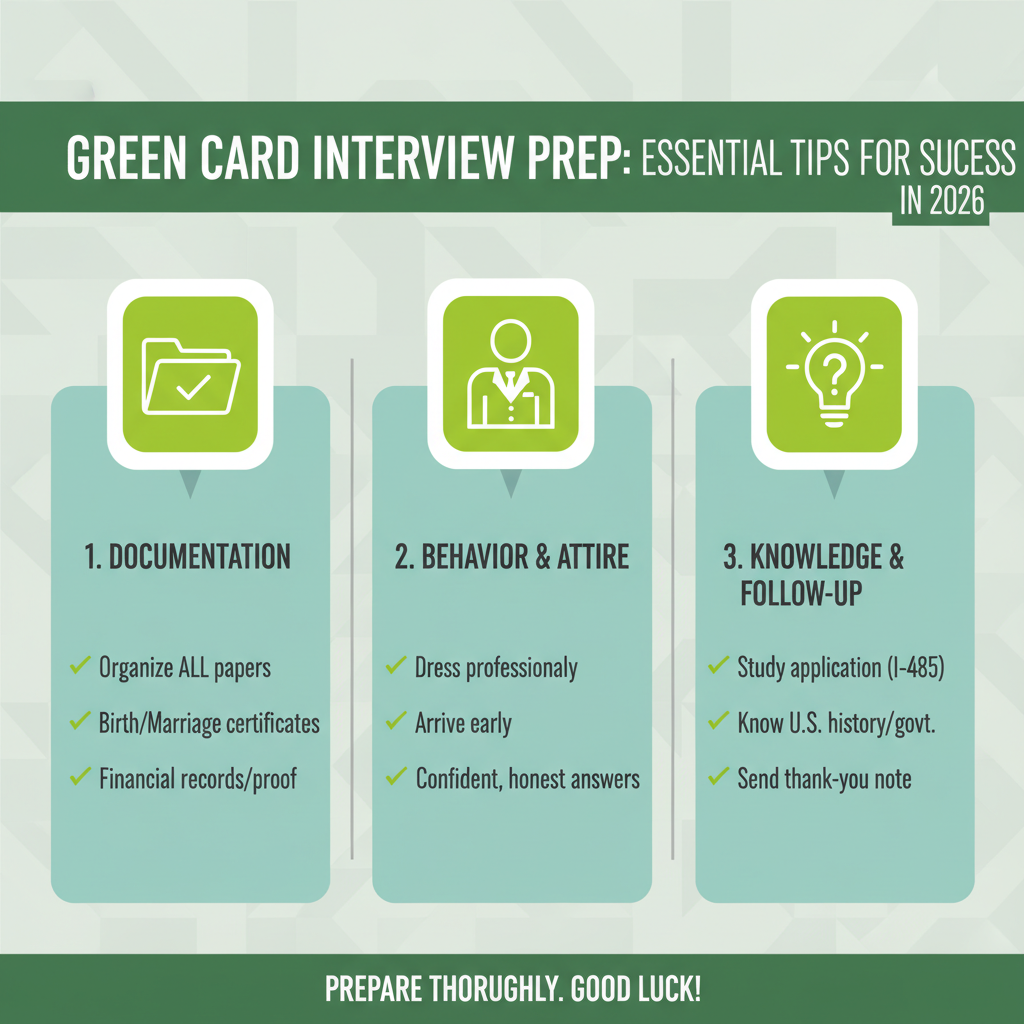
The continuous flow of information and updates regarding immigration law, particularly those pertaining to the final stages of the green card application, consistently highlights the importance of thorough preparation for the interview phase. Recent discussions across various immigration law platforms emphasize the need for applicants to be well-versed in their own cases, understand the legal requirements, and present themselves professionally. This ongoing focus on interview readiness underscores its critical role in the Adjustment of Status process.
Green Card Interview Preparation Tips (Immigration Law)
What This News Means for Immigrants in Orlando and Across Florida
For immigrants residing in Orlando, Central Florida, and throughout the Sunshine State, the consistent emphasis on green card interview preparation is a vital signal. It means that while the fundamental legal framework for obtaining a green card remains stable, the practical execution of your application – specifically your interview – continues to be a key determinant of success. This isn't just bureaucratic red tape; it's a deeply personal and often life-changing event.
Why this news is showing up now
The focus on green card interview preparation is perennially relevant, but it often gains renewed attention due to several factors. As of 2026, USCIS continues to streamline processes while simultaneously enhancing the scrutiny of applications to maintain the integrity of the immigration system. With evolving digital systems and a persistent backlog in some visa categories, ensuring that interviews are conducted efficiently and effectively is paramount. This means officers are often looking for clear, consistent information, making your preparation even more critical. The news cycles frequently reflect updates from USCIS regarding processing times, interview protocols, and fraud prevention measures, all of which indirectly highlight the importance of being well-prepared.
Furthermore, as new policies are implemented or refined, even minor changes in the interpretation of regulations can impact how interviews are conducted. Staying informed and prepared helps applicants adapt to any such nuances, ensuring they meet the current expectations of immigration officers. The increasing complexity of international relationships and security concerns also contributes to the rigorous nature of these interviews, making preparation an evergreen topic of discussion in immigration law circles.
How it can affect Florida residents
For individuals and families in Florida, particularly those within the jurisdiction of the Orlando USCIS Field Office (serving Orange County and surrounding areas along the I-4 corridor), this emphasis translates into direct action. Your green card interview will likely take place at the USCIS Orlando Field Office. This means:
- Local Procedures: While federal law governs the process, individual field offices can have slight variations in their operational procedures or typical interview styles. Being prepared for a direct, thorough examination of your case is crucial.
- High Volume: Florida is a major hub for immigrants, meaning USCIS offices handle a significant volume of cases. Efficiency is key, and a well-prepared applicant can help ensure their interview proceeds smoothly without unnecessary delays.
- Diverse Caseloads: The Orlando office processes a wide array of green card applications, from family-based petitions to employment-based adjustments. Regardless of your specific category, the need for meticulous preparation remains constant.
- Timelines: Understanding the current USCIS processing times, especially for the Orlando Field Office, is essential for managing expectations. While preparation won't necessarily speed up your case, it will prevent avoidable delays due to unpreparedness. You can check current processing times at USCIS Processing Times.
Being prepared means you can confidently answer questions specific to your application, present all necessary documents, and address any potential concerns an officer might have. For Central Florida residents, leveraging local legal expertise, such as that offered by Imigrar, can provide invaluable insight into local practices and ensure your preparation is tailored to your specific circumstances.
What Green Card Interviews Are (and Why They Matter)
The green card interview is a mandatory step for most individuals applying for permanent residency in the United States, whether through Adjustment of Status (if you are already in the U.S.) or Consular Processing (if you are applying from abroad). It is a face-to-face meeting with a USCIS officer (for Adjustment of Status) or a Consular Officer (for Consular Processing) who will review your application, verify the information you've provided, and assess your eligibility for a green card.
A plain-English definition
Think of the green card interview as your final exam for permanent residency. It’s a formal conversation where an immigration officer asks you questions about your application, your background, and your relationship (if applicable) to make sure everything you've submitted is true and accurate, and that you meet all the legal requirements to become a lawful permanent resident of the United States. It’s designed to confirm your identity, verify the facts, and ensure you are not inadmissible under U.S. immigration law.
For family-based petitions, especially marriage-based green cards, the interview is also a crucial opportunity for the officer to determine the bona fides (genuineness) of the relationship. They want to ensure the marriage is real and not just entered into for immigration purposes.
Key terms you need to know
Understanding these terms will help you navigate the green card process with greater clarity:
- Adjustment of Status (AOS): The process of applying for lawful permanent resident status (a green card) while physically present in the United States. This is the pathway that typically leads to an interview at a USCIS Field Office like the one in Orlando.
- Consular Processing: The process of applying for an immigrant visa at a U.S. embassy or consulate abroad, typically in your home country, to come to the U.S. as a permanent resident.
- USCIS (U.S. Citizenship and Immigration Services): The government agency responsible for administering the country's lawful immigration system, including green card applications and interviews within the U.S.
- Immigrant Visa: A visa issued to foreign nationals who intend to live permanently in the United States. Upon arrival in the U.S. with an immigrant visa, you become a permanent resident.
- Petitioner: The U.S. citizen or lawful permanent resident who files an immigrant petition (e.g., Form I-130, Petition for Alien Relative) on behalf of an eligible foreign national.
- Beneficiary: The foreign national seeking a green card through the petition filed by the petitioner.
- Affidavit of Support (Form I-864): A legally binding document signed by a petitioner (sponsor) to accept financial responsibility for the beneficiary, ensuring they will not become a public charge. This is a critical document for most family-based green card applications.
- Public Charge: A term in immigration law referring to an individual who is primarily dependent on the government for subsistence, as demonstrated by the receipt of public cash assistance for income maintenance or long-term institutionalization at government expense.
- Priority Date: The date your immigrant petition (e.g., Form I-130) was properly filed with USCIS. This date determines your place in the visa queue for numerically limited categories.
- Inadmissibility: Grounds under U.S. immigration law that can prevent someone from entering or remaining in the U.S. (e.g., certain criminal convictions, health issues, prior immigration violations).
Understanding these terms is fundamental to comprehending the legal framework surrounding your green card interview and the questions you might face. It empowers you to engage more effectively with your attorney and the immigration process itself.
Need Help? Our Orlando immigration team is ready to assist. Call +1 786-791-3106 for a free consultation, or message us online. Se Habla Español.
Current Immigration Law: The Foundation
The green card interview and the entire process of obtaining permanent residency are firmly rooted in the Immigration and Nationality Act (INA), the primary body of U.S. immigration law. Understanding the legal framework is crucial for appreciating why certain questions are asked and why specific documents are required.
Federal requirements
The main federal statute governing Adjustment of Status is Section 245 of the Immigration and Nationality Act (INA § 245), which allows certain eligible foreign nationals to apply for lawful permanent resident status without having to leave the United States. For those undergoing Consular Processing, the relevant sections are primarily INA § 201-204 concerning immigrant visas and petitions, and INA § 212 regarding grounds of inadmissibility.
Key federal requirements across all green card categories include:
- Eligibility: You must be eligible for a specific immigrant visa category (e.g., immediate relative of a U.S. citizen, family preference category, employment-based, diversity visa).
- Admissibility: You must not be inadmissible to the U.S. under any grounds specified in INA § 212. These grounds can include health-related issues, criminal history, security concerns, public charge concerns, and prior immigration violations.
- Properly Filed Forms: All required forms must be accurately completed and filed. For Adjustment of Status, these typically include:
- Form I-130, Petition for Alien Relative (filed by the U.S. citizen or LPR petitioner).
- Form I-485, Application to Register Permanent Residence or Adjust Status (filed by the beneficiary).
- Form I-864, Affidavit of Support (filed by the petitioner/sponsor).
- Form I-693, Report of Medical Examination and Vaccination Record (completed by a USCIS-approved civil surgeon).
- Form I-765, Application for Employment Authorization (optional, for work permit while AOS is pending).
- Form I-131, Application for Travel Document (optional, for advance parole while AOS is pending).
- Interview: Most applicants for Adjustment of Status and all applicants for Consular Processing are required to attend an interview. The purpose is to verify facts, clarify discrepancies, and ensure the applicant meets all statutory requirements.
Florida-specific considerations
While the federal laws are uniform across the nation, their application can involve specific considerations depending on your location. For immigrants in Florida, particularly those in the Orlando area, your Adjustment of Status interview will be conducted at the USCIS Orlando Field Office. This office serves a large geographical area, including Orange County, Seminole County, Volusia County, and other Central Florida regions.
- Jurisdiction: If you reside in Central Florida, your case will fall under the jurisdiction of the Orlando Field Office. It's important to ensure your mailing address with USCIS is current to receive all correspondence, including your interview notice.
- Local Legal Counsel: Having an attorney familiar with the practices of the Orlando Field Office can be a significant advantage. While officers follow federal guidelines, attorneys with local experience can offer insights into common questions, procedural nuances, and the general atmosphere of interviews conducted in Orlando.
- Resources: Organizations and legal firms like Imigrar, based in Orlando, are well-positioned to assist local residents with their green card applications and interview preparation, offering support in both English and Spanish.
The interview is a critical juncture where the officer evaluates your credibility, the consistency of your statements with your application, and the authenticity of your relationship (for marriage-based cases). Therefore, a thorough understanding of the law and meticulous preparation are not just recommended, but essential.
Need Help? Our Orlando immigration team is ready to assist. Call +1 786-791-3106 for a free consultation, or message us online. Se Habla Español.
How to Prepare for Your Green Card Interview: A Complete Step-by-Step Guide
Preparing for your green card interview can feel overwhelming, but breaking it down into manageable steps makes the process clearer and less stressful. This guide provides a comprehensive roadmap for success.
1) Understand Your Case and Application
Before anything else, you must thoroughly understand every detail of your own application. The officer will have your entire file in front of them, and your answers must be consistent with what you've submitted.
- Review All Submitted Forms: Read through every form you submitted (Form I-130, Form I-485, Form I-864, etc.) and all supporting documents. Pay attention to dates, addresses, employment history, and any questions you answered.
- Know Your Personal History: Be prepared to discuss your immigration history, travel history, employment, education, and family background.
- For Marriage-Based Cases: Understand the timeline of your relationship, how you met, important dates (first date, proposal, marriage), shared living arrangements, and joint financial responsibilities.
- Consult with Your Attorney: Your Imigrar attorney will review your entire case with you, highlighting potential areas of inquiry and ensuring you understand the legal basis of your petition.
Required Documents for this Step (for review):
- Copies of all forms previously submitted to USCIS (Form I-130, Form I-485, Form I-864, etc.)
- Copies of all supporting documents (birth certificates, marriage certificates, divorce decrees, passports, previous visa stamps, etc.)
2) Gather and Organize All Documents
This is arguably the most critical practical step. The officer will expect you to have all original documents and copies readily available. Create an organized folder or binder.
- Originals and Copies: Bring all original documents you submitted copies of, plus new copies of everything. The officer may keep the copies.
- Birth Certificates: Your original birth certificate and your petitioner's (if applicable).
- Marriage Certificate: Original marriage certificate (if applicable).
- Divorce Decrees/Death Certificates: Originals for any previous marriages of either spouse.
- Passports and Travel Documents: All current and expired passports, U.S. visas, I-94 records.
- Medical Exam (Form I-693): If not already submitted, bring the sealed envelope from the civil surgeon. Do NOT open it.
- Affidavit of Support (Form I-864) Evidence:
- Petitioner's most recent federal income tax returns (e.g., Form 1040 and all W-2s/1099s for the last 3 years).
- Employment verification letter from petitioner's employer.
- Recent pay stubs.
- Evidence of assets (bank statements, property deeds, etc.) if income alone isn't sufficient.
- Evidence of Bona Fide Marriage (for marriage-based cases): This is crucial. Bring as much evidence as possible to prove your marriage is real.
- Joint bank accounts statements.
- Joint lease agreements or mortgage statements.
- Joint utility bills.
- Joint health, life, or auto insurance policies.
- Birth certificates of any children you have together.
- Photos of your wedding, family gatherings, vacations together.
- Affidavits from friends/family attesting to your relationship.
- Credit card statements with both names.
- Tickets from trips taken together.
- Correspondence (emails, texts, social media posts) showing interaction.
- Police Records/Court Documents: If you have any criminal history, bring certified copies of all arrest records, court dispositions, and sentencing documents. Even minor infractions should be disclosed.
- Translations: Any documents not in English must be accompanied by a certified English translation.
- Interview Notice: The official letter from USCIS scheduling your interview.
Important: Organize your documents logically, perhaps in the order they appear on your forms or by category (personal, financial, relationship). Use tabs to make it easy to find specific documents quickly.
3) Practice Answering Questions
Rehearsing answers will help you feel more confident and ensure your responses are clear and concise. While you shouldn't memorize answers verbatim, be prepared to discuss common topics.
- Common Questions:
- "Why are you seeking a green card?"
- "How did you meet your spouse?" (for marriage-based)
- "When and where did you get married?"
- "Describe your current living situation."
- "What is your employment history?"
- "Have you ever been arrested or convicted of a crime?"
- "Have you ever violated immigration laws?"
- "What is your spouse's date of birth/parents' names?" (for marriage-based)
- "Do you have any children?"
- Mock Interview: Ask a trusted friend, family member, or your attorney to conduct a mock interview. This can help identify areas where you might hesitate or need to clarify information.
- Be Honest and Consistent: Always tell the truth. Inconsistencies between your testimony and your application can raise red flags. If you don't remember a specific detail, it's okay to say so.
- Clarify if Unsure: If you don't understand a question, politely ask the officer to repeat or rephrase it.
Reminder: For marriage-based interviews, the officer may separate you and your spouse to ask similar questions. Your answers should align on key facts.
4) Prepare for the Interview Day Logistics
Knowing the practical details of the interview day reduces stress.
- Location: Confirm the address of the USCIS Field Office (e.g., Orlando Field Office).
- Parking and Transportation: Plan your route, parking options, and travel time. Aim to arrive at least 30-45 minutes early.
- Security: Be aware of security procedures at the USCIS office. You will go through metal detectors, and certain items (like weapons, large bags) are prohibited.
- Accompanying Persons: Only the applicant(s), petitioner (if applicable), and your attorney are typically allowed into the interview room. Family members or friends may wait in the waiting area.
- Interpreter: If you are not fluent in English, you may bring your own interpreter (not the petitioner) or request one from USCIS in advance. Imigrar can help arrange this, or our bilingual attorneys can translate during the interview.
5) Dress Appropriately and Be Punctual
First impressions matter, and professionalism reflects your respect for the process.
- Dress Code: Dress in neat, conservative business attire, similar to what you would wear for a job interview.
- Punctuality: Arrive early. Being late can cause your interview to be rescheduled, leading to significant delays.
Warning: Being significantly late or missing your interview without prior communication and a valid reason can lead to denial of your application.
6) During the Interview: What to Do and Say
This is where your preparation pays off.
- Be Respectful and Courteous: Address the officer as "Officer" and maintain a polite demeanor.
- Answer Truthfully and Concisely: Answer only the question asked. Do not volunteer extra information unless it's directly relevant or asked for.
- Take an Oath: You will be asked to swear an oath to tell the truth. Take this seriously.
- Maintain Eye Contact: This conveys honesty and confidence.
- Bring Your Attorney: Having an experienced immigration attorney from Imigrar by your side can provide immense reassurance. Your attorney can clarify questions, ensure your rights are protected, and address any legal issues that arise.
- Review and Sign: The officer may ask you to review and sign certain documents or forms after the interview. Read them carefully before signing.
7) After the Interview: Next Steps
The interview is not always the final step, but it's a major one.
- Decision: The officer may make a decision on the spot, or they may tell you that a decision will be mailed. Sometimes, further evidence (a Request for Evidence, RFE) may be requested.
- Follow-Up: If additional documents are requested, submit them promptly as instructed.
- Green Card Delivery: If approved, your Permanent Resident Card will be mailed to you, typically within a few weeks.
- Contact Imigrar: Keep your attorney informed of any communication you receive from USCIS after the interview.
Important: Do not make travel plans outside the U.S. until you have received your physical green card, even if you are verbally approved. Traveling without a valid green card can create re-entry issues.
Need Help? Our Orlando immigration team is ready to assist. Call +1 786-791-3106 for a free consultation, or message us online. Se Habla Español.

Practical Steps You Can Take Today
Don't wait until the last minute to prepare. Here are actionable steps you can begin taking immediately, whether your interview is weeks or months away.
Actionable Checklist:
- Locate All Original Documents: Start digging through your files for birth certificates, marriage licenses, passports, and any other crucial documents. Ensure they are in good condition.
- Request Official Records: If you're missing any official documents (e.g., divorce decrees, police reports), order certified copies from the issuing authority today. This can take time.
- Review Your Submitted Application: Get out your copies of Form I-130, Form I-485, and all supporting documents. Read every line and refresh your memory on dates, addresses, and answers.
- Compile Relationship Evidence (if applicable): Begin gathering recent photos, joint utility bills, bank statements, and any other new evidence of your bona fide marriage that has accumulated since you first filed.
- Check USCIS Processing Times: Visit USCIS Processing Times to get an estimate of how long it might take for your interview notice to arrive, or for a decision to be made after your interview. Select the Orlando Field Office for local estimates.
- Consult with an Immigration Attorney: Schedule a consultation with an Imigrar attorney. Even if you filed your application yourself, an attorney can review your case, identify potential issues, and help you prepare thoroughly.
- Address Any Potential Inadmissibility Issues: If you have any concerns about past criminal history, immigration violations, or health issues, discuss these immediately with your attorney. Proactive disclosure and preparation are key.
Document Preparation Guidance
- Create a Master Checklist: Make your own detailed checklist of every document you need, categorizing them (e.g., "Personal ID," "Relationship Evidence," "Financial," "Medical").
- Physical Folder/Binder: Invest in a sturdy binder with dividers. Label each section clearly. Place originals in one pocket and copies in another. This organization will impress the officer and make your interview smoother.
- Digital Backup: Scan all your documents and save them to a secure cloud service or external hard drive. This is a good practice for all important personal records.
- New Evidence: Continuously collect new evidence of your relationship (for marriage-based cases) up until the interview date. The more recent, the better.
- Translations: Ensure all non-English documents have certified English translations attached. The translator must provide a statement attesting to their competence and the accuracy


