


The reporting that sparked this guide
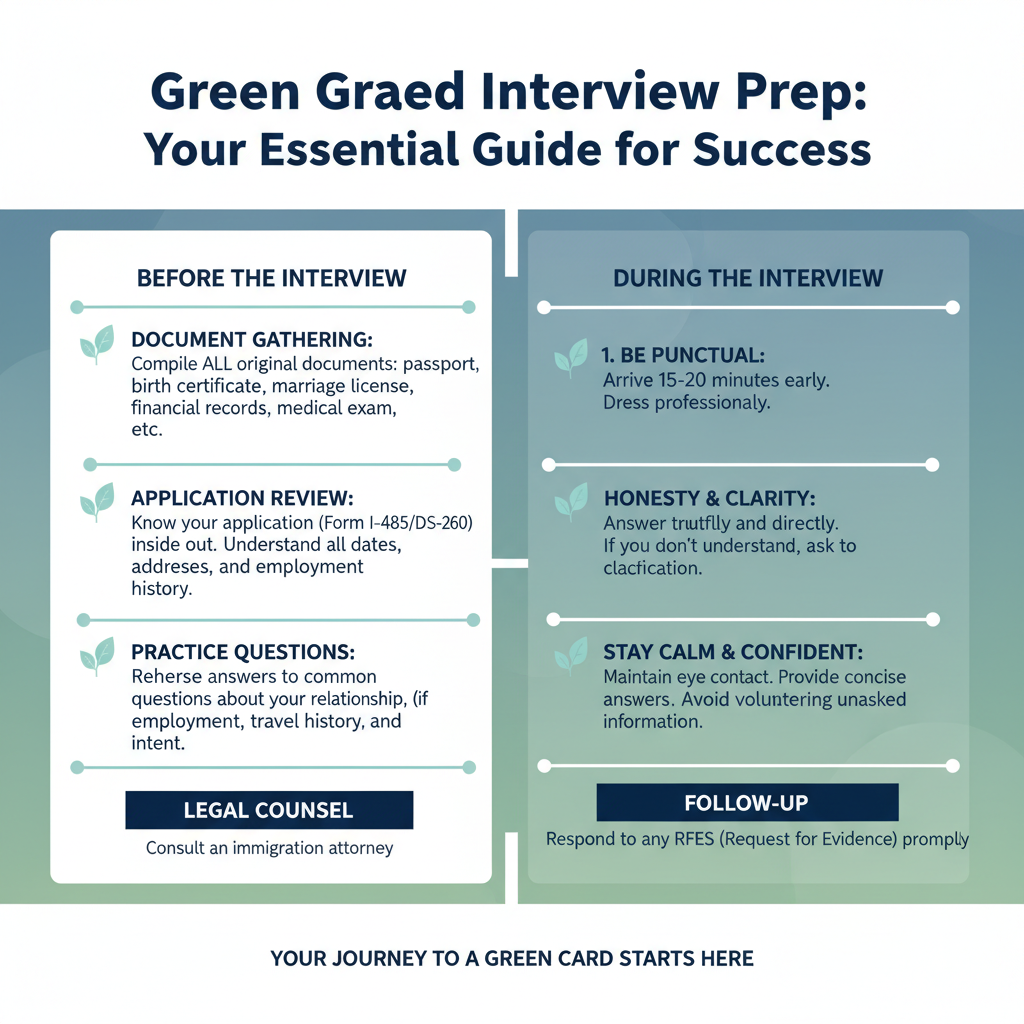
In the dynamic world of immigration law, staying informed is paramount. Recent discussions and insights from various legal sources consistently highlight the critical importance of thorough preparation for one of the most pivotal stages in the Green Card process: the interview. This renewed emphasis on interview readiness underscores the need for applicants to approach this step with meticulous attention to detail and a clear understanding of what to expect. This guide is inspired by the ongoing discourse surrounding effective preparation strategies, ensuring applicants are well-equipped for success, as seen in reports such as Green Card Interview Preparation Tips (Immigration Law).
Need Help? Our Orlando immigration team is ready to assist. Call +1 786-791-3106 for a free consultation, or message us online. Se Habla Español.
What This News Means for Immigrants in Orlando and Across Florida
The Green Card interview is a cornerstone of the immigration journey for countless individuals and families. For those seeking permanent residency in the United States, this interview represents a crucial opportunity to affirm their eligibility and intentions before a U.S. Citizenship and Immigration Services (USCIS) officer. The continuous focus on interview preparation in immigration news means that applicants should never underestimate the significance of this step. It’s not merely a formality; it’s a detailed examination designed to verify all information provided in your application and to ensure you meet all legal requirements for a Green Card.
Why this news is showing up now
The emphasis on Green Card interview preparation is not new, but it tends to gain renewed prominence due to several factors. Firstly, changes in immigration policy and enforcement priorities often lead to a more rigorous review process, making interviews more critical. USCIS aims to maintain the integrity of the immigration system, and comprehensive interviews are a key tool in achieving this. Secondly, as processing times fluctuate, applicants may have a longer wait between filing their application and their interview date, making it easy to forget details or for circumstances to change. Timely reminders and guides help bridge this gap. Finally, with a significant backlog in many immigration categories, interviews are becoming increasingly important for officers to make accurate and timely decisions, placing a greater burden on applicants to be fully prepared.
How it can affect Florida residents
Florida, particularly Central Florida with its vibrant immigrant communities, is home to hundreds of thousands of individuals navigating the Green Card process. For residents in Orlando, Tampa, Miami, and across the I-4 corridor, the need for thorough interview preparation is particularly relevant. The Orlando USCIS Field Office, like others nationwide, processes a high volume of Green Card applications, especially those based on family petitions and employment. A well-prepared applicant can significantly reduce potential delays or requests for additional evidence (RFEs), leading to a smoother, faster path to permanent residency. Conversely, inadequate preparation can result in setbacks, including interview rescheduling, RFEs, or even denial, causing immense stress and prolonging the separation of families—something Imigrar is dedicated to preventing. Understanding the nuances of the interview process and having all your documents in order can be the difference between a swift approval and a prolonged, uncertain wait.
What Green Card Interview Preparation Is (and Why It Matters)
The Green Card interview is a mandatory step for most individuals applying for permanent residence in the United States, either through Adjustment of Status (if you are already in the U.S.) or through Consular Processing (if you are applying from outside the U.S.). It is a formal meeting with a USCIS officer (or a Consular Officer if abroad) who will review your application, verify your identity, and ask questions to determine your eligibility for a Green Card.
Why does it matter so much? This interview is the officer's primary opportunity to assess the veracity of your claims, the authenticity of your relationship (for family-based petitions), your admissibility to the U.S., and your overall eligibility under U.S. immigration law. It's where all the documents and information you've submitted come to life, and where you, the applicant, have the chance to present your case clearly and confidently. A successful interview is often the final hurdle before your Green Card is approved.
A plain-English definition
Simply put, the Green Card interview is your chance to talk directly with a government official who will decide if you can become a permanent resident. They want to make sure you qualify for a Green Card, that the information in your application is true, and that you understand what it means to live permanently in the U.S. It’s like a final check-up to ensure everything is correct before they give you your Green Card.
Key terms you need to know
- Green Card: The common name for a Permanent Resident Card, which allows foreign nationals to live and work permanently in the United States.
- Adjustment of Status (AOS): The process of applying for a Green Card while physically present in the United States. The interview typically takes place at a USCIS Field Office, such as the one in Orlando.
- Consular Processing: The process of applying for an immigrant visa at a U.S. embassy or consulate abroad. Once approved, the immigrant visa allows entry into the U.S. as a permanent resident.
- USCIS: U.S. Citizenship and Immigration Services, the government agency responsible for processing immigration benefits, including Green Cards.
- Immigrant Visa: A visa issued to a foreign national who wishes to live permanently in the U.S. (used in Consular Processing).
- Interview Notice: The official document from USCIS (or the National Visa Center) informing you of your interview date, time, and location, along with required documents.
- Petition: The initial application filed by a U.S. citizen or lawful permanent resident on behalf of a foreign national (e.g., Form I-130) or by an employer (e.g., Form I-140).
- Application to Register Permanent Residence: The primary application form filed by the foreign national to request a Green Card (Form I-485 for AOS).
- Affidavit of Support: A legally binding document (Form I-864) signed by a sponsor (petitioner) to accept financial responsibility for the applicant.
- Request for Evidence (RFE): A letter from USCIS asking for additional documents or information to support your application.
- Priority Date: The date your immigration petition was filed. This date determines your place in the visa queue for certain categories.
- Inadmissibility: Grounds under which a person can be barred from entering or remaining in the U.S. (e.g., certain criminal offenses, health issues, past immigration violations).
Current Immigration Law: The Foundation
The Green Card interview process is governed by the Immigration and Nationality Act (INA), the primary body of U.S. immigration law. Specific sections of the INA dictate eligibility for various Green Card categories and the requirements for Adjustment of Status or Consular Processing.
Federal requirements
At the federal level, the legal framework for Green Card eligibility is complex, but generally falls under these key areas:
- Eligibility for an Immigrant Visa: This is established through an approved petition, such as Form I-130 (Petition for Alien Relative) for family-based immigration, or Form I-140 (Immigrant Petition for Alien Worker) for employment-based immigration. The INA sets forth the relationships and qualifications that make an individual eligible to be petitioned.
- Admissibility to the United States: INA § 212 outlines various grounds of inadmissibility, which can prevent an individual from receiving a Green Card. These grounds include certain health-related issues, criminal convictions, security concerns, public charge concerns (meaning an individual is likely to become primarily dependent on government assistance), misrepresentation, and previous immigration violations. The officer at your interview will assess if any of these apply to you.
- Adjustment of Status Specifics: For those applying from within the U.S. via Adjustment of Status, INA § 245 provides the legal basis. Generally, to adjust status, an applicant must have been lawfully admitted to the U.S., be eligible for an immigrant visa, and not be subject to any bars to adjustment (e.g., unauthorized employment, certain types of overstays, or unlawful presence, though some exceptions apply for immediate relatives of U.S. citizens).
- Bona Fide Relationship: For marriage-based Green Cards, INA § 204(c) is critical. It requires proof of a "bona fide" (real and legitimate) marriage, not one entered into solely for immigration benefits. The interview is a primary tool for officers to determine the authenticity of the marriage.
- Financial Support: INA § 213A mandates that most family-based immigrants and some employment-based immigrants must have a financial sponsor who files Form I-864, Affidavit of Support. This ensures the immigrant will not become a "public charge."
All these legal requirements will be explored during your Green Card interview. The USCIS officer’s role is to ensure that you meet every criterion set forth by these federal laws and regulations. You can find detailed information on these laws and forms on the USCIS official website.
Florida-specific considerations
While immigration law is federal, meaning the core requirements for a Green Card are the same nationwide, the practical aspects can vary slightly depending on your location. Florida does not have its own specific immigration laws that dictate Green Card eligibility. However, the operational procedures of the Orlando USCIS Field Office (or other field offices like Tampa or Miami) can influence your experience. For instance:
- Local Processing Times: While USCIS aims for consistency, processing times can vary between field offices. You can check current estimates for the Orlando Field Office on the USCIS Processing Times page.
- Officer Demeanor and Interview Style: While all officers follow federal guidelines, individual interview styles can differ. Being prepared for a wide range of questions and maintaining a respectful demeanor is always advisable.
- Local Legal Resources: For Central Florida residents, having access to experienced immigration attorneys like those at Imigrar in Orlando is a significant advantage. Our team understands the local context and can provide tailored advice based on the practices of the Orlando USCIS Field Office.
Need Help? Our Orlando immigration team is ready to assist. Call +1 786-791-3106 for a free consultation, or message us online. Se Habla Español.
How to Prepare for Your Green Card Interview: A Complete Step-by-Step Guide
Preparing for your Green Card interview is an intensive but manageable process. Following these steps meticulously can significantly increase your chances of a successful outcome.
1) Understand Your Interview Notice and Case Type
Your first step is to thoroughly read your Interview Notice. This document, typically Form I-797C, Notice of Action, will specify the date, time, and location of your interview, usually at a local USCIS Field Office (e.g., the Orlando USCIS Field Office for Central Florida residents). It will also list the specific documents you must bring. Pay close attention to these instructions.
- Location: Confirm the address and plan your route. For Orlando residents, this will likely be the Orlando Field Office.
- Date and Time: Mark it clearly on your calendar. Punctuality is critical.
- Required Documents: This section is paramount. It will list originals of documents you previously submitted copies of, as well as new documents.
- Case Type: Understand whether your interview is for a family-based Green Card (e.g., marriage to a U.S. citizen), an employment-based Green Card, or another category. This will shape the types of questions and evidence required.
Important: If you cannot attend, you must contact USCIS immediately to reschedule. Failure to appear without prior notification can lead to your application being denied.
2) Gather All Required Documents (Originals and Copies)
This is arguably the most critical step. Create a well-organized folder or binder with all your documents. You will need both the originals and high-quality copies of everything. If any documents are not in English, they must be accompanied by a certified English translation.
General Documents (Applicable to most cases):
- Your Interview Notice.
- Your passport and all other travel documents (visas, I-94 arrival/departure records).
- Your birth certificate (original and translation, if applicable).
- Any previous immigration documents (e.g., EAD cards, advance parole documents, previous visa stamps).
- Two passport-style photos (check notice for specific requirements).
- Medical examination report (Form I-693), sealed in an envelope, if not already submitted.
- Proof of financial support (e.g., Form I-864, Affidavit of Support, along with the sponsor's tax returns, employment letters, pay stubs, bank statements).
- Police clearance certificates from any country you've lived in for 6+ months since age 16 (for consular processing).
Specific Documents (Depending on your Green Card Category):
- For Marriage-Based Green Cards (most common):
- Original marriage certificate.
- Proof of bona fide marriage (joint bank accounts, joint leases/mortgages, utility bills in both names, joint insurance policies, photos together, affidavits from friends/family, birth certificates of children born to the marriage, shared credit cards, travel itineraries together).
- Divorce decrees or death certificates for any previous marriages of both petitioner and applicant.
- Spouse's proof of U.S. citizenship or permanent residency (e.g., passport, birth certificate, Green Card).
- For Employment-Based Green Cards:
- Original employment offer letter.
- Copies of educational degrees, transcripts, and professional licenses.
- Letters from previous employers.
- Evidence of the petitioner's (employer's) ability to pay the offered wage.
Reminder: Do not just bring what's listed on the notice. Bring everything you submitted with your application, plus any additional evidence you believe strengthens your case. Organize documents into categories with tabs for easy access.
3) Review Your Application Packet Thoroughly
You must be intimately familiar with every detail of your submitted application (Form I-485, Form I-130, Form I-140, etc.) and supporting documents. Read through your entire application packet several times. This includes the forms, personal statements, and all evidence. The officer will refer to these documents and ask questions based on the information provided.
- Consistency is Key: Ensure your answers during the interview align perfectly with the information on your forms. Any discrepancies, even minor ones, can raise red flags and lead to further scrutiny.
- Dates and Addresses: Memorize important dates (marriage date, entry dates, birth dates) and all addresses you've lived at.
- Employment History: Be ready to discuss your past and current employment.
- Travel History: Know your travel dates in and out of the U.S.
Warning: Never misrepresent information or lie. If you made an honest mistake on your application, be prepared to explain it truthfully.
4) Practice Your Answers to Potential Questions
While you can't predict every question, you can anticipate common ones based on your application type. Practice answering them clearly, concisely, and truthfully. Consider having a mock interview with a trusted friend, family member, or your attorney.
Common Interview Questions:
- "What is your full name and date of birth?"
- "How did you meet your spouse (for marriage-based cases)?"
- "When and where did you get married?"
- "Do you have any children?"
- "What is your spouse's/petitioner's full name and date of birth?"
- "Have you ever been arrested or convicted of a crime?"
- "Have you ever been denied a visa or removed from the U.S.?"
- "What are your current living arrangements?"
- "What do you do for work?"
- "Do you have any financial dependents?"
- "Do you understand the oath you've taken (to tell the truth)?"
- "Do you have any questions for me?"
For marriage-based interviews, expect detailed questions about your daily life, relationship history, and shared experiences to confirm the marriage is genuine. Both spouses will be interviewed, sometimes together, sometimes separately (known as a "Stokes interview" if there are concerns).
5) Prepare for the Interview Day Logistics
The day of the interview requires careful planning to minimize stress and ensure you arrive prepared.
- Dress Code: Dress professionally, as you would for a job interview. This shows respect for the process and the officer.
- Punctuality: Arrive at least 30-45 minutes before your scheduled appointment. This allows time for security checks, finding parking (especially at the Orlando USCIS Field Office), and locating the waiting area. Being late can lead to rescheduling or even denial.
- Transportation: Plan your route and transportation method in advance. Account for traffic, especially in busy areas like Orlando.
- Attorney Presence: You have the right to have your immigration attorney accompany you to the interview. At Imigrar, we strongly advise our clients to have legal representation present. An attorney can provide support, clarify questions, and protect your rights.
- Interpreter: If you are not fluent in English, bring a certified interpreter. Your notice will specify if USCIS provides one or if you must bring your own. If you bring your own, ensure they are fluent in both English and your native language and are not involved in your case (e.g., your spouse or petitioner).
- Childcare: If possible, arrange for childcare. While children are sometimes allowed, it's best to minimize distractions during such a critical meeting.
6) During the Interview: Demeanor and Answering Questions
Your conduct during the interview is as important as your preparation.
- Be Respectful and Polite: Address the officer as "Officer" or "Sir/Madam." Maintain eye contact.
- Listen Carefully: Pay close attention to each question. If you don't understand a question, politely ask the officer to repeat or rephrase it.
- Answer Truthfully and Concisely: Always tell the truth. Answer only the question asked, without volunteering unnecessary information. Long, rambling answers can confuse the officer or lead to more questions.
- Stay Calm: It's natural to be nervous, but try to remain calm and composed. Take a deep breath if needed.
- Refer to Your Attorney: If you have an attorney present, they can help clarify questions or interject if necessary. You can also discreetly consult with your attorney if you are unsure about an answer.
- Offer Documents Proactively: Have your organized documents ready. When the officer asks for a specific document, present it promptly.
- Don't Argue: If you disagree with a statement or question, respectfully state your position or ask for clarification, but avoid becoming confrontational.
7) Post-Interview Follow-Up
The interview is not always the final step. Here’s what to expect afterwards:
- Immediate Decision: Sometimes, the officer will tell you on the spot that your Green Card is approved. You might receive a stamp in your passport as temporary proof of permanent residency.
- Request for Evidence (RFE): If the officer needs more information or documents, they will issue an RFE. You will have a specific deadline (e.g., 87 days) to respond. Respond promptly and thoroughly.
- Notice of Decision: Most decisions are mailed to you within a few weeks to several months. This notice will inform you whether your application has been approved, denied, or if further action is required.
- Green Card Mailing: If approved, your physical Green Card will be mailed to you, typically within 30 days of approval.
- Conditional Green Card: If you are married for less than two years at the time of approval, you will receive a 2-year conditional Green Card. You will need to file Form I-751, Petition to Remove Conditions on Residence, within the 90-day window before your conditional Green Card expires.
Need Help? Our Orlando immigration team is ready to assist. Call +1 786-791-3106 for a free consultation, or message us online. Se Habla Español.
Practical Steps You Can Take Today
Don't wait until the last minute to prepare for your Green Card interview. Start taking these practical steps now:
Actionable Checklist
- Review Your Entire Application: Pull out copies of all forms (Form I-485, Form I-130, etc.) and supporting documents you submitted. Read them carefully to ensure you remember every detail.
- Gather Original Documents: Start collecting all original birth certificates, marriage certificates, passports, and any other identity or relationship documents. Ensure they are current and valid.
- Obtain Certified Translations: If any original documents are not in English, get them professionally translated and certified.
- Collect New Evidence (Especially for Marriage Cases): Continuously gather evidence of your ongoing relationship (joint bills, photos, shared travel, cards, letters). This is vital for showing a "bona fide" marriage.
- Consult with an Attorney: Schedule a consultation with an experienced immigration attorney, especially if your case has complexities or if you feel nervous.
- Practice Answering Questions: Rehearse common interview questions out loud. Focus on clear, concise, and truthful answers.
- Check USCIS Processing Times: Use the USCIS Processing Times tool to get an estimate of how long it might take for your interview to be scheduled after your application is filed. While not exact, it helps manage expectations.
- Clean Up Your Social Media: Be mindful of your online presence. Officers may review public social media profiles. Ensure nothing could be misinterpreted or contradict your application.
- Update Your Address with USCIS: If you move, promptly update your address using Form AR-11 or through your USCIS online account. Failure to receive important notices, like your Interview Notice, due to an outdated address can severely jeopardize your case.
Document Preparation Guidance
Proper organization of your documents can significantly impress the interviewing officer and make the process smoother. Here’s how:
- Create a Master Checklist: Based on your Interview Notice and your application type, create a detailed checklist of every document you need.
- Use a Binder or Folder System: Organize your documents into clear sections. Use dividers with labels (e.g., "Identity Documents," "Marriage Evidence," "Financial Support," "Application Copies").
- Originals vs. Copies: Keep originals in one section and a separate set of copies in another. The officer will typically review originals and keep copies.
- Chronological Order: Arrange documents within each section chronologically, especially for evidence like photos, bank statements, or utility bills.
- Highlight Key Information: For lengthy documents, you might discreetly highlight key dates or names to help the officer quickly find relevant information.
- Prepare a Table of Contents: For very thick binders, a simple table of contents at the beginning can be extremely helpful.
Timeline Expectations
The timeline for a Green Card interview can vary widely based on your specific case type, the USCIS field office processing your application (e.g., Orlando USCIS Field Office), and current backlogs. Here’s a general overview:
- Application Filing to Interview Notice: After filing Form I-485 (Adjustment of Status), it can take anywhere from a few months to over a year to receive your Interview Notice. For family-based petitions, the Priority Date and visa bulletin availability also play a role.
- Interview Notice to Interview Date: Once you receive the notice, your interview date is typically scheduled 30 to 60 days out.
- Interview to Decision: While some decisions are made on the spot, many applicants receive a decision notice in the mail within a few weeks to several months. If an RFE is issued, the timeline will extend.
Reminder: These are general estimates. Always check the USCIS Processing Times page for the most current information specific to your form and field office. For example, search for Form I-485 processed at the Orlando Field Office.

How Imigrar Helps Immigrants in Orlando
Navigating the complex landscape of U.S. immigration law can be daunting, especially when a critical stage like the Green Card interview approaches. At Imigrar, we understand the stakes involved. Our firm, based in Orlando, Florida, is dedicated to helping individuals and families achieve their immigration goals and "Keep Families Together."
Our experience and expertise
Our team of experienced immigration attorneys possesses in-depth knowledge of federal immigration laws and procedures. We have successfully guided countless clients through their Green Card interviews, understanding the unique challenges and requirements of each case. We are


