

The journey to obtaining a Green Card, or lawful permanent residency in the United States, is a monumental step for countless individuals and families. While the process involves numerous forms and waiting periods, one of the most critical stages is the Green Card interview. This interview serves as a direct interaction with a U.S. Citizenship and Immigration Services (USCIS) officer, where you'll have the opportunity to verify the information in your application and demonstrate your eligibility for permanent residency.
For many, the prospect of an interview can be daunting. Questions arise about what to expect, what documents to bring, and how to present oneself effectively. At Imigrar, an immigration law firm based in Orlando, Florida, we understand these concerns. Our mission, "Keep Families Together," drives us to provide comprehensive, compassionate, and expert legal guidance to navigate every stage of the immigration process, including rigorous interview preparation.
Need Help Preparing for Your Green Card Interview? Our Orlando immigration team is ready to assist. Call +1 786-791-3106 for a free consultation, or message us online. Se Habla Español.
The reporting that sparked this guide: Green Card Interview Preparation Tips (Immigration Law)
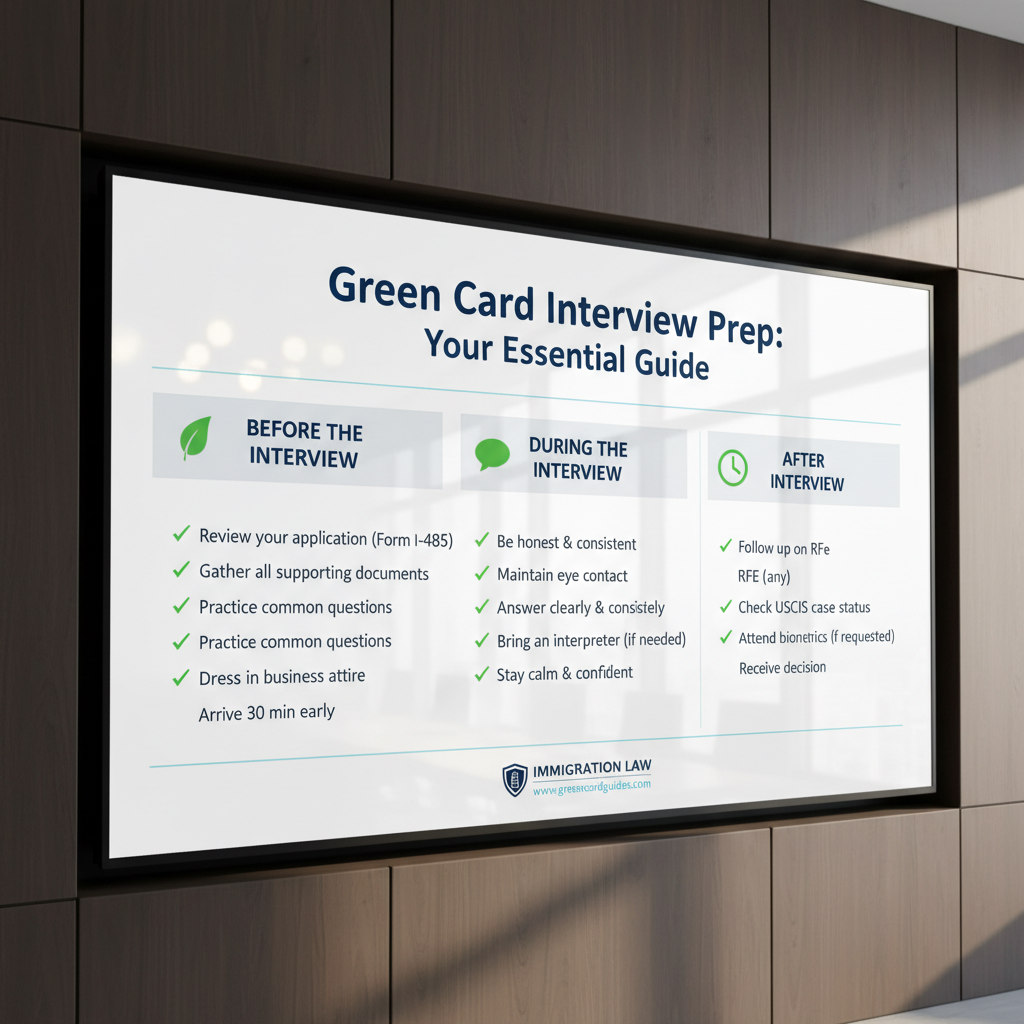
What This News Means for Immigrants in Orlando and Across Florida
The continuous discussion and reporting around "immigration law" and specifically "Green Card Interview Preparation Tips" underscore the evergreen importance of this crucial step in the immigration journey. While the interview process itself isn't "new," the ongoing spotlight on preparation tips reflects the complex and often anxiety-inducing nature of this stage for applicants.
Why this news is showing up now
Green Card interviews are a standard, mandatory component for most individuals seeking lawful permanent residency in the U.S., whether through Adjustment of Status (applying from within the U.S.) or Consular Processing (applying from abroad). The continuous stream of news and advice on this topic highlights several key factors:
- High Stakes: The interview is often the final hurdle before a decision on permanent residency, making preparation critically important.
- Complexity: Each case is unique, and interview questions can vary widely, requiring thorough and personalized preparation.
- Volume of Applications: USCIS and consular offices process hundreds of thousands of Green Card applications annually, leading to a constant demand for guidance.
- Policy Changes and Nuances: While the core interview process remains, specific areas of focus for immigration officers can shift based on evolving immigration policies, security concerns, or fraud prevention efforts. This necessitates updated advice and preparation strategies.
- Increased Scrutiny: In recent years, there has been an increased focus on vetting applicants thoroughly, particularly in marriage-based Green Card cases, to detect potential fraud. This heightened scrutiny means applicants must be better prepared than ever.
The news isn't about a sudden change in law, but rather a persistent and vital need for applicants to be well-informed and meticulously prepared for an interview that can make or break their immigration dream.
How it can affect Florida residents
For immigrants residing in Orlando, Central Florida, and across the Sunshine State, the emphasis on Green Card interview preparation is particularly relevant. Florida is home to a large and diverse immigrant population, with many individuals and families pursuing permanent residency. Here’s how this ongoing discussion impacts you:
- Local USCIS Field Offices: If you are applying for Adjustment of Status from within the U.S., your interview will likely be scheduled at one of Florida's USCIS Field Offices, such as the Orlando USCIS Field Office, or offices in Miami or Tampa. These offices operate under federal guidelines but have their own scheduling and procedural nuances.
- High Volume of Cases: Florida's immigrant communities mean these field offices handle a high volume of Green Card interviews. Proper preparation can help your case stand out and move efficiently.
- Family-Based Immigration Focus: Florida has a significant number of family-based Green Card applications, particularly marriage-based petitions. These cases often involve more in-depth interviews focusing on the bona fides of the relationship, making thorough preparation for questioning and document presentation absolutely essential.
- Access to Legal Expertise: Being in a state with a large immigrant population means access to experienced immigration attorneys like those at Imigrar. Our local presence in Orlando allows us to provide targeted advice, understanding the local USCIS office's practices and common interview styles. We help clients from Orange County, along the I-4 corridor, and throughout Florida prepare confidently.
Whether your Green Card journey is through a family petition, employment sponsorship, or another category, understanding the interview process and preparing diligently is your best strategy for a positive outcome. This news serves as a constant Reminder: Do not take your Green Card interview lightly.
What Green Card Interviews Are (and Why It Matters)
The Green Card interview is a pivotal moment in your journey towards becoming a lawful permanent resident of the United States. It is a face-to-face meeting with an immigration officer from either USCIS (if you are applying from within the U.S. via Adjustment of Status) or the U.S. Department of State (if you are applying from outside the U.S. via Consular Processing).
A plain-English definition
Simply put, a Green Card interview is your opportunity to personally confirm all the information you've provided in your application forms and to present original documents that support your eligibility for a Green Card. The immigration officer's primary goal is to verify your identity, confirm the accuracy and truthfulness of your application, and ensure you meet all legal requirements for permanent residency and are not inadmissible to the U.S.
For marriage-based Green Cards, the interview also serves a crucial purpose: to determine if the marriage is legitimate and entered into in good faith, rather than solely for immigration benefits. This can often involve detailed questions about your relationship, daily life, and shared experiences.
Key terms you need to know
Navigating the immigration process requires understanding specific terminology. Here are some key terms related to your Green Card interview:
- Green Card: Officially known as a Permanent Resident Card, it proves your authorization to live and work permanently in the United States.
- Adjustment of Status (AOS): The process of applying for a Green Card from within the United States. If approved, you "adjust" your current nonimmigrant status to that of a lawful permanent resident. Your interview will be at a USCIS Field Office (e.g., Orlando USCIS Field Office).
- Consular Processing: The process of applying for an immigrant visa (which leads to a Green Card) from outside the United States at a U.S. embassy or consulate in your home country. Your interview will be at the embassy/consulate.
- USCIS: U.S. Citizenship and Immigration Services. The government agency responsible for administering immigration and naturalization benefits.
- Department of State (DOS): The U.S. government agency that handles foreign policy, including the issuance of visas through its embassies and consulates abroad.
- Petitioner: The U.S. citizen or lawful permanent resident who files an immigrant petition (e.g., Form I-130) on behalf of a foreign national relative.
- Beneficiary: The foreign national who is seeking a Green Card based on the petition filed by the Petitioner.
- Form I-130, Petition for Alien Relative: The initial form filed by a U.S. citizen or LPR to establish a relationship with an eligible foreign national relative who wishes to immigrate to the United States.
- Form I-485, Application to Register Permanent Residence or Adjust Status: The primary application form filed by an individual seeking to adjust their status to a lawful permanent resident from within the United States.
- Form I-864, Affidavit of Support: A legally binding document signed by the Petitioner (and sometimes a joint sponsor) to accept financial responsibility for the immigrant. This ensures the immigrant will not become a "public charge."
- Inadmissibility: Grounds under immigration law that can prevent an individual from entering the U.S. or obtaining a Green Card (e.g., certain criminal convictions, health issues, immigration violations).
- Bona Fide Marriage: A marriage entered into for love and companionship, not solely for immigration benefits. This is a critical concept in marriage-based Green Card interviews.
Understanding these terms will empower you to better comprehend the process and the questions you might encounter during your interview. The interview is your chance to present your case clearly and truthfully, and its outcome directly determines your future in the United States. It truly matters because it is the final, personal assessment of your eligibility and credibility.
Current Immigration Law: The Foundation for Your Green Card Interview
Your Green Card interview is not an arbitrary meeting; it is a formal proceeding governed by the intricate framework of U.S. immigration law. The interview officer's questions and decisions are rooted in the Immigration and Nationality Act (INA) and its corresponding regulations. Understanding this legal foundation is crucial for effective preparation.
The primary legal authority for Green Card eligibility is found within the Immigration and Nationality Act (INA). For those applying for Adjustment of Status from within the U.S., INA Section 245(a) outlines the general requirements for adjusting status to that of a lawful permanent resident. For those undergoing Consular Processing, various sections, including INA Section 203, deal with immigrant visa categories and preferences, while INA Section 212 details grounds of inadmissibility.
Federal requirements
Regardless of whether you are adjusting status domestically or undergoing consular processing abroad, federal law mandates specific requirements that must be met to receive a Green Card:
- Eligibility for an Immigrant Visa Category: You must be eligible under a specific immigrant visa category, such as family-sponsored (e.g., immediate relative of a U.S. citizen, preference categories) or employment-based. This eligibility is initially established through an approved petition (e.g., Form I-130, Form I-140).
- Admissibility: You must be admissible to the United States. This means you must not fall under any of the grounds of inadmissibility outlined in INA Section 212(a), which include health-related grounds, criminal grounds, security and related grounds, public charge grounds, illegal entry and immigration violations, and others. If you are inadmissible, you may need a waiver.
- No Bars to Adjustment (for AOS applicants): For those adjusting status, you must not have any specific "bars" to adjustment, such as having entered without inspection or having engaged in certain types of immigration fraud.
- Financial Support: The Petitioner (and sometimes a joint sponsor) must demonstrate the financial ability to support the applicant by submitting Form I-864, Affidavit of Support. This form ensures the immigrant will not become a "public charge" and relies on the sponsor's income being at least 125% of the federal poverty guidelines.
- Medical Examination: All Green Card applicants must undergo a medical examination by a USCIS-approved civil surgeon (for AOS) or a panel physician (for Consular Processing) to ensure they do not have any inadmissible health conditions. The results are submitted on Form I-693, Report of Medical Examination and Vaccination Record.
The interview is the officer's opportunity to confirm that all these federal requirements have been met and that your application is truthful and accurate. Any discrepancies or inconsistencies can lead to further scrutiny or even denial.
Florida-specific considerations
While the underlying federal laws are uniform across the nation, how they are applied can have regional nuances, particularly concerning processing times and local office procedures. For Florida residents, your interview will typically be conducted at one of the USCIS Field Offices in the state, with the Orlando USCIS Field Office being a common location for those in Central Florida.
- Orlando USCIS Field Office: Familiarity with this office's general atmosphere, typical interview duration, and common questions can be beneficial. While every officer is different, local attorneys often gain insights into regional trends.
- Processing Times: USCIS processing times can vary significantly by field office. You can check estimated processing times for the Orlando office and other locations via the USCIS Processing Times tool. This helps manage expectations for your Priority Date and interview scheduling.
- High Volume of Marriage-Based Cases: Florida, like many states, sees a high number of marriage-based Green Card applications. This means officers are well-versed in detecting potential marriage fraud, and applicants should be prepared for detailed questions and extensive documentation regarding the bona fides of their marriage.
Important: Always refer to the USCIS official website for the most current forms, instructions, and policy updates. Immigration law is dynamic, and staying informed is crucial. An experienced immigration attorney in Orlando can provide tailored advice based on the latest legal developments and local practices.
How to Prepare for Your Green Card Interview: A Complete Step-by-Step Guide
Preparing for your Green Card interview is crucial for a successful outcome. This detailed guide will walk you through the essential steps, ensuring you are confident and well-equipped on interview day.
1) Understand Your Case Type and Interview Purpose
Before diving into document gathering, ensure you fully understand the specifics of your Green Card application. Are you applying through a family member (e.g., spouse, parent, child), an employer, or another category like asylum? The type of case dictates the focus of the interview.
- Family-Based (especially marriage-based): The primary goal is to verify the bona fides of your relationship. Officers will ask detailed questions about how you met, your daily life, shared finances, and future plans.
- Employment-Based: The focus will be on your qualifications for the job, the employer's ability to pay the prevailing wage, and your intent to work in the sponsored position.
- Asylum/Refugee: The interview will delve into your claims for asylum, the threats you face, and the reasons you cannot return to your home country.
Action: Review your initial petition (e.g., Form I-130, Form I-140) and your Form I-485 (if adjusting status) or immigrant visa application (if consular processing). Understand the legal basis for your application and what the officer needs to confirm.
2) Gather and Organize All Required Documents
This is arguably the most critical step. You must bring ALL original documents that were submitted with your application, plus copies, and any new supporting evidence that has become available since you filed.
- Originals and Copies: Bring the originals of ALL documents you submitted, along with a complete set of copies. The officer will review originals and may keep copies.
- Identification:
- Valid passport (and expired passports)
- Driver's license or state ID (especially for Florida residents)
- Employment Authorization Document (EAD)
- Advance Parole document (if applicable)
- Application Forms:
- Your interview notice
- A complete copy of your Form I-485 (or immigrant visa application)
- A complete copy of the underlying petition (e.g., Form I-130, Form I-140)
- A copy of your Form I-864, Affidavit of Support, and all supporting financial documents (tax returns, W-2s, pay stubs for petitioner/joint sponsor)
- Form I-693, Report of Medical Examination and Vaccination Record (if not already submitted, bring in a sealed envelope from the civil surgeon).
- Personal Civil Documents:
- Original birth certificate (for both applicant and petitioner/spouse)
- Original marriage certificate (if applicable)
- Divorce decrees or death certificates for any prior marriages (for both applicant and petitioner/spouse)
- Children's birth certificates (if applicable)
- Official translations of any foreign language documents, certified by a competent translator.
- Proof of Relationship (for Family-Based, especially marriage):
- Joint bank accounts, credit cards, and financial statements
- Joint leases or mortgage statements
- Utility bills in both names
- Insurance policies (life, health, auto) listing each other as beneficiaries
- Photos together (dated, with family/friends, travel)
- Correspondence (emails, texts, cards)
- Affidavits from friends/family attesting to the bona fides of the relationship
- Children's birth certificates (if you have children together)
- Travel itineraries and tickets from trips taken together
- Other Supporting Evidence:
- Educational degrees, diplomas, transcripts
- Employment letters, pay stubs, resume
- Proof of legal entry into the U.S. (Form I-94, visa stamps)
- Police clearances (if requested or applicable)
Tip: Organize documents in a binder with clear tabs. Create a checklist to ensure nothing is forgotten. This shows preparedness and respect for the officer's time.
3) Review Your Application and Supporting Documents Thoroughly
You must know your application inside and out. The officer will ask questions directly from the forms you submitted. Any inconsistencies, even minor ones, can raise red flags.
- Read Everything: Go through your Form I-485, Form I-130, and all other forms and supporting documents multiple times.
- Memorize Key Dates and Details: Be familiar with dates of entry, marriage, employment, addresses, and other significant life events.
- Consistency is Key: Ensure your answers during the interview align perfectly with the written information. If there are any updates or changes (e.g., new address, new job, new child), be prepared to explain them clearly and provide supporting documentation.
Warning: Never misrepresent facts or provide false information. Doing so can lead to a denial, a finding of fraud, and even future bars to immigration benefits.
4) Practice Answering Potential Interview Questions
While you can't predict every question, many are common. Practice answering them out loud with a friend, family member, or your attorney.
- General Questions:
- Confirming your name, date of birth, place of birth.
- "Why are you seeking a Green Card?"
- Questions about your immigration history (entries, exits, prior visas).
- Questions related to the "Part 8. General Information" section of Form I-485 (criminal history, arrests, memberships, public charge, national security). Be honest and upfront about everything.
- Family-Based (especially marriage-based) Specific Questions:
- "How and where did you meet your spouse?"
- "When did you decide to get married?"
- "Who proposed to whom?"
- "Describe your wedding day."
- "What do you do together for fun?"
- "Who handles the finances?"
- "Describe your typical day together."
- "Do you have joint bank accounts, insurance, property?"
- "Who lives with you?"
- "Have you met each other's families?"
- Employment-Based Specific Questions:
- "What is your job title and responsibilities?"
- "What is your salary?"
- "Do you intend to work for this employer?"
- "How long have you worked there?"
Tip: Practice giving clear, concise, and truthful answers. Avoid volunteering unnecessary information. If you don't know an answer, say so honestly rather than guessing.
5) Prepare for the Interview Day Logistics
The day of the interview requires attention to detail beyond just documents and answers.
- Dress Code: Dress professionally, as you would for a job interview. It shows respect for the process and the officer.
- Arrive Early: Plan to arrive at the Orlando USCIS Field Office (or other location) at least 30-45 minutes before your scheduled time. Parking can be difficult, and you'll need time to pass through security.
- Who Should Attend:
- Adjustment of Status: Typically, both the applicant (Beneficiary) and the petitioner (Sponsor) must attend. If you have a legal representative, they should also attend.
- Consular Processing: Only the applicant typically attends, along with an interpreter if needed.
- Interpreter: If you are not fluent in English, bring a professional, neutral interpreter. Your attorney can often arrange this. Do NOT rely on your spouse or petitioner to interpret, as this is often not allowed or can complicate the interview.
- Attorney Presence: Having an experienced immigration attorney from Imigrar by your side can provide immense reassurance and advocacy. Your attorney can clarify questions, object to improper lines of questioning, and ensure your rights are protected.
- Be Calm and Polite: Maintain a respectful demeanor. Answer truthfully and directly. If you don't understand a question, politely ask the officer to repeat or rephrase it.
6) Understand Post-Interview Procedures
The interview doesn't always end with an immediate decision.
- Immediate Approval: Some cases, particularly straightforward ones, may receive an immediate approval notice.
- Request for Evidence (RFE): The officer may issue an RFE if they need additional documents or clarification. Respond promptly and thoroughly.
- Notice of Intent to Deny (NOID): This indicates the officer intends to deny your application but gives you a chance to respond and provide further evidence.
- Decision by Mail: Most decisions are mailed within a few weeks or months. You can check your case status online via the USCIS official website using your receipt number.
Timeline Expectation: While some interviews lead to immediate decisions, it's common for a decision to take anywhere from a few days to several months, well within the 90-day window often cited for processing. Be prepared for patience.
Feeling Overwhelmed by Interview Prep? Let Imigrar guide you. Our Orlando-based lawyers specialize in Green Card cases and offer personalized preparation. Call +1 786-791-3106 for a free consultation. Se Habla Español.

Practical Steps You Can Take Today
Proactive preparation is your greatest asset. Here's an actionable checklist to start on your Green Card interview journey right now:
Actionable Checklist (5+ items)
- Locate Your Interview Notice: Ensure you know the date, time, and location (e.g., Orlando USCIS Field Office). Double-check if the petitioner/spouse also needs to attend.
- Gather All Original Documents: Start compiling every document you submitted, plus any new evidence. Create a separate folder for "originals" and "copies."
- Review Your Entire Application Packet: Read through Form I-130, Form I-485, Form I-864, and all supporting documents. Highlight any areas where you might anticipate questions or where information has changed.
- Practice Interview Questions: Sit down with a trusted friend or family member and go through common interview questions. Practice articulating your answers clearly and concisely.
- Update Supporting Evidence (Especially for Marriage-Based Cases): Collect recent joint bank statements, utility bills, updated photos, and any new evidence of your shared life.
- Schedule a Consultation with Imigrar: Even if you've filed yourself, a final review and mock interview with an experienced immigration attorney can significantly boost your confidence and readiness.
- Check USCIS Website for Updates: Regularly visit USCIS official website for any procedural changes or specific instructions related to your case type.
Document Preparation Guidance
- Organize in a Binder: Use a three-ring binder with dividers and clear labels for each document category (e.g., "Birth Certificates," "Marriage Evidence," "Financial Documents"). This helps you and the officer quickly locate information.
- Create a Table of Contents: A simple list at the beginning of your binder can make it even easier to navigate.
- Originals vs. Copies: Always bring the original documents for the officer to review, but also have a complete set of high-quality photocopies ready. The officer may keep the copies.
- Translations: If any document is not in English, it MUST be accompanied by a complete and certified English translation. The translator must certify that they are competent to translate and that the translation is accurate.
- Photos: For marriage-based cases, arrange photos chronologically, ideally with dates or captions, showing your relationship's progression, family events, and travel.
- Medical Exam: If you haven't submitted your Form I-693 yet, bring it to the interview in the sealed envelope provided by the civil surgeon. Do NOT open it yourself.
Timeline Expectations
Understanding the typical timeline can help manage your expectations and anxiety:
- Interview Scheduling: After USCIS processes your application and conducts preliminary checks (like biometrics), you will receive an interview notice (Form I-797C, Notice of Action) by mail. This notice typically arrives several weeks to a few months before the actual interview date.
- Interview Duration: Most Green Card interviews last between 20 minutes to an hour. Marriage-based interviews, especially those requiring more scrutiny, can sometimes extend longer.
- Decision Post-Interview: While some applicants receive an immediate approval stamp in their passport, it's more common to receive a decision by mail within a few weeks to a few months. USCIS aims to issue decisions within a 90-day window after an interview, but this is not a strict guarantee.
- Green Card Delivery: Once approved, the physical Green Card (Form I-551) is typically mailed to


