


The journey to obtaining a Green Card, or permanent residency in the United States, is a monumental step for many individuals and families seeking to build a new life. While the application process itself can be complex, the Green Card interview stands as a critical milestone, often determining the success of your petition. It’s a moment of truth where you present your case directly to a U.S. Citizenship and Immigration Services (USCIS) officer, affirming your eligibility and intent.
At Imigrar, an immigration law firm based in Orlando, Florida, we understand the anxieties and hopes that accompany this crucial interview. Our mission is to "Keep Families Together," and a successful Green Card interview is often central to achieving that goal. With the landscape of immigration law constantly evolving, staying informed and thoroughly prepared is not just advisable—it's essential.
Need Help? Our Orlando immigration team is ready to assist. Call +1 786-791-3106 for a free consultation, or message us online. Se Habla Español.
NEWS SOURCE REFERENCE SECTION
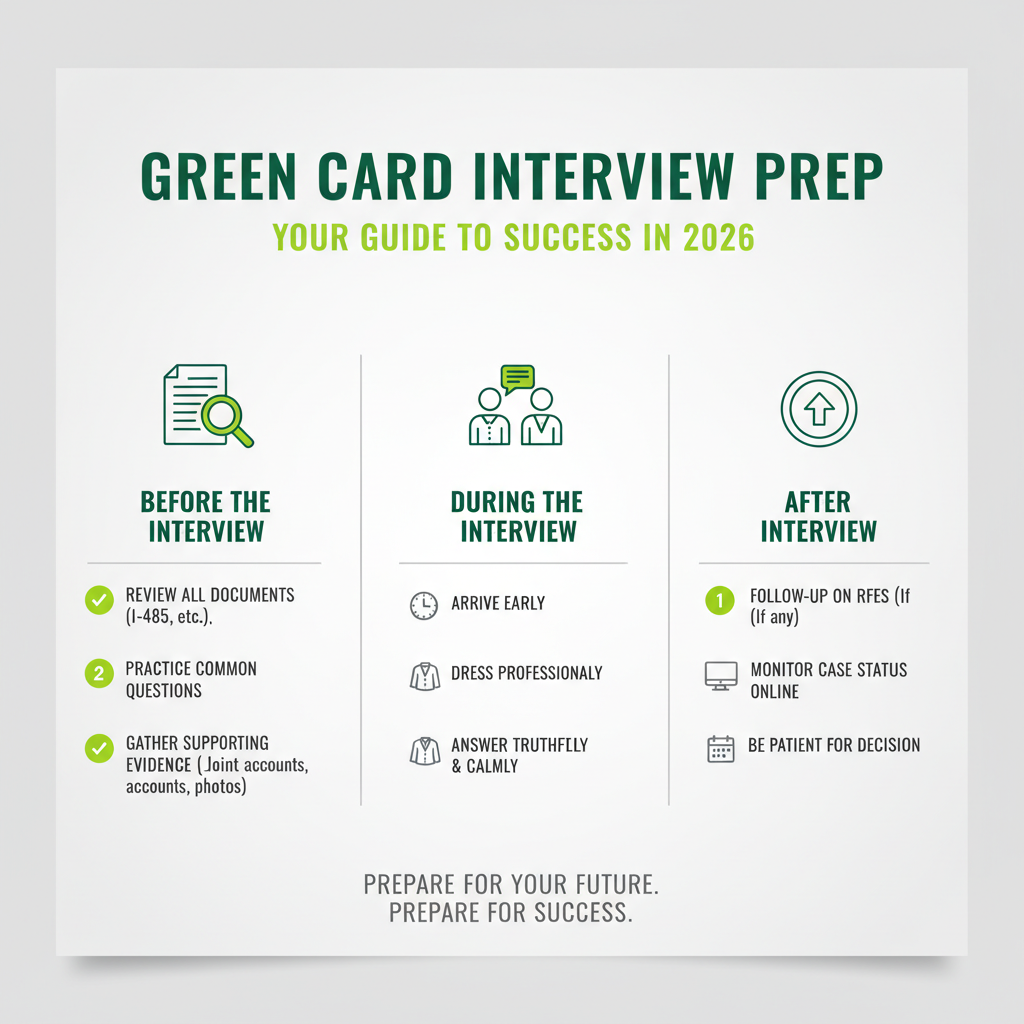
The reporting that sparked this guide: Green Card Interview Preparation Tips (Immigration Law)
What This News Means for Immigrants in Orlando and Across Florida
As of April 2026, the focus on thorough preparation for Green Card interviews continues to be a trending topic within immigration law. This isn't new; interview preparation has always been a cornerstone of a successful application. However, with ongoing adjustments in USCIS processing priorities and increasing scrutiny on certain categories of applications, the emphasis on presenting a clear, consistent, and well-supported case at the interview has never been stronger.
Why this news is showing up now
The consistent appearance of "Green Card Interview Preparation Tips" in immigration news reflects several realities:
- Ongoing Processing Volume: USCIS continues to process a high volume of Green Card applications, particularly family-based petitions. Each of these applications typically culminates in an interview, making preparation a perpetual concern.
- Policy Shifts and Scrutiny: While specific policies can change, there's a general trend towards heightened scrutiny in interviews, especially concerning the bona fides of marriages, financial support (Affidavit of Support), and potential public charge concerns. This means applicants must be more prepared than ever to articulate their eligibility.
- Digitalization and Efficiency Efforts: USCIS is continually looking for ways to streamline processes, but this doesn't diminish the importance of the interview. In fact, more efficient pre-interview processing can sometimes lead to more focused and intensive interviews, as officers have better access to information beforehand.
- Applicant Anxiety: The interview is often the most stressful part of the Green Card process. This inherent anxiety drives a constant search for advice and best practices, making preparation tips perennially relevant.
How it can affect Florida residents
For immigrants in Florida, and particularly those in the Orlando and Central Florida area, this emphasis on preparation has direct implications:
- Local USCIS Field Office Demands: The Orlando USCIS Field Office, like others across the country, handles a significant caseload. Knowing what to expect and being fully prepared can help your interview proceed smoothly and efficiently. The I-4 corridor, a major population hub, means a high concentration of Green Card applicants in our area.
- Diverse Applicant Pool: Florida is home to a incredibly diverse immigrant population. This means officers at the Orlando Field Office are experienced with a wide range of cultural backgrounds and case types, but it also means applicants must be prepared to clearly communicate their unique circumstances.
- Access to Legal Expertise: Being in a major metropolitan area like Orlando means residents have access to experienced immigration attorneys. Leveraging this resource, especially for interview preparation, can be a significant advantage.
- Specific Local Procedures: While federal law governs the Green Card process, local field offices can have slight variations in their operational procedures, such as security protocols or document submission preferences on the day of the interview. Staying informed about these local nuances is crucial.
Reminder: Whether you are adjusting status in Orlando or undergoing consular processing abroad, the core principles of interview preparation remain the same: honesty, consistency, and thorough documentation.
What Green Card Interviews Are (and Why They Matter)
A Green Card interview is a formal meeting with a USCIS officer (for those applying from within the U.S. through Adjustment of Status) or a Consular Officer at a U.S. Embassy or Consulate abroad (for those applying through Consular Processing). The primary purpose of this interview is to verify the information provided in your Green Card application, assess your eligibility for permanent residency, and ensure that no grounds of inadmissibility apply to your case.
A plain-English definition
Think of the Green Card interview as your opportunity to tell your story directly to the government official who will decide your future in the U.S. It's where you confirm that everything you've written on your application forms is true, and you provide any additional evidence needed to prove you qualify for a Green Card. For most family-based petitions, it's also where USCIS confirms the legitimacy of your relationship with the petitioner.
Key terms you need to know
Navigating the Green Card process requires understanding specific terminology:
- Green Card: The common name for a Permanent Resident Card, which grants foreign nationals official authorization to live and work permanently in the United States.
- USCIS (U.S. Citizenship and Immigration Services): The government agency responsible for overseeing lawful immigration to the United States. Most interviews for Adjustment of Status happen at a USCIS Field Office.
- Adjustment of Status (AOS): The process of applying for a Green Card from within the United States without having to return to your home country. This typically involves filing Form I-485.
- Consular Processing: The process of applying for a Green Card through a U.S. Embassy or Consulate in your home country. This is for individuals who are outside the U.S. or ineligible for Adjustment of Status.
- Petitioner: The U.S. citizen or lawful permanent resident who files an immigration petition (e.g., Form I-130, Petition for Alien Relative) on behalf of a foreign national.
- Beneficiary: The foreign national for whom the immigration petition is filed and who seeks the Green Card.
- Affidavit of Support (Form I-864): A legally binding document signed by the petitioner (and sometimes a joint sponsor) to accept financial responsibility for the immigrant, ensuring they will not become a "public charge."
- Public Charge Rule: A ground of inadmissibility that can prevent an individual from receiving a Green Card if they are deemed likely to rely primarily on government assistance for subsistence.
- Bona Fide Marriage: A marriage entered into in good faith, not solely for immigration purposes. Proving a bona fide marriage is critical for marriage-based Green Card applications.
- Priority Date: The date USCIS receives your immigration petition (e.g., Form I-130). This date is used to determine when an immigrant visa becomes available, especially for categories with visa backlogs.
- Notice of Intent to Deny (NOID): A letter from USCIS indicating that they intend to deny your application unless you provide additional evidence or explanation within a specified timeframe.
- Request for Evidence (RFE): A letter from USCIS asking for more information or documents to support your application.
Understanding these terms will empower you to better comprehend the process and your attorney's advice.
Current Immigration Law: The Foundation for Your Green Card Interview
The Green Card interview is not an arbitrary conversation; it is a structured inquiry based on U.S. immigration laws, primarily the Immigration and Nationality Act (INA). The officer's role is to ensure that you meet all statutory requirements for permanent residency and are not subject to any grounds of inadmissibility.
Federal requirements
The core federal requirements for obtaining a Green Card are outlined in various sections of the INA. Key aspects include:
- Eligibility for the Specific Visa Category: You must meet the criteria for the Green Card category you are applying under (e.g., family-based, employment-based, asylum, diversity visa). For family-based, this means proving the qualifying relationship (e.g., marriage, parent-child) and that the petitioner is a U.S. citizen or LPR.
- Admissibility: Sections 212(a) and 237(a) of the INA detail various grounds of inadmissibility and deportability. These include health-related grounds, criminal grounds, security grounds, public charge grounds, misrepresentation, and prior immigration violations. The interview is a crucial step for the officer to assess if any of these apply to you.
- Financial Support: For most family-based Green Cards and some employment-based categories, an Affidavit of Support (Form I-864) is required. This demonstrates that the immigrant will not become a public charge. The petitioner must meet specific income requirements, usually 125% of the federal poverty guidelines.
- Medical Examination: Applicants must undergo a medical examination by a USCIS-approved civil surgeon (for AOS) or panel physician (for consular processing) to ensure they meet health-related standards of admissibility. This involves submitting Form I-693, Report of Medical Examination and Vaccination Record, in a sealed envelope.
Important: Honesty and consistency are paramount. Any misrepresentations or inconsistencies between your application and your interview answers can lead to a denial or even accusations of fraud.
Florida-specific considerations
While federal law is uniform, the administrative procedures can have regional nuances. For Central Florida residents, your Green Card interview for Adjustment of Status will likely take place at the Orlando USCIS Field Office. It's important to be aware of:
- Local Office Procedures: Each field office has its own security protocols, waiting room procedures, and potentially slightly different ways officers conduct interviews based on local caseloads and common issues.
- Community Resources: Orlando, being a large metropolitan area, offers numerous resources for immigrants, including community organizations and legal aid services, in addition to private law firms like Imigrar.
- Travel Considerations: If your case is in Orlando, plan your travel to the USCIS office, considering potential traffic on I-4 or other major routes, especially if you are traveling from surrounding areas in Orange County or beyond. Arriving late can have serious consequences.
For more detailed information on specific forms and current processing, always refer to the USCIS official website.
Need Help? Our Orlando immigration team is ready to assist. Call +1 786-791-3106 for a free consultation, or message us online. Se Habla Español.
How to Prepare for Your Green Card Interview: A Complete Step-by-Step Guide
Preparing for your Green Card interview can feel overwhelming, but a structured approach can significantly reduce stress and increase your chances of success. Here’s a comprehensive step-by-step guide:
1) Understand Your Interview Notice (Form I-797C)
The first step is to carefully review your interview notice, typically sent on Form I-797C, Notice of Action. This document is critical because it contains the date, time, and location of your interview. It also includes a list of documents you MUST bring with you. Do not assume you know what to bring; read this notice thoroughly.
- Check Date, Time, and Location: Mark your calendar and confirm the address of the USCIS Field Office (e.g., Orlando USCIS Field Office) or Consulate.
- Review Required Documents List: The notice will specify original documents, copies, and additional evidence. This list is mandatory.
- Identify All Parties: Confirm who needs to attend (e.g., both petitioner and beneficiary for marriage-based cases, children if applicable).
- Translations: If any documents are not in English, ensure you have certified English translations.
Warning: Missing your interview without a valid reason can lead to your application being denied or abandoned.
2) Gather and Organize All Original Documents
This is arguably the most crucial step. You must bring ALL original documents that support your application, along with copies. Organize them neatly in a binder or folder, clearly labeled, so you can easily access them during the interview.
- Identity and Travel Documents:
- Passports (current and expired)
- Birth Certificates (for all applicants and petitioner)
- National Identity Cards
- Travel History (entry/exit stamps, I-94 records)
- Marriage and Divorce Certificates (if applicable):
- Original Marriage Certificate (for petitioner and beneficiary)
- Divorce Decrees or Death Certificates for all prior marriages of both parties (proving all prior marriages were legally terminated)
- Financial Documents:
- Form I-864, Affidavit of Support (signed, with all attachments)
- Petitioner's federal income tax returns (most recent 3 years) and W-2s/1099s
- Employment verification letters, pay stubs
- Bank statements, asset documentation (if needed to meet income requirements)
- Medical Examination:
- Sealed envelope containing Form I-693, Report of Medical Examination and Vaccination Record (if not already submitted). Do NOT open this envelope.
- Vaccination records
- Police and Court Records:
- Certified copies of police clearances from all countries resided in since age 16 (for consular processing)
- Certified copies of court dispositions for any arrests or convictions, even if expunged or dismissed.
- Evidence of Bona Fide Marriage (for marriage-based Green Cards):
- Joint bank accounts (statements)
- Joint leases or mortgage agreements
- Joint utility bills
- Joint health or car insurance policies
- Birth certificates of children born to the marriage
- Photos together (dating, wedding, family events, travel)
- Affidavits from friends/family attesting to the marriage
- Correspondence (emails, texts, social media posts)
- Travel itineraries, hotel bookings from shared trips
- Life insurance policies with spouse as beneficiary
- Joint credit card statements
- All Forms Filed: A complete copy of your entire Green Card application package (Form I-130, Form I-485, Form I-765, Form I-131, etc.) exactly as submitted to USCIS.
Tip: Create a checklist based on your Form I-797C and your specific case to ensure you don't miss anything.
3) Review Your Application Forms Thoroughly
Before the interview, meticulously review every form you submitted. The USCIS officer will have your entire file in front of them and will compare your verbal answers to the written information. Any inconsistencies, even minor ones, can raise red flags.
- Know Your Answers: Be familiar with every answer you provided on Form I-130, Form I-485, and other supporting documents.
- Dates and Addresses: Pay special attention to dates of entry, previous addresses, employment history, and marital history.
- "Yes/No" Questions: Understand why you answered "yes" or "no" to specific questions, especially those related to criminal history, immigration violations, or security concerns.
- Petitioner's Information: The petitioner should also review their portion of the application (e.g., Form I-130, Form I-864) and be prepared to answer questions about their own history and finances.
Important: If you realize there was an error or omission on your submitted forms, inform your attorney immediately. They can advise you on how to address it proactively and truthfully during the interview.
4) Prepare for the Interview Questions
While you can't predict every question, you can anticipate common themes. Practice answering questions clearly, concisely, and truthfully.
- Personal Background: Name, date of birth, place of birth, parents' names, previous addresses, education, work history.
- Immigration History: How and when you first entered the U.S., previous visas, any prior immigration applications, any past immigration issues.
- Relationship (for marriage-based cases):
- How and when you met.
- Details of your courtship, engagement, and wedding.
- Daily life together (living arrangements, chores, meals).
- Shared experiences, holidays, family interactions.
- Future plans as a couple.
- The petitioner will be asked similar questions, often separately, to verify consistency.
- Petitioner's Background: For family-based cases, the petitioner should be prepared to answer questions about their own background, employment, and financial situation.
- Grounds of Admissibility: Questions about criminal history, health issues, involvement in certain organizations, or past immigration fraud.
Tip: Role-play the interview with a trusted friend, family member, or your attorney. Practice speaking slowly and clearly.
5) Attend Your Medical Examination (Form I-693)
If you haven't already, ensure you complete your medical examination with a USCIS-approved civil surgeon. You must bring the sealed envelope containing your Form I-693 to the interview if you did not submit it with your initial application or if USCIS requested an updated one. Do not open the envelope, as it will invalidate the results.
- Find a Civil Surgeon: Use the USCIS website to locate an approved civil surgeon in your area (e.g., Orlando, Central Florida).
- Vaccinations: Ensure all required vaccinations are up-to-date. The civil surgeon can administer any missing ones.
- Bring ID: Take a valid photo ID to your medical exam.
Reminder: The medical exam results are typically valid for two years from the date of the civil surgeon's signature. Check the validity period if you submitted it earlier.
6) Consider Bringing an Attorney
While not mandatory, having an experienced immigration attorney from Imigrar accompany you to your Green Card interview can be incredibly beneficial. Your attorney can:
- Provide Last-Minute Guidance: Offer reassurance and answer any final questions before you enter the interview room.
- Ensure Fair Procedure: Observe the interview process to ensure the officer adheres to proper legal procedures.
- Clarify Complex Issues: Intervene to clarify questions, provide legal context, or present additional evidence if needed, preventing misunderstandings.
- Address Challenges: Help navigate unexpected questions or difficult situations that may arise.
- Advocate on Your Behalf: Be your advocate and ensure your rights are protected throughout the process.
For Central Florida residents, our Orlando team is well-versed in the specific procedures of the local USCIS Field Office.
7) What to Expect on Interview Day
Knowing the general flow of the interview day can help ease anxiety:
- Arrival: Arrive at least 30-45 minutes early. This accounts for traffic (especially on I-4 in Orlando), parking, and security checks.
- Security: You will go through airport-style security. Be prepared to remove electronics, belts, and sometimes shoes.
- Waiting Area: You will check in and wait for your name to be called.
- The Interview Room: You will be called by an officer, who will lead you to a private interview room. Your attorney (if present) will accompany you.
- Oath: The officer will ask you to raise your right hand and swear to tell the truth.
- Verification: The officer will verify your identity and review your application forms with you.
- Questions: The bulk of the interview involves the officer asking questions about your application, background, and relationship (if applicable).
- Document Review: The officer will review your original documents and may ask for copies.
- Decision: Sometimes a decision is made on the spot, but often the officer will state that a decision will be mailed to you, or that more evidence is needed (RFE).
Important: Maintain a respectful demeanor, answer truthfully, and avoid volunteering unnecessary information. If you don't understand a question, politely ask the officer to rephrase it.
Practical Steps You Can Take Today
Even if your interview is months away, there are immediate actions you can take to ensure you are fully prepared.
Actionable Checklist:
- Review Your Entire Application Packet: Pull out copies of everything you submitted to USCIS. Read through it carefully, as if you were the officer.
- Start a "Interview Documents" Folder: Create a dedicated, organized folder or binder. As you gather documents, place them here.
- Identify Missing Documents: Compare your current documents against the list on your Form I-797C and the general requirements. Start acquiring any missing birth certificates, marriage licenses, or other official records.
- Gather Relationship Evidence (if applicable): If it’s a marriage-based Green Card, actively collect photos, joint bills, travel itineraries, and other proof of your bona fide marriage. The more recent the evidence, the better.
- Practice Common Questions: Think about how you would answer questions about your background, your relationship, and your immigration history. Practice speaking out loud.
- Consult with an Attorney: Schedule a consultation with an experienced immigration lawyer, like those at Imigrar, to review your case and discuss interview strategies. This is especially crucial if you have any complex issues or past immigration challenges.
- Check Processing Times: Use the USCIS Processing Times tool to get an estimate of how long your specific application might take after the interview.
Document Preparation Guidance:
- Originals vs. Copies: Always bring originals of all supporting documents. USCIS typically wants to see the original and will keep a copy. If you only have copies, they may not be accepted.
- Translations: Any document not in English must be accompanied by a complete, word-for-word English translation certified by a translator who attests to their competence and the accuracy of the translation.
- Supplementary Evidence: Don't just bring what's on the notice. If you have additional evidence that strengthens your case (especially for marriage-based petitions), bring it. This could include recent photos, new joint accounts, or updated financial information.
- Organize, Organize, Organize: A well-organized binder allows you to quickly retrieve documents requested by the officer, demonstrating preparedness and professionalism.
Timeline Expectations:
- Interview Notice: You typically receive your interview notice (Form I-797C) several weeks to a few months before your scheduled interview date.
- Interview Length: Most Green Card interviews last between 20 minutes to an hour, though some complex cases can take longer.
- Decision: A decision can be made on the same day, but it’s more common to receive a decision or a Request for Evidence (RFE) in the mail within a few weeks to a few months. Sometimes, cases require additional administrative processing.
- Green Card Mailing: Once approved, your physical Green Card is usually mailed within 90 days.

How Imigrar Helps Immigrants in Orlando Prepare for Their Green Card Interview
At Imigrar, we believe that no one should face the complexities of immigration law alone. Our firm, conveniently located in Orlando, Florida, is dedicated to providing comprehensive legal support to immigrants and their families, "Keeping Families Together" through every step of their journey, including the critical Green Card interview.
Our experience and expertise
- Specialized Knowledge: Our attorneys possess deep expertise in family-based immigration, Adjustment of Status, Consular Processing, and the nuances of Green Card interviews. We stay abreast of the latest legal developments and USCIS policies as of April 2026.
- Personalized Preparation: We don't offer generic advice. We review your specific application, identify potential challenges, and conduct mock interviews tailored to your unique case. This includes reviewing your answers for consistency and completeness.
- Document Organization: We guide you through the meticulous process of gathering, organizing, and preparing all necessary documents, ensuring you have everything the officer might request.
- Legal Representation: An Imigrar attorney can accompany you to your interview at the Orlando USCIS Field Office, providing invaluable support, legal counsel, and advocacy throughout the process. We ensure your rights are protected and that the interview proceeds fairly.
- Navigating Challenges: If you have a complex case, prior immigration issues, or criminal history, our team is skilled at addressing these challenges proactively and developing strategies to present your case in the best possible light.
- Local Insight: Our Orlando location gives us specific insight into the procedures and expectations of the local USCIS Field Office, which can be an advantage for Central Florida residents.
Free consultation offer
We understand that the decision to hire legal counsel is significant. That's


