


The journey to obtaining a Green Card, or lawful permanent residency in the United States, is a significant milestone for many immigrants and their families. While the application process can be lengthy and complex, one of the most crucial steps is the Green Card interview. This interview is your opportunity to demonstrate your eligibility and honesty to a U.S. Citizenship and Immigration Services (USCIS) officer. Proper preparation is not just recommended; it's essential for a successful outcome.
Need Help? Our Orlando immigration team is ready to assist. Call +1 786-791-3106 for a free consultation, or message us online. Se Habla Español.
The reporting that sparked this guide
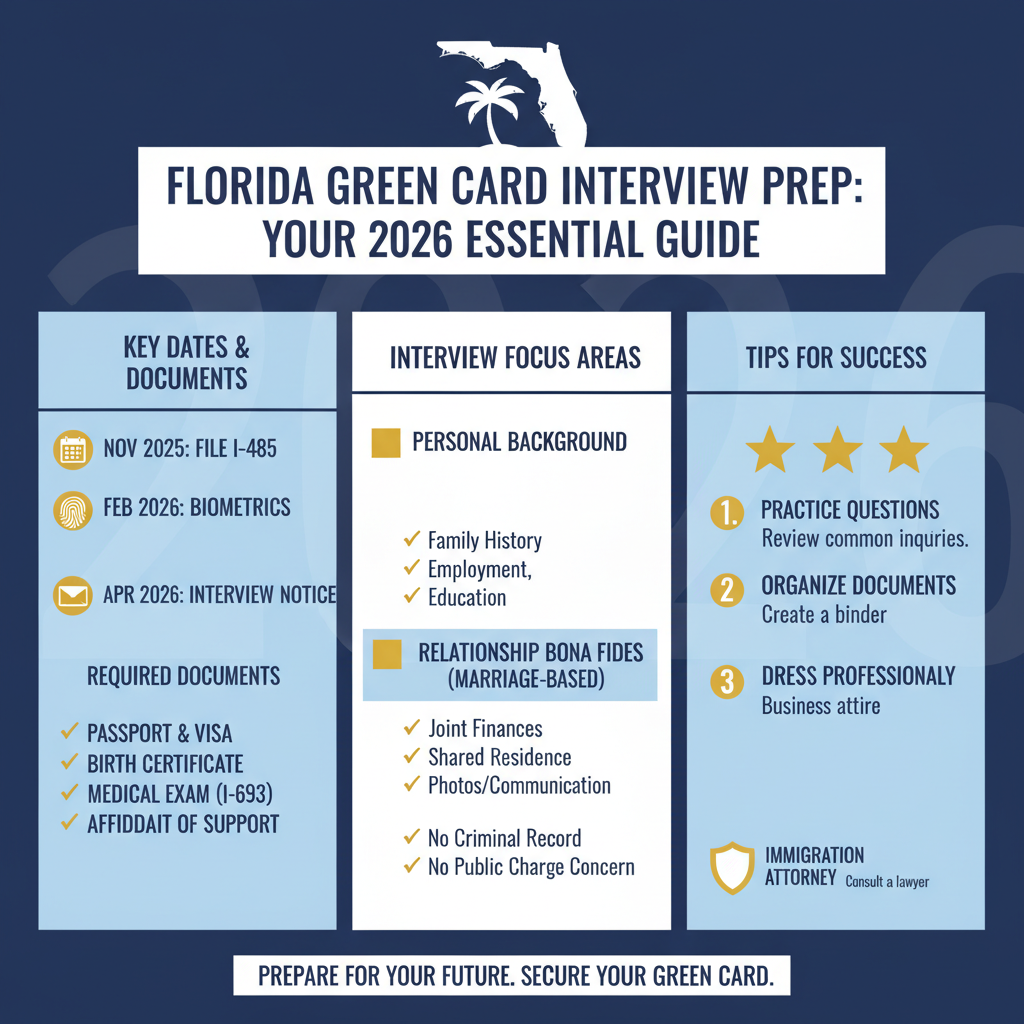
The constant stream of questions and concerns surrounding the Green Card interview process, as highlighted by Green Card Interview Preparation Tips (Immigration Law), underscores the critical need for comprehensive guidance. This ongoing discussion in immigration law circles reflects the reality that for thousands of applicants, the interview remains a pivotal, often nerve-wracking, step.
What This News Means for Immigrants in Orlando and Across Florida
For immigrants in Orlando, across Central Florida, and throughout the Sunshine State, the focus on Green Card interview preparation is not just trending news; it's a perennial necessity. Every year, thousands of individuals and families navigate this process, and their success hinges on meticulous preparation and understanding of what to expect.
Why this news is showing up now
The Green Card interview is an evergreen topic in immigration law because it's a mandatory step for most applicants seeking lawful permanent residency through Adjustment of Status within the U.S. or Consular Processing abroad. While the fundamental requirements remain consistent, USCIS procedures, processing times, and interview backlogs can shift. As of 2026, with ongoing efforts to streamline immigration processes and address past backlogs, the efficiency and scrutiny of these interviews are paramount. News and discussions around interview preparation consistently resurface because applicants are always looking for the latest insights, practical advice, and ways to avoid common pitfalls that could delay or jeopardize their journey to a Green Card. Furthermore, the complexities of different Green Card categories—such as family-based, employment-based, or asylum-based—mean that preparation advice must be nuanced and specific, contributing to the continuous demand for up-to-date guidance.
How it can affect Florida residents
Florida is home to a vibrant and diverse immigrant population, with major immigration hubs in cities like Orlando, Miami, Tampa, and Jacksonville. For residents in these areas, particularly those whose cases are processed at the Orlando USCIS Field Office or other field offices across the state, the importance of interview preparation cannot be overstated. High volumes of applications mean that USCIS officers are often working under pressure, making a well-prepared applicant's interview smoother and more efficient. For Central Florida residents, the Orlando Field Office typically handles Adjustment of Status interviews. Understanding the local office's procedures, typical wait times, and specific document requests can be a significant advantage. Additionally, Florida's large immigrant communities often mean that family-based petitions are common, making comprehensive preparation for marriage-based interviews, for instance, particularly relevant. Any delays or denials due to inadequate preparation can have profound impacts on families striving to build a life together in Florida, affecting everything from employment to educational opportunities.
What Green Card Interview Preparation Is (and Why It Matters)
The Green Card interview is a critical stage in the immigration process where a USCIS officer reviews your application, verifies the information you've provided, and determines your eligibility for lawful permanent residency. It’s an opportunity for you and your petitioner (if applicable) to answer questions under oath and provide any additional documentation requested. This interview matters immensely because it is often the final hurdle before a decision is made on your Green Card application. A successful interview can lead directly to approval, while a poorly prepared or inconsistent interview can result in delays, Requests for Evidence (RFEs), or even denial.
A plain-English definition
Simply put, a Green Card interview is a face-to-face meeting with an immigration officer. During this meeting, the officer will ask you questions about your application, your background, and the basis of your eligibility for a Green Card. If you applied based on marriage, they will also ask about your relationship with your spouse. The goal is for the officer to confirm that all the information you submitted in your application is true and accurate, and that you meet all the legal requirements for permanent residency in the U.S.
Key terms you need to know
- Green Card: Officially known as a Permanent Resident Card, it proves you are authorized to live and work permanently in the United States.
- Adjustment of Status (AOS): The process of applying for lawful permanent resident status (a Green Card) while physically present in the United States. This is contrasted with Consular Processing, where the interview takes place at a U.S. embassy or consulate abroad.
- USCIS (U.S. Citizenship and Immigration Services): The government agency responsible for administering immigration and naturalization benefits.
- Petitioner: The U.S. citizen or lawful permanent resident who files an immigration petition (e.g., Form I-130) on behalf of an immigrant relative.
- Beneficiary: The immigrant who is being petitioned for a Green Card.
- Affidavit of Support (Form I-864): A legally binding document filed by the petitioner (and sometimes a joint sponsor) to show that the immigrant has adequate financial support and will not become a public charge.
- Priority Date: The date USCIS receives your immigration petition. This date determines your place in the visa queue, especially for categories with annual limits.
- Request for Evidence (RFE): A letter from USCIS asking for additional documents or information to support your application.
- Notice of Intent to Deny (NOID): A letter from USCIS indicating their intention to deny your application and giving you an opportunity to respond.
- Medical Examination (Form I-693): A required medical exam conducted by a USCIS-approved civil surgeon to ensure you meet health-related admissibility standards.
Current Immigration Law: The Foundation
The framework for Green Card interviews is rooted in the Immigration and Nationality Act (INA), specifically various sections pertaining to admissibility, eligibility, and the process of Adjustment of Status. The interview ensures compliance with these laws and regulations, confirming that applicants meet all statutory requirements and are not inadmissible to the United States.
Federal requirements
Under federal law, specifically the INA, an applicant for a Green Card must prove their eligibility. This typically involves demonstrating a valid basis for immigration (e.g., a qualifying family relationship, an employment offer, or asylum status), financial self-sufficiency (often through an Affidavit of Support using Form I-864), and good moral character. Furthermore, applicants must be admissible to the U.S., meaning they must not fall under any grounds of inadmissibility, such as certain health-related issues, criminal history, security concerns, or previous immigration violations. The interview is designed to probe these areas. For those applying for Adjustment of Status within the U.S., the interview is conducted by USCIS. For those undergoing Consular Processing, the interview is conducted by a Consular Officer at a U.S. Embassy or Consulate abroad, following similar federal guidelines but with some procedural differences. USCIS uses various forms to collect information, including the primary petition Form I-130 (Petition for Alien Relative) or Form I-140 (Immigrant Petition for Alien Worker), and the application for Adjustment of Status, Form I-485.
You can find detailed information on these requirements and forms on the USCIS official website.
Florida-specific considerations
While immigration law is federal, the practicalities of the interview process can have local nuances. For Florida residents, most Adjustment of Status interviews will be scheduled at the Orlando USCIS Field Office, located at 5449 Forbes Pl, Orlando, FL 32812. The specific caseload and officer practices at this office can influence the interview experience. For example, the Orlando office often handles a high volume of family-based petitions, particularly marriage-based Green Cards, given the diverse demographics of Orange County and the wider Central Florida region. This means officers are very experienced in assessing marital bona fides. While the legal requirements are consistent nationwide, understanding the local office's procedures for scheduling, document submission on the day of, and general interview flow can be beneficial. It's always advisable to consult with an attorney who has experience with the Orlando Field Office.
Important: Always refer to the latest instructions for USCIS forms and procedures on the official USCIS website: USCIS Forms.
How to Prepare for Your Green Card Interview: A Complete Step-by-Step Guide
Preparing for your Green Card interview is crucial. This comprehensive guide will walk you through the essential steps to ensure you are ready for this pivotal moment.
1) Understand Your Case & Review Your Application
The first and most fundamental step is to have a complete and thorough understanding of your own immigration case. This means reviewing every single document you submitted to USCIS. You need to be familiar with the dates, names, addresses, and other details provided in your initial petition and application.
- Review All Forms: Go through your Form I-130, Form I-485, Form I-864, and any other supporting forms like Form I-765 (Employment Authorization) or Form I-131 (Travel Document) that you filed. Make sure you recall the answers you provided.
- Understand Your Eligibility Basis: Clearly articulate the basis for your Green Card (e.g., marriage to a U.S. citizen, employment, asylum).
- Identify Key Dates: Know your entry date into the U.S., your marriage date (if applicable), the date your petition was filed, and your Priority Date.
- Check for Consistency: Ensure all information across all forms and supporting documents is consistent. Discrepancies, even minor ones, can raise red flags.
- Read the Interview Notice: Carefully read your Form I-797C, Notice of Action, which is your interview notice. It will specify the date, time, location (e.g., Orlando USCIS Field Office), and list any specific documents you are required to bring.
2) Gather and Organize All Required Documents
Organization is key. You must bring all original documents, along with copies, even if you think USCIS already has them. The officer will want to see the originals and may keep the copies.
- General Required Documents for Both Petitioner and Beneficiary:
- Original Interview Notice (Form I-797C)
- Government-issued photo identification (e.g., driver's license, state ID)
- Passports (current and expired with U.S. visas and entry stamps)
- Birth Certificates (original and certified translation if not in English)
- Marriage Certificate (original and certified translation if not in English)
- Divorce Decrees or Death Certificates for all prior marriages (original and certified translation)
- Proof of Legal Entry into the U.S. (e.g., I-94 Arrival/Departure Record)
- Medical Examination Report (Form I-693) in a sealed envelope, if not already submitted. Ensure it's current.
- Two passport-style photos for each applicant.
- Copies of all documents submitted in your application package.
- Financial Documents (for Sponsor/Petitioner):
- Original Form I-864 (Affidavit of Support) with all supporting documents, even if previously submitted.
- Most recent federal income tax returns (e.g., Form 1040) with all schedules and W-2s/1099s.
- Proof of current employment (e.g., employment verification letter, recent pay stubs).
- Bank statements, property deeds, or other assets if relying on assets to meet income requirements.
- Case-Specific Documents (e.g., Marriage-Based Green Card):
- Proof of Bona Fide Marriage: This is critical. Bring a wide variety of documents demonstrating your shared life.
- Joint bank accounts (statements, account agreements)
- Joint utility bills (electricity, water, internet)
- Joint leases or mortgage statements (property deeds)
- Joint credit card statements
- Joint health, auto, or life insurance policies
- Photos together (dating, engagement, wedding, holidays, with family/friends)
- Correspondence addressed to both spouses at the same address
- Children's birth certificates (if applicable)
- Affidavits from friends/family attesting to the marriage (Form I-130A)
- Travel itineraries, tickets, hotel bookings for trips taken together
- Evidence of shared assets or debts
- Proof of Bona Fide Marriage: This is critical. Bring a wide variety of documents demonstrating your shared life.
- Employment-Based Green Card Specific Documents:
- Original job offer letter.
- Employment verification letter from your current employer.
- Academic degrees, transcripts, professional licenses, and certifications relevant to your petition.
- Letters of recommendation.
Reminder: Organize your documents in a clear, logical manner. Use folders or binders with tabs. Have originals readily accessible for the officer to review and copies prepared for them to keep.
3) Practice Your Interview Skills
The interview is a conversation, but it's a formal one. Practicing how you'll answer questions can significantly boost your confidence and ensure clarity.
- Anticipate Questions: Think about the questions an officer might ask based on your application. For marriage-based cases, expect detailed questions about how you met, your wedding, daily life, finances, and future plans.
- Role-Play: Practice with a friend, family member, or your attorney. Have them ask you questions as an officer would.
- Be Honest and Consistent: Always tell the truth. Do not embellish or fabricate details. Your answers should be consistent with your application forms and supporting documents.
- Listen Carefully: Pay close attention to the question being asked. If you don't understand, politely ask the officer to repeat or rephrase it.
- Answer Directly: Provide clear, concise answers without volunteering unnecessary information.
- Maintain Composure: It's natural to be nervous, but try to remain calm and respectful.
4) Prepare for Specific Question Types
While questions vary by case, certain themes are common:
- Biographical Questions: Name, date of birth, place of birth, addresses, employment history, education.
- Admissibility Questions: Questions related to criminal history, past immigration violations, health issues, and national security concerns. The officer will go through the "Yes/No" questions on Form I-485 in detail.
- Basis of Petition Questions:
- Family-Based: Detailed questions about the relationship, how you met, your shared life, and future plans. For marriage-based, expect questions about your wedding, daily routines, household responsibilities, and proof of a bona fide marriage.
- Employment-Based: Questions about your job, employer, qualifications, and the necessity of your role.
- For the Petitioner (if applicable): They will be asked similar questions about the relationship and their ability to support you financially.
Warning: For marriage-based interviews, officers are trained to detect fraud. They may ask very specific, sometimes personal, questions to verify the authenticity of your relationship. Do not be offended; answer truthfully.
5) The Day Before & Day Of The Interview
Logistics matter. A smooth interview day starts with good planning.
- The Day Before:
- Confirm the interview location and plan your route, especially if navigating to the Orlando USCIS Field Office during peak traffic times.
- Lay out your interview outfit. Dress professionally and conservatively.
- Organize all your documents one last time.
- Get a good night's sleep.
- The Day Of:
- Arrive early (at least 30 minutes before your scheduled time) to allow for parking, security checks, and finding the correct waiting area.
- Bring your attorney if you have one. Their presence can provide comfort and ensure your rights are protected.
- Be polite and respectful to all USCIS staff, from the security guard to the officer.
- Turn off your cell phone before entering the interview room.
6) What to Expect During the Interview
Knowing the typical flow can ease anxiety.
- Waiting Area: You will check in and wait for your name to be called.
- Oath: The officer will call your name, escort you to their office, and ask you to swear to tell the truth.
- Identity Verification: They will verify your identity, take your fingerprints, and sometimes new photos.
- Document Review: The officer will review your original documents and compare them to the copies you provided. They may ask for specific documents listed on your interview notice.
- Questioning: The bulk of the interview involves the officer asking questions about your application, background, and the basis of your petition. For marriage-based cases, both spouses will be questioned, sometimes together, sometimes separately.
- Clarifications/RFEs: If there are any ambiguities or missing documents, the officer may issue an RFE or ask for immediate clarification.
- Decision: In some cases, the officer might make a decision on the spot. More often, they will inform you that a decision will be mailed to you within a few weeks or months.
Important: If you need an interpreter, you must inform USCIS in advance, or bring your own certified interpreter (who is not your attorney or petitioner). For Orlando residents, many officers are bilingual, but it's not guaranteed.
7) After the Interview
The waiting period can be stressful, but there are things to keep in mind:
- Decision Notification: You will typically receive a decision by mail. This could be an approval, an RFE, a NOID, or a denial.
- Approval: If approved, your Green Card will be mailed to you.
- RFE/NOID: If you receive an RFE or NOID, respond promptly and thoroughly with the requested information. This is where legal counsel is invaluable.
- Denial: If your application is denied, consult with an experienced immigration attorney immediately to discuss your options, which may include filing an appeal or a motion to reconsider.
Need Expert Guidance for Your Interview? Don't face your Green Card interview alone. Imigrar's team understands the Orlando USCIS Field Office procedures. Call +1 786-791-3106 for a free consultation. Se Habla Español.
Practical Steps You Can Take Today
Even before your interview notice arrives, you can start preparing. Proactive preparation can save you time, stress, and potential delays.
Actionable Checklist:
- Start a "Green Card Interview" Folder: Designate a physical and digital folder specifically for interview documents.
- Review Your Initial Application: Dig out copies of your Form I-130, Form I-485, and all supporting documents. Read through them carefully.
- Update Supporting Evidence: If your case is marriage-based, continuously gather new evidence of your bona fide marriage (new joint bills, photos, shared experiences). This is especially important if there has been a significant time lapse since you submitted your initial application.
- Check Document Validity: Ensure your passport and any other identity documents are valid and not expired.
- Schedule Your Medical Exam (if not done): If you haven't already had your medical exam (Form I-693), locate a USCIS-approved civil surgeon and schedule it. Ensure the sealed envelope remains unopened until the interview.
- Address Any Red Flags: If you have any criminal history, prior immigration violations, or other potentially problematic issues, gather all relevant court documents and consult with an attorney immediately.
- Inform Your Petitioner/Sponsor: If applicable, ensure your petitioner or sponsor is aware of the interview date and understands their role and the documents they need to bring.
- Consider Legal Counsel: If you haven't already, schedule a consultation with an immigration attorney to review your case and discuss interview preparation.
Document Preparation Guidance
When organizing your documents, think like an immigration officer. They want to see a clear, organized, and complete package.
- Originals vs. Copies: Always bring originals of everything. The officer will want to see them. Have a complete set of photocopies for the officer to keep.
- Translations: Any document not in English must be accompanied by a certified English translation. The translator must certify that they are competent to translate and that the translation is accurate.
- Order and Tabs: Arrange your documents in the order they were requested or in a logical flow (e.g., by form number, then by type of evidence). Use tabs to easily distinguish sections.
- Binders/Folders: A three-ring binder or well-organized folders can make a significant positive impression.
Timeline Expectations
The timeline for receiving an interview notice and getting a decision can vary significantly based on the type of Green Card, the specific USCIS Field Office (e.g., Orlando Field Office), and current processing backlogs. You can check estimated processing times for the Orlando Field Office on the official USCIS website.
- Interview Scheduling: After your initial application (e.g., Form I-485) is filed and biometrics are processed, it can take several months to over a year to receive an interview notice.
- Interview Notice: You typically receive your interview notice (Form I-797C) 3-6 weeks before the actual interview date.
- Decision: While some decisions are made on the spot, most applicants receive a decision letter by mail within a few weeks to a few months after the interview. If the case is complex or requires further review, it could take longer.
You can monitor your case status and check processing times here: USCIS Processing Times.
How Imigrar Helps Immigrants in Orlando
At Imigrar, we understand that the Green Card interview can be one of the most stressful parts of the immigration process. Our mission, "Keep Families Together," drives our commitment to providing expert legal guidance and support to immigrants in Orlando, across Florida, and nationwide.
Our experienced immigration attorneys have a deep understanding of USCIS procedures, including the specific practices of the Orlando USCIS Field Office. We have successfully guided countless clients through their Green Card interviews, preparing them for every possible scenario.
Our experience and expertise include:
- Comprehensive Case Review: We meticulously review your entire application package to identify any inconsistencies or potential issues before the interview.
- Personalized Interview Preparation: We conduct mock interviews, providing you with tailored advice and helping you anticipate questions specific to your case.
- Document Organization: We assist you in organizing your documents efficiently, ensuring you have all necessary originals and copies.
- Attorney Representation: One of our skilled attorneys can accompany you to your interview, providing legal support and advocating on your behalf. This presence often provides significant peace of mind and can help ensure a fair process.
- Post-Interview Support: Whether it's responding to an RFE or appealing a denial, we stand by you through every stage.
We believe that no one should face the complexities of immigration law alone. That's why we offer a free consultation to discuss your case and how we can help you achieve your immigration goals. Our team is fluent in both English and Spanish, ensuring clear and effective communication: Se Habla Español.

Frequently Asked Questions
Q: Do all Green Card applicants need an interview?
A: Most applicants for a Green Card, especially those filing for Adjustment of Status based on family petitions (like marriage to a U.S. citizen), will require an interview. However, there are exceptions. For example, some employment-based categories, or derivative beneficiaries of certain petitions, may have their interviews waived if USCIS determines they have sufficient evidence on file and no issues requiring in-person clarification. It is crucial to always assume an interview will be required and prepare accordingly until you receive specific notification from USCIS that it has been waived.
Q: What kind of questions are asked in a marriage-based Green Card interview?
A: For marriage-based Green Card interviews, officers aim to determine if the marriage is bona fide (real and not entered into solely for immigration purposes). Questions can range from general to very specific and personal. Common questions include: How and when did you meet? What was your first date like? What did you do on your wedding day? What are your daily routines? Who pays the bills? What are your spouse's parents' names? What did you eat for breakfast today? Where do you keep your toothbrush? They may also ask about shared finances, living arrangements, mutual friends, and future plans. Be prepared to answer honestly and consistently with your submitted evidence.
Q: How long does a Green Card interview usually last?
A: The duration of a Green Card interview can vary significantly. Simple, straightforward cases with well-prepared applicants and complete documentation might last only 15-30 minutes. More complex cases, those with missing documents, or


