


The journey to obtaining a Green Card, also known as lawful permanent residency, is a pivotal moment for many immigrants and their families in the United States. While the application process can be lengthy and complex, the Green Card interview is often the final hurdle – a critical step that determines the outcome of your case. For many, this interview can be a source of anxiety, but with proper preparation and understanding, it can be a smooth and successful experience.
At Imigrar, an immigration law firm based in Orlando, Florida, we understand the immense significance of this interview. Our mission is to "Keep Families Together," and that means empowering you with the knowledge and support needed to navigate every stage of your immigration journey, especially the Green Card interview.
Need Help? Our Orlando immigration team is ready to assist. Call +1 786-791-3106 for a free consultation, or message us online. Se Habla Español.
The reporting that sparked this guide
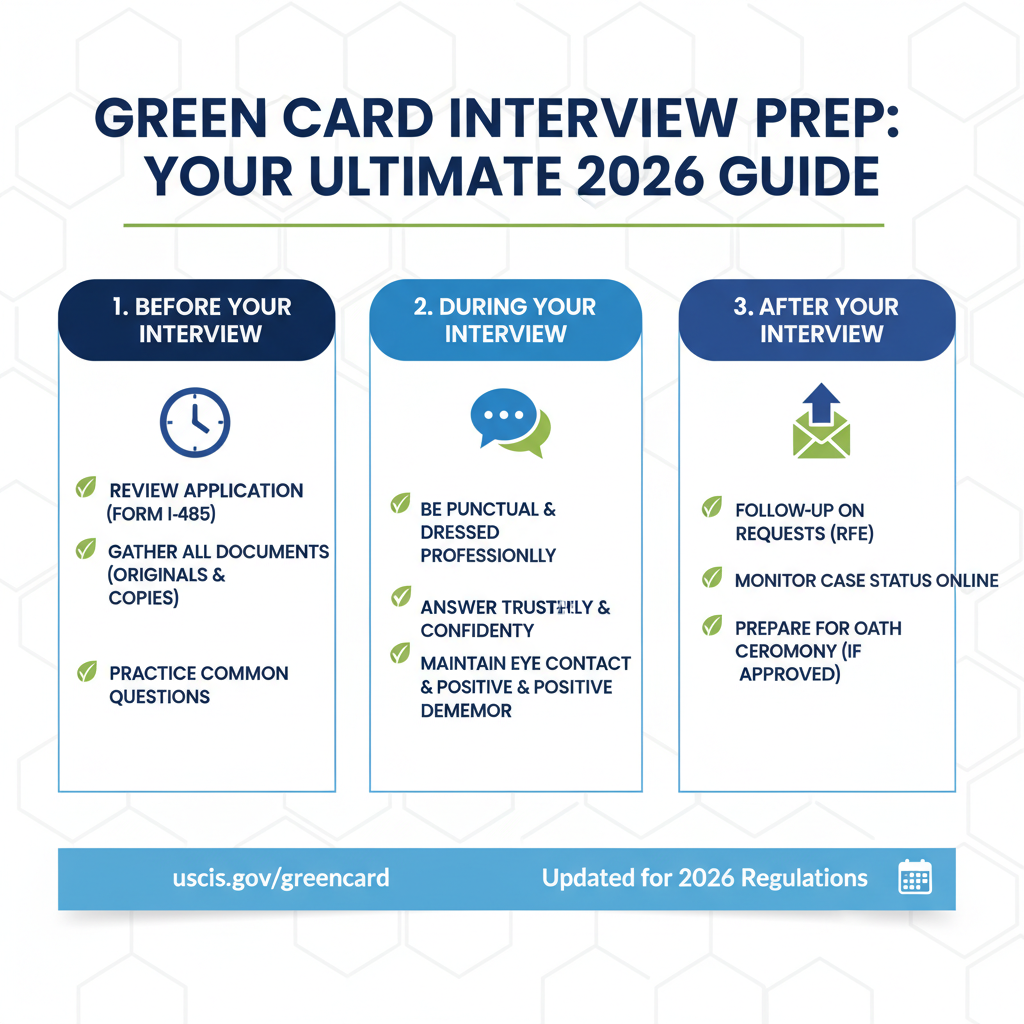
Recent discussions and reports from various Green Card Interview Preparation Tips (Immigration Law) sources highlight the ongoing importance of thorough preparation for Green Card interviews. These conversations consistently emphasize that while each case is unique, a well-prepared applicant significantly increases their chances of a positive outcome. The evolving landscape of immigration policy, coupled with the inherent complexities of U.S. immigration law, makes expert guidance more crucial than ever.
What This News Means for Immigrants in Orlando and Across Florida
The emphasis on thorough Green Card interview preparation is not just a general recommendation; it's a vital directive for anyone seeking permanent residency in the U.S., including the vibrant immigrant communities across Florida. Understanding the nuances of this process can make all the difference between approval and potential delays or denials.
Why this news is showing up now
The topic of Green Card interview preparation is consistently trending for several reasons. Firstly, as the U.S. Citizenship and Immigration Services (USCIS) continues to process a high volume of applications, maintaining efficiency and integrity in the interview process remains paramount. USCIS periodically updates its guidelines and focuses on specific areas during interviews, making it essential for applicants to stay informed. Secondly, with the current administration's ongoing review of immigration policies, the scrutiny on applications can sometimes feel heightened. This means that presenting a clear, consistent, and well-supported case is more important than ever. Finally, the sheer number of individuals applying for Green Cards, particularly through family-based petitions, ensures a continuous demand for reliable preparation resources. Every month, thousands of individuals receive their interview notices, driving the constant need for updated advice.
How it can affect Florida residents
For immigrants living in Florida, especially those in Orlando and the surrounding Central Florida area, this news is particularly relevant. Florida has one of the largest immigrant populations in the country, and many residents are navigating the Green Card process. The Orlando USCIS Field Office, located on Tradeport Drive, serves a vast area, including Orange County, Osceola County, and communities along the I-4 corridor. This office conducts a significant number of interviews, and understanding their specific procedures and common lines of questioning can give local applicants a distinct advantage.
- Local Caseload Impact: High volumes of applications mean that officers are experienced but also efficient. Being organized and prepared helps streamline your interview.
- Diverse Community Needs: Florida's diverse immigrant population, with significant communities from Latin America, the Caribbean, and other regions, means that cultural nuances and language support (like Se Habla Español) are crucial.
- Economic Ties: Many Florida residents pursue Green Cards to maintain family unity and contribute to the state's economy, making the success of their applications vital for both personal and community well-being.
- Legal Support Accessibility: Having access to experienced local immigration attorneys, like Imigrar in Orlando, ensures that Florida residents receive tailored advice that considers both federal law and local USCIS office practices.
Being well-prepared is not just about answering questions; it's about demonstrating your eligibility, honesty, and genuine intent to become a lawful permanent resident. For those in Orlando and across Florida, this means taking every step to ensure your interview goes smoothly.
What Green Card Interview Preparation Is (and Why It Matters)
The Green Card interview is a mandatory step for most individuals seeking lawful permanent residency in the United States, whether through Adjustment of Status within the U.S. or through Consular Processing abroad. It's your opportunity to personally present your case to an immigration officer, answer questions under oath, and provide supporting documentation.
A plain-English definition
Simply put, Green Card interview preparation is the process of getting ready for your meeting with a USCIS officer (if you're applying from within the U.S.) or a Consular Officer (if applying from outside the U.S.). The goal of this meeting is for the officer to verify the information in your application, confirm your eligibility for a Green Card, and ensure that you are admissible to the United States. It's essentially a fact-checking and verification session where you, and often your petitioning relative, will answer questions about your application, your relationship, and your background.
For instance, if you're applying for a Green Card through marriage to a U.S. citizen, the interview's primary purpose is to confirm that your marriage is genuine and not entered into solely for immigration benefits. For other categories, it might focus on your employment history, family ties, or specific qualifications.
Key terms you need to know
Navigating the Green Card process involves understanding several key terms:
- Green Card: Official name is Form I-551, Permanent Resident Card. It grants you authorization to live and work permanently in the United States.
- Adjustment of Status (AOS): The process of applying for a Green Card from within the United States. This is for individuals who are already legally present in the U.S. and meet specific eligibility requirements. The primary form for this is Form I-485.
- Consular Processing: The process of applying for a Green Card through a U.S. embassy or consulate in your home country (or another country if you are eligible). This is for individuals who are outside the U.S. or ineligible for Adjustment of Status.
- USCIS (U.S. Citizenship and Immigration Services): The government agency responsible for processing immigration petitions and applications, including Green Cards, and conducting interviews for Adjustment of Status.
- Priority Date: For certain visa categories (like family-sponsored and employment-based), this is the date your petition (e.g., Form I-130) was properly filed with USCIS. It determines your place in the visa queue. You can only proceed with your Green Card application when your priority date becomes current.
- Petitioner: The U.S. citizen or lawful permanent resident who files an immigration petition (e.g., Form I-130) on behalf of an immigrant relative.
- Beneficiary: The immigrant who is applying for the Green Card.
- Affidavit of Support: A legally binding document (Form I-864) signed by the petitioner, promising financial support for the immigrant if needed, ensuring they won't become a public charge.
- Public Charge: A term used by immigration officials to describe individuals who are primarily dependent on the government for subsistence, as demonstrated by the receipt of public cash assistance for income maintenance or long-term institutionalization at government expense.
Understanding these terms will help you better comprehend the legal requirements and the questions you might face during your interview. It's about speaking the same language as the immigration officers and ensuring clarity in your responses.
Need Help? Our Orlando immigration team is ready to assist. Call +1 786-791-3106 for a free consultation, or message us online. Se Habla Español.
Current Immigration Law: The Foundation
The Green Card interview, and indeed the entire Green Card process, is rooted in specific sections of the Immigration and Nationality Act (INA), which is the body of law governing immigration to the United States. Understanding these foundational laws is crucial for appreciating why certain questions are asked and why specific documents are required.
Federal requirements
The primary legal framework for obtaining a Green Card is found in the INA. Key sections include:
- INA § 245 (Adjustment of Status): This section outlines the eligibility criteria for individuals seeking to adjust their status to lawful permanent resident while physically present in the United States. Generally, applicants must have been inspected and admitted or paroled into the U.S. and maintain a lawful status (though exceptions exist, particularly for immediate relatives of U.S. citizens).
- INA § 201-204 (Family-Sponsored Immigration): These sections establish the categories for family-based immigration, including immediate relatives (spouses, unmarried children under 21, and parents of U.S. citizens who are at least 21) and family preference categories (such as unmarried adult children, married children, and siblings of U.S. citizens, and spouses and unmarried children of lawful permanent residents). The petitioning relative files Form I-130, Petition for Alien Relative, under these provisions.
- INA § 212 (Inadmissibility Grounds): This is a critical section that lists various reasons an individual might be deemed "inadmissible" to the U.S., preventing them from receiving a Green Card. These grounds include health-related issues, criminal history, security concerns, public charge concerns, misrepresentation, and prior immigration violations. During the interview, officers will specifically look for any inadmissibility factors. Waivers may be available for certain grounds of inadmissibility, but they are complex and require careful legal strategy.
- INA § 237 (Deportability Grounds): While inadmissibility applies at the time of entry or adjustment of status, deportability grounds apply to individuals already admitted to the U.S. An officer might uncover information during an interview that could lead to deportability proceedings if not addressed appropriately.
For most Green Card applications, the process involves filing several forms with USCIS. For Adjustment of Status, this typically includes:
- Form I-130, Petition for Alien Relative (filed by the U.S. citizen/LPR petitioner).
- Form I-485, Application to Register Permanent Residence or Adjust Status (filed by the beneficiary).
- Form I-765, Application for Employment Authorization (optional, allows you to work while your AOS is pending).
- Form I-131, Application for Travel Document (optional, allows you to travel abroad while your AOS is pending).
- Form I-864, Affidavit of Support (filed by the petitioner to demonstrate financial support).
- Form I-693, Report of Medical Examination and Vaccination Record (completed by a USCIS-approved civil surgeon).
All these forms and their supporting documents must be meticulously prepared and submitted. You can find detailed instructions and the latest versions of these forms on the USCIS Forms page on the USCIS official website.
Florida-specific considerations
While federal law governs the Green Card process nationwide, certain practical considerations are specific to Florida residents:
- Orlando USCIS Field Office: If you reside in Central Florida, your interview will likely be scheduled at the Orlando Field Office. Understanding the general atmosphere, typical wait times, and specific document requests of this office can be beneficial. Local attorneys often have experience with the nuances of specific field offices.
- State-level Support: While Florida does not have its own immigration laws that directly impact Green Card eligibility, various state and local resources exist to assist immigrants, from community organizations to legal aid services.
- Driving Laws and Identification: For those who successfully obtain their Green Card in Florida, understanding state-specific requirements for obtaining a Florida driver's license or state ID is important.
- Public Charge Rule: While the public charge rule is federal, its application can sometimes be a point of concern for applicants. Florida’s diverse economic landscape means that petitioners must clearly demonstrate their financial ability to support the beneficiary through Form I-864.
It’s important to remember that immigration law is complex and constantly evolving. Relying on outdated information or informal advice can jeopardize your case. Always consult with a qualified immigration attorney for personalized guidance.
How to Prepare for Your Green Card Interview: A Complete Step-by-Step Guide
The Green Card interview is a critical step, and thorough preparation is your best defense against potential issues. This comprehensive guide breaks down the preparation process into actionable steps.
1) Review Your Application & Documents
Before anything else, you must be intimately familiar with every piece of information you’ve submitted to USCIS. Your interview is essentially a verification of these documents and statements.
- Gather all copies: Collect copies of every form you submitted (Form I-130, Form I-485, Form I-864, etc.) and all supporting documents (birth certificates, marriage certificates, divorce decrees, financial records, photos, etc.).
- Read everything: Go through your entire application packet, page by page. Ensure you remember all dates, addresses, employment history, and answers provided. The immigration officer will have your file in front of them and will refer to it.
- Identify inconsistencies: If you find any discrepancies or information that has changed since you filed, make a note of it. Be prepared to explain these changes clearly and honestly. For example, if you moved, update your address with USCIS immediately.
- Understand the "Why": For each question on the forms, understand why it was asked and why you answered it the way you did. This deep understanding will help you answer follow-up questions confidently.
Required Documents to Review:
- All filed USCIS forms (I-130, I-485, I-864, I-765, I-131, I-693)
- Copies of all supporting documents (birth certificates, marriage certificates, previous divorce decrees, passports, visas, I-94 records, etc.)
- Any RFE (Request for Evidence) responses you submitted.
- Your medical exam results (Form I-693).
2) Organize Your Evidence
The interview is not just about answering questions; it's about proving your eligibility with tangible evidence. Organization is key to making a strong impression and avoiding delays.
- Create a master checklist: List every original document and piece of evidence you need to bring.
- Originals and copies: Bring ALL original documents that you submitted copies of with your application. Also bring an extra set of copies of everything. The officer will want to see the originals and may ask to keep copies.
- Categorize and label: Use folders, binders, or envelopes to organize your documents logically. For marriage-based cases, categorize evidence of a bona fide marriage (e.g., joint finances, shared residence, photos, affidavits). For other cases, categorize by type (e.g., birth certificates, medical records, financial documents).
- Financial evidence: For the Affidavit of Support (Form I-864), bring the petitioner's most recent tax returns, W-2s, pay stubs, and employment verification letters.
- Proof of relationship: For family-based petitions, especially marriage, gather extensive evidence: joint bank accounts, joint leases/mortgages, utility bills in both names, insurance policies, birth certificates of shared children, wedding photos, travel itineraries, communication records, and affidavits from friends/family.
Example of Organized Evidence (for marriage-based Green Card):
- Tab 1: Interview Notice & Passports (Your interview notice, current passports, EAD card, travel documents)
- Tab 2: Application Forms (Copies of all filed forms: I-130, I-485, I-864, etc.)
- Tab 3: Vital Records (Original birth certificates, original marriage certificate, original divorce decrees if applicable)
- Tab 4: Financial Evidence (Petitioner's recent tax transcripts, W-2s, pay stubs, employment letter)
- Tab 5: Joint Financial Documents (Joint bank statements, credit card statements, joint loan documents)
- Tab 6: Joint Residence Evidence (Joint lease/mortgage, utility bills in both names, property deeds)
- Tab 7: Shared Life Evidence (Health/life insurance policies naming spouse, photos with dates/captions, travel documents, affidavits from friends/family)
- Tab 8: Medical Exam (Sealed Form I-693 if not already submitted, or receipt of submission)
- Tab 9: Other Supporting Documents (Any additional documents requested or relevant to your case)
3) Practice Answering Questions
The interview is a conversation, but it's a formal one. Practicing your answers can build confidence and ensure clarity.
- Anticipate questions: Research common Green Card interview questions for your specific category. For marriage-based cases, expect questions about how you met, your wedding, daily life, finances, and future plans. For other categories, expect questions about your background, job, family, and criminal history.
- Role-play: Practice with your spouse, a friend, or your attorney. Have them ask you questions as if they were the immigration officer. Focus on clear, concise, and truthful answers.
- Be consistent: Ensure your verbal answers match the information on your submitted forms. Inconsistencies can raise red flags.
- Honesty is paramount: Never lie or intentionally mislead an immigration officer. If you don't know an answer, say so. If you need clarification on a question, ask.
- Practice English (if applicable): If English is not your first language, practice answering in English. If you need an interpreter, inform USCIS in advance or bring your own (if allowed by the specific office). At Imigrar, we often accompany our clients to interviews, providing support and interpretation if needed.
Common Interview Questions Examples:
- "How did you meet your spouse?" (for marriage-based)
- "When and where did you get married?"
- "Describe a typical day in your life together."
- "What is your spouse's date of birth/parents' names?"
- "Have you ever been arrested or convicted of a crime?"
- "Have you ever been deported or removed from the U.S.?"
- "Do you have any children?"
- "What is your current address and how long have you lived there?"
- "Do you understand the oath you just took?"
4) Understand the Interview Process
Knowing what to expect on the day of your interview can significantly reduce anxiety.
- Arrival: Arrive at least 30 minutes before your scheduled appointment. Factor in traffic, especially in Orlando (I-4 corridor can be unpredictable), and parking.
- Security: You will go through security screening similar to an airport. Leave prohibited items at home.
- Waiting area: You will check in and wait for your name to be called.
- The Oath: The interview begins with you (and your spouse/petitioner, if applicable) taking an oath to tell the truth. Take this seriously.
- The Interview Itself: The officer will review your application, ask questions, and examine your original documents. They will likely take notes. For marriage-based interviews, both spouses are typically interviewed together, though some officers may separate you briefly for certain questions.
- Decision: Most interviews do not result in an immediate decision. The officer may tell you they need to review further, or they may approve you on the spot. You will usually receive a decision notice by mail.
- Attorney's Role: If you have an attorney, they will accompany you, advise you during the interview, and can intervene if the officer asks inappropriate questions or misrepresents facts.
5) Plan Your Interview Day Logistics
The day of your interview should be as stress-free as possible, allowing you to focus on the task at hand.
- Dress professionally: While not a job interview, dressing neatly shows respect for the process.
- Childcare: If possible, arrange for childcare. Children can be a distraction, though they are sometimes allowed to accompany parents.
- Transportation: Plan your route to the Orlando USCIS Field Office well in advance. Consider traffic and parking.
- Food/Drink: Bring water. The waiting period can sometimes be long.
- Remain calm: Take deep breaths. If you feel overwhelmed, ask for a moment. Be polite and respectful to the officer.
- Follow instructions: Listen carefully to the officer's instructions and questions.
6) Follow Up After the Interview
Your responsibility doesn't necessarily end when you leave the USCIS office.
- Decision Notice: If you don't receive an immediate decision, you'll receive a notice by mail. This could be an approval, a Request for Evidence (RFE), or a Notice of Intent to Deny (NOID).
- RFE/NOID: If you receive an RFE or NOID, it's crucial to respond promptly and thoroughly. This is often where legal counsel is invaluable.
- Green Card Delivery: If approved, your Green Card will be mailed to you, typically within a few weeks. Ensure your address on file with USCIS is current.
- Conditional Green Card: If you received a Green Card based on a marriage less than two years old, it will be a conditional Green Card, valid for two years. You'll need to file Form I-751, Petition to Remove Conditions on Residence, within the 90-day window before its expiration. Start preparing for this early.
Practical Steps You Can Take Today
Don't wait until the last minute to start preparing for your Green Card interview. Here are actionable steps you can take right now to set yourself up for success.
Actionable Checklist:
Review Your Entire Application Packet: Pull out copies of every form you submitted (Form I-130, Form I-485, Form I-864, etc.) and all supporting documents. Read through them carefully. Note any information that has changed or needs clarification since submission.
Create a Master Document Checklist: List every original document and piece of evidence you will need to bring to the interview. This should include all vital records (birth certificates, marriage certificates), financial documents, and relationship evidence.
Gather Originals and Make Copies: Start collecting all original documents. Make at least two sets of clear, legible copies of everything. Organize them into clearly labeled folders or binders. One set for the officer, one for your records, and originals to show.
Collect Additional Evidence: Even if you submitted extensive evidence with your initial application, gather more recent documents. For marriage-based cases, this means new photos, recent joint bank statements, updated utility bills, and correspondence. The more evidence you have of an ongoing, bona fide relationship, the better.
Update Address with USCIS: If you have moved since filing your application, immediately update your address with USCIS online via their change of address tool. This ensures you receive all notices, including your interview appointment. Important: Missing an interview notice can lead to denial.
Schedule a Mock Interview: Practice answering common Green Card interview questions with your spouse or a trusted friend. Focus on clear, concise, and consistent answers. Identify areas where you might hesitate or need more clarity.
Consult with an Immigration Attorney: This is arguably the most important step. An experienced attorney can review your entire file, identify potential issues, help you organize your documents, conduct a mock interview, and accompany you to the actual interview at the Orlando USCIS Field Office. They can provide peace of mind and expert guidance.
Document Preparation Guidance:
- Authenticity: All documents must be authentic. If a document is in a foreign language, it must be accompanied by a certified English translation. The translator must certify that they are competent to translate and that the translation is accurate.
- Physical Condition: Ensure your documents are clean, unfolded, and easy to read.
- Photocopies: While you bring originals, officers often appreciate having clear photocopies they can keep. Have a full set ready.
- Organize, Organize, Organize: Use tabs, dividers, and labels. Imagine you are presenting a case to someone who knows nothing about you – make it easy for them to follow.
Timeline Expectations:
The timeline for receiving a Green Card interview notice and a final decision can vary significantly based on the type of petition, the USCIS field office (e.g., Orlando Field Office), and current processing volumes.
- Petition Filing to Interview Scheduling: For family-based Adjustment of Status cases (e.g., immediate relatives of U.S. citizens), after filing Form I-485, it can take anywhere from 6 months to 2 years to receive an interview notice. For preference categories, this depends on your Priority Date becoming current, which can take several years. You can check approximate USCIS Processing Times online.
- Interview to Decision: While some officers may give an immediate approval, it's more common to receive a decision notice by mail within a few weeks to a few months after the interview. If your case is complex or if additional evidence is requested, it could take longer.
- Green Card Delivery: Once approved, the physical Green Card is typically mailed within 2-3 weeks.
- Conditional Green Cards: If you receive a 2-year conditional Green Card, remember to file Form I-751, Petition to Remove Conditions on Residence, within the 90-day window before it expires. Failing to do so can result in loss of status.
Reminder: These are general timelines. Individual cases may vary. Always refer to official USCIS communications and consult with your attorney for the most accurate and up-to-date information regarding your specific case.

How Imigrar Helps Immigrants in Orlando
At Imigrar, we understand that the Green Card interview can feel like the final, most nerve-wracking hurdle in your


