

The journey to obtaining a Green Card, or lawful permanent residency in the United States, is a significant milestone for countless individuals and families. A pivotal step in this process is the Green Card interview, a face-to-face meeting with a U.S. Citizenship and Immigration Services (USCIS) officer. While it can feel intimidating, proper preparation is key to a smooth and successful outcome. At Imigrar, we understand the stakes involved and are dedicated to guiding our clients through every stage, ensuring they are well-prepared to present their case clearly and confidently.
The reporting that sparked this guide:
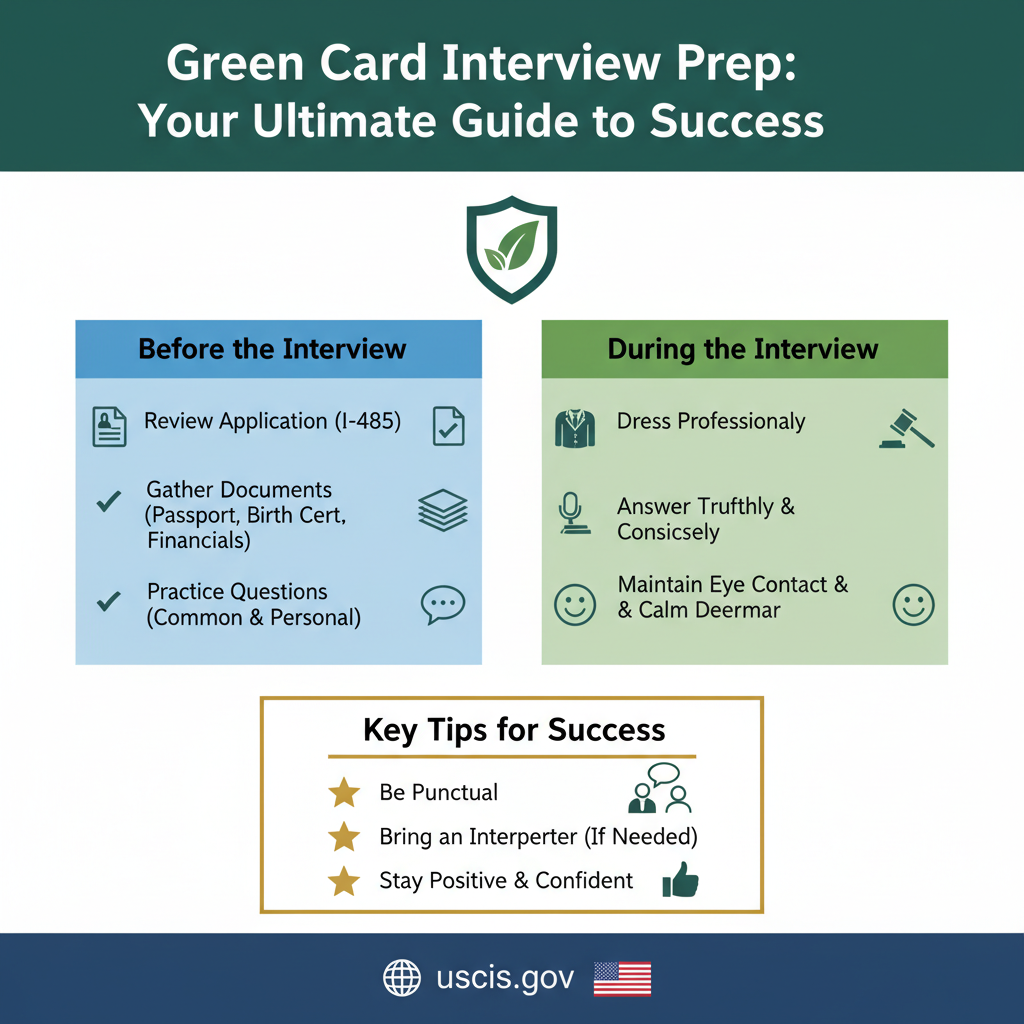
The ongoing importance of thorough preparation for immigration interviews is consistently highlighted across legal news and advisories. Our comprehensive guide is directly informed by the continuous focus on effective interview strategies, as seen in reporting like: Green Card Interview Preparation Tips (Immigration Law).
What This News Means for Immigrants in Orlando and Across Florida
The necessity of being fully prepared for a Green Card interview isn't new, but its relevance is ever-present. For immigrants living in Orlando, across Central Florida, and throughout the entire state, understanding how to navigate this critical step is paramount. The news consistently emphasizes that thorough preparation is not just advisable; it's essential for a positive outcome.
Why this news is showing up now
The topic of Green Card interview preparation is perennially relevant because it's a non-negotiable part of the Adjustment of Status process for most applicants. While policies and processing times can fluctuate, the fundamental requirement to demonstrate eligibility and sincerity to a USCIS officer remains constant. As immigration continues to be a central topic in national discourse, and with ongoing updates to USCIS procedures, the demand for clear, actionable guidance on crucial steps like the interview remains high. Every applicant hopes for a smooth process, and effective preparation is the primary way to achieve that, making this a consistently trending and vital topic for anyone seeking permanent residency.
How it can affect Florida residents
Florida is one of the most diverse states in the nation, home to vibrant immigrant communities from Latin America, the Caribbean, and beyond. This means that thousands of Florida residents, from Miami to Jacksonville, and especially here in Orlando along the I-4 corridor, regularly go through the Green Card interview process. For those whose cases are processed through the Orlando USCIS Field Office, understanding local nuances and preparation strategies can be particularly beneficial. In a state with such a high volume of immigration cases, even minor missteps can lead to significant delays or denials. Therefore, for Florida residents, staying informed and meticulously preparing for their Green Card interview is not just a general recommendation—it’s a localized necessity that directly impacts their future and the ability to keep their families together in the Sunshine State.
Need Help? Our Orlando immigration team is ready to assist. Call +1 786-791-3106 for a free consultation, or message us online. Se Habla Español.
What Green Card Interview Preparation Is (and Why It Matters)
The Green Card interview is a crucial step for most individuals applying for lawful permanent residency in the United States. It’s an opportunity for a USCIS officer to verify the information provided in your application, confirm your eligibility, and ensure that your marriage (if applicable) is bona fide, or that your employment offer is legitimate. It’s also a chance to address any discrepancies or unanswered questions from your submitted forms and documents. Think of it as the final exam of your immigration journey.
A plain-English definition
Simply put, a Green Card interview is a meeting with a U.S. government official to discuss your application for permanent residency. During this meeting, the officer will ask you questions about your application, your background, and your relationship (if applying based on marriage or family). They want to make sure that you meet all the legal requirements to become a permanent resident and that all the information you’ve provided is truthful and accurate. It’s a formal conversation, but also a human interaction where you have the chance to present your case directly.
Key terms you need to know
- Adjustment of Status (AOS): This is the process of applying for a Green Card while you are already inside the United States. The interview is a key part of this process.
- Consular Processing: If you are applying for a Green Card from outside the U.S., your interview will take place at a U.S. consulate or embassy in your home country. While this guide focuses on AOS interviews, many preparation tips apply to both.
- Petitioner: The U.S. citizen or lawful permanent resident who files an immigrant petition (like Form I-130) on behalf of another person.
- Beneficiary: The foreign national who is seeking a Green Card based on the petition filed by the petitioner.
- Bona Fide Marriage: A marriage entered into in good faith, not solely for immigration benefits. This is a critical concept for marriage-based Green Cards.
- Affidavit of Support (Form I-864): A legally binding document signed by the petitioner (and sometimes a joint sponsor) to demonstrate they can financially support the immigrant and prevent them from becoming a "public charge."
- Priority Date: The date your immigrant petition (e.g., Form I-130) was properly filed with USCIS. This date determines your place in the visa queue for certain categories.
- Notice of Interview: The official letter from USCIS (or the National Visa Center for consular processing) informing you of your interview date, time, and location, along with required documents.
- Inadmissibility: Grounds under U.S. immigration law that can make a foreign national ineligible for a Green Card, such as certain criminal offenses, health issues, or past immigration violations.
Understanding these terms will not only help you navigate the process but also empower you to discuss your case more effectively with your attorney and the USCIS officer.
Current Immigration Law: The Foundation
The Green Card interview process is governed by the Immigration and Nationality Act (INA), which is the body of law that dictates all aspects of U.S. immigration. Specific sections of the INA lay out the eligibility requirements for various Green Card categories and the procedures USCIS must follow. For most Green Card applicants undergoing an interview, the relevant sections include:
- INA Section 245 (Adjustment of Status): This section outlines the general requirements for individuals to adjust their status to lawful permanent resident while present in the United States. Key provisions include having been inspected and admitted or paroled, and being eligible for an immigrant visa.
- INA Sections 201 and 203 (Family-Sponsored and Employment-Based Immigration): These sections establish the categories and numerical limitations for immigrant visas, which are the basis for most Green Card applications. They define who can petition for whom and in what order.
- INA Section 212 (General Classes of Aliens Ineligible to Receive Visas and Inadmissible to the United States): This crucial section lists the various grounds of inadmissibility that can prevent someone from obtaining a Green Card, such as health-related grounds, criminal grounds, security and related grounds, public charge, and prior immigration violations. The interview is often used to ensure applicants do not fall under these categories.
These laws form the bedrock of eligibility, and the interview is designed to confirm that you meet these legal standards.
Federal requirements
At the federal level, all Green Card applicants must meet specific criteria depending on their category (e.g., family-based, employment-based, asylum, diversity visa). Common federal requirements include:
- Valid Immigrant Petition: You must be the beneficiary of an approved immigrant petition, such as Form I-130 (Petition for Alien Relative) for family-based cases or Form I-140 (Immigrant Petition for Alien Worker) for employment-based cases.
- Visa Availability: An immigrant visa must be immediately available to you at the time of filing your Form I-485 (Application to Register Permanent Residence or Adjust Status) and at the time of the interview. This is determined by the Visa Bulletin published monthly by the U.S. Department of State.
- Admissibility: You must not be inadmissible to the U.S. under INA Section 212. This involves background checks, medical examinations, and an assessment of your criminal history, health status, and other factors.
- Financial Support: For most family-based and some employment-based Green Cards, the petitioner must file Form I-864, Affidavit of Support, demonstrating sufficient income to support you above the poverty line.
- Physical Presence (for AOS): If you are adjusting status within the U.S., you must generally have been inspected and admitted or paroled into the country.
The interview serves as a direct means for USCIS to verify these requirements and address any concerns. You can find detailed information on all forms and requirements on the USCIS official website.
Florida-specific considerations
While immigration law is federal, the practical application often involves local USCIS field offices. For residents of Central Florida, your Green Card interview will likely take place at the Orlando USCIS Field Office. While the legal requirements remain the same nationwide, understanding the local context can be helpful:
- Orlando USCIS Field Office: Familiarize yourself with the location, parking, and security procedures for the Orlando USCIS Field Office. Traffic along the I-4 corridor can be unpredictable, so plan to arrive well in advance.
- Diverse Caseload: The Orlando office processes a wide range of cases from a highly diverse population, including many family-based petitions. Officers are accustomed to interviewing individuals from various cultural backgrounds.
- Legal Support: Having an experienced immigration attorney from a local firm like Imigrar, located in Orlando, can be particularly beneficial. We are familiar with the procedures and expectations of the local field office, providing tailored guidance for our Florida clients.
Reminder: The principles of thorough preparation apply universally, but having a local legal team familiar with your specific office can add an extra layer of confidence.
Need Help? Our Orlando immigration team is ready to assist. Call +1 786-791-3106 for a free consultation, or message us online. Se Habla Español.
How to Prepare for Your Green Card Interview: A Complete Step-by-Step Guide
Preparing for your Green Card interview is a multi-faceted process that requires attention to detail, organization, and a clear understanding of your case. Here’s a comprehensive step-by-step guide to help you succeed:
1) Understand Your Case and Interview Type
Before anything else, clearly understand the basis of your Green Card application. Is it family-based (e.g., through a U.S. citizen spouse, parent, or child)? Employment-based? Asylee/refugee? Each category has specific eligibility criteria and types of questions. For marriage-based cases, the focus will be heavily on proving a bona fide marriage. For employment-based cases, the officer will verify the job offer and your qualifications.
- Review Your Petition: Go back to your initial immigrant petition (e.g., Form I-130, Form I-140) and your Form I-485 application. Understand every answer you provided.
- Identify Key Elements: Pinpoint the critical facts of your case that establish your eligibility. For example, the date of your marriage, the start date of your employment, or the circumstances of your asylum claim.
- Know Your Timeline: Be aware of all significant dates related to your application, such as filing dates, approval dates, and dates of entry to the U.S.
2) Gather All Original Documents (and Copies)
This is arguably the most critical step. Your interview notice will list required documents, but it’s always better to over-prepare. Organize your documents meticulously in a binder or folder, clearly labeled. Bring both originals and complete photocopies of everything. The officer will review the originals and may keep the copies.
- Interview Notice: The official letter from USCIS.
- Passports: Current and all expired passports for all applicants.
- Birth Certificates: Original for all applicants and petitioner (if applicable), with certified English translations if not in English.
- Marriage Certificate: Original, if applicable, with translations.
- Divorce Decrees/Death Certificates: For any prior marriages of either spouse, if applicable, with translations.
- Medical Exam Results: Form I-693, Report of Medical Examination and Vaccination Record, in a sealed envelope (unless already submitted).
- Affidavit of Support (Form I-864) Package: If required, bring the original signed form, the petitioner's (and joint sponsor's, if any) most recent three years of federal tax returns/transcripts, W-2s, pay stubs, and employment verification letter.
- Proof of Relationship (Family-Based): This is paramount for marriage-based Green Cards. Bring extensive evidence of your bona fide marriage, such as:
- Joint bank accounts statements
- Joint utility bills (electricity, water, internet)
- Joint lease agreements or mortgage statements
- Joint health or car insurance policies
- Photos together over time (wedding, vacations, family events)
- Children's birth certificates (if any)
- Affidavits from friends/family attesting to the marriage
- Correspondence (emails, texts, social media posts)
- Any other evidence showing cohabitation and commingling of lives.
- Employment-Based Evidence: Original job offer letter, employer verification letter, pay stubs, educational degrees, transcripts, professional licenses, and any other documents proving your qualifications for the position.
- Financial Documents: Bank statements, assets, liabilities, tax returns (if not already part of I-864).
- Arrest Records/Court Dispositions: If you have any arrests, even if charges were dropped, bring certified copies of all court records.
- Travel History: Copies of all entry/exit stamps, and any I-94 arrival/departure records.
- Previously Filed USCIS Forms: Copies of all forms submitted (e.g., Form I-130, Form I-485, Form I-765, Form I-131).
Important: All documents not in English must be accompanied by a certified English translation.
3) Review Your Application Forms Thoroughly
You will be asked questions based on the information you provided in your Form I-485, Form I-130, and other supporting documents. It’s crucial that you remember what you wrote and that your verbal answers are consistent with your written application.
- Read Everything: Go through every single question and answer on your submitted forms.
- Identify Potential Discrepancies: If there are any minor errors or changes since you filed (e.g., a new address, a new job), be prepared to explain them clearly and truthfully. Bring updated documentation if available.
- Know Your History: Be able to recall dates of entry, previous addresses, employment history, and any significant life events mentioned in your application.
4) Prepare for Interview Questions (Practice Makes Perfect)
While you can't predict every question, you can anticipate common themes. Practice answering questions out loud with your spouse, a friend, or your attorney. Focus on being clear, concise, and truthful.
- Personal Background: Name, date of birth, place of birth, parents' names, addresses.
- Immigration History: How and when you entered the U.S., previous visas, any prior immigration applications or issues.
- Relationship (for marriage-based):
- How and when did you meet?
- Who proposed? Where and when?
- Details of your wedding (date, location, guests).
- Where do you live? Who pays the bills?
- What are your daily routines?
- Do you have joint finances?
- What are your spouse’s family members’ names?
- Have you traveled together? Where?
- Employment History: Current and past employers, job duties, salary.
- Criminal History: Even minor infractions, arrests, or traffic violations must be disclosed.
- Grounds of Inadmissibility: Be prepared to answer questions related to health, financial stability, and any potential issues that could make you inadmissible.
- Affidavit of Support: The petitioner should be ready to discuss their income, assets, and ability to support the beneficiary.
Warning: Never lie or provide misleading information. Any misrepresentation can lead to a denial and severe immigration consequences.
5) Dress Appropriately and Arrive Early
First impressions matter. While there's no strict dress code, dressing in professional or business-casual attire shows respect for the process and the officer.
- Dress Code: Opt for neat, conservative clothing.
- Punctuality: Arrive at least 30-45 minutes before your scheduled interview time, especially if your interview is at the Orlando USCIS Field Office, considering potential traffic and security screening. This allows time for parking, security, and calming your nerves.
- Bring Comfort Items: If you are bringing children, bring snacks, toys, or books to keep them occupied during potential wait times.
6) During the Interview: Conduct and Clarity
How you conduct yourself during the interview is as important as what you say. Maintain a respectful and cooperative demeanor.
- Be Truthful and Consistent: Always tell the truth. Your answers should be consistent with your application forms and supporting documents.
- Listen Carefully: Pay close attention to each question. If you don’t understand a question, ask the officer to rephrase it. Do not guess.
- Answer Directly and Concisely: Answer only the question asked. Do not volunteer extra information unless it’s directly relevant and clarifies your answer.
- Maintain Eye Contact: Show confidence and honesty.
- Bring an Attorney: While not mandatory, having an experienced immigration attorney from Imigrar by your side can provide immense peace of mind. Your attorney can clarify questions, ensure proper procedure, and address any legal issues that may arise. They are there to protect your rights.
- Sign Documents: The officer may ask you to review and sign various documents, including an affirmation that you understand and attest to the truthfulness of your application.
7) Post-Interview: What to Expect Next
The outcome of your interview may not be immediate. Be prepared for different scenarios.
- Immediate Decision: In some cases, the officer might approve your case on the spot, and you may receive a temporary stamp in your passport or be told your Green Card will be mailed.
- Request for Evidence (RFE): If the officer needs more information or documents, they will issue an RFE, usually within a few weeks. Respond promptly and thoroughly to avoid delays.
- Notice of Intent to Deny (NOID): If the officer believes your case should be denied, they may issue a NOID, giving you an opportunity to submit further evidence to overcome the grounds for denial. This is a critical stage where legal counsel is invaluable.
- Decision by Mail: Most decisions are mailed within a few weeks to a few months after the interview. You can check your case status online on the USCIS Case Status website.
Reminder: The process doesn't always end with the interview. Be prepared for follow-up actions and continue to monitor your case.
Practical Steps You Can Take Today
Don't wait until the last minute to start preparing for your Green Card interview. Here are actionable steps you can take right now:
- Organize Your Documents: Start compiling all original documents and making clear, legible copies. Create a system (e.g., a binder with dividers) that makes it easy to find specific documents quickly.
- Review Your Application: Print out all forms you submitted and read through them. Highlight any areas where you might anticipate questions or where you need to refresh your memory.
- Gather Relationship Evidence (if applicable): If you're applying based on marriage, actively collect and categorize all evidence of your bona fide marriage. This is an ongoing process, so start early and keep adding.
- Practice Interview Questions: Sit down with your spouse or a trusted friend and simulate the interview. Practice answering calmly and truthfully.
- Consult with Imigrar: Schedule a free consultation with our experienced Orlando immigration attorneys. We can review your case, identify potential issues, and provide personalized interview coaching.
- Check USCIS Processing Times: While not directly related to preparation, knowing the current USCIS Processing Times for your specific field office (e.g., Orlando USCIS Field Office) can help you manage expectations regarding when your interview might be scheduled after your initial filing.
Document preparation guidance
When preparing your documents:
- Originals AND Copies: Always bring both. The officer will typically review originals and keep the copies.
- Translations: Any document not in English must have a complete and accurate English translation, certified by the translator. The certification must state that the translator is competent to translate and that the translation is accurate.
- Affidavits: If you include affidavits from friends or family (e.g., attesting to your marriage), ensure they are signed, dated, and include the affiant's contact information.
- Photographs: For marriage-based cases, arrange photos chronologically, ideally with dates and brief descriptions on the back or in an album. Include a diverse range of photos showing you with family, friends, and on trips.
Timeline expectations
The timeline for receiving an interview notice and subsequently a decision can vary significantly based on the type of Green Card, the USCIS field office (e.g., Orlando), and current processing backlogs. Typically:
- Interview Scheduling: After filing Form I-485, it can take several months to over a year to receive your interview notice. This largely depends on your specific category and the workload of your local field office.
- Notice of Interview: You will usually receive your interview notice (Form I-797C, Notice of Action) by mail approximately 3-6 weeks before the interview date.
- Decision: Some decisions are made on the spot, but many take weeks or even months. USCIS aims to issue decisions within 90 days of the interview, but delays are common. You can check your status online.
Important: Do not make any irreversible plans (e.g., selling property, quitting jobs) until you have received your physical Green Card or an official approval notice.
Need Help? Our Orlando immigration team is ready to assist. Call +1 786-791-3106 for a free consultation, or message us online. Se Habla Español.
How Imigrar Helps Immigrants in Orlando
At Imigrar, we understand that the Green Card interview is a high-stakes moment for you and your family. Our firm is founded on the principle of "Keep Families Together," and our services are meticulously designed to support that mission.
Based right here in Orlando, Florida, our experienced immigration legal team serves clients nationwide, but we have a particular understanding of the local context, including the procedures and expectations of the Orlando USCIS Field Office. We speak both English and Spanish (Se Habla Español), ensuring that language is never a barrier to receiving top-tier legal representation.
We provide comprehensive assistance for Green Card interview preparation, including:
- Thorough Case Review: We meticulously review your entire application package, identifying any potential weaknesses or areas that need additional documentation.
- Document Organization: We guide you in organizing all necessary original documents and copies, ensuring nothing is missed.
- Personalized Interview Coaching: We conduct mock interviews, preparing you for the types of questions you might face and helping you articulate your answers clearly and confidently. We focus on your specific case details, ensuring you are ready for any scenario.
- Attorney Presence: One of our attorneys can accompany you to your interview, providing legal guidance, clarifying questions, and advocating on your behalf if any issues arise. This presence can significantly reduce stress and ensure your rights are protected.
- Post-Interview Support: We assist with responding to Requests for Evidence (RFEs) or Notices of Intent to Deny (NOIDs) if they are issued after your interview, helping you navigate any challenges.
Your journey to permanent residency is too important to navigate alone. Let Imigrar be your trusted guide. We offer a free consultation to discuss your specific situation and explain how we can help you achieve your immigration goals.

Frequently Asked Questions
Q: Who needs to attend the Green Card interview?
A: Generally, all applicants for a Green Card through Adjustment of Status who are 14 years of age or older must attend the interview. For family-based petitions, both the beneficiary (the immigrant) and the petitioner (the U.S. citizen or permanent resident who filed the petition) are usually required to attend. If children are applying, they may also need to attend if they are over a certain age or if the officer specifically requests their presence.
Q: What if I need an interpreter for my interview?
A: If you are not fluent in English, you must bring a disinterested interpreter to your interview. A "disinterested" interpreter means they cannot be your attorney, the petitioner, a family


