


The reporting that sparked this guide
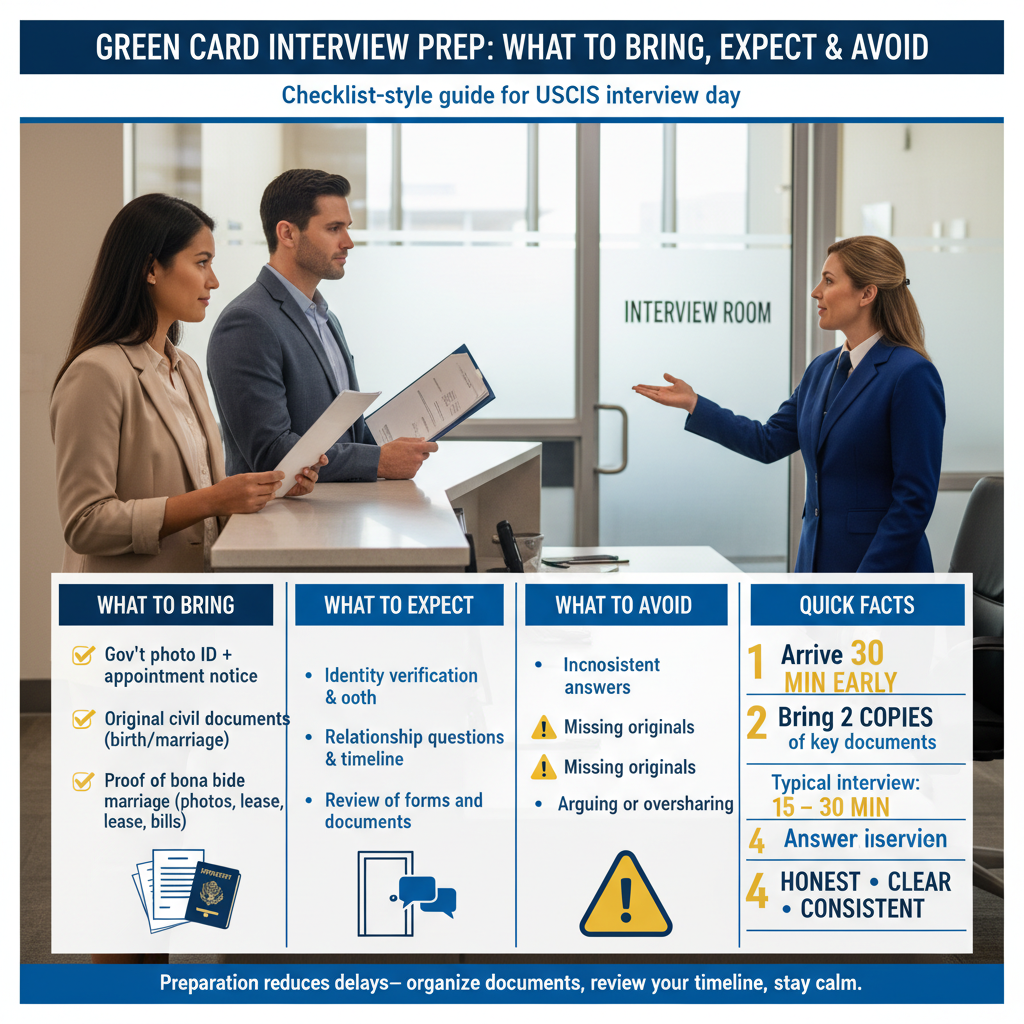
Immigration interview procedures and adjudication trends frequently make headlines—especially when USCIS backlogs, fraud-prevention initiatives, and policy updates affect how cases are reviewed. This guide was inspired by ongoing coverage and discussion in immigration law news, including: Green Card Interview Preparation Tips (Immigration Law).
Need Help? Our Orlando immigration team is ready to assist. Call +1 786-791-3106 for a free consultation, or message us online. Se Habla Español.
What This News Means for Immigrants in Orlando and Across Florida
Why this news is showing up now
Green card interviews are trending because more applicants are reaching the interview stage after months (sometimes years) of processing. At the same time, USCIS continues to emphasize case integrity—meaning officers may scrutinize documentation, timelines, and consistency in answers more carefully than many families expect.
Important: Even when your case is strong, lack of preparation can create delays, Requests for Evidence (RFEs), or a second interview (sometimes called a “Stokes” interview in marriage-based cases).
Many applicants also feel extra pressure due to:
- Changing USCIS processing times and local field office workloads (including Florida)
- Increased focus on identity verification, prior immigration history, and fraud indicators
- Confusion about what to bring—especially when the interview notice is brief
- Life changes during the wait (moves, job changes, new baby, divorce, travel)
How it can affect Florida residents
Florida is one of the busiest states for family-based immigration, employment-based immigration, and humanitarian filings. For Central Florida residents, interviews often take place at the local USCIS field office with jurisdiction over your address.
If your case is in Orlando... your interview may be scheduled at the Orlando USCIS Field Office (jurisdiction depends on your ZIP code and current residence). Orlando’s growth along the I-4 corridor—from Orange County through Seminole, Osceola, Polk, and beyond—means many families are filing and interviewing in the same region, which can impact appointment availability and rescheduling timelines.
Reminder: If you move after filing, you must update your address promptly (and keep proof). A missed interview due to an old address can lead to denial for abandonment.
What Green Card Interview Preparation Tips Is (and Why It Matters)
A plain-English definition
“Green card interview preparation” means getting ready for your USCIS in-person (or occasionally waived) interview so you can clearly prove eligibility for lawful permanent residence and respond confidently to questions about your case.
For most people, the interview is the final major step before approval. It is not just a conversation—it is an evidence-check and credibility assessment. Officers verify your identity, review your forms (like Form I-485), confirm your immigration history, and decide whether your documentation and testimony satisfy the legal requirements.
Key terms you need to know
- Adjustment of Status: Applying for a green card from inside the U.S. (typically using Form I-485).
- Consular Processing: Applying for an immigrant visa at a U.S. consulate abroad (Department of State process).
- Priority Date: Your place in line for certain categories (often family preference and employment). Some applicants cannot finalize a green card until the Priority Date is current.
- RFE (Request for Evidence): USCIS asks for more documents before deciding.
- NOID (Notice of Intent to Deny): USCIS intends to deny unless you overcome concerns.
- Inadmissibility: Legal reasons you may be barred from getting a green card (e.g., certain immigration violations, criminal issues, misrepresentation).
- 180 days: A key threshold in certain contexts (for example, job portability rules in some employment-based cases after a pending period, and other timing concepts). Timing matters throughout immigration.
- 90-day window: A common planning concept in immigration (for example, certain renewals and timing strategies). While not every case uses a strict “90-day window,” deadlines and timing can be decisive.
Warning: If your case has prior immigration violations, arrests, or inconsistencies, interview preparation is not just helpful—it is often essential to avoid a denial or referral to immigration court.
Current Immigration Law: The Foundation
Green card interviews are governed by federal immigration law, regulations, and agency policy. The specific legal basis varies by case type (family, employment, asylum-based, etc.), but the interview’s purpose is consistent: USCIS must confirm you meet the requirements for lawful permanent residence and are not inadmissible.
Federal requirements
Key legal authorities include:
-
Immigration and Nationality Act (INA), including:
- INA § 245 (Adjustment of Status) — codified at 8 U.S.C. § 1255
- INA § 212 (Grounds of Inadmissibility) — 8 U.S.C. § 1182
- INA § 204 (Petitions, including family-based) — 8 U.S.C. § 1154
- Federal regulations at 8 C.F.R. § 245 (Adjustment of Status regulations) and related sections
- USCIS Policy Manual guidance on eligibility, interviews, and evidence standards (official USCIS guidance)
The most common forms tied to an interview include:
- Form I-130 (Petition for Alien Relative)
- Form I-485 (Application to Register Permanent Residence or Adjust Status)
- Form I-864 (Affidavit of Support)
- Form I-693 (Medical Examination and Vaccination Record)
- Form I-765 (Employment Authorization) and Form I-131 (Advance Parole), if filed
For official instructions and updates, use the USCIS official website and verify form editions at USCIS Forms.
Florida-specific considerations
Immigration law is federal, but Florida-specific realities still matter:
- Local field office practices: Interview scheduling, rescheduling, and same-day approvals can vary by workload. The Orlando USCIS Field Office may have different timing compared to other Florida offices.
- Documentation realities: Many families in Orange County and Central Florida have mixed documentation (leases in one name, informal housing arrangements, cash payments). Preparation often means translating real life into clear evidence.
- Travel and work patterns: Tourism and service-industry jobs along the I-4 corridor can lead to frequent job changes—this can affect how you present financial sponsorship and employment history.
Reminder: If USCIS denies a case and the applicant is not in lawful status, USCIS may issue a Notice to Appear (NTA) and place the person in removal proceedings. Immigration court is handled by EOIR: Executive Office for Immigration Review.
How to Prepare for Your Green Card Interview: A Complete Step-by-Step Guide
1) Confirm your interview type, location, and what USCIS is deciding
Start by identifying the legal basis of your green card and what USCIS must confirm at the interview. A marriage-based Adjustment of Status interview is different from an employment-based interview, and both differ from certain humanitarian categories.
Review your interview notice carefully and confirm:
- Date and time (arrive early; plan for parking and security)
- Address and field office jurisdiction (if your case is in Orlando, confirm it’s the Orlando office)
- Whether your petitioner/sponsor must attend (common in marriage cases)
- Whether an interpreter is needed (USCIS rules and practical expectations vary by case type)
Documents to gather for Step 1:
- Interview notice (original)
- Government-issued photo IDs (driver’s license, passport)
- All USCIS receipt notices for your filing package
- A copy of your complete filing (everything submitted for Form I-130, Form I-485, and related forms)
2) Build a “master file” that matches your forms line-by-line
USCIS officers often ask questions directly from your forms. Your best preparation is to review every answer you submitted and ensure it is still accurate. If something changed, prepare to explain and document it.
Common form-based topics include:
- All prior names used
- All addresses for the last 5 years (sometimes longer)
- All employment history
- Prior entries to the U.S. (dates, visa types, I-94 information)
- Prior marriages, divorces, and children
- Yes/No security and inadmissibility questions on Form I-485
Documents to gather for Step 2:
- Copy of submitted Form I-130 and supporting packet
- Copy of submitted Form I-485 and supporting packet
- Copy of Form I-864 with financial evidence submitted
- Copy of Form I-693 (if you have a copy; many applicants do not)
- Passports (current and expired), visas, entry stamps
- I-94 record printout (if applicable)
3) Update and organize relationship or eligibility evidence (the “since filing” file)
Many interviews occur months after filing. USCIS expects updated evidence—especially in marriage-based cases—to show the relationship continues and is genuine.
If your case is based on marriage, your goal is to show a shared life, not just a wedding. If your case is employment-based, your goal is to show the job offer and eligibility remain valid. If your case is family-based (not marriage), your goal is to show the family relationship and eligibility remain consistent.
Documents to gather for Step 3 (examples):
- Marriage-based:
- Joint lease/mortgage, rent ledger, or landlord letter
- Joint bank statements (ideally several months)
- Joint insurance (health, auto, renters/homeowners)
- Utility bills showing same address
- Birth certificates of children (if any)
- Photos over time (not just one event), with dates/locations
- Travel itineraries, hotel bookings, shared memberships
- Affidavits from friends/family (if needed, but prefer objective documents)
- Employment-based:
- Recent employment verification letter
- Recent pay stubs
- Updated job description consistent with petition
- Proof employer still exists and is operating
- General:
- Any USCIS notices since filing (RFEs, responses, biometrics notices)
- Evidence of lawful entry or eligibility documents specific to your category
4) Prepare for the officer’s questions (and practice answering truthfully and clearly)
A successful interview is usually calm, direct, and consistent. Officers look for credibility and legal eligibility. Your job is not to “perform”—it is to answer honestly, briefly, and with confidence.
Typical question areas:
- Identity and biographic details (names, DOB, parents)
- Immigration history (entries, overstays, prior applications)
- Relationship history (how you met, timeline, living arrangements)
- Financial sponsorship (Form I-864) and household composition
- Review of Form I-485 “Yes/No” questions
Warning: Never guess. If you don’t remember a date, say so and provide the best accurate estimate, or explain you can provide documentation. Guessing can create inconsistencies that look like misrepresentation.
Documents to gather for Step 4:
- A timeline of key events (meeting, engagement, marriage, moves, trips)
- Proof supporting key dates (tickets, leases, bank statements)
- Certified court dispositions for any arrests/citations (even if dismissed)
- Certified divorce decrees/annulments for any prior marriages
5) Prepare the day-of interview logistics (security, translations, originals vs. copies)
USCIS field offices operate like secure federal buildings. Plan for screening, prohibited items, and check-in procedures. Bring originals for civil documents and organized copies for the officer to keep, if requested.
For Central Florida residents, traffic on I-4 can be unpredictable. Build in extra time.
Documents to gather for Step 5:
- Interview notice and IDs (again—do not forget)
- Original civil documents:
- Birth certificates
- Marriage certificate
- Divorce decrees
- Passports
- Copy packet (one clean set) of everything you may submit
- Interpreter information (if applicable)
- Pen, small notebook, and a labeled folder system
6) Know what happens after the interview (approval, RFE, “review,” or denial)
Some applicants receive an approval on the spot; others receive a “case is being held for review.” Both can be normal. If USCIS needs more documents, they may issue an RFE. If there are legal issues, USCIS may send a NOID or deny.
Check your case status and estimated timelines using USCIS Processing Times.
Documents to gather for Step 6:
- Any handouts or written requests the officer gives you
- Notes about questions asked and how you answered
- Proof of submission for any documents you later upload/mail
Need Help? Our Orlando immigration team is ready to assist. Call +1 786-791-3106 for a free consultation, or message us online. Se Habla Español.
Practical Steps You Can Take Today
Interview success usually comes down to preparation, organization, and consistency. Here’s a practical checklist you can start today—even before your interview is scheduled.
Actionable checklist (do these now)
- Print and review your entire filed packet for Form I-130 and Form I-485; highlight anything that changed since filing.
- Create a relationship/eligibility binder with tabs: IDs, civil docs, financials, shared residence, photos, travel, children, and “since filing” updates.
- Pull your I-94 and travel history and confirm dates match your forms. If consular processing, review the Department of State guidance at U.S. Department of State.
- Order certified court dispositions for any arrest/citation—do not rely on online summaries.
- Check your medical exam timing (Form I-693) and whether you need an updated exam under current USCIS rules.
- Practice your “case story” (timeline and key facts) with your spouse/petitioner so answers are consistent and truthful.
- Track USCIS notices and keep proof of address updates (AR-11 confirmations, USPS forwarding, etc.).
Document preparation guidance
Aim for documents that are:
- Objective (bank statements, insurance, leases) rather than only affidavits
- Time-spanning (covering months/years, not one week)
- Consistent with your forms (addresses, dates, names)
- Readable and organized (avoid handing over a pile of screenshots)
Important: If a document is not in English, it generally must include a compliant English translation and certification. If you are unsure what is acceptable, get legal guidance before submitting.
Timeline expectations
Timelines vary by category, workload, and whether USCIS waives or requires an interview. Many applicants experience:
- Weeks to months between “interview scheduled” and the interview date
- Same-day approval or approval within several weeks after interview
- Delays if an RFE/NOID is issued or if background checks require more time
Reminder: If USCIS requests additional evidence, respond by the deadline. Missing deadlines can lead to denial. Keep copies and delivery confirmation.
How Imigrar Helps Immigrants in Orlando
Imigrar is an immigration law firm based in Orlando, Florida, serving clients nationwide. Our mission is simple: Keep Families Together.
We help green card applicants prepare for interviews by:
- Reviewing your filed Form I-130 / Form I-485 packet for inconsistencies and risk areas
- Building an evidence strategy tailored to your case type (marriage, family, employment, humanitarian)
- Preparing you for common and case-specific questions (including “Yes/No” admissibility issues)
- Identifying red flags early—prior overstays, misrepresentation concerns, prior marriages, criminal records
- Helping you respond to RFEs/NOIDs and avoid preventable delays
We offer a free consultation to discuss your situation and the best plan for interview preparation. Se Habla Español.
Need Help? Our Orlando immigration team is ready to assist. Call +1 786-791-3106 for a free consultation, or message us online. Se Habla Español.
Frequently Asked Questions
Q: Am I guaranteed a green card if I have an interview scheduled?
A: No. An interview means USCIS is ready to review eligibility and confirm facts, but approval is not guaranteed. Bring strong supporting documents, be consistent with your filed Form I-485, and address any potential inadmissibility issues (like prior overstays or arrests) proactively.
Q: Will the green card interview affect my current immigration status?
A: It can. If you are in valid nonimmigrant status, you generally maintain that status while the Adjustment of Status application is pending (as long as you comply with its rules). If you are out of status, a denial can be more serious and may lead to removal proceedings in some cases. If you have status concerns, consult an attorney before the interview.
Q: How long after the interview will I get a decision?
A: Some applicants are approved the same day; others receive a decision in days or weeks. If USCIS issues an RFE or needs additional review, it can take longer. Track general timing at USCIS Processing Times, but remember that individual cases vary.
Q: What documents should I bring to my green card interview?
A: Bring the interview notice, passports/IDs, originals of civil documents (birth/marriage/divorce), your complete copy of what you filed for Form I-130 and Form I-485, updated relationship/eligibility evidence, and updated financial sponsorship documents (Form I-864 support). If you had any arrests, bring certified dispositions.
Q: How much does it cost to prepare for a green card interview?
A: Government filing fees are separate from preparation costs. Interview preparation may include costs for document translations, certified records, medical exams (Form I-693), and legal fees if you hire counsel. If cost is a concern, prioritize essentials: certified court records (if any), updated financial evidence, and objective relationship documents.
Q: What happens if my green card application is denied after the interview?
A: USCIS may deny for lack of eligibility, missing evidence, or inadmissibility. Options can include filing a motion to reopen/reconsider, refiling, or (in some cases) renewing the application in immigration court if you are placed in proceedings. Because consequences can be serious, speak with an attorney immediately if you receive a denial or a NOID.
Q: Do both spouses have to attend a marriage-based green card interview?
A: In most marriage-based Adjustment of Status cases, yes—USCIS expects both the petitioner (U.S. citizen or permanent resident) and the applicant to attend, unless USCIS explicitly states otherwise. If your spouse cannot attend due to an emergency, get legal guidance about rescheduling and documentation.
Q: Can I bring an attorney to the USCIS interview in Orlando?
A: Yes, you generally may be represented by an attorney at a USCIS interview. Having counsel can be especially helpful if there are prior immigration violations, criminal history, prior marriages, or complex sponsorship issues. If your case is in Orlando, we can help you prepare and attend where permitted.
Common Mistakes (and How to Avoid Them)
Mistake #1: Showing up without updated evidence since filing
Many applicants bring only what they filed months ago. Officers often want to see what happened since then—especially in marriage cases.
How to avoid it: Bring updated bank statements, insurance, lease renewals, new photos over time, and any major life updates (new job, baby, move). Organize them so the officer can review quickly.
Mistake #2: Inconsistent answers between spouses or compared to the forms
Inconsistencies are one of the fastest ways to trigger suspicion or a second interview. Many inconsistencies are innocent—stress, language barriers, or poor memory—but USCIS may interpret them negatively.
How to avoid it: Review your submitted Form I-130 and Form I-485 together, confirm dates and addresses, and practice answering questions truthfully and consistently.
Mistake #3: Ignoring prior immigration or criminal issues until the interview
Prior overstays, unauthorized work, misrepresentation, or arrests can affect admissibility. Waiting until the interview to “see what happens” can lead to denial or a NOID.
How to avoid it: Get certified dispositions, FOIA records if needed, and legal analysis before the interview. If a waiver might be required, plan early—do not assume the officer will “overlook” it.
Additional Official Resources (Use These to Double-Check Requirements)
- USCIS official website
- USCIS Forms (confirm editions and instructions for Form I-130, Form I-485, and more)
- USCIS Processing Times (field office and form estimates)
- U.S. Department of State (consular processing and immigrant visa info)
- Executive Office for Immigration Review (immigration court information)
Reminder: Online information changes. Always confirm the latest instructions directly on official websites before filing or attending your interview.
Need Help? Our Orlando immigration team is ready to assist. Call +1 786-791-3106 for a free consultation, or message us online. Se Habla Español.
Closing: Be Ready, Be Organized, and Protect Your Future
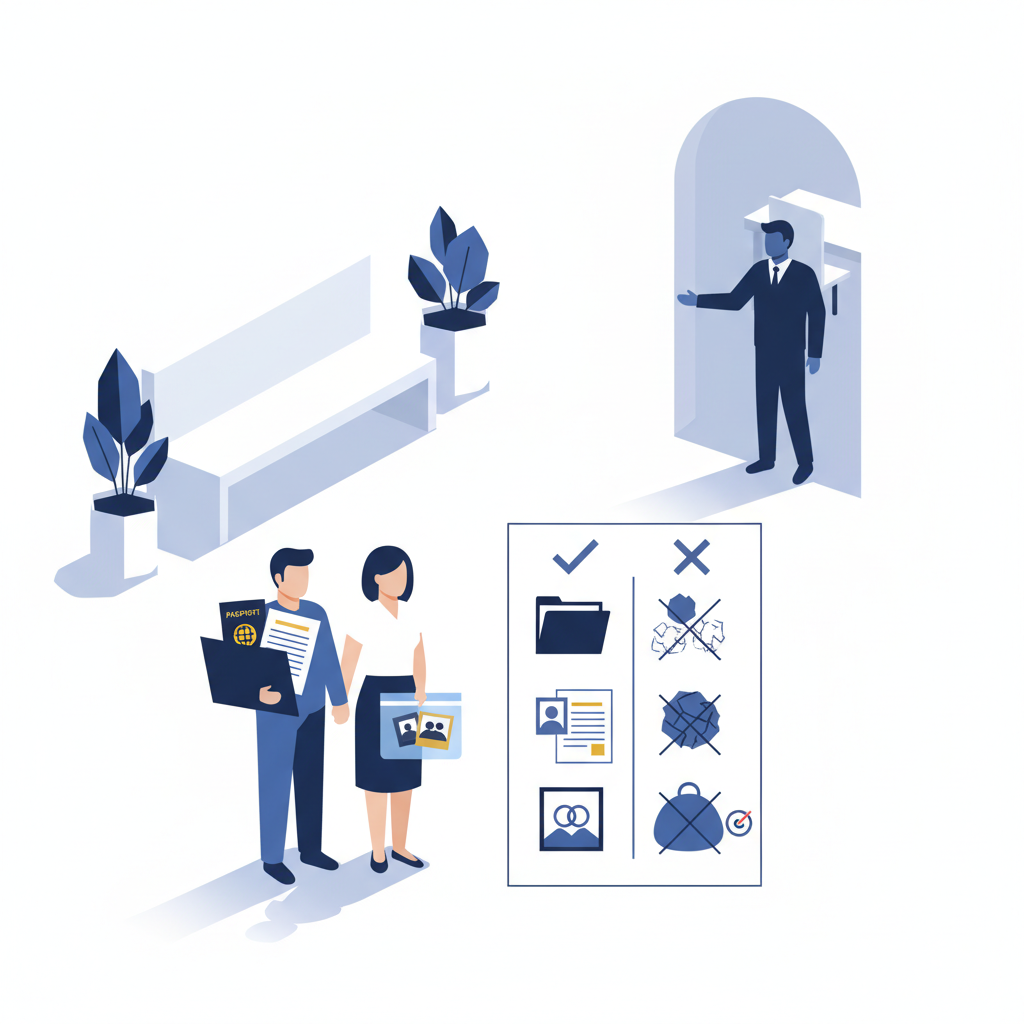
A green card interview is one of the most important appointments in your immigration journey. The best outcomes usually come from careful preparation: knowing your case, bringing the right documents, answering clearly, and addressing any legal concerns before you walk into the building.
If your case is in Orlando, or you live anywhere in Orange County or along the I-4 corridor, Imigrar can help you prepare with confidence—whether you want a full case review, mock interview coaching, or representation through the interview and beyond.
Need help preparing for your green card interview? Call Imigrar at +1 786-791-3106 for a free consultation, or message us online. Se Habla Español.


