

The journey to obtaining a Green Card, or lawful permanent residency, in the United States is a significant milestone for countless individuals and families. While the application process can be complex, one of the most crucial stages is the Green Card interview. This interview is your opportunity to demonstrate your eligibility and provide clarity on your application to a United States Citizenship and Immigration Services (USCIS) officer.
For many, the thought of an interview with a government official can be daunting. However, with proper preparation, understanding of the process, and accurate documentation, you can approach this critical step with confidence. At Imigrar, your trusted immigration law firm in Orlando, Florida, we understand the stakes involved. Our mission is to "Keep Families Together," and that means guiding you through every stage, including meticulous preparation for your Green Card interview.
The reporting that sparked this guide
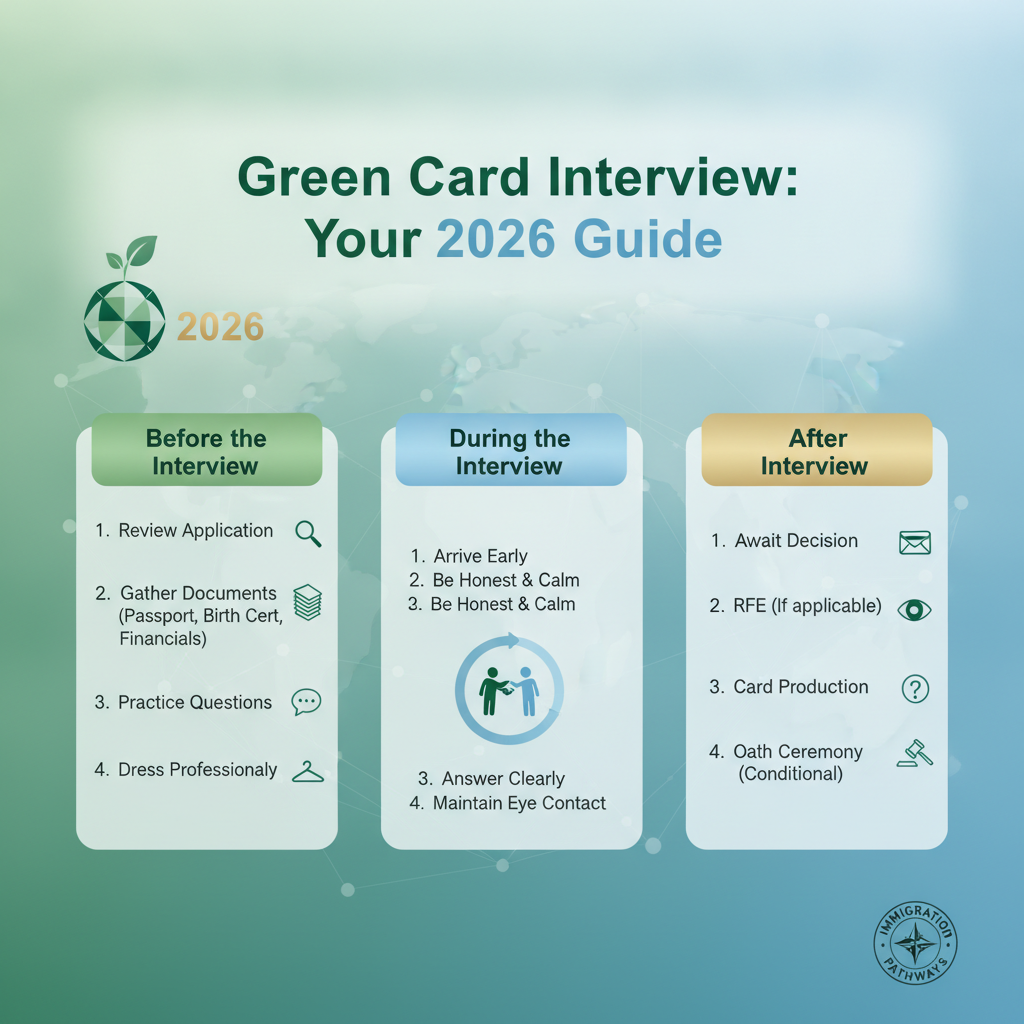
The constant evolution and scrutiny of immigration processes mean that advice on crucial steps like the Green Card interview is always in demand. This comprehensive guide is inspired by the ongoing discussion and interest in effective strategies for navigating U.S. immigration procedures, as highlighted by continuous reporting on topics like: Green Card Interview Preparation Tips (Immigration Law).
What This News Means for Immigrants in Orlando and Across Florida
The importance of thorough Green Card interview preparation is not new, but its relevance is constantly underscored by the dynamic nature of immigration law and policy. For immigrants residing in Orlando, Central Florida, and throughout the Sunshine State, understanding these preparation strategies is more critical than ever.
Why this news is showing up now
While the Green Card interview has been a standard part of the immigration process for decades, its significance often comes into sharper focus due to several factors:
- Increased Scrutiny: USCIS officers are trained to thoroughly vet applications to prevent fraud and ensure compliance with immigration laws. This often means more detailed questioning during interviews, especially in categories prone to higher scrutiny, such as marriage-based Green Cards.
- Policy Changes: Though the core requirements for Green Cards remain largely consistent, administrative policies and priorities can shift. These shifts might lead to changes in how interviews are conducted, what questions are emphasized, or the types of evidence given greater weight. Staying informed about these nuances is vital.
- Processing Times: Fluctuations in USCIS processing times can create anxiety. When applicants wait longer for their interviews, the anticipation builds, making comprehensive preparation even more crucial to ensure they are ready when their turn comes. As of August 2026, many processing centers are working through backlogs, making it imperative to be perfectly prepared to avoid further delays.
- Digitalization and Technology: While interviews are still in-person, the backend processing and evidence submission often involve digital platforms. Ensuring your physical documents align perfectly with what was submitted digitally is a common point of emphasis.
How it can affect Florida residents
Florida is a vibrant hub for immigrants from across the globe, and its unique demographic landscape means that Green Card interviews are a daily occurrence at local USCIS field offices. For those in Orlando and the surrounding areas, this news directly impacts their journey:
- Orlando USCIS Field Office: If your case is based in Orlando, your interview will likely be scheduled at the Orlando USCIS Field Office. Understanding the specific procedures and common interview styles at this location can be advantageous. Our attorneys at Imigrar are intimately familiar with the Orlando office and its practices.
- Diverse Applicant Pool: Florida serves a highly diverse immigrant population, including individuals from Latin America, the Caribbean, Europe, and Asia. This diversity means a wide range of case types and complexities, all requiring tailored preparation.
- Family-Based Petitions: Given Florida's large immigrant communities, a significant number of Green Card applications are family-based, particularly marriage-based petitions. These cases often involve detailed interviews focusing on the bona fides of the relationship, making thorough preparation for questioning about shared life and experiences paramount.
- Economic Impact: Many immigrants in Florida are vital to the state's economy, working in tourism, agriculture, healthcare, and other sectors along the I-4 corridor and beyond. Delays or denials due to inadequate interview preparation can have significant personal and economic repercussions.
- Language Barriers: For many non-English speaking applicants in Central Florida, the interview can present additional challenges. Knowing when and how to utilize an interpreter is a critical aspect of preparation.
At Imigrar, we specialize in helping individuals and families across Florida navigate these complexities. Our goal is to ensure that when your interview day arrives, you are not just prepared, but truly confident, ready to present your case clearly and accurately.
Need Expert Guidance for Your Green Card Interview? Don't leave your future to chance. Our Orlando immigration team provides comprehensive interview preparation tailored to your specific case. Call +1 786-791-3106 for a free consultation, or message us online. Se Habla Español.
What Green Card Interview Preparation Is (and Why It Matters)
The Green Card interview is a mandatory step for most individuals seeking lawful permanent residency in the United States, whether through Adjustment of Status (applying from within the U.S.) or Consular Processing (applying from abroad). It’s not merely a formality; it’s a critical opportunity for a USCIS officer to verify the information in your application, confirm your eligibility, and ensure you meet all legal requirements for a Green Card.
Why does it matter so much? Because the outcome of this interview directly determines whether you will be granted permanent residency. A successful interview moves you closer to your goal, while an unprepared or poorly handled interview can lead to delays, requests for additional evidence (RFE), or even a denial. It’s your chance to put a human face to your application and address any potential questions or concerns an officer may have.
A plain-English definition
Simply put, a Green Card interview is a meeting with a U.S. immigration officer where they ask you questions about your application for permanent residency. They want to confirm that everything you've stated in your forms is true, that you qualify for a Green Card under immigration law, and that there are no reasons why you should be denied. It’s a chance for them to get to know you and your case better, and for you to clarify any details.
Key terms you need to know
Navigating the immigration process requires understanding specific terminology. Here are some key terms related to your Green Card interview:
- Green Card: Officially known as a Permanent Resident Card, it proves you are authorized to live and work permanently in the United States.
- Adjustment of Status (AOS): The process of applying for a Green Card while you are physically present in the United States. This typically involves filing Form I-485.
- Consular Processing: The process of applying for a Green Card through a U.S. embassy or consulate in your home country.
- USCIS: United States Citizenship and Immigration Services, the government agency responsible for administering immigration and naturalization benefits. This is the agency that conducts your Green Card interview.
- USCIS Officer (or Immigration Officer): The official who will conduct your interview and make a recommendation on your case.
- Petitioner: The U.S. citizen or lawful permanent resident who files an immigration petition on behalf of a foreign national (e.g., in family-based cases, the U.S. citizen spouse files Form I-130 for their foreign spouse).
- Beneficiary: The foreign national seeking the immigration benefit (the Green Card).
- Form I-130, Petition for Alien Relative: The initial form filed by a U.S. citizen or Green Card holder to establish a qualifying relationship with a foreign relative.
- Form I-485, Application to Register Permanent Residence or Adjust Status: The primary application form filed by an individual seeking a Green Card from within the U.S. (Adjustment of Status).
- Form I-864, Affidavit of Support: A legally binding document signed by the petitioner (and sometimes a joint sponsor) to show they can financially support the immigrant and that the immigrant will not become a public charge. This form is crucial for most family-based and some employment-based Green Cards.
- Priority Date: For certain visa categories (especially employment-based and some family-based), this is the date your petition was filed. It determines your place in the visa queue. Your interview typically won't be scheduled until your priority date is current.
- Bona Fide Marriage: In marriage-based Green Card cases, this refers to a genuine, real marriage entered into for love, not solely for immigration benefits. The interview will heavily focus on proving this.
- Request for Evidence (RFE): A letter from USCIS requesting additional documents or information to support your application. An RFE can delay your case significantly.
- Notice of Intent to Deny (NOID): A letter from USCIS indicating their intention to deny your application unless you provide specific information or evidence to overcome the grounds for denial. This is a serious notice.
Understanding these terms will empower you to better comprehend the process and your role in it. Remember, clarity and consistency are key throughout your application and interview.
Current Immigration Law: The Foundation
The Green Card interview process is firmly rooted in federal immigration law, primarily the Immigration and Nationality Act (INA). This act outlines the various categories for obtaining a Green Card and the eligibility requirements for each.
Federal requirements
The core legal framework for Green Cards is established by the INA. Most Green Card interviews fall under specific sections of the INA:
- INA Section 245 (Adjustment of Status): This section governs the ability of eligible foreign nationals to apply for lawful permanent resident status without leaving the United States. Key requirements often include lawful entry, maintenance of status (or being exempt from this requirement), and having an immigrant visa immediately available.
- INA Section 201-204 (Family-Based Immigration): These sections define the categories for family-sponsored immigration, such as immediate relatives (spouses, unmarried children under 21, and parents of U.S. citizens) and family preference categories (e.g., married children of U.S. citizens, siblings of U.S. citizens, unmarried children of Green Card holders). The interviews for these categories heavily focus on proving the bona fides of the relationship and the financial sponsorship.
- INA Section 203 (Employment-Based Immigration): This section outlines the five preference categories for employment-based Green Cards. Interviews for these cases will often focus on the applicant's qualifications, the job offer, and the employer's ability to pay the proffered wage.
- INA Section 212 (Inadmissibility Grounds): This crucial section lists the reasons why an individual may be denied entry to the U.S. or adjustment of status, even if they otherwise qualify. These grounds include health-related issues, criminal history, security risks, public charge concerns (relying on government benefits), fraud or misrepresentation, and prior immigration violations. The interview is a primary mechanism for USCIS to screen for these inadmissibility grounds.
During your interview, the USCIS officer will verify that you meet the specific criteria for the Green Card category you are applying under and that none of the inadmissibility grounds apply to you. This includes reviewing forms such as Form I-130 (Petition for Alien Relative), Form I-485 (Application to Register Permanent Residence or Adjust Status), and Form I-864 (Affidavit of Support).
For detailed information on these laws and requirements, always refer to the USCIS official website.
Florida-specific considerations
While immigration law is federal, the practical application often involves local USCIS field offices. For residents of Florida, especially those in the Orlando area, understanding these local aspects is beneficial:
- Orlando USCIS Field Office: This office handles a significant volume of Green Card interviews for applicants residing in Central Florida, including Orange County and neighboring regions along the I-4 corridor. Knowing the office's location, parking situation, and security procedures in advance is part of good preparation.
- Interview Scheduling: USCIS sends out interview notices, typically on Form I-797C, Notice of Action, detailing the date, time, and location. For Central Florida residents, this will usually be the Orlando office.
- Language Services: If you are not fluent in English, you must arrange for a certified interpreter for your interview. The Orlando office, like others, accommodates this, but it is your responsibility to bring one unless USCIS explicitly states they will provide one (which is rare).
- Community Resources: Florida has numerous community organizations that assist immigrants. While they can offer general support, for legal advice and interview preparation, an experienced immigration attorney like those at Imigrar is essential.
Important: Always adhere to the instructions on your interview notice. Failure to appear on time or with required documents can lead to delays or even case abandonment.
Unsure About Your Green Card Eligibility or Interview Requirements? Imigrar's experienced attorneys serve clients nationwide, with a strong presence in Orlando. We can clarify the law and prepare you for success. Call +1 786-791-3106 for a free consultation, or message us online. Se Habla Español.
How to Prepare for Your Green Card Interview: A Complete Step-by-Step Guide
The key to a successful Green Card interview lies in meticulous preparation. Here’s a detailed, step-by-step guide to ensure you are fully ready.
1) Understand Your Case & Review Your Application
Before anything else, you must have a deep understanding of your own application. This sounds obvious, but many applicants forget the details they submitted months or even years ago.
- Review All Submitted Forms: Go through every form you submitted (Form I-130, Form I-485, Form I-864, Form I-765, Form I-131, etc.). Read every answer you provided. Ensure you remember dates, addresses, employment history, and personal details exactly as they were written.
- Understand Your Eligibility Category: Be clear about the specific Green Card category you are applying under (e.g., spouse of a U.S. citizen, parent of a U.S. citizen, employment-based EB-2). Understand the requirements for that category.
- Recall Your Immigration History: Be prepared to discuss your entire immigration history, including all entries and exits from the U.S., previous visa applications, and any past interactions with immigration authorities.
- Anticipate Questions: Based on your application, identify any areas that might raise questions. For instance, if there are gaps in employment, multiple addresses, or previous marriages, be ready to explain them clearly and consistently.
Reminder: Your answers during the interview must be consistent with the information in your submitted applications. Any discrepancies, even minor ones, can raise red flags.
2) Gather & Organize All Original Documents
This is arguably the most critical step. The USCIS officer needs to see original documents to verify your claims. You must bring originals of everything you submitted as copies, plus any new documents that have arisen since you filed.
- Originals of All Documents Submitted:
- Birth Certificates (applicant and petitioner/spouse)
- Marriage Certificate (if applicable)
- Divorce Decrees or Death Certificates for all prior marriages (applicant and petitioner/spouse)
- Passports (current and expired, with all visas and entry stamps)
- I-94 Arrival/Departure Records
- Employment Authorization Document (EAD)
- Advance Parole Document (if applicable)
- Travel History documents
- Police Clearances (if applicable)
- Medical Examination Report (Form I-693) in a sealed envelope, if not already submitted.
- Proof of Relationship (for Family-Based Green Cards):
- Joint bank statements, credit card statements
- Joint utility bills (electricity, water, internet)
- Joint lease agreements or mortgage statements for shared residence
- Joint insurance policies (health, auto, life)
- Birth certificates of any children you have together
- Photos together (dating, wedding, family events, vacations)
- Correspondence (letters, emails, text messages)
- Affidavits from friends and family attesting to the bona fides of the relationship
- Travel itineraries for trips taken together
- Any other evidence showing commingling of finances and shared life.
- Financial Support Documents (for Form I-864):
- Petitioner's (and joint sponsor's, if applicable) most recent federal income tax returns (last three years, with W-2s and 1099s).
- Proof of current employment (employment letter, recent pay stubs).
- Bank statements and other asset documentation.
- Additional Documents Specific to Your Case:
- Educational degrees, transcripts (for employment-based).
- Letters of employment, resumes (for employment-based).
- Any previous immigration applications or decisions.
- Proof of membership in organizations.
- Military records (if applicable).
Organization Tip: Use a binder with dividers and clearly label each section. Have copies of everything in a separate folder as well. Bring your interview notice!
3) Prepare for Interview Questions
While specific questions vary, officers generally follow a pattern. Practice answering common questions clearly and concisely.
- Personal History: Be ready to confirm your full name, date of birth, place of birth, parents' names, and addresses.
- Immigration History: Your entry into the U.S., visa history, any previous applications, and travel outside the U.S.
- Relationship (for Marriage-Based): This will be the bulk of the questions. Expect questions about:
- How and when you met.
- First date, proposal, wedding details.
- Daily life: what you do together, who cooks, who cleans, what you eat for breakfast.
- Shared experiences, family members, friends.
- Future plans.
- Any separation periods or disagreements.
- Employment History: Your current and past jobs, employers, job duties, and income.
- Education: Schools attended, degrees obtained.
- Criminal History: Even minor infractions must be disclosed. Be truthful and bring certified court dispositions for any arrests or convictions.
- Security Questions: Standard questions about involvement in terrorism, espionage, genocide, or other prohibited activities.
- Public Charge: Questions designed to assess whether you are likely to become a public charge, confirming the financial support from your sponsor.
Important: Always tell the truth. Lying or misrepresenting facts can lead to a permanent bar from the U.S. If you don't understand a question, ask the officer to rephrase it. If you don't know the answer, state that you don't know rather than guessing.
4) Practice Your English (if applicable) & Arrange Interpreter
If you are not fluent in English, it is your responsibility to bring a certified interpreter to the interview. This is a critical step for many Central Florida residents.
- Interpreter Requirements: The interpreter must be fluent in both English and your native language. They cannot be your petitioner, spouse, attorney, or any witness to your case. They must be an unbiased third party.
- Practice with Interpreter: If you plan to bring an interpreter, practice mock interviews with them to ensure smooth communication.
- Practice English: Even if you bring an interpreter, it's beneficial to understand some basic English and be able to answer simple questions yourself. The officer might ask you a few questions directly in English to assess your proficiency.
5) Dress Appropriately & Plan Your Logistics
First impressions matter, and punctuality is non-negotiable.
- Dress Code: Dress in clean, professional, and conservative attire, as you would for a job interview. This shows respect for the process and the officer.
- Plan Your Route: For the Orlando USCIS Field Office (or any other location), know exactly where it is, how long it takes to get there, and where to park. Aim to arrive at least 30 minutes before your scheduled appointment time. Account for potential traffic on the I-4 corridor.
- Childcare: If possible, arrange for childcare. While children are allowed, a quiet, focused environment is best for your interview.
Warning: Arriving late can lead to your interview being rescheduled or even your case being denied for failure to appear.
6) What to Expect on Interview Day
Knowing the typical flow of the interview can reduce anxiety.
- Security Check: You will go through a security checkpoint similar to an airport. Leave prohibited items (weapons, large bags) in your car.
- Waiting Area: You will wait in a designated area until your name is called.
- Oath: The officer will ask you to raise your right hand and swear to tell the truth.
- Questioning: The officer will review your application forms with you, ask questions about your background, your relationship (if applicable), and your eligibility. They will also review your original documents.
- Signature: You may be asked to sign certain documents, confirming the accuracy of your statements.
- Decision: Sometimes the officer can make a decision on the spot, but more often, they will inform you that a decision will be mailed to you within a few weeks or months. They may also issue an RFE if they need more information.
Remember: Remain calm, polite, and respectful. Answer only the questions asked, and do not volunteer unnecessary information. If you have an attorney, they will be present to assist and protect your rights.
7) Follow-Up After the Interview
Your responsibility doesn't necessarily end when you leave the USCIS office.
- RFE Response: If you receive an RFE, respond promptly and thoroughly with all requested documentation. Pay close attention to the deadline (e.g., typically 87 days from the date of the RFE, but check the letter carefully).
- Check Status Online: You can monitor your case status using the receipt number on the USCIS Case Status Online tool.
- Attorney Consultation: If you have any concerns or haven't heard back within the expected timeframe, consult with your attorney. They can follow up with USCIS on your behalf.
Feeling Overwhelmed by Interview Prep? Imigrar takes the stress out of the process. Our Orlando-based lawyers will prepare you thoroughly, ensuring you're confident and ready. Schedule your free consultation today: +1 786-791-3106. Se Habla Español.

Practical Steps You Can Take Today
Don't wait until you receive your interview notice to start preparing. There are several proactive steps you can take right now to set yourself up for success.
Actionable checklist with 5+ items
- Gather Core Documents: Start collecting all original birth certificates, marriage certificates, passports, and any divorce decrees. Even if your interview is months away, having these foundational documents organized will save you time and stress later.
- Review Your Application Copies: Locate the copies of all forms you submitted (Form I-130, Form I-485, Form I-864, etc.). Read through them carefully to refresh your memory on every detail you provided.
- Begin Evidence Collection (Especially for Marriage-Based): If applying through marriage, actively accumulate evidence of your shared life. This includes joint bank statements, utility bills, photos, and correspondence. The more robust your evidence, the stronger your case.
- Address Any Potential Issues: Think about any "red flags" in your case – a past overstay, a minor arrest, gaps in employment, or a previous denial. Start gathering documentation to explain these issues. Transparency and clear explanations are crucial.
- Improve English Skills (if needed): If English is not your first language, dedicate time to practicing your conversational English. Even basic communication can make a positive impression. Alternatively, research and identify a certified interpreter who can assist you.
- Consult with an Immigration Attorney: The best proactive step is to schedule a free consultation with an experienced immigration lawyer. They can review your case, identify potential challenges, and provide a personalized preparation strategy.
Document preparation guidance
Effective document preparation is about more than just collecting papers; it's about organization and presentation.
- Create a Master Checklist: Based on your specific case, create a detailed checklist of every document you need.
- Originals vs. Copies: Always bring the original of every document you submitted as a copy. Also, bring a complete set of copies for the officer, just in case they need them.
- Translations: Any document not in English must be accompanied by a certified English translation. The translator must certify that they are competent to translate and that the translation is accurate.
- Organize in a Binder: Use a binder with labeled dividers. This allows you to quickly access any document the officer requests, showing preparedness and efficiency.
- New Evidence: If you have new evidence since you filed your application (e.g., new joint bank statements, a new baby, new photos), organize it


