The reporting that sparked this guide:
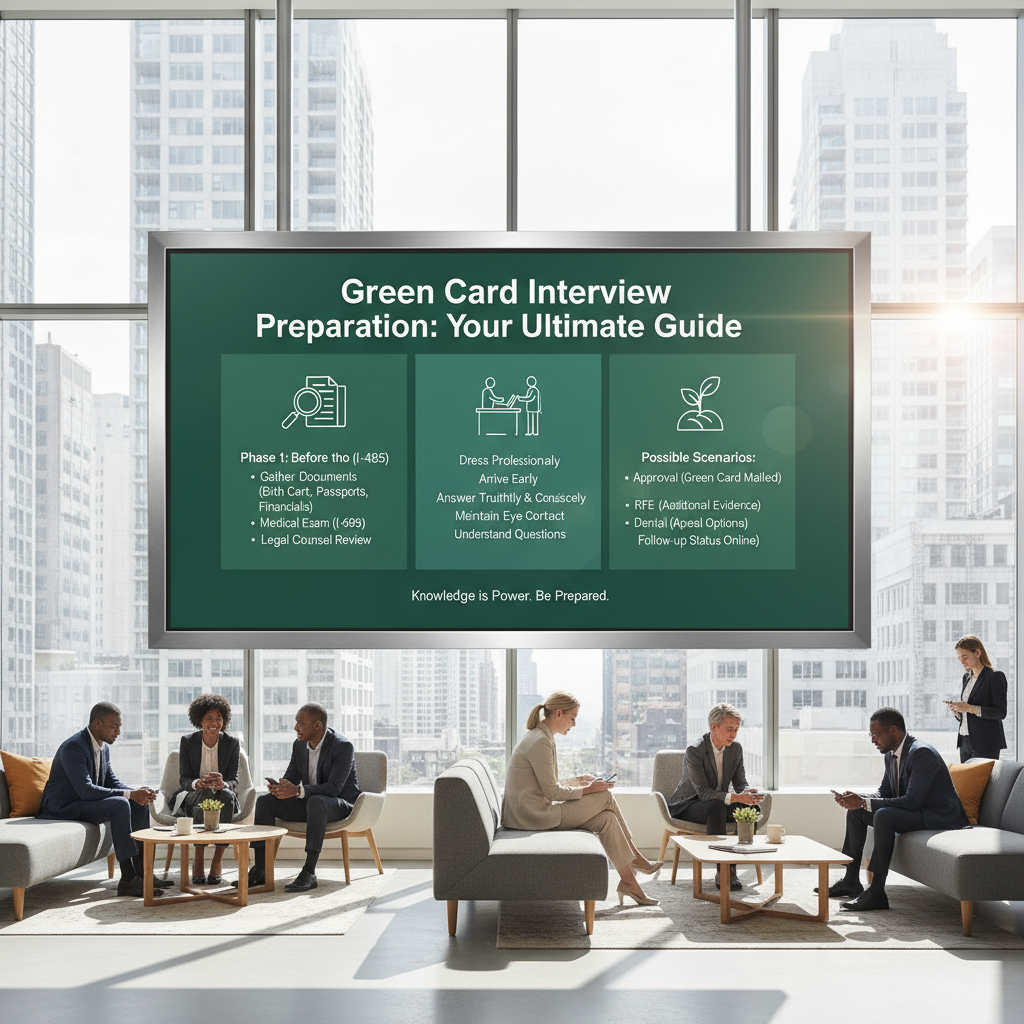
Staying informed about immigration law is crucial. This comprehensive guide is inspired by the ongoing importance of Green Card Interview Preparation Tips (Immigration Law), a topic consistently highlighted in immigration news for its critical role in the naturalization process.
What This News Means for Immigrants in Orlando and Across Florida
The journey to obtaining a Green Card, also known as lawful permanent residency, is a pivotal moment for countless individuals and families seeking to build a new life in the United States. A critical juncture in this process is the Green Card interview. While the specific legal frameworks surrounding immigration don't change daily, the emphasis on thorough preparation, attention to detail, and understanding of current USCIS procedures is a constant and trending theme in immigration law discussions.Why this news is showing up now
The news isn't necessarily about a brand-new law, but rather a perpetual and heightened focus on the *process* of immigration, especially as USCIS aims for efficiency and accuracy. In 2026, with an evolving immigration landscape and continued efforts to streamline adjudications, the importance of a well-prepared applicant cannot be overstated. USCIS officers are trained to meticulously review applications and assess credibility during interviews. Therefore, resources and guidance on how to best prepare are always in demand. The "trending" aspect reflects the ongoing need for clarity and practical advice amidst a complex and often intimidating legal process. Immigrants and their families consistently seek reliable information to navigate their interviews successfully, making preparation tips a timeless and essential topic. Furthermore, any shifts in processing times or interview backlogs can bring this topic to the forefront, as applicants need to be ready when their turn arrives, sometimes unexpectedly.How it can affect Florida residents
For individuals and families residing in Florida, particularly in the vibrant Orlando metropolitan area and along the I-4 corridor, the need for meticulous Green Card interview preparation is especially relevant. Florida is a melting pot of cultures and a primary destination for immigrants from around the globe. This means that the USCIS field offices in Florida, including the **Orlando USCIS Field Office**, often handle a high volume of Green Card applications. What does this mean for you? * **Local USCIS Procedures:** While federal law applies nationwide, local USCIS field offices may have minor procedural nuances or specific expectations regarding document organization or interview flow. Being prepared for general requirements and understanding local office dynamics is key. * **High Caseloads:** A high volume of applications can sometimes lead to longer processing times or, conversely, a sudden scheduling of interviews. Being prepared at all times is crucial. * **Diverse Interview Pool:** Florida residents come from myriad backgrounds, meaning interviewers encounter a vast array of cultural contexts. Clear, concise, and well-supported answers are vital to avoid misunderstandings. * **Access to Resources:** For Central Florida residents, understanding the importance of interview preparation means leveraging local resources, including reputable immigration attorneys like Imigrar, who are familiar with the Orlando office and can provide tailored guidance. * **Impact on Families:** Many Green Card applications in Florida are family-based, emphasizing the tagline "Keep Families Together." Proper interview preparation directly contributes to a successful outcome, allowing families to remain united and build their future in the Sunshine State.Need Help? Our Orlando immigration team is ready to assist. Call +1 786-791-3106 for a free consultation, or message us online. Se Habla Español.
What Green Card Interview Preparation Is (and Why It Matters)
The Green Card interview is a mandatory step for most individuals seeking lawful permanent residency in the United States, whether through **Adjustment of Status** (applying while in the U.S.) or **Consular Processing** (applying from abroad). It’s an opportunity for a U.S. Citizenship and Immigration Services (USCIS) officer to verify the information provided in your application, confirm your eligibility, and ensure you are not inadmissible to the United States.A plain-English definition
Simply put, your Green Card interview is a formal meeting with a U.S. government official who will ask you questions about your application, your background, and your relationship (if applicable) to ensure you meet all legal requirements to become a permanent resident. Think of it as a thorough check-up on everything you’ve submitted and claimed in your immigration forms. It's your chance to demonstrate your honesty, eligibility, and genuine intent to live permanently in the U.S.Key terms you need to know
Navigating the immigration process requires understanding specific terminology. Here are some key terms related to your Green Card interview: * **Adjustment of Status (AOS):** The process of applying for a Green Card while physically present in the United States. This typically involves filing **Form I-485**, Application to Register Permanent Residence or Adjust Status. * **Consular Processing:** The process of applying for a Green Card through a U.S. embassy or consulate abroad. This is for individuals outside the U.S. or those ineligible for **Adjustment of Status**. * **USCIS (U.S. Citizenship and Immigration Services):** The government agency responsible for administering immigration and naturalization benefits. Your interview will be with a **USCIS Officer**. * **Sponsor/Petitioner:** The U.S. citizen or lawful permanent resident who files a petition on behalf of the applicant (e.g., **Form I-130** for family-based immigration). * **Beneficiary/Applicant:** The foreign national seeking a Green Card. * **Affidavit of Support (Form I-864):** A legally binding document signed by the sponsor, promising to financially support the applicant to prevent them from becoming a "public charge." * **Priority Date:** The date USCIS receives your petition (e.g., **Form I-130**). This date determines when your Green Card becomes available, especially for categories with annual quotas. * **Inadmissibility:** Legal grounds that can make an individual ineligible for a Green Card, such as certain criminal convictions, health issues, or prior immigration violations. * **Waiver:** An application to overcome certain grounds of inadmissibility. * **Biometrics Appointment:** An appointment where USCIS collects fingerprints, photographs, and signatures for background checks. * **Welcome Notice:** The official notice you receive after your Green Card is approved. Understanding these terms will help you comprehend the legal framework surrounding your application and prepare more effectively for your interview.Current Immigration Law: The Foundation
The framework for Green Card eligibility and the interview process is primarily established by the **Immigration and Nationality Act (INA)**, specifically 8 U.S.C. § 1101 et seq., as well as various regulations published in the Code of Federal Regulations (8 C.F.R.) and USCIS policy manuals. These laws dictate who is eligible, what documents are required, and the standards for adjudication.Federal requirements
Regardless of where you reside in the U.S., federal law governs the fundamental requirements for obtaining a Green Card. The specific requirements depend heavily on the **immigrant category** under which you are applying. Common categories include: * **Family-Based Immigration:** This is the most common path, involving a U.S. citizen or lawful permanent resident sponsoring a family member. Key forms include **Form I-130**, Petition for Alien Relative, filed by the sponsor, and **Form I-485**, Application to Register Permanent Residence or Adjust Status, filed by the beneficiary. The sponsor must also file **Form I-864**, Affidavit of Support, to demonstrate financial capability. * **Immediate Relatives (IR):** Spouses, unmarried children under 21, and parents of U.S. citizens. These categories do not have numerical limits, meaning Green Cards are generally available more quickly. * **Family Preference Categories (F1, F2A, F2B, F3, F4):** Unmarried adult children of U.S. citizens, spouses and children of LPRs, married children of U.S. citizens, and siblings of U.S. citizens. These categories are numerically limited and subject to **Priority Dates** and visa bulletins. * **Employment-Based Immigration:** For individuals sponsored by an employer or with extraordinary abilities. This involves forms like **Form I-140**, Immigrant Petition for Alien Worker. * **Asylum/Refugee Status:** For individuals who have been granted asylum or refugee status and wish to adjust to permanent residency after one year. * **Diversity Visa (DV) Program:** A lottery program for individuals from countries with historically low rates of immigration to the U.S. * **Special Immigrant Juveniles, VAWA self-petitioners, etc.** **Core requirements for all applicants typically include:** * **Admissibility:** Applicants must not be inadmissible under INA § 212(a) (8 U.S.C. § 1182(a)). Grounds of inadmissibility can include certain health-related issues, criminal convictions, security risks, public charge concerns, and prior immigration violations. * **Eligibility for the specific visa category:** Meeting the criteria for the family-based, employment-based, or other category under which you are applying. * **Financial Support:** Demonstrated through **Form I-864**, ensuring the applicant will not become a burden on the U.S. government. * **Good Moral Character:** While not always a direct requirement for a Green Card (more so for naturalization), it can be a factor, especially in cases involving waivers or discretionary decisions. For comprehensive information on all forms and requirements, always refer to the USCIS official website.Florida-specific considerations
While the federal laws are uniform, the practical application often involves local USCIS field offices. For residents of Florida, your interview will likely take place at one of the state's USCIS Field Offices. * **Orlando USCIS Field Office:** Serves Central Florida, including Orange, Seminole, Osceola, Volusia, Brevard, and surrounding counties. If your case is in Orlando, familiarity with this office's procedures and typical interview environment can be beneficial. * **Miami Field Office:** Serves South Florida. * **Tampa Field Office:** Serves the west coast of Florida. **Important:** Each office operates under the same federal guidelines, but knowing your local office helps with logistics such as travel, parking, and understanding the general flow of appointments in that specific location. For example, the Orlando office, being in a major metropolitan area, typically has a high volume of interviews. Attorneys experienced with the Orlando office can offer insights into what to expect in that particular setting.Need Help? Our Orlando immigration team is ready to assist. Call +1 786-791-3106 for a free consultation, or message us online. Se Habla Español.
How to Prepare for Your Green Card Interview: A Complete Step-by-Step Guide
The Green Card interview is often the final hurdle before achieving lawful permanent residency. Approaching it with thorough preparation is key to a successful outcome. This step-by-step guide will help you organize, anticipate, and confidently navigate your interview.1) Understand Your Case Type and Review Your Submitted Applications
Before you do anything else, you must have a clear understanding of the specific Green Card category under which you applied. Is it family-based (e.g., spouse of a U.S. citizen, parent of a U.S. citizen), employment-based, asylum-based, or another category? Each type has distinct eligibility requirements and common lines of questioning. * **Review all forms you submitted:** This includes **Form I-130** (if applicable), **Form I-485**, **Form I-864**, **Form G-325A** (Biographic Information, if previously used), and any supplementary forms like **Form I-765** (Application for Employment Authorization) or **Form I-131** (Application for Travel Document) that were filed concurrently. * **Familiarize yourself with every answer:** You must be able to recall the information you provided on these forms without hesitation. USCIS officers will often refer directly to your application during the interview. * **Identify potential discrepancies:** If any information has changed since you filed (e.g., new address, new job, new child), gather updated documentation and be prepared to explain the changes clearly. **Required Documents for this Step (for review, not submission):** * Copies of your entire Green Card application package, including all forms and supporting documents. * Your original birth certificate and marriage certificate (if applicable), to cross-reference dates and spellings.2) Gather and Organize All Required Documents (Originals and Copies)
This is perhaps the most critical step. You must bring all original documents and a complete set of photocopies to your interview. USCIS will keep the copies and return the originals. Organize everything neatly in a folder or binder, clearly labeled. * **Proof of Identity and Nationality:** * **Original passport(s)** and copies of all pages (even blank ones). * **Original birth certificate** with certified English translation (if not in English). * **Any previous visas** or entry stamps to the U.S. * **Proof of Relationship (for family-based petitions):** * **Original marriage certificate** (if spouse-based) and copies. * **Birth certificates of children** (joint children or children of either spouse) and copies. * **Evidence of bona fide marriage** (for spousal petitions): * Joint bank accounts statements (most recent 6-12 months) * Joint utility bills (electricity, water, internet) * Joint lease agreements or mortgage statements * Photos together (wedding, holidays, everyday life, with family/friends – choose a diverse selection, 10-20 photos) * Affidavits from friends/family attesting to the marriage (optional, but helpful) * Life insurance policies naming each other as beneficiaries * Joint tax returns (most recent 3 years) * Letters/emails/text messages showing ongoing communication * Any other shared financial responsibilities or commitments. * **Financial Support Documents:** * **Original Form I-864**, Affidavit of Support, signed by your sponsor. * Sponsor's most recent federal income tax returns (3 years) with all W-2s and 1099s. * Sponsor's pay stubs (most recent 6 months). * Letter from sponsor's employer verifying employment and salary. * Proof of sponsor’s assets (if relying on assets to meet poverty guidelines). * **Medical Examination:** * **Original Form I-693**, Report of Medical Examination and Vaccination Record, in a sealed envelope from the civil surgeon. Do NOT open this envelope. * **Travel Documents:** * If you have **Form I-131** (Application for Travel Document) pending or approved, bring your **Advance Parole document** if you used it to re-enter the U.S. * **Employment Authorization Document (EAD):** * If you have **Form I-765** (Application for Employment Authorization) pending or approved, bring your EAD card. * **Police Clearances/Court Records:** * If you have any arrests, convictions, or traffic citations (even minor ones), bring certified court dispositions for *each* incident. * **Prior Marriages/Divorces (if applicable):** * Original divorce decrees or death certificates for ALL previous marriages of both applicant and sponsor. * **Other Documents:** * Your original **interview notice (Form I-797C)**. * Any other documents requested by USCIS in your interview notice or a Request for Evidence (RFE). * Proof of your lawful entry into the U.S. (e.g., **Form I-94** Arrival/Departure Record). **Warning:** Do not assume USCIS has all your documents. Even if you submitted copies with your application, bring originals and new copies to the interview.3) Prepare for the Interview Questions
The questions will vary based on your case type, but they generally aim to verify the information in your application and confirm your eligibility. * **For all applicants:** * Biographical questions: Your full name, date of birth, place of birth, parents' names, addresses, educational background, employment history. * Questions about your entries and exits to the U.S. * Questions about your criminal history, if any. * Questions about your affiliations, military service, and any past immigration violations. * Questions from the **Form I-485** Part 8 ("General Eligibility Test") regarding various inadmissibility grounds (e.g., "Have you ever been involved in genocide?", "Have you ever been a member of a terrorist organization?"). Be prepared to answer "No" to most of these, but understand what each question means. * **For family-based (especially spouse-based) applicants:** * **How did you meet?** When and where? * **Who proposed?** When and where? * **When and where was your wedding?** Who attended? * **Where do you live?** Describe your home. * **What are your spouse’s daily routines?** What do they do for work? What are their hobbies? * **What are your shared finances?** Do you have joint accounts, bills, insurance? * **What did you do last weekend?** What are your future plans together? * **How many siblings does your spouse have?** What are their names? * **Have you met each other's families?** * **When was the last time you traveled together?** **Important:** Answer truthfully and consistently with your application. If you don't know an answer, say so, rather than guessing.4) Practice Your Responses and Conduct Mock Interviews
Merely reviewing your documents isn't enough. You need to practice articulating your answers clearly and confidently. * **Role-play:** Ask a friend, family member, or your attorney to conduct a mock interview with you. Have them ask tough questions, including those that might feel intrusive, to simulate the actual environment. * **Practice telling your story:** Especially for marriage-based cases, practice recounting your relationship story from start to finish. Ensure both you and your spouse (if attending) tell consistent stories. * **Focus on clarity and conciseness:** Answer the question asked, and then stop. Do not volunteer extra information unless it directly clarifies your answer or is requested. * **Practice with an interpreter (if needed):** If you require an interpreter, practice speaking through one to ensure smooth communication. USCIS provides interpreters for those who request them, but having your own (if approved by USCIS) or attorney acting as one can sometimes be helpful.Need Help? Our Orlando immigration team is ready to assist. Call +1 786-791-3106 for a free consultation, or message us online. Se Habla Español.
5) Dress Appropriately and Arrive Early
Your appearance and punctuality make a first impression. * **Dress professionally:** Treat it like a job interview. Business casual or formal attire is best. Avoid overly casual clothing, hats, or distracting accessories. * **Arrive at least 30-45 minutes early:** This allows time for security checks, finding parking (especially at the **Orlando USCIS Field Office**), and settling any pre-interview nerves. Being late can lead to rescheduling or even denial. * **Bring only necessary items:** Leave large bags, unnecessary electronics, and weapons at home. You will go through airport-style security.6) What to Expect During and After the Interview
Knowing the process reduces anxiety. * **The Waiting Room:** You'll check in, receive a number, and wait to be called. * **The Interview Room:** You and your attorney (if applicable) will be called to an interview room. The USCIS officer will swear you in to tell the truth. * **The Interview Itself:** The officer will review your identity, ask questions based on your application, and examine your original documents. They may take notes, type on their computer, or ask clarifying questions. Maintain eye contact, speak clearly, and be respectful. * **With an Attorney:** If you attend with an attorney, they will be present to advise you, clarify questions, and ensure the process is fair. They cannot answer questions for you, but they can object to inappropriate questions. * **Decision:** * **Approved on the spot:** Some officers may approve your case at the end of the interview. You might receive a stamp in your passport or a "Welcome Notice" in the mail. * **Request for Evidence (RFE):** If the officer needs more documents, they will issue an RFE, usually giving you a deadline (e.g., **90-day window**) to submit them. * **Notice of Intent to Deny (NOID):** If the officer intends to deny your case, they will issue a NOID, explaining the reasons and giving you a chance to respond. * **Decision by Mail:** Most often, you will receive a decision in the mail within a few weeks or months. You can check your case status online at USCIS Case Status Online. * **After Approval:** Once approved, your Green Card will be mailed to you. You are now a Lawful Permanent Resident! **Reminder:** The interview is a formal proceeding. Stay calm, be honest, and cooperate fully.Practical Steps You Can Take Today
Preparing for your Green Card interview doesn't have to be overwhelming if you break it down into manageable steps. Here’s an actionable checklist to help you get started today: * **Review Your Application (Immediately):** Pull out copies of **Form I-130**, **Form I-485**, **Form I-864**, and all supporting documents you submitted. Read through every line to refresh your memory and identify any information that might have changed. * **Start Document Gathering (Don't Delay):** Begin collecting all original documents and making clear, legible copies. Create a checklist based on the "Required Documents" section above. Prioritize securing hard-to-get documents like certified court records or foreign birth certificates with official translations. * **Organize Your Files:** Use a binder or accordion folder. Label sections clearly (e.g., "Applicant ID," "Sponsor Finances," "Marriage Evidence," "Medical Exam"). This organization will impress the officer and make your interview smoother. * **Discuss with Your Sponsor/Spouse:** If your case is family-based, sit down with your spouse or sponsor. Go over your application answers together. Share your relationship story and ensure consistency in key details. * **Practice Common Questions:** Even if you don't do a full mock interview, mentally (or verbally) run through common questions about your background, your relationship, and the "yes/no" questions from **Form I-485** Part 8. * **Check USCIS Processing Times:** Visit USCIS Processing Times to get an estimate of how long it might take for your local field office (e.g., Orlando) to process your application after the interview. This helps manage expectations. * **Seek Legal Counsel (Highly Recommended):** Consider scheduling a consultation with an experienced immigration attorney. They can review your case, conduct a mock interview, identify potential issues, and accompany you to the interview.Document preparation guidance
* **Originals vs. Copies:** Always bring both. The officer will want to see the originals and will keep the copies. * **Translations:** Any document not in English must be accompanied by a complete and accurate English translation, certified by the translator as competent to translate and that the translation is accurate. * **Affidavits:** If you’re relying on affidavits (e.g., from friends attesting to your marriage), ensure they are notarized and include the affiant’s full name, address, and contact information. * **Photos:** For marriage-based cases, organize photos chronologically, if possible, and label them with dates, locations, and the names of people present. Don't bring hundreds; a well-curated selection (10-20) is sufficient.Timeline expectations
* **Interview Notice:** You typically receive an interview notice (Form I-797C) by mail 4-6 weeks before your scheduled interview date. * **Interview Day:** The interview itself can last anywhere from 15 minutes to over an hour, depending on the complexity of your case and the officer. * **Decision Post-Interview:** * **Immediate Approval:** Possible, but not common. * **Decision within Weeks/Months:** Most common. Check your online case status regularly. * **RFE/NOID:** If issued, you will have a specific deadline (e.g., **60 to 90 days**) to respond. * **Green Card Delivery:** Once approved, your physical Green Card is usually mailed within 2-4 weeks. If you don't receive it within **30 days** of approval, contact USCIS.