


Today, February 27, 2026, many individuals and families across Florida and nationwide are preparing for one of the most significant steps on their path to permanent residency: the green card interview. This crucial meeting with a U.S. Citizenship and Immigration Services (USCIS) officer can feel daunting, but with the right preparation, it’s a hurdle you can clear with confidence. At Imigrar, an immigration law firm based in Orlando, Florida, we understand the stakes and are dedicated to helping you keep your family together.
Need Help? Our Orlando immigration team is ready to assist. Call +1 786-791-3106 for a free consultation, or message us online. Se Habla Español.
The reporting that sparked this guide
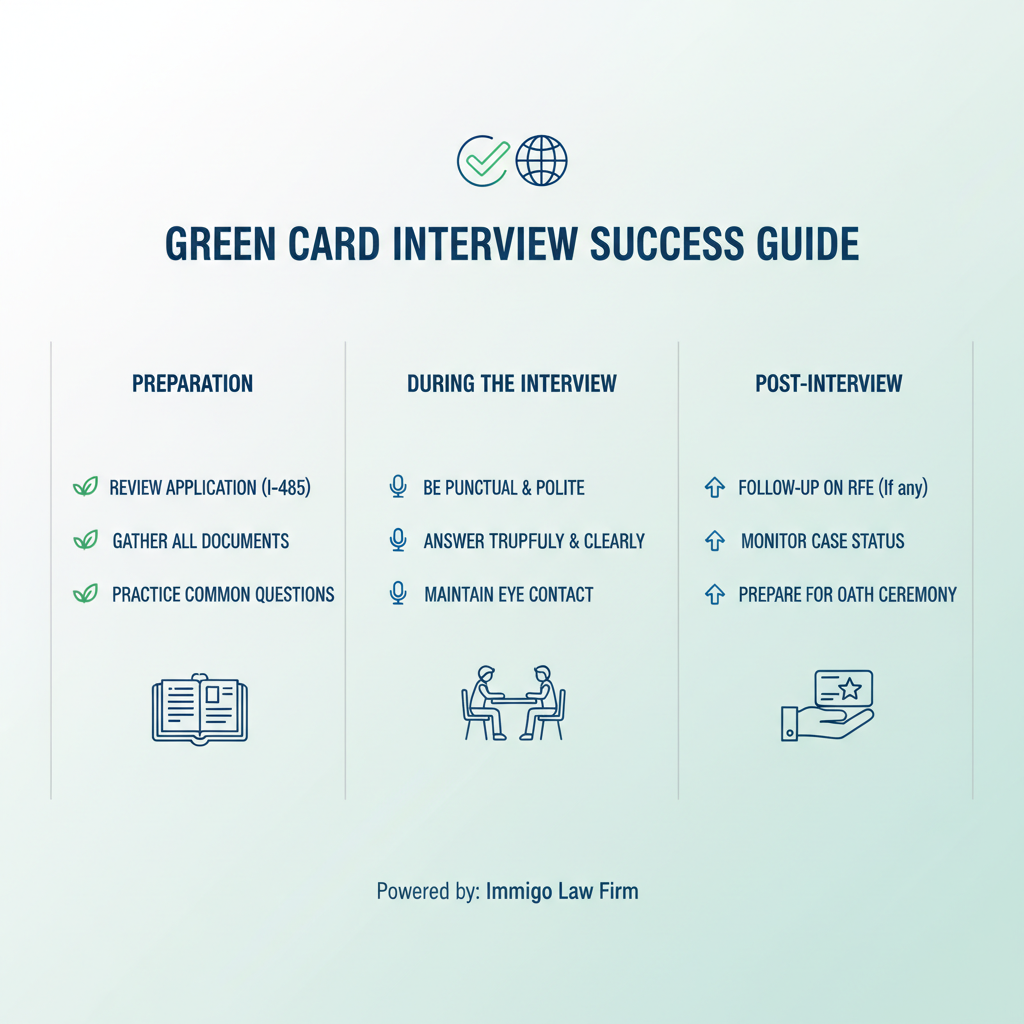
The importance of thorough preparation for your green card interview is consistently highlighted in immigration news and legal discussions. Recent reports and ongoing dialogues in the field of immigration law underscore the need for applicants to be meticulously prepared for their USCIS interviews. This critical stage, often the final step for many seeking permanent residency, demands attention to detail, accuracy, and a clear understanding of the process. Our insights are informed by these ongoing conversations, ensuring you receive the most current and relevant advice.
Green Card Interview Preparation Tips (Immigration Law)
What This News Means for Immigrants in Orlando and Across Florida
The green card interview is a pivotal moment for anyone seeking permanent residency in the United States. While not every green card applicant will undergo an interview, it remains a common and often decisive step, particularly for family-based petitions and some employment-based cases. Understanding its significance and preparing adequately can make all the difference.
Why this news is showing up now
The topic of green card interview preparation is perennially relevant because the interview itself is a fundamental component of the Adjustment of Status process for many applicants. USCIS continually refines its procedures, but the core requirement for applicants to prove their eligibility and the legitimacy of their petition remains constant. With ongoing changes in immigration policy and processing priorities, the spotlight often falls on the interview as a key mechanism for ensuring compliance and preventing fraud. For current applicants, especially those whose cases may have experienced delays due to past backlogs or policy shifts, receiving an interview notice is a clear signal that their application is progressing, making preparation an immediate and critical concern.
How it can affect Florida residents
Florida, with its diverse population and significant immigrant communities, sees a substantial number of green card applications processed annually. For residents of Orlando, Miami, Tampa, and other cities across the Sunshine State, preparing for a green card interview often means interacting with local USCIS Field Offices. The Orlando USCIS Field Office, for instance, serves a wide area, including Orange County and surrounding regions. While federal law dictates the overall interview process, local field offices may have specific nuances in scheduling, waiting times, or even the interview atmosphere. Adequate preparation ensures that Florida residents, regardless of their background or the complexity of their case, are ready to present their strongest possible case to the interviewing officer. Furthermore, Florida’s unique demographic landscape means many applicants may benefit from legal assistance that understands the cultural contexts and language needs of its diverse communities. At Imigrar, we are proud to offer services in both English and Spanish (Se Habla Español) to better serve our community.
What Green Card Interviews Are (and Why It Matters)
A green card interview is a formal meeting with a USCIS officer to review your application for lawful permanent residency in the United States. Its primary purpose is to verify the information provided in your application forms, confirm your eligibility, and ensure that you meet all legal requirements for obtaining a green card. The officer will ask questions about your background, the basis of your petition (e.g., your marriage to a U.S. citizen, your employment offer), and your intent to reside permanently in the U.S.
This interview matters immensely because it is often the final hurdle before a decision is made on your green card application. It’s your opportunity to present your case directly, clarify any ambiguities, and provide additional evidence if requested. A successful interview can lead directly to green card approval, while a poorly prepared or unsuccessful one can result in delays, Requests for Evidence (RFEs), or even denial.
A plain-English definition
Think of the green card interview as a detailed conversation with an immigration official. They want to make sure you qualify for a green card and that all the information you’ve given them is true and consistent. It's like a final check-up before they give you the "okay" to become a permanent resident.
Key terms you need to know
- Green Card: Formally known as a Lawful Permanent Resident Card, it grants you the right to live and work permanently in the United States.
- USCIS: U.S. Citizenship and Immigration Services, the government agency responsible for processing immigration benefits, including green cards.
- Adjustment of Status (AOS): The process of applying for a green card while physically present in the United States. This is the most common path for those who will have an interview within the U.S.
- Consular Processing: The process of applying for a green card through a U.S. embassy or consulate in your home country. While similar, the interview takes place abroad.
- Petition: The initial application filed by a sponsor (e.g., U.S. citizen spouse, employer) on behalf of the immigrant. Examples include Form I-130 (Petition for Alien Relative) or Form I-140 (Immigrant Petition for Alien Worker).
- Application: The immigrant's request for the green card itself, such as Form I-485 (Application to Register Permanent Residence or Adjust Status).
- Interview Notice: The official document from USCIS informing you of the date, time, and location of your interview, and listing required documents.
- Prima Facie: Latin for "on its face," meaning that the initial evidence provided appears to establish eligibility. While a positive step, it doesn't guarantee approval.
- Inadmissibility: Grounds under immigration law that can prevent an individual from entering the U.S. or obtaining a green card (e.g., certain criminal offenses, health issues, immigration violations).
- Affidavit of Support: Form I-864, a legally binding document signed by a sponsor (petitioner) to accept financial responsibility for the intending immigrant.
Current Immigration Law: The Foundation
The green card interview process is governed by the Immigration and Nationality Act (INA), which is the body of law that covers immigration to the United States. Several sections of the INA are particularly relevant to green card applications and interviews, establishing eligibility criteria, grounds of inadmissibility, and the framework for adjustment of status.
Federal requirements
At the federal level, the legal requirements for obtaining a green card are primarily found within the INA. For most applicants undergoing an interview, especially those seeking Adjustment of Status, key provisions include:
- INA Section 245(a): This section outlines the general eligibility requirements for Adjustment of Status. To qualify, an applicant must have been inspected and admitted or paroled into the U.S., be eligible for an immigrant visa, and have an immigrant visa immediately available at the time of filing the Form I-485 and at the time of final adjudication.
- INA Section 212: This critical section details the various grounds of inadmissibility, which can prevent an individual from obtaining a green card. These grounds cover areas such as health-related issues, criminal history, security and terrorism concerns, public charge (dependency on government assistance), misrepresentation, and prior immigration violations. The USCIS officer will assess whether any of these grounds apply to your case during the interview.
- INA Section 204: This section deals with the petitioning process, such as the filing of Form I-130 (Petition for Alien Relative) or Form I-140 (Immigrant Petition for Alien Worker). The officer will verify the bona fides of the relationship or employment offer established by these petitions.
During the interview, the USCIS officer's role is to ensure that you meet all the positive requirements for your specific green card category and that no grounds of inadmissibility apply. They will scrutinize the legitimacy of your marriage (for family-based petitions), the validity of your employment offer, or other bases for your application. They will also confirm that all required forms, such as Form I-485, Form I-130, Form I-864 (Affidavit of Support), and the results of your medical examination (Form I-693), are complete and accurate.
You can find detailed information about these laws and forms on the official government website: USCIS official website.
Florida-specific considerations
While immigration law is federal, the practical application often involves local USCIS Field Offices. For Central Florida residents, the Orlando USCIS Field Office typically handles Adjustment of Status interviews. While the law itself doesn't change from state to state, the local office's specific procedures, current caseload, and the individual officers can influence the interview experience. For example:
- Processing Times: Local office processing times can fluctuate, impacting when you receive your interview notice. You can check estimated processing times for the Orlando Field Office on the USCIS Processing Times page.
- Cultural Nuances: Florida is a melting pot of cultures. Officers at the Orlando office are accustomed to interviewing individuals from diverse backgrounds, but clear communication, whether in English or with an approved interpreter, is always key.
- Accessibility: Familiarizing yourself with the location and accessibility of the Orlando USCIS Field Office (or any other office if your case is transferred) is a practical, Florida-specific consideration. Orange County traffic, for instance, can be a factor.
Reminder: While federal law is paramount, understanding the local context can help you prepare logistically and mentally for your interview experience in Florida.
Feeling Overwhelmed? The complexities of immigration law require expert guidance. Imigrar is here to simplify the process. Contact our Orlando office at +1 786-791-3106 for a free consultation. Se Habla Español.
How to Prepare for Your Green Card Interview: A Complete Step-by-Step Guide
Preparing for your green card interview is a multi-faceted process that requires attention to detail, organization, and a clear understanding of your case. Follow these steps to maximize your chances of success.
1) Understand Your Case Type and Eligibility
Before anything else, be absolutely clear about the basis of your green card application. Are you applying through a family member, an employer, or another category?
- Family-Based Petitions (e.g., Marriage to a U.S. Citizen/LPR): This is the most common type. Be ready to prove the legitimacy of your relationship. The officer will look for evidence that your marriage is genuine and not solely for immigration purposes. Both spouses are typically required to attend.
- Employment-Based Petitions: You'll need to demonstrate your qualifications for the job, the employer's ability to pay the offered wage, and the ongoing need for your position.
- Asylum/Refugee-Based Petitions: Focus on the details of your asylum claim and any changes in circumstances.
- Other Categories: Understand the specific requirements for your unique path (e.g., EB-5 investor, special immigrant).
Action: Review your initial petition (Form I-130, Form I-140) and your Form I-485 application. Ensure you fully understand every answer you provided and how it supports your eligibility.
2) Gather and Organize All Original Documents and Copies
The interview notice (Form I-797C, Notice of Action) will list specific documents to bring. However, it's prudent to bring originals and copies of *all* documents submitted with your initial application, plus any new evidence. Organize them meticulously in a binder or folder, clearly labeled.
- Required Documents (Always Bring):
- Your original interview notice.
- Your passport (current and expired, if applicable).
- Your birth certificate (original and a certified English translation if not in English).
- Marriage certificate (original and translation, if applicable).
- Divorce decrees or death certificates for any prior marriages (for both applicant and petitioner, if applicable).
- Medical examination results (Form I-693) in a sealed envelope, if not already submitted.
- Original Form I-485 and all supporting documents (e.g., affidavits, police clearances).
- Original Form I-130 (if family-based) and all supporting documents.
- Original Form I-864 (Affidavit of Support) and all supporting financial documents for the petitioner (e.g., tax transcripts, W-2s, pay stubs, employment verification letter).
- All travel documents (Form I-94 Arrival/Departure Record, advance parole documents, previous visas).
- Employment Authorization Document (EAD) / Form I-765.
- Any previous immigration documents (e.g., approval notices for non-immigrant visas, asylum approval).
- Two passport-style photos meeting USCIS specifications (even if you submitted them before).
- Additional Evidence (Especially for Family-Based Petitions):
- Joint bank accounts statements.
- Joint leases or mortgage statements.
- Utility bills in both names.
- Life insurance policies, health insurance, or wills naming each other as beneficiaries.
- Birth certificates of children born to the marriage.
- Photos of the couple together over time, with family, and at significant events.
- Correspondence (e.g., letters, emails, social media messages) showing ongoing relationship.
- Affidavits from friends and family testifying to the bona fides of the relationship.
- For Employment-Based Petitions:
- Original job offer letter.
- Employment verification letter from your employer.
- Pay stubs.
- Educational degrees, transcripts, professional licenses.
- Evidence of employer's ability to pay (e.g., tax returns, annual reports).
Important: Bring originals of everything and a complete set of copies. USCIS officers typically want to see the originals and will keep the copies for their file.
3) Review Your Application and Anticipate Questions
Thoroughly reread every form you submitted, especially Form I-485 and Form I-130. The officer will refer to these documents and ask questions based on your answers. Discrepancies can raise red flags.
- Practice common questions:
- "What is your full name and date of birth?"
- "How did you meet your spouse?" (For marriage-based)
- "When and where did you get married?"
- "Do you have any children?"
- "Have you ever been arrested or convicted of a crime?"
- "Have you ever been deported or removed from the U.S.?"
- "Have you ever claimed to be a U.S. citizen?"
- "Do you understand the oath of allegiance?"
- "What is your current address and employment?"
- For married couples: Be prepared for separate questioning to verify the consistency of your answers about your relationship, daily life, and shared history.
- Be honest and consistent: Any false statements or inconsistencies with your application can lead to serious problems, including denial and accusations of fraud.
4) Arrange for an Interpreter and Legal Counsel
If you are not fluent in English, you must bring an independent, certified interpreter. Do not rely on your spouse or family member to interpret, as USCIS generally does not permit this due to potential conflicts of interest. The interpreter must be fluent in both English and your native language and should bring identification. If you are working with an attorney, they will attend the interview with you and can assist with interpretation if they are fluent in your language. At Imigrar, our team includes professionals fluent in Spanish (Se Habla Español) who can provide this crucial support.
- Legal Representation: Attending the interview with an experienced immigration attorney from Imigrar can provide immense benefits. Your attorney can:
- Prepare you thoroughly for the types of questions you'll face.
- Ensure all documents are in order.
- Clarify questions from the officer.
- Address any legal issues that arise during the interview.
- Provide emotional support and confidence.
5) Prepare for the Interview Day Logistics
The day of the interview is not the time for surprises. Plan ahead.
- Location: Confirm the exact address of the USCIS Field Office (e.g., the Orlando USCIS Field Office).
- Travel: Plan your route, considering potential traffic (especially in Central Florida), parking, and security checks. Aim to arrive at least 30-45 minutes early.
- Attire: Dress professionally, as if you were attending a job interview. This shows respect for the process and the officer.
- Mindset: Remain calm, polite, and confident. Listen carefully to each question before answering. Answer truthfully and directly, without volunteering unnecessary information.
- Children: If you have children, discuss with your attorney whether they should attend. Sometimes, their presence can be helpful, but they can also be a distraction.
6) During the Interview
When you are called in, you will typically be sworn in. The officer will then begin asking questions.
- Listen Carefully: Understand each question before you answer. If you don't understand, politely ask the officer to repeat or rephrase it.
- Answer Truthfully and Concisely: Provide direct answers. Do not elaborate unnecessarily unless asked for more details.
- Refer to Documents: If the officer asks for a specific document, provide it promptly from your organized folder.
- Maintain Composure: Even if questions feel intrusive or challenging, remain calm and respectful.
- Let Your Attorney Speak: If you have an attorney, they will advise you on when and how to answer. They may interject to clarify or object if appropriate.
7) Follow-up Post-Interview
The officer may make a decision on the spot, issue a Request for Evidence (RFE), or inform you that a decision will be mailed. Regardless of the outcome:
- Note Everything: After leaving the interview, make notes of all questions asked, documents provided, and any instructions given by the officer.
- Respond to RFEs Promptly: If an RFE is issued, respond within the specified 90-day window with all requested information.
- Monitor Status: Check your case status online using your receipt number on the USCIS website.
- Consult Your Attorney: If you attended with an attorney, they will guide you on the next steps and follow-up actions.
Practical Steps You Can Take Today
Don't wait until the last minute to prepare. Here’s an actionable checklist to start your green card interview preparation today:
- Review Your Application: Print out copies of all forms (Form I-130, Form I-485, Form I-864, etc.) you submitted. Read through every answer. Highlight any areas where you might need to clarify or provide additional context.
- Start Document Gathering: Begin collecting all original documents listed in your interview notice and the comprehensive list above. If any documents are missing or require updates (e.g., a new passport, updated medical exam), start the process to obtain them immediately.
- Organize Your File: Create a dedicated physical folder or binder for your immigration documents. Use tabs to separate originals, copies, and different categories of evidence (e.g., "Birth & Marriage Certificates," "Financial Documents," "Relationship Evidence").
- Identify Potential Gaps: As you review your application and documents, identify any potential weaknesses in your case or areas where USCIS might have questions. For example, if there's a significant age difference in a marriage, gather additional evidence of shared life.
- Practice Answering Questions: Have a trusted friend, family member, or your attorney conduct a mock interview with you. Practice answering common questions clearly, truthfully, and concisely.
- Confirm Interpreter Needs: If you need an interpreter, identify a certified professional and make arrangements. Do this well in advance.
- Consult with Imigrar: Schedule a free consultation with an immigration attorney at Imigrar. Even if you filed your application yourself, having legal counsel review your case and prepare you for the interview is invaluable.
Document preparation guidance
- Translations: Any document not in English must be accompanied by a complete and accurate English translation, certified by a competent translator. The translator must provide a statement certifying their competence and the accuracy of the translation.
- Photocopies: Always bring clear photocopies of all originals. USCIS will typically keep the copies and return the originals.
- Digital Backups: Consider scanning all your documents and saving them to a secure cloud service or external hard drive as a backup.
- Affidavits: If you are submitting affidavits from friends or family, ensure they are notarized and include the affiant's contact information.
- Updates: If there have been any significant life changes since you filed your application (e.g., new job, new address, birth of a child), bring updated evidence and be prepared to discuss them.
Timeline expectations
The timeline from filing your Form I-485 to receiving an interview notice can vary significantly based on your USCIS service center, field office, and case category. Generally:
- Initial Filing to Interview Notice: This can range from several months to over a year, sometimes longer for certain categories. You can check estimated processing times on the USCIS Processing Times website.
- Interview Notice to Interview Date: Once you receive your interview notice, the interview date is typically scheduled within 30 to 90 days.
- Interview to Decision: In some straightforward cases, a decision might be made on the spot. More often, you will receive a decision by mail within a few weeks to a few months. If an RFE is issued, the timeline will extend.
Warning: These are general estimates. Your specific timeline may differ. Continuous monitoring of your case status and prompt responses to any USCIS requests are essential.
How Imigrar Helps Immigrants in Orlando
At Imigrar, we understand that the green card interview can be one of the most stressful parts of the immigration journey. Our firm is built on the philosophy of "Keep Families Together," and we apply this principle to every case we handle, ensuring you feel supported and prepared.
Our experienced immigration attorneys in Orlando provide comprehensive legal support for green card applicants. We offer:
- Expert Case Review: We thoroughly review your entire application package, identifying potential issues and ensuring all necessary documents are prepared.
- Personalized Interview Preparation: We conduct mock interviews, providing realistic scenarios and constructive feedback to help you feel confident and ready to answer any question.
- Document Organization: We assist you in organizing your documents, ensuring you have all originals and copies readily accessible for the interview.
- Attorney Representation: An Imigrar attorney can accompany you to your green card interview at the Orlando USCIS Field Office, providing legal guidance, clarity, and advocacy during the process.
- Post-Interview Follow-Up: We assist with responding to RFEs or other follow-up actions required after the interview.
- Bilingual Services: Our team is fully bilingual, offering services in both English and Spanish (Se Habla Español), ensuring clear communication and understanding throughout your case.
We serve clients not only in Orlando and Central Florida but also nationwide, bringing our expertise to families wherever they are. Don't face this critical step alone. Let Imigrar be


