


The reporting that sparked this guide: Green Card Interview Preparation Tips (Immigration Law)
What This News Means for Immigrants in Orlando and Across Florida
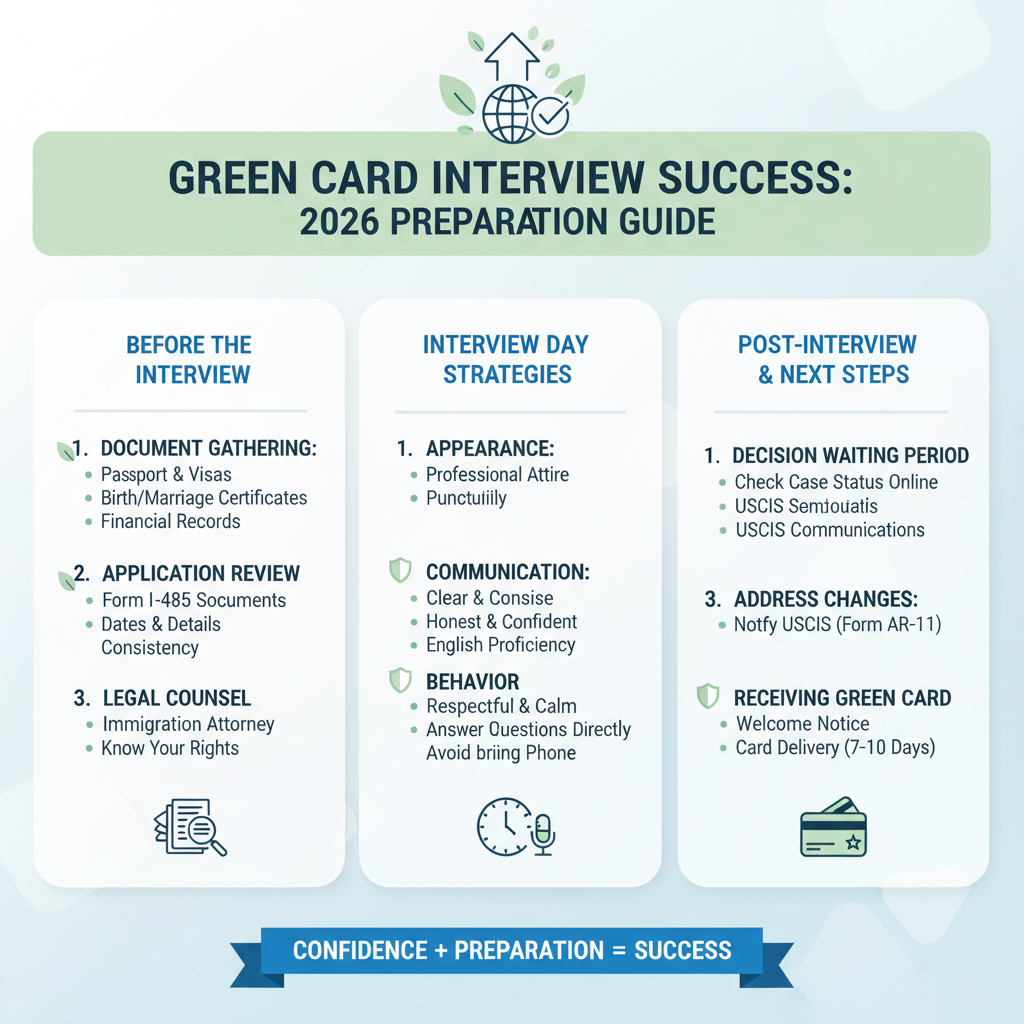
For many aspiring permanent residents, the Green Card interview represents the final, often most nerve-wracking, hurdle in their immigration journey. While the process of obtaining a Green Card, or lawful permanent residency, has been a cornerstone of U.S. immigration law for decades, the importance of thorough preparation for the interview remains a constant, trending topic in immigration circles. Today, as of 2026-05-25, the focus on diligent preparation is more critical than ever, reflecting evolving administrative scrutiny and the profound impact a successful interview has on an individual’s future.
Why this news is showing up now
The "news" surrounding Green Card interview preparation isn't about a sudden change in policy but rather a persistent emphasis on its significance. Immigration laws and procedures, while largely federal, are subject to administrative interpretations and enforcement priorities that can shift. This means that while the core requirements for a Green Card remain consistent, the level of scrutiny and the types of questions an applicant might face at an interview can evolve. In 2026, with ongoing efforts to streamline immigration processes while also ensuring national security and preventing fraud, USCIS officers are often more thorough in their questioning and document review. This puts the onus on applicants to be impeccably prepared, making expert guidance on interview preparation a perennially relevant and trending topic. The stakes are high, and the difference between approval and a Request for Evidence (RFE) or even denial often hinges on the quality of preparation.
How it can affect Florida residents
Florida, particularly Orlando and the Central Florida region, is a vibrant melting pot of cultures and home to a large, diverse immigrant population. This means that many residents across Orange County and along the I-4 corridor are actively navigating the Green Card process. The Orlando USCIS Field Office, like others nationwide, conducts a significant number of these interviews daily. For Florida residents, understanding the nuances of interview preparation is paramount. While federal immigration law applies uniformly, local USCIS field offices can develop specific procedural tendencies or priorities. The volume of cases, the demographics of applicants, and even the individual officers can influence the interview experience. Being well-prepared not only instills confidence but also helps navigate any potential local specificities. Moreover, Florida's dynamic economic landscape, with its tourism, agriculture, and tech sectors, means many different categories of Green Card applicants—from family-based to employment-based—are present, each requiring tailored preparation strategies. Imigrar, based in Orlando, is acutely aware of these local dynamics and offers specialized support to keep families together.
Need Help? Our Orlando immigration team is ready to assist with your Green Card interview preparation. Call +1 786-791-3106 for a free consultation, or message us online. Se Habla Español.
What the Green Card Interview Is (and Why It Matters)
The Green Card interview is a pivotal and often final step in the journey towards becoming a lawful permanent resident of the United States. It is a mandatory meeting with a U.S. Citizenship and Immigration Services (USCIS) officer, designed to verify the information provided in your application, assess your eligibility for a Green Card, and ensure you meet all legal requirements for admissibility into the country. Think of it as your opportunity to personally present your case and clarify any ambiguities in your submitted documentation.
A plain-English definition
Simply put, the Green Card interview is a face-to-face conversation with a government official where you (and often your sponsoring family member or employer) answer questions about your application. The officer's main goal is to confirm that the information you submitted in forms and supporting documents is accurate, truthful, and consistent. They want to make sure you genuinely qualify for a Green Card under the specific category you applied for (e.g., marriage to a U.S. citizen, employment with a U.S. company, or a family petition). It’s also their chance to identify any potential issues that might make you inadmissible to the U.S., such as past criminal activity, certain health conditions, or immigration violations. For many, it’s the last significant hurdle before receiving that coveted Green Card.
Key terms you need to know
Navigating the immigration process means understanding specific terminology. Here are some key terms related to your Green Card interview:
- Green Card: The common name for a Permanent Resident Card, which proves you are authorized to live and work permanently in the United States.
- Adjustment of Status (AOS): The process of applying for a Green Card while physically present in the United States. This is contrasted with Consular Processing, where you apply for an immigrant visa at a U.S. embassy or consulate abroad.
- USCIS (U.S. Citizenship and Immigration Services): The government agency responsible for administering immigration and naturalization benefits. Your interview will be with a USCIS officer.
- Principal Applicant: The main individual seeking the Green Card.
- Petitioner: The U.S. citizen or lawful permanent resident (LPR) who filed an immigrant petition (like Form I-130) on behalf of the principal applicant. For employment-based cases, the petitioner is typically the employer.
- Derivatives: Family members (spouse, unmarried children under 21) who apply for a Green Card based on the principal applicant's petition.
- Admissibility: The legal term for meeting the requirements to be allowed to enter or remain in the United States. During the interview, the officer will assess your admissibility.
- Inadmissibility Grounds: Specific reasons under U.S. immigration law that can prevent an individual from being granted a Green Card, such as certain criminal convictions, health issues, past immigration fraud, or being deemed a "public charge."
- Affidavit of Support (Form I-864): A legally binding document signed by a petitioner (sponsor) to accept financial responsibility for the immigrant. This form demonstrates that the applicant will not become a public charge.
- Priority Date: The date your immigrant petition (e.g., Form I-130 or Form I-140) was filed. This date determines your place in the visa queue for numerically limited categories.
- Request for Evidence (RFE): A letter from USCIS asking for additional documents or information to support your application.
- Notice of Intent to Deny (NOID): A letter from USCIS indicating their intention to deny your application unless you provide compelling reasons or evidence to overcome their concerns.
Current Immigration Law: The Foundation for Your Green Card Interview
U.S. immigration law is primarily federal, meaning it applies nationwide, including in Florida. The foundation for the Green Card interview process is rooted in the Immigration and Nationality Act (INA), which is the body of law governing immigration to the United States. Understanding the relevant statutes is crucial for appreciating the purpose and scope of your interview.
Federal requirements
The overarching legal framework for Green Card applications is found in the INA. Key sections include:
- INA § 245 (8 U.S.C. § 1255): This section governs Adjustment of Status for individuals already in the United States. It outlines the eligibility criteria, including lawful admission, maintenance of lawful status (with some exceptions), and being eligible for an immigrant visa. The interview is a direct mechanism to verify these conditions.
- INA § 201 et seq. (8 U.S.C. § 1151 et seq.): These sections define who is eligible for an immigrant visa, including family-sponsored preferences, employment-based preferences, and special immigrants. The interview ensures that the applicant fits one of these categories.
- INA § 212 (8 U.S.C. § 1182): This critical section details the various grounds of inadmissibility. During your interview, the USCIS officer will assess whether any of these grounds apply to you. Common grounds include health-related issues, criminal history, security concerns, prior immigration violations, and the "public charge" rule. You must demonstrate that you are not inadmissible or, if you are, that you qualify for a waiver.
- INA § 237 (8 U.S.C. § 1227): This section addresses grounds of deportability. While primarily for those already admitted, the officer may consider if any issues arising from the interview could make you deportable in the future.
The interview serves as a final check to ensure compliance with these federal statutes and regulations found in the Code of Federal Regulations (CFR). The officer will scrutinize the veracity of statements made in your application, specifically on forms such as:
- Form I-130, Petition for Alien Relative: Filed by a U.S. citizen or LPR on behalf of a relative. The interview often delves into the bona fides of the relationship established by this petition.
- Form I-485, Application to Register Permanent Residence or Adjust Status: The primary application for the Green Card itself when applying from within the U.S. All information on this form will be reviewed.
- Form I-864, Affidavit of Support: Signed by the financial sponsor, confirming they meet income requirements to support the applicant and prevent them from becoming a public charge.
- Form I-693, Report of Medical Examination and Vaccination Record: Submitted by a civil surgeon to confirm you meet health-related admissibility requirements.
- Form I-765, Application for Employment Authorization (EAD): Often filed concurrently with Form I-485 to allow work authorization while the Green Card application is pending.
- Form I-131, Application for Travel Document (Advance Parole): Often filed concurrently with Form I-485 to allow travel outside the U.S. while the Green Card application is pending.
For the most up-to-date forms and instructions, always refer to the USCIS official website.
Florida-specific considerations
While immigration law is federal, its application and processing occur at local USCIS Field Offices. For Central Florida residents, the primary office for Green Card interviews is the Orlando USCIS Field Office. While the legal requirements remain the same, certain practical aspects can be influenced by the local office:
- Processing Times: Although governed by national backlogs, local office efficiency and caseload can influence how quickly interviews are scheduled and decisions are rendered. You can check average processing times for the Orlando office on the USCIS Processing Times page.
- Officer Tendencies: Officers at different field offices may have varying approaches or areas of focus. For example, some offices might be particularly vigilant about marriage fraud, while others might focus more on public charge issues given local economic conditions. An experienced local attorney like Imigrar can offer insight into these local nuances.
- Logistics: Understanding the specific layout, parking, and security procedures of the Orlando USCIS Field Office is a practical advantage that can reduce stress on interview day.
Reminder: Despite any local variations in procedure or emphasis, the fundamental laws and eligibility criteria are set by federal statute. Your preparation must always align with these federal requirements.
Overwhelmed by forms and legal jargon? Imigrar simplifies the Green Card process. Contact our Orlando office at +1 786-791-3106 for expert guidance and peace of mind. Se Habla Español.

How to Prepare for Your Green Card Interview: A Complete Step-by-Step Guide
Preparing for your Green Card interview is a multi-faceted process that requires meticulous attention to detail, thorough organization, and a clear understanding of what to expect. Following these steps will significantly increase your chances of a successful outcome.
1) Review Your Application and Supporting Documents
The first and most critical step is to thoroughly review every single document you submitted to USCIS. Your interview will be based on the information contained in your original application. You must be intimately familiar with every answer, every date, and every piece of evidence. This includes:
- A complete copy of your filed Form I-130 (if applicable) and all its supporting documents.
- A complete copy of your filed Form I-485 and all its supporting documents.
- Any other forms filed concurrently, such as Form I-765 and Form I-131.
- All exhibits and evidence, such as birth certificates, marriage certificates, divorce decrees, police clearances, financial documents, photos, joint utility bills, bank statements, leases, and any other evidence of a bona fide relationship or employment.
Tip: If you used an attorney, they should have provided you with a complete copy of your file. If you filed yourself, ensure you have kept an organized copy. The officer will have your entire file, and any inconsistencies between your verbal answers and the written record can raise red flags.
2) Gather All Original Documents
You must bring the originals of every document you submitted as a copy, as well as any new evidence that has developed since your initial filing. Create a checklist and meticulously gather each item. This typically includes:
- Your interview appointment notice.
- Your valid passport(s) and any previous passports.
- Your original birth certificate (and certified translations, if applicable).
- Your original marriage certificate (and certified translations, if applicable).
- Original divorce decrees or death certificates for any previous marriages of either spouse (if applicable).
- Your original medical examination report (Form I-693) in a sealed envelope, if you haven't already submitted it and it's still valid.
- Original police clearance certificates from all countries where you have lived.
- Original employment authorization document (EAD) and advance parole (AP) cards, if you have them.
- For family-based petitions: original financial documents for the sponsor, including the original signed Form I-864, tax transcripts (not just tax returns), W-2s, and pay stubs for the most recent year.
- Any new evidence of your bona fide relationship (e.g., more recent joint bank statements, utility bills, photos, travel itineraries, insurance policies, shared property deeds, children's birth certificates).
- For employment-based petitions: updated employment verification letters, recent pay stubs, and any changes to your job description or salary.
Important: Do not forget your appointment notice and a government-issued photo ID. For Orlando residents, this means planning your commute to the Orlando USCIS Field Office well in advance to avoid any delays.
3) Organize Your Documents Meticulously
Presentation matters. A well-organized set of documents will convey professionalism and make the officer's job easier, which can positively influence your interview. Consider creating a binder or several clearly labeled folders.
- Tabs and Sections: Use dividers or tabs to separate documents into logical categories (e.g., "Petitioner's Documents," "Applicant's Documents," "Financial Sponsorship," "Relationship Evidence," "Medical/Police Records").
- Chronological Order: Within each section, arrange documents chronologically, with the most recent on top.
- Copies vs. Originals: Bring both the originals and a complete set of copies of everything you submitted. This allows the officer to keep the copies if needed, without holding your originals.
- New Evidence: Keep any new evidence separate but easily accessible, perhaps in its own clearly labeled section.
This level of organization demonstrates your preparedness and respect for the process, which can make a favorable impression on the interviewing officer at the Orlando USCIS Field Office.
4) Practice Answering Potential Questions
The best way to reduce anxiety is to anticipate and practice answering common interview questions. While every interview is unique, certain themes are universally explored. Conduct mock interviews with your attorney, spouse, or a trusted friend.
- For Marriage-Based Cases: Be prepared for detailed questions about your relationship, including how and when you met, your courtship, engagement, wedding, daily life together, shared responsibilities, future plans, and intimate details that prove your marriage is genuine. For example: "Where did you go on your first date?", "Who wakes up first?", "What did you do last weekend?", "What are your spouse's parents' names?", "Do you have joint bank accounts?", "What are your future plans together?"
- For Employment-Based Cases: Questions will focus on your qualifications, the job offer, the petitioning company, and your intent to work in the specified position. For example: "What is your role at the company?", "What are your daily duties?", "What is your salary?", "How long have you been employed there?", "How did you find this job?"
- General Background Questions: Expect questions about your immigration history, travel history, education, employment history, family members, and any potential inadmissibility issues (e.g., criminal record, past visa overstays).
- Inadmissibility Concerns: If you have any potential inadmissibility issues, be prepared to explain them truthfully and clearly, and have any relevant waivers or documentation ready.
Warning: Always be honest. Inconsistent or untruthful answers can lead to serious consequences, including denial and accusations of fraud.
5) Understand the Interview Day Logistics
Knowing the practical details of your interview day will help alleviate stress. For those in Central Florida, your interview will likely be at the Orlando USCIS Field Office.
- Location and Directions: Confirm the exact address of the USCIS Field Office. Use GPS and plan your route. Consider a dry run if you're unfamiliar with the area.
- Arrival Time: Arrive at least 30 minutes (or even an hour) before your scheduled appointment. Security checks and navigating the building can take time.
- Parking: Research parking options near the office. Some offices have dedicated parking, while others require street parking or paid garages.
- Security: Be aware of security procedures. You will likely go through a metal detector, and certain items (like weapons, some electronics) may be prohibited.
- Who Should Attend: If it's a family-based petition, both the applicant and the petitioner (your spouse) must attend. If you have an attorney, they should also attend. Generally, children listed as derivatives are not required to attend unless specifically requested by USCIS.
6) Prepare for the Interview Itself
Your demeanor and how you conduct yourself during the interview are important.
- Dress Appropriately: While not a job interview, dressing in neat, business-


