


The journey to obtaining a Green Card, or lawful permanent residency, is a pivotal moment for many immigrants and their families in the United States. While the application process can be lengthy and complex, the Green Card interview stands as a crucial step, often determining the outcome of your application. Understanding how to prepare thoroughly can significantly increase your chances of success and alleviate much of the stress associated with this important meeting. At Imigrar, we understand the stakes and are dedicated to helping you navigate every phase with confidence.
Need Help? Our Orlando immigration team is ready to assist. Call +1 786-791-3106 for a free consultation, or message us online. Se Habla Español.
Today, we delve into the essential strategies and practical advice for preparing for your Green Card interview, ensuring you are well-equipped for this critical step towards permanent residency.
The reporting that sparked this guide
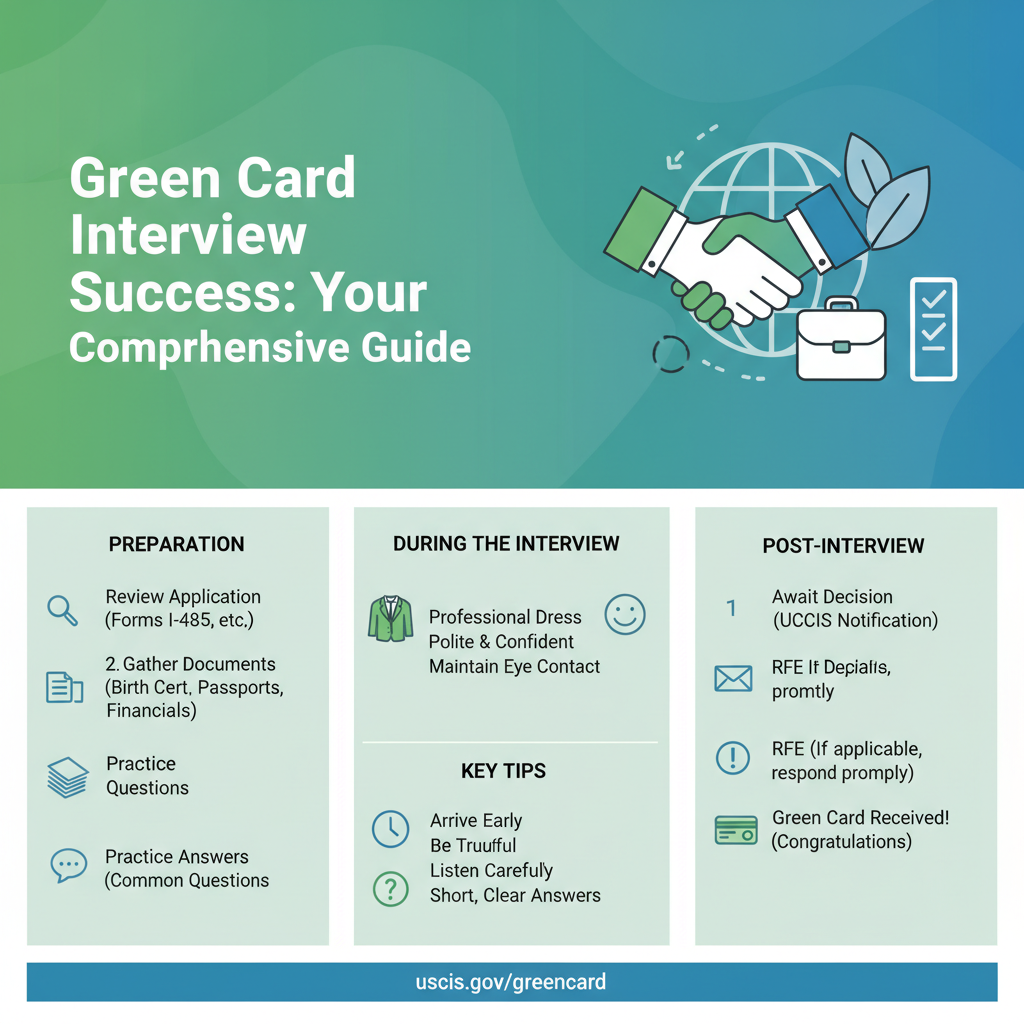
The information and advice in this guide are inspired by the ongoing discourse and updates within the realm of Green Card Interview Preparation Tips (Immigration Law). Staying informed about immigration law trends and best practices is essential for every applicant.
What This News Means for Immigrants in Orlando and Across Florida
For immigrants residing in Orlando, across Central Florida, and throughout the Sunshine State, preparing for your Green Card interview is not just a recommendation; it's a necessity. The landscape of immigration law is constantly evolving, and while the core requirements for a Green Card remain, the interview process itself can vary based on individual circumstances, the specific USCIS field office, and current administrative priorities.
Why this news is showing up now
The topic of Green Card interview preparation is perennially relevant because the interview is a mandatory step for most individuals seeking Adjustment of Status to lawful permanent resident within the U.S., or for those undergoing Consular Processing abroad. While the fundamental legal framework has been stable, shifts in processing times, increased scrutiny in certain case types (such as marriage-based petitions), and the sheer volume of applications mean that thorough preparation is more critical than ever. News and discussions around immigration law frequently highlight the importance of being ready for every stage, especially the interview, which serves as a crucial point of direct interaction with immigration officials. It's a reminder that while the journey can be long, diligence at each step, particularly the interview, is paramount.
How it can affect Florida residents
For individuals living in Florida, especially in metropolitan areas like Orlando, Tampa, or Miami, understanding the nuances of Green Card interview preparation is vital. Florida is home to a large and diverse immigrant population, leading to significant activity at USCIS field offices across the state. If your case is processed in Orlando, for instance, your interview will likely take place at the Orlando USCIS Field Office. Each field office operates under the same federal guidelines, but local processing volumes and specific interview styles can sometimes create distinct experiences. For Central Florida residents, being prepared means:
- Navigating Local Logistics: Knowing the location, parking, and security procedures for the Orlando field office (or whichever office your interview is scheduled at).
- Understanding Local Processing Times: While federal, processing times can still feel specific to your local office based on caseload. You can check current processing times on the USCIS Processing Times page.
- Ensuring Comprehensive Documentation: With a high volume of cases, USCIS officers rely heavily on well-organized and complete documentation to expedite the interview process.
- Addressing Florida-Specific Ties: Be ready to discuss your life and community ties within Florida, demonstrating your genuine intent to reside permanently in the U.S.
The stakes are high, and for families seeking to establish their lives together in Florida, a successful interview is the gateway to stability and opportunity.
What Green Card Interviews Are (and Why They Matter)
A Green Card interview is a formal meeting with an immigration officer from U.S. Citizenship and Immigration Services (USCIS) or a Consular Officer from the U.S. Department of State. Its primary purpose is to verify the information provided in your Green Card application, assess your eligibility for permanent residency, and ensure that you are admissible to the United States under current immigration law. This is a critical step in the process, as it allows the government to review your case in person and address any potential concerns.
A plain-English definition
Simply put, a Green Card interview is your chance to personally explain your case to an immigration officer. It's where the officer confirms that everything you've written on your application forms is true, that you meet all the legal requirements for a Green Card, and that there are no reasons why you should be denied residency. Think of it as a thorough background check and a conversation rolled into one, designed to ensure fairness and compliance with immigration laws.
Key terms you need to know
To navigate the Green Card process successfully, understanding these key terms is essential:
- Green Card: Official document (Form I-551) proving lawful permanent residency in the U.S.
- Lawful Permanent Resident (LPR): An individual who has been granted the privilege of residing permanently in the United States.
- Adjustment of Status (AOS): The process of applying for a Green Card while physically present in the United States. This typically involves filing Form I-485.
- Consular Processing: The process of applying for an immigrant visa at a U.S. embassy or consulate abroad. This is for individuals outside the U.S.
- USCIS (U.S. Citizenship and Immigration Services): The government agency responsible for processing immigration petitions and applications within the U.S. This is where your interview will take place if you are adjusting status. (USCIS official website)
- U.S. Department of State: The government agency responsible for foreign policy and administering consular processing through U.S. embassies and consulates worldwide. (U.S. Department of State)
- Petitioner: The U.S. citizen or lawful permanent resident who files an immigrant petition (e.g., Form I-130) on behalf of a relative.
- Beneficiary: The foreign national who is seeking an immigrant visa or Green Card based on the petitioner's filing.
- Affidavit of Support (Form I-864): A legally binding document signed by a petitioner (or joint sponsor) to accept financial responsibility for the immigrant.
- Inadmissibility: Legal grounds that can prevent a foreign national from entering the U.S. or adjusting status (e.g., certain criminal offenses, health issues, prior immigration violations).
- Priority Date: The date USCIS receives a properly filed immigrant visa petition. This date determines your place in the visa queue for numerically limited categories.
Need Help? Our Orlando immigration team is ready to assist. Call +1 786-791-3106 for a free consultation, or message us online. Se Habla Español.
Current Immigration Law: The Foundation for Your Green Card Interview
The Green Card interview is not an arbitrary process; it is firmly rooted in U.S. immigration law, primarily the Immigration and Nationality Act (INA). The officer's questions and document requests are designed to ensure compliance with these statutes. Understanding the legal framework provides context for why certain information is required and what the officer is looking for.
Federal requirements
The core federal requirements for Green Card eligibility are outlined in various sections of the INA:
- INA § 201 and § 203: These sections define the categories of immigrants eligible for Green Cards, including immediate relatives of U.S. citizens (spouses, unmarried children under 21, and parents) and family-sponsored preference categories (unmarried adult children, married children, siblings).
- INA § 204: This section governs the filing of immigrant petitions, such as Form I-130, Petition for Alien Relative, which establishes the qualifying relationship between the petitioner and beneficiary.
- INA § 245: This is the cornerstone for Adjustment of Status. It allows eligible foreign nationals already in the U.S. to apply for lawful permanent residency without having to leave the country. Key requirements include having been "inspected and admitted or paroled" into the U.S. and being eligible for an immigrant visa.
- INA § 212: This critical section details the grounds of inadmissibility. An immigration officer at your interview will assess whether any of these grounds apply to you. These can include health-related grounds, criminal grounds, security grounds, public charge considerations (addressed by Form I-864, Affidavit of Support), and prior immigration violations.
During the interview, the officer will verify that the information in your Form I-130 (if family-based), Form I-485, Application to Register Permanent Residence or Adjust Status, and supporting documents accurately reflects your eligibility under these laws. They will also scrutinize your background against the inadmissibility grounds. You can find all official forms and instructions on the USCIS Forms page.
Florida-specific considerations
While the laws are federal, the application of these laws happens at the local level. For Florida residents, particularly those in the Orlando area, your interview will likely be conducted at the Orlando USCIS Field Office. The officers at this office are trained to apply federal law consistently. However, local nuances can arise:
- Local Crime Data: Officers may have access to local criminal databases, so it's crucial that all past interactions with law enforcement, no matter how minor, are truthfully disclosed.
- Community Ties: While not a legal requirement for eligibility, demonstrating strong ties to your Florida community (e.g., employment, property, community involvement in Orange County) can subtly reinforce your genuine intent to make the U.S. your permanent home.
- Access to Legal Aid: Florida has a robust legal community, and having experienced legal counsel from firms like Imigrar, based in Orlando, can make a significant difference in navigating the local processing environment.
Important: Always disclose complete and accurate information. Any misrepresentation, even seemingly minor, can lead to a finding of inadmissibility and denial of your Green Card application under INA § 212(a)(6)(C)(i).
How to Prepare for Your Green Card Interview: A Complete Step-by-Step Guide
The key to a successful Green Card interview lies in meticulous preparation. This comprehensive guide breaks down the process into actionable steps.
1) Understand Your Case and Review Your Application
Before you even think about gathering documents, you need to thoroughly understand your own application. The immigration officer will be referring to the forms you submitted, and your answers must be consistent with that information.
- Review All Submitted Forms: Read through every form you submitted, including Form I-130, Form I-485, Form I-864, Form I-765 (Employment Authorization), Form I-131 (Travel Document), and any other supporting affidavits or documents. Pay close attention to dates, addresses, employment history, and family details.
- Identify Potential Issues: Are there any discrepancies, gaps in employment, periods out of status, or past criminal incidents? Be prepared to explain these clearly and honestly.
- Know Your Relationship Details (for marriage-based cases): If you’re applying based on marriage, be ready to discuss how you met, your wedding, your daily life together, future plans, and any shared experiences. The officer is looking for evidence of a bona fide (genuine) marriage.
2) Gather and Organize All Required Documents
This is arguably the most critical step. You must bring all original documents, copies of all documents, and any additional evidence that supports your case. Organize them neatly in a binder or folder, clearly labeled.
General Required Documents:
- Interview Notice: The official letter from USCIS scheduling your interview.
- Government-Issued Photo ID: Passport, driver's license, or state ID.
- Copies of All Forms Submitted: Bring a complete copy of your entire application package.
- Original Birth Certificates: For both applicant and petitioner (if applicable).
- Original Marriage Certificate: If applying based on marriage.
- Original Divorce Decrees/Death Certificates: For any previous marriages of either spouse.
- Original Passports and Travel Documents: All current and expired passports, including any visas, entry stamps, and I-94 arrival/departure records.
- Medical Examination Report (Form I-693): If not already submitted and still valid. Ensure it's in a sealed envelope from the civil surgeon.
- Employment Authorization Document (EAD) and Advance Parole (AP): If you have them.
- Two Passport-Style Photos: Even if you submitted them previously, it's wise to bring fresh ones.
Financial Support Documents (for Form I-864, Affidavit of Support):
- Petitioner's (and Joint Sponsor's, if applicable) Most Recent Federal Income Tax Returns: Including all W-2s, 1099s, and schedules.
- Proof of U.S. Domicile: Driver's license, utility bills, lease, or mortgage statements.
- Proof of Employment: Letter from employer, pay stubs.
- Proof of Assets: Bank statements, property deeds, stock certificates (if relying on assets).
Evidence of Bona Fide Marriage (for marriage-based cases):
- Joint Bank Accounts: Statements showing joint ownership and activity.
- Joint Leases or Mortgage Statements: Showing shared residence.
- Utility Bills: In both names or showing shared address.
- Insurance Policies: Health, life, auto, property insurance listing both spouses.
- Birth Certificates of Children: If you have children together.
- Joint Credit Card Statements: Showing joint financial responsibility.
- Photos: Dated photos of your relationship (dating, engagement, wedding, family, travel).
- Correspondence: Letters, emails, text messages, social media posts showing interaction.
- Affidavits from Friends/Family: Letters attesting to the bona fides of your marriage.
- Shared Property Ownership: Vehicle titles, property deeds.
Reminder: Bring ALL originals and a complete set of photocopies. The officer will review the originals and keep the copies.
3) Practice Answering Potential Questions
The interview is a conversation, but it's also an examination. Be prepared to answer questions about everything on your application forms and your life story.
- Personal History: Dates of birth, addresses, employment history, education, travel history, parents' names, siblings.
- Immigration History: How and when you entered the U.S., previous visas, any past immigration applications, any arrests or citations.
- Eligibility Questions: Questions related to the grounds of inadmissibility (criminal history, health issues, public charge, security concerns).
- Relationship Questions (marriage-based): For a marriage-based Green Card, expect detailed questions about your relationship, often asked separately to you and your spouse to check for consistency. Examples:
- How did you meet? When and where was your first date?
- Who proposed? When and where?
- Describe your wedding day. Who attended?
- What did you do this morning?
- What is your spouse's job? What hours do they work?
- What side of the bed do you sleep on?
- What are your favorite activities to do together?
Warning: Answer truthfully and directly. Do not volunteer unnecessary information. If you don't understand a question, ask for clarification. If you don't know an answer, say so honestly.
4) Prepare Your Spouse/Petitioner (if applicable)
If your Green Card is based on a family relationship, especially marriage, your petitioner (spouse, parent, etc.) will likely need to attend the interview with you. They also need to be prepared.
- Review the Application Together: Ensure both of you are familiar with all the information submitted.
- Discuss Potential Questions: Go over the types of questions mentioned above, especially those related to your relationship.
- Bring Their ID and Documents: The petitioner should bring their government-issued photo ID and any documents related to their status (e.g., U.S. passport, Green Card).
- Emphasize Consistency and Truthfulness: Both of you must provide consistent and truthful answers. Inconsistencies, even minor ones, can raise red flags.
5) Dress Appropriately and Plan Your Logistics
First impressions matter, and punctuality is non-negotiable.
- Dress Professionally: Treat this like a job interview. Business casual or professional attire is recommended.
- Arrive Early: Plan to arrive at the Orlando USCIS Field Office (or your designated location) at least 30 minutes before your scheduled time. This allows for security checks, finding parking, and calming your nerves. For Central Florida residents, consider traffic on the I-4 corridor.
- Know the Location: Confirm the exact address and plan your route. Bring the interview notice with you.
- Bring Your Attorney: If you have retained an immigration attorney, they will accompany you to the interview. Make sure they have all necessary documents as well.
6) What to Expect on Interview Day
Knowing the general flow can help reduce anxiety.
- Check-in and Security: You will go through security, similar to an airport. Be prepared to show your interview notice and ID.
- Waiting Area: You will wait until your name is called.
- The Interview Itself:
- The officer will call your name and escort you to their office.
- You will be sworn in, promising to tell the truth.
- The officer will review your identity and documents.
- They will then proceed to ask questions about your application, personal history, and eligibility.
- For marriage-based cases, questions about your relationship will be a significant part.
- Your attorney, if present, can clarify questions or object to inappropriate ones.
- The interview typically lasts 20-30 minutes but can be shorter or longer depending on the complexity of your case.
- After the Interview: The officer may make a decision on the spot, or they may tell you that a decision will be mailed to you. Sometimes, they may issue a Request for Evidence (RFE) if they need more documents or information.
7) Follow-Up After the Interview
Your responsibility doesn't necessarily end when you leave the USCIS office.
- Respond to RFEs Promptly: If you receive a Request for Evidence, respond completely and within the specified deadline.
- Monitor Case Status: You can check your case status online using the receipt number from your application on the USCIS official website.
- Contact Your Attorney: If you have questions or concerns about the interview outcome or subsequent communications, contact your immigration lawyer.
Practical Steps You Can Take Today for Your Green Card Interview
Don't wait until the last minute. Start your preparation now, even if your interview isn't scheduled yet.
Actionable Checklist:
Locate All Original Documents: Start gathering birth certificates, marriage certificates, passports, and any other foundational documents. Put them in a designated, safe place.
Request Official Records: If you have any criminal history (even minor arrests), obtain certified court dispositions and police reports. For any immigration violations, gather all relevant documents from prior proceedings (e.g., from the Executive Office for Immigration Review).
Create a Document Checklist: Based on your specific case type, make a comprehensive list of every document you'll need. Imigrar can help you customize this list.
Start Compiling Relationship Evidence (if applicable): Begin collecting photos, joint financial statements, and letters from friends/family if your Green Card is marriage-based. The more evidence of a genuine relationship, the better.
Review Your Application Forms: Print out copies of all forms you submitted and read through them carefully. Highlight any areas where you might need to provide additional context or clarification.
Schedule a Consultation with an Immigration Attorney: Even if you plan to represent yourself, a consultation with an expert can help identify potential issues and provide a roadmap for preparation. Imigrar offers free consultations!
Document Preparation Guidance:
- Organization is Key: Use a binder with dividers and tabs. Label each section clearly (e.g., "Original Birth Certificates," "Copies of I-485," "Marriage Evidence").
- Originals vs. Copies: Always bring the original document, but have a clear, legible photocopy of everything for the officer to keep. Do not assume USCIS has all your documents digitally.
- Translations: Any document not in English must be accompanied by a certified English translation.
- Photographs: For marriage-based cases, print a selection of photos (15-20) with dates, locations, and people identified.
Timeline Expectations:
- Interview Scheduling: After filing Form I-485, it can take several months to over a year to receive an interview notice, depending on your USCIS field office and case type. Check USCIS Processing Times for current estimates.
- Decision Timeline: Some officers may make a decision on the day of the interview. More often, you will receive a decision by mail within a few weeks to a few months. If there are complex issues or an RFE is issued, the decision can take longer.
- Conditional Green Card: If you are granted a Green Card based on marriage and your marriage is less than two years old on the day your Green Card is approved, you will receive a Conditional Green Card valid for two years. You will then need to file Form I-751, Petition to Remove Conditions on Residence, within the 90-day window before your conditional Green Card expires.
How Imigrar Helps Immigrants in Orlando Prepare for Their Green Card Interview
At Imigrar, we understand that the Green Card interview can be daunting. Our mission, "Keep Families Together," drives our commitment to providing comprehensive and compassionate legal support to immigrants in Orlando, across Florida, and nationwide.
Our experienced immigration attorneys specialize in guiding clients through every stage of the Green Card process, with particular expertise in interview preparation. We offer:
- Personalized Case Review: We meticulously review your entire application package, identifying potential red flags or areas that require additional evidence or explanation.
- Tailored Document Organization: We provide detailed checklists and help you organize your documents efficiently, ensuring you have all necessary originals and copies.
- Mock Interview Sessions: We conduct realistic mock interviews, rehearsing potential questions and helping you practice clear, concise, and truthful answers. This builds confidence and reduces anxiety.
- Legal Representation: An Imigrar attorney can accompany you to your interview at the Orlando USCIS Field Office (or other locations) to provide legal support, clarify questions, and protect your rights.
- Post-Interview Support: We assist with responding to RFEs, monitoring case status, and addressing any follow-up actions required by USCIS.
Our team is fluent in English and Spanish, ensuring clear communication and understanding for all our clients. Se Habla Español.


