


The reporting that sparked this guide
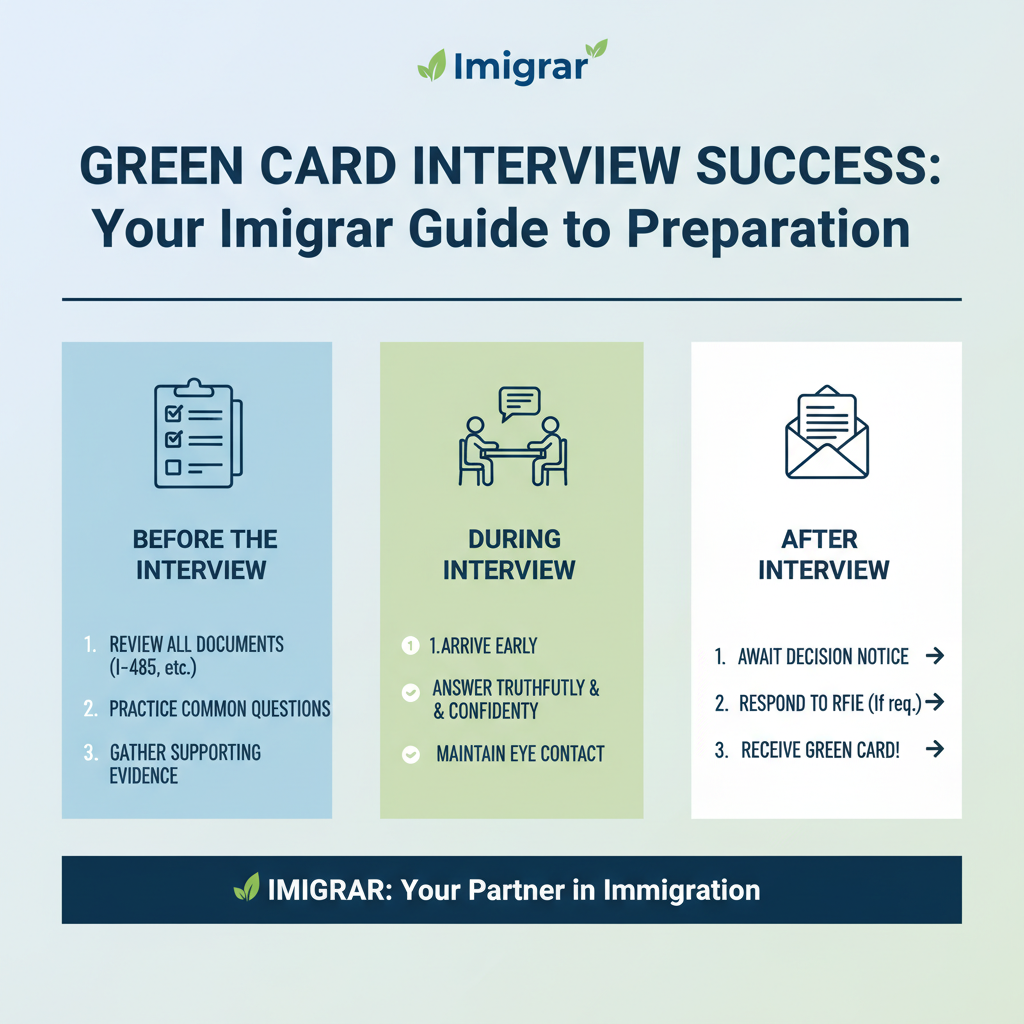
The continuous and vital discussion around immigration law, as highlighted by recent trends in searches like Green Card Interview Preparation Tips (Immigration Law), underscores the critical need for accurate, up-to-date, and actionable information for individuals navigating the U.S. immigration system. At Imigrar, we understand that preparing for your Green Card interview is one of the most significant steps in this journey, often filled with anticipation and anxiety. This guide is crafted to empower you with the knowledge and confidence required to approach your interview successfully.
What This News Means for Immigrants in Orlando and Across Florida
Why this news is showing up now
The topic of Green Card interview preparation is not a fleeting trend but a constant, high-priority concern within the broader landscape of immigration law. While there may not be specific "new" legislation directly changing the interview process, the ongoing volume of Green Card applications and the inherent stress associated with this crucial step keep it at the forefront of immigration discussions. Each year, hundreds of thousands of individuals attend these interviews, seeking to secure their permanent residency. The continuous search for "Green Card interview tips" reflects a consistent demand for clarity, guidance, and reassurance in a complex legal process. Furthermore, changes in USCIS processing times, policy interpretations, and the overall immigration climate can subtly influence how applicants perceive and prepare for their interviews, driving renewed interest in comprehensive preparation resources.
How it can affect Florida residents
For immigrants residing in Orlando, Central Florida, and across the state, this sustained interest in Green Card interview preparation is particularly relevant. Florida is a vibrant hub for diverse immigrant communities, and the Orlando USCIS Field Office serves a significant population seeking adjustment of status. If you're an immigrant in Florida, preparing for your Green Card interview means understanding not just the national requirements but also the practicalities of attending an interview at a local field office. Delays in processing, specific document requests, or nuances in interview procedures at the Orlando office can directly impact your experience. Moreover, the state's significant immigrant population means that experienced legal counsel, like that offered by Imigrar, is always in high demand to help navigate these critical junctures. Ensuring you are well-prepared can mitigate potential delays, prevent misunderstandings, and ultimately expedite your path to permanent residency, allowing you to continue building your life and keeping your family together in Florida.
Need Help? Our Orlando immigration team is ready to assist. Call +1 786-791-3106 for a free consultation, or message us online. Se Habla Español.
What Green Card Interview Preparation Is (and Why It Matters)
A plain-English definition
The Green Card interview is a mandatory, in-person meeting with an officer from U.S. Citizenship and Immigration Services (USCIS). Its purpose is for the USCIS officer to verify the information provided in your Green Card application, confirm your eligibility for permanent residency, and ensure that you meet all legal requirements. For family-based Green Cards, especially those through marriage, the interview also serves to confirm the legitimacy of your relationship. It’s a crucial step where you, and sometimes your petitioner, will answer questions about your application, personal history, and supporting documents. Think of it as the final, direct assessment of your case before a decision is made.
Key terms you need to know
- Green Card: Also known as a Permanent Resident Card, it is an identification card that proves you are authorized to live and work permanently in the United States.
- Adjustment of Status (AOS): This is the process of applying for a Green Card while you are physically present in the United States. If you are applying from outside the U.S., it's called Consular Processing.
- Petitioner: The U.S. citizen or lawful permanent resident who files an immigrant petition (e.g., Form I-130) on behalf of the beneficiary.
- Beneficiary: The foreign national who is seeking a Green Card based on the petition filed by the petitioner.
- USCIS: U.S. Citizenship and Immigration Services, the government agency responsible for processing immigrant petitions and applications. You can find more information on the USCIS official website.
- Priority Date: The date USCIS receives your immigrant petition (e.g., Form I-130). This date determines your place in the visa queue, especially for categories with annual visa limits.
- Affidavit of Support (Form I-864): A legally binding document signed by the petitioner (and sometimes a joint sponsor) to accept financial responsibility for the immigrant.
- Inadmissibility: Grounds under U.S. immigration law that can make an individual ineligible to enter or remain in the United States, such as certain criminal convictions, health issues, or past immigration violations.
The interview matters immensely because it is your direct opportunity to present your case, clarify any ambiguities, and demonstrate your eligibility to a USCIS officer. A well-prepared interview can lead to an immediate approval, while poor preparation, missing documents, or inconsistent answers can result in delays, requests for additional evidence, or even denial. It's the moment where your entire application comes to life, making thorough preparation absolutely essential.
Current Immigration Law: The Foundation
The framework for Green Card interviews is rooted in the Immigration and Nationality Act (INA), specifically sections pertaining to eligibility for permanent residency and the grounds for inadmissibility. While the interview itself is an administrative process, its purpose is to ensure compliance with these underlying statutes.
Federal requirements
The primary federal requirements for obtaining a Green Card are established by the INA. For most family-based Green Cards (e.g., spouses, parents, children of U.S. citizens or lawful permanent residents), the process typically involves two main applications:
- Form I-130, Petition for Alien Relative: Filed by the U.S. citizen or lawful permanent resident petitioner to establish the qualifying relationship.
- Form I-485, Application to Register Permanent Residence or Adjust Status: Filed by the foreign national beneficiary to apply for the Green Card itself, if they are eligible to adjust status while in the U.S.
During the interview, the USCIS officer will refer to these applications and their supporting documents to verify:
- Eligibility: Does the beneficiary meet the criteria for the petitioned Green Card category? For instance, in marriage-based cases, is the marriage bona fide (entered into in good faith, not solely for immigration purposes)?
- Admissibility: Is the beneficiary admissible to the United States? The officer will review for any potential grounds of inadmissibility, such as certain criminal records, past immigration violations, or health-related issues. (INA § 212 outlines these grounds).
- Financial Support: Is there sufficient financial support to ensure the beneficiary will not become a "public charge"? This is assessed through the Form I-864, Affidavit of Support, which requires the petitioner (and any joint sponsor) to demonstrate income at or above 125% of the federal poverty guidelines. (INA § 213A).
- Identity and Background: Confirming the applicant's identity, criminal history, and compliance with all immigration laws.
The interviewing officer has broad discretion to ask questions pertinent to these requirements. It is crucial to be truthful and consistent with your submitted applications. For detailed information on forms and policies, always refer to the USCIS official website.
Florida-specific considerations
While the federal laws governing Green Card eligibility are uniform across the United States, the practical application and experience can vary slightly depending on your location. For Central Florida residents, your interview will likely be scheduled at the Orlando USCIS Field Office. While the legal standards remain the same, understanding the local office's procedures and common practices can be beneficial.
- Orlando USCIS Field Office: Familiarize yourself with the location, parking, and security procedures for the Orlando office. Arrive early to allow time for security checks.
- Processing Times: Processing times for Form I-485 can vary by field office. You can check current estimates for the Orlando office on the USCIS Processing Times page.
- Local Legal Community: Having an Orlando-based immigration attorney, such as Imigrar, means having counsel familiar with the local field office, its staff, and common interview scenarios, which can be invaluable.
There are no "Florida-specific" immigration laws that dictate Green Card eligibility; all requirements stem from federal statutes. However, a local attorney understands the unique challenges and opportunities for immigrants in Florida, from navigating local resources to understanding the specific needs of the diverse communities along the I-4 corridor and throughout Orange County.
Concerned about your Green Card interview? Don't face it alone. Imigrar offers expert guidance for immigrants in Orlando and nationwide. Call +1 786-791-3106 for a free consultation. Se Habla Español.
How to Prepare for Your Green Card Interview: A Complete Step-by-Step Guide
Thorough preparation is the cornerstone of a successful Green Card interview. Follow these steps meticulously to ensure you are ready for every aspect of the process.
1) Review Your Entire Application Package
Before anything else, you must be intimately familiar with every piece of information you submitted to USCIS. This includes your original petition (Form I-130, if applicable), your adjustment of status application (Form I-485), and all supporting documents. The USCIS officer will have your file in front of them and will ask questions based on its contents. Inconsistencies or a lack of familiarity with your own application can raise red flags.
- Read Everything: Go through your entire application package, page by page. Pay close attention to dates, addresses, employment history, and answers to all questions.
- Correct Errors: If you find any minor errors or omissions, make a note of them and be prepared to politely point them out and provide the correct information during the interview. For significant errors, consult with your attorney immediately.
- Understand the Relationship: If it's a marriage-based Green Card, review the timeline of your relationship, key dates (first met, first date, engagement, marriage), and how you met.
2) Gather and Organize All Required Documents
This is perhaps the most critical logistical step. You must bring originals and copies of every document you submitted, plus any new evidence that has become available since your initial submission. Organize them neatly in a binder or folder with dividers, making it easy to retrieve any document quickly.
Required Documents Checklist (bring originals and copies):
- Interview Notice: The official letter from USCIS scheduling your interview.
- Government-Issued ID: Valid passport, driver's license (especially for Florida residents), or state ID.
- All USCIS Correspondence: Any letters or notices received from USCIS since filing.
- Original Application Forms: Copies of your Form I-485, Form I-130 (if applicable), Form I-765 (EAD), Form I-131 (Advance Parole), Form I-864 (Affidavit of Support), and all other forms you submitted.
- Birth Certificates: Original birth certificates for both applicant and petitioner (if applicable), with certified translations if not in English.
- Marriage Certificate: Original marriage certificate (for marriage-based cases), with certified translation if not in English.
- Divorce Decrees/Death Certificates: Originals of any prior marriage termination documents for both applicant and petitioner.
- Medical Exam (Form I-693): If you haven't already submitted it, bring the sealed envelope from the civil surgeon. If you submitted it but the results are expiring, be prepared to discuss.
- Financial Documents:
- Petitioner's most recent federal tax returns (3 years recommended), W-2s, and/or 1099s.
- Proof of current employment (employment verification letter, recent pay stubs).
- Bank statements, property deeds, or other asset documentation if relying on assets to meet poverty guidelines.
- Any joint sponsor's financial documents, if applicable.
- Proof of Bona Fide Marriage (for marriage-based cases – bring NEW and old evidence):
- Joint bank accounts (statements, account opening documents).
- Joint leases, mortgages, or property deeds.
- Joint utility bills, insurance policies (health, auto, life), or tax returns.
- Birth certificates of any children you have together.
- Photos of your relationship history (engagement, wedding, holidays, with family/friends).
- Affidavits from friends/family attesting to the legitimacy of your marriage.
- Travel itineraries for joint trips.
- Any other evidence showing commingling of finances, shared responsibilities, and a genuine marital relationship.
- Police Certificates/Court Records: Originals of any police clearances or court disposition documents for any arrests, citations, or convictions, even if expunged.
- Travel History: Copies of all pages of your current and expired passports, especially those showing entries and exits to the U.S.
- Employment Authorization Document (EAD) and Advance Parole (AP): If you have them.
- Photos: Two passport-style photos, even if you submitted them previously.
Important: Do not bring more documents than you can reasonably present. A well-organized, concise presentation is far better than a mountain of disorganized papers.
3) Practice Answering Questions
While you cannot predict every question, you can anticipate common ones. Practice answering them truthfully, clearly, and concisely. If you have an attorney, they will conduct a mock interview with you.
Common Interview Questions:
- "What is your full name and date of birth?"
- "When and how did you enter the U.S.?"
- "What is your current address?"
- "Tell me about your spouse/petitioner." (For marriage-based cases)
- "How did you meet your spouse?"
- "When did you get married?"
- "Do you have any children together?"
- "Have you ever been arrested, cited, or convicted of a crime?"
- "Have you ever violated immigration laws?"
- "Have you ever been a member of the Communist party or any terrorist organization?" (These are "public charge" and "inadmissibility" related questions).
- "Do you understand the oath of allegiance?"
Reminder: Answer only the question asked. Do not volunteer extra information unless it's necessary for clarification. If you don't understand a question, politely ask the officer to rephrase it. If you need an interpreter, make sure one is present or inform USCIS in advance.
4) Attend with Your Attorney and Petitioner (if applicable)
Having an experienced immigration attorney from Imigrar by your side offers invaluable support. Your attorney can:
- Represent you and ensure your rights are protected.
- Clarify questions from the officer or help you articulate your answers.
- Address any legal complexities or issues that arise.
- Provide reassurance and confidence.
For marriage-based Green Cards, your U.S. citizen or lawful permanent resident spouse (petitioner) is usually required to attend the interview with you. They will also be sworn in and questioned about the validity of your marriage and their financial sponsorship.
5) Maintain a Professional Demeanor and Dress Appropriately
First impressions matter. Dress in professional or business casual attire, as if you were attending an important job interview. Be polite, respectful, and honest with the USCIS officer. Do not interrupt the officer, and listen carefully to each question before answering.
- Be Punctual: Arrive at least 30-45 minutes before your scheduled appointment, especially at busy field offices like the Orlando USCIS Field Office, to account for security and unexpected delays.
- Stay Calm: It's normal to be nervous, but try to remain calm and composed.
- Tell the Truth: Always be honest. Misrepresenting facts can lead to serious legal consequences, including a finding of inadmissibility.
6) Follow Up After the Interview
Often, the officer will tell you their decision at the end of the interview. If approved, congratulations! You'll typically receive your Green Card in the mail within a few weeks. If the officer requests additional evidence (RFE), submit it promptly. If denied, or if you receive a "Notice of Intent to Deny" (NOID), contact your attorney immediately to discuss your options.
Practical Steps You Can Take Today
Don't wait until the last minute to prepare for your Green Card interview. Start taking these practical steps now:
- Compile Your Documents: Create a master checklist of all documents, both those submitted and new evidence. Start collecting originals and making copies.
- Review Your Application: Dedicate time to thoroughly read through your Form I-485, Form I-130, and all supporting documents. Highlight any areas you need to clarify or remember.
- Gather New Evidence: For marriage-based cases, continuously collect new evidence of your bona fide marriage – recent joint bills, bank statements, photos, shared correspondence.
- Schedule a Mock Interview: If working with Imigrar, we will conduct a mock interview to help you feel more comfortable and identify areas for improvement.
- Plan Your Logistics: Map out your route to the Orlando USCIS Field Office, consider parking, and plan to arrive early.
- Consult with an Attorney: If you haven't already, schedule a free consultation with Imigrar to assess your case and develop a robust interview strategy.
Document preparation guidance
When organizing your documents, create separate sections for each type (e.g., identity, financial, relationship evidence). Use tabs for easy navigation. Make sure all copies are clear and legible. For any documents not in English, ensure you have certified translations, along with the original document and a certification from the translator.
Timeline expectations
The time between filing your Form I-485 and receiving an interview notice can vary significantly, often ranging from several months to over a year, depending on the USCIS field office and the visa category. Once you receive the interview notice, you typically have a few weeks to a month to prepare. After the interview, you might receive a decision on the spot, or it could take several weeks for USCIS to mail a final decision or a Request for Evidence (RFE). You can track your case status online using the receipt number provided by USCIS on their official website.
Ready to prepare? Imigrar's experienced Orlando immigration attorneys are here to guide you through every step of your Green Card interview. Call +1 786-791-3106 for a free consultation. Se Habla Español.
How Imigrar Helps Immigrants in Orlando
At Imigrar, we understand that the Green Card interview can be one of the most stressful parts of the immigration process. Our mission, "Keep Families Together," drives our commitment to providing compassionate, effective, and professional legal representation. Based in Orlando, Florida, we serve clients nationwide, ensuring that wherever you are, you have access to top-tier immigration legal assistance.
Our experienced team specializes in family-based immigration, adjustment of status, and Green Card processes. We don't just fill out forms; we provide comprehensive support, from the initial consultation to the final interview. Our expertise includes:
- Thorough Case Review: We meticulously review your entire application package to identify any potential issues or areas for improvement before your interview.
- Document Organization: We help you organize your documents efficiently, ensuring you have all necessary originals and copies readily available.
- Personalized Interview Preparation: We conduct detailed mock interviews, asking questions tailored to your specific case, and provide feedback to boost your confidence.
- Legal Representation: An Imigrar attorney can accompany you to your Green Card interview at the Orlando USCIS Field Office or other locations, providing legal counsel and advocating on your behalf.
- Addressing Complexities: We are skilled at navigating complex issues, such as past immigration violations, criminal histories, or previous denials, developing strategies to overcome potential inadmissibility concerns.
- Post-Interview Support: Whether it's responding to a Request for Evidence (RFE) or appealing a denial, we continue to support you until a resolution is reached.
We offer a free consultation to discuss your specific situation and explain how we can assist you. Our team is fluent in both English and Spanish, ensuring clear and effective communication: Se Habla Español. Let Imigrar be your trusted partner in securing your future in the United States.
Frequently Asked Questions
Q: What if I don't speak English well enough for the interview?
A: If you are not fluent in English, you have a right to an interpreter. You should indicate on your Form I-485 that you require an interpreter. USCIS may provide one, or you may bring your own, provided they are not your attorney, petitioner, or a witness in your case. Your interpreter must be fluent in both English and your native language and be at least 18 years old. It's crucial that the interpreter translates accurately and completely, without adding their own opinions. Having a professional interpreter ensures that you fully understand the questions and can accurately convey your answers, preventing misunderstandings that could jeopardize your case.
Q: What happens if I miss my Green Card interview?
A: Missing your Green Card interview without a valid reason and without notifying USCIS can lead to the denial of your Form I-485 application. If you have a legitimate emergency or unavoidable conflict, you must contact USCIS immediately to request a reschedule. Provide clear documentation supporting your reason for rescheduling. It's best to do this in writing and keep a record of your request. If your application is denied due to a missed interview, you may have limited options for appeal or to refile, making it significantly more complicated. Always consult with an attorney if you anticipate missing your interview or if you have already missed it.
Q: How long does it take to get a Green Card after the interview?
A: The timeline can vary. In many cases, if the interview goes well and no further evidence is needed, the USCIS officer may approve your case on the spot or indicate that it will be approved. You would then typically receive your physical Green Card in the mail within 2-4 weeks. However, some cases require additional administrative processing, a Request for Evidence (RFE), or a "Notice of Intent to Deny" (NOID). If an RFE is issued, you will have a specific deadline (usually 30-90 days) to submit the requested documents. This will naturally extend the processing time. You can monitor your case status online via the USCIS official website.
Q: What if the USCIS officer asks a question I don't know the answer to?
A: It's perfectly acceptable to honestly state that you don't know the answer or don't recall. Do not guess or fabricate information. If you genuinely don't know, simply say, "I don't know" or "I don't recall at this moment." If it's a piece of information you believe you *should* know but are drawing a blank, you can ask if you can refer to your documents, if applicable. The key is to be truthful. An honest "I don't know" is always better than an incorrect or misleading answer.
Q: Are there any fees associated with the Green Card interview itself?
A: No, there is typically no separate fee for the Green Card interview itself. The fees for your Form I-485 and other associated forms (like the biometrics fee) are paid when you initially file your application. However, there might be costs associated with preparing for the interview, such as obtaining new documents, certified translations, civil surgeon fees for medical exams (Form I-693), or legal fees if you choose to hire an attorney to represent you. These are preparation costs, not interview fees charged by USCIS.
Q: What happens if my Green Card application is denied after the interview?
A: If your Green Card application is denied, USCIS will send you a written decision explaining the reasons for the denial. This is a serious situation, but it is not necessarily the end of your immigration journey. Your options typically depend on the reason for the denial. You may be able to file a motion to reconsider or a motion to reopen the case, or in some instances, file an appeal with the Administrative Appeals Office (AAO). In other cases, you might be eligible to refile your application if the underlying issue can be resolved. It is absolutely critical to consult with an experienced immigration attorney immediately upon receiving a denial notice to understand your options and the best course of action. Do not delay, as there are often strict deadlines for appeals or motions.

Common Mistakes (and How to Avoid Them)
Mistake #1: Lack of Thorough Document Organization
One of the most frequent pitfalls applicants face is showing up to the interview with disorganized or incomplete documents. This can create a chaotic impression, cause delays, and even lead to an RFE or denial. Officers need to quickly verify information and see clear evidence.
How to Avoid: Start collecting and organizing your documents well in advance. Create a binder with dividers for each category of documents (e.g., "Identity," "Financial," "Marriage Evidence"). Label each tab clearly. Place originals in one section and copies in another, or keep originals separate but easily accessible. Review your checklist multiple times and ensure all documents are legible and translated if necessary. For Central Florida residents attending the Orlando USCIS Field Office, a smooth document presentation can make a significant difference.
Mistake #2: Inconsistent or Dishonest Answers
Providing answers that contradict information in your application or previous statements, or worse, being dishonest, can have severe consequences. USCIS officers are trained to detect inconsistencies and untruthfulness. Lying to an immigration officer can lead to a finding of misrepresentation, which is a permanent bar to immigration benefits.
How to Avoid: Review your entire application package thoroughly before the interview. Know your dates, addresses, and employment history by heart. If you don't remember something, say so honestly. If there's an error in your application, politely point it out and provide the correct information with an explanation. Always tell the truth, even if the information is unfavorable. An experienced attorney can help you prepare to address any potentially problematic areas truthfully and effectively.
Mistake #3: Underestimating the Importance of the Bona Fide Marriage Evidence
For marriage-based Green Cards, some applicants assume that just being legally married is enough. However, USCIS is vigilant about detecting fraudulent marriages. The officer will probe deeply into the legitimacy and good faith of your marriage.
How to Avoid: Continuously gather and present compelling evidence of your shared life and commingled finances. This includes joint bank statements, utility bills, leases, insurance policies, tax returns, and most importantly, a robust collection of photos (with dates and captions) showing your relationship over time with


