


The journey to obtaining a Green Card, or lawful permanent residency, in the United States is a significant milestone for countless individuals and families. For many, this path culminates in a crucial step: the Green Card interview. This interview, conducted by a U.S. Citizenship and Immigration Services (USCIS) officer, is designed to verify the information in your application, confirm your eligibility, and ensure you meet all legal requirements for permanent residency. It’s a moment that can feel both exciting and nerve-wracking, but with proper preparation, it can be a smooth and successful experience.
At Imigrar, an immigration law firm based in Orlando, Florida, we understand the anxieties and hopes tied to this process. Our mission is to "Keep Families Together," and a successful Green Card interview is often a vital step in achieving that goal. This comprehensive guide is designed to empower you with the knowledge and practical tools needed to approach your interview with confidence, whether you're adjusting status within the U.S. or going through consular processing abroad.
Need Help? Our Orlando immigration team is ready to assist. Call +1 786-791-3106 for a free consultation, or message us online. Se Habla Español.
The reporting that sparked this guide
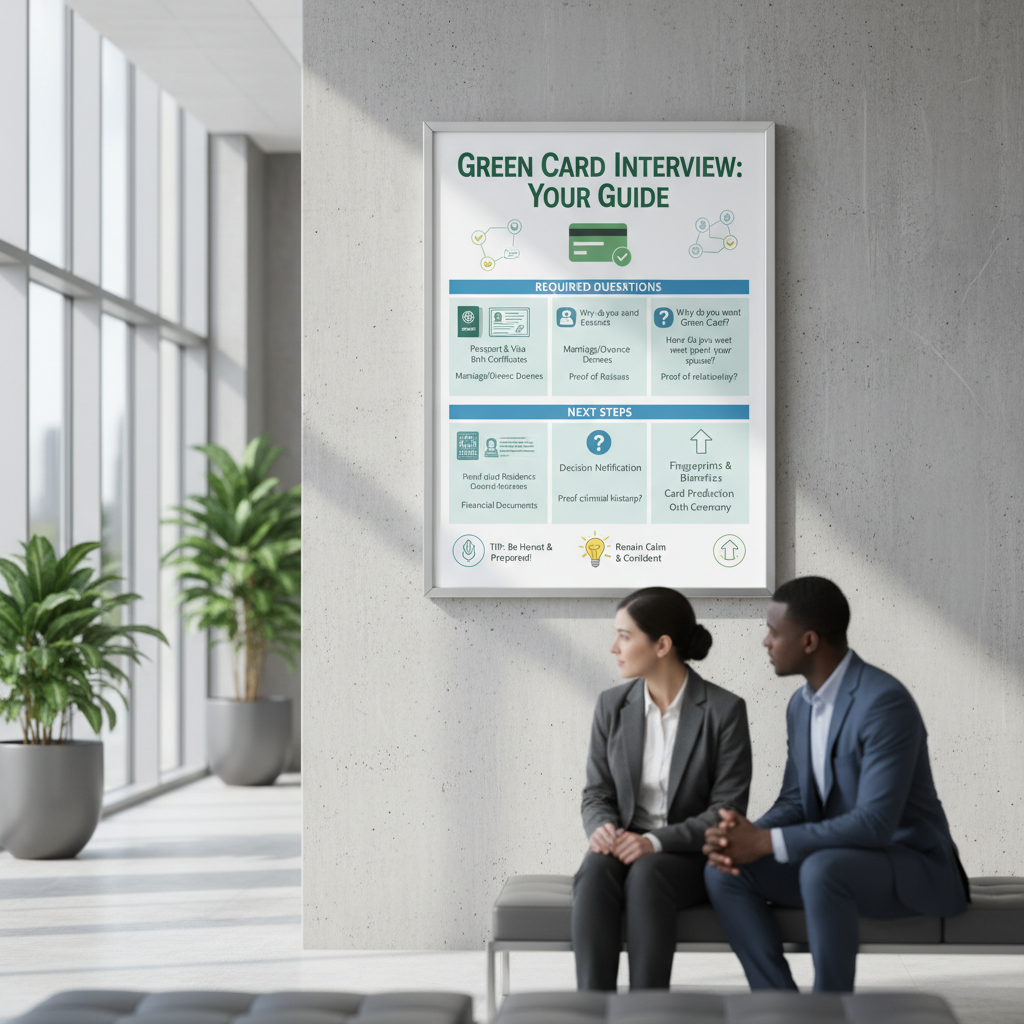
The importance of thorough preparation for Green Card interviews is a perennial topic in immigration law discussions, consistently highlighted in legal news and updates. The insights and practical advice shared in this guide are directly informed by the continuous reporting on immigration procedures and best practices, aiming to equip you with the most current and effective strategies for your interview.
Green Card Interview Preparation Tips (Immigration Law)
What This News Means for Immigrants in Orlando and Across Florida
The consistent focus on Green Card interview preparation in immigration news underscores its critical importance. For immigrants throughout Florida, and especially in a diverse hub like Orlando, understanding the nuances of this process is paramount to a successful outcome.
Why this news is showing up now
While Green Card interviews have always been a cornerstone of the immigration process, there's a renewed emphasis on thoroughness and scrutiny by USCIS. Several factors contribute to this trend:
- Increased Application Volume: With a consistent flow of immigration applications, USCIS officers are managing a high caseload, making efficient and decisive interviews crucial.
- Enhanced Scrutiny on Fraud Prevention: USCIS continues to prioritize measures to detect and prevent immigration fraud, particularly in marriage-based and family-based petitions. This means officers are trained to ask probing questions and look for inconsistencies.
- Policy Shifts and Adjudication Standards: While the core laws remain, the interpretation and application of those laws can evolve. Current adjudication standards often emphasize a comprehensive review of an applicant's entire immigration history and eligibility.
- Digitalization and Data Sharing: As USCIS systems become more integrated, officers have access to a wider array of information, enabling them to cross-reference details more effectively during an interview.
This heightened focus means that applicants cannot afford to be complacent. Preparation is not just about having documents; it's about truly understanding your case, your history, and how to present it clearly and consistently.
How it can affect Florida residents
For individuals residing in Florida, including our neighbors in Orlando, Kissimmee, and along the I-4 corridor, the general trends in immigration law apply directly. Most Green Card interviews for applicants adjusting status within the U.S. will take place at a local USCIS Field Office. For Central Florida residents, this often means the Orlando USCIS Field Office. While the federal requirements are universal, local offices can have slight variations in scheduling, officer caseloads, and specific interview styles.
- Local Office Procedures: Understanding the typical flow and expectations at the Orlando Field Office can be advantageous.
- Diverse Population Nuances: Florida is home to a vast and diverse immigrant population. This can mean a higher volume of certain types of cases (e.g., family-based petitions, asylum-based adjustments), which officers are well-versed in handling.
- Access to Legal Support: With a significant immigrant community, there is also a robust network of legal support. Firms like Imigrar in Orlando specialize in guiding clients through these local and federal processes.
Being prepared means not just knowing the law, but also being ready for the practical realities of your specific interview location and the current immigration climate.
What Green Card Interviews Are (and Why They Matter)
The Green Card interview is a pivotal step for most individuals seeking lawful permanent residency in the United States. It's the moment when a USCIS officer directly assesses your eligibility for a Green Card.
A plain-English definition
Simply put, a Green Card interview is a formal meeting between you (the applicant) and a U.S. immigration officer. Its primary purpose is to verify the information you submitted in your Green Card application, clarify any ambiguities, and determine if you meet all the legal requirements to become a lawful permanent resident. For family-based petitions, especially marriage-based ones, the interview also serves to confirm the legitimacy of your relationship.
Think of it as the final, in-person review of your application. The officer wants to ensure that everything you've stated in your forms is true and that you are not inadmissible to the U.S. under immigration law.
Key terms you need to know
Navigating the immigration process requires understanding some specific terminology:
- Green Card (Form I-551): The official identification card proving your status as a lawful permanent resident of the United States.
- USCIS (U.S. Citizenship and Immigration Services): The government agency responsible for administering immigration and naturalization benefits. This is the agency that conducts your interview. USCIS official website
- Adjustment of Status (AOS): The process of applying for a Green Card while physically present in the United States. If you applied via Form I-485, you are adjusting status.
- Consular Processing: The process of applying for a Green Card through a U.S. embassy or consulate in your home country (or another country if you are outside the U.S.). This typically involves an interview at a U.S. Department of State facility abroad. U.S. Department of State
- Petitioner: The U.S. citizen or lawful permanent resident who filed an immigration petition (e.g., Form I-130, Petition for Alien Relative) on your behalf.
- Beneficiary: The immigrant who is seeking the Green Card based on the petitioner's filing.
- Affidavit of Support (Form I-864): A legally binding document signed by the petitioner (and sometimes a joint sponsor) to ensure the immigrant will not become a public charge in the U.S.
- Inadmissibility: Grounds under U.S. immigration law that can prevent an individual from entering or remaining in the country (e.g., certain criminal offenses, health issues, prior immigration violations).
- Priority Date: The date your immigration petition (e.g., Form I-130) was filed. This date determines your place in the visa queue for certain categories.
- Notice of Interview (Form I-797C): The official letter from USCIS (or the National Visa Center for consular processing) informing you of your interview date, time, and location, along with required documents.
Need Help? Our Orlando immigration team is ready to assist. Call +1 786-791-3106 for a free consultation, or message us online. Se Habla Español.
Current Immigration Law: The Foundation for Your Green Card Interview
Your Green Card interview is conducted under the authority of the Immigration and Nationality Act (INA), the body of law governing immigration to the United States. Understanding the legal framework is crucial for preparing effectively.
Federal requirements
The core requirements for a Green Card are established at the federal level and apply nationwide. The specific laws and regulations depend on your eligibility category (e.g., family-based, employment-based, asylum/refugee status).
- Eligibility for Adjustment of Status (INA Section 245): For those applying from within the U.S., Section 245 of the INA is paramount. It generally allows an eligible noncitizen to apply for lawful permanent resident status without having to leave the U.S. However, there are exceptions and specific requirements, such as having been lawfully admitted or paroled into the U.S. and having an immediately available immigrant visa.
- Visa Petition Approval: Most Green Card paths begin with an approved immigrant petition, such as Form I-130 (Petition for Alien Relative) for family-based cases, or Form I-140 (Immigrant Petition for Alien Worker) for employment-based cases. The interview will confirm the validity of this underlying petition.
- Admissibility (INA Section 212): A critical aspect of the interview is determining your admissibility to the United States. INA Section 212 outlines various grounds of inadmissibility, which can include:
- Health-related grounds (e.g., certain communicable diseases, lack of vaccinations).
- Criminal grounds (e.g., certain convictions, drug trafficking).
- Security and related grounds (e.g., terrorism, espionage).
- Public charge grounds (e.g., likelihood of becoming primarily dependent on government assistance, addressed by Form I-864, Affidavit of Support).
- Illegal entry and immigration violations (e.g., prior deportations, unlawful presence).
- Marriage Bona Fides (for Marriage-Based Green Cards): If you are applying based on marriage to a U.S. citizen or LPR, the interview will heavily focus on proving that your marriage is genuine and not entered into solely for immigration purposes. This is governed by various sections of the INA, with the officer looking for evidence of a shared life.
All USCIS forms and detailed instructions are available on the USCIS Forms page.
Florida-specific considerations
While federal law governs the Green Card process, the practical experience can be influenced by your location. For residents of Florida, particularly those in the Orlando area:
- Orlando USCIS Field Office: If you are adjusting status in Central Florida, your interview will likely be scheduled at the Orlando USCIS Field Office. Understanding the local office's procedures and typical interview environment can be beneficial.
- Local Legal Resources: Florida has a robust network of immigration legal professionals. Firms like Imigrar are deeply familiar with the nuances of processing applications and interviews within Florida's jurisdiction, offering tailored advice for local residents.
- Demographic Factors: Florida's diverse population means that USCIS officers in the state are experienced in handling a wide array of cases, including those involving complex family structures or unique cultural considerations.
There are no state-specific laws that directly impact Green Card eligibility or interview requirements. However, state laws can indirectly affect your case, for example, through criminal convictions or family court proceedings that might be relevant to your immigration history.
Important: Always refer to the official USCIS official website for the most current information and forms.
How to Prepare for Your Green Card Interview: A Complete Step-by-Step Guide
Preparing for your Green Card interview is a multi-faceted process that requires meticulous attention to detail. Follow these steps to maximize your chances of success.
1) Understand Your Case Type and Review Your Application
Before you do anything else, thoroughly understand the specifics of your Green Card application. Your interview will be tailored to your eligibility category.
- Know Your Category: Are you adjusting status based on a marriage to a U.S. citizen (Form I-130/I-485)? An employment petition (Form I-140/I-485)? Asylum status (Form I-589/I-485)? Each category has specific requirements.
- Review All Submitted Forms: Read through every form you submitted (e.g., Form I-130, Form I-485, Form I-864, Form I-765, Form I-131). Ensure you remember all dates, addresses, employment history, and answers provided. The officer will compare your interview answers to these documents.
- Identify Potential Issues: If there are any discrepancies, past immigration violations, criminal history, or other potential inadmissibility issues, acknowledge them and be prepared to discuss them truthfully and provide any relevant documentation (e.g., court dispositions, waivers).
Reminder: Consistency is key. Your verbal answers must match your written application.
2) Gather and Organize All Required Documents (Originals & Copies)
The Notice of Interview (Form I-797C) will list specific documents to bring. However, it's prudent to bring a comprehensive set of documents related to your case. Organize them neatly in a folder or binder, clearly labeled.
- Notice of Interview: Always bring the original.
- Government-Issued Photo ID: Your passport, driver's license (especially if you're a Florida resident), or other valid ID.
- Application Forms: Copies of all forms submitted (Form I-130, Form I-485, Form I-864, etc.).
- Birth Certificates: Original and copy for both applicant and petitioner (if applicable).
- Marriage Certificate: Original and copy (if applicable).
- Divorce Decrees/Death Certificates: For any previous marriages of either spouse (original and copy).
- Medical Examination Report (Form I-693): If not already submitted, or if it has expired (valid for 2 years from the date of the civil surgeon's signature). Bring the sealed envelope.
- Affidavit of Support (Form I-864) & Supporting Financial Documents:
- Most recent federal income tax returns (and W-2s/1099s) for the petitioner/joint sponsor.
- Proof of U.S. citizen or LPR status for the petitioner/joint sponsor (passport, Green Card).
- Employment verification letter and recent pay stubs for the petitioner/joint sponsor.
- Proof of Relationship (for Family-Based Petitions):
- Marriage-based: Joint bank accounts, joint leases/mortgages, utility bills in both names, joint health/auto insurance, birth certificates of children born to the marriage, photos together (dated), affidavits from friends/family, shared credit cards, travel itineraries, etc.
- Parent-child/sibling: Birth certificates, adoption decrees, school records, photos.
- Police Clearances/Court Dispositions: For any arrests, citations, or convictions, even if expunged.
- Travel History: Copies of all passports, visas, and I-94 arrival/departure records.
- Work Permits (EAD) and Travel Documents (Advance Parole): If you have them (Form I-765, Form I-131).
- Translations: Any document not in English must be accompanied by a certified English translation.
- Photographs: Passport-style photos if required and not already submitted.
Warning: Always bring originals of all documents, even if you only submitted copies previously. USCIS officers will want to see the originals and will make copies themselves if needed.
3) Prepare for Interview Questions
The types of questions will vary based on your case, but general themes include your personal history, how you met your petitioner (if family-based), your intentions in the U.S., and your immigration history.
- Personal History: Date of birth, place of birth, parents' names, education, employment history, addresses.
- Immigration History: How you entered the U.S., previous visas, any prior immigration applications, any arrests or encounters with immigration officials.
- Marriage-Based Questions (if applicable):
- How and when did you meet?
- When did you get married?
- Where do you live? Describe your home.
- What did you do last weekend?
- Who pays which bills?
- What are your spouse's habits/hobbies?
- Have you met each other's families?
- Details about your wedding, honeymoon, significant events.
- Inadmissibility Questions: Be prepared for questions about any criminal history, health issues, or prior immigration violations. Answer truthfully and calmly.
Practice: Have a friend or family member conduct a mock interview with you, asking questions from your application and common interview questions. This helps build confidence and ensures consistent answers.
4) Practice Your English (If Applicable) and Understand Interpreter Needs
While you are entitled to an interpreter, it's best to demonstrate your English proficiency if you possess it.
- English Proficiency: If you are comfortable communicating in English, do so. This can streamline the interview process.
- Interpreter: If you are not fluent in English, you must bring a certified interpreter. USCIS does not provide interpreters for Green Card interviews. The interpreter must be fluent in both English and your native language, be at least 18 years old, and not be involved in your case (e.g., your petitioner, lawyer, or a witness). They will need to bring photo ID.
- Speak for Yourself: Even with an interpreter, answer questions directly, pausing to allow the interpreter to translate. Do not let your interpreter answer for you.
5) Attend the Interview Professionally
First impressions matter, and professionalism can contribute to a positive experience.
- Dress Appropriately: Business casual attire is recommended. It shows respect for the process.
- Arrive Early: Aim to arrive at the Orlando USCIS Field Office (or other designated location) at least 30 minutes before your scheduled appointment. Parking and security checks can take time.
- Be Polite and Respectful: Address the officer respectfully. Maintain eye contact.
- Answer Truthfully and Consistently: This is paramount. If you don't understand a question, politely ask for clarification. If you don't know an answer, say so. Do not guess or fabricate information.
- Stay Calm: Interviews can be stressful. Take a deep breath. Remember, the officer is just doing their job to verify your eligibility.
- Bring Your Attorney: You have the right to have an attorney present at your interview. An attorney can provide legal guidance, clarify questions, and protect your rights. This is highly recommended, especially for complex cases.
6) Know What Happens After the Interview
The interview is not always the final step, but understanding potential outcomes can help manage expectations.
- On-the-Spot Approval: In straightforward cases, the officer may tell you on the spot that your Green Card is approved. You might receive a stamp in your passport (I-551 stamp) as temporary proof of LPR status. Your physical Green Card will be mailed later.
- Request for Additional Evidence (RFE): The officer might issue an RFE if they need more documents or clarification. You will be given a deadline (e.g., 87 days, 12 weeks, 90-day window) to submit these.
- Notice of Intent to Deny (NOID): If the officer believes your case should be denied but wants to give you a final chance to present arguments or evidence, they might issue a NOID. This is a serious notice and requires immediate legal attention.
- Interview Not Concluded: Sometimes, the officer needs more time to review your case or consult with a supervisor. They may tell you they will notify you by mail.
- Green Card Mailing: If approved, your physical Green Card will typically be mailed within a few weeks to a few months. You can check the status online using your receipt number on the USCIS Case Status Online tool.
Practical Steps You Can Take Today for Interview Success
Don't wait until the last minute to prepare. Here’s an actionable checklist to start today:
- Review Your Application Package: Pull out copies of all forms you submitted. Read through every question and your answers. Highlight any areas where you might need to refresh your memory or gather additional supporting documents.
- Create a Document Checklist: Based on your Form I-797C (Notice of Interview) and the general list above, create a detailed checklist of every original and copy you need to bring.
- Start Gathering Originals: Locate all original documents (birth certificates, marriage certificates, passports, etc.). If any are missing, begin the process of obtaining certified copies or replacements immediately.
- Organize Your Evidence: Purchase a binder or accordion folder. Label sections for each type of document (e.g., "Applicant's Originals," "Petitioner's Originals," "Relationship Evidence," "Financial Documents"). Place documents in a logical order.
- Consolidate Relationship Evidence (Marriage-Based): If your case is marriage-based, gather strong evidence of a bona fide marriage. This includes joint financial documents, leases, utility bills, insurance, photos, travel history, and affidavits from friends/family. Aim for a variety of evidence spanning the duration of your marriage.
- Practice Q&A: Have your spouse, a trusted friend, or your attorney conduct a mock interview. Focus on answering questions clearly, concisely, and consistently with your application.
- Confirm Interpreter: If you need an interpreter, identify and confirm one well in advance. Ensure they meet USCIS requirements.
- Consult with an Attorney: Even if you prepared your application yourself, a consultation with an immigration attorney from Imigrar can provide invaluable peace of mind and identify potential issues you might have overlooked.
Document preparation guidance
The key to document preparation is organization and thoroughness.
- Originals and Copies: For every document, bring the original and a clear photocopy. USCIS will often review the original and keep the copy.
- Translations: Any document not in English must be accompanied by a complete and accurate English translation, certified by the translator as competent to translate and that the translation is accurate. The certification must include the translator's name, signature, address, and date.
- Logical Order: Arrange your documents in the order they appear on your checklist or in the order they were submitted in your application. This makes it easier for both you and the officer to find specific items.
- Labels: Use sticky notes or tabs to label sections in your binder.
Timeline expectations
Understanding the timeline can help manage anxiety:
- Interview Notice: You typically receive your interview notice (Form I-797C) by mail 4-6 weeks before the interview date.
- Interview Duration: Most Green Card interviews last between 20 minutes and 1 hour, though complex cases can take longer.
- Decision: Some cases are approved on the spot. Others may take several weeks or months for a decision, especially if an RFE is issued. You can track your case status online at USCIS Processing Times.
- Green Card Delivery: Once approved, the physical Green Card is usually mailed within 2-4 weeks.
Need Help? Our Orlando immigration team is ready to assist. Call +1 786-791-3106 for a free consultation, or message us online. Se Habla Español.
How Imigrar Helps Immigrants in Orlando Prepare for Their Green Card Interview
The Green Card interview is a critical juncture in your immigration journey. While this guide provides extensive information, navigating the complexities of immigration law and USCIS procedures can be overwhelming. This is where Imigrar steps in.
As an immigration law firm based in Orlando, Florida, with a nationwide reach, our primary goal is to "Keep Families Together." We understand the unique challenges faced by immigrants in Central Florida and beyond, and we are dedicated to providing compassionate, effective legal representation.
Our experienced team of immigration attorneys offers comprehensive support for your Green Card interview preparation:
- Thorough Case Review: We meticulously review your entire


