


The reporting that sparked this guide: Green Card Interview Preparation Tips (Immigration Law)
What This News Means for Immigrants in Orlando and Across Florida
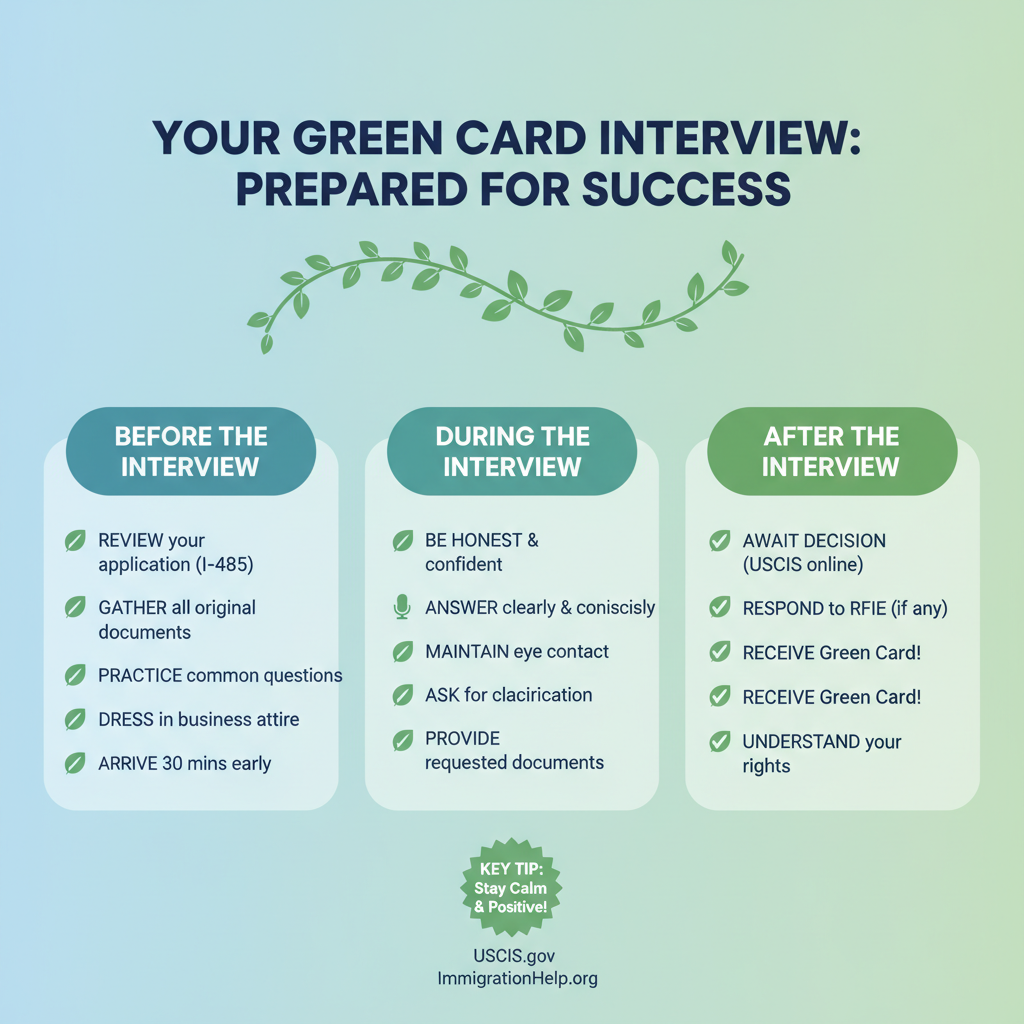
The journey to obtaining a Green Card, also known as lawful permanent residency, is a pivotal moment for countless individuals and families seeking to build a new life in the United States. A critical step in this process for many is the Green Card interview. While the concept of an interview might seem daunting, it's a standard procedure designed to verify the information in your application and ensure you meet all eligibility requirements. Recent discussions in immigration law circles, as highlighted by the ongoing news surrounding "immigration law," consistently emphasize the importance of thorough preparation for this interview.
Why this news is showing up now
The focus on Green Card interview preparation is not new, but its prominence tends to fluctuate with changes in immigration policy, processing backlogs, and public awareness campaigns. In recent years, USCIS has experienced various shifts in interview rates and procedures, making it more crucial than ever for applicants to be fully prepared. The continuous flow of individuals seeking permanent residency means that interviews remain a cornerstone of the immigration system. Moreover, with increased scrutiny on applications and a focus on maintaining the integrity of the immigration process, the interview serves as a key mechanism for USCIS officers to assess credibility and eligibility. This perpetual need for careful preparation ensures that "Green Card Interview Preparation Tips" remains a trending and vital topic within immigration law discussions.
How it can affect Florida residents
For immigrants residing in Florida, particularly those in the bustling Orlando metropolitan area, understanding and preparing for the Green Card interview is paramount. Florida is one of the nation's largest recipients of immigrants, meaning that USCIS field offices across the state, including the Orlando USCIS Field Office, process a high volume of Green Card applications. This high volume can sometimes lead to longer processing times or specific interview procedures unique to certain field offices. Residents along the I-4 corridor and throughout Central Florida must be aware that their interview experience will be conducted by officers familiar with regional nuances and common local issues. Failing to adequately prepare could lead to delays, requests for additional evidence, or even denial, impacting families who have often invested years in their immigration journey. Imigrar, based in Orlando, is acutely aware of these local dynamics and helps clients navigate them effectively, ensuring they are well-prepared for their specific interview circumstances.
Need Help? Our Orlando immigration team is ready to assist. Call +1 786-791-3106 for a free consultation, or message us online. Se Habla Español.
What a Green Card Interview Is (and Why It Matters)
The Green Card interview is a mandatory step for most individuals applying for lawful permanent residency in the United States, especially those applying through Adjustment of Status (i.e., applying from within the U.S.). It’s a formal meeting with a U.S. Citizenship and Immigration Services (USCIS) officer who will review your application, ask questions about your eligibility, and verify the information you’ve provided. For family-based petitions, both the petitioner (U.S. citizen or Green Card holder) and the beneficiary (the immigrant applicant) typically attend the interview together.
A plain-English definition
Think of the Green Card interview as a final check-up by the immigration doctor. You've submitted all your medical history (your application forms and supporting documents), and now the doctor (the USCIS officer) wants to meet you in person to ask a few more questions, clarify anything unclear, and make sure everything is in order before giving you a clean bill of health – in this case, a Green Card. It's a chance for USCIS to confirm your identity, verify your eligibility, and ensure that your application is legitimate and free from fraud.
Key terms you need to know
- Green Card (Lawful Permanent Resident Card): A document issued by USCIS to immigrants as evidence that they have been granted permanent residency in the United States.
- Adjustment of Status (AOS): The process of applying for a Green Card while residing in the United States. This is contrasted with Consular Processing, where the application is processed through a U.S. embassy or consulate abroad.
- Petitioner: The U.S. citizen or lawful permanent resident who files an immigration petition (e.g., Form I-130) on behalf of an eligible family member.
- Beneficiary: The immigrant who is being petitioned for, and who is applying for the Green Card.
- USCIS (U.S. Citizenship and Immigration Services): The government agency responsible for administering immigration and naturalization adjudication functions and establishing immigration policies and priorities.
- Affidavit of Support (Form I-864): A legally binding document filed by the petitioner (or a joint sponsor) to show they can financially support the immigrant, ensuring the immigrant won't become a "public charge."
- Priority Date: The date USCIS receives your immigration petition. This date is crucial for tracking your place in line for a visa, especially for categories with annual limits.
- Notice of Interview (Form I-797C): The official letter from USCIS notifying you of your interview date, time, and location, along with a list of required documents.
- Public Charge: A term used in immigration law to describe an individual who is primarily dependent on the government for subsistence, as demonstrated by the receipt of public cash assistance for income maintenance or long-term institutionalization at government expense.
- Bona Fide Marriage: A marriage entered into in good faith, not solely for immigration purposes. This is a crucial aspect for marriage-based Green Card applications.
Current Immigration Law: The Foundation
The Green Card interview process is firmly rooted in the Immigration and Nationality Act (INA), which is the body of law governing immigration in the United States. Specifically, sections related to eligibility for permanent residence and the various avenues for obtaining it dictate the nature and scope of the interview.
Federal requirements
The primary legal framework for obtaining a Green Card through Adjustment of Status is found in Section 245 of the Immigration and Nationality Act (INA) (8 U.S.C. § 1255). This section outlines who is eligible to adjust their status to that of a lawful permanent resident while remaining in the U.S. Key requirements generally include:
- Lawful Admission or Parole: Most applicants must have been inspected and admitted or paroled into the United States.
- Eligibility for an Immigrant Visa: The applicant must be eligible for an immigrant visa in a specific category (e.g., family-based, employment-based, asylum). For family-based petitions, this often involves an approved Form I-130, Petition for Alien Relative, or Form I-140, Immigrant Petition for Alien Worker, for employment-based cases.
- Visa Availability: An immigrant visa must be immediately available at the time of filing the Form I-485, Application to Register Permanent Residence or Adjust Status. This is determined by the Visa Bulletin published by the U.S. Department of State, based on your Priority Date and preference category.
- Admissibility: The applicant must be admissible to the United States. This means not being subject to any grounds of inadmissibility, such as certain criminal convictions, health issues, or immigration violations. Waivers may be available for some grounds of inadmissibility.
- Public Charge Rule: Applicants must demonstrate they are not likely to become a public charge. This is primarily addressed through the Affidavit of Support (Form I-864), where the petitioner or a joint sponsor pledges financial support.
The interview serves as the final step for USCIS to confirm these federal requirements are met. The officer will review all submitted documentation, including your Form I-485, Form I-130 (if applicable), Form I-864, and any supporting evidence. They will ask questions to ensure the veracity of your application and your eligibility under the INA.
Official government references:
- USCIS official website: The primary source for all immigration forms, instructions, and policy updates.
- USCIS Forms: Direct access to download forms like Form I-130, Form I-485, and Form I-864.
- U.S. Department of State: Provides the monthly Visa Bulletin and information on consular processing.
Florida-specific considerations
While the federal laws are uniform across the U.S., the practical application can vary slightly by location. For Central Florida residents, your Green Card interview will likely be scheduled at the Orlando USCIS Field Office (located at 6650 TPC Blvd, Orlando, FL 32822). The officers at this office are experienced in handling a wide range of cases, often dealing with a diverse immigrant population from Latin America, the Caribbean, and other global regions.
Important: While the law is federal, the local field office may have specific scheduling patterns, document submission preferences, or common types of questions they ask based on local demographics and fraud trends. For example, marriage-based interviews in Orlando may focus heavily on the authenticity of the relationship, given the volume of such applications in the area. Our firm, Imigrar, with its Orlando base, possesses direct experience with the specific nuances and expectations of the Orlando Field Office, offering clients tailored advice.
Be aware of specific state-level considerations that, while not directly impacting federal immigration law, might affect your overall situation, such as state ID requirements or access to state-funded resources. While these do not change federal eligibility, they can be relevant to your life in Florida.
How to Prepare for Your Green Card Interview: A Complete Step-by-Step Guide
Preparing for your Green Card interview is crucial for a successful outcome. This comprehensive guide will walk you through the essential steps, ensuring you arrive confident and ready.
1) Understand Your Case and Application
Before anything else, you must have a clear understanding of your own immigration case. This means knowing the basis of your application (e.g., marriage to a U.S. citizen, employment-based, asylum), your immigration history, and the specific details you provided in all your submitted forms.
- Review all submitted forms: Go over every single form you filed, including Form I-130 (if applicable), Form I-485, Form I-864, and any supplementary forms like Form I-765 (Application for Employment Authorization) or Form I-131 (Application for Travel Document). Pay close attention to dates, addresses, employment history, and answers to questions about your background.
- Know your immigration history: Be clear on when you entered the U.S., your visa status upon entry, any previous immigration applications, and any travel history.
- For marriage-based cases: Both the petitioner and beneficiary must understand the history of their relationship – how you met, key dates (first date, proposal, marriage), shared life events, and any periods of separation.
- For other categories: Understand the specifics of your petition, e.g., the employer's details for employment-based cases, or the details of your asylum claim.
2) Gather and Organize All Required Documents
This is arguably the most critical step. USCIS will send you an interview notice (Form I-797C) listing specific documents to bring. However, it's wise to bring more than just what's listed. Organize everything neatly in a folder or binder, making it easy for both you and the officer to access.
Required Documents Checklist (bring originals and copies):
- Interview Notice (Form I-797C): The original letter from USCIS.
- Government-Issued Photo ID: Your passport, driver's license (especially important for Florida residents), or state ID.
- All Original Passports and Travel Documents: Current and expired passports, any travel documents (like a re-entry permit or advance parole document - Form I-131).
- Birth Certificates: Original birth certificates for both applicant and petitioner (if applicable). Include certified translations if not in English.
- Marriage Certificate: Original marriage certificate (for marriage-based cases). Include certified translations if not in English.
- Divorce Decrees/Death Certificates: Originals for any previous marriages of either spouse. Include certified translations.
- Medical Examination Report (Form I-693): If not already submitted or if it has expired. Ensure it's in a sealed envelope from the civil surgeon.
- Affidavit of Support (Form I-864): Bring copies of the form and all supporting financial documents (tax returns, W-2s, pay stubs, bank statements) for the petitioner and any joint sponsors.
- Proof of Relationship (for family-based cases): Extensive evidence of a bona fide relationship. This is where you can truly shine.
- Joint bank accounts, credit cards, leases/mortgages, utility bills showing shared address.
- Birth certificates of any children you have together.
- Life insurance policies, health insurance, wills naming each other as beneficiaries.
- Photos together (dated, with friends/family, from different times/events).
- Communication records (texts, emails, call logs, social media posts).
- Travel itineraries, hotel bookings for trips taken together.
- Letters from friends/family attesting to the relationship.
- Employment History Documents: Recent pay stubs, employment letters, tax returns (if self-employed).
- Educational Documents: Diplomas, transcripts (if relevant to your case).
- Police Records/Court Documents: If you have any arrests, citations, or criminal history, bring certified copies of all court dispositions, even if charges were dismissed. Do not hide anything.
- Previous Immigration Filings: Copies of any prior petitions or applications you have filed with USCIS.
- Children's Birth Certificates: For all children, even if not applying with you, particularly if they are part of your immediate family petition.
- Additional Photos: Two passport-style photos meeting USCIS specifications (even if you submitted them with your application, it's good to have extras).
Reminder: For any document not in English, you must provide a complete and accurate English translation certified by a competent translator.
3) Review Your Application Forms Thoroughly
This cannot be stressed enough. The USCIS officer will have your entire application file in front of them. They will compare your verbal answers to the information you provided in your forms. Any discrepancies, even minor ones, can raise red flags and lead to further questioning or delays.
- Read every question and answer: Go through your Form I-130 and Form I-485 line by line.
- Memorize key dates: Be able to recall dates of entry, marriage, employment, and other significant life events without hesitation.
- Identify potential discrepancies: If there are any errors or inconsistencies, be prepared to explain them clearly and truthfully. For example, if you moved and forgot to update an address on an older form, acknowledge it and explain.
- Practice answering questions: Have a friend or family member role-play the interview with you, asking questions based on your forms.
4) Practice Your Answers and Anticipate Questions
While you can't predict every question, you can anticipate common ones based on your application type. Practice answering clearly, concisely, and truthfully.
Common Interview Questions:
- About your identity: "What is your full name?", "What is your date of birth?", "Where were you born?"
- About your application: "Why are you applying for a Green Card?", "What is your current address?", "What is your employer's name?"
- About your immigration history: "When did you first enter the U.S.?", "What was your visa status upon entry?", "Have you ever been out of status?"
- For marriage-based cases:
- "How did you meet your spouse?"
- "When and where did you get married?"
- "What is your spouse's date of birth/place of birth?"
- "What did you do last weekend together?"
- "Who does the cooking/chores?"
- "Do you have joint bank accounts? What's the balance?"
- "Describe your wedding day."
- "Do you have children together? What are their names/ages?"
- "Where do you keep your toothbrush?" (A classic question to check cohabitation)
- About inadmissibility grounds: "Have you ever been arrested or convicted of a crime?", "Have you ever lied to an immigration officer?", "Have you ever claimed to be a U.S. citizen?" (Always answer truthfully and be prepared with documentation if applicable).
- About your intentions: "What are your plans once you receive your Green Card?"
Warning: Never lie or intentionally mislead the officer. Any misrepresentation can lead to severe consequences, including permanent bars from the U.S.
5) Dress Professionally and Arrive Early
First impressions matter. While there's no strict dress code, dressing in neat, business-casual attire shows respect for the process and the officer.
- Dress code: Opt for clean, conservative clothing. Avoid overly casual attire like shorts, t-shirts, or flip-flops.
- Arrive early: Plan to arrive at the Orlando USCIS Field Office at least 30-45 minutes before your scheduled interview time. This allows time for parking, security checks, and finding the correct waiting area. Being late can lead to your interview being rescheduled or even cancelled. Consider the notorious Orlando traffic, especially around the I-4 corridor, when planning your commute.
- What to bring: Only bring essential documents, your phone (turned off or on silent), and car keys. Avoid bringing large bags, unnecessary electronics, or weapons, as these will delay your entry through security.
6) During the Interview: Be Honest and Respectful
The interview itself is a formal procedure. Your demeanor and responses are just as important as your documents.
- Be truthful: Always answer questions honestly. If you don't know an answer, say so. If you need to correct a previous answer, do so clearly.
- Be clear and concise: Answer the question asked, and then stop. Do not volunteer extra information unless it's directly relevant or asked for.
- Maintain eye contact: Show confidence and sincerity.
- Listen carefully: Make sure you understand the question before answering. If you don't, politely ask the officer to repeat or rephrase it.
- Bring an interpreter if needed: If you are not fluent in English, and USCIS has not provided an interpreter, you should bring your own certified interpreter. USCIS typically provides interpreters for certain languages, but it's best to confirm this beforehand or arrange for your own. Imigrar can help arrange this, and our staff is fully bilingual (Se Habla Español).
- Present documents when asked: Do not just hand over a stack of documents. Wait for the officer to request a specific document.
- Swear an oath: You and your petitioner will be sworn in to tell the truth. Take this seriously.
- Remain calm: It's natural to be nervous, but try to remain calm and composed. Take a deep breath if you feel overwhelmed.
- Follow instructions: Pay attention to the officer's instructions and follow them precisely.
7) After the Interview: Follow Up and Next Steps
The interview is usually the last major step, but there might be a waiting period for a decision.
- Decision: The officer may tell you immediately if your case is approved, or they may say they need more time to review. They might also issue a "Request for Evidence" (RFE) if they need additional documents.
- If approved: You will typically receive a welcome notice and your Green Card in the mail within a few weeks.
- If RFE: Respond promptly and thoroughly to any RFE. Failure to do so can lead to denial.
- If denied: Do not panic. You may have options to appeal or refile. This is where expert legal counsel from a firm like Imigrar is essential.
- Track your case: You can check the status of your application online using your receipt number on the USCIS official website.
Feeling Overwhelmed by Documents? Let Imigrar simplify the process. Our Orlando-based lawyers ensure every form is correct and every document is ready. Call +1 786-791-3106 for peace of mind. Se Habla Español.
Practical Steps You Can Take Today
Don't wait until the last minute to prepare for your Green Card interview. Here are actionable steps you can start taking right now to ensure a smooth process.
Actionable Checklist:
- Review Your Application: Print out all submitted forms (Form I-130, Form I-485, Form I-864, etc.) and read them cover-to-cover. Highlight any areas where you might anticipate questions or where information could be unclear.
- Create a Master Document List: Based on your interview notice and the comprehensive list provided in this guide, create a checklist of every single document you need.
- Start Gathering Originals and Copies: Don't wait. Locate all original documents and make at least two copies of each. Keep them organized in a dedicated folder or binder.
- Obtain Certified Translations: If any vital documents are not in English, immediately find a certified translator to provide accurate translations.
- Collect Additional Relationship Evidence (Marriage-Based): Continuously gather evidence of your ongoing bona fide marriage. This includes new photos, updated joint statements, and recent communication.
- Schedule a Consultation with an Attorney: If you haven't already, consult with an experienced immigration attorney at Imigrar. We can review your entire application, identify potential issues, and conduct mock interviews.
- Check USCIS Processing Times: Visit the USCIS Processing Times page for the Orlando Field Office to get an estimated timeline for your case.
- Plan Your Travel to the Interview: Map out your route to the Orlando USCIS Field Office, considering traffic during your interview time. If you need childcare or time off work, arrange it now.
- Practice Interview Questions: Role-play with a trusted friend or family member. Focus on clarity, honesty, and consistency.
Document Preparation Guidance:
The key to successful document preparation is organization. Here’s a recommended approach:
- Create a "Master File": This is your complete, organized set of all original documents and their corresponding copies.
- Categorize: Use dividers in a binder for categories like "Personal Documents (Applicant)," "Personal Documents (Petitioner)," "Relationship Evidence," "Financial Documents," "Immigration Forms," "Medical Exam," "Criminal History (if any)."
- Label Clearly: Label each section and individual document.
- Originals vs. Copies: Keep originals separate from copies. For the interview, you will usually present copies first, and then the officer may ask to see the original for verification.
- Digital Backup: Consider scanning all your documents and saving them to a secure cloud service as a backup, but always bring physical copies to the interview.
- Highlight Key Information: For long documents like tax returns or bank statements, use sticky notes or light highlighting to point out the most relevant figures or names.
Timeline Expectations:
The timeline for receiving your Green Card after the interview can vary significantly. While some applicants receive an immediate approval notice, others may wait weeks or even months.
- Immediate Decision: Sometimes, the officer will tell you on the spot that your case is approved. You'll typically receive your welcome notice and Green Card in the mail within 2-4 weeks.
- Decision within Weeks/Months: More commonly, the officer will state that a decision will be mailed to you. This can take anywhere from a few days to several months, depending on the complexity of your case and the workload of the Orlando Field Office. You can monitor your case status online using your receipt number.
- Request for Evidence (RFE): If the officer needs more information or documentation, they will issue an RFE. You will typically have a response deadline, often 87 days (though check the specific RFE for your deadline). Responding promptly and thoroughly is critical.
- Notice of Intent to Deny (NOID): In some cases, USCIS may issue a NOID if they intend to deny your application, providing you an opportunity to submit additional information to overcome the denial. This is a serious notice, and immediate legal counsel is advised.
- Employment Authorization Document (EAD): If you filed Form I-765 concurrently with your Form I-485, you typically receive your EAD much sooner, often within 90-180 days of filing. This allows you to work legally while your Green Card application is pending.
Important: Always keep your address updated with USCIS via Form AR-11, Alien's Change of Address Card, to ensure you receive all official communications.

How Imigrar Helps Immigrants in Orlando
At Imigrar, our mission is to "Keep Families Together." We understand that the Green Card interview is a high-stakes moment, filled with anxiety and uncertainty. Based right here in Orlando, Florida, we are uniquely positioned to assist immigrants and their families not just in Central Florida, but nationwide, through every stage of their Green Card journey.
Our experienced immigration attorneys provide comprehensive support, ensuring you are fully prepared and confident for your interview. We don't just fill out forms; we build relationships and offer personalized guidance tailored to your specific situation and the nuances of immigration law.
Our experience and expertise
Our team has extensive experience navigating the complexities of U.S. immigration law, with a particular focus on family-based petitions and Adjustment of Status cases. We are intimately familiar with the procedures and expectations of the Orlando USCIS Field Office, having successfully guided countless clients through their interviews. We stay abreast of the latest changes in immigration policy and processing, ensuring our advice is always current and accurate. From the initial filing of Form I-130 and Form I-485 to the final interview preparation, we are your trusted advocates.
Free consultation offer
We believe that everyone deserves access to expert legal advice. That's why Imigrar offers a free, no-obligation consultation. During this consultation, you can discuss your specific case, ask questions, and understand your options without any financial commitment. We will assess your situation, explain the Green Card interview process in detail, and outline how our services can benefit you. Whether you're just starting your immigration journey or have an interview scheduled, we're here to help.
Se Habla Español:


