


The reporting that sparked this guide: Green Card Interview Preparation Tips (Immigration Law)
What This News Means for Immigrants in Orlando and Across Florida
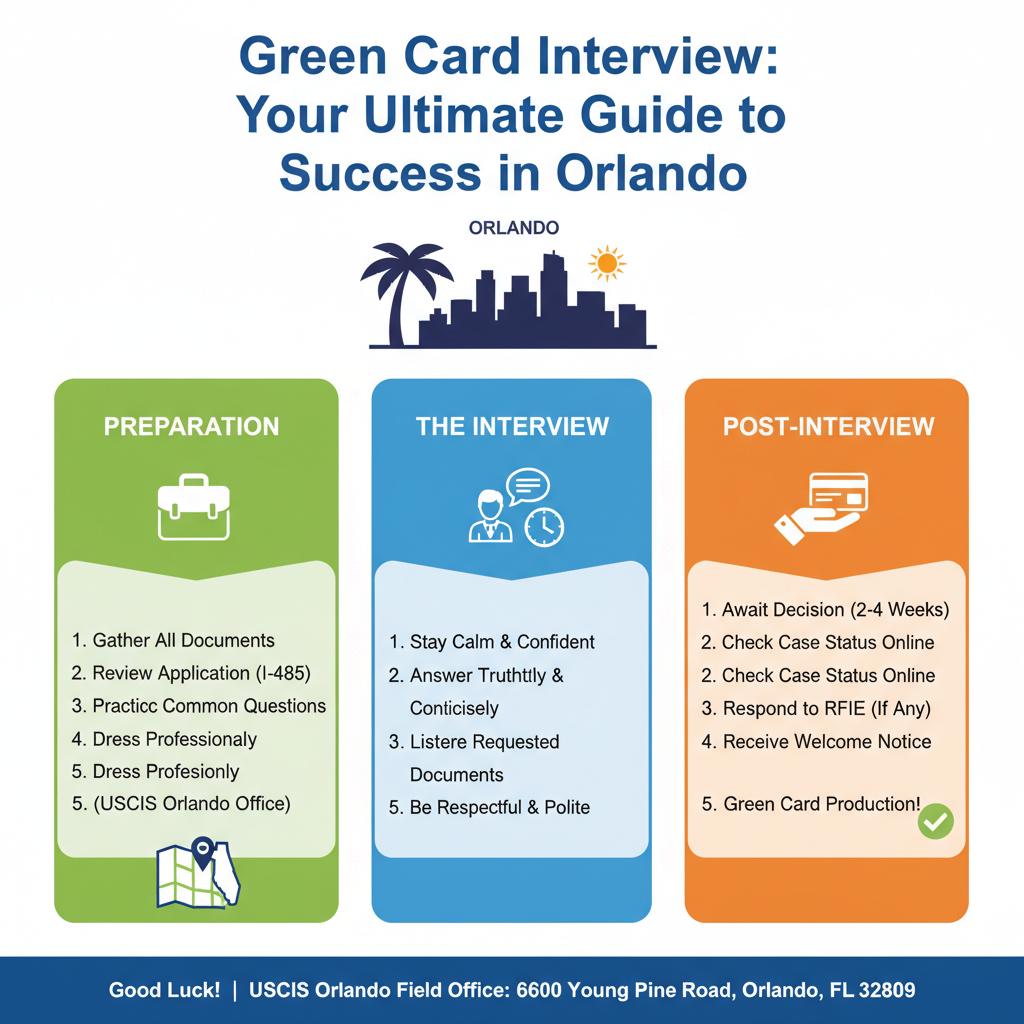
Navigating the U.S. immigration system can feel like a labyrinth, and for many, the Green Card interview is one of the most significant milestones. While the concept of an interview for permanent residency isn't "new" news in the traditional sense, its importance is consistently highlighted across immigration law discussions, underscoring the critical need for thorough preparation. News outlets, legal blogs, and community forums frequently revisit this topic because of its direct impact on countless lives and families.
Why this news is showing up now
The continuous focus on Green Card interview preparation reflects several ongoing realities within the immigration landscape. Firstly, the U.S. Citizenship and Immigration Services (USCIS) regularly updates its policies, procedures, and scrutiny levels. What might have been sufficient preparation five years ago may not be today. Secondly, processing times can fluctuate, leading to periods where interviews are scheduled more rapidly or, conversely, after long waits, making preparation feel urgent or daunting when the notice finally arrives. Thirdly, with an ever-present backlog of applications, interviews remain a bottleneck, making each one a high-stakes event. Finally, the emphasis on interview preparation is a perpetual reminder that while an application may be approved on paper, the in-person interview is often the final, crucial hurdle where an applicant's credibility and the authenticity of their case are directly assessed. This constant discussion serves as a vital public service, reminding applicants not to take this step lightly.
How it can affect Florida residents
For immigrants residing in Orlando, Central Florida, and across the Sunshine State, the focus on Green Card interview preparation is particularly relevant. Florida is one of the most diverse states in the nation, home to a vast immigrant population seeking permanent residency through various avenues, including family-based petitions, employment-based visas, and asylum adjustments. Many of these interviews take place at the Orlando USCIS Field Office, located at 6680 Corporate Centre Blvd, Orlando, FL 32822, or through consular processing if applying from outside the U.S.
Residents of Orange County and surrounding areas along the I-4 corridor will often find themselves preparing for an interview that could determine their future in the U.S. The implications are profound: a successful interview means the potential for permanent residency, the ability to work freely, travel, and ultimately, a pathway to U.S. citizenship. Conversely, an unprepared or poorly handled interview can lead to delays, Requests for Evidence (RFEs), or even denial, causing immense stress and uncertainty for families. Therefore, staying informed and meticulously preparing for this interview is not just advisable; it's absolutely essential for Florida residents seeking to build their lives here.
What Green Card Interviews Are (and Why They Matter)
A Green Card interview is a mandatory step for most individuals applying for permanent residency in the United States. It is a face-to-face meeting with an immigration officer, either from USCIS (if you are applying from within the U.S. through Adjustment of Status) or with a Consular Officer from the U.S. Department of State (if you are applying from abroad through Consular Processing). The primary purpose of this interview is for the immigration officer to verify the information provided in your application, confirm your eligibility for a Green Card, and ensure that you are not inadmissible to the United States under current immigration law.
This interview is a critical juncture because it's the government's opportunity to assess your credibility, the authenticity of your relationship (for family-based petitions), and your overall suitability for permanent residency. It's not just about reviewing documents; it's about understanding the human element behind the application. A successful interview moves you closer to achieving your American dream, while a misstep can lead to significant delays or even denial of your application.
A plain-English definition
Simply put, a Green Card interview is your chance to meet with an immigration official who will ask you questions about your application for a Green Card (permanent resident card). They want to make sure all the information you submitted is true and that you qualify for a Green Card under U.S. law. For many, especially those applying based on marriage to a U.S. citizen, this interview will focus heavily on proving that your marriage is real and not just for immigration purposes. It’s a formal conversation, but one where being prepared, honest, and clear is paramount.
Key terms you need to know
- Green Card (Form I-551): The official identification card proving your status as a lawful permanent resident of the United States.
- Adjustment of Status (AOS): The process of applying for a Green Card while you are already inside the United States. This is typically done by filing Form I-485, Application to Register Permanent Residence or Adjust Status.
- Consular Processing: The process of applying for a Green Card from outside the United States, typically at a U.S. embassy or consulate in your home country. This involves Form DS-260, Immigrant Visa Application.
- USCIS (U.S. Citizenship and Immigration Services): The government agency responsible for adjudicating immigration benefits, including Green Cards, within the U.S.
- U.S. Department of State (DOS): The government agency responsible for U.S. foreign policy, which includes overseeing U.S. embassies and consulates and the Consular Processing pathway.
- Immigrant Visa: The visa issued by a U.S. consulate abroad that allows an individual to travel to the U.S. and be admitted as a lawful permanent resident.
- Sponsor/Petitioner: The U.S. citizen or lawful permanent resident who files a petition (e.g., Form I-130) on behalf of an immigrant relative.
- Beneficiary/Applicant: The immigrant seeking the Green Card.
- Affidavit of Support (Form I-864): A legally binding document signed by the petitioner/sponsor to accept financial responsibility for the immigrant.
- Bona Fide Marriage: A marriage entered into in good faith, not solely for the purpose of obtaining an immigration benefit. This is a critical concept in marriage-based Green Card interviews.
- Interview Notice (Form I-797C): The official document from USCIS or the National Visa Center (NVC) informing you of your interview date, time, and location, and listing required documents.
- Request for Evidence (RFE): A notice from USCIS requesting additional documents or information to support your application.
- Inadmissibility: Grounds under immigration law that can make an individual ineligible for a Green Card, such as certain criminal convictions, health issues, or previous immigration violations.
Need Help? Our Orlando immigration team is ready to assist. Call +1 786-791-3106 for a free consultation, or message us online. Se Habla Español.
Current Immigration Law: The Foundation for Your Green Card Interview
The entire Green Card process, including the interview, is governed by the Immigration and Nationality Act (INA), which is the body of law that dictates immigration policy in the United States. Understanding the legal framework behind your application is crucial, as the immigration officer's questions will always be rooted in these statutes and regulations.
Federal requirements
The core legal requirements for obtaining a Green Card are found primarily in the INA. For most family-based Green Cards through Adjustment of Status, the key provisions are:
- Section 201 of the INA: Defines who is considered an "immediate relative" (spouses, unmarried minor children, and parents of U.S. citizens), who are exempt from numerical quotas.
- Section 203 of the INA: Establishes the preference categories for other family members and employment-based immigrants, subject to annual limits and visa bulletin availability.
- Section 245 of the INA: Governs the eligibility for Adjustment of Status for applicants already present in the U.S. This section outlines who can adjust status and under what conditions. For example, generally, applicants must have been lawfully admitted to the U.S. or fall under specific exceptions.
- Section 212 of the INA: Details the grounds of inadmissibility. This is a critical section, as an applicant found inadmissible due to certain health issues, criminal history, security concerns, or prior immigration violations may be denied a Green Card unless a waiver is available and approved. The interview officer will be assessing whether any grounds of inadmissibility apply to your case.
- Section 213A of the INA: Mandates the filing of an Affidavit of Support (Form I-864) for most family-based immigrants, ensuring they will not become a public charge. The sponsor must demonstrate financial ability to support the applicant.
During your interview, the officer will be specifically looking to ensure you meet all the criteria outlined in these and other relevant sections of the INA. For marriage-based Green Cards, for instance, they will be assessing the "bona fides" of the marriage, as required by law to prevent immigration fraud.
To deepen your understanding, you can always refer to the USCIS official website for detailed policy manuals and legal resources.
Florida-specific considerations
While immigration law is federal, the practical application often involves local nuances. For those residing in Central Florida, your Green Card interview will likely be scheduled at the Orlando USCIS Field Office. Understanding the local office's procedures, typical interview questions, and common areas of scrutiny can be advantageous. For example, officers at the Orlando office, like any other, are trained to detect potential fraud, especially in marriage-based cases, and will be thorough in their questioning.
Additionally, while there are no Florida-specific immigration laws that directly impact federal Green Card eligibility, local laws and records can play a role. For instance, any criminal history in Florida, even minor offenses, will be part of your background check and could be brought up during your interview as potential grounds for inadmissibility. Ensuring that all your Florida-based records are accurate and fully disclosed is vital. Imigrar, being based in Orlando, has extensive experience with the local USCIS field office and can provide tailored advice.
Key USCIS forms relevant to the Green Card interview process include:
- Form I-130, Petition for Alien Relative: Filed by the U.S. citizen or LPR sponsor.
- Form I-485, Application to Register Permanent Residence or Adjust Status: Filed by the beneficiary if adjusting status within the U.S.
- Form I-864, Affidavit of Support Under Section 213A of the INA: Filed by the sponsor to show financial support.
- Form I-693, Report of Medical Examination and Vaccination Record: Completed by an approved civil surgeon.
- Form DS-260, Immigrant Visa Application (Online): Used for Consular Processing.
You can find all these forms and their instructions on the USCIS Forms page.
How to Prepare for Your Green Card Interview: A Complete Step-by-Step Guide
The Green Card interview is a pivotal moment in your immigration journey. Proper preparation is not just recommended; it is essential for a successful outcome. This comprehensive guide breaks down the preparation process into actionable steps.
1) Understand Your Interview Notice (Form I-797C)
Your journey to interview success begins the moment you receive your Interview Notice (Form I-797C). This document is not just a calendar reminder; it's a critical guide.
What to look for:
- Date and Time: Mark it immediately on your calendar and plan to arrive at least 30-45 minutes early.
- Location: Confirm the address of the USCIS Field Office (e.g., Orlando USCIS Field Office) or U.S. Consulate. Understand parking, public transport, and security procedures.
- Required Documents List: This is paramount. The notice will list specific original documents and copies you must bring. This list is tailored to your case, so follow it precisely.
- Applicant Information: Double-check that your name and case number are correct.
Actionable Tip: If you are unsure about any item on the notice, contact your immigration attorney immediately. Do not guess or assume.
2) Gather and Organize All Required Documents
This is arguably the most critical step. The immigration officer needs to see evidence supporting every claim made in your application. Organize your documents meticulously in a binder or folder, clearly labeled. Bring both originals and high-quality photocopies of everything. USCIS may keep copies, but they will want to see the originals.
General Checklist of Documents (may vary based on case type):
- Interview Notice (Form I-797C)
- Government-Issued Photo Identification: Passport, state ID, driver's license.
- Birth Certificates: For both applicant and petitioner (if applicable), with certified English translations if not in English.
- Marriage Certificate: If applicable, with certified English translation.
- Divorce Decrees/Death Certificates: For any previous marriages of either applicant or petitioner.
- Passport(s): All valid and expired passports.
- Travel History: Records of all entries and exits from the U.S.
- Medical Examination Report (Form I-693): In a sealed envelope, unless you submitted it already and it's still valid. Ensure it was completed by a USCIS-approved civil surgeon.
- Affidavit of Support (Form I-864): Complete with all supporting financial documents for the sponsor (tax returns, W-2s, pay stubs, bank statements).
- Evidence of Bona Fide Marriage (for marriage-based Green Cards): This is crucial. Bring as much evidence as possible, including:
- Joint bank accounts, credit cards, leases/mortgages, utility bills
- Photos together (dating, engagement, wedding, family events, vacations)
- Children's birth certificates (if applicable)
- Life insurance policies, wills, power of attorney documents naming each other
- Shared health insurance, car insurance
- Letters/cards/emails exchanged
- Affidavits from friends/family attesting to the bona fides of the marriage.
- Employment History: Letters from employers, pay stubs.
- Educational Records: Diplomas, transcripts.
- Police Certificates: From any country where you lived for 6 months or more since age 16 (for Consular Processing) or for arrests in the U.S. (certified court dispositions).
- Receipt Notices: For all filed applications (Form I-130, Form I-485, etc.).
- Any other documents requested in your Interview Notice or RFE.
Important: Bring originals AND high-quality copies for everything. Have certified English translations for all foreign language documents.
3) Review Your Submitted Application Forms Thoroughly
The immigration officer will have your entire application file in front of them. You must be intimately familiar with every answer you provided on forms like Form I-130, Petition for Alien Relative, Form I-485, Application to Register Permanent Residence or Adjust Status, and Form G-325A, Biographic Information (if applicable). For Consular Processing, review your Form DS-260, Immigrant Visa Application.
Actionable Step: Print out copies of all submitted forms and read through them multiple times. Highlight any areas where you might have made a mistake or where your memory might be fuzzy. Ensure your answers during the interview are consistent with what's on paper. Any discrepancies, even minor ones, can raise red flags and lead to further questioning or requests for clarification.
4) Practice Answering Potential Interview Questions
While you can't predict every question, many common themes arise. Practicing your answers can help you feel more confident and articulate.
Common Question Categories:
- About Your Background: Birthplace, family, education, work history, travel history.
- About Your Immigration History: Previous visas, entries to the U.S., any prior immigration applications or denials.
- About Your Sponsor/Petitioner: Their background, employment, family.
- For Marriage-Based Cases (most common area of intense questioning):
- How and when did you meet?
- What was your first date like?
- When did you decide to get married?
- Details about your wedding (if any)?
- What do you do together for fun?
- Who wakes up first? Who cooks? Who handles finances?
- Describe your home/apartment.
- Details about your spouse's family.
- Where did you celebrate your last birthday/holiday?
- Do you have joint bank accounts?
- Do you have children together?
- Inadmissibility Questions: Any criminal history, health issues, arrests, past immigration violations, or misrepresentations.
Practical Tip: Have a trusted friend or family member conduct a mock interview with you. Practice answering clearly, concisely, and honestly. If you are working with Imigrar, we often conduct mock interviews to ensure you are fully prepared for the specific questions you might face at the Orlando USCIS Field Office.
5) Dress Appropriately and Arrive Early
First impressions matter. While there's no strict dress code, dressing in neat, professional attire demonstrates respect for the process and the interviewing officer. Avoid overly casual clothing.
Punctuality is Non-Negotiable: Aim to arrive at the interview location at least 30-45 minutes before your scheduled time. This allows for potential traffic delays (especially common on the I-4 corridor in Orlando), finding parking, navigating security, and checking in. Being late can lead to your interview being rescheduled, causing significant delays.
6) During the Interview: Be Honest, Calm, and Clear
The interview itself can be nerve-wracking, but remembering these principles can help:
- Be Honest: Always tell the truth. Providing false information or misrepresenting facts can lead to a denial, accusations of fraud, and severe immigration consequences. If you don't know an answer, say so.
- Be Calm: Take a deep breath. Listen carefully to each question. If you don't understand a question, politely ask the officer to repeat or rephrase it.
- Be Clear and Concise: Answer the question asked, without volunteering unnecessary information. Avoid rambling. If a "yes" or "no" suffices, provide it, and elaborate only if asked.
- Maintain Eye Contact: This demonstrates confidence and honesty.
- Bring an Interpreter if Needed: If you are not fluent in English, you must bring a certified interpreter. If your attorney is bilingual (like Imigrar, Se Habla Español), they can assist. Do not rely on family members who are not certified.
- Be Respectful: Address the officer respectfully.
- Review Documents When Asked: If the officer asks you to identify a document or information in your file, do so carefully.
- For Spousal Interviews: If applying with your spouse, be prepared for questions that might be asked separately to ensure consistency in your answers and confirm the authenticity of your relationship.
7) Understand Post-Interview Procedures
What happens after the interview?
- Immediate Decision: Sometimes, the officer will approve your case on the spot or indicate that it will be approved soon.
- Request for Evidence (RFE): If the officer needs more documents or information, they will issue an RFE, usually in writing, detailing what is needed and the deadline to submit it.
- Further Review/Delay: Some cases require additional review, especially if there are complex legal issues or security checks. This can lead to delays.
- Denial: While rare for well-prepared cases, a denial can occur. If denied, you will receive a written explanation. It's crucial to consult an attorney immediately to discuss options, which may include appealing the decision or refiling.
Reminder: Do not leave the interview without asking for a receipt or confirmation of any documents you submitted. Your Green Card will typically be mailed to you within a few weeks of approval. Keep your address updated with USCIS via Form AR-11, Alien's Change of Address Card.
Need Help? Our Orlando immigration team is ready to assist. Call +1 786-791-3106 for a free consultation, or message us online. Se Habla Español.
Practical Steps You Can Take Today for Interview Success
Don't wait until you receive your interview notice to start preparing. There are several proactive steps you can take right now to set yourself up for success.
Actionable Checklist:
- Consult an Immigration Attorney: This is the single most impactful step. An experienced attorney, like those at Imigrar in Orlando, can review your entire case, identify potential issues, help you gather documents, and prepare you for questions.
- Start Organizing Documents NOW: Even before you get an interview notice, begin compiling all vital records (birth certificates, marriage certificates, passports, financial documents). Create a master checklist.
- Maintain a "Bona Fide Marriage" File (if applicable): Continuously collect and organize evidence of your ongoing relationship – photos, joint bills, shared travel itineraries, cards, text messages. This is an ongoing process, not something to do last minute.
- Review Your Submitted Application: If you don't have copies of everything you submitted to USCIS, request them from your previous attorney or through a FOIA request. Familiarize yourself with every detail.
- Check Your Background: Obtain copies of your criminal record (if any) and any past immigration records. Address any discrepancies or potential inadmissibility issues with an attorney.
- Update Your Address with USCIS: Ensure USCIS has your current mailing address to avoid missing critical notices, including your interview appointment. Use Form AR-11 or update online.
- Schedule Your Medical Exam (if not already done): The Form I-693 medical exam must be completed by a USCIS-approved civil surgeon. The results are valid for two years from the civil surgeon's signature date. Ensure it's current for your interview.
Document Preparation Guidance
Beyond just gathering documents, how you prepare them matters:
- Make Multiple Copies: Have at least two sets of photocopies for every original document. One set for the officer, one for your records.
- Organize Logically: Use a binder with dividers, tabs, and a table of contents. Group documents by category (e.g., "Birth Certificates," "Marriage Evidence," "Financial Documents").
- Highlight Key Information: For lengthy documents like tax returns, highlight the relevant financial figures. For bank statements, highlight joint account holders.
- Translations: Any document not in English must be accompanied by a complete and accurate English translation, certified by the translator. The certification must include a statement that the translator is competent to translate and that the translation is accurate.
- Affidavits: If submitting affidavits from friends or family (e.g., for marriage cases), ensure they are notarized and include the affiant's contact information.
Timeline Expectations
Understanding the timeline can help manage expectations:
- Interview Scheduling: After USCIS processes your application (Form I-485), conducts background checks, and you complete your biometrics appointment, you will receive an Interview Notice. The time between filing and interview can vary significantly, from a few months to over a year, depending on the USCIS field office workload and your case type. You can check USCIS Processing Times for current estimates for the Orlando Field Office.
- Interview Day: The interview itself typically lasts 20-60 minutes, though complex cases can take longer.
- Decision After Interview: Sometimes, a decision is made on the spot. More often, you will receive a decision notice by mail within a few weeks to a few months. If an RFE is issued, the timeline will extend.
- Green Card Delivery: Once approved, your Green Card (Form I-551) is usually mailed within 2-4 weeks.
Warning: These timelines are estimates and can change without notice. Patience is key, but proactive follow-up with the help of an attorney can sometimes expedite responses or address delays.

How Imigrar Helps Immigrants in Orlando Prepare for Their Green Card Interview
At Imigrar, our mission is to "Keep Families Together." We understand that the Green Card interview is a high-stakes event, and our dedicated team is here to provide comprehensive support to immigrants in Orlando, Central Florida, and nationwide.
Our experience and expertise in U.S. immigration law mean we are intimately familiar with the intricacies of the Green Card process, including the specific expectations of the Orlando USCIS Field Office. We don't just fill out forms; we build strong, compelling cases and meticulously prepare our clients for every step.
How Imigrar can assist you:
- Comprehensive Case Review: We will review your entire application, identifying any potential weaknesses or areas of concern that an immigration officer might question.
- Document Organization and Review: We help you gather, organize, and prepare all necessary documents, ensuring nothing is missed and everything is presented clearly and correctly. This includes reviewing translations and affidavits.
- Personalized Mock Interviews: Our attorneys conduct realistic mock interviews, asking questions tailored to your specific case. This helps you practice articulating your answers, manage nerves, and build confidence. We'll provide constructive feedback to refine your responses.
- In-Depth Legal Advice: We explain the legal nuances of your case, including potential grounds of inadmissibility and how to address them, ensuring you understand the "why" behind every question.
- Attorney Representation: In most cases, having an attorney accompany you to the interview can be invaluable. We can clarify questions, object to improper questioning, and advocate on your behalf, providing a layer of protection and reassurance.
- Post-Interview Support: Whether it's responding to an RFE or navigating a denial, we stand by you through the entire process until a final decision is reached.
We are a local firm with a national reach, committed to serving our community. Our team is fluent in both English and Spanish, so Se Habla Español is more than just


