


Navigating the complex world of U.S. immigration can be one of the most significant journeys an individual or family undertakes. Among the various milestones, the Green Card interview stands as a pivotal moment. It’s a step that can feel daunting, but with the right preparation and guidance, it can be a smooth and successful experience. At Imigrar, we understand the stakes, and our mission is to help you "Keep Families Together."
Need Help? Our Orlando immigration team is ready to assist. Call +1 786-791-3106 for a free consultation, or message us online. Se Habla Español.
The reporting that sparked this guide:
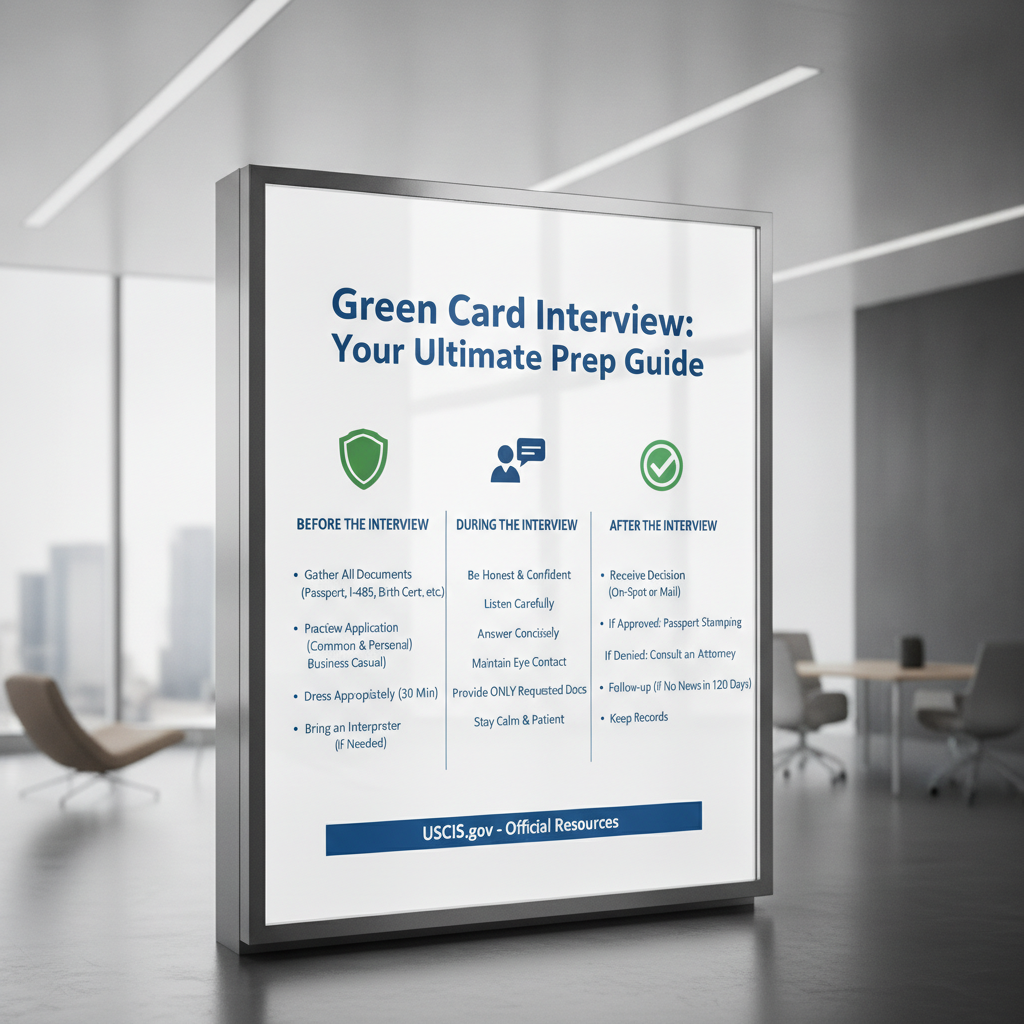
The importance of proper preparation for immigration interviews is a constant topic in legal discussions and news. This comprehensive guide is inspired by ongoing reports and discussions highlighting the critical nature of these interviews, particularly those concerning Green Card applications. Staying informed and prepared is key to success.
Green Card Interview Preparation Tips (Immigration Law)
What This News Means for Immigrants in Orlando and Across Florida
The emphasis on thorough preparation for the Green Card interview is not just legal advice; it's a practical necessity. For immigrants residing in Orlando, Central Florida, and throughout the Sunshine State, this news underscores the need to approach this stage of the immigration process with diligence and expert support.
Why this news is showing up now
While the requirement for a Green Card interview has been a long-standing component of the immigration process, its significance remains a recurring topic due to several factors:
- Increased Scrutiny: Immigration policies and procedures are subject to change and heightened scrutiny, making interviews more critical than ever. USCIS officers are tasked with ensuring the integrity of the immigration system.
- Complexity of Cases: As immigration laws evolve, cases can become more complex, requiring applicants to demonstrate a deep understanding of their application and supporting evidence.
- Common Pitfalls: Many applicants, despite having genuine cases, face delays or denials due to inadequate preparation, misunderstanding questions, or failing to provide crucial documentation. Legal professionals consistently advise on avoiding these common mistakes.
- Technological Advancements: While some aspects of immigration are digitized, the personal interview remains a core element, emphasizing the human interaction and verification aspect.
How it can affect Florida residents
For individuals and families living in Florida, especially those whose cases are processed at the Orlando USCIS Field Office, understanding the implications of a well-prepared interview is paramount:
- Local USCIS Field Office Demands: The Orlando USCIS Field Office, like others nationwide, maintains specific procedures and expectations. Being prepared means understanding what the local officers might focus on.
- Diverse Applicant Pool: Florida is home to a vast and diverse immigrant population. This means the Orlando office handles a wide array of cases, from family-based petitions to employment-based applications, each with unique interview considerations.
- Impact on Daily Life: A successful interview means moving forward with your life, obtaining work authorization, and eventually permanent residency. Delays or denials can disrupt employment, education, and family stability. For those along the I-4 corridor, stability is key to integrating into the community.
- Access to Legal Expertise: Florida, particularly Orlando, has a robust legal community. This means residents have access to experienced immigration attorneys like those at Imigrar, who can provide tailored preparation and representation, ensuring you’re not alone in this critical step.
Being informed and prepared isn't just about passing an interview; it's about securing your future and keeping your family together in the U.S.
What Green Card Interview Is (and Why It Matters)
The Green Card interview is a critical step for most individuals seeking lawful permanent resident status in the United States. It's a face-to-face meeting with a U.S. Citizenship and Immigration Services (USCIS) officer or, for those applying from abroad, a Consular Officer at a U.S. Embassy or Consulate. The primary purpose of this interview is to verify the information provided in your application, confirm your eligibility for a Green Card, and ensure that you are admissible to the United States.
A plain-English definition
Simply put, a Green Card interview is like a final check-up before you get your permanent resident card. You and any relevant family members (like your sponsoring spouse) will meet with an immigration officer. They will ask questions about your application, your background, your relationship (if it’s a marriage-based case), and your reasons for wanting to live permanently in the U.S. They'll also review all the documents you've submitted to make sure everything is accurate and consistent.
It's your opportunity to demonstrate that you meet all the legal requirements for a Green Card and to clarify any details in your application. For many, it's the last major hurdle before achieving the dream of permanent residency.
Key terms you need to know
Understanding the terminology will help demystify the process:
- Green Card (Form I-551): The official identification card proving your status as a lawful permanent resident of the United States. It grants you the right to live and work permanently in the U.S.
- USCIS (U.S. Citizenship and Immigration Services): The government agency responsible for administering immigration and naturalization benefits. This is where most domestic Green Card interviews take place. USCIS official website
- Adjustment of Status (AOS): The process of applying for a Green Card while physically present in the United States. This typically involves submitting Form I-485, Application to Register Permanent Residence or Adjust Status. The interview is a key part of this process.
- Consular Processing: The process of applying for an immigrant visa (which leads to a Green Card upon entry) at a U.S. Embassy or Consulate in your home country or another country. This applies if you are outside the U.S.
- Sponsor/Petitioner: The U.S. citizen or lawful permanent resident who files an immigrant petition on your behalf (e.g., Form I-130, Petition for Alien Relative, or Form I-140, Immigrant Petition for Alien Worker).
- Beneficiary/Applicant: The foreign national who is seeking a Green Card.
- Affidavit of Support (Form I-864): A legally binding document signed by the sponsor, promising to financially support the applicant if needed, ensuring they do not become a "public charge."
- Notice of Interview (Form I-797C): The official letter from USCIS or the National Visa Center (NVC) informing you of your interview date, time, and location, along with a list of required documents.
- Admissibility: The legal determination that an individual is eligible to enter the U.S. and receive immigration benefits, meaning they are not subject to any grounds of inadmissibility (e.g., certain criminal offenses, health issues, immigration violations).
For immigrants in Orlando and beyond, preparing for this interview is not just about answering questions; it's about presenting a clear, consistent, and truthful narrative that aligns with your application and demonstrates your eligibility under U.S. immigration law.
Current Immigration Law: The Foundation
The framework for the Green Card interview is deeply rooted in U.S. immigration law, primarily the Immigration and Nationality Act (INA). This comprehensive body of law dictates who is eligible for a Green Card, the procedures for applying, and the grounds for inadmissibility or deportability. The interview serves as the government's mechanism to ensure compliance with these laws.
Federal requirements
The core requirements for obtaining a Green Card are established at the federal level and administered by USCIS and the Department of State. Key statutes and regulations that govern this process include:
- Immigration and Nationality Act (INA): This is the overarching law. Sections of the INA, such as INA §245 for Adjustment of Status (for those already in the U.S.) and INA §201-204 for visa classifications and petitions, directly apply. For instance, INA §212 outlines the various grounds of inadmissibility, which USCIS officers investigate during the interview.
- 8 CFR (Code of Federal Regulations): Title 8 of the CFR contains the specific regulations implementing the INA, detailing the application process, interview procedures, and evidence requirements.
- Public Charge Rule: While the 2019 "public charge" rule was rescinded, USCIS still considers whether an applicant is likely to become a public charge under the long-standing 1999 guidance, which is primarily addressed through the Affidavit of Support (Form I-864).
During the interview, the USCIS officer will verify that:
- You are eligible for the specific Green Card category you applied under (e.g., family-based, employment-based, asylum).
- Your relationship with the petitioner (if applicable) is genuine.
- You have no criminal history or other factors that would make you inadmissible to the U.S.
- All information provided in your forms, such as Form I-130, Petition for Alien Relative, Form I-485, Application to Register Permanent Residence or Adjust Status, and Form I-864, Affidavit of Support, is true and accurate.
Important: Honesty and consistency are paramount. Any discrepancies or misrepresentations can lead to denial or even accusations of fraud.
Florida-specific considerations
While immigration law is federal, certain aspects can have local implications, particularly concerning documentation and support services:
- State-issued Documents: When preparing for your interview in Orlando, ensure that any Florida-issued documents, such as birth certificates, marriage licenses, or divorce decrees, are original or certified copies.
- Access to Resources: Florida residents have access to various community and legal resources. For example, if you need a certified translator for documents not in English, ensure they meet Florida's standards for notarization and translation.
- Orlando USCIS Field Office: If your case is in Orlando, your interview will likely take place at the local USCIS Field Office. Understanding the local office's specific procedures and typical interview styles can be beneficial, though the core legal requirements remain universal. Always check your Notice of Interview (Form I-797C) for the exact location and instructions.
The foundation of your Green Card application and interview success lies in a clear understanding of these federal laws and regulations. Consulting with an experienced Orlando immigration lawyer from Imigrar can provide invaluable insight and ensure your application fully complies with all legal requirements.
For more detailed information on forms and processes, visit the USCIS official website.
Need Help? Our Orlando immigration team is ready to assist. Call +1 786-791-3106 for a free consultation, or message us online. Se Habla Español.
How to Prepare for Your Green Card Interview: A Complete Step-by-Step Guide
The Green Card interview is often the final hurdle before achieving permanent residency. Thorough preparation is key to a successful outcome. This guide provides a detailed, step-by-step approach to help you confidently navigate this crucial stage.
1) Understand Your Case and Review Your Application
Before anything else, you must have a complete understanding of your own application. The USCIS officer will refer to the forms you submitted, such as Form I-130 (if family-sponsored) and Form I-485, so you should know every detail.
- Review All Submitted Forms: Read through every question and answer on your Form I-130, Form I-485, Form I-864, and any other supplementary forms like Form I-693 (Report of Medical Examination and Vaccination Record). Ensure you recall all dates, addresses, employment history, and travel details.
- Understand Your Eligibility Category: Be clear on the basis of your application (e.g., marriage to a U.S. citizen, employment-based, asylum). The questions asked will often be tailored to your specific category.
- Identify Potential Red Flags: Are there any past issues (e.g., prior immigration violations, arrests, long periods of unemployment, discrepancies in previous applications) that might raise questions? Prepare honest and concise explanations.
- Practice Explaining Your Story: For marriage-based cases, be ready to clearly articulate how you met, your relationship timeline, shared life experiences, and future plans. For other categories, be prepared to discuss your qualifications or reasons for seeking asylum.
Reminder: If you worked with an attorney to prepare your application, ask for a complete copy of everything submitted to USCIS. If you prepared it yourself, ensure you have organized copies of everything.
2) Gather and Organize All Required Documents
This is arguably the most critical step. The Notice of Interview (Form I-797C) will list specific documents you need to bring. However, it's always wise to bring more than just the listed items, especially originals and copies of everything submitted. Organize them in a binder or folder for easy access.
- Original Interview Notice: Your Form I-797C.
- Government-Issued Photo Identification: Valid passport, driver's license (especially for Florida residents), or state ID.
- Medical Examination Results: If not already submitted, bring your sealed Form I-693 from a USCIS-approved civil surgeon.
- Birth Certificates: Original and copy for both applicant and petitioner (if applicable).
- Marriage Certificate: Original and copy (if marriage-based).
- Divorce Decrees/Death Certificates: For any previous marriages of either spouse.
- Financial Documents (Affidavit of Support - Form I-864):
- Original Form I-864 signed by the petitioner/sponsor.
- Last three years of federal tax returns (IRS transcripts preferred).
- Recent pay stubs or employment verification letter.
- Proof of assets (bank statements, property deeds) if income is insufficient.
- Proof of Relationship (for marriage-based Green Cards):
- Joint bank accounts, credit cards, leases, utility bills.
- Photos together (dated, showing progression of relationship).
- Correspondence (emails, texts, social media posts).
- Children's birth certificates (if any, showing both parents).
- Joint insurance policies (health, life, auto).
- Affidavits from friends/family attesting to the bona fide marriage.
- Proof of Legal Entry and Status:
- Passport(s) with entry stamps and visas.
- Form I-94, Arrival/Departure Record.
- Previous EAD (Employment Authorization Document) or Advance Parole documents.
- Police Records/Court Documents: If you have any arrests or convictions, bring certified court dispositions, even if charges were dismissed or expunged.
- Translations: Any document not in English must be accompanied by a certified English translation.
- Photocopies: Bring a complete set of photocopies for all original documents. The officer may keep the copies.
Warning: Missing documents can lead to delays, a Request for Evidence (RFE), or even denial.
3) Prepare for Interview Questions and Practice
Anticipating the types of questions an officer might ask can significantly reduce anxiety and help you respond confidently and accurately.
- Review Your Application Details: The officer will ask questions directly from your Form I-485 and supporting forms. Know your dates of entry, previous addresses, employment history, and biographical information.
- General Questions: Be prepared for questions about your background, family history, travel history, and any prior immigration interactions.
- Marriage-Based Specific Questions: If your Green Card is through marriage, expect detailed questions about your relationship:
- How and when did you meet?
- Details of your wedding, honeymoon.
- Who lives in your household?
- What did you do last weekend?
- Details about your spouse's family, job, daily routine.
- Specifics about your home (e.g., color of toothbrush, what's in the fridge).
- Inadmissibility Questions: Be ready to answer questions about any criminal history, past immigration violations, or health issues.
- Practice with a Friend or Attorney: Have someone ask you mock interview questions. Practice answering clearly, concisely, and truthfully.
- Language Assistance: If you are not fluent in English, you have the right to bring an interpreter. However, having an attorney who can interpret (like those at Imigrar who are bilingual) is often preferred.
Important: Answer truthfully and consistently with your application. Do not volunteer information unless asked directly, but always be honest.
4) Attend the Interview Prepared and Punctual
The day of the interview is crucial. Your demeanor and presentation matter.
- Dress Appropriately: Treat it like a professional job interview. Business casual or professional attire is recommended.
- Arrive Early: Plan to arrive at the Orlando USCIS Field Office (or other designated location) at least 30 minutes before your scheduled time. This allows for parking, security checks, and finding the correct waiting area.
- Bring ALL Documents: Re-check your binder before leaving home. Don't forget your Notice of Interview.
- Remain Calm and Polite: Officers appreciate respectful and cooperative applicants.
- Listen Carefully: Pay close attention to each question. If you don't understand, politely ask the officer to repeat or rephrase it.
- Answer Truthfully and Directly: Provide honest answers. If you don't know the answer, say so. Do not guess or fabricate information.
- Do Not Volunteer Information: Answer only the question asked. Avoid rambling or offering unsolicited details.
- Review Documents When Asked: If the officer asks you to review a document, do so carefully before confirming anything.
- Bring Your Attorney: Having an experienced immigration lawyer from Imigrar by your side can provide reassurance, clarify questions, and intervene if necessary, ensuring your rights are protected.
For Central Florida residents attending their interview at the Orlando USCIS Field Office, be aware of traffic and parking conditions, especially around Orange County government buildings.
5) What to Expect During the Interview
Understanding the flow of the interview can help manage expectations and anxiety.
- Oath: You will typically be sworn in to tell the truth.
- Identity Verification: The officer will confirm your identity using your photo ID and fingerprints.
- Review of Application: The officer will go through your application forms, confirming details and asking clarifying questions about dates, places, and events.
- Questions about Eligibility: They will focus on why you qualify for a Green Card, often delving into your relationship (for marriage cases) or employment history (for work-based cases).
- Inadmissibility Questions: You will be asked about criminal history, past immigration violations, membership in certain organizations, and other grounds of inadmissibility. Be prepared to answer "yes" or "no" to these questions.
- Review of Documents: The officer will examine the documents you brought, often keeping copies and returning originals.
- Decision or Further Review: In some cases, a decision may be made on the spot. More often, the officer will indicate that a decision will be mailed to you. Sometimes, a Request for Evidence (RFE) might be issued, or a second interview scheduled if there are significant concerns.
The interview typically lasts between 20 minutes to an hour, but it can vary significantly depending on the complexity of the case.
6) Post-Interview Follow-Up
The process doesn't always end when you leave the USCIS office.
- Await Decision: USCIS will mail you a notice of their decision. This could be an approval, a Request for Evidence (RFE), or a denial. You can check your case status online using the receipt number from your Form I-797C at USCIS Processing Times.
- Respond to RFEs Promptly: If you receive an RFE, respond thoroughly and within the specified deadline. This is a critical opportunity to provide missing information.
- Receive Green Card: If approved, your Green Card will be mailed to you. Ensure your mailing address with USCIS is current.
- Conditional Green Card: If you receive a conditional Green Card (e.g., for marriage-based cases where the marriage is less than two years old at the time of approval), remember to file Form I-751, Petition to Remove Conditions on Residence, within the 90-day window before your conditional Green Card expires.
Working with an Imigrar attorney throughout these steps provides crucial support, ensuring all deadlines are met and all correspondence is handled correctly.
Practical Steps You Can Take Today
Don't wait until the last minute to prepare for your Green Card interview. Proactive steps can significantly improve your chances of a smooth and successful outcome. For those in Orlando and across Florida, getting started early is key.
Actionable Checklist (5+ items):
- Review Your Entire Application Package: Gather copies of every form and document you submitted to USCIS. Read through them carefully, making sure you remember all details. Highlight any areas where you might anticipate questions or where information could be unclear.
- Start Compiling Original Documents and Copies: Don't wait for the interview notice. Begin collecting original birth certificates, marriage licenses, passports, and any other crucial identity or relationship documents. Make high-quality photocopies of everything.
- Organize Your Evidence: Create a binder or clearly labeled folders. Separate documents by category (e.g., "Personal IDs," "Marriage Proof," "Financial Documents"). This makes it easy to find items during the interview and demonstrates your preparedness.
- Seek Legal Counsel Early: Schedule a consultation with an experienced immigration lawyer, like those at Imigrar. An attorney can review your case, identify potential issues, and help you strategize your interview approach. This is especially important for complex cases or if you have any history that might raise inadmissibility concerns.
- Practice Answering Questions: Have a family member or friend conduct a mock interview. Focus on answering clearly, concisely, and truthfully. Practice explaining your relationship timeline (for marriage cases) or your professional background (for employment cases).
- Verify Mailing Address with USCIS: Ensure your address on file with USCIS is current to receive your Notice of Interview (Form I-797C) and subsequent decisions. You can update your address online via the USCIS website.
- Check USCIS Processing Times: While not directly interview preparation, monitoring processing times for Form I-485 can give you an estimate of when to expect your interview notice. Visit USCIS Processing Times.
Document preparation guidance
- Originals vs. Copies: Always bring originals of all supporting documents. The officer will typically review the originals and keep the copies. If you only have copies, they must be certified copies.
- Translations: For any document not in English, provide a complete and accurate English translation, certified by a translator. The certification must include a statement that the translator is competent to translate and that the translation is accurate.
- Order and Accessibility: Arrange your documents in the same order they appear on your application or in the order suggested by your attorney. This shows organization and respect for the officer's time.
- Photos: For marriage-based cases, select a diverse range of photos showing your relationship over time, with family and friends, and during significant life events. Print them in an album or on clearly labeled sheets.
Timeline expectations
The time between filing your Form I-485 and receiving an interview notice can vary significantly. For Orlando residents, current processing times at the local USCIS Field Office can be found on the USCIS website. It can range from several months to over a year, depending on the category and current USCIS workload.
- Filing to Biometrics: Typically 3-8 weeks after filing.
- Biometrics to Interview Notice: Can be several months. The Notice of Interview usually arrives 3-6 weeks before the interview date.
- Interview to Decision: In some cases, a decision is made quickly. In others, it can take several weeks or even months, especially if an RFE is issued.
Reminder: Begin preparing your documents and reviewing your application as soon as you file, not just when you receive the interview notice. This will give you ample time to gather everything and prepare thoroughly.
Need Help? Our Orlando immigration team is ready to assist. Call +1 786-791-3106 for a free consultation, or message us online. Se Habla Español.
How Imigrar Helps Immigrants in Orlando
At Imigrar, we understand that the Green Card interview is more than just a formality; it's a deeply personal and often stressful experience that determines the future of individuals and families. Our mission, "Keep Families Together," drives our dedicated approach to client service, especially for those navigating complex immigration processes in Orlando, Central Florida, and nationwide.
Our experience and expertise
The immigration landscape is constantly shifting, requiring specialized knowledge and up-to-date legal strategies. Imigrar's team of experienced immigration attorneys brings a wealth of expertise to your Green Card journey:
- Comprehensive Case Review: We thoroughly review your entire application package, including Form I-130, Form I-485, and Form I-864, to identify any potential weaknesses or areas of concern before the interview.
- Personalized Interview Preparation: We conduct mock interviews, simulating the environment and types of questions you might face at the Orlando USCIS Field Office. Our attorneys provide tailored advice on how to answer questions truthfully, clearly, and concisely, especially for marriage-based Green Card interviews where the genuineness of the relationship is paramount.
- Document Organization and Review: We guide you through the meticulous process of gathering and organizing all necessary original and supporting documents, ensuring nothing is overlooked and everything is presented effectively to the USCIS officer.
- Representation at the Interview: Having an Imigrar attorney accompany you to your Green Card interview provides invaluable peace of mind. Your lawyer can clarify questions, ensure the officer adheres to proper procedures, and advocate on your behalf if any issues arise. This legal presence can significantly impact the interview's outcome.
- Addressing Complex Issues: If your case involves a criminal history, previous immigration violations, or other complexities, our attorneys are skilled in preparing waivers and presenting compelling arguments to overcome potential grounds of inadmissibility.
- Post-Interview Support: Whether it's responding to a Request for Evidence (RFE) or helping you understand the next steps, Imigrar remains your steadfast partner until your Green Card is in hand.
Our commitment to keeping families together extends to every client we serve, providing compassionate yet aggressive legal representation.
Free consultation offer
We believe that everyone deserves access to quality legal advice. That's why Imigrar offers a free consultation for prospective clients. This initial meeting allows us to understand the specifics of your Green Card application, assess your needs, and outline how our services can best support you through the interview process and beyond. It's an opportunity for you to ask questions, understand your options, and gain clarity on your path to permanent residency.
Don't face this critical step alone. Contact Imigrar today to schedule your free consultation and take the first step towards a confident and successful Green Card interview.
Se Habla Español. Our bilingual team is here to assist Spanish-speaking clients with the same level of expertise


