


What This News Means for Immigrants in Orlando and Across Florida
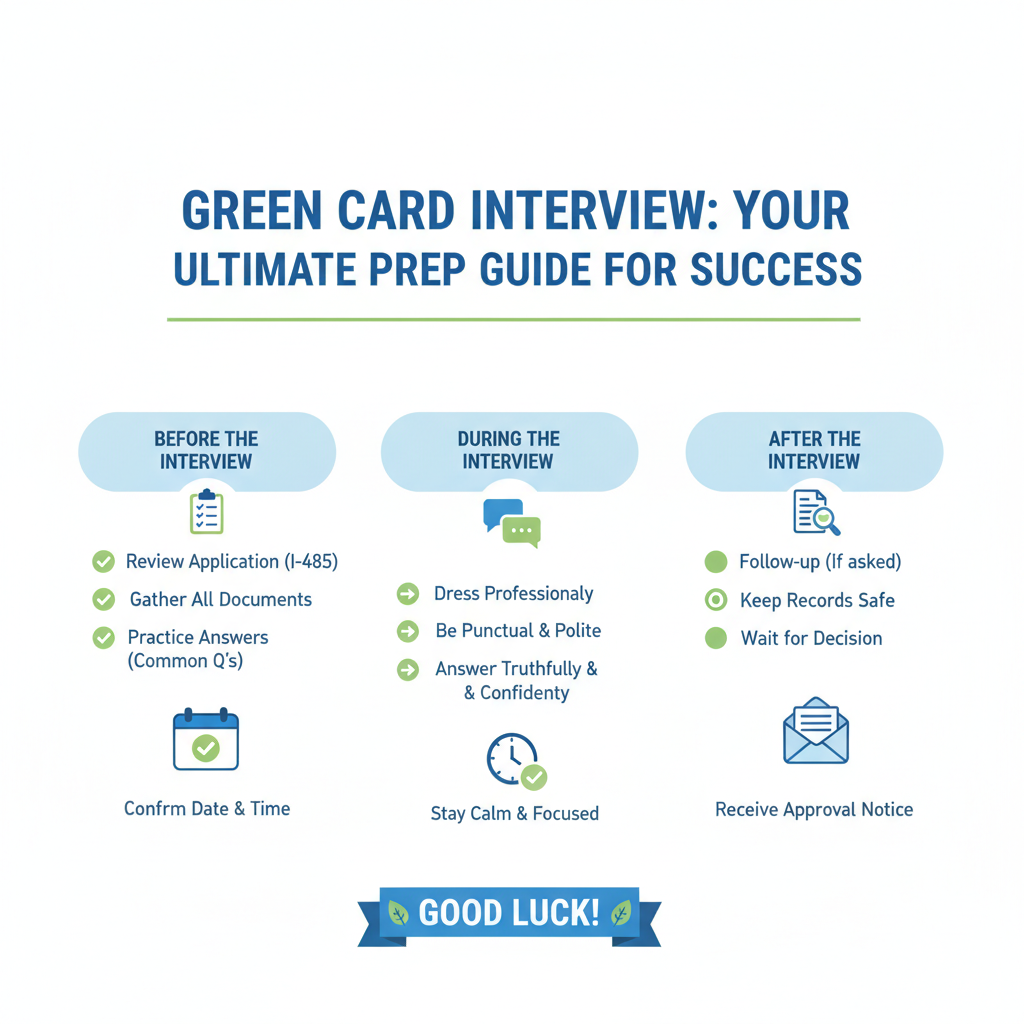
Why this news is showing up now
The need for comprehensive Green Card interview preparation is evergreen in immigration law. Each year, hundreds of thousands of individuals apply for permanent residency through various avenues, including family-based petitions, employment-based petitions, and asylum. While the foundational laws governing these interviews remain relatively stable, USCIS (U.S. Citizenship and Immigration Services) procedures, processing times, and specific areas of focus can evolve. Furthermore, with the constant influx of new applicants, there’s a perpetual demand for clear, actionable guidance to navigate this complex process successfully. The "news" in immigration law often reflects a renewed emphasis on procedural compliance, the efficiency of the interview process, or specific challenges applicants might face, making robust preparation tips perpetually relevant and sought-after.How it can affect Florida residents
For immigrants residing in Florida, particularly those in the bustling Orlando metropolitan area, understanding and preparing for your Green Card interview is paramount. Florida is a melting pot of cultures and a popular destination for immigrants, meaning the USCIS Field Offices across the state, including the one in Orlando, handle a high volume of Green Card applications. If your case is processed in Orlando, your interview will likely take place at the **Orlando USCIS Field Office**. This means local knowledge and preparation tailored to the specific dynamics of this office can be incredibly beneficial. For Central Florida residents, being well-prepared means not only understanding federal requirements but also being ready for the local logistics, such as travel to the office, parking, and potential wait times. A well-prepared applicant from Orlando, Kissimmee, or Sanford is more likely to experience a smoother interview process, reducing stress and increasing the chances of a positive outcome. Imigrar, located right here in Orlando, is uniquely positioned to offer this localized expertise, guiding you through every step with an understanding of both federal law and local practice.Need Help? Our Orlando immigration team is ready to assist. Call +1 786-791-3106 for a free consultation, or message us online. Se Habla Español.
What Green Card Interview Preparation Is (and Why It Matters)
The Green Card interview is a pivotal moment in your journey towards becoming a lawful permanent resident of the United States. It is a formal meeting with a USCIS officer who will review your application, ask you questions about your eligibility, and examine the evidence you’ve submitted. Proper preparation for this interview is not merely a recommendation; it is a necessity that can significantly influence the success of your application.A plain-English definition
Simply put, a **Green Card interview** is a mandatory meeting you attend with a U.S. immigration officer. Its primary purpose is for the officer to confirm the information you provided in your Green Card application, ensure you meet all legal requirements for permanent residency, and verify that you are not inadmissible to the United States. For most applicants, this interview is the final hurdle before a decision is made on their **Adjustment of Status** application (if applying from within the U.S.) or their **Immigrant Visa** application (if applying from abroad through **Consular Processing**). The officer wants to ensure your application is truthful, complete, and aligns with immigration law.Key terms you need to know
Navigating immigration can be challenging, especially with its specialized terminology. Here are some key terms vital to understanding your Green Card interview: * **Green Card:** Also known as a Permanent Resident Card, it is an identification document that proves you are authorized to live and work permanently in the United States. * **USCIS (U.S. Citizenship and Immigration Services):** The federal agency responsible for administering immigration and naturalization benefits, including Green Cards. * **Adjustment of Status (AOS):** The process of applying for lawful permanent resident status (a Green Card) when you are already in the United States. This is handled by USCIS. * **Consular Processing:** The process of applying for an immigrant visa at a U.S. embassy or consulate abroad. Once approved, you enter the U.S. as a permanent resident. This is handled by the U.S. Department of State. * **Immigrant Visa:** A visa issued to a foreign national who intends to live permanently in the U.S. (as opposed to a non-immigrant visa for temporary stays). * **Petition (e.g., Form I-130):** The initial application filed by a U.S. citizen or lawful permanent resident on behalf of an eligible family member to establish a qualifying relationship. * **Application (e.g., Form I-485):** The actual application for **Adjustment of Status** filed by the immigrant beneficiary. * **Affidavit of Support (Form I-864):** A legally binding document signed by a petitioner (sponsor) promising to financially support the immigrant beneficiary to prevent them from becoming a public charge. * **Priority Date:** The date your immigrant visa petition was properly filed with USCIS. This date determines your place in line for a visa, especially for categories with annual numerical limits. * **Admissibility:** Refers to whether a foreign national is eligible to enter the U.S. or adjust status. Certain factors like criminal history, health issues, or past immigration violations can make someone "inadmissible." * **Oath:** Before your interview begins, you will be asked to swear or affirm that your testimony will be truthful. * **Interpreter:** If you are not fluent in English, you may bring a certified interpreter (unless USCIS provides one, which is rare for interviews).Current Immigration Law: The Foundation
The Green Card interview is conducted under the authority of the **Immigration and Nationality Act (INA)**, the body of law that governs immigration to the United States. The purpose of the interview is to ensure that applicants meet the eligibility criteria outlined in the INA and are not subject to any grounds of inadmissibility.Federal requirements
The core legal framework for Green Card eligibility is found in various sections of the **INA**. For most family-based Green Card applications, the process begins with a U.S. citizen or lawful permanent resident filing **Form I-130, Petition for Alien Relative**. This form establishes the qualifying relationship between the petitioner and the beneficiary. Once the **Form I-130** is approved and an immigrant visa is available (for some categories, this depends on the **Priority Date**), the beneficiary can then apply for a Green Card. If the beneficiary is already in the U.S. and meets certain conditions, they can file **Form I-485, Application to Register Permanent Residence or Adjust Status**. If they are abroad, they will go through **Consular Processing** by filing **Form DS-260, Immigrant Visa Application**, with the U.S. Department of State. Key federal requirements that USCIS officers assess during an interview include: * **Valid Relationship:** For family-based petitions, the officer will confirm the bona fides of the marriage or family relationship. * **Financial Support:** The petitioner must demonstrate the financial ability to support the applicant by filing **Form I-864, Affidavit of Support**, ensuring the applicant will not become a "public charge." * **Admissibility:** Applicants must not fall under any grounds of inadmissibility, such as certain criminal convictions, health-related issues, or previous immigration violations. Waivers may be available for some grounds. * **Eligibility for Adjustment of Status:** If applying from within the U.S., the applicant must have maintained lawful immigration status (with some exceptions for immediate relatives of U.S. citizens). For a complete understanding of all forms and requirements, always refer to the USCIS official website.Florida-specific considerations
While the federal laws are uniform across the U.S., the practical application of these laws can have local nuances. For residents of Florida, particularly those in the Orlando area, your **Adjustment of Status** interview will typically be conducted at the **Orlando USCIS Field Office**. This office serves a wide geographical area, including Orange, Osceola, Seminole, and other surrounding counties. The officers at the Orlando Field Office are well-versed in handling a diverse range of family-based and employment-based Green Card applications. Being familiar with local procedures, such as specific instructions provided in your interview notice for the Orlando office, is important. For instance, the Orlando office may have specific requirements for interpreter credentials or unique parking instructions. Imigrar, being an Orlando-based firm, has extensive experience navigating the local USCIS processes and can provide tailored advice for your interview in Central Florida. Important: Always follow the instructions provided in your official **interview notice** from USCIS, as they contain critical details specific to your appointment, including location, time, and required documents.How to Prepare for Your Green Card Interview: A Complete Step-by-Step Guide
Preparing for your Green Card interview is a thorough process that demands attention to detail, organization, and a clear understanding of your application. This guide breaks down the preparation into manageable steps to help you feel confident and ready.1) Understand Your Case Type and Eligibility
Before you do anything else, be absolutely clear about the basis of your Green Card application. Are you applying through marriage to a U.S. citizen? Through a parent? An employer? The type of application dictates the specific questions you’ll be asked and the evidence you’ll need to present. * **Family-Based Petitions:** (e.g., **Form I-130**) Focus on proving the bona fides of your relationship. For marriage-based cases, this means demonstrating a genuine, loving marriage, not one entered solely for immigration purposes. * **Employment-Based Petitions:** (e.g., **Form I-140**) Focus on your qualifications, the job offer, and the employer's ability to pay the prevailing wage. * **Asylum/Refugee Status:** Focus on the fear of persecution and your asylum narrative. **Required Documents for this step:** * A copy of your original **Form I-130**, **Form I-140**, or other initial petition. * A copy of your **Form I-485** (or **Form DS-260** if consular processing). * Any **Request for Evidence (RFE)** notices you received and your responses.2) Gather and Organize All Required Documents
This is arguably the most critical step. You must bring ALL original documents that were submitted with your application, plus copies, and any new evidence that has become available since you filed. Organize them neatly in a binder with tabs for easy access. **Key Documents to Bring (Originals and Copies):** * **Interview Notice:** The official letter from USCIS scheduling your interview. * **Photo Identification:** Valid passport, driver’s license (especially for Florida residents), or state ID. * **Birth Certificates:** For yourself, petitioner/spouse, and any children. * **Marriage Certificate:** If applicable. * **Divorce Decrees or Death Certificates:** For any previous marriages of yourself or your spouse. * **Medical Examination Report (Form I-693):** If not already submitted or if it has expired. Ensure it’s in a sealed envelope. * **Affidavit of Support (Form I-864) and Supporting Documents:** * Sponsor's most recent federal income tax returns (Form 1040) with all schedules and W-2s/1099s. * Proof of sponsor's employment (e.g., employment letter, pay stubs). * Proof of assets if income is insufficient. * **Proof of Lawful Entry and Status:** * **Form I-94, Arrival/Departure Record.** * Visas, entry stamps in your passport. * Prior **Form I-797** approval notices (e.g., for H-1B, F-1, L-1 status). * **Police Records/Court Dispositions:** For any arrests or convictions, even minor ones. * **Military Records:** If applicable. * **Photographs:** Passport-style photos (check your interview notice for specific requirements, usually two per applicant). * **Certified Translations:** Any document not in English must be accompanied by a full English translation certified by a competent translator. **For Marriage-Based Green Cards, additional crucial evidence includes:** * **Joint Financial Documents:** Joint bank accounts, credit card statements, tax returns, utility bills (electric, water, gas) in both names, joint lease agreements or mortgage statements. * **Joint Assets:** Property deeds, car titles, life insurance policies with each other as beneficiaries. * **Proof of Cohabitation:** Lease agreements, utility bills, mail addressed to both at the same address. * **Photographs:** A diverse selection of photos showing you and your spouse together over time, with family and friends, at significant events (wedding, holidays, vacations). * **Letters/Communications:** Emails, text messages, social media posts, cards exchanged. * **Affidavits from Friends/Family:** Letters from people who know your relationship is genuine.3) Review Your Application Forms and Submitted Evidence
Go through every form you submitted (especially **Form I-485** and **Form I-130**) line by line. You must be completely familiar with every answer you provided. The USCIS officer will have your entire file in front of them and will compare your verbal answers to your written application. * **Consistency is Key:** Any discrepancies, even minor ones, can raise red flags and lead to further questioning, delays, or even a **Request for Evidence (RFE)** or **Notice of Intent to Deny (NOID)**. * **Understand the "Why":** For each answer, understand why you provided that specific information and be ready to elaborate if asked. * **Practice Explaining:** If there were any unusual circumstances or complex answers, practice explaining them clearly and concisely.4) Practice Answering Potential Interview Questions
While you can’t predict every question, many are standard. Conducting mock interviews with a friend, family member, or your attorney can significantly boost your confidence. **Typical Questions Include:** * **Personal Information:** Your full name, date of birth, place of birth, parents' names. * **Application Details:** Confirmation of answers on your **Form I-485** and **Form I-130**. * **Immigration History:** How you entered the U.S., previous visas, any past immigration issues. * **Background Checks:** Questions related to your criminal history, health, and any security concerns. * **For Marriage-Based Cases:** * How, when, and where did you meet? * Details about your wedding. * Daily routines, living arrangements. * Shared experiences, future plans. * Your spouse's family members, job, and habits. **Reminder:** Always answer truthfully and consistently. If you don't know an answer, say so. If you don't understand a question, ask for clarification.5) Dress Appropriately and Arrive Early
First impressions matter. While there’s no strict dress code, dressing in professional or business-casual attire shows respect for the process and the interviewing officer. * **Dress:** Aim for clean, neat, and conservative clothing. * **Punctuality:** Plan to arrive at the **Orlando USCIS Field Office** (or other designated location) at least 30-45 minutes before your scheduled appointment. This allows time for parking, security checks, and finding your waiting area without feeling rushed or stressed. Being late can lead to your interview being rescheduled or even your case being denied. For Central Florida residents, consider potential I-4 corridor traffic when planning your travel.6) Know What to Expect During the Interview
The interview typically lasts between 20 minutes to an hour, though it can be longer depending on the complexity of your case. * **Security:** You will go through airport-style security upon entering the building. * **Waiting Area:** You will wait in a designated area until your name is called. * **Oath:** The officer will ask you to swear or affirm to tell the truth. * **Questions:** The officer will go through your application, asking questions to verify information and assess your eligibility. * **Review of Documents:** The officer will review your original documents and may ask for additional evidence. * **Interpreter:** If you brought an interpreter, they will also take an oath to accurately translate. * **Attorney Presence:** Your immigration attorney from Imigrar can accompany you to the interview, providing invaluable support and legal guidance.7) Follow Up After the Interview
The officer may make a decision on the spot, or they may tell you that a decision will be mailed to you. * **Approval:** If approved, you may receive a stamp in your passport as temporary proof of permanent residency, and your Green Card will be mailed within a few weeks. * **Request for Evidence (RFE):** If the officer needs more information, they will issue an RFE, giving you a deadline to submit additional documents. * **Notice of Intent to Deny (NOID):** In more serious cases, USCIS might issue a NOID, explaining why they intend to deny your application and giving you a chance to respond. * **Denial:** If your application is denied, you will receive a written explanation. It’s crucial to consult with an immigration attorney immediately to understand your options, which may include filing an appeal or a new application.Need Help? Our Orlando immigration team is ready to assist. Call +1 786-791-3106 for a free consultation, or message us online. Se Habla Español.
Practical Steps You Can Take Today
Preparing for your Green Card interview can feel overwhelming, but breaking it down into actionable steps can make the process manageable. Here's what you can do right now to set yourself up for success. * **Create a Master Document Checklist:** Start a detailed list of every document you think you might need. Organize it by category (personal, financial, relationship evidence). As you gather each item, check it off. This helps ensure nothing is overlooked. * **Start Gathering Originals and Copies:** Don't wait until the last minute. Begin collecting all original documents and making high-quality copies. Remember, any foreign-language documents need certified English translations. * **Review Your Entire Application File:** Sit down with your **Form I-130**, **Form I-485**, and all supporting evidence. Read through everything carefully to refresh your memory on dates, addresses, and specific answers. Highlight any areas where you might need to elaborate. * **Schedule a Mock Interview:** Ask a trusted friend, family member, or your attorney to conduct a mock interview with you. Have them ask challenging questions, especially about potential discrepancies or complex parts of your case. Practice answering clearly and concisely. * **Visit the USCIS Website:** Familiarize yourself with the USCIS Forms and instructions relevant to your case. Check USCIS Processing Times for your specific field office (e.g., Orlando) to get a general idea of when to expect updates after your interview. * **Consult with an Immigration Attorney:** The single most impactful step you can take is to seek legal counsel. An experienced attorney can review your entire case, identify potential issues, help you organize documents, and prepare you for the interview. This is where Imigrar shines.Document preparation guidance
The way you present your documents can influence the interview. * **Binders and Tabs:** Organize all documents in a well-labeled binder with dividers for each category (e.g., "Personal Documents," "Financial Evidence," "Relationship Evidence," "I-864 Support"). * **Originals vs. Copies:** Bring all *original* documents, but also bring a complete set of *copies* for the officer to keep. This can speed up the process. * **Certified Translations:** For any document not in English (e.g., birth certificate from another country), you must provide a full, accurate English translation along with a certification from the translator stating their competence and the accuracy of the translation. * **New Evidence:** If you have new evidence that wasn't available when you filed your application (e.g., new joint bank statements, photos from recent events, updated medical reports), organize it clearly and be ready to present it.Timeline expectations
* **Interview Notice:** You typically receive your interview notice 2-4 weeks before the actual interview date. This notice is critical and contains the date, time, and location (e.g., **Orlando USCIS Field Office**). * **Post-Interview Decision:** Some officers may approve your case on the spot, but often, a decision is mailed to you within a few weeks to a few months. * **Green Card Delivery:** Once approved, your physical Green Card is usually mailed within **30 days** to **120 days**. * **Conditional Green Card:** If you are granted a Green Card based on a marriage less than two years old, you will receive a **Conditional Green Card** valid for two years. You and your spouse will then need to file **Form I-751, Petition to Remove Conditions on Residence**, within the **90-day window** before your conditional Green Card expires. Warning: These timelines are estimates and can vary significantly based on the specific USCIS field office workload, case complexity, and current processing backlogs. Always check the USCIS Processing Times for the most current information.How Imigrar Helps Immigrants in Orlando
At Imigrar, we understand that the Green Card interview is more than just a formality; it’s a critical step towards securing your future in the United States and keeping your family together. Our dedicated team of immigration attorneys in Orlando, Florida, is committed to providing comprehensive, compassionate, and effective legal representation to guide you through this complex process.Our experience and expertise
With years of experience focusing exclusively on immigration law, Imigrar has a deep understanding of USCIS procedures, federal regulations, and the specific nuances of the **Orlando USCIS Field Office**. We have successfully helped countless individuals and families from Orlando, Central Florida, and across the nation prepare for and navigate their Green Card interviews. Our expertise covers all types of Green Card applications, including family-based (marriage, parent-child, sibling), employment-based, and asylum-based adjustments. We stay current with the latest changes in immigration policy and processing trends to provide you with the most accurate and up-to-date advice.Free consultation offer
We believe that everyone deserves access to quality legal advice, especially when their future and family unity are at stake. That's why Imigrar offers a **free, no-obligation consultation** to discuss your Green Card case. During this consultation, we will: * Review your current immigration situation. * Assess your eligibility for a Green Card. * Explain the interview process in detail. * Identify potential challenges and how to address them. * Outline how our services can benefit you. Our goal is to provide clarity and peace of mind, empowering you with the knowledge needed to make informed decisions.Need Help? Our Orlando immigration team is ready to assist. Call +1 786-791-3106 for a free consultation, or message us online. Se Habla Español.

Frequently Asked Questions
Preparing for a Green Card interview often brings up many questions. Here are answers to some of the most common concerns immigrants have.Q: Who needs a green card interview?
A: Most applicants for **Adjustment of Status** (applying for a Green Card from within the U.S.) are required to attend an interview with USCIS. This includes individuals applying based on family relationships (e.g., marriage to a U.S. citizen or lawful permanent resident) and many employment-based categories. There are some limited exceptions, such as for certain employment-based cases where USCIS may waive the interview if all evidence is clear and sufficient. Applicants undergoing **Consular Processing** (applying for an immigrant visa at a U.S. embassy or consulate abroad) will also have an interview as part of that process.
Q: What if my English isn't perfect?
A: If you are not fluent in English, you have


