


Today's Date: 2026-03-25
The reporting that sparked this guide: H-1B Visa Lottery Changes for FY2027 (Legal News)
What This News Means for Immigrants in Orlando and Across Florida
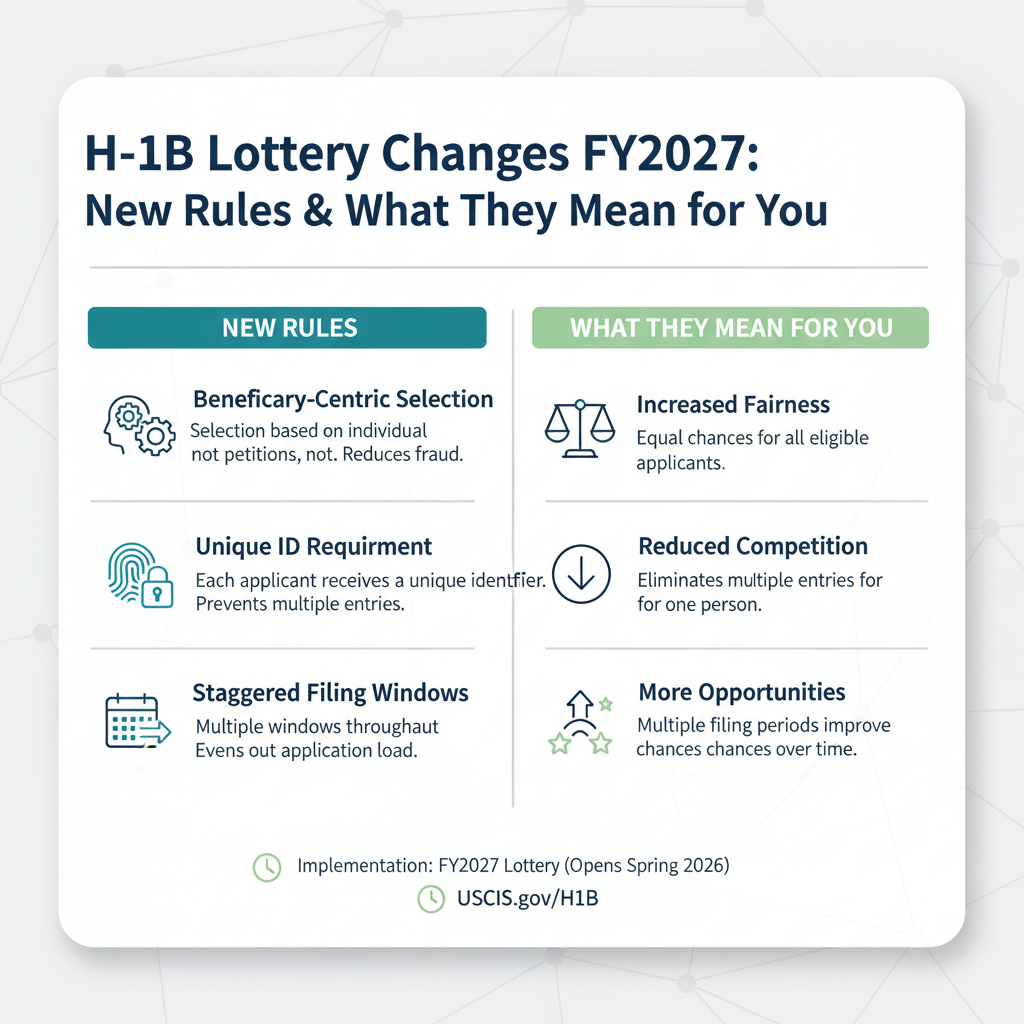
The landscape of U.S. immigration law is constantly evolving, and few areas see as much change and impact as the H-1B visa program. As an immigration law firm based in Orlando, Florida, Imigrar is dedicated to keeping our clients informed about critical developments that could affect their futures. The recent announcements regarding significant changes to the H-1B visa lottery process for Fiscal Year 2027 (FY2027) are monumental, marking a pivotal shift in how the U.S. Citizenship and Immigration Services (USCIS) will select petitions under the annual cap.
For individuals aspiring to work in specialty occupations in the U.S., and for the employers who seek to hire them, these new rules are not just technical updates; they are game-changers. At Imigrar, we understand the stakes involved. Our mission is to "Keep Families Together," and securing a pathway to legal employment is often a crucial step in achieving that goal. These changes, effective for the upcoming FY2027 lottery, demand immediate attention and careful preparation.
Why this news is showing up now
This news is coming to light now because USCIS has finalized and published new rules governing the H-1B cap registration process. These rules are specifically designed to go into effect for the upcoming FY2027 cap season, which typically kicks off with the electronic registration period in early March of the calendar year prior to the fiscal year (i.e., March 2026 for FY2027 petitions starting October 1, 2026). The agency's primary motivation behind these changes is to enhance the integrity of the H-1B cap lottery process and significantly reduce the potential for fraud and abuse, particularly the practice of multiple employers submitting registrations for the same beneficiary to increase their chances of selection. The goal is to ensure that every eligible beneficiary has an equal and fair chance at selection, rather than allowing a single individual to gain an unfair advantage through multiple employer registrations.
How it can affect Florida residents
Florida, and particularly the Orlando area, is a vibrant economic hub with growing sectors heavily reliant on skilled foreign talent. Industries such as technology, healthcare, tourism, aerospace, and finance frequently sponsor H-1B visas. For individuals living in Central Florida, or those looking to secure employment with a Florida-based company, these changes have direct and significant implications:
- Increased Emphasis on Individual Eligibility: The new beneficiary-centric selection model means that the focus shifts from the number of registrations an employer submits to the uniqueness of the individual beneficiary. For Florida residents hoping for an H-1B, this means ensuring your personal documentation, especially your passport, is impeccable and up-to-date.
- Fairer Competition: While the overall cap remains the same, these rules aim to level the playing field. This could potentially reduce the perceived "luck" factor for individuals who previously felt disadvantaged by widespread multiple registrations for a single beneficiary. For those in Orlando's burgeoning tech corridor along the I-4, this could mean a fairer chance against candidates with multiple employer bids.
- Employer Compliance: Florida employers, from large corporations to smaller tech startups in Orange County, must adapt their H-1B sponsorship strategies. They need to understand that while they can still register multiple times for the same beneficiary (if multiple genuine job offers exist), the beneficiary will only be counted once in the lottery. This emphasizes the need for genuine job offers and diligent adherence to the new attestation requirements.
- Critical for Planning: For those in Orlando whose status might be expiring, or for international students graduating from Florida universities like UCF, understanding these changes immediately is crucial for planning their long-term immigration strategy. The window for registration is narrow, and meticulous preparation is paramount.
Need Help Navigating These New H-1B Rules? The complexities of immigration law, especially with new changes, require expert guidance. Our Orlando immigration team at Imigrar is ready to assist you. Call +1 786-791-3106 for a free consultation, or message us online. Se Habla Español.
What H-1B Visa Lottery Changes for FY2027 Is (and Why It Matters)
The H-1B visa program is a cornerstone of the U.S. economy, allowing American employers to temporarily hire foreign workers in "specialty occupations." These are jobs that typically require a bachelor's degree or higher in a specific field, such as IT professionals, engineers, doctors, architects, and more. The demand for H-1B visas consistently exceeds the annual statutory cap set by Congress, leading to a lottery system to select eligible petitions. The changes for FY2027 directly address how this lottery will be conducted, fundamentally altering the process for both employers and prospective H-1B workers.
A plain-English definition
Imagine a very popular concert where tickets are limited. In the past, if you wanted a ticket, you could ask multiple friends to stand in line for you, each friend buying a ticket in your name if they got to the front. This meant you had many chances to get a ticket. The new H-1B rule is like saying: "No, each person only gets ONE chance, no matter how many friends try to buy a ticket for them. We'll check your ID, and if we see your name twice, we'll only count you once."
In simpler terms, the H-1B visa allows U.S. companies to hire skilled foreign workers for jobs requiring specific expertise. Because there are more applicants than available visas, USCIS uses a lottery. For FY2027, the big change is that the lottery will now be based on the individual foreign worker (the beneficiary) rather than on each registration submitted by an employer (the petitioner). This means each unique individual will only have one chance in the lottery, even if multiple companies genuinely want to hire them and submit a registration. This aims to make the lottery fairer and prevent fraud where companies might artificially inflate a beneficiary's chances.
Key terms you need to know
Understanding these terms is crucial to navigating the H-1B process, especially with the new FY2027 changes:
- H-1B Cap: This is the annual limit on the number of H-1B visas issued. Congress has set this at 65,000 for the regular cap and an additional 20,000 for those with a U.S. master's degree or higher (the "master's cap"). Institutions of higher education and certain non-profit research organizations are generally cap-exempt.
- Specialty Occupation: A job that requires theoretical and practical application of a body of highly specialized knowledge, and a bachelor's degree or higher in a specific specialty, or its equivalent, as a minimum for entry into the occupation.
- Beneficiary: This is the foreign worker who is seeking the H-1B visa. Under the new rules, the beneficiary's unique passport or travel document number is paramount for the lottery selection.
- Petitioner: This is the U.S. employer who files the H-1B petition on behalf of the foreign worker.
- Registration Period: The designated window (typically in early March) during which employers electronically submit basic information about themselves and the prospective H-1B beneficiary to USCIS for the lottery. This is where the $10 registration fee is paid.
- Lottery Selection: The process USCIS uses to randomly select registrations when the number of eligible registrations exceeds the annual cap. For FY2027, this selection is now beneficiary-centric.
- Cap-Exempt: Certain employers (like universities, non-profit research organizations, and government research organizations) are exempt from the annual H-1B cap. Petitions filed by these employers do not go through the lottery.
- DHS (Department of Homeland Security): The federal department responsible for immigration enforcement and services, including USCIS.
- USCIS (U.S. Citizenship and Immigration Services): The agency within DHS that administers the U.S. immigration system, including processing H-1B petitions. You can find more information on their official website.
- Attestation: A formal declaration or confirmation. Under the new rules, employers must attest that the job offer is genuine and that they have not colluded to give a beneficiary an unfair advantage in the lottery.
The significance of these changes cannot be overstated. By shifting to a beneficiary-centric selection, USCIS aims to create a more equitable system where every eligible individual has a fair shot, regardless of how many employers are interested in sponsoring them. This reduces the incentive for fraudulent or speculative multiple registrations and puts the focus back on the genuine demand for skilled foreign workers.
Current Immigration Law: The Foundation
The H-1B visa program is rooted in the Immigration and Nationality Act (INA), specifically Section 214(g)(1)(B), which establishes the annual numerical limitations (the cap) for H-1B nonimmigrants. Regulatory provisions, primarily found in 8 CFR 214.2(h)(8), detail the requirements and procedures for the H-1B classification. For FY2027, USCIS has introduced a "final rule" that amends these regulations, specifically targeting the H-1B cap registration process to combat fraud and abuse.
Federal requirements
The most significant federal requirement change for FY2027 is the implementation of the beneficiary-centric selection process. This means:
- Unique Beneficiary, One Chance: For FY2027, USCIS will select H-1B registrations based on each unique beneficiary, identified primarily by their valid passport or travel document number. If a beneficiary has multiple registrations submitted on their behalf by different employers, USCIS will consider them as a single individual in the lottery pool. This ensures that a single beneficiary, regardless of how many employers register them, only has one chance of selection. This is a direct departure from previous years where each valid registration, even for the same person, was considered a separate entry.
- Mandatory Passport/Travel Document Number: The H-1B registration form will now require a valid passport or travel document number for each beneficiary. This is the key identifier USCIS will use to prevent duplicate entries for the same person. Warning: Failure to provide a valid, unique passport number could lead to disqualification.
- Expanded Attestation Requirements: Employers (petitioners) must now attest that the job offer for the beneficiary is genuine and that the employer has not worked with other entities or individuals to submit multiple registrations for the same beneficiary to unfairly increase their chances. This includes an attestation that the employer has not colluded to obtain an unfair advantage. False attestations can lead to severe penalties, including denial of the petition, revocation of approval, and potential criminal charges.
- Increased Authority for USCIS: The new rule grants USCIS greater authority to deny or revoke H-1B petitions where there is evidence of fraud, misrepresentation, or invalid registrations. This includes situations where the underlying job offer is not genuine or where multiple registrations were submitted with the intent to subvert the lottery process.
These changes are outlined in the H-1B Registration Final Rule, which USCIS released to ensure greater fairness and integrity in the H-1B program. All employers and beneficiaries must adhere strictly to these updated federal requirements.
Florida-specific considerations
While immigration law is federal, its impact is felt locally. Florida's economy is robust and diverse, making it a significant destination for H-1B workers. Although there are no Florida-specific H-1B laws, the federal changes have a pronounced effect on the state:
- High Demand in Key Sectors: Orlando, Tampa, Miami, and other metropolitan areas in Florida are home to thriving technology, healthcare, aerospace, and hospitality industries. These sectors frequently rely on H-1B visas to fill specialized roles that require specific skills often found in foreign talent pools. The new rules mean that Florida employers will need to be particularly diligent in their registration and petition processes.
- Impact on Tech Hubs: Central Florida, particularly the Orlando area, has seen significant growth in its tech sector. Companies along the I-4 corridor are often seeking software engineers, data scientists, and IT specialists. The new beneficiary-centric lottery system aims to ensure that these companies are competing on a level playing field, focusing on the merit of their job offers rather than the volume of registrations.
- University Graduates: Florida boasts a strong university system, including the University of Central Florida (UCF) in Orlando, which graduates a large number of international students in STEM fields. These graduates are prime candidates for H-1B visas. The new rules mean that while they might have multiple job offers from Florida employers, their chance in the lottery remains singular, emphasizing the importance of a strong, genuine job offer.
- Orlando USCIS Field Office: While the H-1B cap registration and initial petition processing are handled nationally by USCIS service centers, local support and understanding of the rules are vital. The Orlando USCIS Field Office primarily handles interviews for adjustment of status and other local services, but having an attorney familiar with both federal regulations and local conditions is invaluable.
For all H-1B petitions, the employer must generally file Form I-129, Petition for a Nonimmigrant Worker, after a lottery selection. Confirmation of registration and selection is typically provided via Form I-797, Notice of Action.
For up-to-date information and official forms, always refer to the USCIS official website.

How to Navigate the FY2027 H-1B Lottery Changes: A Complete Step-by-Step Guide
The H-1B cap registration process for FY2027 is unlike previous years. To maximize your chances of success, both employers and beneficiaries must understand and meticulously follow these steps. This guide provides a detailed roadmap.
1) Understand the New Beneficiary-Centric Selection Process
This is the cornerstone of the FY2027 changes. Previously, each registration submitted by an employer was treated as a separate entry in the lottery. Now, USCIS will identify each unique beneficiary based on their valid passport or travel document number. If multiple employers register the same beneficiary, USCIS will de-duplicate these entries, and that beneficiary will only be entered into the lottery once. If selected, any of the employers who registered them can proceed with filing the H-1B petition.
- Key Action: Both employer and beneficiary must fully grasp that the lottery chance is tied to the individual, not the number of registrations.
- Required Documents for Understanding: USCIS policy announcements, legal counsel guidance.
2) Employer and Employee Preparation for H-1B Registration
Preparation begins well before the registration window opens.
- For Employers (Petitioners):
- Ensure your company meets the requirements to sponsor an H-1B (e.g., valid Federal Employer Identification Number (FEIN), genuine job offer in a specialty occupation).
- Create or update your USCIS online account. This is where electronic registrations are submitted.
- Verify the job position qualifies as a Specialty Occupation.
- Understand the new attestation requirements regarding genuine job offers and non-collusion.
- For Employees (Beneficiaries):
- Critical: Ensure you possess a valid, unexpired passport or other acceptable travel document. The number from this document will be mandatory for registration. If your passport is expiring soon, renew it immediately. If you don't have one, apply for one as soon as possible.
- Provide accurate and complete personal information to your potential employer(s).
- Gather all educational documents (degrees, transcripts) and work experience letters. If your degree is from outside the U.S., you may need a foreign degree evaluation.
- Required Documents for This Step:
- Employer's FEIN.
- Beneficiary's valid passport or travel document.
- Job offer letter (draft or final).
- Beneficiary's educational credentials and work history.
3) The H-1B Electronic Registration Process (Early March 2026)
The registration period is typically a short window in


