


The landscape of U.S. immigration is constantly evolving, and few areas experience as much anticipation and change as the H-1B visa program. As we approach the H-1B lottery for Fiscal Year 2027 (FY2027), critical updates from U.S. Citizenship and Immigration Services (USCIS) are set to reshape how employers and foreign nationals approach this highly sought-after work visa. For skilled professionals and the businesses that rely on their talent, understanding these changes is paramount.
At Imigrar, an immigration law firm based in Orlando, Florida, we are committed to keeping families together and helping individuals navigate these complex legal pathways. Our team of expert immigration attorneys, fluent in English and Spanish, is dedicated to providing accurate, timely, and actionable guidance.
Need Help? Our Orlando immigration team is ready to assist. Call +1 786-791-3106 for a free consultation, or message us online. Se Habla Español.
The reporting that sparked this guide
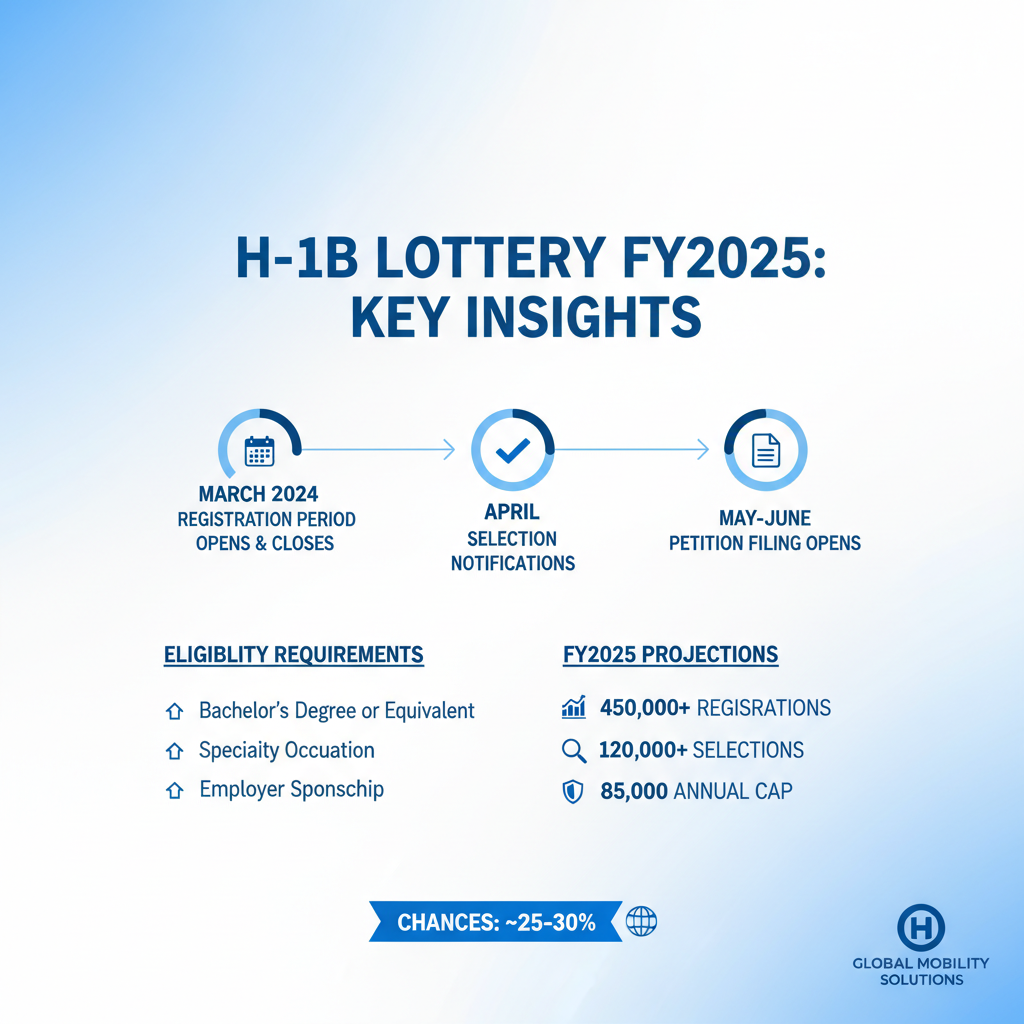
This comprehensive guide is informed by recent developments and announcements regarding the H-1B visa program, including new rules affecting H-1B visa applications, as reported by various legal news outlets. For more information, you can refer to the broader discussion on these changes:
H-1B Visa Lottery Changes for FY2027 (Legal News)
What This News Means for Immigrants in Orlando and Across Florida
The H-1B visa program is a lifeline for many U.S. employers seeking highly skilled foreign professionals and for individuals looking to contribute their expertise to the American economy. Florida, with its booming tech sector, robust healthcare industry, and burgeoning aerospace and tourism enterprises, is a significant hub for H-1B visa holders. Changes to the lottery system, therefore, have a direct and profound impact on our community.
Why this news is showing up now
USCIS typically announces significant policy changes and operational updates well in advance of the annual H-1B cap season. As of March 15, 2026, the focus is squarely on the upcoming FY2027 H-1B Cap season. These announcements are crucial because they dictate the rules for the electronic registration process, which usually opens in early March of the calendar year preceding the fiscal year for which the visas are being sought (e.g., March 2026 for FY2027). The recent news reflects USCIS's continued efforts to streamline the process, combat fraud, and ensure fairness, particularly by implementing a beneficiary-centric selection process that was initially introduced for FY2025 and is now a permanent fixture.
How it can affect Florida residents
For individuals residing in Orlando, across Central Florida, and throughout the Sunshine State, these H-1B changes carry substantial implications:
- Increased Fairness for Beneficiaries: The shift to a beneficiary-centric selection model means that each unique beneficiary will only have one chance in the lottery, regardless of how many employers register them. This is a significant positive for legitimate candidates, as it dramatically reduces the advantage gained by fraudulent multiple registrations from various related employers. For those in Orlando's tech corridor or working in healthcare in South Florida, this could mean a fairer shot at selection.
- Reduced Fraud and Abuse: By making it harder for unscrupulous employers to game the system with multiple registrations for the same individual, the integrity of the H-1B program is strengthened. This benefits legitimate employers and employees in Florida by ensuring that the limited number of visas goes to truly qualified candidates.
- Strategic Employer Engagement: Florida employers, from startups in Tampa to established corporations in Miami, will need to be more strategic in their H-1B sponsorship. They must ensure their registrations are legitimate and that they have a genuine job offer for a specialty occupation.
- Impact on Local Talent Pools: Universities like the University of Central Florida (UCF) in Orlando, the University of Florida (UF) in Gainesville, and Florida International University (FIU) in Miami graduate thousands of international students annually who often seek H-1B visas. These changes directly affect their post-graduation employment prospects and their ability to stay and contribute to Florida's economy.
- Heightened Scrutiny: USCIS's focus on program integrity means that all H-1B petitions, especially those from new or less-established employers, might face increased scrutiny. This underscores the importance of meticulously prepared applications and strong legal representation for Florida businesses and their prospective employees.
Understanding these shifts is the first step toward successful navigation. Imigrar is here to provide the clarity and support you need.
What H-1B Visa Lottery Changes for FY2027 Is (and Why It Matters)
The H-1B visa program allows U.S. employers to temporarily employ foreign workers in specialty occupations. These occupations generally require a bachelor's degree or higher in a specific field. Due to overwhelming demand, the number of H-1B visas available each fiscal year is capped by Congress, necessitating a lottery system.
A plain-English definition
Imagine a highly competitive job market where there are far more qualified applicants than available positions. The H-1B visa is like one of those coveted positions, allowing a U.S. company to hire a skilled foreign professional for a specific job. Because there's a limit to how many H-1B visas are issued each year (currently 85,000, including 20,000 for those with a U.S. master's degree or higher), USCIS conducts a "lottery" if the demand exceeds the supply. The recent "changes" primarily refer to how this lottery is conducted, specifically moving from an employer-centric to a beneficiary-centric selection process. This means that instead of each employer registration having a separate chance, each individual person (beneficiary) now only gets one chance in the lottery, regardless of how many different employers registered them.
Important: These changes aim to make the lottery fairer and reduce the incentive for fraudulent multiple registrations for the same individual by related companies.
Key terms you need to know
Navigating the H-1B process requires familiarity with specific terminology:
- H-1B Visa: A nonimmigrant visa that allows U.S. employers to temporarily employ foreign workers in specialty occupations.
- Specialty Occupation: An occupation that requires theoretical and practical application of a body of highly specialized knowledge, and a bachelor's or higher degree in the specific specialty (or its equivalent) as a minimum for entry into the occupation in the United States.
- Cap-Subject H-1B: Refers to H-1B petitions that are subject to the annual statutory cap (limit) set by Congress. Most H-1B petitions fall under this category.
- Cap-Exempt H-1B: Certain employers are exempt from the annual cap, such as institutions of higher education, non-profit organizations affiliated with higher education, and government research organizations.
- Beneficiary: The foreign national worker whom the employer intends to hire.
- Petitioner: The U.S. employer filing the H-1B petition on behalf of the beneficiary.
- H-1B Registration: The initial electronic process where prospective petitioners (employers) register a beneficiary for the H-1B lottery. This requires a small fee.
- Registration Period: The specific window of time (usually in March) when employers can submit H-1B registrations for the upcoming fiscal year. For FY2027, this is expected to be in March 2026.
- Lottery Selection: The random selection process conducted by USCIS if the number of eligible registrations exceeds the annual cap.
- Selection Notice: A notification from USCIS informing a petitioner that their registration for a specific beneficiary has been selected in the lottery.
- Petition Filing Window: The period during which selected petitioners can file a full H-1B petition (Form I-129) with USCIS.
- Beneficiary-Centric Selection: The new rule for the lottery where each unique beneficiary is entered into the lottery only once, regardless of how many employers submit registrations on their behalf. If selected, USCIS will notify all employers who registered that beneficiary.
- Duplicate Filings (under new rule): While multiple employers can register the same beneficiary, USCIS will now identify unique beneficiaries and select them only once. An employer cannot submit multiple registrations for the *same* beneficiary.
- Fraud Deterrence: USCIS has increased its efforts to detect and deter fraud, including site visits and investigations into suspicious registrations or petitions.
Need Help? Our Orlando immigration team is ready to assist. Call +1 786-791-3106 for a free consultation, or message us online. Se Habla Español.
Current Immigration Law: The Foundation
The H-1B visa program is rooted in federal immigration law, primarily the Immigration and Nationality Act (INA). Specific provisions govern its requirements, limitations, and administration.
Federal requirements
The statutory basis for the H-1B nonimmigrant classification is found in INA § 101(a)(15)(H)(i)(b), and the cap is established under INA § 214(g). Key federal requirements include:
- Specialty Occupation: The job offered must meet the definition of a specialty occupation, typically requiring a bachelor's degree or its equivalent in a specific field.
- Beneficiary Qualifications: The foreign national must possess the required degree or its equivalent, or hold an unrestricted state license, or have experience equivalent to a bachelor's degree in the specialty occupation field.
- Employer-Employee Relationship: A valid employer-employee relationship must exist between the petitioning U.S. employer and the H-1B beneficiary. This is a critical area of scrutiny for USCIS, especially for third-party placement models.
- Labor Condition Application (LCA): Before filing an H-1B petition, the employer must obtain a certified LCA from the U.S. Department of Labor (DOL). The LCA attests that the employer will pay the H-1B worker at least the prevailing wage for the occupation in the area of employment or the actual wage paid to other employees with similar experience and qualifications, whichever is higher, and will provide working conditions that will not adversely affect other workers.
- Numerical Cap: As mentioned, there is an annual cap of 65,000 H-1B visas, with an additional 20,000 reserved for those with a U.S. master's degree or higher. This cap is why the lottery is necessary.
- Period of Stay: H-1B status is generally granted for an initial period of up to three years and can be extended for a maximum total of six years.
For official guidance and forms, always refer to the USCIS official website.
Florida-specific considerations
While immigration law is federal, its practical application often has local nuances. In Florida, particularly in innovation hubs like Orlando, Tampa, and Miami, the demand for H-1B visas is consistently high due to:
- Technology Sector Growth: Florida's tech industry, including aerospace, simulation, cybersecurity, and software development, particularly along the I-4 corridor (Orlando-Tampa), attracts significant H-1B talent.
- Healthcare Industry: Large hospital systems and research institutions across the state heavily rely on H-1B physicians, researchers, and other medical professionals.
- Tourism & Hospitality Management: While less common for the H-1B, certain specialized roles within large corporate structures in the tourism sector may qualify.
- Educational Institutions: Florida's universities and colleges often sponsor H-1B visas for professors, researchers, and specialized staff, who are generally cap-exempt.
Employers in Orlando and other Florida cities seeking to sponsor H-1B workers must ensure they comply not only with federal immigration regulations but also with Florida's business and employment laws. This includes adhering to state-specific licensing requirements for certain professions, which can be critical for establishing a specialty occupation. The Florida Department of Economic Opportunity (now FloridaCommerce) provides valuable data on prevailing wages and labor market information relevant to LCA filings.
USCIS Forms: The primary form for an H-1B petition is Form I-129, Petition for a Nonimmigrant Worker. Other forms potentially involved include Form I-907, Request for Premium Processing Service, and if the beneficiary is already in the U.S. and seeking to change their status, Form I-539, Application to Extend/Change Nonimmigrant Status, or Form I-485, Application to Register Permanent Residence or Adjust Status (if applicable in the long term).
How to Navigate the H-1B Visa Lottery Changes for FY2027: A Complete Step-by-Step Guide
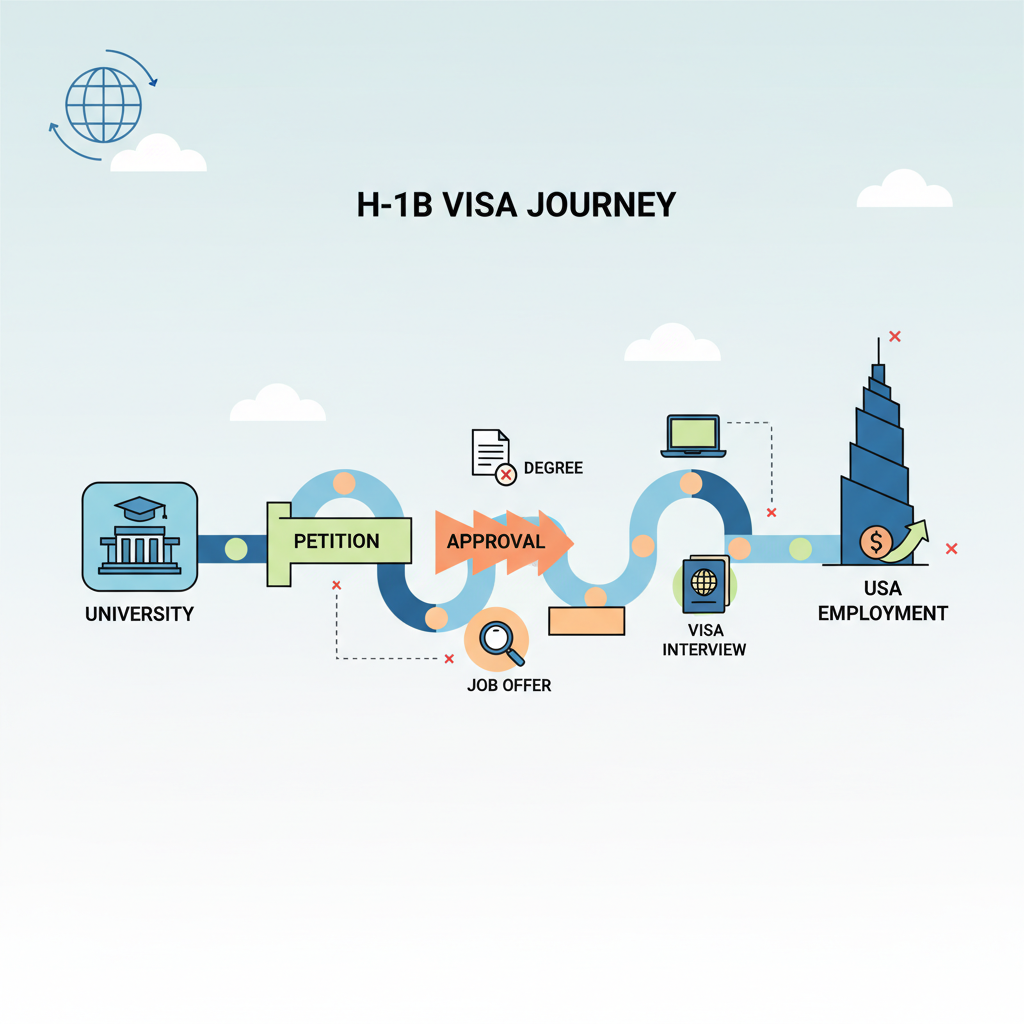
The H-1B lottery process, particularly with the new beneficiary-centric selection, demands meticulous planning and execution. Here’s a detailed guide for employers and beneficiaries.
1) Understand the New Rules & Confirm Eligibility
Before anything else, both the employer and the beneficiary must understand the new beneficiary-centric selection process and confirm their eligibility.
- For Beneficiaries: Ensure you have at least one valid job offer from a U.S. employer in a specialty occupation. Do not rely on multiple registrations from potentially fraudulent employers. Understand that you, the individual, will only have one chance in the lottery, regardless of how many different legitimate employers register you.
- For Employers: Verify that the position offered genuinely qualifies as a specialty occupation and that you meet all H-1B petitioner requirements. Confirm a bona fide employer-employee relationship exists.
- Action: Review the latest USCIS announcements and regulations regarding the FY2027 H-1B cap. Consult with an experienced immigration attorney to confirm eligibility and strategy.
- Required Documents (for initial assessment):
- Beneficiary’s resume/CV
- Beneficiary’s educational degrees and transcripts (evaluated if from foreign institutions)
- Beneficiary’s professional licenses (if applicable)
- Job description for the offered position
- Employer's EIN (Employer Identification Number)
2) Employer-Sponsor Identification & H-1B Job Offer
The process begins with a U.S. employer offering a job in a specialty occupation to a foreign national.
- Action: The employer formally extends a job offer detailing the position, salary, and responsibilities. The salary offered must meet or exceed the prevailing wage for that occupation in the specific geographic area (e.g., Orlando-Kissimmee-Sanford MSA).
- Required Documents:
- Formal job offer letter
- Detailed job description, including duties, responsibilities, and minimum educational/experience requirements.
3) H-1B Registration Process
This is the first critical step for cap-subject H-1B visas and where the lottery selection occurs. The registration period for FY2027 is expected to be in March 2026.
- Action: The petitioning employer (or their authorized representative) creates a USCIS online account and submits an electronic registration for each prospective H-1B beneficiary. For FY2027, the registration fee is expected to be $10 per registration. The employer must provide beneficiary information (name, date of birth, country of birth, passport number, highest degree, etc.) and basic employer information.
- Important: Under the new rules, if a beneficiary has multiple registrations from different employers, USCIS will consolidate these and enter the beneficiary only once into the lottery. If selected, all employers who registered that beneficiary will be notified. This is a key fraud prevention measure.
- Required Information for Registration:
- Employer’s legal name, address, and EIN
- Employer’s authorized signatory information
- Beneficiary’s full legal name, date of birth, country of birth, country of citizenship
- Beneficiary’s gender
- Beneficiary’s passport number
- Beneficiary’s highest level of education
- Whether the beneficiary has a U.S. master’s degree or higher (for master’s cap eligibility)
4) Lottery Selection & Petition Filing
If USCIS receives more registrations than available visas, a lottery is conducted. Selections are typically announced by the end of March.
- Action (if selected): If a registration is selected, USCIS will notify the petitioning employer(s) through their online account. The employer then has a specific filing window (usually 90 days, from April 1 to June 30) to submit the full H-1B petition (Form I-129) with all supporting documentation.
- Warning: Only selected registrations are eligible to file the Form I-129. Filing based on an unselected registration will result in denial.
- Required Documents (for Form I-129 petition, if selected):
- Certified Labor Condition Application (LCA) from DOL
- Form I-129, Petition for a Nonimmigrant Worker
- Employer's support letter detailing the job, beneficiary's qualifications, and why the position is a specialty occupation
- Beneficiary's educational documents (degrees, transcripts, evaluations)
- Beneficiary's resume/CV
- Copies of beneficiary's passport, visa, I-94 record (if applicable)
- Employer's federal tax ID number (EIN)
- Evidence of the employer's ability to pay the proffered wage
- Client letter (if beneficiary will work at a third-party site)
- Organizational charts, company brochures, and other evidence to establish a valid employer-employee relationship.
- Filing fees (Form I-129 fee, ACWIA fee, fraud prevention and detection fee, public law 114-113 fee if applicable).
5) Premium Processing (Optional)
For an additional fee, petitioners can opt for expedited processing of their H-1B petition.
- Action: If eligible and desired, the employer can file Form I-907, Request for Premium Processing Service, along with the required fee ($2,805 as of FY2024, subject to change). This guarantees USCIS action (approval, denial, Request for Evidence, or Notice of Intent to Deny) within 15 calendar days.
- Reminder: Premium processing only expedites the petition's adjudication; it does not increase the chances of lottery selection.
6) Petition Adjudication & Visa Stamping/Change of Status
USCIS reviews the filed H-1B petition.
- Action (if approved):
- For beneficiaries outside the U.S.: USCIS sends an approval notice (Form I-797). The beneficiary then applies for an H-1B visa stamp at a U.S. consulate or embassy abroad. This involves a visa interview.
- For beneficiaries inside the U.S. (Change of Status): If the beneficiary is already in the U.S. in a valid nonimmigrant status (e.g., F-1 OPT) and requested a change of status to H-1B, their status automatically changes on October 1st (the start of the fiscal year) if the petition is approved.
- Required Documents (for visa stamping):
- Original Form I-797 approval notice
- DS-160 confirmation page
- Visa interview appointment confirmation
- Valid passport
- Passport-style photographs
- Copies of educational and professional documents
- Employer's support letter and LCA copy
- Proof of ties to home country (if applicable)
7) Post-Approval & Compliance
After approval, ongoing compliance is crucial.
- Action: H-1B workers must begin employment as specified in the petition. Employers must comply with all LCA attestations, including paying the prevailing wage and maintaining appropriate working conditions. Any material changes to employment (e.g., job duties, work location, salary) may require an amended H-1B petition.
- Important: USCIS conducts site visits to H-1B employers, including those in Orlando and across Florida, to verify information provided in petitions.
Need Help? Our Orlando immigration team is ready to assist. Call +1 786-791-3106 for a free consultation, or message us online. Se Habla Español.
Practical Steps You Can Take Today
Proactive preparation is key to navigating the H-1B lottery, especially with the FY2027 changes. Here’s an actionable checklist:
- Verify Beneficiary Eligibility: Ensure the foreign national meets the educational and experiential requirements for a specialty occupation. Gather all academic transcripts and degree certificates. If degrees are from foreign institutions, obtain a professional credential evaluation.
- Employer Readiness Assessment: Employers should confirm their ability to meet the H-1B wage requirements and verify the job position qualifies as a specialty occupation. Prepare a detailed job description.
- Document Gathering & Organization: Start collecting all necessary documents for both the employer and beneficiary well in advance. This includes company financials, beneficiary's passport, visa, I-94, resume, and educational documents.
- Consult with Legal Counsel: Engage an experienced immigration attorney from Imigrar early in the process. We can help assess eligibility, strategize the application, prepare the LCA, and manage the registration and petition filing. This is especially critical with the new beneficiary-centric rules and increased fraud scrutiny.
- Understand Timelines: Familiarize yourself with the expected H-1B cap season timeline for FY2027. The registration period is typically in March (2026), lottery results in late March, and petition filing from April 1st. Missing these deadlines can mean a year-long wait.
- Fraud Prevention Awareness: Be wary of any third parties promising guaranteed H-1B selection or asking for payment directly from the beneficiary for registration. The registration fee is minimal, and the process is managed by the employer.
- Maintain Current Status: If you are a beneficiary currently in the U.S. (e.g., on F-1 OPT), ensure your nonimmigrant status is maintained throughout the H-1B process.
Document preparation guidance
Meticulous document preparation is crucial. Organize all documents clearly, ensuring they are legible and complete. For foreign documents, provide certified English translations. For educational credentials, include professional evaluations if degrees are from outside the U.S. Always keep copies of everything submitted.
Timeline expectations (based on historical patterns for FY2027)
- Early 2026 (Jan-Feb): Employers and beneficiaries prepare, gather documents, and consult with attorneys.
- March 2026: H-1B electronic registration period opens (typically early March, for a 2-3 week window). Employers submit registrations.
- Late March 2026: USCIS conducts the lottery (if needed) and announces selection results.
- April 1, 2026 – June 30, 2026: Selected petitioners file full H-1B petitions (Form I-129) with supporting documents.
- October 1, 2026: The start of Fiscal Year 2027. Approved H-1B petitions become effective. For beneficiaries in the U.S. whose change of status was approved, their H-1B status begins. For those abroad, they can enter the U.S. on their new H-1B visa.
- Throughout 2026-2027: USCIS adjudicates petitions, potentially issuing Requests for Evidence (RFEs).
How Imigrar Helps Immigrants in Orlando Navigate H-1B Changes
The H-1B visa process, especially with the evolving rules for FY2027, is complex and fraught with potential pitfalls. At Imigrar, we understand the stakes involved for individuals and families in Orlando, Central Florida, and nationwide.
Our experience and expertise
Our team of dedicated immigration attorneys has extensive experience with the H-1B program. We stay abreast of the latest USCIS regulations, policy changes, and adjudication trends, including the nuances of the beneficiary-centric selection process. We assist both employers and beneficiaries with:
- Eligibility Assessment: Thoroughly evaluating whether the position and beneficiary meet H-1B requirements.
- Strategic Planning:


