


The landscape of U.S. immigration law is constantly evolving, and for those aspiring to work in specialty occupations in the United States, few updates are as critical as changes to the H-1B visa lottery system. As we look towards the Fiscal Year 2027 (FY2027) H-1B cap season, new regulations have been implemented by U.S. Citizenship and Immigration Services (USCIS) that fundamentally alter how the lottery will be conducted. These changes, effective for the upcoming registration period, aim to enhance fairness, deter fraud, and ensure that every eligible beneficiary has an equal chance.
At Imigrar, an immigration law firm based in Orlando, Florida, our mission is to "Keep Families Together" by providing expert, compassionate legal guidance. We understand the profound impact these changes can have on individuals, families, and businesses across Orlando, Central Florida, and nationwide. This comprehensive guide will break down the new H-1B lottery rules for FY2027, explain what they mean for you, and outline the steps you can take to navigate this complex process successfully.
Navigating the New H-1B Lottery Rules? Don't go it alone. Our experienced Orlando immigration team is here to help you understand the changes and prepare your strongest case. Call +1 786-791-3106 for a free consultation, or message us online. Se Habla Español.
The reporting that sparked this guide:

H-1B Visa Lottery Changes for FY2027 (Legal News)
What This News Means for Immigrants in Orlando and Across Florida
The H-1B visa program is a lifeline for many skilled professionals seeking opportunities in the U.S. and for American businesses seeking top talent. Florida, with its booming tech, tourism, healthcare, and aerospace industries, is a significant hub for H-1B workers. The recent changes to the lottery system are a direct response to past challenges, particularly the issue of fraud and multiple registrations that skewed the lottery results.
Why this news is showing up now
For years, the H-1B cap-subject lottery has been oversubscribed, meaning far more registrations were submitted than available visas. This led to intense competition and, unfortunately, instances where employers would submit multiple registrations for the same beneficiary through various companies, artificially inflating their chances of selection. This practice, while not explicitly illegal under previous rules, was widely perceived as unfair and undermined the integrity of the lottery system. USCIS, under its authority to manage immigration benefits, has implemented these changes to rectify these issues, ensuring a fairer and more transparent process for the upcoming FY2027 lottery and beyond. The agency announced these changes to provide ample notice before the next registration period, typically in March of each year.
How it can affect Florida residents
Florida's economy is diverse and growing, attracting talent in various specialty occupations. From the tech corridor along I-4 in Orlando, connecting to Tampa, to the healthcare systems across the state, and the burgeoning space industry on the Space Coast, H-1B visas are crucial for filling high-skilled roles. For Florida residents currently on other visa types (like F-1 OPT) or those abroad hoping to work in the Sunshine State, these changes bring both challenges and opportunities:
- Increased Fairness: If you are a legitimate candidate with a sponsoring employer, the new rules mean your chances are no longer diminished by fraudulent multiple entries. This levels the playing field.
- Employer Responsibility: Florida employers who rely on H-1B talent must now be meticulously compliant with the new rules, ensuring they only submit one registration per beneficiary.
- Reduced Uncertainty (Potentially): While the lottery remains unpredictable, the elimination of widespread fraud could lead to more predictable selection rates for legitimate candidates, though demand will likely remain high.
- Focus on Beneficiary: The shift to a beneficiary-centric selection means that if you are selected, that selection is tied to you, not a specific employer. This could offer some flexibility, though a valid petition from a sponsoring employer is still required.
For those living in Orlando, whether you are an international student graduating from UCF or Rollins, or a professional working for a tech company in Lake Nona, understanding these changes is paramount. The Orlando USCIS Field Office primarily handles interviews for petitions that require in-person appearances, but the initial H-1B process is managed centrally by USCIS.
What the H-1B Visa Is (and Why It Matters)
The H-1B visa program is a cornerstone of U.S. nonimmigrant work visas, designed to allow U.S. employers to temporarily employ foreign workers in specialty occupations. It's a critical pathway for skilled international professionals to contribute to the American economy and for U.S. companies to access global talent.
A plain-English definition
An H-1B visa is a temporary (nonimmigrant) visa that permits U.S. employers to hire foreign workers in "specialty occupations." A specialty occupation is generally defined as an occupation that requires a theoretical and practical application of a body of highly specialized knowledge, and a bachelor's degree or higher in a specific field (or its equivalent) as a minimum for entry into the occupation. Common examples include roles in IT, engineering, medicine, science, architecture, and certain business specializations.
The H-1B visa is typically granted for an initial period of three years and can be extended for up to a maximum of six years. In some circumstances, it can be extended beyond six years, especially if the H-1B holder is on the path to obtaining a Green Card.
Key terms you need to know
Navigating the H-1B process requires familiarity with specific terminology. Here are some essential terms:
- USCIS: U.S. Citizenship and Immigration Services, the federal agency responsible for administering immigration and naturalization benefits. USCIS official website
- LCA (Labor Condition Application): Form ETA-9035, certified by the U.S. Department of Labor (DOL), which attests that the employer will pay the H-1B worker at least the prevailing wage for the occupation in the area of employment and will provide working conditions that will not adversely affect other workers.
- Petitioner: The U.S. employer who files the H-1B petition on behalf of the foreign worker.
- Beneficiary: The foreign worker who is the subject of the H-1B petition.
- Cap-Subject H-1B: Refers to H-1B petitions that are subject to the annual statutory cap of 65,000 visas, plus an additional 20,000 for those with U.S. master's degrees or higher. Most H-1B petitions fall under this category and must go through the lottery.
- Cap-Exempt H-1B: Certain employers are exempt from the annual cap. These typically include institutions of higher education, non-profit organizations affiliated with institutions of higher education, and non-profit research organizations or governmental research organizations. These petitions do not need to participate in the lottery.
- Master's Cap: The additional 20,000 visas reserved for beneficiaries who have earned a U.S. master's degree or higher. These are typically selected first in the lottery.
- H-1B Lottery (or Cap Lottery): The random selection process conducted by USCIS when the number of eligible H-1B registrations exceeds the annual cap. This is where the new rules are most impactful.
- Registration Period: The designated window during which employers (or their attorneys) must electronically register prospective H-1B beneficiaries with USCIS for the annual lottery. This usually occurs in March.
- Petition Period: The window following lottery selection during which selected petitioners can file their full Form I-129, Petition for a Nonimmigrant Worker.
- Specialty Occupation: As defined above, an occupation requiring a specific bachelor's degree or its equivalent.
Current Immigration Law: The Foundation of the H-1B Program
The H-1B program is rooted in federal immigration law, primarily the Immigration and Nationality Act (INA). Understanding these legal underpinnings is crucial for appreciating the significance of the recent changes.
Federal requirements
The H-1B visa category is defined under Section 101(a)(15)(H)(i)(b) of the Immigration and Nationality Act (INA). Further regulations governing the H-1B program are found at 8 CFR 214.2(h). Key federal requirements include:
- Specialty Occupation: The job must meet the definition of a specialty occupation, meaning it requires a bachelor's degree or higher in a specific field.
- Educational/Experiential Qualifications: The beneficiary must possess the required degree or its equivalent in work experience (three years of experience can often be substituted for one year of college education, known as the "3-for-1 rule").
- Employer-Employee Relationship: A valid employer-employee relationship must exist between the petitioner and the beneficiary. The employer must have the right to control the work of the beneficiary.
- Prevailing Wage: The employer must pay the H-1B worker at least the prevailing wage for the occupation in the area of intended employment, or the actual wage paid to other employees with similar experience and qualifications, whichever is higher. This is attested to in the Labor Condition Application (LCA), Form ETA-9035, certified by the U.S. Department of Labor.
- Cap-Subject vs. Cap-Exempt: As discussed, most H-1B petitions are subject to the annual cap and lottery. Certain employers (universities, affiliated non-profits, government research organizations) are cap-exempt.
The recent changes primarily affect the lottery selection process for cap-subject petitions, not the fundamental eligibility criteria or the statutory cap itself. The goal is to enforce the "one beneficiary, one chance" principle within the lottery.
Florida-specific considerations
While immigration law is federal, the practical implications vary by state and local economy. Florida's vibrant job market means a high demand for H-1B visas:
- Tech Hubs: Cities like Orlando, Tampa, and Miami are growing tech hubs, attracting software engineers, data scientists, and IT professionals. Companies in these areas frequently sponsor H-1B visas.
- Healthcare Industry: Florida has a significant demand for healthcare professionals, including medical technologists, physical therapists, and nurses (though nurses often qualify under other visa categories, some specialized nursing roles might fit H-1B).
- Tourism and Hospitality: While many roles in tourism do not qualify as specialty occupations, certain management, marketing, or IT positions within large hospitality corporations in Orlando and other tourist destinations might.
- Education: Florida's numerous universities and colleges, such as the University of Central Florida (UCF) in Orlando, Florida State University, and the University of Florida, often sponsor H-1B visas for researchers and professors, which are typically cap-exempt.
For Central Florida residents, particularly those in Orange County and surrounding areas, the competition for H-1B visas can be intense due to the concentration of employers in Orlando. It is crucial to have a strong, well-prepared petition to stand out.
Reminder: All required forms, such as Form I-129 (Petition for a Nonimmigrant Worker), Form G-28 (Notice of Entry of Appearance as Attorney or Accredited Representative), and others, must be completed accurately and submitted according to USCIS guidelines. You can find all official forms and instructions on the USCIS Forms page.
Confused by the H-1B forms and requirements? Imigrar's legal team can streamline your application process. Contact us at +1 786-791-3106 for a free consultation. Se Habla Español.
How to Navigate the H-1B Visa Lottery Changes for FY2027: A Complete Step-by-Step Guide
The H-1B cap lottery process is complex, and the new rules add another layer of consideration. This guide focuses on the beneficiary-centric selection process for FY2027.
1) Employer Evaluation and LCA Filing
Before any lottery registration can occur, the prospective employer must determine if the position qualifies as a specialty occupation and if they meet the requirements to sponsor an H-1B worker. This includes ensuring the job requires a bachelor's degree or higher in a specific field and that the employer can pay the prevailing wage.
- Employer Actions:
- Determine if the position is a specialty occupation.
- Obtain a certified Labor Condition Application (LCA), Form ETA-9035, from the U.S. Department of Labor (DOL). This typically takes 7 business days. The LCA attests to prevailing wage and working conditions.
- Required Documents (for LCA):
- Job description and duties.
- Employer's Federal Employer Identification Number (FEIN).
- Information on the proposed wage, work location, and occupational classification.
2) H-1B Registration Period (New Process)
This is where the most significant changes for FY2027 take effect. USCIS has shifted to a "beneficiary-centric" selection process.
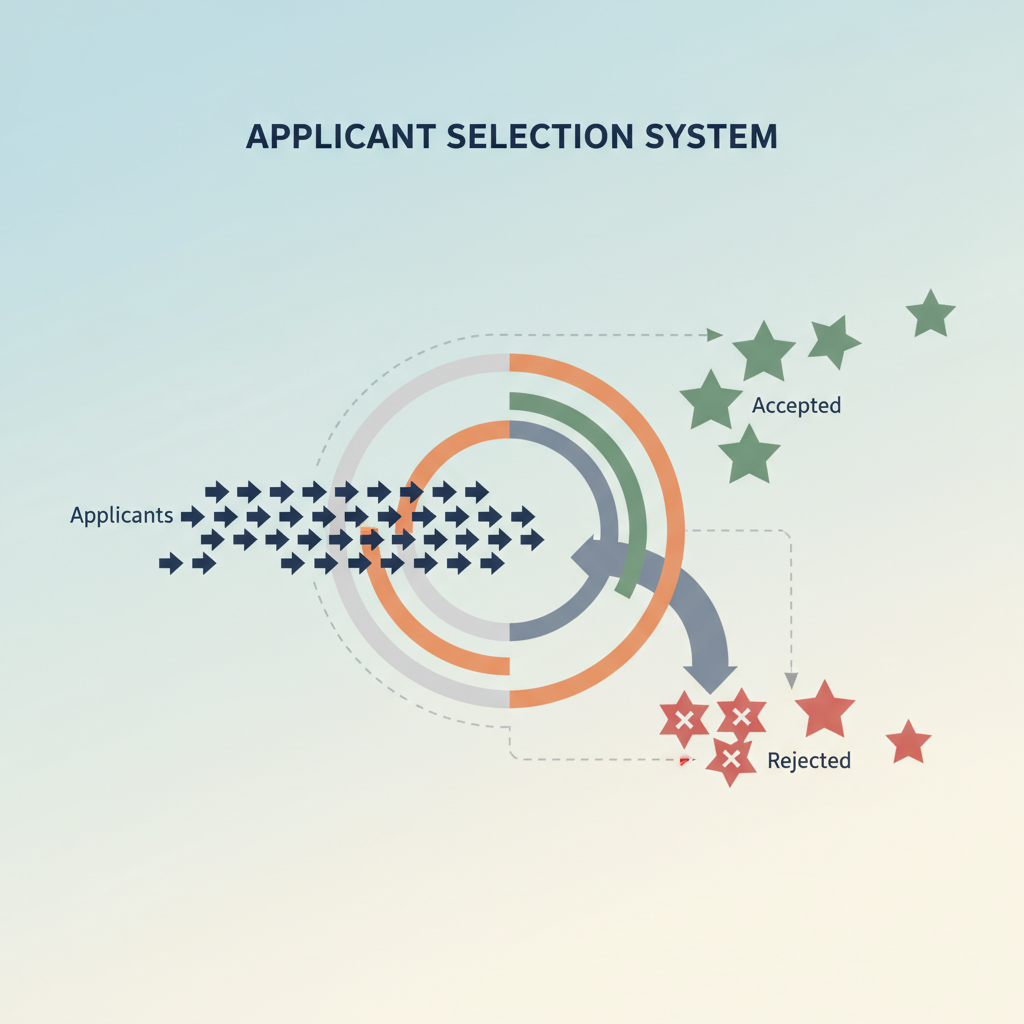
- Key Change: Instead of employers registering, the registration is now tied directly to the beneficiary. Each unique beneficiary can only have one registration submitted on their behalf in a given fiscal year, regardless of how many different employers wish to sponsor them. If multiple registrations are submitted for the same beneficiary, all registrations for that beneficiary will be deemed invalid.
- Who Registers: The prospective employer (or their authorized representative/attorney) must submit the electronic registration on behalf of the beneficiary.
- Registration Fee: The non-refundable fee for each registration is $10.
- Timeline: Typically, the registration period opens in early March and lasts for approximately two to three weeks. For FY2027, this is expected to be March 2026.
- Beneficiary Information: The registration requires the beneficiary's full legal name, date of birth, country of birth, country of citizenship, passport number, and whether they hold a U.S. master's or higher degree.
- Required Documents (for Registration – typically provided by beneficiary to employer/attorney):
- Copy of beneficiary's passport.
- Evidence of highest educational degree (e.g., U.S. Master's degree transcript/diploma for master's cap).
Important: Under the new rules, if a beneficiary has multiple job offers, each prospective employer can still submit a registration for that beneficiary. However, USCIS will consolidate these multiple registrations for the same beneficiary into a single entry for the lottery selection. If that single entry is selected, it will be up to the beneficiary and the employers to decide which employer will proceed with filing the H-1B petition. This dramatically reduces the incentive for fraudulent multiple registrations.
3) Lottery Selection and Notification
Once the registration period closes, USCIS conducts the lottery. The selection process is random and typically starts with the Master's Cap, followed by the Regular Cap.
- Selection Process: USCIS will conduct the lottery based on the unique beneficiary. If a beneficiary is selected, all employers who registered that beneficiary will be notified.
- Notification: USCIS typically announces the lottery results a few days after the registration period closes, usually by the end of March. Employers (and their attorneys) will be notified through their USCIS online accounts. Each selected registration will receive a selection notice.
- What Happens Next: Only employers whose registrations were selected for a particular beneficiary can proceed to file an H-1B petition for that beneficiary.
4) Petition Filing (Form I-129)
If a registration is selected, the employer can then file the full H-1B petition with USCIS. This is a crucial step that requires meticulous attention to detail.
- Form: The employer files Form I-129, Petition for a Nonimmigrant Worker, along with all supporting documentation.
- Filing Window: USCIS provides a specific 90-day window for filing the H-1B petition after selection notification. It is critical to file within this period.
- Supporting Documents (examples – this list is not exhaustive and varies by case):
- Certified LCA (Form ETA-9035).
- Copy of the H-1B registration selection notice.
- Beneficiary's educational documents (degrees, transcripts, evaluations of foreign degrees).
- Beneficiary's resume and letters of experience.
- Job offer letter and detailed job description.
- Employer's business documents (e.g., articles of incorporation, financial statements, tax returns, business licenses).
- Organizational charts, client contracts (for IT consulting firms).
- Evidence of a valid employer-employee relationship.
- Beneficiary's passport, visa, and I-94 records.
- Any other documents proving the specialty occupation nature of the job and the beneficiary's qualifications.
- Fees: Various fees are associated with filing Form I-129, including the base filing fee, ACWIA fee, Fraud Prevention and Detection fee, and (for certain employers) Public Law 114-113 fee.
Warning: The petition must be filed by the employer whose registration was selected. If multiple employers registered the same beneficiary and that beneficiary was selected, only one of those employers can proceed to file the petition.
5) Premium Processing (Optional)
For an additional fee, employers can opt for premium processing to expedite the adjudication of the H-1B petition.
- Form: Form I-907, Request for Premium Processing Service.
- Fee: The current fee for premium processing is $2,805 (as of FY2027).
- Benefit: USCIS guarantees a processing time of 15 calendar days for petitions filed with premium processing. If they fail to meet this deadline, they will refund the premium processing fee.
Important: Premium processing only speeds up the USCIS decision; it does not guarantee approval. It also does not apply to the lottery registration phase.
6) USCIS Decision and Next Steps
After filing, USCIS will review the petition and make a decision.
- Approval: If approved, USCIS will issue an Approval Notice (Form I-797). If the beneficiary is already in the U.S. and eligible for a change of status, the I-797 will include an I-94 reflecting the new H-1B status, effective October 1st (for cap-subject petitions).
- Request for Evidence (RFE): USCIS may issue an RFE if they require more information or clarification. Responding to an RFE accurately and promptly is critical.
- Denial: If denied, USCIS will provide a reason. This typically means the beneficiary cannot work under H-1B status.
- Change of Status vs. Consular Processing:
- Change of Status (COS): If the beneficiary is already in the U.S. on a different nonimmigrant visa (e.g., F-1 OPT), and their H-1B is approved, their status automatically changes on October 1st.
- Consular Processing: If the beneficiary is outside the U.S. or chooses to leave and re-enter, they must attend a visa interview at a U.S. embassy or consulate abroad to obtain the H-1B visa stamp in their passport.
7) Visa Interview (Consular Processing - If Applicable)
For those undergoing consular processing, an interview at a U.S. embassy or consulate is required.
- Scheduling: After petition approval, the National Visa Center (NVC) will process the case and forward it to the designated embassy/consulate. The beneficiary will schedule an interview.
- Required Documents (for interview – examples):
- Valid passport.
- Form I-797 (H-1B Approval Notice).
- DS-160 confirmation page.
- Visa interview appointment confirmation.
- Original educational documents and work experience letters.
- Job offer letter and LCA.
- Employer's supporting documents (often a copy of the I-129 petition packet).
- Proof of ties to home country.
- Passport-style photos.
- Interview: The consular officer will review the application and conduct an interview to determine eligibility and intent.
Practical Steps You Can Take Today to Prepare for the H-1B Lottery
Proactive preparation is key, especially with the new rules for FY2027. Here's a checklist of actionable steps:
- Verify Your Eligibility: Ensure your educational background (bachelor's degree or higher in a specialty field) and work experience align with H-1B requirements.
- Identify Sponsoring Employers: Start networking and applying for jobs with companies known to sponsor H-1B visas, particularly in Orlando or other relevant Florida locations.
- Gather Essential Personal Documents:
- Valid passport (ensure it has at least 6 months validity beyond your intended H-1B stay).
- Birth certificate.
- Educational degrees, transcripts, and any professional licenses. Obtain official copies and certified translations if necessary.
- Resume/CV detailing work experience.
- Letters of recommendation or employment verification.
- Prior U.S. visa documents (e.g., F-1, OPT EAD cards, I-20s, I-94 records).
- Understand the New Rules Thoroughly: Familiarize yourself with the beneficiary-centric lottery and the implications of having multiple employers register for you. Communicate this understanding to potential employers.
- Consult with an Experienced Immigration Attorney: This is arguably the most crucial step. An attorney can assess your specific situation, advise potential employers, and ensure all filings are compliant with the latest regulations.
- Prepare for Potential RFEs: Even with a strong initial petition, RFEs are common. Having additional supporting documents ready (e.g., detailed job duties, project descriptions, supervisor letters) can save time if an RFE is issued.
- Stay Informed: Regularly check the USCIS official website for updates and announcements regarding the H-1B program and specific lottery dates.
Document preparation guidance
- Accuracy is Paramount: Ensure all information on documents matches your passport exactly. Discrepancies can lead to RFEs or denials.
- Certified Translations: Any document not in English must be accompanied by a complete and accurate English translation, certified by the translator as competent to translate and that the translation is accurate.
- Organize and Digitize: Keep all original documents safe. Create digital copies of everything, organized logically, for easy access and submission.
Timeline expectations
The H-1B process, especially with the lottery, is lengthy. Here’s a general timeline:
- January-February: Employers prepare LCAs and gather beneficiary information.
- Early March: H-1B electronic registration window opens (approx. 2-3 weeks).
- Late March: USCIS conducts the lottery and announces selections.
- April 1 - June 30: Selected employers file Form I-129 petitions (the 90-day window).
- June-September: USCIS adjudicates petitions. Premium processing can shorten this. Check USCIS Processing Times for current estimates.
- October 1: Earliest effective date for approved H


