


The landscape of U.S. immigration is constantly evolving, and for those seeking to work in specialty occupations, few changes are as impactful as those affecting the H-1B visa program. As we look towards the H-1B Cap Lottery for Fiscal Year 2027 (FY2027), significant updates are reshaping how employers and beneficiaries approach this highly competitive process. At Imigrar, your trusted immigration law firm in Orlando, Florida, we are committed to keeping you informed and prepared.
Our mission, "Keep Families Together," extends to ensuring that skilled professionals can pursue their careers in the U.S. legally and efficiently. With the latest news regarding the H-1B lottery, understanding the nuances of these changes is more critical than ever.
The reporting that sparked this guide
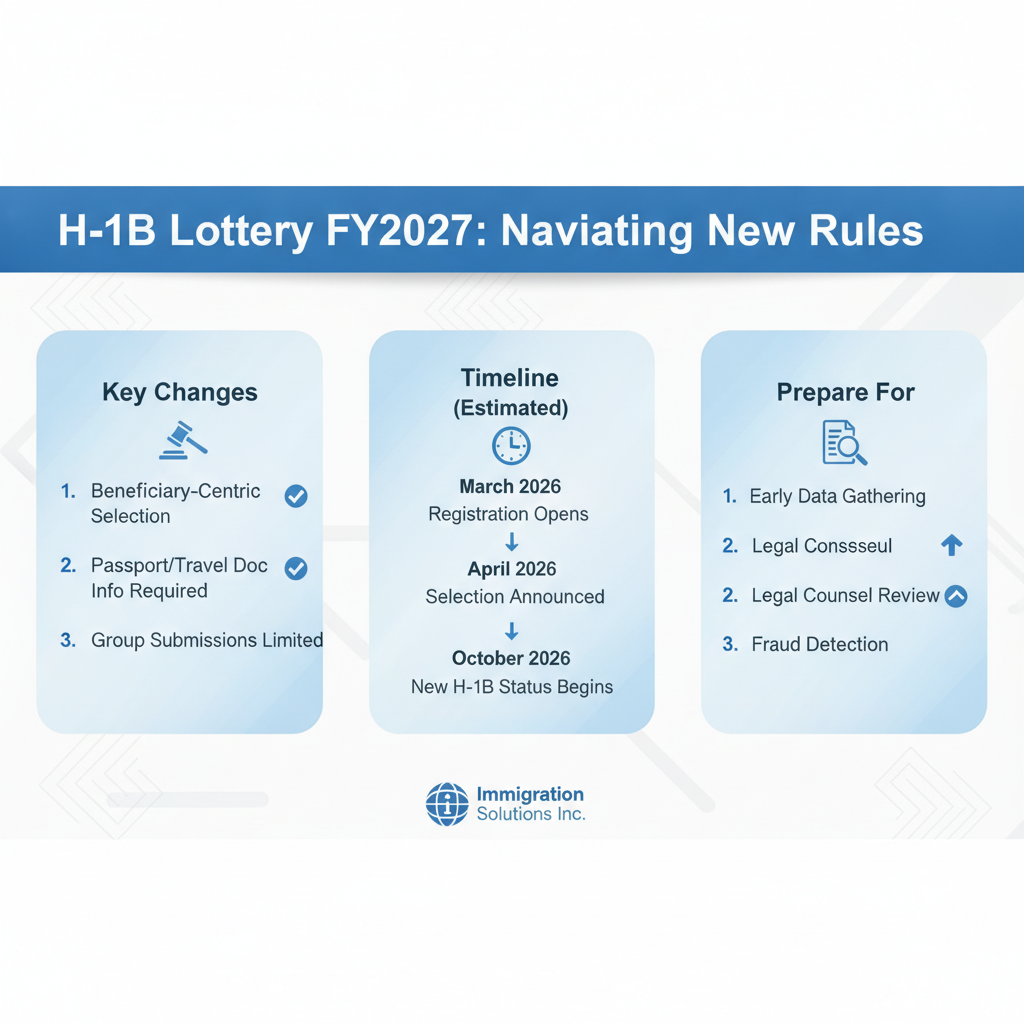
What This News Means for Immigrants in Orlando and Across Florida
The H-1B visa program is a cornerstone for many highly skilled foreign professionals seeking to work in the United States, particularly in specialty occupations. For the upcoming FY2027 lottery, significant rule changes are in effect, directly impacting how registrations are submitted and selected. This news isn't just a regulatory update; it's a fundamental shift designed to enhance the integrity of the lottery process and create a fairer playing field for all eligible candidates.
Why this news is showing up now
The changes for the H-1B lottery, particularly the move to a beneficiary-centric selection process, are the culmination of years of observation and efforts by U.S. Citizenship and Immigration Services (USCIS) to combat widespread fraud. In past lottery cycles, USCIS identified a concerning trend where multiple companies, often related or working in concert, would submit numerous H-1B registrations for the same individual. This practice artificially inflated the chances of a particular beneficiary being selected, effectively sidelining other equally or more qualified candidates and undermining the integrity of the lottery system.
While discussions and initial rule adjustments began for earlier fiscal years, the full implementation and enforcement framework for the beneficiary-centric model are now firmly in place for FY2027. This ensures that the system is more robust and less susceptible to manipulation. USCIS is continually refining its processes to ensure transparency and fairness, and this latest iteration for FY2027 reflects their commitment to a merit-based selection process. The goal is clear: ensure that each unique beneficiary has an equal, single chance in the lottery, regardless of how many employers are interested in sponsoring them.
This news is therefore not just a fleeting headline but a confirmation of a sustained effort to reform the H-1B program, making it more equitable and aligned with its original intent of bringing highly skilled talent to the U.S. economy.
How it can affect Florida residents
Florida, especially the Greater Orlando area, is a hub for innovation, technology, tourism, healthcare, and engineering. Companies along the I-4 corridor, from tech startups in Orlando's Lake Nona Medical City to aerospace firms on the Space Coast, heavily rely on H-1B visas to fill critical specialty occupation roles. For Central Florida residents, these changes carry significant implications:
- Increased Fairness for Genuine Candidates: If you are a highly skilled professional residing in Florida or looking to come here for work, and you have legitimate job offers from employers, the new beneficiary-centric system means your chances of selection are now based solely on your unique entry, not on how many companies registered you. This levels the playing field against fraudulent multi-registrations.
- Employer Due Diligence: Florida employers, particularly those in Orange County and surrounding areas, must be more diligent than ever in their H-1B registration process. They need to ensure their processes are compliant with the new rules to avoid potential audits or even criminal investigations by USCIS. For businesses in Orlando and across Florida, ensuring a genuine employer-employee relationship is paramount.
- Focus on Quality over Quantity: For both beneficiaries and employers, the emphasis shifts from trying to "game" the system to ensuring that the job offer, the candidate's qualifications, and the employer's needs genuinely align with the H-1B program's requirements. This means more robust petition preparation will be necessary from the outset.
- Impact on Tech and Healthcare Sectors: Florida's booming tech industry and expansive healthcare networks frequently sponsor H-1B workers. These sectors will particularly feel the effects of a fairer lottery, potentially leading to more stability for genuine job offers and less frustration from competitive applicants.
For those living or planning to live in Orlando, these changes underscore the importance of working with an experienced immigration attorney. Navigating these new rules correctly is crucial for a successful H-1B application.
Need Help? Our Orlando immigration team is ready to assist. Call +1 786-791-3106 for a free consultation, or message us online. Se Habla Español.
What H-1B Visa Lottery Changes for FY2027 Is (and Why It Matters)
The H-1B visa program is a non-immigrant visa category that allows U.S. employers to temporarily employ foreign workers in specialty occupations. These occupations generally require a bachelor's degree or higher in a specific specialty. Due to high demand, the number of H-1B petitions often exceeds the annual cap set by Congress, necessitating a lottery system to select eligible registrations.
A plain-English definition
Imagine a very popular concert where there are far more people who want tickets than there are seats available. To make it fair, a lottery is held. The H-1B visa is similar. Each year, the U.S. government allows a certain number of H-1B visas (the "cap"). Because many more employers want to hire foreign professionals than there are visas available, USCIS runs a lottery to decide which employers can move forward with their applications. The big change for FY2027 is *how* that lottery works.
Previously, an employer could submit a separate registration for each potential H-1B employee. If one person had job offers from three different companies, those three companies could each register that person, effectively giving that individual three chances in the lottery. This led to abuses where beneficiaries were registered by many companies, some of which might not have been legitimate, just to boost their chances.
The new rule for FY2027, known as the beneficiary-centric selection process, changes this fundamentally. Now, regardless of how many employers want to sponsor a single foreign professional, that professional (the "beneficiary") gets only *one* entry in the lottery. USCIS will identify unique beneficiaries based on their passport information. If that unique beneficiary is selected, then any employer who registered them can proceed with filing a full H-1B petition. This means the lottery is fairer, focusing on the individual's qualifications rather than the number of registrations submitted on their behalf.
Key terms you need to know
Navigating the H-1B process requires understanding specific terminology. Here are the key terms relevant to the FY2027 changes:
- H-1B Visa: A non-immigrant visa that permits U.S. employers to temporarily employ foreign workers in specialty occupations.
- USCIS (U.S. Citizenship and Immigration Services): The government agency responsible for administering immigration and naturalization benefits. This is the primary agency you'll interact with for H-1B petitions. (USCIS official website)
- Beneficiary: The foreign national who is seeking the H-1B visa (the employee).
- Petitioner: The U.S. employer who is sponsoring the foreign national for the H-1B visa.
- H-1B Cap: The annual numerical limit on the number of H-1B visas issued. Congress currently sets this at 65,000 for the regular cap and an additional 20,000 for those with a U.S. master's degree or higher (the Master's Cap exemption).
- H-1B Lottery (Selection Process): The computer-generated random selection process USCIS conducts when the number of eligible registrations exceeds the annual cap.
- Registration Period: The designated timeframe, typically in March, during which employers must electronically register their prospective H-1B beneficiaries with USCIS. For FY2027, this would have occurred in March 2026.
- Beneficiary-Centric Selection: The new rule for FY2027 where the lottery selection is based on unique beneficiaries, not on the number of registrations submitted by various employers. Each unique beneficiary is entered into the lottery once.
- Employer-Employee Relationship: A critical requirement for H-1B visas, meaning the employer must have the right to control the work of the beneficiary. This is key to proving a legitimate job offer.
- Specialty Occupation: An occupation that requires theoretical and practical application of a body of highly specialized knowledge, and a bachelor's degree or higher in the specific specialty (or its equivalent) as a minimum for entry into the occupation in the U.S.
- LCA (Labor Condition Application): Form ETA-9035, which is filed with the U.S. Department of Labor (DOL) by the employer. It attests that the employer will pay the H-1B worker the prevailing wage or actual wage, whichever is higher, and will provide working conditions that will not adversely affect other workers. This must be certified before filing the H-1B petition.
Understanding these terms is vital for anyone involved in the H-1B process for FY2027 and beyond. The shift to a beneficiary-centric model is particularly important, as it redefines the strategy for both employers and potential H-1B workers.
Current Immigration Law: The Foundation of the H-1B Program
The H-1B visa program is governed by specific sections of the Immigration and Nationality Act (INA) and federal regulations. Understanding these legal underpinnings is crucial for ensuring compliance and a successful application.
Federal requirements
The authority for the H-1B non-immigrant classification stems primarily from Section 101(a)(15)(H)(i)(b) of the Immigration and Nationality Act (INA). The numerical limitations (the cap) are established under INA Section 214(g). Further regulations governing the H-1B program are detailed in 8 CFR Part 214.2(h).
Key federal requirements for an H-1B petition include:
- Specialty Occupation: The job offered must qualify as a specialty occupation. This means it requires a theoretical and practical application of a body of highly specialized knowledge, and a bachelor's degree or higher in the specific specialty (or its equivalent) as a minimum for entry into the occupation in the U.S.
- Beneficiary Qualifications: The beneficiary must meet the minimum educational and/or licensure requirements for the specialty occupation. This typically means holding a U.S. bachelor's or higher degree, a foreign equivalent degree, or a state license in the specialty.
- Employer Attestations (LCA): The employer must file a Labor Condition Application (Form ETA-9035) with the Department of Labor (DOL), attesting that:
- They will pay the H-1B worker at least the prevailing wage for the occupation in the area of employment or the actual wage paid to other employees with similar experience and qualifications, whichever is higher.
- Working conditions will not adversely affect other workers.
- There is no strike or lockout at the place of employment.
- They have provided notice of the LCA filing to their employees.
- Employer-Employee Relationship: USCIS scrutinizes the relationship to ensure a bona fide employer-employee relationship exists. The employer must have the right to control the work of the H-1B beneficiary.
- Cap and Lottery System: As discussed, the annual cap (65,000 regular, 20,000 Master's) necessitates a lottery when demand exceeds supply. The beneficiary-centric selection process for FY2027 is the latest iteration of how this lottery is conducted.
All H-1B petitions are filed using Form I-129, Petition for a Nonimmigrant Worker, along with extensive supporting documentation. USCIS Forms are regularly updated, so always ensure you are using the latest version.
Florida-specific considerations
While H-1B laws are federal, their impact and practical application vary by region. Florida's dynamic economy presents unique considerations:
- High Demand in Specific Industries: Orlando, Tampa, Miami, and other major Florida cities have strong demand for H-1B workers in sectors like information technology, hospitality management, healthcare, aerospace engineering, and finance. This means competition for cap-subject visas remains high among employers in the state.
- Prevailing Wage Levels: Prevailing wages are determined by geographic area. For employers in Orlando or other parts of Florida, ensuring compliance with local prevailing wage determinations from the DOL is critical. Wages in Central Florida might differ significantly from those in other regions of the U.S.
- Local USCIS Field Office: While H-1B petitions are generally processed at USCIS service centers, the Orlando USCIS Field Office handles certain interviews or requests for information if a beneficiary is adjusting status or has other immigration matters. However, for initial H-1B petitions, the process is largely centralized.
- Talent Pool: Florida boasts several large universities, such as the University of Central Florida (UCF) in Orlando, the University of Florida, and Florida International University, which produce a steady stream of graduates who may be eligible for H-1B visas. This contributes to a robust local talent pool, but also to the demand for H-1B sponsorship from local employers.
Understanding both federal regulations and how they intersect with Florida's economic and demographic landscape is key to a successful H-1B strategy.
How to Navigate the H-1B Cap Lottery for FY2027: A Complete Step-by-Step Guide
The H-1B cap lottery process is intricate and requires meticulous attention to detail and strict adherence to deadlines. With the new beneficiary-centric selection process for FY2027, strategic planning is more important than ever. Here is a comprehensive step-by-step guide:
1) Employer Determines Need and Eligibility
The process begins with the U.S. employer identifying a business need for a foreign worker in a specialty occupation. The employer must determine if the position qualifies as a specialty occupation and if the prospective employee (beneficiary) meets the educational and experience requirements.
- Action: The employer defines the job duties, minimum educational requirements, and salary for the position. They should also perform an initial check of prevailing wage data for the occupation in the specific geographic area (e.g., Orlando, Florida).
- Required Documents (Initial Internal Review):
- Detailed job description, including duties, responsibilities, and minimum qualifications.
- Beneficiary's resume/CV and educational credentials (degrees, transcripts, evaluations of foreign degrees).
- Proposed salary information.
2) File the Labor Condition Application (LCA) (Form ETA-9035)
Before an H-1B petition can be filed with USCIS, the employer must obtain a certified Labor Condition Application (Form ETA-9035) from the U.S. Department of Labor (DOL). The LCA contains attestations regarding wages and working conditions.
- Action: The employer (or their attorney) electronically files Form ETA-9035 with the DOL. The DOL typically processes and certifies LCAs within 7 business days. This step is critical and must be completed before the H-1B registration or petition filing.
- Required Documents:
- Completed Form ETA-9035.
- Documentation supporting the prevailing wage determination (e.g., from DOL's Foreign Labor Certification Data Center, private wage surveys).
- Employer's Federal Employer Identification Number (FEIN).
3) H-1B Registration Period (March 2026 for FY2027)
This is where the new beneficiary-centric selection rule for FY2027 comes into play. Employers must register each unique beneficiary electronically with USCIS during the designated registration period, typically in March of the calendar year preceding the fiscal year (e.g., March 2026 for FY2027). Each unique beneficiary will only be entered into the lottery once, even if multiple employers submit registrations on their behalf.
- Action: The employer creates a USCIS online account and submits the electronic registration for each prospective H-1B beneficiary. A $10 fee is required per registration. USCIS requires the beneficiary's passport information for identification purposes to ensure uniqueness.
- Required Documents (for Registration):
- Beneficiary's full legal name, date of birth, country of birth, country of citizenship, and passport number.
- Employer's legal name, FEIN, and U.S. mailing address.
- Authorized signatory's name and title.
4) Lottery Selection and Notification
After the registration period closes, USCIS conducts the random lottery selection. USCIS first selects enough registrations to meet the Master's Cap, then selects from the remaining pool for the regular cap. For FY2027, the beneficiary-centric method ensures fairness.
- Action: USCIS performs the lottery. Employers whose registrations are selected will receive a selection notice through their USCIS online accounts. Notifications are typically issued by the end of March.
- Required Documents:
- Form I-797C, Notice of Action (Selection Notice). This notice is crucial as it permits the employer to proceed with filing the full H-1B petition.
5) Prepare and File Form I-129 H-1B Petition
If a registration is selected, the employer must prepare and file a complete H-1B petition (Form I-129


