


The landscape of U.S. work visas is constantly evolving, and few areas see more change and competition than the annual H-1B visa lottery. For Fiscal Year 2027 (FY2027), significant new rules have been implemented by U.S. Citizenship and Immigration Services (USCIS), profoundly impacting how employers can sponsor foreign workers and how beneficiaries are selected. Understanding these changes is critical for anyone hoping to secure an H-1B visa, especially those in Orlando and across Florida's dynamic job market.
The reporting that sparked this guide
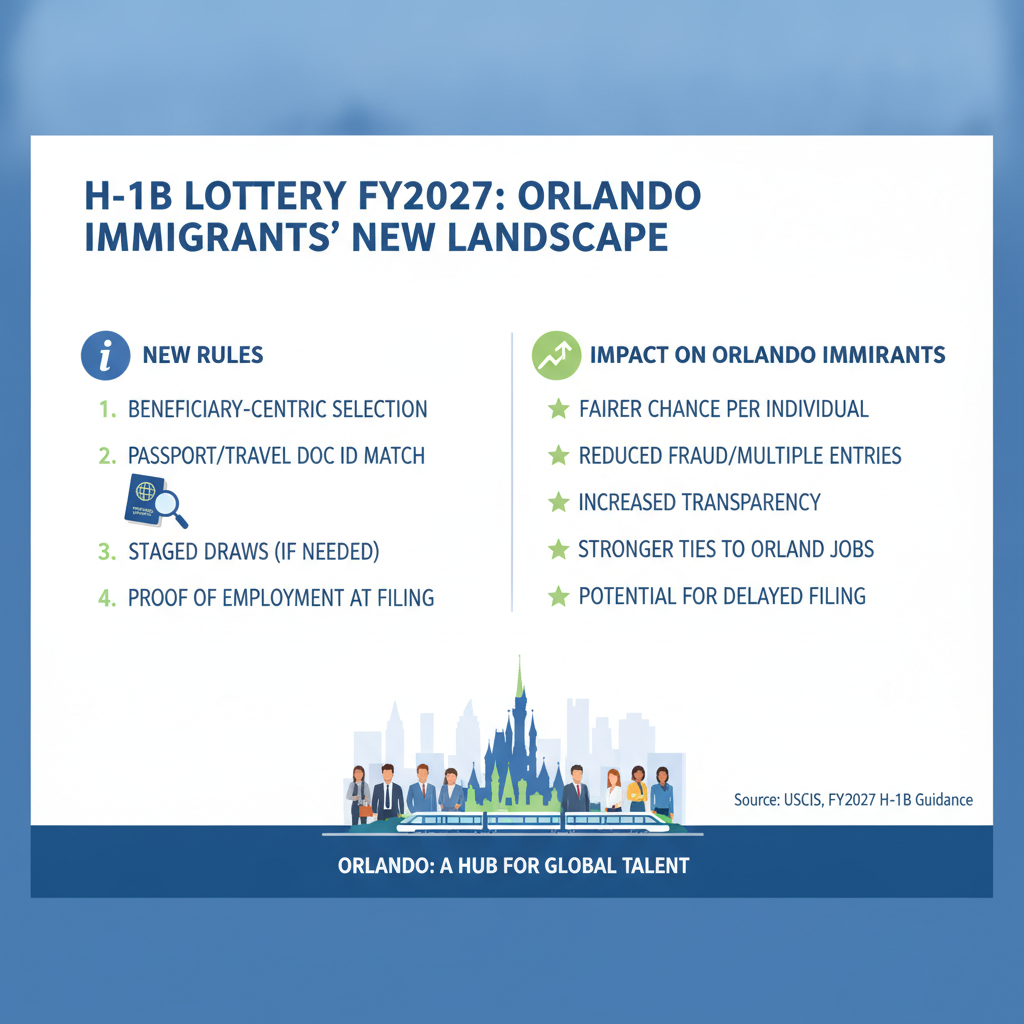
This comprehensive guide is built upon the latest developments and insights reported in legal and immigration news, particularly concerning the H-1B visa lottery changes for FY2027. The ongoing discussions and finalized regulations from USCIS have underscored the need for clear, actionable information for immigrants and their employers. We encourage you to review official sources for further details:
What This News Means for Immigrants in Orlando and Across Florida
The recent changes to the H-1B visa lottery system for FY2027 represent a pivotal shift in how highly skilled foreign workers gain opportunities in the U.S. This isn't just bureaucratic red tape; it's a fundamental alteration designed to ensure fairness and integrity in a highly competitive process. For individuals and businesses throughout Florida, these updates have direct and significant implications.
Why this news is showing up now
The news regarding H-1B visa lottery changes for FY2027 is prominent now because USCIS has finalized and implemented new regulations aimed at reforming the lottery system. While the registration period for FY2027 (which typically occurs in March of the preceding calendar year, i.e., March 2026 for FY2027) has already concluded, the impact of these new rules is still very much in play. The primary driver for these changes was a pressing need to combat fraud and enhance the fairness of the lottery, particularly addressing concerns where multiple employers submitted registrations for the same individual, artificially inflating their chances of selection. The rules, largely established through a final rule published in early 2024, came into full effect for the FY2025 lottery and are now the established framework for FY2027 and beyond. This ongoing discussion reflects continuous updates, clarifications, and the real-world impact observed by USCIS, immigration attorneys, and the affected population.
How it can affect Florida residents
Florida, especially the Orlando metropolitan area, is a hub for technology, tourism, healthcare, and aerospace industries—sectors that heavily rely on skilled foreign talent often sponsored through the H-1B visa program. Here's how these changes directly affect residents:
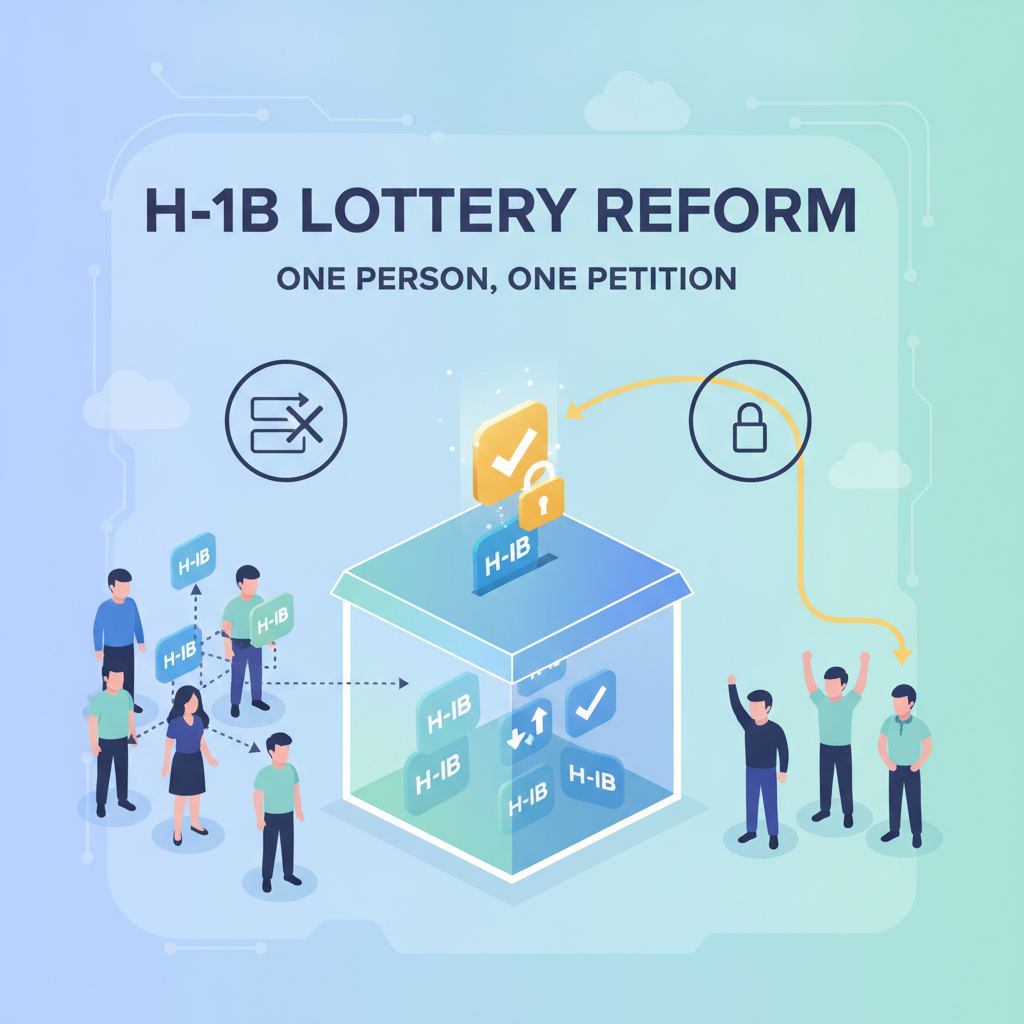
- Increased Fairness for Beneficiaries: The most significant change is the shift to a beneficiary-centric selection process. This means that each unique individual (beneficiary) is entered into the lottery only once, regardless of how many employers submit registrations on their behalf. For hopeful immigrants living in Orlando or studying in Florida universities, this means that their chances of selection are no longer diluted or unfairly skewed by others submitting multiple registrations. It levels the playing field, making the lottery more equitable for genuine job candidates.
- Impact on Employers: For Florida-based companies, from tech startups in Winter Park to aerospace firms along the I-4 corridor, this change means they can no longer strategize by having multiple related entities submit registrations for the same candidate. Employers must now focus on submitting one strong, legitimate registration per candidate. This reduces administrative burden related to managing multiple registrations for the same person but increases the importance of a single, compliant filing.
- Focus on Legitimate Job Offers: The new rules emphasize that the registration must be based on a legitimate job offer. USCIS has enhanced its ability to detect and deter fraud, including site visits and investigations into suspicious patterns. This protects the integrity of the program and ensures that the limited number of H-1B visas goes to individuals filling real specialty occupation roles in Florida.
- Reduced "Lottery Fatigue": While the lottery remains highly competitive, the beneficiary-centric approach aims to reduce the frustration caused by the perception of widespread fraud. This can lead to a more transparent and less anxiety-inducing process for those genuinely seeking to work in Florida.
- Heightened Scrutiny: With increased integrity measures, all applications, especially those originating from specific geographic areas or involving certain types of employers that have historically shown high registration volumes, might face heightened scrutiny. This makes thorough preparation and experienced legal counsel, like Imigrar, even more vital for Orlando applicants.
For Central Florida residents and businesses, these changes underscore the importance of precision, honesty, and expert guidance when navigating the H-1B visa process. The goal is to ensure that the process serves its intended purpose: bringing highly skilled talent to the U.S. to fill critical roles and contribute to our economy.
Need Help Navigating H-1B Changes? Our Orlando immigration team at Imigrar specializes in work visas and is ready to assist you. Call +1 786-791-3106 for a free consultation to understand how these updates impact your situation, or message us online. Se Habla Español.
What H-1B Visa Lottery Changes for FY2027 Is (and Why It Matters)
The H-1B visa program is a cornerstone of U.S. immigration policy, designed to allow U.S. employers to temporarily employ foreign workers in specialty occupations. These are occupations that require a theoretical and practical application of a body of highly specialized knowledge and a bachelor's degree or higher in a specific specialty (or its equivalent) as a minimum for entry into the occupation.
A plain-English definition
Imagine a highly skilled professional, like a software engineer, a data scientist, a doctor, or an architect, who wants to work in the U.S. for a specific company. The H-1B visa is the main way for that to happen. However, there's a yearly limit (a "cap") on how many new H-1B visas can be issued. Because demand almost always far exceeds this limit, USCIS uses a lottery system to select who gets to apply. The "H-1B Visa Lottery Changes for FY2027" refers to new rules that USCIS has put in place to make this lottery fairer and prevent fraud, primarily by changing how individuals are entered into the lottery process. Instead of an employer registering a person, the person themselves is now the unique entry point, regardless of how many companies want to hire them.
Key terms you need to know
- H-1B Visa: A nonimmigrant visa that allows U.S. employers to temporarily employ foreign workers in specialty occupations.
- Specialty Occupation: An occupation that requires a bachelor's degree or higher in a specific field (or its equivalent). Examples include IT professionals, engineers, doctors, professors, and financial analysts.
- Cap-Subject H-1B: Most H-1B visas are subject to an annual numerical limit (cap). Currently, this is 65,000 visas per fiscal year, plus an additional 20,000 for those with a U.S. master's degree or higher (the "master's cap"). Certain employers (like universities or non-profits affiliated with universities) are "cap-exempt."
- Fiscal Year (FY): The U.S. government's fiscal year runs from October 1 to September 30. FY2027 begins on October 1, 2026.
- H-1B Registration Process: An electronic process where prospective petitioners (employers) submit basic information about the company and the prospective employee (beneficiary) to USCIS during a designated period. This is the entry into the lottery.
- Beneficiary-Centric Selection: The core of the new changes. This means that selection in the lottery is now based on each unique beneficiary, rather than on each registration. If a beneficiary has multiple registrations submitted on their behalf by different employers, they are still only entered into the lottery once. This aims to prevent individuals from gaining an unfair advantage through multiple entries.
- Lottery: The random selection process USCIS uses when the number of eligible registrations exceeds the annual cap.
- Employer Identification Number (EIN): A unique nine-digit number assigned by the IRS to business entities for tax purposes. Essential for employers to register.
- LCA (Labor Condition Application): Form ETA-9035. An application filed with the Department of Labor (DOL) by an employer seeking to hire an H-1B worker. It attests that the employer will pay the H-1B worker at least the prevailing wage or the actual wage paid to similarly employed workers, whichever is higher, and provide working conditions that will not adversely affect the working conditions of U.S. workers.
- Form I-129, Petition for a Nonimmigrant Worker: The primary form an employer files with USCIS to petition for an H-1B worker after a successful lottery selection.
The significance of these changes lies in their direct impact on fairness and integrity. By implementing a beneficiary-centric selection, USCIS intends to curb fraudulent practices where multiple related companies or individuals conspired to submit numerous registrations for the same person, effectively "gaming" the system. This ensures that every eligible individual has an equal and fair chance, making the lottery more transparent and equitable for the genuine talent Florida companies seek to employ.
Current Immigration Law: The Foundation
The H-1B visa program is rooted in federal immigration law, primarily established by the Immigration and Nationality Act (INA). Understanding these statutory foundations is crucial for grasping the requirements and limitations of the program.
The H-1B visa category was created by the Immigration Act of 1990 (Public Law 101-649). Its statutory basis can be found in Section 101(a)(15)(H)(i)(b) of the Immigration and Nationality Act (INA), codified as 8 U.S.C. § 1101(a)(15)(H)(i)(b). This section defines a nonimmigrant H-1B as an alien who is coming temporarily to the United States to perform services in a specialty occupation.
The annual numerical limits (caps) for H-1B visas are specified in Section 214(g) of the INA, codified as 8 U.S.C. § 1184(g). This section outlines the general annual cap of 65,000 and the additional 20,000 for beneficiaries with U.S. master's degrees or higher.
Federal requirements
To qualify for an H-1B visa, both the employer (petitioner) and the foreign worker (beneficiary) must meet specific federal requirements:
- For the Employer:
- Must have a valid Employer Identification Number (EIN).
- Must offer a job in a specialty occupation.
- Must pay the H-1B worker at least the prevailing wage for the occupation in the area of intended employment, or the actual wage paid to other employees with similar experience and qualifications, whichever is higher. This is attested in the LCA (Form ETA-9035) filed with the Department of Labor.
- Must provide documentation showing the employment relationship, job duties, required qualifications, and terms of employment.
- For the Employee (Beneficiary):
- Must possess a bachelor's degree or its equivalent, or a license in a specialty occupation field, or work experience equivalent to a bachelor's degree.
- Must be qualified to perform services in the specialty occupation.
- Must meet the specific educational and experience requirements of the offered position.
The H-1B program is administered by USCIS, a component of the Department of Homeland Security (DHS). The Department of Labor (DOL) also plays a critical role in the LCA process. All official forms and detailed instructions can be found on the USCIS official website and Department of Labor (H-1B) websites.
Florida-specific considerations
While H-1B visa requirements are federal, certain aspects can have unique implications for Florida residents and businesses:
- High Demand in Key Sectors: Florida's growing tech, healthcare, aerospace, and hospitality industries contribute to a high demand for H-1B workers. This means competition for available visas can be particularly fierce for roles within these sectors in areas like Orlando, Tampa, and Miami.
- Prevailing Wage: The prevailing wage is determined by the geographic area of employment. For employers in Orlando, for instance, the prevailing wage for a software developer might differ from that in San Francisco or even other parts of Florida. Employers must ensure they are meeting the local prevailing wage requirements as determined by the DOL for their specific Orlando or Central Florida location.
- Orlando USCIS Field Office: While H-1B petitions are generally processed at specific USCIS service centers, if an H-1B worker is already in the U.S. and is seeking a change of status or has other immigration matters, the Orlando USCIS Field Office may be involved for interviews or certain filings. However, initial H-1B petitions are typically not adjudicated at local field offices.
- State Licensing: For certain professions in Florida (e.g., healthcare, engineering), state-specific professional licensing is required in addition to federal immigration requirements. An H-1B visa holder must meet these Florida state licensing standards to practice their profession lawfully within the state.
Navigating these federal and Florida-specific nuances requires careful attention to detail and expertise. Imigrar, located in Orlando, is uniquely positioned to assist clients throughout the state with these complex considerations.
Considering an H-1B Petition in Florida? Don't go it alone. Our attorneys understand the unique challenges and opportunities in Orlando and across the state. Contact Imigrar for a free consultation at +1 786-791-3106 or visit our contact page. Se Habla Español.
How to Navigate the H-1B Visa Lottery with New FY2027 Rules: A Complete Step-by-Step Guide
The H-1B visa process, particularly with the lottery, is intricate and demands precision. The FY2027 changes, especially the beneficiary-centric selection, have altered how employers and beneficiaries approach the initial steps. Here’s a detailed guide:
1) Understand Eligibility & Secure a Job Offer
Before anything else, both the employer and the prospective employee must confirm their eligibility. The employee must have a job offer from a U.S. employer that qualifies as a specialty occupation.
- Employer Requirements:
- Must be a U.S. employer with a valid EIN.
- Must offer a position that requires at least a bachelor's degree in a specific field.
- Must intend to pay the prevailing wage for the occupation in the specific geographic area (e.g., Orlando, FL).
- Beneficiary Requirements:
- Hold a U.S. bachelor's degree (or foreign equivalent), or a higher degree (U.S. master's or doctorate for the master's cap), or have a state license in a specialty occupation field, or possess work experience equivalent to a bachelor's degree.
- Be qualified to perform the duties of the offered specialty occupation.
Required Documents (for initial assessment):
- Beneficiary's academic transcripts and diplomas (translated and evaluated if foreign).
- Beneficiary's resume/CV detailing work experience.
- Detailed job description from the employer.
- Employer's EIN.
2) Employer Files the LCA (Form ETA-9035) with DOL
Once a qualified job offer is made, the employer must file a Labor Condition Application (LCA) with the U.S. Department of Labor (DOL). This step is crucial as it attests that the employer will comply with wage and working condition requirements for H-1B workers.
- The employer must attest to paying the higher of the actual wage or the prevailing wage.
- The LCA includes information about the job title, duties, wage rate, and location of employment (e.g., Orlando, FL).
- The DOL certifies the LCA, usually within 7 business days, provided there are no deficiencies.
Important: The LCA must be certified before an H-1B petition can be filed. The LCA posting requirement must also be met, notifying U.S. workers of the employer's intent to hire foreign workers.
Required Documents:
- Form ETA-9035 (Labor Condition Application).
- Prevailing Wage Determination (if obtained separately, though DOL determines it during LCA processing).
3) H-1B Electronic Registration for the Lottery
This is where the FY2027 changes are most prominent. Employers seeking to file cap-subject H-1B petitions (including those for the master's cap) must first electronically register the beneficiary with USCIS during a specific registration period (typically in March preceding the fiscal year). For FY2027, this registration period would have been in March 2026.
- Beneficiary-Centric: Each beneficiary is entered into the lottery only once, regardless of how many employers register on their behalf. USCIS uses the beneficiary's valid passport or travel document information to identify unique individuals.
- The employer pays a non-refundable $10 registration fee per beneficiary.
- Employers will provide basic information about their company and the beneficiary.
Warning: Submitting multiple registrations for the same beneficiary by related entities or attempting to circumvent the beneficiary-centric selection can lead to denial, revocation, or even criminal prosecution.
Required Information for Registration:
- Employer's legal name, EIN, and mailing address.
- Authorized signatory's name, title, and contact information.
- Beneficiary's full name, date of birth, country of birth, country of citizenship.
- Beneficiary's passport number or travel document number.
- Beneficiary's gender.
- Whether the beneficiary has a U.S. master's degree or higher.
- Attorney/representative information (if applicable).
4) Lottery Selection and Notification
After the registration period closes, USCIS conducts the lottery. If selected, USCIS notifies the registered petitioner (employer) through their USCIS online account. For FY2027, selections were typically announced by late March 2026.
- Selection Notice: If selected, the employer receives a selection notice that includes instructions and the specific filing period during which the H-1B petition can be filed.
- Important: Only employers with a valid selection notice for a specific beneficiary can file an H-1B petition for that beneficiary.
Timeline Expectation:
- Registration period: Typically early-to-mid March.
- Selection announcements: Usually by late March.
- Petition filing window: Typically April 1 to June 30 of the calendar year preceding the fiscal year (e.g., April 1 - June 30, 2026, for FY2027).
5) Filing the H-1B Petition (Form I-129)
Upon selection, the employer must prepare and file Form I-129, Petition for a Nonimmigrant Worker, along with all supporting documentation, within the designated filing window.
- Comprehensive Documentation: This includes the certified LCA, evidence of the beneficiary's qualifications, evidence that the job is a specialty occupation, company financial documents, and the USCIS filing fees.
- Filing Fees: Several fees apply, including the base filing fee, ACWIA fee, fraud prevention and detection fee, and (if applicable) a Public Law 114-113 fee. The registration fee is separate.
- Premium Processing: Employers may opt for Premium Processing (for an additional fee) to receive a decision within 15 calendar days. This can be crucial for time-sensitive cases.
Required Documents (for Form I-129 petition):
- Completed and signed Form I-129, Petition for a Nonimmigrant Worker.
- Certified LCA (Form ETA-9035).
- Copy of the H-1B registration selection notice.
- Beneficiary's educational documents (degrees, transcripts, evaluations).
- Beneficiary's resume and letters of experience.
- Beneficiary's passport copy, visa, I-94 record (if applicable).
- Employer's tax ID (EIN) and financial statements (tax returns, annual reports).
- Detailed support letter from the employer outlining the job, beneficiary's qualifications, and why it's a specialty occupation.
- Client letters/contracts (if a third-party worksite).
- Organizational charts.
- Filing fees.
6) Adjudication and Decision
USCIS reviews the petition. This process can take several months, unless Premium Processing is used.
- Request for Evidence (RFE): USCIS may issue an RFE if they need more information or clarification. Responding thoroughly and promptly is critical.
- Approval: If approved, USCIS sends an I-797 Approval Notice. If the beneficiary is already in the U.S. and eligible, their status may change to H-1B on October 1 (the start of the fiscal year).
- Consular Processing: If the beneficiary is outside the U.S., they will need to attend an interview at a U.S. consulate or embassy abroad to obtain their H-1B visa stamp.
Reminder: The earliest an approved cap-subject H-1B petition can take effect is October 1 of the fiscal year for which it was approved (e.g., October 1, 2026, for FY2027).
Practical Steps You Can Take Today
Even if the FY2027 lottery has concluded, there are always proactive steps to take, whether you're preparing for future lotteries, awaiting a decision, or planning for your H-1B journey in Orlando.
Actionable checklist:
- Review Your Credentials: Ensure all academic degrees, transcripts, and professional licenses are in order, translated, and evaluated (if foreign). Start this process early.
- Update Your Resume/CV: Keep your professional profile current and detailed, highlighting skills and experiences relevant to specialty occupations.
- Research Potential Employers: Identify Florida-based companies in Orlando, Tampa, or Miami that sponsor H-1B visas and align with your qualifications.
- Understand the Lottery Process: Familiarize yourself with the beneficiary-centric selection and USCIS requirements for future lotteries.
- Consult an Immigration Attorney: This is arguably the most crucial step. Seek expert advice from firms like Imigrar to assess your eligibility and plan your strategy.
- Gather Employer Information: If you are an employer, ensure your company's EIN and business details are accurate and readily available for the next registration cycle.
Document preparation guidance
Meticulous document preparation is key to a successful H-1B petition. Organize everything systematically:
- Educational Documents: Collect all diplomas, degrees, and transcripts. For foreign degrees, obtain a professional evaluation


