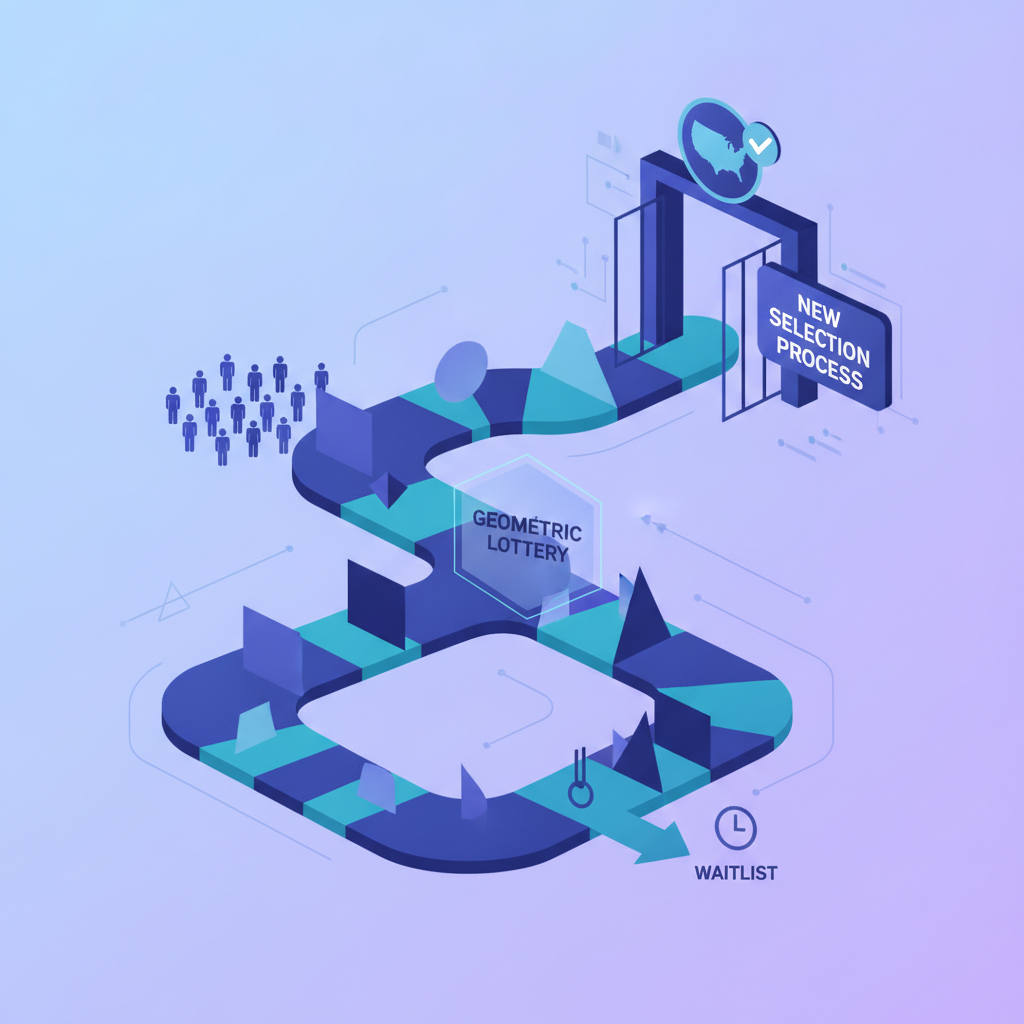
The reporting that sparked this guide: H-1B Visa Lottery Changes for FY2027 (Legal News)
What This News Means for Immigrants in Orlando and Across Florida
For many skilled professionals and U.S. employers, the H-1B visa is a critical pathway to opportunity and growth. This nonimmigrant visa allows U.S. employers to temporarily employ foreign workers in specialty occupations, demanding a bachelor's degree or higher in a specific field. Each year, demand vastly outstrips supply, leading to a lottery system to allocate the limited number of visas available. The news of significant changes to the H-1B Visa Lottery for Fiscal Year 2027 (FY2027) is therefore monumental, reshaping the landscape for thousands of hopeful applicants and their sponsoring companies.
Why this news is showing up now
The U.S. Citizenship and Immigration Services (USCIS) has been on a continuous mission to enhance the integrity of the H-1B lottery process and combat fraud. Following extensive review and public feedback, USCIS announced new final rules impacting the H-1B cap registration for FY2027. These changes, formally implemented for the FY2027 lottery cycle (which concluded its registration phase earlier this year, in March 2026, with petitions filed starting April 1, 2026, for an October 1, 2026 start date), represent a pivotal shift. The legal news outlets are now thoroughly analyzing the impact of these changes, reflecting on the completed lottery and preparing for future cycles, making this a trending topic. As of August 13, 2026, many employers and beneficiaries are either preparing to file petitions or are eagerly awaiting the outcomes of the FY2027 selections, making this a highly relevant discussion.
How it can affect Florida residents
Florida, particularly the Orlando metropolitan area and the I-4 corridor, is a hub for technology, aerospace, healthcare, and tourism – sectors that heavily rely on skilled foreign talent. Many companies in Orlando, Tampa, and Miami sponsor H-1B visas to bring in specialized professionals. The new H-1B lottery rules for FY2027 directly impact these businesses and the foreign nationals they seek to employ. For residents of Central Florida, this means:
- Increased Clarity and Fairness: The most significant change, the beneficiary-centric selection process, aims to reduce fraud by ensuring each unique beneficiary has only one chance in the lottery, regardless of how many employers register them. This levels the playing field for legitimate applicants.
- Employer Compliance: Florida employers must now be hyper-vigilant about compliance, ensuring their registration practices align with the new rules to avoid disqualification.
- Strategic Planning: Both employers and prospective H-1B beneficiaries in Orlando and across Florida need to understand the updated timelines, fee structures, and documentation requirements to prepare effectively for future cycles.
- Reduced Multiple Filings: While intended to curb fraud, this also means that if an individual was previously registered by multiple employers hoping to increase their chances, that strategy is no longer effective.
Understanding these changes is crucial for anyone involved in the H-1B process in the Sunshine State.
Need Help Navigating H-1B Changes? Our Orlando immigration team is ready to assist. Call +1 786-791-3106 for a free consultation, or message us online. Se Habla Español.
What H-1B Visa Lottery Changes for FY2027 Is (and Why It Matters)
The H-1B visa program is a cornerstone of U.S. immigration for highly skilled workers. However, its annual numerical cap (currently 65,000 for the regular cap and an additional 20,000 for the U.S. master's degree exemption, totaling 85,000) means that demand consistently outstrips supply, necessitating a lottery system. The changes for FY2027 are designed to address long-standing issues, primarily concerning fraud and the integrity of the lottery process.
A plain-English definition
The H-1B Visa Lottery Changes for FY2027 refer to new rules put in place by USCIS to modify how the annual H-1B cap lottery is conducted. The most significant of these changes, implemented for the FY2025 cycle and continuing for FY2027, is the shift from an "employer-centric" to a "beneficiary-centric" selection process. Previously, each employer could submit a registration for the same beneficiary, effectively giving that beneficiary multiple entries if multiple employers registered them. Under the new rules, selections are based on unique beneficiaries. If a beneficiary is registered by multiple employers, they still only get one "ticket" in the lottery. If selected, USCIS will notify all employers who registered that specific beneficiary, and any one of them can then file a petition. This aims to prevent fraud where individuals or companies would submit numerous registrations for the same person to unfairly increase their chances of selection.
Additionally, USCIS has increased certain fees associated with the H-1B process for FY2027, including the registration fee and the base petition filing fee. These adjustments are part of broader efforts to recover operational costs and modernize the immigration system.
Key terms you need to know
- H-1B Visa: A nonimmigrant visa that allows U.S. employers to temporarily employ foreign workers in specialty occupations.
- Specialty Occupation: An occupation that requires a theoretical and practical application of a body of highly specialized knowledge and a bachelor's or higher degree in the specific specialty (or its equivalent) as a minimum for entry into the occupation.
- Annual Cap: The statutory limit on the number of H-1B visas issued each fiscal year. Currently 65,000 for the regular cap and 20,000 for the master's cap.
- Fiscal Year (FY): The U.S. government's fiscal year runs from October 1 to September 30. FY2027 began on October 1, 2026.
- H-1B Cap Registration: The initial electronic process where prospective petitioners (employers) submit basic information about the company and the prospective H-1B beneficiary to USCIS during a designated period. This is the "lottery entry."
- Beneficiary-Centric Selection: The new lottery method where selections are made based on unique beneficiaries, not on individual registrations. Each unique beneficiary has one chance of selection, regardless of how many employers register them.
- Petition (Form I-129): If selected in the lottery, the employer must then file a full Form I-129, Petition for a Nonimmigrant Worker, with all supporting documentation.
- DHS (Department of Homeland Security): The federal department overseeing USCIS.
- USCIS (U.S. Citizenship and Immigration Services): The government agency responsible for administering immigration and naturalization benefits. USCIS official website
Understanding these terms is fundamental to grasping the significance of the FY2027 changes and navigating the H-1B landscape effectively.
Current Immigration Law: The Foundation of the H-1B Visa
The H-1B visa program is rooted in federal immigration law, specifically the Immigration and Nationality Act (INA). The current framework for the H-1B program is primarily found under Section 101(a)(15)(H)(i)(b) and Section 214(g) of the INA, as well as 8 CFR Part 214.2(h).
- INA Section 101(a)(15)(H)(i)(b): Defines the H-1B nonimmigrant classification.
- INA Section 214(g): Establishes the annual cap limitations for H-1B visas and sets forth the rules for counting H-1B workers.
- 8 CFR Part 214.2(h): Contains the detailed regulations governing the H-1B nonimmigrant classification, including eligibility, petition requirements, and duration of stay.
These laws and regulations form the bedrock of the H-1B program, providing the legal authority for USCIS to implement and modify procedures like the annual lottery. The recent changes for FY2027 were enacted under USCIS's regulatory authority to manage the cap-subject H-1B process and combat fraud.
Federal requirements
To qualify for an H-1B visa, both the employer (petitioner) and the foreign worker (beneficiary) must meet specific federal requirements:
- For the Employer:
- Must have an Employer Identification Number (EIN).
- Must offer a "specialty occupation" position.
- Must pay the H-1B worker at least the prevailing wage for the occupation in the area of intended employment or the actual wage paid to other employees with similar experience and qualifications, whichever is higher. This is determined via a certified Labor Condition Application (LCA) (Form ETA-9035) from the U.S. Department of Labor.
- Must demonstrate the ability to pay the offered wage.
- For the Beneficiary:
- Must hold a bachelor's degree or its equivalent, or possess a license in a specialty occupation field, or have work experience equivalent to a bachelor's degree.
- The job offered must be in a specialty occupation related to the beneficiary's field of study or experience.
- Must possess the qualifications required for the specialty occupation.
The core document for the H-1B petition is Form I-129, Petition for a Nonimmigrant Worker. This form is filed by the employer on behalf of the beneficiary, along with supporting documentation, after a successful lottery selection. For FY2027, the USCIS processing fees for Form I-129 increased from $460 to $780 for most petitioners, with a reduced fee for small employers and non-profits.
Florida-specific considerations
While H-1B laws are federal, their impact and application have unique considerations in Florida. The state's vibrant economy, particularly in key sectors, creates a strong demand for H-1B talent:
- Tech Industry: Orlando, Tampa, and South Florida are growing tech hubs. Companies in these areas frequently sponsor H-1B visas for software engineers, IT specialists, data scientists, and other tech professionals. The new beneficiary-centric selection process aims to help legitimate Florida tech companies secure the talent they need by reducing speculative registrations.
- Hospitality and Tourism: While less common for the H-1B, some specialized roles in large hospitality and theme park operations in Orlando, such as financial analysts or marketing specialists with unique international experience, may qualify.
- Healthcare: Florida's large and aging population drives demand for healthcare professionals. While many medical roles fall under other visa categories, certain specialized medical researchers or administrators might be eligible for H-1B.
- Legal Support: The Orlando USCIS Field Office primarily handles adjustment of status applications, but its proximity means local attorneys are well-versed in H-1B matters, assisting Central Florida employers and individuals.
- Prevailing Wage Determination: Employers in Florida must ensure they are meeting the prevailing wage requirements specific to their geographic area within the state. Wages in metropolitan areas like Orlando or Miami can differ significantly from rural parts of Florida.
For Central Florida residents, staying informed about these federal changes and their local implications is paramount.
Confused by the new H-1B rules? Imigrar provides expert guidance for employers and beneficiaries nationwide, with local support in Orlando. Call +1 786-791-3106 for a free consultation. Se Habla Español.
How to Navigate the H-1B Visa Process with the New FY2027 Rules: A Complete Step-by-Step Guide
The H-1B cap-subject process is highly competitive and requires meticulous preparation. With the FY2027 changes, precision is more critical than ever. Here’s a detailed guide:
1) Employer Determines Need and Eligibility & Files LCA
The process begins with a U.S. employer identifying a need for a specialty occupation worker. The employer must confirm that the position qualifies as a specialty occupation and that the prospective employee meets the educational or experience requirements. Before any H-1B registration or petition can be filed, the employer must obtain a certified Labor Condition Application (LCA) from the U.S. Department of Labor (DOL).
- Action: Employer files Form ETA-9035 (LCA) with the DOL. This form attests that the employer will pay the prevailing wage and provide working conditions that will not adversely affect other workers.
- Timeline Expectation: DOL typically processes LCAs within 7 business days. This must be completed *before* the H-1B registration period opens.
- Required Documents (for LCA):
- Employer's EIN and contact information.
- Job title and duties for the specialty occupation.
- Proposed wage and prevailing wage determination for the specific geographic area (e.g., Orlando, FL).
- Period of employment.
2) H-1B Cap Registration (Beneficiary-Centric)
This is the lottery entry phase, which typically occurs in March. For FY2027, the registration period was March 6 to March 22, 2026. The significant change here is the beneficiary-centric selection. Each unique beneficiary receives only one entry in the lottery, regardless of how many employers register them. This is a crucial integrity measure.
- Action: Employer (or their authorized representative) creates a USCIS online account and submits an electronic registration for each prospective H-1B beneficiary. For FY2027, the registration fee increased to $10 per registration.
- Timeline Expectation: USCIS typically announces selected registrations by the end of March. For FY2027, selections were announced by March 27, 2026.
- Required Information (for Registration):
- Employer's name, EIN, and mailing address.
- Authorized signatory's name, title, and contact information.
- Beneficiary's full name, date of birth, country of birth, country of citizenship.
- Beneficiary's passport number.
- Beneficiary's gender.
- Whether the beneficiary holds a U.S. master's or higher degree (for master's cap eligibility).
- Important: If a beneficiary is selected, USCIS will notify *all* registrants who submitted a registration for that unique beneficiary. Any one of the selected registrants can then proceed to file a petition.
3) Lottery Selection Notification & Petition Filing
If a registration is selected, USCIS will notify the employer (and their legal counsel) through their online account. This notification includes a receipt number and a filing window during which the employer must submit the full H-1B petition.
- Action: Upon selection, the employer must file Form I-129, Petition for a Nonimmigrant Worker, along with the certified LCA and all required supporting documentation, within the specified filing window. For FY2027, this window typically begins April 1, 2026, and extends for at least 90 days.
- Timeline Expectation: Filing must occur within the designated window (e.g., April 1 to June 30, 2026, for FY2027).
- Required Documents (for Petition Filing - Form I-129):
- Certified LCA (Form ETA-9035).
- Evidence of beneficiary's educational qualifications (transcripts, diplomas, foreign degree evaluations).
- Beneficiary's resume and letters of experience.
- Employer's support letter detailing the specialty occupation, job duties, and why the beneficiary is qualified.
- Employer's financial documentation (e.g., tax returns, annual reports) to prove ability to pay.
- Organizational charts, client contracts (if applicable for consulting firms).
- Employer's federal EIN.
- Copy of beneficiary's passport, visa, I-94 record, and previous I-797 approval notices (if applicable).
- Applicable USCIS filing fees (Form I-129 base fee: $780 for most, ACWIA fee: $750/$1,500, Fraud Prevention and Detection Fee: $500, Public Law 114-113 Fee: $4,000 for certain employers).
- Important: The petition must be filed by the employer who submitted the *selected* registration. If multiple employers registered the same beneficiary and that beneficiary was selected, any of those registered employers can file a petition.
4) USCIS Processing and Request for Evidence (RFE)
USCIS reviews the filed petition. During this stage, they may issue a Request for Evidence (RFE) if they need additional information or clarification to determine eligibility. Responding promptly and thoroughly to an RFE is critical.
- Action: USCIS adjudicates the petition. If an RFE is issued, the employer and legal counsel must gather and submit the requested documents within the specified deadline (typically 60-90 days).
- Timeline Expectation: Regular processing can take several months. Premium Processing (an additional fee of $2,805 for FY2027, guaranteeing a 15-calendar-day processing) is available once the petition is filed, but not during the registration phase.
- Required Documents (for RFE Response): Varies widely based on the RFE, but often includes more detailed evidence of specialty occupation, beneficiary qualifications, employer-employee relationship, or project details.
5) Petition Approval and Change of Status/Consular Processing
If the petition is approved, USCIS will issue an I-797 Approval Notice. The beneficiary can then either change their status if already in the U.S. or undergo consular processing abroad.
- Action (for those in the U.S.): If the beneficiary is already in the U.S. in a valid nonimmigrant status, the approval notice usually includes a change of status, making them an H-1B worker effective October 1 (the start of the fiscal year).
- Action (for those outside the U.S.): The beneficiary will attend an H-1B visa interview at a U.S. consulate or embassy in their home country. They will need to present their passport, DS-160 confirmation, interview appointment letter, and the original Form I-797 approval notice.
- Timeline Expectation: Change of status is automatic with approval. Consular processing times vary by embassy/consulate.
- Required Documents (for Consular Processing):
- Valid passport.
- Confirmation page of Form DS-160 (Online Nonimmigrant Visa Application).
- Interview appointment confirmation.
- Original Form I-797 approval notice.
- Marriage certificate, birth certificates (if applicable for dependents).
- Educational documents, resume, employer's letter.
- Evidence of ties to home country.
6) Entry into U.S. and Employment Start
Once the visa is issued (or status changed), the H-1B worker can begin employment.
- Action: For those abroad, enter the U.S. on or after October 1st (the start of the fiscal year). For those in the U.S., commence H-1B employment on October 1st or the effective date stated on the I-797.
- Reminder: H-1B status is tied to the sponsoring employer. Any change in employment requires a new H-1B petition.
Practical Steps You Can Take Today
Whether you're an employer in Orlando planning for future H-1B cycles or a prospective beneficiary, proactive preparation is key, especially with the FY2027 changes firmly in place.
- Review the New USCIS Regulations: Familiarize yourself with the final rule for the H-1B cap and registration process. USCIS provides detailed information on its website.
- Confirm Beneficiary Eligibility: Ensure the prospective H-1B worker genuinely qualifies as a specialty occupation worker (e.g., holds a bachelor's degree or equivalent in a related field). This is the foundation of any successful petition.
- Document Preparation: Start gathering all necessary documents well in advance. For beneficiaries, this means academic transcripts, degree certificates, detailed resumes, and letters of experience. For employers, financial statements, company structure, and detailed job descriptions are crucial.
- Engage with Legal Counsel Early: The H-1B process is complex, and the new rules add another layer. An experienced immigration attorney can help ensure compliance, strategically prepare your case, and prevent costly mistakes.
- Understand the New Fee Structure: Be aware of the increased fees for H-1B registration ($10) and Form I-129 ($780 for most), along with other applicable fees. Budget accordingly.
- Monitor USCIS Announcements: USCIS frequently updates its guidance and announces timelines. Stay informed through official channels.
- Consider Alternatives: If the H-1B lottery is not successful, explore other visa options (e.g., L-1 for intracompany transfers, O-1 for extraordinary ability, TN for Canadian/Mexican professionals, or E-3 for Australian professionals) with your attorney.
Timeline expectations (for future FY2028 cycle, as FY2027 lottery is complete)
- November-December 2026: Employers begin identifying candidates and preparing LCA applications.
- January-February 2027: File LCA (Form ETA-9035) with DOL.
- Early March 2027: H-1B Cap Registration window opens (typically 2-3 weeks).
- Late March 2027: USCIS conducts the lottery and announces selections.
- April 1, 2027: Filing window for selected H-1B petitions opens (typically 90 days).
- April-June 2027: Employers file Form I-129 petitions.
- October 1, 2027: Start date for approved H-1B petitions for FY2028.
Warning: These dates are projections based on past patterns and the current date (August 2026). Always refer to official USCIS announcements for precise dates.
How Imigrar Helps Immigrants in Orlando Navigate H-1B Challenges
At Imigrar, our mission is "Keep Families Together," and that extends to helping talented individuals pursue their professional dreams in the U.S. We understand the challenges and anxieties that come with navigating complex immigration processes like the H-1B visa lottery, especially with the recent changes for FY2027.
Our team of experienced immigration attorneys provides comprehensive legal support to both employers and beneficiaries in Orlando, across Florida, and nationwide. We pride ourselves on our deep understanding of U.S. immigration law, including the latest regulations from USCIS, the U.S. Department of State (U.S. Department of State), and the Executive Office for Immigration Review (Executive Office for Immigration Review).
- Our Experience and Expertise: We have a proven track record of assisting businesses of all sizes, from startups to established corporations in Orlando's tech corridor, as well as individual professionals, in successfully preparing and filing H-1B registrations and petitions. We stay abreast of all regulatory updates, including the nuances of the beneficiary-centric selection process and fee changes.
- Personalized Guidance: We don't believe in one-size-fits-all solutions. We meticulously review each client's unique situation, providing tailored advice and strategy to maximize their chances of success.
- Comprehensive Support: From conducting thorough eligibility assessments and preparing robust LCA applications to meticulously drafting Form I-129 petitions and responding to complex Requests for Evidence (RFEs), we guide you through every step.
- Local Knowledge: While we serve clients nationwide, our Orlando location means we have specific insights into the local job market, prevailing wage requirements, and the needs of Central Florida businesses and immigrants. If your case needs to interact with local services, we understand the landscape.
We are committed to providing clear, honest, and effective legal representation. Don't let the complexity of the H-1B process deter you. Let our expertise be your guide.
We offer a free consultation to discuss your H-1B needs and evaluate your options. Call us today or reach out online to schedule your appointment. Se Habla Español.
Ready to start your H-1B journey? Contact Imigrar for expert legal assistance. Call +1 786-791-3106 for a free consultation, or message us online. Se Habla Español.