

The reporting that sparked this guide: H-1B Visa Lottery Changes for FY2027 (Legal News)
What This News Means for Immigrants in Orlando and Across Florida
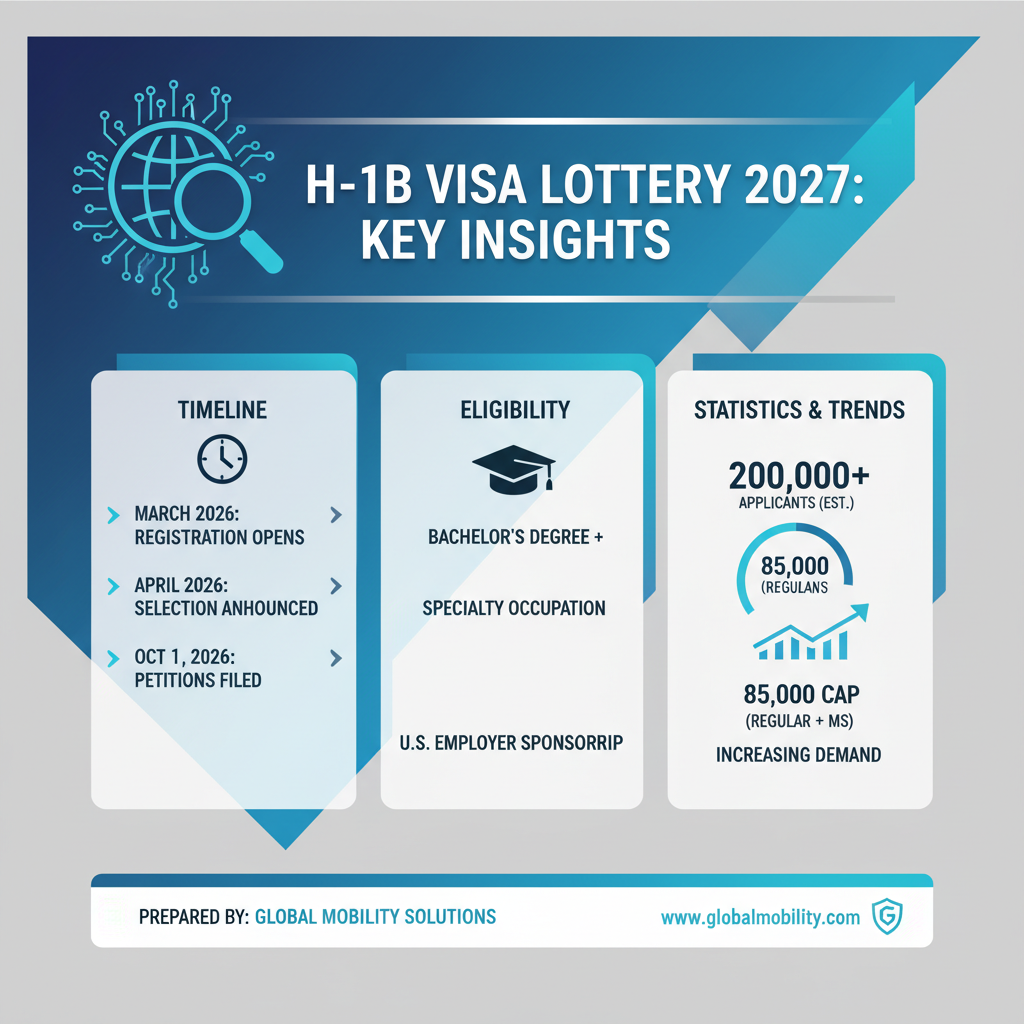
The landscape of U.S. immigration is constantly evolving, and few areas see as much change and competition as the H-1B visa program. For professionals in Orlando, Central Florida, and indeed across the entire nation, the recent updates to the H-1B visa lottery system for Fiscal Year 2027 (FY2027) are not just another piece of legal news; they represent a significant shift in how thousands of skilled workers will pursue their American dreams.
Why this news is showing up now
The U.S. Citizenship and Immigration Services (USCIS) has been actively implementing changes to the H-1B cap registration process to enhance the integrity of the lottery system and combat fraud. While these new rules were initially announced and applied to the FY2025 H-1B cap season (which had its registration period in March 2024), their implications are far-reaching and will continue to govern the process for subsequent fiscal years, including the upcoming FY2027 lottery. As we approach the typical registration period for FY2027 (expected in March 2026), discussions around these changes are resurfacing in legal news and among prospective applicants and employers. USCIS aims to ensure that each eligible beneficiary has an equal chance of selection, eliminating the previous advantage gained by filing multiple registrations through related entities.
How it can affect Florida residents
Florida, particularly the I-4 corridor stretching from Tampa through Orlando to Daytona, is a growing hub for technology, healthcare, aerospace, and tourism – sectors heavily reliant on skilled foreign talent. Many companies in Orlando, Miami, and other major Florida cities sponsor H-1B visas for engineers, IT professionals, medical researchers, and other specialists. The new H-1B lottery rules directly impact both these Florida-based employers and the foreign national beneficiaries they seek to hire.
- For Employers: Florida companies must now ensure their registration strategies align with the new beneficiary-centric selection process. This means a focus on legitimate job offers and a clear understanding of what constitutes a valid registration, reducing the temptation (and legality) of multiple registrations for a single individual.
- For Beneficiaries: If you are a student graduating from a Florida university (like UCF, UF, or FIU) on an F-1 visa, or a professional working on Optional Practical Training (OPT) in Orlando, these changes are critical. The new system ensures that your individual chance of selection is not diluted by fraudulent multiple entries, potentially making the lottery fairer for genuinely qualified individuals. However, the competition remains fierce, and proper preparation is more important than ever.
Understanding these updates is essential for anyone in Florida involved in the H-1B process, from international students to multinational corporations. Imigrar, based in Orlando, is uniquely positioned to guide you through these changes, ensuring your application is compliant and robust.
Need Help Navigating H-1B Changes? Our Orlando immigration team is ready to assist. Call +1 786-791-3106 for a free consultation, or message us online. Se Habla Español.
What H-1B Visa Lottery Changes for FY2027 Is (and Why It Matters)
The H-1B visa program is a cornerstone of U.S. immigration for skilled foreign workers. It allows U.S. employers to temporarily employ foreign workers in specialty occupations that require theoretical or technical expertise in specialized fields such as IT, engineering, medicine, and more. Due to high demand, the number of petitions typically far exceeds the annual cap set by Congress, necessitating a lottery system. The recent changes aim to refine this lottery, making it more equitable and less susceptible to abuse.
A plain-English definition
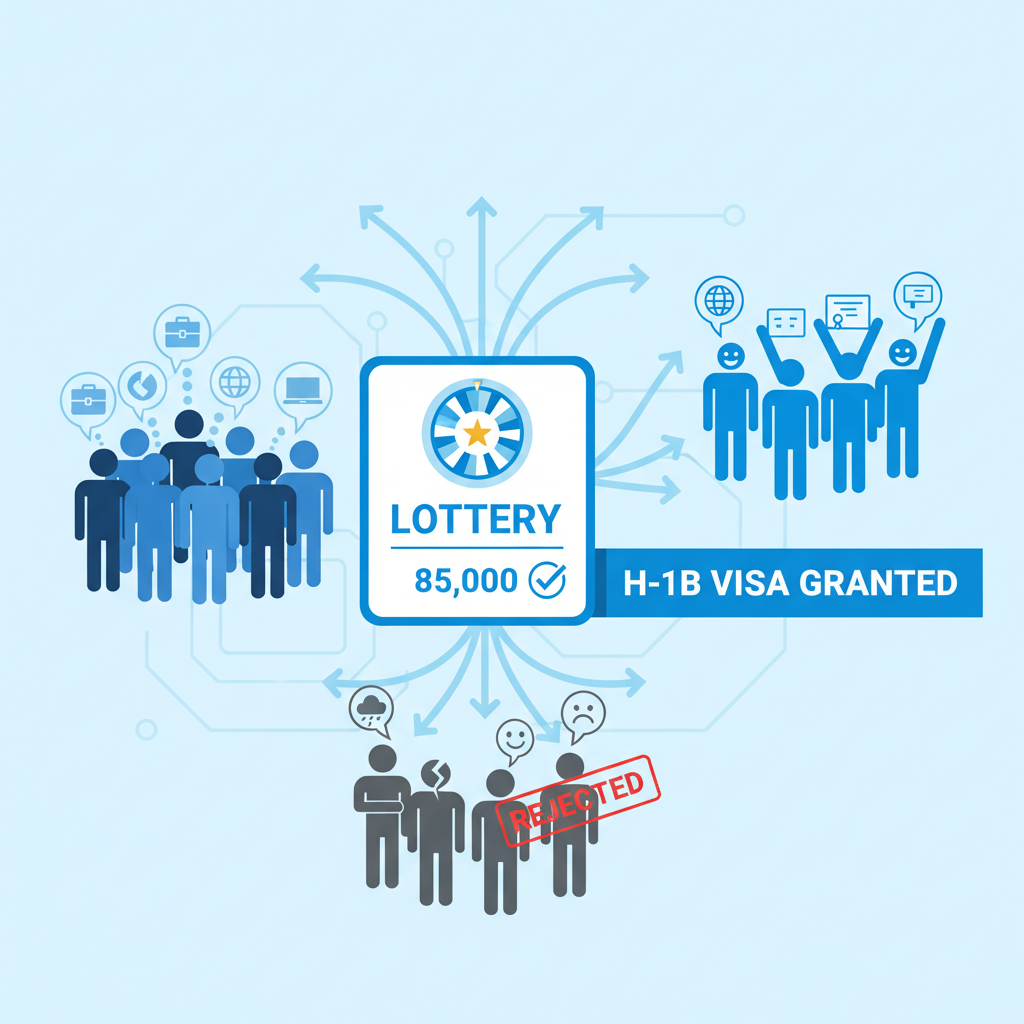
Imagine a highly sought-after concert where tickets are distributed via a lottery because demand far outstrips supply. Previously, some people might have tried to enter the lottery multiple times using different names or accounts to increase their chances. The new H-1B lottery rules are like saying, "We're going to make sure that each *person* who wants a ticket only gets one entry into the lottery, no matter how many friends try to register for them."
Specifically, for the FY2027 H-1B lottery, USCIS has shifted from an "employer-centric" to a "beneficiary-centric" selection process. This means that instead of multiple employers being able to register the *same* foreign worker (beneficiary) multiple times, the selection is now based on the unique beneficiary. If a beneficiary is registered by more than one employer, they are still only entered into the lottery once. If selected, USCIS will then notify *all* employers who registered that specific beneficiary, and those employers will then be eligible to file an H-1B petition on their behalf.
This change is critical because it aims to prevent a single individual from having a statistically higher chance of selection simply because multiple employers (sometimes related entities or even fraudulent ones) submitted registrations on their behalf. It levels the playing field, giving every unique beneficiary an equal chance.
Key terms you need to know
Navigating the H-1B process requires understanding specific terminology. Here are some key terms, especially relevant to the new changes:
- H-1B Visa: A nonimmigrant visa that allows U.S. employers to temporarily employ foreign workers in specialty occupations.
- Specialty Occupation: An occupation that generally requires a bachelor's degree or higher in a specific specialty as a minimum for entry into the occupation.
- Beneficiary: The foreign national worker who is seeking the H-1B visa.
- Petitioner: The U.S. employer who is sponsoring the foreign national for the H-1B visa.
- H-1B Cap: The annual numerical limit on the number of H-1B visas issued. Congress currently sets the cap at 65,000 visas each fiscal year, with an additional 20,000 visas for those with a U.S. master's degree or higher (the "Master's Cap").
- Cap-Subject H-1B: An H-1B petition that is subject to the annual numerical cap. Most H-1B petitions fall into this category.
- Cap-Exempt H-1B: Certain H-1B petitions are exempt from the annual cap, such as those filed by institutions of higher education, non-profit organizations affiliated with higher education, or government research organizations.
- Fiscal Year (FY): The U.S. government's fiscal year runs from October 1st to September 30th. The FY2027 H-1B cap will allow employment to begin on or after October 1, 2026.
- H-1B Cap Registration: The electronic process through which petitioners (employers) submit basic information about the company and the prospective H-1B worker (beneficiary) to USCIS during a designated window. This is the stage where the lottery takes place.
- E-Registration: The online system used by USCIS for the H-1B cap registration process.
- Lottery Selection: If the number of registrations exceeds the annual H-1B cap, USCIS conducts a random selection process to determine which beneficiaries will be eligible to have an H-1B petition filed on their behalf.
- Beneficiary-Centric Selection: The new process where each unique beneficiary is entered into the lottery once, regardless of how many employers registered them. This is the core of the FY2027 change.
- Labor Condition Application (LCA): Form ETA-9035. An application filed with the U.S. Department of Labor (DOL) that attests to the employer's compliance with specific wage and working condition requirements for H-1B workers. This must be certified before filing Form I-129.
- Form I-129: Petition for a Nonimmigrant Worker. The primary form filed with USCIS by the employer after a beneficiary has been selected in the lottery.
- Premium Processing: An optional service offered by USCIS for an additional fee, guaranteeing processing of certain petitions (including H-1B) within 15 calendar days.
- Duplication/Fraud: The practice of submitting multiple registrations for the same beneficiary by related entities to unfairly increase the chances of selection. The new rules aim to prevent this.
- Integrity Measures: Actions taken by USCIS to prevent fraud and maintain the fairness of the immigration system. The beneficiary-centric selection is one such measure.
Current Immigration Law: The Foundation
The H-1B visa program is governed primarily by the Immigration and Nationality Act (INA). Specifically, Section 214(g) of the INA establishes the annual numerical cap on H-1B visas. The implementing regulations are found in 8 CFR Part 214.2(h).
The recent changes to the lottery process are codified in 8 CFR Part 214.2(h)(8)(i)(A)(4) and (h)(8)(ii)(C), which outline the beneficiary-centric selection process and the new rules for multiple registrations, respectively. These regulations reinforce USCIS's authority to manage the H-1B cap registration process to ensure fairness and prevent abuse.
For official information and to review the regulations, always refer to the USCIS official website.
Federal requirements
To be eligible for an H-1B visa, both the employer (petitioner) and the foreign national (beneficiary) must meet specific federal requirements:
- For the Beneficiary:
- Hold a bachelor's degree or its equivalent, or a higher degree, or possess a license in a specialty occupation field, or have work experience equivalent to a bachelor's degree.
- The job offered must be in a specialty occupation.
- If currently in the U.S., they must maintain a valid nonimmigrant status (e.g., F-1 OPT, L-1, TN).
- For the Petitioner (Employer):
- Must have a legitimate job offer for the beneficiary in a specialty occupation.
- Must agree to pay the H-1B worker at least the prevailing wage for the occupation in the area of employment, or the actual wage paid to other employees with similar experience and qualifications, whichever is higher. This is attested to in the Labor Condition Application (LCA), Form ETA-9035.
- Must provide documentation showing the employer-employee relationship exists and that the employer has the financial ability to pay the offered wage.
- Must ensure the terms and conditions of employment meet Department of Labor (DOL) regulations.
Florida-specific considerations
While the H-1B is a federal program, its impact and practical considerations vary by location. In Florida:
- Prevailing Wage: The prevailing wage determination for H-1B positions is locality-specific. For positions in Orlando, the prevailing wage will be determined by data relevant to the Orlando-Kissimmee-Sanford Metropolitan Statistical Area (MSA). This can vary significantly from other parts of Florida or the U.S.
- Industry Demand: Florida's growing tech sector, particularly in cities like Orlando (known for simulation and modeling, defense contractors, and theme park technology), Tampa (cybersecurity, financial services), and Miami (international trade, healthcare, IT), creates high demand for H-1B professionals. This often means increased competition in the lottery.
- Educational Institutions: Florida is home to numerous universities producing highly skilled graduates, many of whom seek H-1B sponsorship. The Orlando USCIS Field Office may handle certain follow-up processes for local residents, although initial H-1B petitions are processed at service centers.
- Local Economy: The robust and diverse economy of Central Florida, supported by a strong tourism base and emerging tech industries, provides ample opportunities for H-1B beneficiaries and sponsoring employers.
Confused by H-1B Law? Imigrar attorneys in Orlando can clarify federal requirements and Florida-specific nuances for your case. Call +1 786-791-3106 for expert guidance. Se Habla Español.
How to Navigate the New H-1B Lottery System: A Complete Step-by-Step Guide
The H-1B cap season for FY2027 will be the second cycle operating under the beneficiary-centric selection process. Here's a comprehensive step-by-step guide for employers and beneficiaries:
1) Understand Eligibility & New Rules for FY2027
Before anything else, both the employer and the prospective H-1B worker must confirm their eligibility and understand the new regulatory framework.
- For Beneficiaries:
- Ensure you meet the educational or experience requirements for a specialty occupation.
- Verify your current immigration status allows for a change of status to H-1B, if applicable.
- Understand that you, as the beneficiary, are now the central point of the lottery. Multiple employers can register you, but your name will only appear once in the lottery pool.
- For Employers (Petitioners):
- Confirm the offered position qualifies as a specialty occupation.
- Be prepared to pay the prevailing or actual wage.
- Be aware that submitting multiple registrations for the same beneficiary by *related* entities is explicitly prohibited and will result in invalidation of *all* registrations for that beneficiary. Unrelated employers may still register the same beneficiary.
- Review the USCIS official website for the latest guidance on what constitutes a "related entity" to avoid inadvertent violations.
Required Documents (for initial assessment):
- Beneficiary's Resume/CV
- Copies of all academic degrees, diplomas, and transcripts (foreign degrees may require an evaluation)
- Copies of professional licenses (if applicable)
- Beneficiary's passport, visa, and I-94 record
- Job description and offer letter from the employer
- Employer's basic company information (name, address, FEIN)
2) Employer Registration for the H-1B Cap Lottery
This is the critical initial phase where the lottery takes place. The registration period typically opens in early March for the fiscal year starting October 1st. For FY2027, this means March 2026.
- The employer (or their authorized attorney) must create a registrant account on the USCIS online portal.
- For each prospective H-1B beneficiary, the employer submits a separate electronic registration.
- Important: Under the new beneficiary-centric system, the registration form requires the beneficiary's valid passport information or other valid travel document details. USCIS uses this to identify unique beneficiaries.
- A non-refundable $10 fee is required for each registration.
Required Documents (for registration):
- Beneficiary's full legal name, date of birth, country of birth, country of citizenship, passport number (or other valid travel document number).
- Beneficiary's gender.
- Whether the beneficiary has a U.S. master's or higher degree.
- Employer's legal name, doing business as name (if applicable), Employer Identification Number (EIN), U.S. mailing address, and authorized signatory's name and title.
- Attorney or accredited representative's name and contact information (if applicable, using Form G-28).
3) Lottery Selection & Notification
After the registration period closes, USCIS conducts the lottery. This typically happens within a few weeks of the registration period closing.
- USCIS conducts the random selection process based on unique beneficiaries. The Master's Cap is usually selected first, followed by the regular cap.
- Employers whose beneficiaries are selected receive a "Selection Notice" in their USCIS online account. This notice indicates that they are eligible to file an H-1B cap-subject petition for that specific beneficiary.
- Reminder: If a beneficiary was registered by multiple unrelated employers and selected, all those employers will receive a selection notice and can proceed to file a petition. The beneficiary must then decide which employer to proceed with.
Timeline Expectation:
- Registration period: Typically early March (e.g., March 6-22, 2026, for FY2027).
- Selection notifications: By the end of March (e.g., March 27-31, 2026).
4) Prepare and File the H-1B Petition (Form I-129)
Once a beneficiary is selected, the employer has a designated filing window (typically 90 days) to prepare and submit the full H-1B petition to USCIS.
- Step 4a: File and Get Certified LCA (Form ETA-9035): Before filing Form I-129, the employer must file an LCA with the Department of Labor. This process takes approximately 7 business days. The LCA attests to wage and working conditions.
- Step 4b: Complete Form I-129, Petition for a Nonimmigrant Worker: This is the core petition form. It requires detailed information about the employer, the beneficiary, the proposed employment, and includes various supplements.
- Step 4c: Gather Supporting Documentation: This is a crucial step requiring extensive documentation to prove eligibility.
- Step 4d: Assemble and Mail the Petition: The complete petition package, including Form I-129, LCA, all supporting documents, and the correct filing fees, must be mailed to the appropriate USCIS service center.
Required Documents (for Form I-129 petition):
- Certified Labor Condition Application (LCA), Form ETA-9035.
- H-1B Cap Registration Selection Notice.
- Evidence of the beneficiary's educational qualifications (degrees, transcripts, evaluations).
- Beneficiary's resume/CV.
- Copies of beneficiary's passport, visa, I-94, and current immigration documents (EAD, I-20, etc.).
- Detailed job offer letter and description of duties.
- Employer's company profile, financial statements, and business licenses.
- Evidence of employer-employee relationship (e.g., employment agreement, organizational charts).
- Prevailing wage determination documentation.
- Any required certifications or licenses for the occupation.
- Form G-28 (if represented by an attorney).
5) USCIS Adjudication and Premium Processing (Optional)
After receiving the petition, USCIS will process and adjudicate it.
- Regular Processing: Processing times can vary significantly based on the service center and current caseload. You can check estimated processing times on the USCIS Processing Times page.
- Premium Processing: For an additional fee (currently $2,805 as of February 2024, subject to change), USCIS guarantees a decision within 15 calendar days. This is highly recommended for those who need a quicker decision.
- USCIS may issue a Request for Evidence (RFE) if they need more information. Responding promptly and thoroughly to an RFE is critical.
Required Documents (for RFE, if issued):
- Specific documents requested by USCIS, often relating to specialty occupation, employer-employee relationship, or beneficiary qualifications.
6) Visa Interview (for those outside the U.S.) & Status Change (for those inside the U.S.)
Once the H-1B petition is approved, the next steps depend on the beneficiary's location.
- If Outside the U.S.: The beneficiary will undergo consular processing. This involves scheduling an interview at a U.S. embassy or consulate in their home country to obtain the H-1B visa stamp in their passport.
- If Inside the U.S. (Change of Status): If the beneficiary is already in the U.S. in a valid nonimmigrant status (e.g., F-1 OPT, L-1, TN) and the H-1B petition requests a change of status, their status automatically changes to H-1B on October 1st (the start of the fiscal year) if the petition is approved.
Required Documents (for Consular Processing/Status Change):
- H-1B Approval Notice (Form I-797).
- Valid passport.
- Form DS-160 (Online Nonimmigrant Visa Application) confirmation page.
- Appointment confirmation.
- Passport-style photographs.
- Supporting documents from the H-1B petition (job offer letter, LCA, educational documents, etc.).
- Proof of ties to home country.
7) Maintaining H-1B Status
Upon approval and commencement of H-1B employment, beneficiaries must strictly adhere to the terms of their visa.
- Work only for the sponsoring employer in the approved position and location.
- Notify USCIS of any material changes in employment (e.g., new job location, significant change in duties) by filing an amended H-1B petition.
- Maintain valid passport and I-94 records.
- H-1B status is generally granted for an initial period of up to three years, extendable for a total of six years.
Practical Steps You Can Take Today
Proactive preparation is key to success in the highly competitive H-1B lottery. Here's an actionable checklist:
- Verify Beneficiary Eligibility: Double-check that the foreign national meets the educational/experiential requirements for a specialty occupation. Gather all academic credentials and have foreign degrees evaluated if necessary.
- Secure a Sponsoring Employer: If you are a beneficiary, actively seek out employers in Orlando, across Florida, or nationwide who are willing to sponsor H-1B visas and understand the new rules. Build strong professional relationships.
- Understand the New Rules Thoroughly: Both employers and beneficiaries must fully grasp the beneficiary-centric selection process and the restrictions on multiple registrations by related entities. Ignorance is not an excuse.
- Gather Essential Documents Early: Start compiling all required personal and professional documents (passports, degrees, transcripts, resumes, offer letters, company details). Ensure passports are valid for at least six months beyond the proposed H-1B end date.
- Consult with an Experienced Immigration Attorney: This is perhaps the most critical step. An attorney can assess eligibility, advise on the new rules, ensure compliance, and prepare a robust registration and petition package. Our Orlando team at Imigrar specializes in H-1B matters.
- Monitor USCIS Announcements: Stay updated on official USCIS news releases for specific registration dates, fee changes, and any further clarifications regarding the new rules. The USCIS official website is your primary source.
- Prepare for Contingencies: Given the lottery's competitive nature, always have alternative plans if H-1B is not selected (e.g., O-1 visa, L-1 visa, exploring options in other countries, or returning to school).
Document preparation guidance
- Accuracy is Paramount: Ensure all information on registration forms and petitions exactly matches official documents (e.g., name as it appears on passport).
- Translations: Any document not in English must be accompanied by a certified English translation.
- Certified Copies: While USCIS generally accepts copies, be prepared to provide originals if requested. Educational institutions can often provide certified copies of transcripts and diplomas.
- Professional Evaluations: If your degree is from a foreign institution, obtain a professional educational credential evaluation to determine its U.S. equivalent.
Timeline expectations (for FY2027, based on previous years)
- Early 2026 (Jan-Feb): Employers and beneficiaries prepare for registration, consult with attorneys, gather documents.
- March 2026: H-1B cap electronic registration period opens (typically a 2-3 week window).
- Late March 2026: Lottery selection notifications issued by USCIS.
- April – June 2026: Selected employers file Form I-129 H-1B petitions. This is generally a 90-day filing window.
- October 1, 2026: FY2027 begins. Approved H-1B petitions take effect, and beneficiaries can start working in H-1B status.
Warning: These dates are estimates based on past patterns. USCIS reserves the right to change these dates. Always refer to official USCIS announcements.
Ready to Start Your H-1B Journey? Don't miss crucial deadlines. Our Orlando immigration lawyers at Imigrar offer free consultations to get you started on the right path. Call +1 786-791-3106 today. Se Habla Español.
How Imigrar Helps Immigrants in Orlando
At Imigrar, our mission is to "Keep Families Together." We understand that an H-1B visa is often a critical step towards building a life and career in the U.S.,


