


The reporting that sparked this guide: H-1B Visa Lottery Changes for FY2027 (Legal News)
What This News Means for Immigrants in Orlando and Across Florida
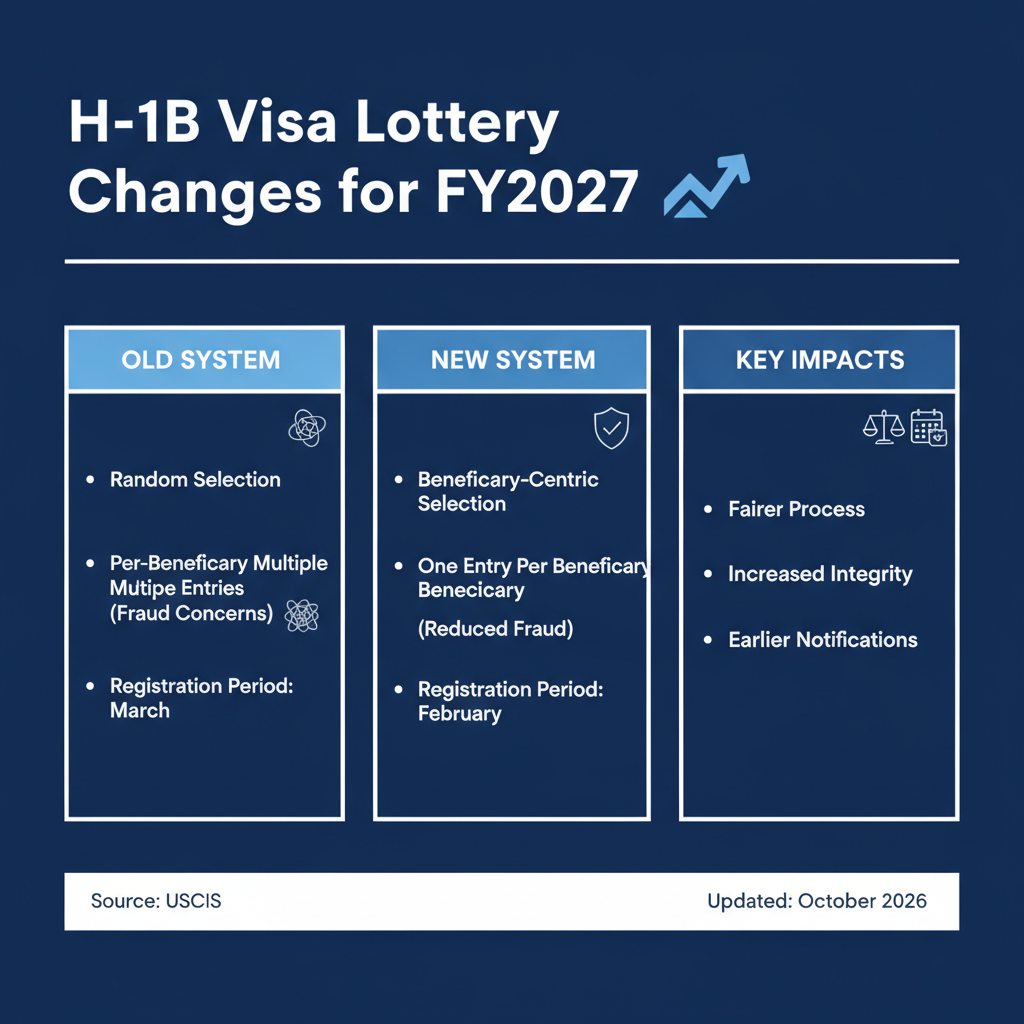
The landscape of U.S. immigration is constantly evolving, and few areas see more significant shifts than the H-1B visa program. For Fiscal Year 2027 (FY2027), which covers the period from October 1, 2026, to September 30, 2027, the U.S. Citizenship and Immigration Services (USCIS) has rolled out crucial changes to the H-1B visa lottery process. These updates are designed to enhance the integrity of the lottery, curb fraud, and ensure a more equitable selection system for highly skilled foreign workers seeking to contribute to the American economy.
At Imigrar, we understand that changes to such a vital program can create uncertainty and anxiety. Our mission, "Keep Families Together," drives us to provide clear, actionable guidance to help you navigate these complexities. Whether you’re an international student in Orlando hoping to transition to an H-1B, a professional in Miami sponsored by a new employer, or an employer in Tampa looking to hire top talent, these changes will directly impact your path.
Why this news is showing up now
The news about H-1B visa lottery changes for FY2027 is emerging now because the preparation for the next fiscal year’s lottery begins well in advance. While FY2027 officially starts on October 1, 2026, the registration period for the H-1B lottery typically occurs in March of the preceding calendar year. Therefore, for FY2027, the registration window will likely open in March 2027. USCIS often announces significant policy or procedural changes months ahead to give employers, beneficiaries, and legal representatives ample time to prepare. This proactive communication is crucial, especially for changes that fundamentally alter the lottery mechanics, such as the shift to a beneficiary-centric selection process introduced in recent years and refined for future cycles. Staying informed now allows for strategic planning and compliance, which are vital for a successful application.
How it can affect Florida residents
Florida, with its booming tech, tourism, healthcare, and aerospace industries, is a magnet for skilled professionals. Cities like Orlando, Miami, Tampa, and Jacksonville attract a diverse pool of international talent and host numerous companies reliant on H-1B visas. The changes to the H-1B lottery will have several direct impacts on Florida residents and businesses:
- For H-1B Beneficiaries: If you are an international student graduating from a Florida university (like UCF, UF, or FIU) on an F-1 visa with Optional Practical Training (OPT), or a professional currently working in Florida on another nonimmigrant visa, these changes are critical. The shift to a beneficiary-centric selection process means that if multiple employers register you, you will only have one chance in the lottery, tied to your unique passport or travel document number. This aims to level the playing field, reducing the advantage of those with multiple registrations.
- For Florida Employers: Companies across Florida, from startups in Orlando’s tech corridor to established corporations in South Florida, depend on the H-1B program to fill specialized roles. These changes require employers to be more meticulous in their registration process, ensuring that each beneficiary is uniquely identified. It also means that employers can no longer rely on the strategy of having multiple related entities submit registrations for the same individual. This emphasizes the importance of legitimate job offers and a clear demonstration of the need for a specialty occupation worker.
- Reduced Fraud: The new rules are specifically designed to combat fraud, where some companies would submit multiple registrations for the same individual through shell companies to increase their odds. While this benefits the integrity of the program, it means that legitimate employers and beneficiaries must ensure absolute accuracy and honesty in their submissions.
- Increased Competition (Potentially): While the new system aims for fairness, the inherent demand for H-1B visas often far outstrips the statutory cap. Florida residents and employers must be prepared for continued high competition, making a well-prepared and compliant application even more critical.
Navigating H-1B changes can be complex. Our Orlando immigration team is ready to assist. Call +1 786-791-3106 for a free consultation, or message us online. Se Habla Español.
What H-1B Visa Lottery Changes for FY2027 Is (and Why It Matters)
The H-1B visa program is a nonimmigrant visa that allows U.S. employers to temporarily employ foreign workers in specialty occupations. These occupations generally require a bachelor's degree or higher in a specific field. The program is crucial for U.S. companies that need to hire highly skilled individuals when qualified American workers are unavailable. Due to overwhelming demand, USCIS conducts a lottery each year to select enough petitions to meet the annual cap.
The "H-1B Visa Lottery Changes for FY2027" refers to the new rules and procedures implemented by USCIS that will govern the selection process for H-1B petitions filed for the fiscal year starting October 1, 2026. These changes are significant because they fundamentally alter how beneficiaries are selected, primarily by shifting to a "beneficiary-centric" selection process. This means the lottery now focuses on the unique individual (the beneficiary) rather than the number of registrations submitted on their behalf by different employers. This change aims to restore fairness, reduce fraud, and ensure that every eligible beneficiary has an equal chance of selection, regardless of how many employers register them.
A plain-English definition
Imagine the H-1B visa as a special work permit for highly skilled jobs, like software engineers, doctors, or architects. Because many more people want this permit than are available each year, the U.S. government holds a lottery. In the past, if you had multiple companies register you for this lottery, you essentially got multiple tickets, increasing your odds. The new rule for FY2027 says: "No more multiple tickets for one person." Now, each person gets only one chance in the lottery, no matter how many companies want to hire them. This makes it fairer for everyone and stops companies from trying to game the system. If you win, then one of the companies that registered you can file a full application for you.
Key terms you need to know
Understanding the following terms is essential to navigate the H-1B process, especially with the new changes:
- H-1B Visa: A nonimmigrant visa that permits U.S. employers to temporarily employ foreign workers in specialty occupations.
- Specialty Occupation: An occupation that requires theoretical and practical application of a body of highly specialized knowledge, and a bachelor's or higher degree in the specific specialty (or its equivalent) as a minimum for entry into the occupation in the United States.
- Beneficiary: The foreign national who is seeking the H-1B visa. Under the new rules, the lottery selection is now tied to the unique beneficiary.
- Petitioner: The U.S. employer who files the H-1B petition on behalf of the foreign national.
- H-1B Cap: The annual numerical limit on the number of H-1B visas issued. The current annual cap is 65,000, with an additional 20,000 visas reserved for those with a U.S. master's degree or higher (the "Master's Cap").
- Cap-Subject: An H-1B petition that is subject to the annual numerical limit. Most H-1B petitions are cap-subject.
- Cap-Exempt: Certain H-1B petitions are not subject to the annual cap, such as those filed by institutions of higher education, non-profit organizations affiliated with higher education, or governmental research organizations.
- H-1B Lottery (or Selection Process): The electronic registration process conducted by USCIS when the number of H-1B registrations exceeds the annual cap. For FY2027, this process is beneficiary-centric.
- H-1B Registration: An online process where prospective petitioners (employers) submit basic information about the company and the beneficiary to USCIS during a designated period, usually in March, to be entered into the lottery. A $10 fee per registration is required.
- Labor Condition Application (LCA): Form ETA-9035. An application filed by the employer with the U.S. Department of Labor (DOL) attesting that the employer will pay the H-1B worker at least the prevailing wage or the actual wage, whichever is higher, and will provide working conditions that will not adversely affect other workers. This must be certified before filing the H-1B petition.
- Prevailing Wage: The average wage paid to similarly employed workers in a specific occupation in the area of intended employment. DOL provides prevailing wage determinations.
- Form I-129, Petition for a Nonimmigrant Worker: The primary form filed by the employer with USCIS after an H-1B registration has been selected in the lottery.
- Request for Evidence (RFE): A letter from USCIS requesting additional documents or information to make a decision on a petition.
- Notice of Intent to Deny (NOID): A letter from USCIS indicating that they intend to deny a petition unless specific concerns are addressed.
Current Immigration Law: The Foundation for H-1B Visas
The H-1B visa program is governed primarily by the Immigration and Nationality Act (INA), specifically Section 101(a)(15)(H)(i)(b), which defines the H-1B nonimmigrant classification, and Section 214(g), which establishes the annual numerical limitations (the cap). These federal statutes are supplemented by regulations found in the Code of Federal Regulations (CFR) at 8 CFR Part 214.2(h) and by USCIS policy memoranda and guidance.
The core legal framework requires that an H-1B worker be employed in a "specialty occupation," meaning the job requires a bachelor's degree or higher in a specific field, and the worker must possess that degree or its equivalent. The employer must also file a certified Labor Condition Application (LCA) with the Department of Labor, attesting to wage and working conditions, before filing the H-1B petition with USCIS.
The recent changes for FY2027, including the beneficiary-centric selection process, are implemented through regulatory amendments and policy updates aimed at improving the integrity and efficiency of the existing statutory framework, particularly concerning the lottery system.
You can always find the most up-to-date information and official forms on the USCIS official website.
Federal requirements
The H-1B visa program has stringent federal requirements that both the employer (petitioner) and the foreign worker (beneficiary) must meet:
- Employer Requirements:
- Must have a valid Employer Identification Number (EIN).
- Must demonstrate a legitimate job offer in a specialty occupation.
- Must file and receive certification for a Labor Condition Application (LCA) from the Department of Labor (DOL) (Form ETA-9035). This LCA attests to paying the prevailing wage or actual wage (whichever is higher), providing working conditions that do not adversely affect U.S. workers, and providing notice of the H-1B filing to U.S. workers.
- Must demonstrate the ability to pay the H-1B worker the offered wage.
- Must submit the H-1B petition (Form I-129) within the designated filing window if the registration is selected.
- Beneficiary Requirements:
- Must possess a bachelor's degree or its equivalent, or a license in a specialty occupation field, or work experience equivalent to a bachelor's degree.
- Must be qualified to perform services in the specialty occupation.
- Must have an employer-employee relationship with the petitioner.
- Must not have reached the maximum H-1B stay (generally 6 years), unless eligible for extensions under AC21 (e.g., green card process pending).
- Cap-Subject vs. Cap-Exempt: Most H-1B petitions are subject to the annual cap. However, certain employers, like universities, non-profit research organizations, or government research organizations, are cap-exempt.
- H-1B Registration Process: All cap-subject H-1B petitions, including those for the Master’s Cap, must first go through an electronic registration process. This is where the beneficiary-centric selection takes effect.
Florida-specific considerations
While H-1B law is federal, the economic landscape and specific industries in Florida can influence the demand and types of H-1B petitions filed. For Central Florida residents, particularly those near Orlando, sectors like hospitality, tourism technology, simulation, aerospace, and advanced manufacturing are significant. South Florida, including Miami, sees strong demand in finance, international trade, and healthcare. Tampa is a hub for cybersecurity and financial services.
This means that while the federal requirements remain the same, the types of specialty occupations that are in high demand in Florida may vary. Employers in Orlando, for instance, might frequently sponsor H-1B visas for software developers creating virtual reality experiences, while a Miami firm might sponsor financial analysts or international business development managers. Understanding the local job market can help beneficiaries align their skills with employer needs and vice versa.
Important: There are no Florida-specific state immigration laws that directly govern the H-1B visa program, as it is a federal program. However, state laws regarding professional licensing (e.g., for doctors, nurses, engineers) must be met by H-1B beneficiaries seeking to practice in Florida.
Need expert guidance on the H-1B process? Our Orlando immigration team is here to help. Call +1 786-791-3106 for a free consultation, or message us online. Se Habla Español.
How to Navigate the H-1B Visa Lottery Changes: A Complete Step-by-Step Guide
The H-1B visa process, particularly with the new lottery changes, requires careful planning and meticulous execution. This guide outlines the key steps for both beneficiaries and employers aiming for an H-1B visa for FY2027.
1) Understand the New Rules & Confirm Eligibility (Beneficiary & Employer)
Before anything else, both the prospective H-1B beneficiary and the petitioning employer must understand the latest H-1B regulations, especially the beneficiary-centric selection process, and confirm their eligibility.
- For Beneficiaries:
- Degree Requirement: Ensure you possess a U.S. bachelor's degree (or foreign equivalent), or a higher degree, in a field directly related to the specialty occupation. If you have a foreign degree, it may need an educational equivalency evaluation.
- Specialty Occupation Alignment: Confirm that the job offer is genuinely a "specialty occupation" requiring your specific degree.
- Unique Identification: Ensure you have a valid passport or other qualifying travel document that will be used for your unique identifier in the registration process.
- For Employers:
- Legitimate Job Offer: Confirm you have a bona fide job offer in a specialty occupation that requires a specific bachelor's degree or higher.
- Employer-Employee Relationship: Establish a clear employer-employee relationship with the beneficiary.
- Ability to Pay: Demonstrate the financial ability to pay the H-1B worker the required wage.
- New Online Accounts: Ensure your organization has an updated USCIS online organizational account, as this is required for electronic registration.
Required Documents (for initial assessment):
- Beneficiary's resume/CV
- Beneficiary's educational degrees and transcripts (or foreign credential evaluations)
- Beneficiary's passport/travel document copies
- Detailed job description from the employer
- Employer's EIN (Employer Identification Number)
2) Employer Registration with USCIS (The Lottery Process)
This is the critical stage where the beneficiary-centric lottery comes into play. The H-1B electronic registration period typically occurs in March (e.g., March 2027 for FY2027). Employers must register each prospective H-1B beneficiary online.
- LCA Not Required Yet: An LCA is not needed for the registration phase.
- One Registration Per Beneficiary: Under the new rules, if multiple employers wish to sponsor the same beneficiary, they can each submit a registration. However, the system will now identify the unique beneficiary based on their passport/travel document number. When the lottery is run, each unique beneficiary is entered only once, regardless of how many registrations are submitted on their behalf. If selected, all employers who registered that beneficiary will be notified that the beneficiary has been selected, and any of them can then file a petition.
- Accurate Information: The employer must provide accurate and truthful information about both the company and the beneficiary. Misrepresentations can lead to denial or even fraud investigations.
- Registration Fee: A non-refundable fee (e.g., $10) is required for each registration.
Timeline Expectation:
- Early March 2027: Registration window opens (e.g., 2-3 weeks).
- Late March 2027: Registration window closes.
- Late March/Early April 2027: USCIS conducts the lottery and announces selections.
Required Information for Registration:
- Employer's legal name, EIN, and mailing address.
- Authorized signatory's name, title, and contact information.
- Beneficiary's full legal name, date of birth, country of birth, country of citizenship.
- Beneficiary's passport or other qualifying travel document number.
- Beneficiary's gender.
- Beneficiary's highest level of education.
- Whether the beneficiary is eligible for the U.S. Master's Cap.
3) If Selected: Prepare and File the H-1B Petition (Form I-129)
If your registration is selected in the lottery, the employer will receive a "Selection Notice." This notice designates a filing window (typically 90 days) during which the full H-1B petition must be submitted to USCIS. This is where the bulk of the documentation and legal arguments are presented.
- File LCA: The employer must immediately file a Labor Condition Application (LCA) (Form ETA-9035) with the Department of Labor (DOL). This typically takes 7-10 business days for certification.
- Prepare Form I-129: Complete the Petition for a Nonimmigrant Worker, including all required supplements and addendums.
- Gather Supporting Documentation: Collect extensive evidence to support the petition, proving the specialty occupation, the beneficiary's qualifications, and the employer-employee relationship.
- Compile & File: Organize all documents meticulously and file the complete petition package with the correct USCIS Service Center within the designated filing window.
Required Documents (Comprehensive List for Form I-129 Filing):
- Certified Form ETA-9035 (LCA)
- Completed Form I-129 and H-1B Data Collection and Filing Fee Exemption Supplement
- Copy of the H-1B registration selection notice
- Copies of beneficiary's passport, visa, I-94 record, EAD (if applicable)
- Beneficiary's birth certificate
- Beneficiary's educational degrees, transcripts, and foreign credential evaluations
- Beneficiary's professional licenses (if applicable, especially for Florida-specific roles)
- Letters of experience from previous employers
- Employer's supporting letter (describing the company, the job, and why the beneficiary is qualified)
- Employer's financial documents (e.g., tax returns, annual reports, payroll records) to prove ability to pay
- Employer's organizational chart
- Copies of any relevant contracts between the employer and the beneficiary
- Photos of the employer's office (if applicable)
- Filing fees (check or money order)
4) Responding to RFEs or NOIDs
It's common for USCIS to issue a Request for Evidence (RFE) if they need more information to make a decision. Less commonly, a Notice of Intent to Deny (NOID) may be issued if USCIS believes the petition should be denied but offers a final chance to respond.
- Review Carefully: Read the RFE/NOID thoroughly to understand exactly what information USCIS is requesting.
- Gather Evidence: Collect all requested documents and prepare a detailed, well-organized response.
- Consult Legal Counsel: This stage is highly critical. Working with an experienced immigration attorney, like those at Imigrar, is crucial to formulate a strong, persuasive response that addresses all USCIS concerns.
- Timely Submission: Submit the response by the deadline provided by USCIS.
Required Documents (Examples for RFE):
- Additional evidence of specialty occupation (e.g., expert opinion letters, industry reports)
- Further proof of employer-employee relationship (e.g., specific contracts, organizational structure)
- More detailed evidence of beneficiary's qualifications or degree equivalency
- Wage records, client letters, or project descriptions
5) Visa Interview & Consular Processing (if applicable) / Change of Status
If the H-1B petition is approved, the next step depends on the beneficiary's current location and immigration status.
- Consular Processing (Outside U.S.): If the beneficiary is outside the U.S., they will attend a visa interview at a U.S. consulate or embassy in their home country. They will need to present their approval notice (Form I-797), passport, DS-160 confirmation, and other supporting documents.
- Change of Status (Inside U.S.): If the beneficiary is already in the U.S. in a valid nonimmigrant status (e.g., F-1 OPT, L-1, H-4) and the H-1B petition requested a change of status, their status automatically changes to H-1B on October 1st (or the petition's start date). They will receive a new Form I-797 with an attached I-94 showing H-1B status.
Required Documents (for Consular Processing):
- Valid passport
- DS-160 confirmation page
- Appointment confirmation page
- Original Form I-797 H-1B approval notice
- Photographs meeting visa requirements
- Educational documents (degrees, transcripts)
- Employment letters, resume
- LCA copy
- Job offer letter
- Receipts for visa application fees
6) Maintaining H-1B Status
Once H-1B status is granted, beneficiaries must comply with all immigration laws to maintain their status.
- Work for Sponsoring Employer: You must work for the H-1B sponsoring employer in the position specified in the petition.
- Report Changes: Any significant changes in employment (e.g., new job duties, change of location, termination) require an amended H-1B petition to be filed by the employer.
- Keep Records: Maintain copies of all immigration documents, pay stubs, and employment records.
- Travel: Ensure you have a valid H-1B visa stamp in your passport for re-entry into the U.S. if traveling internationally.
Practical Steps You Can Take Today to Prepare for the H-1B Lottery
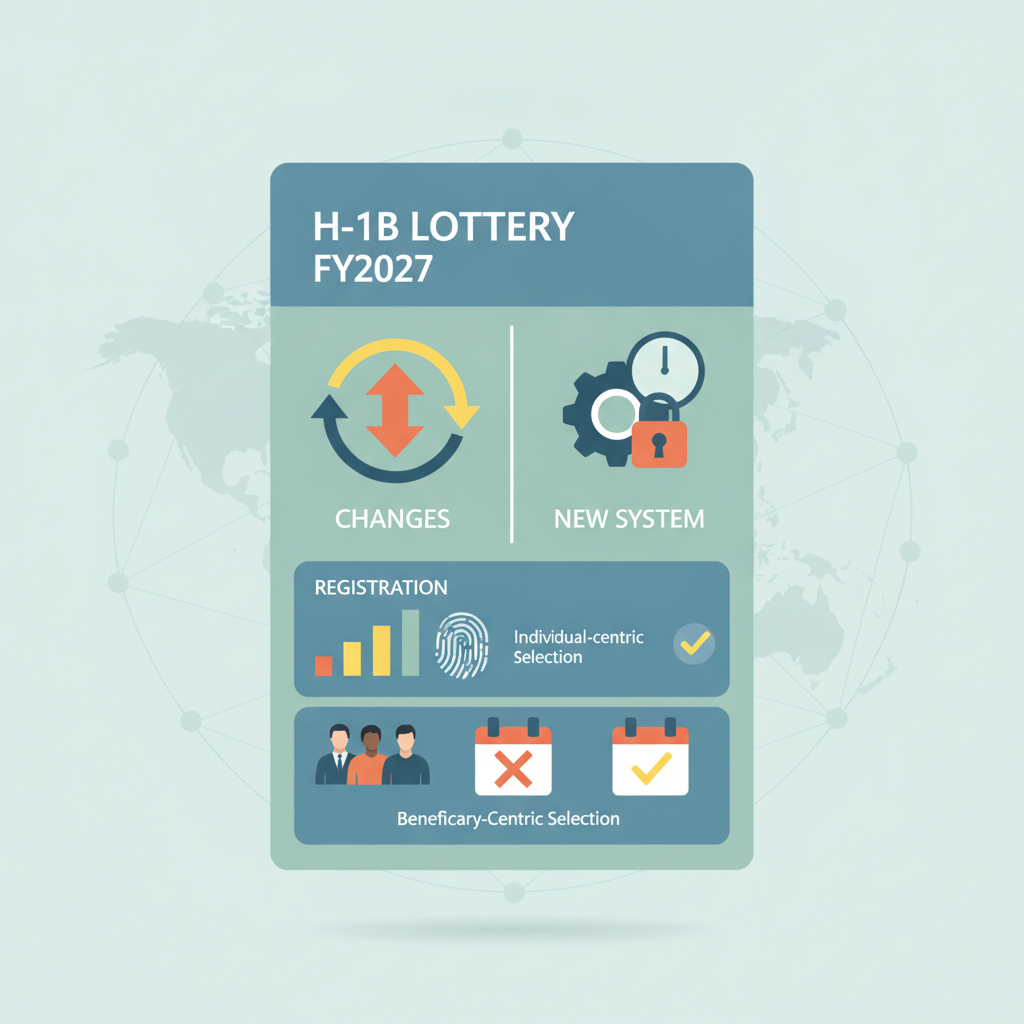
Even though the FY2027 lottery registration is months away (March 2027), proactive preparation is key to success. Don't wait until the last minute!
Actionable Checklist (5+ items)
- Research Potential Employers: Start identifying U.S. employers, especially those in Florida (Orlando, Tampa, Miami, etc.), who have a history of sponsoring H-1B visas. Network, attend job fairs (virtual and in-person), and tailor your resume to specific "specialty occupation" roles.
- Optimize Your Resume and LinkedIn Profile: Ensure your qualifications, skills, and educational background clearly highlight your eligibility for specialty occupations. Emphasize any U.S. master's degrees for the Master's Cap.
- Understand Prevailing Wages: Research the prevailing wage for your occupation in your intended area of employment (e.g., Orlando, Orange County). This helps you understand if a potential job offer meets the H-1B requirements. The DOL FLC Data Center is a useful resource.
- Gather Core Documents: Begin compiling digital and physical copies of all essential personal and academic documents. This includes passports, birth certificates, educational degrees, transcripts, and any professional licenses.
- Consult with an Experienced Immigration Attorney: This is perhaps the most crucial step. An attorney can assess your eligibility


