


At Imigrar, we understand that navigating the complex landscape of U.S. immigration law can be daunting, especially when rules evolve. Our mission is to "Keep Families Together" by providing clear, accurate, and actionable guidance. Today, we're diving deep into the significant changes impacting the H-1B visa lottery for Fiscal Year 2027.
The reporting that sparked this guide
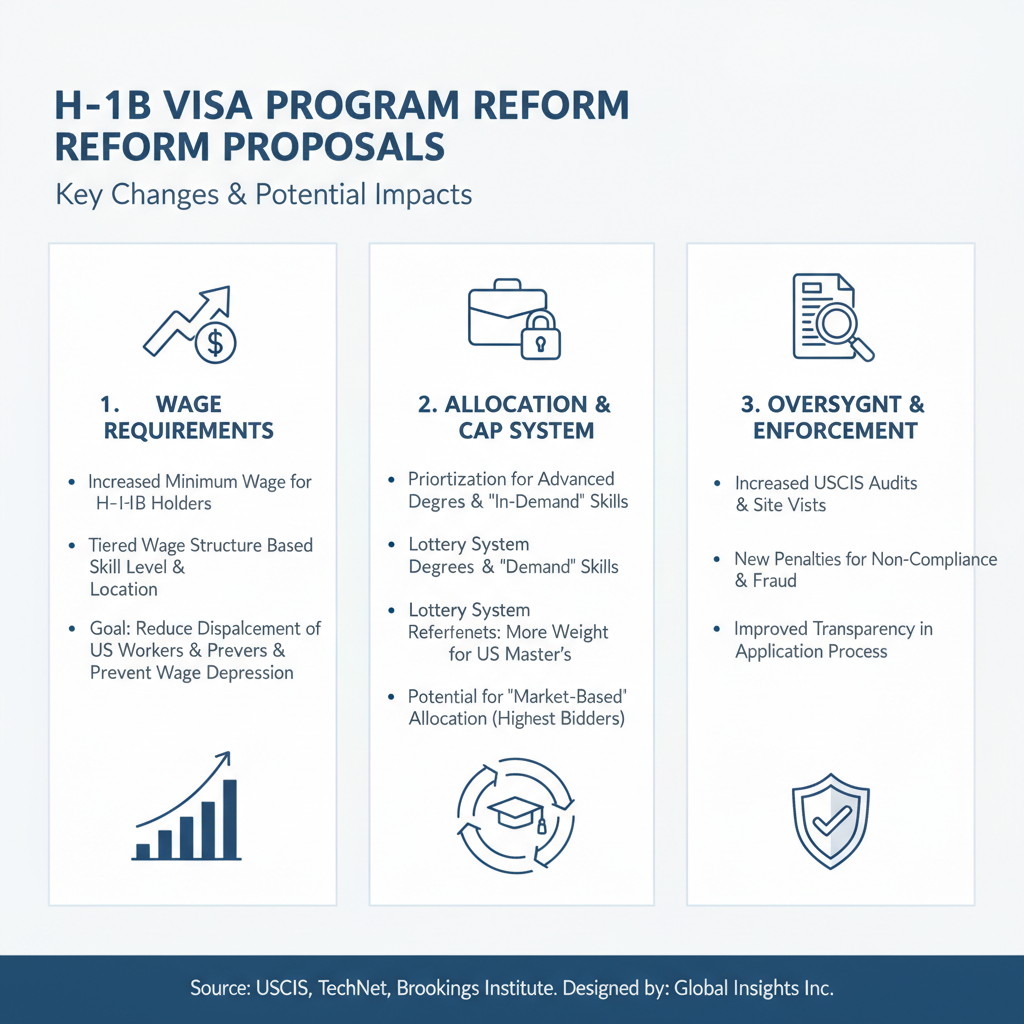
H-1B Visa Lottery Changes for FY2027 (Legal News)
What This News Means for Immigrants in Orlando and Across Florida
The H-1B visa program is a lifeline for U.S. employers seeking highly skilled foreign professionals and for individuals looking to contribute their talents to the American workforce. As of August 17, 2026, the discussion around the H-1B visa lottery for Fiscal Year (FY) 2027 is crucial for anyone planning their professional future in the United States. Recent modifications by U.S. Citizenship and Immigration Services (USCIS) have reshaped the playing field, aiming for a fairer and more integrity-driven selection process.
Why this news is showing up now
The H-1B cap season operates on a fixed annual schedule, with registrations typically opening in March for the fiscal year starting October 1st of the same calendar year. For FY2027, the registration period would have concluded in March 2026, and selections would have been made by late March/early April 2026. However, the impact of these changes extends far beyond the initial registration window. The new rules, primarily introduced through a final rule effective January 30, 2024, for the FY2025 cap, are now fully ingrained in the system for FY2027 and beyond. This means that employers and prospective H-1B beneficiaries need to be acutely aware of how these changes influence petition filing, potential Requests for Evidence (RFEs), and the overall strategy for securing an H-1B visa.
The primary driver behind these modifications was USCIS's commitment to combating fraud and ensuring that the lottery process is truly random and equitable. In previous years, some employers exploited the system by submitting multiple registrations for the same beneficiary, artificially inflating their selection chances. The new rules directly address this, and the results from the FY2025 and FY2026 lotteries are now providing real-world data on the effectiveness and consequences of these changes, making the news particularly relevant for future applicants and those currently in the petition process.
How it can affect Florida residents
Florida, with its booming tech industry, robust healthcare sector, and world-class universities, is a significant hub for H-1B talent. Cities like Orlando, Tampa, Miami, and Jacksonville attract a diverse range of skilled professionals. For Florida residents and those looking to move to the Sunshine State, these H-1B changes have several key implications:
- Increased Fairness for Legitimate Job Offers: If you are a prospective H-1B beneficiary with a genuine job offer from a Florida employer, the new beneficiary-centric selection process levels the playing field. Your chances are no longer diluted by fraudulent multiple entries, potentially increasing your true odds of selection.
- Employer Due Diligence: Florida employers, especially those along the I-4 corridor in Orlando known for its burgeoning tech and tourism sectors, must now exercise even greater due diligence in their H-1B registration and petition processes. They need to ensure their job offers are legitimate and that they comply with all new USCIS integrity measures. This might mean more rigorous internal vetting processes before filing registrations.
- Competitive Landscape: While the new rules aim for fairness, the H-1B lottery remains intensely competitive. Florida’s appeal as a business and lifestyle destination means that demand for H-1B visas in the state will continue to be high. This necessitates meticulous preparation and expert legal guidance for both employers and beneficiaries.
- Focus on Specialty Occupation: USCIS is scrutinizing petitions more closely to ensure the job truly qualifies as a specialty occupation. For Central Florida residents, this means ensuring your role in industries like simulation and training, aerospace, or hospitality tech clearly meets these stringent criteria.
Understanding these changes is not just about compliance; it's about strategizing for success in a highly competitive environment. Imigrar, based right here in Orlando, is uniquely positioned to assist individuals and businesses across Florida in navigating these new H-1B realities.
Navigating the H-1B changes can be complex. Our Orlando immigration team is ready to assist. Call +1 786-791-3106 for a free consultation, or message us online. Se Habla Español.
What H-1B Visa Lottery Changes for FY2027 Are (and Why They Matter)
The H-1B visa program is a cornerstone of U.S. immigration for skilled workers. However, due to its popularity and the annual numerical cap, a lottery system has become necessary. The changes for FY2027 are a direct continuation and reinforcement of new regulations designed to improve the integrity and fairness of this lottery.
A plain-English definition
The H-1B visa is a non-immigrant visa that allows U.S. employers to temporarily employ foreign workers in specialty occupations. A specialty occupation generally requires a bachelor's degree or higher in a specific field. Due to high demand, the U.S. government caps the number of H-1B visas issued each fiscal year. When the number of registrations exceeds the available visas, USCIS conducts an electronic lottery to select which registrations can proceed to file a full petition.
The "changes" for FY2027 refer primarily to the implementation of a new lottery selection process, often called "beneficiary-centric selection." Previously, employers could submit multiple registrations for the same foreign worker, potentially increasing that individual's chances of being selected. Under the new rules, each unique foreign worker (beneficiary) is entered into the lottery only once, regardless of how many employers register them. USCIS consolidates these multiple registrations and makes one selection per beneficiary. This aims to eliminate fraud and artificial inflation of selection rates.
Key terms you need to know
To fully grasp the H-1B process and the impact of the new rules, it's essential to understand these key terms:
- H-1B Visa: A non-immigrant visa category that allows U.S. employers to temporarily employ foreign workers in specialty occupations. These occupations generally require a bachelor's degree or higher in a specific field.
- USCIS: U.S. Citizenship and Immigration Services, the government agency responsible for processing immigration petitions, including H-1B visas. USCIS official website.
- Employer Sponsorship: The requirement that a U.S. employer must file the H-1B petition on behalf of the foreign worker. Individuals cannot self-petition for an H-1B visa.
- Cap-Subject H-1B: Refers to H-1B visas that are subject to the annual numerical limit set by Congress. There are 65,000 regular cap visas and an additional 20,000 visas for those with a U.S. master's degree or higher (the "master's cap").
- Cap-Exempt H-1B: Certain employers are exempt from the annual cap. These typically include institutions of higher education, non-profit organizations affiliated with or related to institutions of higher education, and non-profit research organizations or governmental research organizations.
- Beneficiary: The foreign national worker for whom the H-1B visa is sought. Under the new rules, this is the central figure for lottery selection.
- Registrant: The prospective employer who submits an electronic registration for the H-1B lottery on behalf of a beneficiary.
- Labor Condition Application (LCA): Form ETA-9035. This form must be certified by the U.S. Department of Labor (DOL) before an H-1B petition can be filed with USCIS. It attests that the employer will pay the H-1B worker the prevailing wage or actual wage, whichever is higher, and provide working conditions that will not adversely affect other workers.
- Fiscal Year (FY): The U.S. government's fiscal year runs from October 1st to September 30th. FY2027 begins on October 1, 2026.
- Premium Processing: An optional service that allows petitioners to pay an additional fee to USCIS for expedited processing of certain forms, including Form I-129. It guarantees a decision within 15 calendar days.
The significance of the FY2027 changes lies in their direct impact on the integrity and perceived fairness of the H-1B lottery. By shifting to a beneficiary-centric selection model, USCIS aims to:
- Reduce Fraud: Eliminate the practice of employers colluding to submit multiple registrations for the same individual, which previously gave an unfair advantage.
- Level the Playing Field: Ensure that every legitimate beneficiary has an equal, single chance of selection, regardless of the number of job offers they receive.
- Increase Efficiency: Streamline the initial registration process by focusing on the unique beneficiary.
For individuals and employers in Orlando and nationwide, these changes mean a renewed emphasis on legitimate job offers, meticulous documentation, and strategic planning. While the lottery remains a game of chance, the new rules ensure it's a fairer one.
Current Immigration Law: The Foundation
The H-1B visa program is governed by specific provisions within the Immigration and Nationality Act (INA) and its corresponding regulations. Understanding this legal framework is crucial, as the recent lottery changes operate within these established parameters.
The authority for the H-1B non-immigrant classification is found in Section 101(a)(15)(H)(i)(b) of the INA, which defines an H-1B non-immigrant as an alien who is coming temporarily to the United States to perform services in a specialty occupation. The requirements for a specialty occupation are detailed in Section 214(i)(1) of the INA, generally requiring a theoretical and practical application of a body of highly specialized knowledge, and a bachelor's or higher degree in the specific specialty (or its equivalent) as a minimum for entry into the occupation in the United States.
The annual numerical cap for H-1B visas is mandated by Section 214(g) of the INA. This section establishes the 65,000 regular cap and the additional 20,000 cap for those with a U.S. master's degree or higher. Regulations governing the H-1B program are found in 8 Code of Federal Regulations (CFR) Part 214.2(h), which details the eligibility criteria, petitioning process, and duration of stay.
Federal requirements
To qualify for an H-1B visa, both the employer and the beneficiary must meet specific federal requirements:
For the Employer:
- U.S. Employer: The petitioner must be a U.S. employer.
- Specialty Occupation: The job offered must qualify as a specialty occupation. This means it requires theoretical and practical application of a body of highly specialized knowledge, and a bachelor's or higher degree in a specific specialty (or its equivalent) as a minimum for entry into the occupation. USCIS scrutinizes this heavily, particularly for roles that might seem generalist.
- Prevailing Wage: The employer must agree to pay the H-1B worker at least the prevailing wage for the occupation in the area of intended employment, or the actual wage paid to other employees with similar experience and qualifications, whichever is higher. This is documented through the Labor Condition Application (LCA), Form ETA-9035.
- Employer-Employee Relationship: A valid employer-employee relationship must exist, meaning the petitioner has the right to control the H-1B worker's employment.
For the Beneficiary:
- Educational Qualification: The beneficiary must possess a U.S. bachelor's degree or its equivalent in a field related to the specialty occupation, or hold a full unrestricted state license in a specialty occupation that requires a bachelor's degree, or have work experience equivalent to a bachelor's degree.
- Specialized Knowledge: The beneficiary's qualifications must align with the requirements of the specialty occupation.
- Licensure: If the occupation requires a state license to practice (e.g., doctors, nurses, some engineers), the beneficiary must hold the appropriate license.
Important: The H-1B program is a dual intent visa, meaning H-1B holders can pursue permanent residency while maintaining H-1B status.
Florida-specific considerations
While H-1B is a federal program, its impact and application have unique considerations for Florida residents and businesses:
- High Demand Industries: Florida's growing economy, particularly in areas like technology, aerospace, healthcare, and advanced manufacturing, creates a high demand for H-1B workers. Cities like Orlando, with its simulation and gaming industries, and the thriving medical corridor, are hotbeds for H-1B employment. This means competition for H-1B visas in Florida is often intense.
- Educational Institutions: Florida is home to numerous large universities (e.g., University of Central Florida, University of Florida, Florida International University) that are cap-exempt and employ a significant number of H-1B workers in research and teaching roles. This provides an alternative pathway for some highly skilled individuals.
- Prevailing Wage Challenges: The prevailing wage requirements can sometimes be a challenge for Florida employers, especially in regions with a lower cost of living compared to major tech hubs. Employers must ensure they are meeting the Department of Labor’s wage requirements for their specific location and occupation.
- Orlando USCIS Field Office (Indirect Impact): While H-1B petitions are primarily processed at USCIS Service Centers (e.g., California or Vermont Service Centers), the Orlando USCIS Field Office may handle certain follow-up interviews or requests related to H-1B change of status or adjustment of status cases if the beneficiary is already in Florida.
The primary USCIS form used for an H-1B petition is Form I-129, Petition for a Nonimmigrant Worker. This is the comprehensive document filed by the employer after a registration has been selected in the lottery. For those seeking expedited processing, Form I-907, Request for Premium Processing Service, can be filed concurrently or subsequently.
For the most up-to-date information on forms, fees, and filing instructions, always refer to the USCIS official website and USCIS Forms page.
Have questions about H-1B eligibility or federal requirements? Our Orlando immigration team provides clarity and comprehensive support. Call +1 786-791-3106 for a free consultation, or message us online. Se Habla Español.

How to Navigate the H-1B Lottery Changes: A Complete Step-by-Step Guide
The H-1B cap season for FY2027 has largely concluded its initial registration and selection phases by August 2026. However, understanding the steps is crucial for those currently awaiting petition decisions, preparing for potential RFEs, or planning for future fiscal years. This guide outlines the process under the new beneficiary-centric rules, focusing on what employers and beneficiaries need to do.
1) Understand the New Lottery Rules (Beneficiary-Centric Selection)
The most critical change for FY2027 is the shift to beneficiary-centric selection. This means that USCIS now selects registrations based on unique beneficiaries, not on the number of registrations submitted on their behalf. If multiple employers submit registrations for the same beneficiary, USCIS will consolidate these entries, and the beneficiary will only be entered into the lottery once. If selected, any one of the employers who registered that beneficiary may then file a petition.
- Explanation: This change fundamentally alters strategy. Employers should still submit registrations


