The reporting that sparked this guide: H-1B Visa Lottery Changes for FY2027 (Legal News)
What This News Means for Immigrants in Orlando and Across Florida
Why this news is showing up now
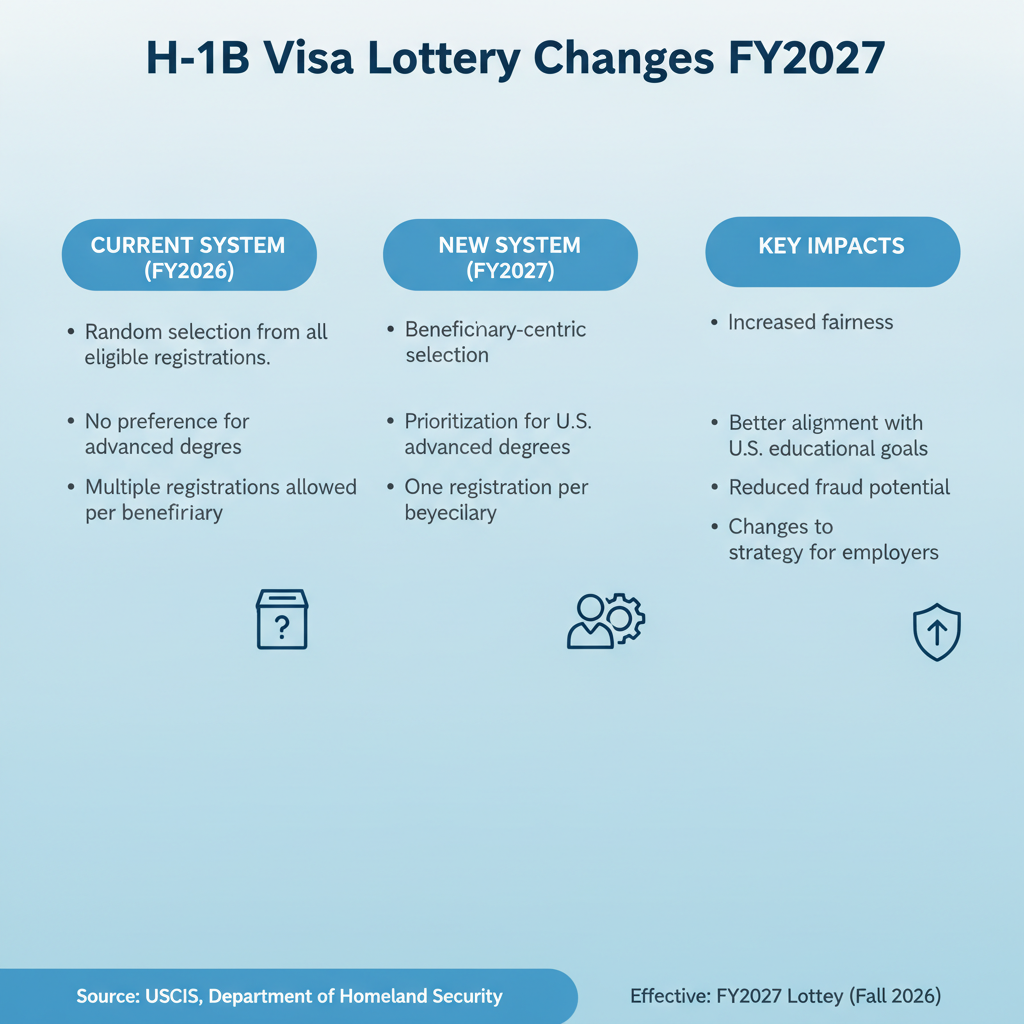
The U.S. Citizenship and Immigration Services (USCIS) formally announced and implemented key changes to the H-1B cap registration process. While these changes were initially effective for the FY2025 lottery, their full impact and implications are now well understood and solidified for subsequent fiscal years, including FY2027. The "news" today isn't necessarily a brand-new announcement for FY2027 specifically, but rather the ongoing discussion, analysis, and practical application of these crucial regulatory updates. As we move through the year, individuals and employers are actively preparing for the next H-1B cap season, making the implications of these changes a constantly trending topic in legal news and immigration circles. It’s about ensuring that everyone is aware of how these established rules affect their strategy for the upcoming lottery cycles. The primary driver behind these modifications was a concerted effort by USCIS to combat widespread fraud and abuse observed in previous lottery cycles, where multiple employers submitted registrations for the same beneficiary, artificially inflating selection odds.How it can affect Florida residents
Florida, particularly Central Florida with its growing tech, tourism, healthcare, and aerospace industries, is a magnet for skilled foreign workers. Cities like Orlando, Tampa, and Miami rely on H-1B visa holders to fill critical talent gaps. These new rules have a direct and profound impact on Florida residents in several ways: * **Increased Fairness for Legitimate Applicants:** For individuals working or aspiring to work in Florida’s vibrant economy, the beneficiary-centric selection process (which we'll detail below) means that each unique beneficiary has an equal chance of selection, regardless of how many employers register them. This levels the playing field and potentially reduces the number of fraudulent registrations, offering a fairer shot to those with genuine job offers. * **Employer Due Diligence:** Florida employers, particularly those along the I-4 corridor or in medical innovation hubs, must now exercise even greater diligence in their H-1B sponsorship processes. They need to ensure they are working with legitimate candidates and understand the single-beneficiary registration rule. * **Strategic Planning:** For international students graduating from Florida universities (like UCF, UF, or FIU) on F-1 visas and looking to transition to H-1B status, understanding these changes is vital for strategic career planning. They need to ensure their prospective employer is fully compliant with the new rules. * **Reduced Lottery Fatigue (Potentially):** While the demand for H-1B visas remains incredibly high, the new rules aim to reduce the perception of a "stacked deck" and might, over time, lead to a slightly more predictable (though still competitive) lottery process. For anyone in Orlando or across Florida considering an H-1B visa, these changes demand careful attention. Imigrar is here to guide you through every nuance.What H-1B Visa Lottery Changes for FY2027 Is (and Why It Matters)
The H-1B visa program allows U.S. employers to temporarily employ foreign workers in specialty occupations. A specialty occupation generally requires a bachelor's degree or higher in a specific specialty, or its equivalent. Examples include IT professionals, engineers, doctors, scientists, and certain business analysts. However, due to overwhelming demand, the number of H-1B visas available each fiscal year is capped by Congress. This cap often necessitates a lottery to select which registrations will proceed to the full petition stage. The recent changes, particularly for FY2027, are designed to reform this lottery process.A plain-English definition
Simply put, the "H-1B Visa Lottery Changes for FY2027" refers to the updated rules governing how USCIS selects registrants for the annual H-1B cap-subject visa program. The most significant change is the shift to a **beneficiary-centric selection process**. This means that instead of multiple registrations for the same individual (beneficiary) by different employers each having a separate chance in the lottery, now each unique beneficiary is entered into the lottery *only once*, regardless of how many employers submit a registration on their behalf. If that beneficiary is selected, *all* employers who registered them are notified, and any one of those employers can then proceed to file an H-1B petition on their behalf. This change matters immensely because it directly addresses the issue of fraud where some individuals or entities exploited the previous system by submitting numerous registrations for the same person through various shell companies or related employers to significantly boost their chances of selection. The new rule aims to create a fairer, more equitable selection process, ensuring that every individual has an equal and genuine chance.Key terms you need to know
Navigating H-1B changes requires familiarity with specific terminology: * **H-1B Visa:** A non-immigrant visa that allows U.S. employers to temporarily employ foreign workers in specialty occupations. * **Specialty Occupation:** An occupation that requires theoretical and practical application of a body of highly specialized knowledge, and a bachelor's or higher degree in the specific specialty (or its equivalent) as a minimum for entry into the occupation. * **Cap-Subject H-1B:** H-1B petitions subject to the annual statutory cap of 65,000 visas, plus an additional 20,000 for those with a U.S. master's degree or higher (the "master's cap"). * **Cap-Exempt H-1B:** H-1B petitions filed by certain employers, such as institutions of higher education, non-profit organizations affiliated with higher education, or non-profit research organizations, which are not subject to the annual cap. * **Beneficiary:** The foreign national individual who is seeking the H-1B visa. * **Petitioner:** The U.S. employer filing the H-1B petition on behalf of the beneficiary. * **H-1B Registration Process:** The initial electronic submission process where prospective petitioners (employers) register beneficiaries for consideration in the H-1B lottery. This is done via a USCIS online account. * **Lottery (Selection Process):** If the number of registrations exceeds the annual cap, USCIS conducts a random selection process to determine which registrations will be eligible to file a full H-1B petition. * **LCA (Labor Condition Application):** Form ETA-9035, certified by the U.S. Department of Labor (DOL), which attests that the employer will pay the H-1B worker at least the prevailing wage or actual wage, whichever is higher, and provide working conditions that will not adversely affect other workers. This must be certified *before* filing the H-1B petition. * **Premium Processing:** An expedited service offered by USCIS for certain petition types, including H-1B, which guarantees a processing time of 15 calendar days for an additional fee. * **Change of Status:** For beneficiaries already in the U.S. in a different non-immigrant status (e.g., F-1 student), this allows them to change their immigration status to H-1B without leaving the country. * **Consular Processing:** For beneficiaries outside the U.S., this involves attending an interview at a U.S. embassy or consulate in their home country to obtain the H-1B visa stamp.Confused by the jargon? Our Orlando immigration team speaks your language and can clarify these terms and more. Call +1 786-791-3106 for a free consultation, or message us online. Se Habla Español.
Current Immigration Law: The Foundation
The H-1B visa program is rooted in federal immigration law, primarily the Immigration and Nationality Act (INA). The statutory authority for the H-1B program is found in **INA § 101(a)(15)(H)(i)(b)**, which defines the H-1B non-immigrant category. The annual numerical cap on H-1B visas is established by **INA § 214(g)**. USCIS regulations, found in **8 CFR Part 214.2(h)**, provide detailed rules for implementing the H-1B program, including eligibility criteria, petitioning procedures, and the lottery process. The recent changes for FY2027 are amendments to these regulations, designed to enhance the integrity of the H-1B registration and selection process.Federal requirements
To qualify for an H-1B visa, both the employer (petitioner) and the foreign worker (beneficiary) must meet specific federal requirements: **For the Employer (Petitioner):** * **Genuine Job Offer:** The employer must have a bona fide offer of employment in a specialty occupation. * **LCA Certification:** The employer must file and have certified a Labor Condition Application (Form ETA-9035) with the Department of Labor, attesting to wage and working conditions. * **Ability to Pay:** The employer must demonstrate the financial ability to pay the H-1B wage. * **Employer-Employee Relationship:** A valid employer-employee relationship must exist, meaning the employer has the right to control the H-1B worker's employment. **For the Employee (Beneficiary):** * **Specialty Occupation Qualification:** The beneficiary must possess the qualifications for the specialty occupation, typically a bachelor's degree or its equivalent in a related field. This can be demonstrated through: * A U.S. bachelor's or higher degree. * A foreign degree equivalent to a U.S. bachelor's or higher degree. * A state license requiring a bachelor's degree. * Work experience equivalent to a bachelor's degree (3 years of specialized experience for every 1 year of college education). * **Licensure (if applicable):** If the occupation requires a state license (e.g., medical doctor, architect), the beneficiary must possess it. * **No Disqualifying Factors:** The beneficiary must not have any grounds of inadmissibility to the U.S. **The Cap:** The annual statutory cap for H-1B visas is 65,000, with an additional 20,000 visas reserved for those with a U.S. master's degree or higher. This "master's cap" is drawn first. USCIS conducts the lottery if the number of registrations exceeds these caps. USCIS official website is the primary source for all forms, regulations, and announcements regarding the H-1B program.Florida-specific considerations
While H-1B requirements are federal, Florida's economic landscape presents unique opportunities and considerations: * **High Demand in Key Sectors:** Florida's robust sectors in technology, aerospace (especially around the Space Coast), healthcare (Orlando's Medical City, Tampa Bay), finance, and hospitality often have a high demand for skilled foreign workers. This means numerous potential H-1B sponsoring employers. * **Education Hubs:** Central Florida is home to major universities like the University of Central Florida (UCF), which produces a significant number of international graduates eligible for Optional Practical Training (OPT) and subsequently, H-1B sponsorship. The proximity of these graduates to potential employers streamlines the transition process. * **Local USCIS Presence:** The Orlando USCIS Field Office primarily handles interviews and certain local adjustments of status, but H-1B petitions are typically processed by USCIS Service Centers (e.g., California or Vermont Service Centers). However, for any local follow-up or related immigration matters, the Orlando office is the point of contact for Central Florida residents. * **State-Level Workforce Programs:** Florida often has state-level initiatives to attract and retain talent, which, while not directly impacting H-1B eligibility, can highlight sectors with high demand for specialty occupation workers. **Warning:** It is crucial for Florida-based employers and beneficiaries to be wary of any "consulting firms" or individuals promising guaranteed H-1B selection or charging exorbitant fees for multiple registrations. The new beneficiary-centric selection process directly targets and aims to eliminate such fraudulent practices. Due diligence is paramount.How to Navigate the H-1B Visa Lottery Changes: A Complete Step-by-Step Guide
The H-1B process, especially with the recent changes, can be complex. This guide outlines the essential steps for the FY2027 cycle, focusing on how the new beneficiary-centric selection impacts each stage.1) Understand the New Lottery Rules (Beneficiary-Centric Selection)
The most critical first step is to fully grasp the shift to beneficiary-centric selection. * **What it means:** For the FY2027 lottery, USCIS selects registrations based on each unique beneficiary. If a beneficiary has multiple registrations submitted on their behalf by different employers, they are still only entered into the lottery once. If selected, USCIS will notify *all* petitioners who submitted a registration for that selected beneficiary. * **Why it matters:** This significantly reduces the incentive for fraudulent multiple registrations and aims to give every eligible beneficiary a fairer chance. It also means that a beneficiary could theoretically be selected and have multiple legitimate job offers from which to choose, allowing them to proceed with the H-1B petition from their preferred employer. * **Actionable Advice:** * **Beneficiaries:** Ensure all prospective employers are aware of this rule. If you have multiple job offers, inform each employer that they are registering you, and that only one petition can be filed if you are selected. * **Employers:** Focus on a single, strong registration for your preferred candidate. Do not rely on multiple registrations for the same individual, as this is no longer effective for increasing selection odds and could lead to issues.2) Employer and Beneficiary Preparation
Preparation is key, often beginning months before the actual registration window opens (typically in March each year). * **Employer Actions:** * **Assess Needs:** Determine the need for H-1B workers and identify eligible positions as specialty occupations. * **Verify Beneficiary Qualifications:** Ensure the prospective employee meets the educational and experience requirements for the specialty occupation. * **Establish USCIS Online Account:** If not already established, the employer (or their authorized representative, like an attorney) must create a "registrant" account with USCIS. * **Internal Compliance Check:** Review internal policies to ensure compliance with H-1B wage requirements and working conditions. * **Beneficiary Actions:** * **Secure Job Offer(s):** Obtain a bona fide job offer from a U.S. employer willing to sponsor an H-1B visa. * **Gather Educational Documents:** Collect all diplomas, transcripts, and any foreign degree evaluations. * **Compile Professional Experience:** Prepare a detailed resume and any employment verification letters. * **Passport Validity:** Ensure your passport is valid for at least six months beyond your intended H-1B period. * **Required Documents for Preparation:** * Beneficiary's full legal name, date of birth, country of birth, country of citizenship, passport number. * Beneficiary's highest level of education, field of study, and institution. * Employer's Legal Name, EIN, mailing address. * Employer's representative contact information. * Job title and proposed start date.3) H-1B Electronic Registration Process
This is the initial phase where employers submit registrations to USCIS. * **Timeline:** The registration period typically opens in early March for about 2-3 weeks. For FY2027, this would have been March 2026. * **How it works:** * The prospective petitioner (employer) or their authorized attorney submits an electronic registration for each beneficiary through their USCIS online account. * Each registration requires basic identifying information for both the employer and the beneficiary. * A non-refundable $10 registration fee is required for each submission. * **New Rule Impact:** Crucially, the system now identifies duplicate registrations for the *same beneficiary*. Only one entry for each unique beneficiary is placed into the lottery pool. * **Required Information for Registration:** * Employer’s legal name, federal employer identification number (EIN), and mailing address. * Authorized signatory’s name, title, and contact information. * Beneficiary’s full legal name, date of birth, country of birth, country of citizenship, gender, and passport number. * Whether the beneficiary has earned a U.S. master’s or higher degree. * **Important:** This step is only a registration, not a full petition. No extensive documentation is required at this stage.4) If Selected: Petition Filing (Form I-129)
If a registration is selected in the lottery, the employer then has a specific window to file a complete H-1B petition. * **Notification:** USCIS notifies selected registrants through their online accounts. The notification will specify the filing period (typically 90 days). * **LCA Filing:** Before filing the H-1B petition, the employer must submit a Labor Condition Application (Form ETA-9035) to the Department of Labor (DOL) and receive certification. This ensures compliance with wage and working condition requirements. This step can take 7-10 days. * **Petition Preparation:** The employer prepares and files Form I-129, Petition for a Nonimmigrant Worker, along with extensive supporting documentation, to the designated USCIS Service Center. * **New Rule Impact:** If a beneficiary was registered by multiple employers and selected, all those employers are notified. However, only *one* employer can proceed to file the Form I-129 petition for that selected beneficiary. The beneficiary and employers must decide which petition to file. * **Required Documents for Form I-129 Petition:** * Certified LCA (Form ETA-9035). * Form I-129 and H-1B Data Collection and Filing Fee Exemption Supplement. * Employer's letter of support describing the job, specialty occupation nature, and beneficiary's qualifications. * Beneficiary's educational documents (diplomas, transcripts, foreign degree evaluations). * Beneficiary's resume and letters of experience. * Beneficiary's passport copy, visa, and I-94 record (if in U.S.). * Employer's business documents (articles of incorporation, financial statements, tax returns, business license) to prove legitimate operations and ability to pay. * Copies of any contracts between employer and beneficiary. * For IT consulting firms, client letters and statements of work are often crucial. * Filing fees (base filing fee, ACWIA fee, fraud prevention and detection fee, public law 114-113 fee if applicable).5) Visa Interview (for those outside US) / Change of Status (for those inside US)
Once the Form I-129 petition is approved, the beneficiary can obtain their H-1B status. * **For Beneficiaries Outside the U.S. (Consular Processing):** * Receive Form I-797B, Approval Notice. * Complete Form DS-160, Online Nonimmigrant Visa Application. * Pay visa application fees. * Schedule and attend a visa interview at a U.S. embassy or consulate in their home country. * If approved, the visa stamp is placed in their passport. * **For Beneficiaries Inside the U.S. (Change of Status):** * If Form I-129 requested a change of status, and it is approved, the I-94 record attached to Form I-797A, Approval Notice, indicates the new H-1B status and validity period. No further action is needed to begin H-1B employment on the effective date (typically October 1st for cap-subject H-1Bs). * **Required Documents for Consular Processing:** * Valid passport. * Form DS-160 confirmation page. * Appointment confirmation. * Original Form I-797B approval notice. * LCA copy. * Employer's support letter. * Educational and experience documents. * Passport-style photos. * Any other documents requested by the consulate.6) Maintaining H-1B Status
Once H-1B status is granted, it's crucial to maintain compliance. * **Start Date:** H-1B cap-subject employment generally begins on October 1st of the fiscal year. * **Adhere to Petition Terms:** Work only for the petitioning employer in the approved specialty occupation and location. * **Amendments:** If there are significant changes to the job duties, salary, or work location, the employer must file an amended Form I-129 petition. * **Extensions:** H-1B status is generally granted for an initial period of up to three years and can be extended for a total maximum of six years. * **Transfer:** If changing employers, the new employer must file a new H-1B petition. The beneficiary can often start working for the new employer upon filing the new petition, under "H-1B portability" rules.Feeling overwhelmed by the steps? Our seasoned immigration attorneys at Imigrar simplify the process. Contact us at +1 786-791-3106 for expert guidance. Se Habla Español.
Practical Steps You Can Take Today
Preparing for the H-1B lottery, especially with the new rules, requires proactive engagement. Here’s an actionable checklist: * **1. Consult an Experienced Immigration Attorney:** This is perhaps the most crucial step. An attorney specializing in H-1B visas can interpret the new rules, assess your eligibility, advise your employer, and handle the entire process meticulously. At Imigrar, our Orlando team is ready to assist. * **2. Verify Employer Legitimacy:** For beneficiaries, thoroughly research any prospective employer. Ensure they are a legitimate, actively operating business with a history of compliance. The new rules aim to curb fraud, but due diligence on your part is still essential. * **3. Gather and Organize All Documents:** Start collecting all educational degrees, transcripts, foreign credential evaluations, professional licenses, and employment verification letters. Having these ready well in advance saves time and reduces stress. * **4. Understand the New Beneficiary-Centric System:** Ensure both you and your sponsoring employer fully comprehend that only one selection per unique beneficiary is possible. This means focusing on quality, not quantity, of registrations. * **5. Review USCIS Official Guidance Regularly:** Immigration laws and procedures can change. Bookmark and regularly check the USCIS official website for the latest updates, FAQs, and policy memos. * **6. Maintain Your Current Immigration Status:** If you are currently in the U.S. (e.g., on an F-1 OPT visa), strictly adhere to the terms of your current status. Any violation could jeopardize your future H-1B eligibility. * **7. Financial Preparedness:** Be aware of the various fees involved (registration fee, filing fees, attorney fees) and discuss who is responsible for which costs with your employer. **Document Preparation Guidance:** * **Certify Copies:** Always provide certified copies of original documents unless USCIS specifically requests originals. * **Translations:** Any document not in English must be accompanied by a certified English translation. The translator must attest that they are competent to translate and that the translation is accurate. * **Educational Evaluations:** For foreign degrees, a credential evaluation from a reputable organization is often required to demonstrate equivalency to a U.S. bachelor's or master's degree. * **Employer Records:** Employers should have robust record-keeping for all H-1B employees, including LCA postings, wage records, and public access files. **Timeline Expectations (General for Upcoming FY Cycles):** * **December - February:** Employer and beneficiary preparation, attorney consultation. * **Early March (e.g., March 2027 for FY2028):** H-1B electronic registration period opens (typically 2-3 weeks). * **Late March - Early April:** USCIS conducts the lottery (if needed) and announces selections. * **April 1 - June 30 (approx. 90-day window):** Selected petitioners file Form I-129 petitions. * **May - September:** USCIS processes petitions. Premium processing can expedite this. * **October 1:** H-1B status becomes effective for approved cap-subject petitions. **Reminder:** The dates above are approximate and subject to change based on USCIS announcements each year. Always refer to official USCIS publications for precise deadlines.