


The landscape of U.S. work visas is constantly evolving, and for those aspiring to work in a specialty occupation, the H-1B visa remains a crucial pathway. As we approach the registration period for Fiscal Year 2027 (FY2027), significant changes to the H-1B lottery system are taking center stage. These new rules, designed to enhance fairness and integrity, will impact countless individuals and employers across the nation, including right here in Orlando and throughout Florida.
The reporting that sparked this guide
Our firm, Imigrar, is dedicated to keeping our community informed about critical updates in immigration law. The insights provided in this guide are informed by recent developments reported across legal news outlets:
H-1B Visa Lottery Changes for FY2027 (Legal News)
What This News Means for Immigrants in Orlando and Across Florida
The H-1B visa program is a lifeline for many skilled foreign nationals and the U.S. companies that rely on their expertise. From tech startups in Lake Nona to aerospace engineers on the Space Coast, and medical professionals across Central Florida, the ability to secure an H-1B visa can be the difference between realizing a dream and facing a closed door. The changes for FY2027 are not minor adjustments; they represent a fundamental shift in how the H-1B lottery will operate, directly impacting the strategies individuals and employers must adopt.
Why this news is showing up now
The U.S. Citizenship and Immigration Services (USCIS) has been implementing reforms to the H-1B program to address concerns about fraud and to ensure a more equitable selection process. While some of these changes, particularly the shift to a beneficiary-centric lottery, were initially announced and implemented for the FY225 cycle, their full impact and implications are now becoming clearer as we look ahead to the FY2027 lottery. With the registration period typically opening in March of each year for the fiscal year beginning October 1st, August 2026 is the perfect time for proactive planning. Employers and prospective H-1B beneficiaries need to understand these rules well in advance to prepare their applications effectively, making this news incredibly timely and relevant.
How it can affect Florida residents
Florida is a vibrant hub for innovation, tourism, healthcare, and technology. Cities like Orlando, Miami, and Tampa attract a diverse pool of international talent. For many skilled professionals currently working in Florida on other nonimmigrant visas (like F-1 OPT or J-1), or those abroad hoping to join the workforce here, the H-1B visa is the primary path to long-term employment and potential permanent residency. The new lottery rules will have several key impacts:
- Increased Fairness for Beneficiaries: The shift to a beneficiary-centric selection process means that each unique individual can only have one registration submitted on their behalf per lottery cycle. This is a game-changer, as it aims to prevent situations where multiple employers submit registrations for the same individual, artificially inflating their chances. For those in Orlando or elsewhere in Florida, this levels the playing field, ensuring that every eligible individual has an equal, fair shot.
- Employer Strategy Shift: Florida employers, from large corporations along the I-4 corridor to smaller tech firms, will need to adjust their H-1B sponsorship strategies. The focus will shift from maximizing individual registrations to ensuring the strongest possible petition for each unique beneficiary.
- Reduced Fraud: USCIS's goal is to reduce fraud and abuse within the H-1B system. This means a more rigorous scrutiny of registrations and petitions, which could affect the processing times or require more detailed documentation from Florida-based companies.
- Preparation is Key: For individuals and employers in Florida, early and meticulous preparation is more critical than ever. Understanding the new requirements, gathering necessary documentation, and potentially seeking legal counsel from firms like Imigrar well in advance of the March 2027 registration period will be essential for success.
Whether you're an international student graduating from a Florida university, a professional working on OPT in Orange County, or an employer seeking to retain top talent, these changes demand your immediate attention.
Need Help? Our Orlando immigration team is ready to assist. Call +1 786-791-3106 for a free consultation, or message us online. Se Habla Español.
What H-1B Visa Lottery Changes for FY2027 Is (and Why It Matters)
The H-1B visa program allows U.S. employers to temporarily employ foreign workers in specialty occupations. These occupations generally require a bachelor's degree or higher in a specific field. Due to high demand, the number of H-1B petitions often exceeds the annual cap set by Congress, necessitating a lottery system. The changes for FY2027 directly impact how this lottery operates, aiming for greater integrity and fairness.
A plain-English definition
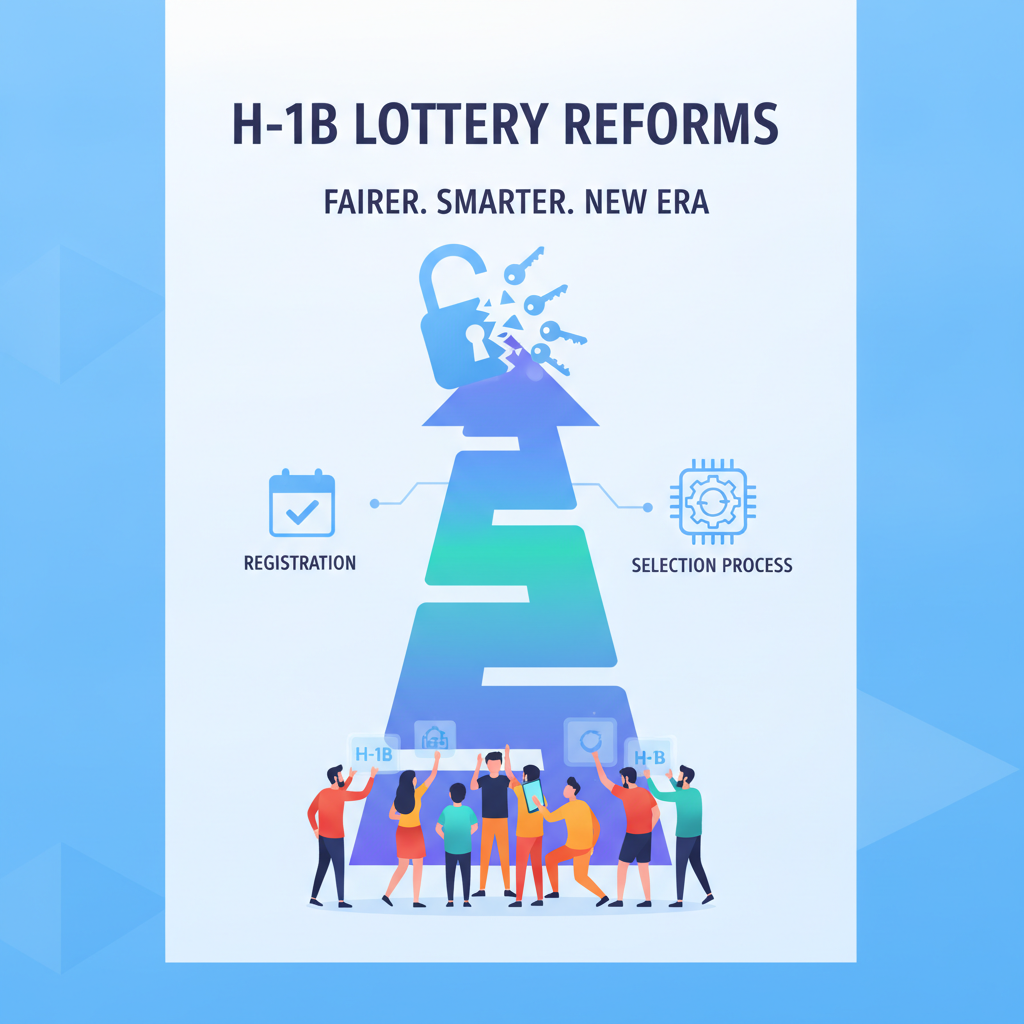
In simple terms, the H-1B Visa Lottery Changes for FY2027 refer to new rules put in place by USCIS to improve the selection process for H-1B visas. The most significant change is that the lottery will now be "beneficiary-centric." This means that instead of counting each registration submitted by an employer, USCIS will now count each unique individual (the beneficiary) who has a registration submitted on their behalf. If one person has ten different employers submit registrations for them, that person still only gets one entry in the lottery, not ten. This change is designed to stop fraud where multiple companies might submit registrations for the same person just to increase their odds, without any real job offer.
Why it matters: This new system is crucial because it gives every eligible individual the same chance in the lottery, regardless of how many employers are willing to sponsor them. It's a move towards a fairer system that aims to allocate the limited number of H-1B visas based on genuine demand and individual qualifications, rather than a strategy of mass registrations.
Key terms you need to know
Navigating the H-1B process requires understanding specific terminology. Here are some key terms vital for the FY2027 changes:
- H-1B Visa: A nonimmigrant visa that allows U.S. employers to temporarily employ foreign workers in specialty occupations.
- Specialty Occupation: An occupation that requires a theoretical and practical application of a body of highly specialized knowledge, and a bachelor's degree or higher in the specific specialty (or its equivalent) as a minimum for entry into the occupation in the United States.
- Beneficiary: The foreign national worker for whom the H-1B petition is being filed.
- Petitioner: The U.S. employer filing the H-1B petition on behalf of the beneficiary.
- H-1B Cap: The annual numerical limit on the number of H-1B visas issued each fiscal year. The current statutory cap is 65,000, with an additional 20,000 visas reserved for those with a U.S. master's degree or higher (the "Master's Cap").
- H-1B Lottery (or Cap Lottery): The random selection process conducted by USCIS when the number of eligible H-1B registrations exceeds the annual cap.
- H-1B Registration Period: The designated timeframe, typically in March, during which prospective petitioners (employers) must electronically register beneficiaries for the H-1B cap lottery.
- Beneficiary-Centric Selection: The new lottery process where each unique beneficiary is entered into the lottery only once, regardless of how many employers submit registrations on their behalf. This is the core of the FY2027 change.
- Labor Condition Application (LCA): Form ETA-9035, certified by the U.S. Department of Labor (DOL), which attests that the employer will pay the H-1B worker at least the prevailing wage or the actual wage, whichever is higher, and provide working conditions that will not adversely affect other workers. This must be approved before filing the H-1B petition.
- Fiscal Year (FY): The U.S. government's fiscal year runs from October 1st to September 30th. For H-1B, the FY2027 lottery is for visas valid starting October 1, 2027.
Current Immigration Law: The Foundation
Understanding the H-1B visa program requires a grasp of the underlying federal immigration laws and regulations that govern it. The H-1B visa category is established under the Immigration and Nationality Act (INA), specifically Section 101(a)(15)(H)(i)(b), which defines nonimmigrant classifications. The annual numerical limitations (the cap) are outlined in INA Section 214(g).
Federal requirements
The H-1B program is a federal program administered primarily by USCIS, an agency of the Department of Homeland Security (DHS), and the Department of Labor (DOL). Key federal requirements include:
- Specialty Occupation: The job offered must qualify as a specialty occupation. This means the duties must be complex enough to generally require a bachelor's degree or higher in a specific field. The beneficiary must also meet the educational and licensing requirements for that specialty.
- Employer-Employee Relationship: A valid employer-employee relationship must exist between the petitioner and the beneficiary, as defined by USCIS regulations.
- Wage Requirements: The employer must pay the H-1B worker at least the prevailing wage for the occupational classification in the area of intended employment or the actual wage paid by the employer to other similarly qualified employees, whichever is higher. This is verified through the Labor Condition Application (LCA), Form ETA-9035, filed with the DOL.
- Numerical Cap Compliance: Unless exempt (e.g., working for a cap-exempt institution), the petition must fall under the annual H-1B cap, which means going through the lottery process if demand exceeds supply.
- Period of Stay: An H-1B visa is initially granted for up to three years and can be extended for a maximum total stay of six years. Some exceptions allow for extensions beyond six years, particularly for those with pending green card applications.
The primary form used for an H-1B petition is Form I-129, Petition for a Nonimmigrant Worker. This form, along with supporting documentation, is filed with USCIS once a registration is selected in the lottery.
For official information and forms, always refer to the USCIS official website.
Florida-specific considerations
While H-1B is a federal program, certain factors can be specific to Florida residents and employers:
- Prevailing Wage Areas: Prevailing wages are determined by geographic location. For example, the prevailing wage for a software developer in Orlando's tech corridor could differ from that in rural North Florida. Employers must ensure they are paying the correct prevailing wage for the specific work location within Florida.
- Local USCIS Field Offices: While H-1B petitions are typically processed by USCIS service centers, residents of Florida might interact with local USCIS Field Offices, such as the Orlando USCIS Field Office, for other immigration matters or in rare cases, for interviews related to adjustment of status if their H-1B is part of a larger immigration strategy.
- State Licensing: For certain specialty occupations in Florida, such as healthcare professionals (doctors, nurses) or engineers, state-specific licensing requirements must be met. An H-1B petition cannot be approved if the beneficiary is not properly licensed to perform the job in Florida.
- Educational Institutions: Florida is home to numerous universities (e.g., University of Central Florida, University of Florida). These institutions, and affiliated non-profit research organizations, are often "cap-exempt" employers, meaning they can petition for H-1B workers at any time, outside of the annual lottery.
Reminder: Staying informed about both federal regulations and any relevant state-specific requirements is crucial for a successful H-1B process in Florida.
How to Navigate the H-1B Visa Lottery Changes: A Complete Step-by-Step Guide
Successfully navigating the H-1B visa lottery, especially with the new beneficiary-centric rules for FY2027, requires careful planning and execution. Here’s a detailed step-by-step guide for both employers and prospective employees.
1) Understand the New Beneficiary-Centric Lottery Rules
Before doing anything else, internalize the core change: the lottery is now based on unique beneficiaries, not registrations. This means if multiple employers register you, your chances don't multiply. Each unique passport number (or other identifying document) gets one entry. Action: If you are a beneficiary, inform all potential sponsoring employers about this rule. If you are an employer, understand that mass registrations for the same individual are no longer advantageous and could even be flagged by USCIS. Required Documents/Information:
- For Beneficiary: Awareness of your unique identifying information (e.g., passport number).
- For Employer: Clear understanding of USCIS regulations on H-1B electronic registration.
2) Employer Files the Labor Condition Application (LCA)
Before an H-1B registration can even be submitted, the employer must obtain a certified Labor Condition Application (LCA), Form ETA-9035, from the Department of Labor (DOL). This form attests to the employer's compliance with wage and working condition requirements. Timeline: This step typically takes 7-10 calendar days for DOL certification. It must be certified before the H-1B registration period closes. Required Documents/Information:
- Employer's Federal Employer Identification Number (FEIN).
- Prevailing wage determination for the specific occupation and geographic location (e.g., Orlando, Florida).
- Job description, duties, and minimum requirements for the position.
- Beneficiary's proposed salary.
- Worksite address in Florida.
3) Electronic H-1B Registration Submission
Once the LCA is certified, the employer (or their authorized representative, like Imigrar) must submit an electronic registration for each beneficiary through the USCIS online H-1B registrant account. This typically occurs in March (e.g., March 2027 for FY2027). Cost: There is a non-refundable $10 registration fee per beneficiary. Important: Only one registration per beneficiary is permitted. If multiple employers register the same beneficiary, USCIS will select based on the beneficiary's unique ID, not the number of registrations. Required Documents/Information (for registration):
- Beneficiary's full legal name, date of birth, country of birth, country of citizenship.
- Beneficiary's passport number.
- Beneficiary's gender.
- Beneficiary's highest level of education and U.S. degree type (if applicable, for Master's Cap).
- Employer's legal name, FEIN, and mailing address.
- Employer's attorney or representative information (if applicable).
4) H-1B Lottery Selection and Notification
After the registration period closes, USCIS conducts the lottery. First, they select enough registrations to meet the Master's Cap, then the regular cap. Notifications are typically sent out electronically within a few weeks of the registration period closing. Outcome:
- Selected: If selected, the employer receives a "Selection Notice" and is eligible to file a full H-1B petition for that beneficiary.
- Not Selected: If not selected, the beneficiary cannot proceed with an H-1B cap-subject petition for that fiscal year.
- Waitlisted: In some years, USCIS might indicate a "waitlisted" status, meaning they might conduct a second lottery if initial selections don't meet the cap.
Warning: Selection in the lottery does NOT guarantee H-1B approval. It only grants the eligibility to file the petition.
5) Filing the H-1B Petition (Form I-129)
If a registration is selected, the employer has a specific window (usually 90 days) to prepare and file the full H-1B petition with USCIS. This involves submitting Form I-129, Petition for a Nonimmigrant Worker, along with extensive supporting documentation. Key Components of the Petition:
- Form I-129 and relevant supplements (e.g., H Classification Supplement).
- Certified LCA (Form ETA-9035).
- Copy of the H-1B registration selection notice.
- Employer's support letter detailing the job, beneficiary's qualifications, and why the position is a specialty occupation.
- Beneficiary's educational documents (degrees, transcripts, evaluations).
- Beneficiary's resume and professional licenses (if applicable for Florida).
- Evidence of employer's ability to pay the proffered wage.
- Employer's financial documents.
- Photos, passport copy, and I-94 record for the beneficiary (if in the U.S.).
- Filing fees (base fee, ACWIA fee, fraud prevention and detection fee, public law 114-113 fee if applicable).
Location-Specific: For Central Florida residents, ensuring all documentation aligns with the specific job site in Orlando or surrounding areas is crucial.
6) USCIS Processing and Adjudication
After filing, USCIS reviews the petition. This process can take several months. During this time, USCIS may issue a Request for Evidence (RFE) if they need more information. Potential Outcomes:
- Approval: If approved, USCIS issues an I-797 Approval Notice. If the beneficiary is already in the U.S., their status is changed to H-1B. If abroad, they can apply for an H-1B visa stamp at a U.S. consulate.
- Request for Evidence (RFE): USCIS requests additional documentation or clarification. A timely and comprehensive response is critical.
- Denial: The petition is denied. This can happen for various reasons, often due to insufficient evidence or not meeting eligibility criteria.
Tip: Premium Processing is available for an additional fee, guaranteeing a response within 15 calendar days for Form I-129 petitions.
Confused by the H-1B process? Let Imigrar guide you through every step. Our Orlando-based team has extensive experience with H-1B petitions. Call +1 786-791-3106 for a free consultation. Se Habla Español.
Practical Steps You Can Take Today
With the FY2027 H-1B lottery still several months away (registration typically in March 2027), now is the ideal time to prepare. Proactive steps can significantly increase your chances of success, whether you're an employer in Orlando or a potential beneficiary anywhere in Florida.
Actionable Checklist (for Beneficiaries and Employers):
- Review Eligibility:
- Beneficiary: Do you have a bachelor's degree or its equivalent in a specialty occupation field? Do you have any relevant professional licenses for your field in Florida?
- Employer: Does the position qualify as a specialty occupation? Can you meet the prevailing wage requirements for the location (e.g., Orlando, Orange County)?
- Update Resumes and Educational Documents:
- Beneficiary: Ensure your resume is current and accurately reflects your skills and experience. Gather all university degrees, transcripts, and any necessary foreign degree evaluations.
- Employer: Have a clear job description ready that highlights the specialty occupation nature of the role.
- Start LCA Preparation Early:
- Employer: Begin gathering information for the Labor Condition Application (LCA), Form ETA-9035. This includes prevailing wage research and ensuring the job duties align with a specialty occupation.
- Communicate with Potential Employers/Beneficiaries:
- Beneficiary: If you have multiple potential employers, clearly communicate the beneficiary-centric rule to ensure only one registration is submitted on your behalf.
- Employer: If you are sponsoring multiple individuals, ensure you have all necessary beneficiary information (passport, education) accurately.
- Consult with an Experienced Immigration Attorney:
- Both beneficiaries and employers should seek legal advice. An attorney can help assess eligibility, strategize the application, ensure compliance with new rules, and prepare a strong petition. For Central Florida residents, Imigrar offers local expertise.
Document Preparation Guidance
Meticulous document preparation is paramount. Missing or incorrect documents are common reasons for RFEs or denials.
- Educational Documents: For beneficiaries, gather original or certified copies of all diplomas, transcripts, and any U.S. equivalency evaluations for foreign degrees. If your degree is from a foreign institution, it will likely need an evaluation by a credential evaluation service to determine its U.S. equivalent.
- Employer Documents: Employers should have their Federal Employer Identification Number (FEIN), business registration documents, financial statements, and a detailed organizational chart ready. These demonstrate the company's legitimacy and ability to pay the proffered wage.
- Job Offer Letter: A comprehensive job offer letter from the employer is critical. It should detail the job title, duties, salary, work location (e.g., Orlando, FL), and the requirement for a bachelor's degree in a specific field.
- Beneficiary's Personal Documents: Passport copies, birth certificate, marriage certificate (if applicable), previous visa stamps, I-94 records (if in the U.S.), and a recent resume.
- LCA Support: Ensure that the certified LCA is fully consistent with the job offer and the H-1B petition.
Timeline Expectations
Understanding the typical H-1B timeline for FY2027 is crucial for planning:
- August 2026 - February 2027: Preparation phase. Employers and beneficiaries gather documents, attorneys assess eligibility, and LCA preparation begins.
- March 2027: H-1B electronic registration period (typically the first two weeks). LCA must be certified before registration.
- Mid-March to Early April 2027: Lottery conducted, selection notifications sent out.
- April 1, 2027 - June 30, 2027 (approx.): Filing window for selected H-1B petitions (usually a 90-day window).
- April 2027 - September 2027: USCIS processes H-1B petitions. RFEs may be issued. Premium Processing can expedite this.
- October 1, 2027: Start date for approved FY2027 H-1B visas. Beneficiaries can begin working in H-1B status.
Important: These are general timelines. Specific dates are announced by USCIS closer to the registration period. Always check the USCIS H-1B webpage for the most current information.
How Imigrar Helps Immigrants in Orlando
At Imigrar, we understand that navigating the complexities of U.S. immigration law can be overwhelming, especially with significant changes like the H-1B lottery updates for FY2027. Based in Orlando, Florida, we are committed to providing expert, compassionate, and results-driven legal services to immigrants and their families nationwide. Our tagline, "Keep Families Together," reflects our core mission.
Our experience and expertise
Our team of experienced immigration attorneys possesses in-depth knowledge of H-1B visa requirements, the lottery process, and the latest policy changes. We have successfully assisted countless individuals and employers in Orlando, Central Florida, and across the United States in securing H-1B visas. Our expertise includes:
- Eligibility Assessment: Thorough evaluation of both the beneficiary's qualifications and the employer's job offer to ensure H-1B suitability under the new rules.
- LCA Preparation and Filing: Meticulous preparation and submission of the Labor Condition Application (LCA) to the Department of Labor.
- H-1B Electronic Registration: Accurate and timely submission of H-1B registrations, ensuring compliance with the beneficiary-centric selection process.
- Petition Preparation and Filing: Comprehensive drafting and filing of Form I-129, Petition for a Nonimmigrant Worker, along with all required supporting documentation, tailored to withstand USCIS scrutiny.
- RFE Responses: Strategic and robust responses to Requests for Evidence (RFEs) from USCIS.
- Strategic Guidance: Advising employers on best practices for H-1B sponsorship in light of new regulations and counseling beneficiaries on maintaining status and future immigration pathways.
- Local Insight: Understanding of Florida-specific nuances, such as prevailing wage considerations in Orlando and local licensing requirements.
We pride ourselves on clear communication, attention to detail, and a proactive approach to prevent issues before they arise. Our goal is to make your H-1B journey as smooth and stress-free as possible.
Free consultation offer
The H-1B lottery changes for FY2027 are significant, and seeking professional guidance early is paramount. Imigrar offers a free consultation to discuss your specific situation. During this consultation, we can:
- Explain how the new H-1B lottery rules impact you or your business.
- Assess your eligibility or your potential employee's eligibility.
- Outline the steps involved and the documents required.
- Answer your pressing questions and address your concerns.
Don't leave your immigration future to chance. Contact our Orlando office today to schedule your free consultation.
Se Habla Español. Our bilingual team is ready to serve the diverse communities of Orlando and beyond, ensuring everyone has access to expert legal advice in their preferred language.
Ready to navigate the H-1B lottery with confidence?


Have Questions About Your Case?
Schedule a free consultation with our attorney-reviewed team today