


Navigating the complex world of U.S. immigration law can be challenging, especially with frequent updates and evolving regulations. At Imigrar, we believe in empowering our clients with accurate, timely, and actionable information to help them achieve their immigration goals and, most importantly, Keep Families Together.
NEWS SOURCE REFERENCE SECTION
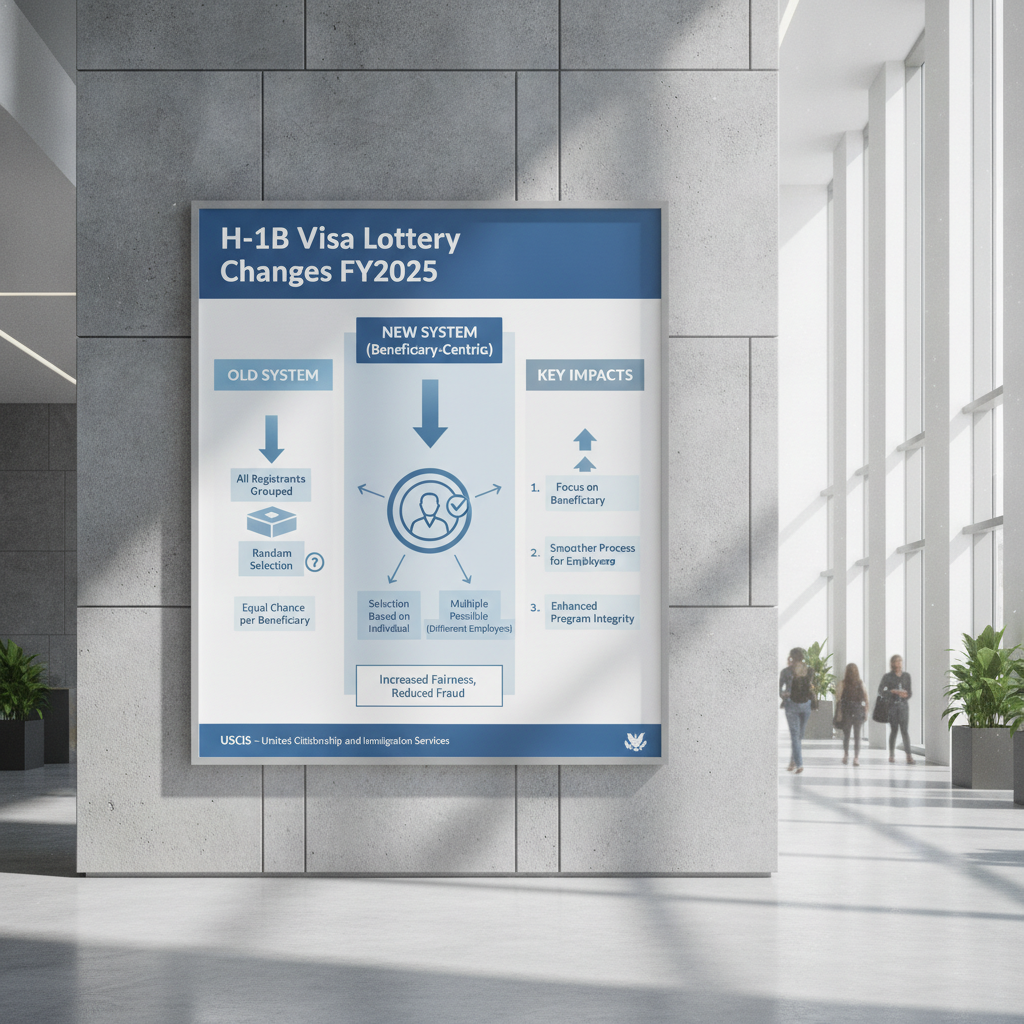
The reporting that sparked this guide: H-1B Visa Lottery Changes for FY2027 (Legal News)
What This News Means for Immigrants in Orlando and Across Florida
The H-1B visa program is a cornerstone for U.S. employers seeking to hire skilled foreign workers in specialty occupations, and for international professionals aspiring to contribute their talents to the American economy. With its annual cap and overwhelming demand, the H-1B lottery has always been a high-stakes event. The recent changes implemented for the Fiscal Year 2027 (FY2027) lottery cycle have introduced significant shifts in how this crucial visa program operates, impacting countless individuals and businesses, including many right here in Florida.
Why this news is showing up now
As of July 5, 2026, the H-1B lottery registration period for FY2027 has concluded, selections have been made, and the window for filing H-1B petitions for selected registrants has just closed or is in its final days. The news surrounding the "changes for FY2027" isn't about new rules *just* being announced, but rather the *impact and implications* of the significant regulatory amendments that were finalized and put into effect for this cycle. These changes, primarily the implementation of a beneficiary-centric selection process and increased fees, have profoundly altered the landscape. Legal news outlets are now reporting on the observed outcomes, the success rates, and the challenges faced by employers and prospective H-1B workers under these new parameters. This is a critical time for reflection and forward planning, as the results of the FY2027 lottery under the new rules become clearer, shaping expectations for future cycles.
How it can affect Florida residents
Florida, particularly Central Florida and the Orlando area, is a vibrant hub for technology, tourism, aerospace, and healthcare industries. Companies along the I-4 corridor, from startups in Lake Nona's Medical City to established tech firms in Orange County, heavily rely on the H-1B program to fill specialized roles that require specific expertise. Universities like the University of Central Florida (UCF) also sponsor numerous researchers and faculty members through the H-1B program.
- For H-1B Beneficiaries in Florida: If you are an international student graduating from a Florida university with an F-1 OPT, or a skilled worker currently employed in Florida on another visa type, the FY2027 changes directly impact your path to obtaining H-1B status. The beneficiary-centric selection aims to make the lottery fairer by preventing multiple entries for the same individual, potentially increasing the odds for genuinely qualified candidates, but also removing the previous "numbers game" strategy some employers used. If you were selected, understanding the new filing requirements and deadlines is paramount. If you were not selected, exploring alternative visa options becomes crucial.
- For Florida Employers: Businesses in Orlando and across Florida that sponsor H-1B visas must adapt to the new processes and increased costs. The focus on unique beneficiaries means employers must ensure their H-1B registration practices are fully compliant with USCIS regulations to avoid allegations of fraud and potential disqualification. The increased registration fee (now $215 per registration) and other associated filing fees also represent a higher financial commitment.
- Increased Scrutiny: USCIS has intensified its focus on program integrity. This means Florida employers and beneficiaries can expect more rigorous review of registrations and petitions, with a greater emphasis on proving a legitimate job offer and qualified beneficiary.
The implications of these changes ripple through Florida's economy and its immigrant communities. Staying informed and seeking expert legal counsel is more critical than ever.
Need Help? Our Orlando immigration team is ready to assist. Call +1 786-791-3106 for a free consultation, or message us online. Se Habla Español.
What H-1B Visa Lottery Changes for FY2027 Is (and Why It Matters)
The H-1B visa program is a nonimmigrant visa that allows U.S. employers to temporarily employ foreign workers in specialty occupations. These occupations generally require a bachelor's degree or higher in a specific specialty. Due to high demand, the U.S. government limits the number of H-1B visas issued each fiscal year through an annual cap. When the number of registrations or petitions exceeds the annual cap, USCIS conducts a lottery to select which registrations or petitions will be processed. The changes for FY2027 refer to the updated rules and procedures that governed the H-1B lottery process for the fiscal year beginning October 1, 2026.
A plain-English definition
Imagine the H-1B visa as a special pass for skilled workers to work in the U.S. There are only a limited number of these passes available each year. Because many more people want these passes than are available, the government uses a lottery system to decide who gets a chance to apply. The "H-1B Visa Lottery Changes for FY2027" means that for the lottery that happened in early 2026 (for passes starting October 1, 2026), the rules for how that lottery worked were significantly updated. The biggest change is that now, each individual person (the "beneficiary") can only be entered into the lottery once, no matter how many companies want to hire them. This is a big shift from previous years where multiple companies could register the same person, potentially increasing their chances artificially. The goal is to make the lottery fairer and reduce fraud.
Key terms you need to know
- H-1B Visa: A nonimmigrant visa that permits U.S. employers to temporarily employ foreign workers in specialty occupations.
- Specialty Occupation: An occupation that requires theoretical and practical application of a body of highly specialized knowledge and a bachelor's degree or higher in the specific specialty (or its equivalent) as a minimum for entry into the occupation in the United States.
- Annual Cap: The numerical limit on the number of H-1B visas issued each fiscal year. The current annual cap is 65,000, with an additional 20,000 visas reserved for those with a U.S. master's degree or higher (the "Master's Cap").
- Fiscal Year (FY): The U.S. government's accounting period, which runs from October 1 to September 30. FY2027 began on October 1, 2026.
- USCIS: U.S. Citizenship and Immigration Services, the government agency that oversees lawful immigration to the United States.
- Beneficiary: The foreign national worker who will be employed in the H-1B specialty occupation.
- Petitioner: The U.S. employer who files the H-1B petition on behalf of the beneficiary.
- H-1B Registration Period: The designated timeframe (typically in March) during which prospective petitioners must electronically register beneficiaries for the lottery. For FY2027, this period was in March 2026.
- Beneficiary-Centric Selection: The core change for FY2027. Instead of selecting registrations based on employer submissions, selections are now based on unique beneficiaries. Each beneficiary is entered into the lottery only once, regardless of how many employers register them. If a beneficiary is selected, all employers who registered them are notified, and only one employer can then file a petition on their behalf.
- Duplicative Registrations: Under the new rules, these are registrations where the same beneficiary is entered more than once by different employers. While multiple employers *can* register the same beneficiary, the system treats all registrations for that single beneficiary as one entry in the lottery. Filing multiple registrations for the *same beneficiary by the same employer* is still prohibited and can lead to disqualification.
- LCA (Labor Condition Application): Form ETA-9035. This form, certified by the U.S. Department of Labor (DOL), attests that the employer will pay the H-1B worker at least the prevailing wage or the actual wage paid to other employees with similar experience and qualifications, and that the employment will not adversely affect working conditions of U.S. workers. It must be certified *before* filing the H-1B petition.
- Premium Processing: An optional service offered by USCIS that guarantees processing of certain petitions (like H-1B) within 15 calendar days for an additional fee (currently $2,805 as of February 2024, subject to change).
These changes are significant because they aim to level the playing field, reduce the incentive for fraudulent or multiple registrations by different entities for the same individual, and ensure that the lottery process selects unique individuals rather than simply maximizing the number of entries. This matters for every employer and prospective H-1B worker involved in the system.
Current Immigration Law: The Foundation
The H-1B visa program is authorized under the Immigration and Nationality Act (INA), specifically Section 101(a)(15)(H)(i)(b), which defines the H-1B nonimmigrant classification. The annual numerical limits (the cap) are established under INA Section 214(g).
Federal requirements
To qualify for an H-1B visa, both the employer (petitioner) and the foreign worker (beneficiary) must meet specific federal requirements:
- Specialty Occupation: The job offered must meet the definition of a specialty occupation. This typically means the job requires a bachelor's degree or higher in a specific field.
- Beneficiary Qualifications: The beneficiary must possess the required degree or its equivalent (e.g., licensure, or work experience equivalent to a bachelor's degree) for the specialty occupation.
- Employer-Employee Relationship: A legitimate employer-employee relationship must exist between the petitioner and the beneficiary, as defined by USCIS.
- Labor Condition Application (LCA): The employer must file and obtain certification for a Form ETA-9035 from the U.S. Department of Labor (DOL) before filing the H-1B petition. The LCA ensures that the employer is paying the H-1B worker the prevailing wage for the occupation in the area of intended employment, or the actual wage paid to other employees with similar experience and qualifications, whichever is higher. It also attests that the employment will not adversely affect the working conditions of U.S. workers.
- Annual Cap Compliance: Unless exempt (e.g., working for cap-exempt institutions like universities or non-profit research organizations), the petition must be filed under the annual H-1B cap, meaning the beneficiary must have been selected in the lottery.
The regulatory framework for the H-1B lottery, including the new beneficiary-centric selection process, is codified under 8 CFR 214.2(h)(8) and other related sections, as updated by the final rule effective for the FY2025 (and thus FY2027) cap season. This rule specifically addresses the electronic registration process and the selection methodology.
Florida-specific considerations
While federal law governs H-1B visas, the local economic landscape in Florida influences the types of H-1B opportunities available and the competitive environment:
- Tech Sector Demand: Florida's growing technology sector, particularly in cities like Orlando, Tampa, and Miami, generates high demand for H-1B workers in fields such as software development, data analytics, cybersecurity, and engineering. This means many local employers are active participants in the H-1B lottery.
- Education and Healthcare: Florida boasts a robust education system and a large healthcare industry, both of which often sponsor H-1B workers. Many universities, like UCF in Orlando, are cap-exempt, meaning they can petition for H-1B visas at any time, outside of the annual lottery. However, their employees may still need to go through the lottery if they transition to a for-profit employer.
- Prevailing Wage Levels: The prevailing wage for a particular occupation can vary significantly by location. Employers in Orlando or other parts of Central Florida must ensure they are meeting the specific prevailing wage requirements for their geographic area, as determined by the Department of Labor.
- Local USCIS Offices: While H-1B petitions are processed by USCIS service centers, residents of Orlando and Central Florida may interact with the Orlando USCIS Field Office for certain related matters, such as biometric appointments or interviews for concurrent applications (e.g., adjustment of status).
Understanding these local nuances, alongside the federal requirements, is key to a successful H-1B application. USCIS provides comprehensive information and forms on its official website: USCIS official website. Key forms for the H-1B process include Form I-129, Petition for a Nonimmigrant Worker, and Form I-907, Request for Premium Processing.
Concerned about the H-1B changes? Imigrar's expert attorneys in Orlando understand the latest regulations. Contact us at +1 786-791-3106 for a free consultation to discuss your specific situation. Se Habla Español.

How to Navigate the H-1B Visa Lottery Changes for FY2027: A Complete Step-by-Step Guide
The FY2027 H-1B lottery process, while retaining its core structure, saw critical changes that demand careful attention. Here’s a detailed guide to understanding the steps, especially in light of the new beneficiary-centric selection rule.
1) Employer Assessment & LCA Filing (Pre-Registration)
Before the lottery registration even begins, the prospective employer must assess the job's eligibility as a specialty occupation and the beneficiary's qualifications. This initial phase involves significant preparation.
- Job Analysis: The employer must confirm that the position genuinely requires a bachelor's degree or higher in a specific field, making it a "specialty occupation."
- Beneficiary Evaluation: Verify the foreign worker holds the required degree or its equivalent. This may involve obtaining an educational equivalency evaluation if the degree is from a foreign institution.
- Prevailing Wage Determination: The employer must determine the appropriate prevailing wage for the position in the specific geographic area (e.g., Orlando, FL). This is a crucial step to ensure compliance with Department of Labor (DOL) requirements.
- LCA Filing & Certification: The employer files a Form ETA-9035, Labor Condition Application, with the DOL. This form attests to wage and working condition compliance. The DOL typically processes LCAs within 7 business days. Important: A certified LCA is required *before* the H-1B petition can be filed, but not necessarily before the lottery registration. However, preparing it early is wise.
Required Documents (for employer and LCA):
- Job description and requirements
- Beneficiary's resume/CV and educational credentials
- Prevailing wage determination documentation
- Employer's Federal Employer Identification Number (FEIN)
2) H-1B Registration Period (The Lottery Entry)
This is the critical phase where employers enter their prospective H-1B workers into the lottery. For FY2027, this typically occurred in March 2026.
- Create a USCIS Online Account: Both the petitioner (employer) and their legal representative (if applicable) must have a registrant account on the USCIS online portal.
- Submit Electronic Registration: For each prospective H-1B beneficiary, the employer (or their attorney) submits an electronic registration. This involves providing basic identifying information for both the employer and the beneficiary.
- Pay Registration Fee: A non-refundable fee of $215 per registration is required. This fee increased significantly from the previous $10 for FY2025 and subsequent years.
- Beneficiary-Centric Rule in Action: Under the new rules, if multiple employers register the same beneficiary, USCIS electronically links these registrations to the unique beneficiary. The beneficiary is then entered into the lottery only once. If selected, all employers who registered that beneficiary are notified, and any one of them can proceed with filing an H-1B petition.
Required Documents/Information (for registration):
- Employer's legal name, address, and FEIN
- Beneficiary's full legal name, date of birth, country of birth, country of citizenship, passport number
- Beneficiary's highest degree obtained and institution
- Indication of whether the beneficiary qualifies for the Master's Cap
3) Lottery Selection & Notification
After the registration period closes, USCIS conducts the lottery. For FY2027, selections typically occurred by late March/early April 2026.
- Random Selection: USCIS conducts a random selection process, first for the Master's Cap, then for the regular cap.
- Notification: USCIS notifies all registrants (employers and attorneys) of the selection results through their online accounts. Selected registrations will show a status of "Selected," while unselected ones will show "Not Selected." Some may show "Denied" if there were issues with the registration (e.g., duplicate entries by the *same* employer).
- Selection Validity Period: Each selected registration is assigned a specific filing period during which the H-1B petition must be properly filed. This period usually runs from April 1 to June 30 for the FY2027 cycle.
Important: Even if a beneficiary was registered by multiple employers, only one H-1B petition can be filed on their behalf based on a single selection notice. The employer who proceeds with the petition should coordinate with the beneficiary to ensure no other employer files a petition for the same beneficiary based on that same selection.
4) Petition Filing (Form I-129)
If a registration is selected, the employer can then proceed with filing the full H-1B petition.
- Prepare Form I-129: The employer, with legal counsel, prepares and compiles Form I-129, Petition for a Nonimmigrant Worker, along with all supporting documentation. This is an extensive package.
- Gather Supporting Documents: This includes the certified LCA, educational documents, experience letters, employer financial statements, detailed job descriptions, offer letters, and more.
- Pay Filing Fees: The base filing fee for Form I-129 is now $460 (as of April 2024, for employers with 25 or fewer FTE employees; $780 for employers with 26 or more FTE employees). Additional fees include the American Competitiveness and Workforce Improvement Act (ACWIA) fee ($750 or $1,500 depending on employer size), the Fraud Prevention and Detection Fee ($500), and potentially the Public Law 114-113 fee ($4,000 for employers with 50 or more employees where more than 50% are H-1B or L-1 workers).
- Mail Petition: The complete petition package is mailed to the correct USCIS Service Center within the designated filing window. For Central Florida residents, this typically means sending to the California Service Center or Vermont Service Center, depending on the specific filing instructions.
Required Documents (for Form I-129):
- Certified Form ETA-9035 (LCA)
- Form I-129 and H-1B Data Collection and Filing Fee Exemption Supplement
- Copies of beneficiary's passport, visa, I-94 record, and all educational degrees/transcripts
- Educational equivalency evaluation (if applicable)
- Beneficiary's resume/CV
- Offer letter and employment contract
- Detailed job description, including duties, responsibilities, and required qualifications
- Employer's financial statements, tax returns, and business documents
- Evidence of a legitimate employer-employee relationship (e.g., payroll records, organizational charts)
- Evidence that the position is a specialty occupation (e.g., industry standards, expert opinion letters)
- G-28 (Notice of Entry of Appearance as Attorney or Accredited Representative) if represented by counsel
5) USCIS Processing & Decision
Once USCIS receives the petition, it undergoes a review process.
- Receipt Notice: USCIS issues a Form I-797C, Notice of Action, acknowledging receipt of the petition.
- Request for Evidence (RFE): It is common for USCIS to issue an RFE if they require additional information or clarification. Responding thoroughly and promptly is crucial.
- Decision: USCIS will issue a decision, which could be an approval (Form I-797A or I-797B) or a denial. Approval notices allow the beneficiary to start working on H-1B status on October 1 of the fiscal year.
- Premium Processing Option: Employers may opt for Premium Processing (Form I-907) for an additional fee (currently $2,805, as of February 2024), which guarantees a decision or RFE within 15 calendar days.
Reminder: USCIS processing times can vary significantly. Check the USCIS Processing Times page regularly.
6) Visa Interview (for those outside U.S.) / Change of Status (for those inside U.S.)
The final step before starting H-1B employment depends on the beneficiary's location.
- Consular Processing (Outside U.S.): If the beneficiary is outside the U.S., they will attend a visa interview at a U.S. embassy or consulate in their home country. Upon approval, an H-1B visa stamp is placed in their passport, allowing them to enter the U.S.
- Change of Status (Inside U.S.): If the beneficiary is already in the U.S. on a different nonimmigrant status (e.g., F-1 OPT), and the H-1B petition requested a change of status, their status will automatically change to H-1B on October 1. They will receive a new Form I-94 (Arrival/Departure Record) as part of the approval notice


