


The H-1B visa program is a cornerstone of the U.S. economy, allowing American companies to employ foreign workers in specialty occupations. For many aspiring immigrants and their families, securing an H-1B visa is the first crucial step towards building a life in the United States. However, the demand for these visas far outstrips their availability, leading to an annual lottery system. Each year, U.S. Citizenship and Immigration Services (USCIS) refines its processes, and the **FY2027 H-1B visa lottery** introduces significant changes designed to enhance integrity and efficiency.
At Imigrar, an immigration law firm based in Orlando, Florida, we understand the profound impact these changes have on individuals, families, and businesses nationwide. Our mission is to "Keep Families Together," and navigating complex immigration regulations is central to that commitment. This comprehensive guide will break down the new H-1B visa lottery rules for FY2027, offering practical advice, timelines, and expert insights to help you prepare.
Facing the H-1B Lottery? Don't leave your future to chance. Our Orlando immigration team is ready to assist you in understanding and preparing for the FY2027 H-1B lottery changes. Call +1 786-791-3106 for a free consultation, or message us online. Se Habla Español.
The reporting that sparked this guide: H-1B Visa Lottery Changes for FY2027 (Legal News)
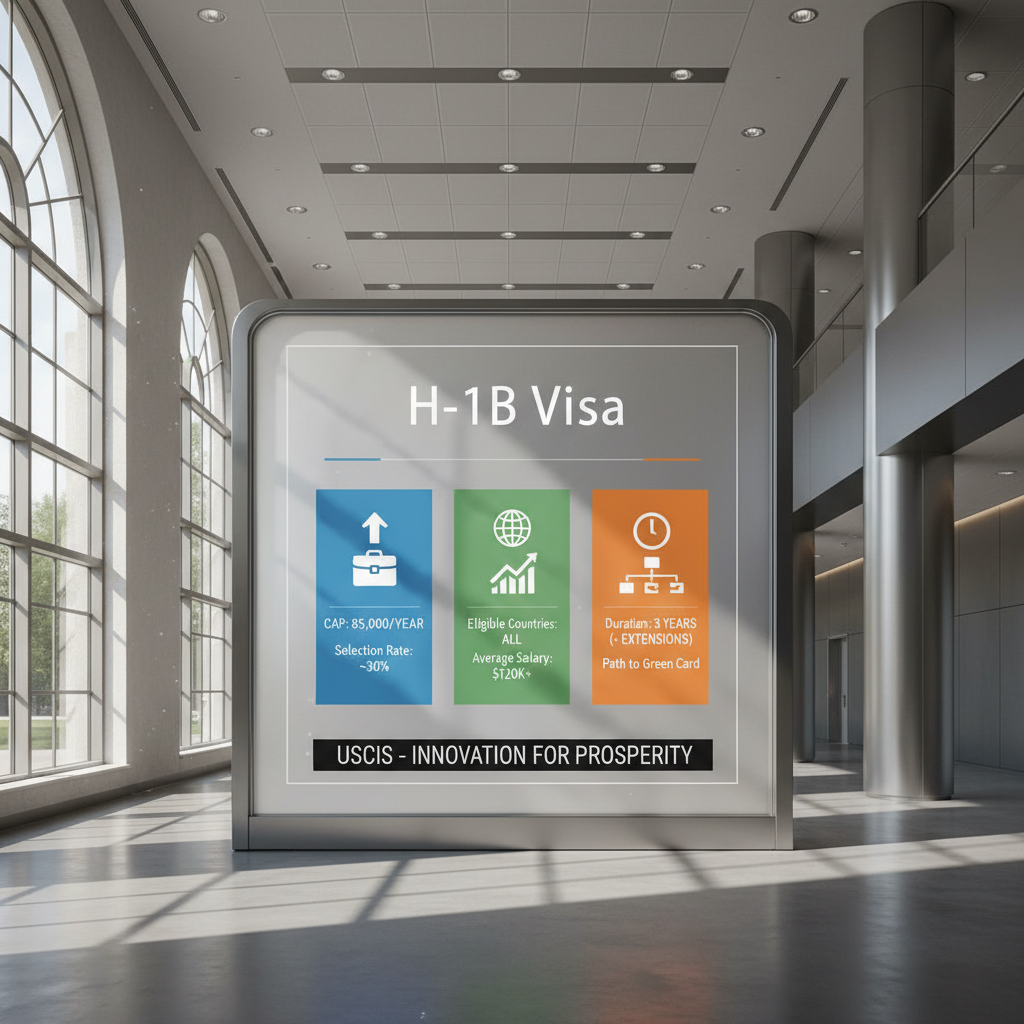
This article is inspired by the ongoing developments and announcements from USCIS regarding the H-1B visa program, specifically those impacting the **H-1B visa lottery process for Fiscal Year 2027**. As an expert immigration law firm, Imigrar closely monitors official government sources and legal news to provide timely and accurate information. The changes discussed herein are based on the latest regulations and policy updates designed to streamline the lottery and combat fraud, which became effective for previous fiscal years and are fully applicable to the upcoming FY2027 cycle.
What This News Means for Immigrants in Orlando and Across Florida
The **H-1B visa lottery changes for FY2027** are not just abstract legal updates; they have very real and tangible implications for individuals and employers across the United States, including our vibrant communities in Orlando and throughout Florida.
Why this news is showing up now
USCIS typically announces changes to major immigration programs well in advance of their implementation to allow applicants and employers sufficient time to prepare. For the **FY2027 H-1B lottery**, which will likely have its electronic registration period in March 2026 (for an October 1, 2026 start date), USCIS has already established new rules that significantly alter how registrations are submitted and selected. These rules, primarily focused on a **beneficiary-centric selection process** and enhanced fraud prevention, were largely cemented in early 2024 and apply to all subsequent H-1B cap seasons, including FY2027. Therefore, now is the critical time to understand these established changes and prepare meticulously.
How it can affect Florida residents
Florida is a hub for innovation, tourism, healthcare, aerospace, and technology. Cities like Orlando, Tampa, and Miami attract highly skilled foreign professionals who contribute significantly to our local economy. Companies in the I-4 corridor, particularly in the tech and simulation industries, frequently rely on the H-1B program to fill specialized roles that require specific expertise. The **FY2027 H-1B lottery changes** will profoundly affect:
- Aspiring H-1B Beneficiaries in Florida: If you are a foreign national working or studying in Florida on an F-1 OPT/CPT, J-1, or L-1 visa, these changes directly impact your path to an H-1B. The new rules aim to give every eligible beneficiary an equal chance, regardless of how many employers register on their behalf. This could reduce the perception of "gaming" the system, potentially leveling the playing field.
- Florida Employers: Businesses across the state, from startups in Lake Nona's Medical City to established tech firms in Orange County, need to adjust their H-1B sponsorship strategies. The focus on a **unique beneficiary identification** means employers must ensure their candidates are not being registered multiple times by different companies in an attempt to inflate their chances. This requires careful coordination and due diligence.
- Educational Institutions: Universities and colleges in Florida, which produce a steady stream of international graduates, will see their alumni navigating these new regulations. Understanding the changes is vital for career services and international student offices.
- The Immigration Landscape in Central Florida: The Orlando USCIS Field Office, and the broader immigration legal community, will be handling cases under these new guidelines. Understanding the updated requirements is paramount for successful petition filing and avoiding delays or denials.
For those living and working in Florida, these changes emphasize the importance of legitimate job offers, accurate information, and strategic legal counsel. The goal is to ensure that the H-1B program serves its intended purpose: bringing highly skilled talent to U.S. companies that truly need them, without being undermined by fraudulent practices.
What H-1B Visa Lottery Changes for FY2027 Is (and Why It Matters)
The **H-1B visa** is a nonimmigrant visa that allows U.S. employers to temporarily employ foreign workers in specialty occupations. These occupations generally require a bachelor's degree or higher in a specific field. Due to annual caps on the number of H-1B visas issued, demand often exceeds supply, necessitating a lottery system. The **H-1B visa lottery changes for FY2027** are USCIS's latest effort to refine this process, primarily to combat fraud and ensure fairness.
A plain-English definition
Imagine a highly competitive job market where there are way more qualified candidates than available positions. That's essentially the H-1B visa program. Each year, the government sets a limit (a "cap") on how many new H-1B visas it will issue. When more employers want to sponsor foreign workers than there are visas available, USCIS runs an electronic lottery. The "changes" for FY2027 mean that the rules of this lottery are being updated, specifically to make sure that each foreign worker (the **beneficiary**) has only one chance in the lottery, no matter how many companies (the **petitioners**) want to sponsor them. This is a big shift from previous years where having multiple employers register for you *could* increase your odds, leading to concerns about abuse. The new rules aim to level the playing field and make the process more transparent and fair.
Key terms you need to know
Understanding the following terms is crucial for navigating the H-1B process:
- H-1B Visa: A nonimmigrant visa that permits U.S. employers to temporarily employ foreign workers in specialty occupations.
- Specialty Occupation: An occupation that requires theoretical and practical application of a body of highly specialized knowledge, and a bachelor's or higher degree in the specific specialty (or its equivalent) as a minimum for entry into the occupation in the United States.
- Beneficiary: The foreign national who is seeking the H-1B visa.
- Petitioner: The U.S. employer who files the H-1B petition on behalf of the foreign national.
- Cap-Subject H-1B: H-1B petitions that are subject to the annual statutory numerical limits (the cap).
- H-1B Cap: The annual limit on the number of H-1B visas issued. Currently, it's 65,000 for the regular cap and an additional 20,000 for the U.S. Master's Cap (for those with a U.S. master's degree or higher).
- H-1B Lottery (or Selection Process): The electronic random selection process USCIS uses when the number of eligible registrations exceeds the annual H-1B cap.
- H-1B Registration Period: The designated timeframe during which prospective petitioners (employers) must electronically register beneficiaries for the H-1B lottery. For FY2027, this is anticipated to be in March 2026.
- Selection Notice: The notification sent by USCIS to petitioners whose registrations have been selected in the lottery, granting them permission to file a full H-1B petition.
- Form I-129, Petition for a Nonimmigrant Worker: The primary form filed by a U.S. employer to petition for a nonimmigrant worker, including H-1B beneficiaries.
- Labor Condition Application (LCA) (Form ETA-9035): A form certified by the U.S. Department of Labor (DOL) that must be obtained before filing an H-1B petition. It attests that the employer will pay the H-1B worker the prevailing wage or actual wage (whichever is higher) and provide working conditions that will not adversely affect other workers.
- Premium Processing: An expedited service offered by USCIS for certain petitions, including H-1B, guaranteeing a processing time of 15 calendar days for an additional fee.
- USCIS: U.S. Citizenship and Immigration Services, the government agency responsible for administering immigration and naturalization benefits.
- Beneficiary-Centric Selection: The core of the new FY2027 changes. This means selections are based on the unique passport or travel document number of the foreign national (beneficiary), rather than the number of registrations submitted by employers. This ensures each beneficiary has an equal chance, preventing multiple registrations by different employers for the same person from artificially inflating selection odds.
These terms will be referenced throughout this guide to help you understand the nuances of the H-1B process and the impact of the **FY2027 H-1B lottery changes**.
Current Immigration Law: The Foundation
The H-1B visa program is governed by specific sections of the Immigration and Nationality Act (INA) and federal regulations. Understanding this legal framework is essential for navigating the application process, especially with the recent changes.
Federal requirements
The statutory basis for the H-1B visa is found primarily in **Section 101(a)(15)(H)(i)(b) of the Immigration and Nationality Act (INA)**, which defines "H-1B nonimmigrant" as an alien who is coming temporarily to the United States to perform services in a specialty occupation. Further regulations governing the H-1B program are detailed in **8 Code of Federal Regulations (CFR) Part 214.2(h)**. Key federal requirements include:
- Specialty Occupation: The position offered must qualify as a specialty occupation, meaning it requires a bachelor's degree or higher in a specific field. The foreign worker must possess this degree or its equivalent.
- Employer-Employee Relationship: A valid employer-employee relationship must exist between the petitioner and the beneficiary.
- Labor Condition Application (LCA): Before filing an H-1B petition, the employer must file and have certified by the Department of Labor a **Form ETA-9035, Labor Condition Application**. This document ensures that the H-1B worker will be paid at least the prevailing wage for the occupation in the area of employment and that their employment will not adversely affect U.S. workers.
- Annual Cap: The H-1B program is subject to an annual cap of 65,000 visas, with an additional 20,000 visas reserved for those holding a U.S. master's degree or higher (the Master's Cap). Certain employers, such as institutions of higher education and non-profit research organizations, are cap-exempt.
- Electronic Registration: Since FY2021, USCIS has implemented an electronic registration process for cap-subject H-1B petitions. Prospective petitioners must register each beneficiary they wish to sponsor during a designated registration period.
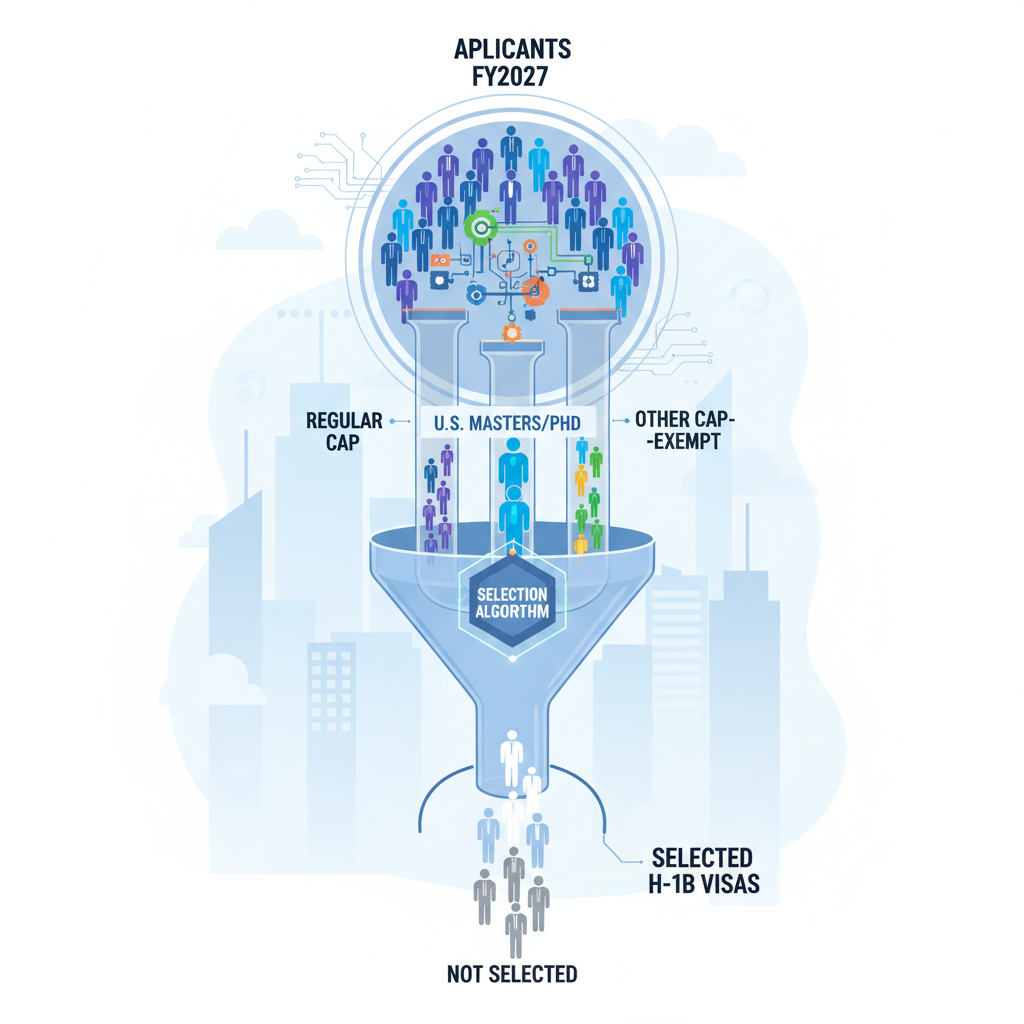
- Beneficiary-Centric Selection (New for FY2025 onwards, applicable to FY2027): The most significant recent change. Instead of selecting based on registrations, USCIS now selects based on unique beneficiaries. If a beneficiary has multiple registrations submitted on their behalf by different employers, they are still only entered into the lottery once. If selected, all petitioners who registered that beneficiary are notified and eligible to file a petition. This change, enacted to deter fraud, means each individual beneficiary has a single, equal chance of selection.
It is crucial that all information provided during the registration and petition phases is accurate and truthful. USCIS has increased its focus on fraud detection and prevention, and any misrepresentation can lead to severe consequences.
Florida-specific considerations
While immigration law is federal, its practical application often has local nuances. For Florida residents and businesses, understanding the H-1B landscape means:
- Key Industries: Florida's booming technology, healthcare, aerospace, and hospitality sectors are significant users of H-1B visas. Companies in areas like Orlando, Tampa, and Miami often seek talent in IT, engineering, data science, specialized medical fields, and finance.
- Local Prevailing Wages: The prevailing wage for an occupation, as determined by the Department of Labor, varies by geographic area. For H-1B petitions in Central Florida, employers must ensure they meet the prevailing wage requirements specific to Orange County or the surrounding metropolitan statistical area.
- Orlando USCIS Field Office: While H-1B petitions are processed at USCIS service centers, the Orlando USCIS Field Office handles other immigration matters, such as interviews for **Adjustment of Status** if an H-1B worker later seeks a green card. Understanding the local office's procedures can be helpful for long-term planning.
- Employer Compliance: Florida employers must be particularly diligent in ensuring compliance with all H-1B regulations, including public access file requirements and worksite posting notices, especially given increased scrutiny by enforcement agencies.
The foundation of any successful H-1B petition lies in strict adherence to these federal laws and regulations, coupled with an awareness of local specificities.
For more detailed information on H-1B requirements and other forms, visit the USCIS official website and the USCIS Forms page. The primary form for H-1B is Form I-129, Petition for a Nonimmigrant Worker.
How to Navigate the H-1B Visa Lottery Changes for FY2027: A Complete Step-by-Step Guide
Navigating the H-1B visa process, especially with the **FY2027 lottery changes**, requires meticulous planning and execution. This guide outlines the essential steps for both beneficiaries and petitioners.
1) Understand the New H-1B Registration Process for FY2027
The most critical change for FY2027 is the **beneficiary-centric selection process**. This means the lottery selection is now based on the unique beneficiary, identified by their valid passport or travel document number, rather than the number of registrations submitted on their behalf. This aims to prevent fraud where multiple employers might register the same individual to increase their chances. If a beneficiary is selected, all employers who registered them will receive a selection notice and be eligible to file a petition.
- Key Action: Ensure accurate beneficiary information, especially the passport/travel document number, for all registrations.
- Required Documents (for registration):
- Beneficiary's full legal name, date of birth, country of birth, country of citizenship.
- Beneficiary's valid passport or travel document number. **Important:** This number must be unique and valid.
- Whether the beneficiary has a U.S. master's or higher degree.
- Petitioner's (employer's) legal name, Employer Identification Number (EIN), and mailing address.
- Attorney/representative information (if applicable).
2) Employer and Beneficiary Preparation
Preparation should begin months before the anticipated March 2026 registration period. This involves ensuring the beneficiary meets the **specialty occupation** requirements and the employer is ready to sponsor.
- Key Action: Verify beneficiary eligibility and secure a legitimate job offer.
- Required Documents (for preparation):
- Beneficiary's academic credentials (bachelor's, master's, or higher degree transcripts, diplomas).
- Foreign degree evaluations (if applicable) to prove equivalency to U.S. degrees.
- Beneficiary's resume/CV and professional licenses/certifications.
- Employer's detailed job description, demonstrating it's a specialty occupation.
- Employer's financial records to prove ability to pay the required wage.
- Prior immigration documents (e.g., I-20, EAD, I-797 approval notices for F-1, J-1, L-1, etc.).
3) The H-1B Electronic Registration Submission
During the designated registration window (typically in March), the prospective petitioner (employer) or their authorized representative (e.g., Imigrar) must submit an electronic registration for each beneficiary they wish to sponsor. There is a **$10 registration fee** per beneficiary.
- Key Action: Submit accurate and timely registrations through the USCIS online system.
- Required Information (for registration, as above):
- Beneficiary's unique passport/travel document number.
- Beneficiary's educational background.
- Employer's details and contact information.
- Confirmation of intent to file an H-1B petition for the registered beneficiary if selected.
- Warning: Intentional misrepresentation or submission of fraudulent registrations can lead to severe penalties, including denial of current and future petitions, and criminal prosecution.
4) Lottery Selection and Notification
After the registration period closes, USCIS conducts the lottery. Selections are made first for the **U.S. Master's Cap** (20,000 visas) and then for the **regular cap** (65,000 visas). USCIS typically announces selections in late March or early April.
- Key Action: Monitor USCIS notifications.
- Notification Details:
- Petitioners (or their attorneys) whose registrations are selected will receive an electronic selection notice in their USCIS online account.
- This notice grants permission to file a **Form I-129, Petition for a Nonimmigrant Worker**, on behalf of the selected beneficiary.
- The selection notice will specify the filing period, usually a **90-day window**.
5) Filing the H-1B Petition (Form I-129)
If selected, the employer must prepare and file the complete H-1B petition with USCIS within the specified filing window. This is a comprehensive submission requiring detailed documentation.
- Key Action: Prepare and file a robust H-1B petition package.
- Required Documents (for Form I-129 petition):
- Form I-129, Petition for a Nonimmigrant Worker (and its supplements, including H-1B Data Collection and Filing Fee Exemption Supplement).
- Certified **Form ETA-9035, Labor Condition Application (LCA)**.
- Beneficiary's academic degrees, transcripts, and any foreign degree evaluations.
- Beneficiary's professional licenses, if applicable to the specialty occupation.
- Beneficiary's passport biographical page, visa, **Form I-94 Arrival/Departure Record**, **Form I-20** (for F-1 students), or **Form DS-2019** (for J-1 exchange visitors).
- Employer's support letter detailing the job, beneficiary's qualifications, and why the position is a specialty occupation.
- Employer's business documents (e.g., articles of incorporation, business licenses, tax returns, financial statements, organizational charts).
- Contracts between the employer and beneficiary (if applicable).
- Proof of a valid employer-employee relationship (e.g., detailed work assignments, supervision structure).
- Applicable filing fees (I-129 fee, ACWIA fee, fraud prevention and detection fee, public law 114-113 fee if applicable).
- Proof of H-1B registration selection.
- Reminder: For Central Florida residents, ensure all documents accurately reflect the job site and prevailing wage for your specific location, such as Orlando or Orange County.
6) Responding to RFEs and Approval
After filing, USCIS may issue a **Request for Evidence (RFE)** if they need more information to make a decision. A prompt and thorough response is crucial. If approved, USCIS will issue an **I-797 Approval Notice**.
- Key Action: Be prepared to respond to RFEs promptly and accurately.
- Common RFE Areas:
- Specialty occupation qualification.
- Employer-employee relationship.
- Beneficiary qualifications.
- Availability of work.
- Wage level/prevailing wage compliance.
7) Post-Approval Steps and Maintaining H-1B Status
Once approved, the beneficiary can begin working for the H-1B employer on the effective start date (typically October 1). If the beneficiary is outside the U.S., they will need to apply for an H-1B visa stamp at a U.S. consulate abroad. If already in the U.S. and granted a change of status, they can begin working on the effective date.
- Key Action: Maintain H-1B status compliance.
- Post-Approval Requirements:
- Begin employment on the designated start date.
- Maintain a valid passport.
- Comply with terms of employment as stated in the LCA and H-1B petition.
- Report any material changes in employment (e.g., new job location, significant change in duties) to USCIS via an amended H-1B petition.
- Keep track of **Form I-94** expiration dates.
This entire process is complex, and even minor errors can lead to significant delays or denials. Consulting with an experienced immigration attorney, like those at Imigrar, is highly recommended at every stage.
Overwhelmed by H-1B changes? Imigrar has the expertise to guide you. Contact our Orlando office today for a free consultation. Call +1 786-791-3106 or reach out online. Se Habla Español.
Practical Steps You Can Take Today
Even though the **FY2027 H-1B lottery registration** is still some months away, proactive preparation is key to success. Here are actionable steps you can take now:
Actionable checklist:
- Verify Eligibility: Both beneficiary and petitioner should confirm they meet all H-1B requirements. For beneficiaries, this means having at least a U.S. bachelor's degree or its foreign equivalent, or a license in a specialty occupation, or work experience equivalent to a bachelor's degree.
- Secure a Sponsoring Employer: If you are a beneficiary, actively seek out employers willing to sponsor your H-1B visa. For employers, identify talent early and confirm your commitment to sponsorship.
- Gather All Academic and Professional Documents: Collect diplomas, transcripts, foreign degree evaluations, professional licenses, and certifications. Ensure they are translated into English by a certified translator if necessary.
- Obtain a Valid Passport/Travel Document: For beneficiaries, ensure your passport is valid and its number is accurately recorded. This number is crucial for the **beneficiary-centric registration** process.
- Consult with an Experienced Immigration Attorney: This is perhaps the most important step. An attorney can assess eligibility, advise on the new rules, prepare documents, and represent you throughout the process.
- Understand the New Beneficiary-Centric Selection: Both employers and beneficiaries must fully grasp that multiple registrations for one beneficiary no longer increase selection odds. Focus on quality, not quantity, of registrations.
- Review Job Descriptions for Specialty Occupation Compliance: Employers should ensure the job offered clearly meets the **specialty occupation** criteria to avoid RFEs.
- Budget for Costs: Familiarize yourself with all potential fees, including registration fees, filing fees, attorney fees, and premium processing fees.
Document preparation guidance
- Accuracy is Paramount: All information on registrations and petitions must be 100% accurate. Discrepancies can lead to denials or accusations of fraud.
- Completeness: Ensure every required document and piece of information is included. Missing items are a common cause of RFEs and delays.
- Organization: Present documents clearly and logically. Follow USCIS guidelines for binding and labeling.


