

The reporting that sparked this guide
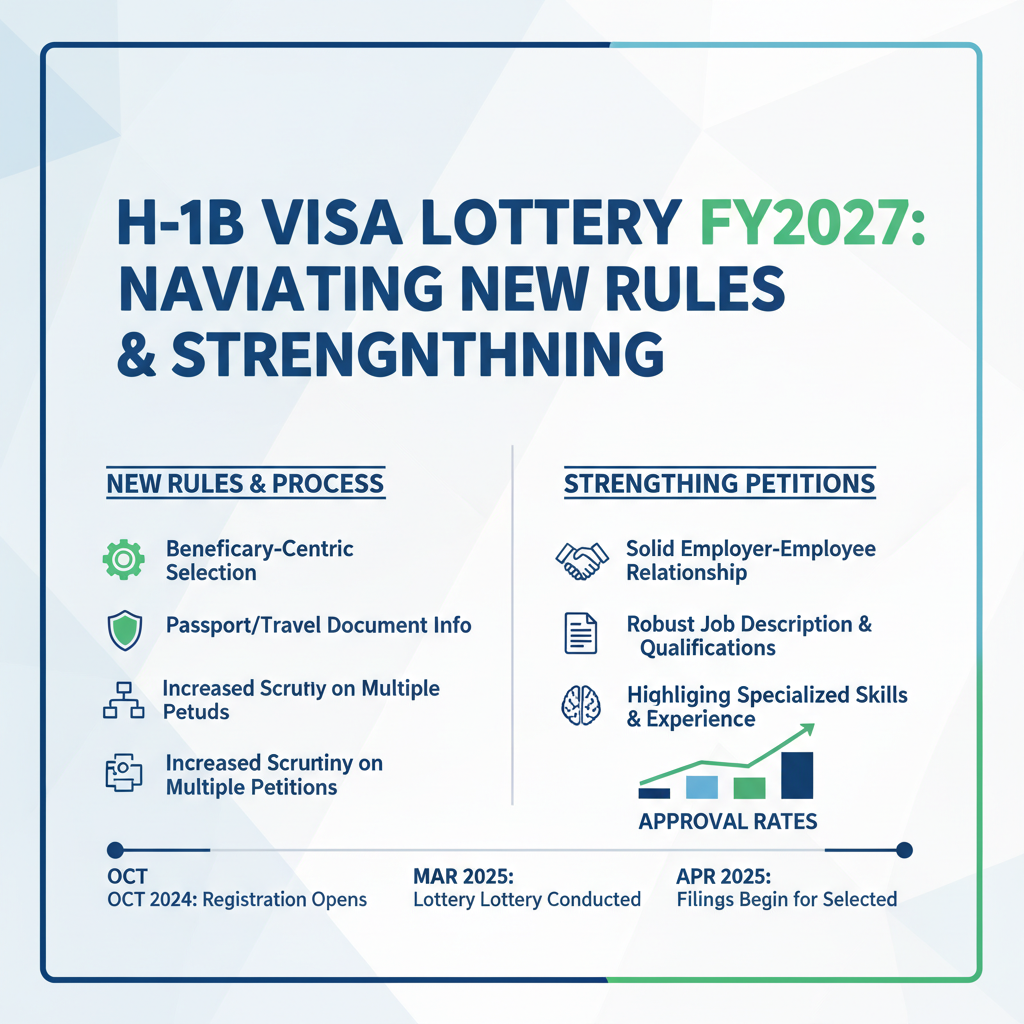
This comprehensive guide is inspired by recent legal news concerning significant updates to the H-1B visa lottery system. For more context, please refer to: H-1B Visa Lottery Changes for FY2027 (Legal News)
What This News Means for Immigrants in Orlando and Across Florida
The H-1B visa program is a cornerstone for many skilled foreign workers seeking opportunities in the U.S., particularly in high-demand sectors like technology, healthcare, and engineering. With the latest announcements from U.S. Citizenship and Immigration Services (USCIS) regarding the H-1B visa lottery for Fiscal Year 2027 (FY2027), there are crucial changes that could significantly impact aspiring immigrants and their sponsoring employers.
Why this news is showing up now
The H-1B visa program has long been a subject of intense demand, often receiving far more applications than the annual cap allows. This has necessitated a lottery system to select eligible registrations. Over recent years, USCIS has observed patterns of fraud and abuse, particularly the submission of multiple registrations for the same beneficiary by related entities, artificially inflating their chances of selection. To combat these integrity issues and ensure a fairer process, USCIS implemented a new final rule, "Improving the H-1B Registration Program and Strengthening Program Integrity," which became effective for the FY2025 cap season. These changes are now firmly established and will govern the upcoming FY2027 lottery, which is expected to open for registrations in March 2026.
The core of these changes revolves around shifting from an employer-centric selection process to a beneficiary-centric one. This means that each unique beneficiary (the individual worker) will be entered into the lottery only once, regardless of how many employers register them. This aims to level the playing field and give every eligible beneficiary an equal chance, reducing the advantage gained by fraudulent multiple registrations.
How it can affect Florida residents
Florida, and particularly the Orlando metropolitan area, is a vibrant hub for innovation and economic growth. The state boasts a rapidly expanding tech industry, a robust healthcare sector, and world-renowned tourism and hospitality management companies. These industries heavily rely on the H-1B visa program to attract and retain top global talent.
- For tech professionals in Orlando: Central Florida is home to a burgeoning tech corridor, attracting software engineers, data scientists, and IT specialists. The new beneficiary-centric lottery system means that if you are a skilled tech worker seeking an H-1B visa, your chances of selection will now genuinely reflect a single entry, making the process fairer. However, it also means employers can no longer improve your odds by having multiple related entities register on your behalf.
- For healthcare workers: Florida's healthcare system is continually growing, creating demand for nurses, medical researchers, and specialized therapists. These professionals often qualify for H-1B visas. The integrity measures will ensure that the competition is fair for all qualified applicants.
- For employers across Florida: Businesses from Miami to Jacksonville, including those along the I-4 corridor in Orlando and Tampa, must now adapt their H-1B registration strategies. The focus must shift entirely to legitimate job offers and ensuring their sponsored beneficiaries are accurately registered. Employers found engaging in fraudulent practices face severe penalties.
- For international students graduating from Florida universities: Many graduates from institutions like the University of Central Florida (UCF), University of Florida (UF), and Florida International University (FIU) pursue H-1B visas after completing their Optional Practical Training (OPT). The new rules provide a clearer, more equitable path for them to transition from student status to skilled worker status without being disadvantaged by fraudulent entries.
Understanding these changes is paramount for anyone involved in the H-1B process in Florida. Imigrar, located in Orlando, is dedicated to helping individuals and businesses navigate these complex regulations to keep families together and support Florida's economic growth.
Need Help Navigating the New H-1B Rules? Our Orlando immigration team is ready to assist. Call +1 786-791-3106 for a free consultation, or message us online. Se Habla Español.
What H-1B Visa Lottery Changes Are (and Why It Matters)
The H-1B visa program allows U.S. employers to temporarily employ foreign workers in specialty occupations. These occupations generally require a bachelor's degree or higher in a specific field. Due to the high demand and a statutory annual cap on the number of H-1B visas available, USCIS conducts a lottery to select eligible registrations when the number of registrations exceeds the cap.
A plain-English definition
Imagine a very popular school with limited spots. Thousands of students want to get in, but only a few thousand spaces are available. To make it fair, the school decides to put all applicants' names into a hat and draw them randomly. That's essentially what the H-1B lottery is. However, in the past, some "students" (beneficiaries) might have had their parents (employers) submit their names multiple times, increasing their chances. The "new rules" for FY2027 are like saying, "Each student gets only one entry, no matter how many parents apply for them." This ensures everyone has a truly equal shot.
Key terms you need to know
- H-1B Visa: A nonimmigrant visa that allows U.S. employers to temporarily employ foreign workers in specialty occupations.
- Specialty Occupation: An occupation that requires theoretical and practical application of a body of highly specialized knowledge, and a bachelor's or higher degree in the specific specialty (or its equivalent) as a minimum for entry into the occupation in the United States.
- USCIS: U.S. Citizenship and Immigration Services, the government agency responsible for administering immigration and naturalization benefits.
- Beneficiary: The foreign national worker who is seeking the H-1B visa.
- Petitioner: The U.S. employer who is sponsoring the foreign national for the H-1B visa.
- Annual Cap: The statutory limit on the number of H-1B visas issued each fiscal year. Currently, it's 65,000 regular cap visas and an additional 20,000 for those with a U.S. master's degree or higher (the "master's cap").
- Cap-Subject: H-1B petitions that are subject to the annual numerical cap.
- Cap-Exempt: Certain employers (like universities, non-profit research organizations, and government research organizations) are exempt from the annual cap.
- H-1B Registration Period: The designated window, typically in March, during which prospective H-1B petitioners (employers) must electronically register their beneficiaries for the lottery.
- H-1B Selection Period: The period following the registration close, usually late March, when USCIS conducts the lottery and announces selections.
- Beneficiary-Centric Selection: The core new rule. Instead of selecting registrations based on the employer, selections are now made based on the unique beneficiary. Each beneficiary, regardless of the number of registrations submitted on their behalf by different employers, will only be entered into the lottery once. If selected, all petitioners who registered that beneficiary will be notified.
- LCA (Labor Condition Application): Form ETA-9035, certified by the U.S. Department of Labor (DOL), attesting that the employer will pay the H-1B worker at least the prevailing wage for the occupation in the area of employment, and that the employment will not adversely affect the working conditions of U.S. workers. This is a prerequisite to filing the H-1B petition.
- Prevailing Wage: The average wage paid to similarly employed workers in a specific occupation in the area of intended employment.
- Premium Processing: An expedited service offered by USCIS for certain petitions, including H-1B, guaranteeing a processing time of 15 calendar days for an additional fee.
The shift to beneficiary-centric selection is a game-changer. It directly addresses the issue of multiple registrations by ensuring that each individual has an equal chance. This not only promotes fairness but also strengthens the integrity of the entire H-1B program, making the system more reliable for genuine employers and deserving beneficiaries across the nation, including those here in Florida.
Current Immigration Law: The Foundation
The H-1B visa program is governed by federal immigration law, primarily the Immigration and Nationality Act (INA). Understanding the legal framework is crucial for navigating the application process.
Federal requirements
The H-1B visa category is established under Section 101(a)(15)(H)(i)(b) of the Immigration and Nationality Act (INA). Key federal requirements for an H-1B petition include:
- Specialty Occupation: The job offered must qualify as a specialty occupation, meaning it requires a bachelor's degree or higher in a specific field.
- Beneficiary Qualifications: The foreign worker (beneficiary) must possess the required bachelor's or higher degree (or its equivalent in work experience) directly related to the specialty occupation.
- Employer-Employee Relationship: A valid employer-employee relationship must exist between the U.S. petitioner and the H-1B beneficiary.
- Labor Condition Application (LCA): The employer must obtain a certified Form ETA-9035 from the U.S. Department of Labor (DOL) before filing the H-1B petition. This LCA attests to certain conditions, including paying the prevailing wage and providing working conditions that do not adversely affect U.S. workers.
- Prevailing Wage: The employer must pay the H-1B worker at least the actual wage paid to other employees with similar experience and qualifications, or the prevailing wage for the occupational classification in the area of intended employment, whichever is higher.
- Numerical Cap: Most H-1B petitions are subject to the annual cap of 65,000 visas, with an additional 20,000 for beneficiaries with a U.S. master's degree or higher.
The primary form used for filing an H-1B petition is Form I-129, Petition for a Nonimmigrant Worker. This form, along with extensive supporting documentation, is submitted to USCIS after a registration has been selected in the lottery.
For more details on federal immigration laws and regulations, always refer to the USCIS official website and the U.S. Department of State.
Florida-specific considerations
While immigration law is federal, certain aspects can have unique implications for residents and businesses in Florida:
- Local Job Market: Florida's diverse economy, particularly in Orlando, Miami, and Tampa, has specific prevailing wage rates that employers must adhere to. The U.S. Department of Labor's Foreign Labor Certification Data Center provides wage data specific to various Metropolitan Statistical Areas (MSAs) within Florida.
- Educational Institutions: Florida is home to numerous universities that produce a significant number of international graduates who may be eligible for the H-1B master's cap. Imigrar frequently assists graduates from institutions like the University of Central Florida, Florida State University, and the University of Miami in their H-1B endeavors.
- Orlando USCIS Field Office: While H-1B petitions are generally processed at service centers, applicants in Florida may interact with the Orlando USCIS Field Office for certain matters, such as biometric appointments or interviews if their status is adjusting.
It's vital for Florida employers and beneficiaries to ensure compliance not only with federal regulations but also with the specific nuances of the local labor market and any regional USCIS guidelines. Legal counsel can help bridge this gap.
Confused by H-1B Regulations? Let Imigrar simplify the process for you. Our experienced attorneys in Orlando offer free consultations. Call us at +1 786-791-3106 or contact us online. Se Habla Español.
How to Navigate the New H-1B Lottery for FY2027: A Complete Step-by-Step Guide
The H-1B cap-subject process involves several critical stages, especially with the new beneficiary-centric selection rule. Here's a detailed guide for FY2027:
1) Understand the New Rules and Ensure Eligibility (Pre-Registration)
Before any registration occurs, both the employer and the prospective H-1B worker must understand the updated regulations and confirm eligibility. This is the crucial first step, especially with the beneficiary-centric selection process now fully in effect.
-
For Employers (Petitioners):
- Verify the job qualifies as a specialty occupation.
- Confirm a legitimate employer-employee relationship will exist.
- Understand the new rule: you can only submit one registration per beneficiary, even if you have multiple related entities. If you have multiple legitimate job offers for the same beneficiary, you must choose one to register. Multiple registrations for the same beneficiary by related entities will be considered fraud.
- Begin collecting necessary company documentation.
-
For Beneficiaries (Workers):
- Ensure you meet the educational requirements (bachelor's degree or higher, or its equivalent).
- Gather your educational transcripts, degree certificates, and any professional licenses or evaluations of foreign degrees.
- If you have multiple potential employers interested in sponsoring you, remember that you will only have one entry in the lottery. Discuss with each employer how they plan to proceed, as only one successful registration will be tied to your unique identity.
Required Documents (Pre-Registration):
- For Beneficiary: Resume, academic transcripts, degree certificates, foreign degree evaluations (if applicable), passport copy.
- For Employer: Employer Identification Number (EIN), company legal name and address, contact information for authorized signatory.
Important: Consult with an experienced immigration attorney at this stage to review eligibility and strategize under the new rules.
2) Employer Registration and Beneficiary-Centric Lottery
The H-1B registration period for FY2027 is expected to occur in March 2026. This is when the lottery mechanism kicks in.
- Electronic Registration: The employer (or their authorized legal representative) must create a USCIS online account and electronically register the prospective H-1B beneficiary. Each registration requires a fee (e.g., $10 for FY2025, check for FY2027 updates).
- Unique Beneficiary Identification: USCIS will use the beneficiary's passport or travel document information to identify them uniquely. This is how the beneficiary-centric selection works: even if multiple unrelated employers register the same individual, that individual will only be counted once in the lottery pool.
- Lottery Conducted: Once the registration period closes, USCIS conducts the lottery. Selections are made based on the unique beneficiary. If a beneficiary is selected, all employers who registered them will be notified that their registration for that specific beneficiary has been selected.
- Notification: USCIS typically announces the lottery results a few days after the registration period closes. Selected registrants (employers) will receive a "Selection Notice" through their USCIS online account.
Required Information for Registration:
- Employer's legal name, address, and EIN.
- Authorized signatory's name, title, and contact information.
- Beneficiary's full legal name, date of birth, country of birth, country of citizenship, gender, and passport number (or other travel document number used for unique identification).
- Whether the beneficiary has a U.S. master's degree or higher.
3) Preparing and Filing the H-1B Petition (Form I-129)
If your registration is selected, the employer can then proceed with filing the full H-1B petition.
- LCA Filing: Before filing Form I-129, the employer must file Form ETA-9035, Labor Condition Application (LCA), with the U.S. Department of Labor and receive certification. This process can take several days to a few weeks.
- Petition Preparation: The employer, often with legal assistance, compiles the extensive documentation required for the H-1B petition, including evidence of the specialty occupation, the beneficiary's qualifications, the employer-employee relationship, and the certified LCA.
- Filing Window: USCIS will provide a specific filing window (e.g., 90 days) during which selected petitions must be submitted. This window typically starts on April 1st of the calendar year.
- Submission: The complete petition package, including Form I-129 and all supporting documents, is mailed to the appropriate USCIS service center.
Required Documents (H-1B Petition Filing):
- Certified Form ETA-9035 (LCA).
- Completed Form I-129, Petition for a Nonimmigrant Worker.
- H-1B selection notice.
- Beneficiary's academic credentials (degrees, transcripts, evaluations).
- Beneficiary's resume and letters of experience.
- Copy of beneficiary's passport, visa, Form I-94 (Arrival/Departure Record), and previous Form I-797 approval notices (if applicable).
- Employer's financial statements, tax returns, and business licenses to prove ability to pay and legitimacy.
- Detailed job description, organizational chart, and evidence the position is a specialty occupation.
- Employment offer letter and contract.
- Employer's letter of support.
- Any additional evidence requested by USCIS.
4) Responding to RFEs (Requests for Evidence)
It's common for USCIS to issue a Request for Evidence (RFE) if they need more information or clarification on any aspect of the petition.
- Review RFE: Carefully review the RFE with your attorney to understand exactly what additional evidence USCIS is requesting.
- Gather Evidence: Collect the requested documents and information. This might involve obtaining additional academic evaluations, employer financial records, or detailed statements about the job duties.
- Submit Response: Prepare a comprehensive response package and submit it to USCIS by the specified deadline (typically 60-90 days). A strong, well-organized RFE response is critical for approval.
5) Visa Interview or Adjustment of Status
Once the H-1B petition is approved (you'll receive Form I-797, Notice of Action), the next step depends on the beneficiary's current location and immigration status.
- Consular Processing (Outside U.S.): If the beneficiary is outside the U.S., they will attend a visa interview at a U.S. embassy or consulate in their home country. Upon approval, an H-1B visa stamp will be placed in their passport, allowing them to enter the U.S.
- Change of Status (Inside U.S.): If the beneficiary is already in the U.S. in a valid nonimmigrant status (e.g., F-1 OPT) and the H-1B petition requested a "change of status," their status will automatically change to H-1B on October 1st (the start of the fiscal year), provided the petition was approved. No interview is typically required for a change of status within the U.S.
Required Documents (Visa Interview/Adjustment):
- Form I-797 Approval Notice.
- Valid passport.
- Form DS-160 confirmation page (for consular processing).
- Interview appointment confirmation.
- Original academic documents and work experience letters.
- Employment offer letter.
- Financial documents (employer and personal).
- Marriage certificate and birth certificates for dependents (if applying for H-4 visas).
6) Maintaining H-1B Status
Approval is not the end; maintaining H-1B status is crucial.
- Employment: You must work for the H-1B sponsoring employer in the approved specialty occupation. Any significant change in job duties, location, or employer requires an amended H-1B petition.
- Compliance: Both employer and employee must comply with all H-1B regulations.
- Expiration: H-1B visas are typically granted for three years and can be extended for a maximum of six years. Extensions usually require filing Form I-129 again.
Reminder: The entire process from registration to visa stamping or change of status can take many months. Starting early and maintaining meticulous records are vital.
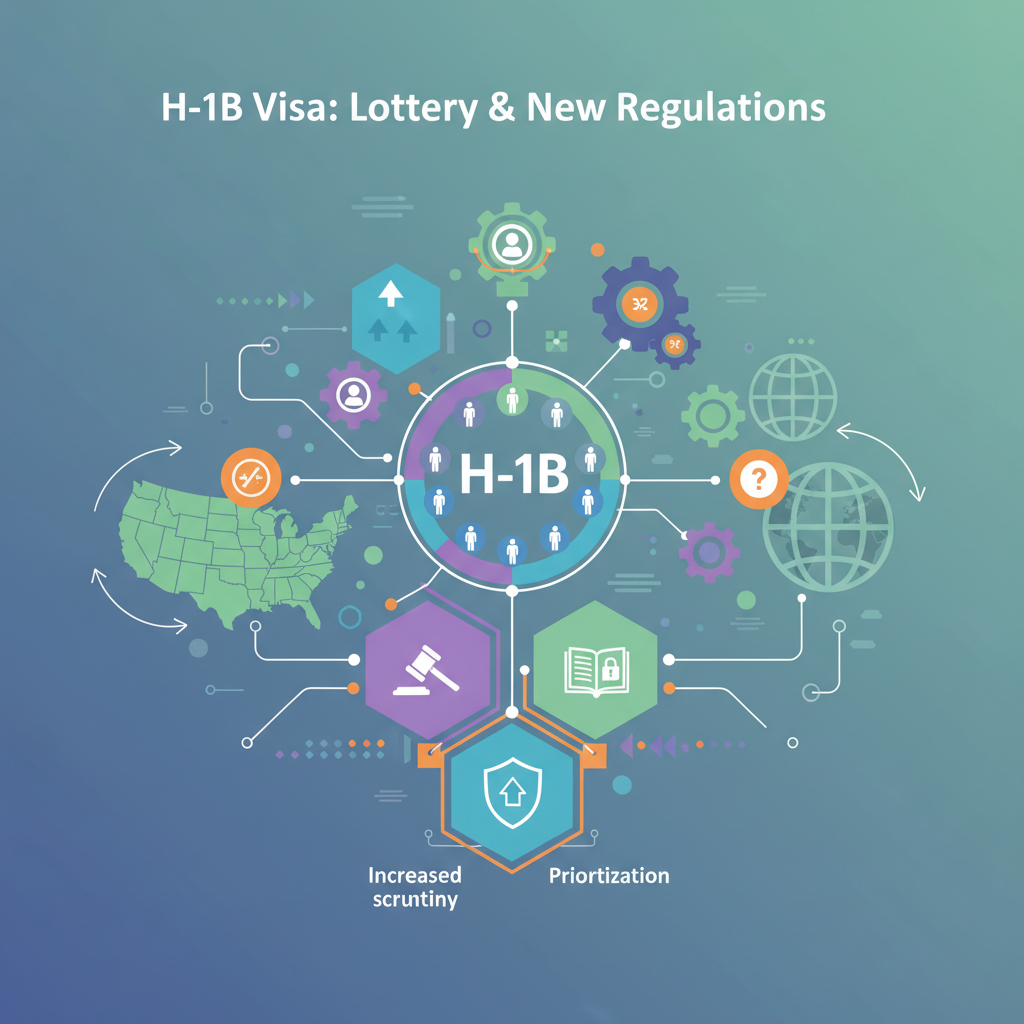
Practical Steps You Can Take Today
Even though the FY2027 registration period is months away, proactive preparation is key, especially with the new rules in place.
Actionable checklist
- Understand the New Beneficiary-Centric Rules: Familiarize yourself (both employer and beneficiary) with how the lottery now works. One beneficiary, one entry. This is the most significant change for FY2027.
-
Verify Eligibility:
- For Beneficiaries: Confirm your educational qualifications meet the specialty occupation requirements. Get foreign degrees evaluated if necessary.
- For Employers: Ensure the job truly is a specialty occupation and that your company can demonstrate the ability to pay the prevailing wage.
- Identify Potential Employers/Sponsors: If you are a beneficiary, start networking and securing job offers from legitimate employers. If you are an employer, identify potential H-1B candidates now.
- Consult with an Immigration Attorney: This is perhaps the most critical step. An attorney can assess your specific situation, advise on the new rules, identify potential issues, and guide you through the complex process.
- Start Document Gathering: Begin compiling all necessary personal and professional documents. Don't wait until the last minute.
- Review Past Denials/RFEs: If you've had previous H-1B applications, understand why they were denied or received an RFE to avoid repeating mistakes.
Document preparation guidance
Thorough documentation is paramount. Here's what to focus on:
- Academic Credentials: Gather original diplomas, transcripts, and course descriptions. If your degree is from outside the U.S., obtain a comprehensive foreign degree evaluation from a reputable credential evaluation service. Ensure it clearly states the U.S. equivalency (e.g., "equivalent to a U.S. Bachelor's Degree").
- Professional Experience: Collect letters from previous employers detailing your job duties, dates of employment, and salary. These should be on company letterhead.
- Personal Identification: Ensure your passport is valid and current. Have copies of your birth certificate, marriage certificate (if applicable), and any previous U.S. visa stamps or Form I-94 records.
- Employer-Specific Documents: Employers should have their business registration, federal tax ID (EIN), financial statements, and a detailed job description ready. Evidence of a legitimate business operation is essential.
Timeline expectations
The H-1B process is lengthy and requires patience. Here’s a general timeline for FY2027:
- Pre-Registration (Now - Feb 2026): Initial consultation, eligibility assessment, document gathering, employer/beneficiary preparation.
- H-1B Registration Period (Expected March 2026): Employers submit electronic registrations. This is typically a two-week window.
- Lottery Results (Expected Late March 2026): USCIS announces selections.
- Petition Filing Window (April 1, 2026 - June 30, 2026, or later, as specified by USCIS): Selected employers file Form I-129 petitions. This requires prior LCA certification.
- Petition Processing (April 2026 - Sept 2026): USCIS processes petitions. RFEs may be issued. Processing times vary; check USCIS Processing Times for current estimates. Premium processing is available for an additional fee.
- H-1B Start Date (October 1, 2026): For approved petitions, H-1B status becomes active.
- Visa Interview/Entry (Oct 2026 onwards):


