

The reporting that sparked this guide: H-1B Visa Lottery Changes for FY2027 (Legal News)
What This News Means for Immigrants in Orlando and Across Florida
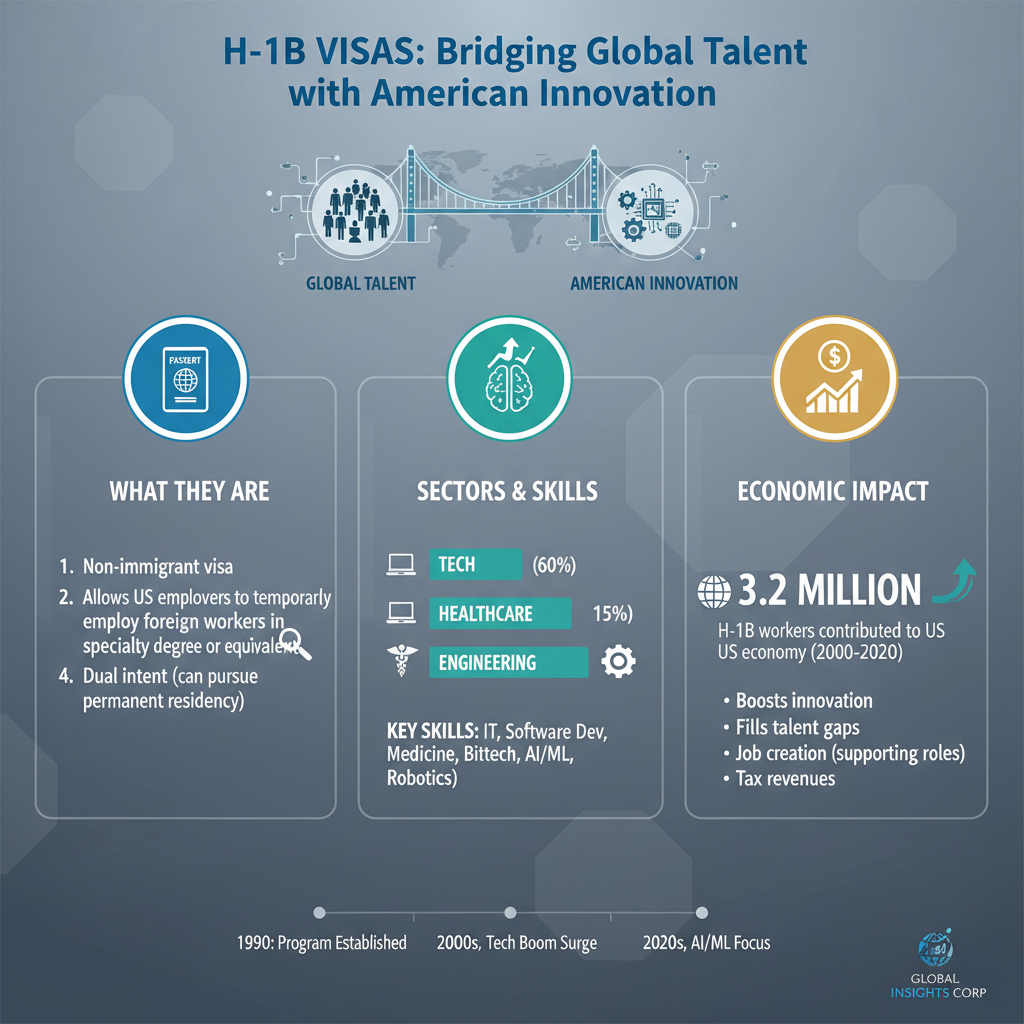
The H-1B visa program is a cornerstone for many skilled professionals seeking to work in the United States, and for U.S. employers looking to fill critical specialty occupations. For Fiscal Year 2027 (FY2027), which commenced on October 1, 2026, the U.S. Citizenship and Immigration Services (USCIS) implemented significant changes to the H-1B cap registration process. These updates, designed to enhance program integrity and reduce fraud, have a profound impact on how prospective beneficiaries and sponsoring employers approach the H-1B lottery.
Why this news is showing up now
The H-1B visa lottery for FY2027 concluded its registration period in March 2026, with selection notifications issued shortly thereafter. Now, in June 2026, employers and beneficiaries who were selected in the lottery are in the midst of preparing and filing their detailed H-1B petitions. The "news" is current because the implications of these new rules are actively being navigated by thousands. For those not selected, or those planning for future H-1B opportunities, understanding these changes is critical for strategic preparation for FY2028 and beyond. The shift to a beneficiary-centric selection process, alongside other integrity measures, marks a pivotal moment in the H-1B program, making it essential for all stakeholders to be fully informed.
How it can affect Florida residents
Florida, particularly the Orlando metropolitan area, is a vibrant hub for technology, healthcare, tourism, and aerospace industries. Companies along the I-4 corridor and throughout Central Florida frequently rely on the H-1B program to attract global talent in specialty occupations. For Florida residents currently on other nonimmigrant visas (like F-1 OPT or L-1) hoping to transition to H-1B status, or for those abroad seeking opportunities in the Sunshine State, these new rules directly impact their path. The increased scrutiny and the beneficiary-centric selection mean that while the process aims for fairness, it also demands meticulous preparation and strict adherence to regulations. Employers in Orlando, Tampa, and Miami must adapt their H-1B sponsorship strategies to comply with the new registration system, ensuring their applications are legitimate and free from any appearance of fraud. For individuals, this means a clearer, but no less competitive, pathway to H-1B status, emphasizing the need for genuine job offers and strong qualifications.
What H-1B Visa Lottery Changes for FY2027 Is (and Why It Matters)
The H-1B visa program is designed for foreign nationals working in specialty occupations, which generally require a bachelor's degree or higher in a specific field. It's a crucial pathway for highly skilled individuals to contribute to the U.S. economy. Due to high demand and an annual cap, USCIS conducts a lottery to select eligible registrations when the number of registrations exceeds the available visas.
A plain-English definition
Think of the H-1B visa as a special work permit for professionals in fields like IT, engineering, medicine, and education. Each year, there's a limit (or cap) on how many new H-1B visas can be issued. Because so many people want these visas, USCIS uses a lottery system to pick who gets a chance to apply. For FY2027, USCIS changed how this lottery works. Previously, multiple employers could register the same person, potentially inflating selection chances. The big change for FY2027 is the beneficiary-centric selection process. This means USCIS now selects based on the individual foreign national (the beneficiary), not the employer. If a beneficiary has multiple registrations filed on their behalf by different employers, they are still only entered into the lottery ONCE. This dramatically reduces the incentive for fraudulent or speculative multiple registrations, aiming to give every eligible individual an equal, fair shot. It also means increased scrutiny on the legitimacy of job offers and employer-employee relationships, especially for those with multiple legitimate job offers.
Key terms you need to know
- H-1B Visa: A nonimmigrant visa that allows U.S. employers to temporarily employ foreign workers in specialty occupations.
- USCIS (U.S. Citizenship and Immigration Services): The government agency that oversees lawful immigration to the United States and processes H-1B petitions.
- H-1B Cap: The annual numerical limit on the number of H-1B visas issued. The general cap is 65,000, with an additional 20,000 for those with a U.S. master's degree or higher (the Master's Cap).
- H-1B Lottery (or Selection Process): The randomized process USCIS uses to select H-1B registrations when demand exceeds the annual cap.
- Beneficiary: The foreign national who will be employed in H-1B status.
- Petitioner: The U.S. employer filing the H-1B petition on behalf of the beneficiary.
- Cap-Subject: Refers to H-1B petitions that are subject to the annual numerical cap.
- Cap-Exempt: Certain employers (e.g., higher education institutions, non-profit research organizations) are exempt from the annual cap.
- Registration Period: The designated window, typically in March, during which employers must electronically register prospective H-1B beneficiaries with USCIS.
- Selection Notice: The notification sent by USCIS to employers whose registrations were selected in the lottery, allowing them to file an H-1B petition.
- LCA (Labor Condition Application): Form ETA Form 9035, certified by the Department of Labor, required before filing an H-1B petition, attesting to prevailing wages and working conditions.
- Specialty Occupation: An occupation that requires theoretical and practical application of a body of highly specialized knowledge, and a bachelor's or higher degree in the specific specialty.
- Premium Processing: An optional service offered by USCIS for an additional fee, guaranteeing processing within 15 calendar days.
Need Help Navigating H-1B Changes? Our Orlando immigration team at Imigrar is ready to assist. Call +1 786-791-3106 for a free consultation, or message us online. Se Habla Español.
Current Immigration Law: The Foundation of H-1B Visas
The H-1B visa program is governed primarily by the Immigration and Nationality Act (INA). Specifically, INA § 101(a)(15)(H)(i)(b) defines the H-1B nonimmigrant classification, while INA § 214(g) establishes the annual numerical limitations (the cap). The new rules for FY2027 were implemented through regulatory changes, specifically amending 8 CFR Part 214, aimed at modernizing the H-1B cap selection process and strengthening program integrity.
Federal requirements
To qualify for an H-1B visa, both the employer and the beneficiary must meet specific federal requirements:
- For the Beneficiary:
- Must hold a bachelor's degree or its equivalent, or possess a license in a specialty occupation field, or have work experience equivalent to a bachelor's degree.
- Must be coming to the U.S. to perform services in a specialty occupation.
- For the Employer (Petitioner):
- Must offer employment in a specialty occupation.
- Must file and receive certification of a Labor Condition Application (LCA), Form ETA Form 9035, from the U.S. Department of Labor (DOL). The LCA attests that the employer will pay the H-1B worker at least the prevailing wage for the occupation in the area of employment, or the actual wage paid to other employees with similar experience and qualifications, whichever is higher.
- Must comply with other LCA attestations regarding working conditions and notice to workers.
- Must demonstrate the ability to pay the offered wage.
- The Cap: As mentioned, the annual cap is 65,000 for the general category and an additional 20,000 for the U.S. Master's Cap. These numbers are set by Congress, and USCIS selects registrations within these limits.
All H-1B petitions are filed using Form I-129, Petition for a Nonimmigrant Worker. This form is the cornerstone of the H-1B application process, and its accurate and complete submission is paramount. For detailed instructions and up-to-date information, always refer to the USCIS official website.
Florida-specific considerations
While H-1B requirements are federal, the impact and prevalence vary by state. Florida's burgeoning tech sector, particularly in cities like Orlando, Tampa, and Miami, sees a high demand for H-1B workers. Companies involved in simulation and training, aviation, biomedical sciences, financial services, and hospitality management frequently sponsor H-1B visas. For individuals living in Florida on other statuses, such as F-1 students graduating from universities like the University of Central Florida (UCF) or the University of Florida, securing an H-1B is often the next step in their career. The Orlando USCIS Field Office may process certain local adjustments of status, but H-1B petitions themselves are processed at designated USCIS service centers. Florida employers must be particularly diligent in understanding prevailing wage determinations for their specific geographical areas within the state, as wages can vary significantly from one county to another (e.g., Orange County vs. a rural county).
How to Navigate the H-1B Process Under the New FY2027 Rules: A Complete Step-by-Step Guide
Navigating the H-1B process, especially with the recent changes for FY2027, requires precision and expert guidance. This guide outlines the typical steps involved, focusing on what has changed and what remains critical for a successful petition. This process applies whether you are preparing for future lotteries (FY2028 onwards) or if your employer's FY2027 registration was selected.
1) Understand the New Beneficiary-Centric Registration System (for FY2028 Planning & FY2027 Integrity)
For FY2027, USCIS implemented a significant change: selection is now based on each unique beneficiary, rather than each registration. This means if multiple employers registered the same beneficiary, that beneficiary is still only entered into the lottery once. If selected, any of the registering employers can then file a petition on that beneficiary's behalf, provided they have a legitimate job offer. This change aims to prevent fraud and give all beneficiaries an equal chance.
- Action: If planning for FY2028, ensure your sponsoring employer(s) understand this rule. For FY2027 selected beneficiaries, choose the best legitimate job offer from a selected employer.
- Required Information for Registration (provided by employer):
- Beneficiary's full legal name, date of birth, country of birth, country of citizenship.
- Beneficiary's passport number.
- Whether the beneficiary has a U.S. master's or higher degree.
- Employer's legal name, EIN, mailing address.
- Employer's attorney or representative information (if applicable).
- Important: Each employer must still submit their own registration with a legitimate job offer. The beneficiary-centric rule applies to how selections are made from the pool of unique beneficiaries.
2) Employer Files the LCA (Labor Condition Application) with the Department of Labor
Before an H-1B petition can be filed with USCIS, the sponsoring employer must obtain a certified Labor Condition Application (LCA), Form ETA Form 9035, from the U.S. Department of Labor (DOL). This step is crucial and ensures the employer will pay the H-1B worker at least the prevailing wage for the occupation in the intended area of employment and will provide working conditions that will not adversely affect other workers.
- Action: The employer, often with legal counsel, determines the prevailing wage for the position and location, prepares the LCA, and electronically submits it to the DOL. The DOL typically processes LCAs within 7 business days.
- Required Documents/Information:
- Employer's EIN and contact information.
- Detailed job title and duties for the specialty occupation.
- Worksite address (including Orange County, if applicable for Orlando).
- Proposed salary and prevailing wage determination (from DOL's FLCD or other legitimate sources).
- Period of employment.
- Number of H-1B workers requested (typically one per LCA).
- Reminder: The certified LCA must be valid for the entire period of employment requested in the H-1B petition.
3) Prepare and File Form I-129, Petition for a Nonimmigrant Worker, with USCIS
Once an H-1B registration is selected and the LCA is certified, the employer can proceed with filing the full H-1B petition, Form I-129, with USCIS. This step involves compiling extensive documentation to prove the eligibility of both the employer and the beneficiary, and that the position qualifies as a specialty occupation.
- Action: The employer, with legal counsel, gathers all necessary supporting documents and prepares a comprehensive petition packet. This must be filed within the filing window specified on the selection notice (typically a 90-day window).
- Required Documents (Beneficiary):
- Copies of all academic degrees, diplomas, and transcripts (translated if not in English).
- Credential evaluations if degrees are from outside the U.S.
- Copies of passport, previous U.S. visas, I-94 records, and EAD cards (if applicable).
- Resume/CV.
- Letters of experience from previous employers.
- Professional licenses (if required for the occupation).
- Required Documents (Employer):
- Certified LCA (Form ETA Form 9035).
- Letter of support/offer letter detailing job duties, salary, and employment terms.
- Company financial documents (e.g., tax returns, annual reports) to prove ability to pay.
- Company brochures, website printouts, and articles of incorporation.
- Client letters or contracts (especially for IT consulting firms) to establish work itinerary and legitimate work.
- Employer-employee agreement.
- Filing Fees:
- Form I-129 filing fee (currently $460).
- American Competitiveness and Workforce Improvement Act (ACWIA) fee (currently $750 for employers with 1-25 FTE employees or $1,500 for employers with 26+ FTE employees).
- Fraud Prevention and Detection Fee (currently $500).
- Public Law 114-113 fee (for employers with 50 or more employees, more than 50% of whom are H-1B or L-1 status, currently $4,000).
- Optional Premium Processing Fee (currently $2,805 for H-1B petitions, guaranteeing 15-day processing).
- Warning: The new rules emphasize the legitimacy of the job offer. USCIS is scrutinizing petitions for bona fide job offers and valid employer-employee relationships, especially when multiple registrations were filed for the same beneficiary.
Overwhelmed by H-1B Forms and Requirements? Imigrar provides expert guidance to ensure your petition is complete and compliant. Call +1 786-791-3106 for a free consultation. Se Habla Español.
4) Respond to Requests for Evidence (RFE) or Notices of Intent to Deny (NOID) (If Applicable)
It is common for USCIS to issue a Request for Evidence (RFE) if they need more information or clarification on any aspect of the petition. In some cases, a Notice of Intent to Deny (NOID) may be issued, indicating USCIS's intention to deny the petition unless compelling evidence is submitted to overcome the stated deficiencies.
- Action: If an RFE or NOID is received, it is critical to respond thoroughly and within the specified deadline (usually 60-90 days). This often requires gathering additional documents, obtaining expert opinions, or providing legal arguments.
- Documents/Information: Specific evidence requested by USCIS, which could range from more details about the specialty occupation, employer-employee relationship, beneficiary qualifications, or company financials.
- Important: A well-prepared and timely response to an RFE can be the difference between approval and denial.
5) Await Petition Decision and Status Change/Consular Processing
After filing the petition and responding to any RFEs, USCIS will issue a decision. If approved, the next steps depend on whether the beneficiary is already in the U.S. or is abroad.
- Action (for beneficiaries in the U.S.): If the petition included a request for Change of Status (e.g., from F-1 to H-1B), and it's approved, the status will automatically change to H-1B effective October 1, 2026 (for cap-subject petitions).
- Action (for beneficiaries abroad - Consular Processing): If the beneficiary is outside the U.S., or if consular processing was chosen, USCIS will send the approval notice to the U.S. Department of State's National Visa Center (NVC). The NVC will then forward the case to the appropriate U.S. Embassy or Consulate for a visa interview.
- Required Documents for Consular Processing:
- Approved Form I-797 (Approval Notice).
- Completed DS-160 (Online Nonimmigrant Visa Application).
- Valid passport (at least 6 months beyond intended stay).
- Visa interview appointment confirmation.
- Passport-style photographs.
- Original academic documents, resume, and experience letters.
- Employer's offer letter and company information.
- Evidence of ties to home country (for nonimmigrant intent).
- Required Documents for Consular Processing:
6) Begin Work on H-1B Status
Once the H-1B petition is approved and the beneficiary has obtained the H-1B visa (if consular processed) or their status has changed (if in the U.S.), they can begin employment under H-1B status.
- Action: For cap-subject H-1B visas approved for FY2027, employment can commence on October 1, 2026. Those who changed status in the U.S. do not need to leave the country. Those who underwent consular processing must enter the U.S. on their new H-1B visa.
- Important: H-1B status is tied to a specific employer and job. Any significant changes in employment (e.g., different job duties, location, or employer) typically require an amended or new H-1B petition.

Practical Steps You Can Take Today
Whether you're already in the H-1B process for FY2027 or planning for future years, proactive preparation is key, especially with the new rules in place. Here's what you can do:
Actionable Checklist:
- Review Your Credentials: Ensure your academic background and work experience clearly align with a specialty occupation. Gather all diplomas, transcripts, and professional licenses. If your degree is from outside the U.S., consider getting a credential evaluation early.
- Research Sponsoring Employers: Identify companies, particularly in Florida's growing sectors (tech, healthcare, engineering), that frequently sponsor H-1B visas. Focus on legitimate job offers that directly relate to your qualifications.
- Understand the Beneficiary-Centric Rules: If you are


