

The landscape of U.S. immigration is constantly evolving, and for professionals seeking to work in a specialty occupation, few changes are as impactful as those affecting the H-1B visa program. As of today, April 7, 2026, the H-1B lottery for Fiscal Year 2027 (FY2027) has recently concluded its registration period, and selection notifications are being issued. This marks a pivotal moment for thousands of hopefuls and their employers.
Navigating the H-1B process can be complex. Our experienced Orlando immigration team at Imigrar is here to guide you through every step. Call +1 786-791-3106 for a free consultation, or message us online. Se Habla Español.
The reporting that sparked this guide

Recent reports regarding significant modifications to the H-1B visa lottery system have generated considerable discussion and concern within the immigrant community and among U.S. employers. These changes, primarily focused on enhancing integrity and ensuring a fair selection process, are now in effect for the FY2027 lottery cycle. Our comprehensive guide is informed by these critical updates, as reported in various legal news outlets:
H-1B Visa Lottery Changes for FY2027 (Legal News)
What This News Means for Immigrants in Orlando and Across Florida
For many highly skilled professionals residing in or planning to move to Orlando, Central Florida, and across the Sunshine State, the H-1B visa represents a crucial pathway to building a career and a life in the U.S. Florida, with its growing tech sector, tourism industry, and diverse economy, is a magnet for talent, making the H-1B program exceptionally relevant here.
Why this news is showing up now
The H-1B visa program operates on a fiscal year basis, beginning October 1st. The U.S. Citizenship and Immigration Services (USCIS) conducts a lottery to select eligible registrations for the limited number of H-1B visas available each year. The registration period for FY2027 typically runs for a few weeks in March, with selection notifications issued by the end of March or early April. As of today, April 7, 2026, the FY2027 lottery registration has closed, and selections have recently been announced, meaning many individuals and employers are now learning their fate. The "news" refers to the new rules that govern this lottery process, which USCIS implemented to address concerns about fairness and prevent fraud, particularly regarding multiple registrations for the same beneficiary.
How it can affect Florida residents
The impact of these H-1B lottery changes reverberates throughout Florida, especially in innovation hubs like Orlando, Tampa, and Miami. For Florida residents who are on Optional Practical Training (OPT), spouses of other visa holders, or international students graduating from Florida universities, the H-1B visa is often the next step in their professional journey. The new rules, particularly the "beneficiary-centric" selection process, aim to create a more equitable playing field, preventing employers from gaming the system by submitting multiple registrations for the same individual. While this is intended to be fairer, it also means that the strategy for employers and beneficiaries has shifted, requiring a deeper understanding of compliance and eligibility. For those selected, the immediate next step is to prepare and file the H-1B petition. For those not selected, understanding alternative visa options or strategies for future lotteries becomes paramount.
What H-1B Visa Lottery Changes for FY2027 Is (and Why It Matters)
The H-1B visa program allows U.S. employers to temporarily employ foreign workers in specialty occupations. These occupations generally require a bachelor's degree or higher in a specific field. Due to high demand and an annual cap of 85,000 visas (65,000 for the regular cap and an additional 20,000 for those with a U.S. master's degree or higher), USCIS conducts a lottery to select eligible registrations.
A plain-English definition
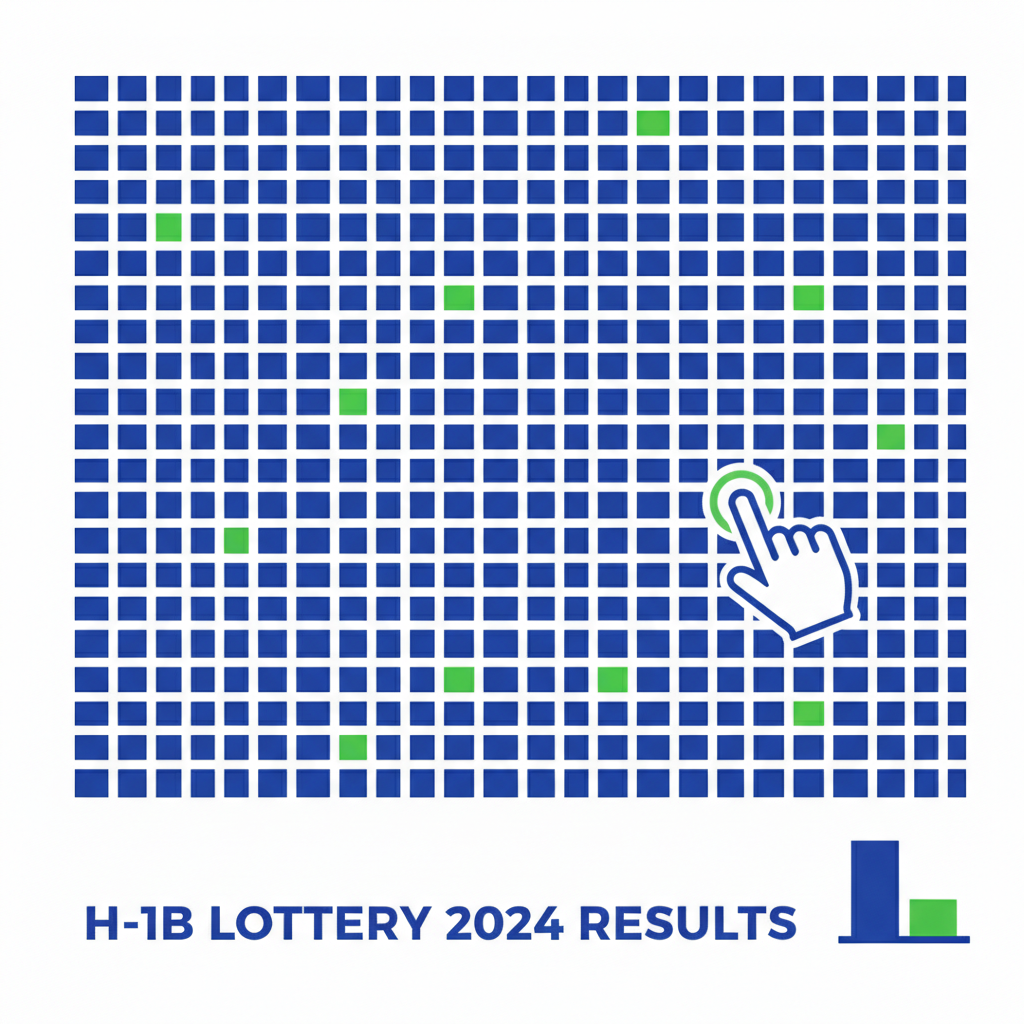
Think of the H-1B visa as a special work permit for highly skilled jobs like IT professionals, engineers, doctors, and scientists. Because there are more people who want these visas than available spots each year, the government holds a "lottery." Employers register their potential employees, and USCIS randomly picks enough registrations to meet the annual limit. The "changes for FY2027" mean that the rules for how this lottery works have been updated, mainly to make it fairer and prevent fraud. The most significant change is that the selection is now based on each unique individual (the "beneficiary"), not how many employers register for that person. This means if multiple employers register for you, you still only get one "ticket" in the lottery, preventing an unfair advantage.
Key terms you need to know
- H-1B Visa: A nonimmigrant visa that allows U.S. employers to temporarily employ foreign workers in specialty occupations.
- Specialty Occupation: An occupation that requires a theoretical and practical application of a body of highly specialized knowledge, and a bachelor's degree or higher in the specific specialty (or its equivalent) as a minimum for entry into the occupation in the United States.
- Cap-Subject: Refers to H-1B petitions that are subject to the annual numerical limit (cap) of 85,000 visas. Certain organizations, like universities and non-profit research institutions, are "cap-exempt."
- Beneficiary: The foreign national (the employee) for whom the H-1B visa is sought.
- Petitioner: The U.S. employer filing the H-1B petition on behalf of the beneficiary.
- Registration Period: The specific window (typically in March) during which prospective petitioners must electronically register beneficiaries for the H-1B lottery. For FY2027, this period has concluded.
- Selection Notification: The official communication from USCIS informing petitioners whether their beneficiary's registration has been selected in the lottery. For FY2027, these notifications have recently been issued.
- Fiscal Year (FY): The U.S. government's accounting year, which runs from October 1 to September 30. H-1B visas approved for FY2027 become valid on October 1, 2026.
- Beneficiary-Centric Selection: The major change for FY2027. USCIS now selects registrations based on each unique beneficiary, regardless of how many registrations are submitted on their behalf by different employers. This ensures that each individual has an equal chance of selection.
- Form I-129: The Petition for a Nonimmigrant Worker, which is the primary form filed by an employer on behalf of a selected H-1B beneficiary.
Current Immigration Law: The Foundation
The H-1B visa program is governed by the Immigration and Nationality Act (INA), specifically Sections 101(a)(15)(H)(i)(b) and 214(g). The regulations implementing these statutes are found in the Code of Federal Regulations, primarily at 8 CFR Part 214.2(h).
Federal requirements
At its core, the H-1B program requires that:
- The position offered must be a specialty occupation. This means the job typically requires a bachelor's degree or higher in a specific field.
- The beneficiary must meet the minimum educational and experience requirements for that specialty occupation. This usually means possessing a U.S. bachelor's or higher degree, or its foreign equivalent, or holding an unrestricted state license, or having work experience equivalent to a bachelor's degree.
- The employer must file a Labor Condition Application (LCA) with the U.S. Department of Labor, attesting to paying the H-1B worker at least the prevailing wage for the occupation in the area of employment or the actual wage paid to other employees with similar experience and qualifications, whichever is higher.
- The employer must offer terms and conditions of employment that will not adversely affect the working conditions of U.S. workers similarly employed.
The recent changes for FY2027, while impacting the lottery *selection process*, do not alter these fundamental federal eligibility requirements for the H-1B visa itself. They primarily focus on the integrity of the registration and selection phase.
Florida-specific considerations
While immigration law is federal, the practical implications can vary by location. Florida, particularly the I-4 corridor connecting Orlando and Tampa, is a hub for technology, healthcare, and engineering industries. Many Florida-based companies actively seek H-1B workers. For those in Central Florida, understanding the local job market and prevailing wage determinations (which are location-specific) is crucial when preparing an H-1B petition. The Orlando USCIS Field Office may handle certain aspects, though H-1B petitions are typically processed at service centers. However, for any potential future interviews or related immigration matters, understanding local resources is key.
For more detailed information on H-1B regulations, always refer to the official source:
How to Navigate the New H-1B Lottery System: A Complete Step-by-Step Guide
Given that today is April 7, 2026, the FY2027 H-1B lottery registration period has closed, and selections have just been announced. This guide will focus on the steps for *selected* beneficiaries and their employers, as well as advice for those not selected.
1) Confirming H-1B Lottery Selection and Understanding Next Steps
Timeline: As of late March/early April 2026, USCIS has issued selection notifications for the FY2027 H-1B lottery. Employers (petitioners) and their authorized representatives should check their USCIS online accounts.
- Notification: USCIS sends electronic notifications to the registrant's online account. If selected, the status will show "Selected."
- Verification: Ensure the selection notice matches the beneficiary's details exactly.
- Understanding the Filing Window: The selection notice will specify the period during which the H-1B petition (Form I-129) must be filed. Typically, this window begins on April 1st and lasts for 90 days. For FY2027, this means the filing window is approximately from April 1, 2026, to June 30, 2026.
Important: Selection in the lottery does not guarantee H-1B approval. It merely grants the opportunity to file the full petition.
2) Preparing the H-1B Petition (Form I-129)
This is the most critical and complex phase. The employer, with legal counsel, must prepare a robust petition demonstrating that the position qualifies as a specialty occupation and the beneficiary meets the requirements.
- Labor Condition Application (LCA): The employer must file and obtain a certified LCA (Form ETA-9035) from the U.S. Department of Labor. This attests to paying the prevailing wage and meeting working conditions. This must be certified *before* filing Form I-129.
- Gathering Beneficiary Documents:
- Copies of all educational degrees, transcripts, and diplomas (U.S. and foreign).
- Foreign degree evaluations if applicable.
- Employer letters verifying professional experience.
- Resume/CV.
- Copies of current and previous visa documents (e.g., I-20, EAD, I-797, I-94).
- Passport copies (biographic page, visa stamps).
- Birth certificate (if applicable for dependent family members).
- Marriage certificate (if applicable for dependent family members).
- Gathering Employer Documents:
- Company financial statements, tax returns.
- Business license, articles of incorporation.
- Detailed job description, including duties, responsibilities, and required qualifications.
- Organizational charts.
- Client letters/contracts (especially for consulting firms).
- Evidence of employer-employee relationship (for third-party placements).
- Certified LCA (Form ETA-9035).
- Petition Letter: A detailed letter from the employer explaining the company, the specialty occupation, the beneficiary's qualifications, and why the position meets H-1B criteria.
3) Filing the H-1B Petition with USCIS
Once all documents are prepared and the LCA is certified, the complete petition package is filed with USCIS.
- Form I-129: The core petition form. Ensure all sections are accurately completed.
- Required Fees:
- Base Filing Fee: $460 (as of April 1, 2024, for petitions filed on or after this date).
- American Competitiveness and Workforce Improvement Act (ACWIA) Fee: $750 (for employers with 1-25 full-time equivalent employees) or $1,500 (for employers with 26 or more full-time equivalent employees).
- Fraud Prevention and Detection Fee: $500.
- Public Law 114-113 Fee (for employers with 50 or more employees, where more than 50% are H-1B or L-1 status): $4,000.
- Biometrics Fee: $30 (new fee as of April 1, 2024, for petitions filed on or after this date).
- Optional: Premium Processing Fee: $2,805 (as of February 26, 2024). This guarantees 15-calendar-day processing.
- Supporting Documentation: All evidence gathered in Step 2.
- Filing Location: The petition must be mailed to the correct USCIS Service Center based on the employer's address and the type of petition.
- Form G-28: If represented by an attorney, Form G-28, Notice of Entry of Appearance as Attorney or Accredited Representative, must be included.
Reminder: All fees must be paid with a check or money order drawn on a U.S. bank, payable to the U.S. Department of Homeland Security.
Don't risk errors with your H-1B petition. Our Orlando immigration attorneys have a proven track record of successful H-1B filings. Contact Imigrar today for expert assistance. Call +1 786-791-3106 for a free consultation. Se Habla Español.
4) USCIS Processing and Potential Requests for Evidence (RFEs)
After filing, USCIS will send a receipt notice (Form I-797C). The processing time can vary significantly, especially without premium processing.
- Normal Processing: Check USCIS Processing Times for current estimates.
- Request for Evidence (RFE): USCIS may issue an RFE if they need more information or clarification. Common RFE topics include specialty occupation eligibility, employer-employee relationship, or beneficiary qualifications.
- Warning: RFEs require a timely and comprehensive response. A poorly prepared RFE response can lead to denial.
- Approval/Denial: If approved, USCIS will issue an approval notice (Form I-797A/B). If denied, the notice will state the reasons for denial.
5) Visa Stamping (for those outside the U.S.) or Change of Status (for those inside the U.S.)
Upon H-1B petition approval, the next step depends on the beneficiary's location.
- Change of Status (within the U.S.): If the beneficiary is already in the U.S. in a valid nonimmigrant status (e.g., F-1 OPT, L-1, H-4) and the H-1B petition requested a change of status, the approval notice (Form I-797A) will typically include a new I-94 card showing H-1B status effective October 1, 2026. The beneficiary can begin H-1B employment on that date.
- Consular Processing (outside the U.S.): If the beneficiary is outside the U.S. or opted for consular processing, the approval notice (Form I-797B) will indicate that the petition has been forwarded to the National Visa Center (NVC). The beneficiary must then schedule an interview at a U.S. embassy or consulate abroad to obtain the H-1B visa stamp.
- Documents for Visa Interview: Passport, DS-160 confirmation, interview appointment letter, original Form I-797B, LCA, employer letter, degrees, transcripts, and other supporting documents.
- More information on visa interviews can be found at U.S. Department of State.
Practical Steps You Can Take Today
Whether you were selected in the FY2027 H-1B lottery or not, there are concrete actions you can take right now to secure your immigration future.
Actionable Checklist for Selected Beneficiaries and Employers:
- Verify Selection: Immediately confirm your selection status in the USCIS online account.
- Engage Legal Counsel: If you haven't already, secure experienced immigration legal representation. The H-1B petition is complex, and professional guidance is invaluable.
- Begin LCA Process: Employers should initiate the Labor Condition Application (LCA) with the Department of Labor (DOL) as soon as possible. This is a prerequisite for filing Form I-129.
- Gather Documents Promptly: Start compiling all necessary beneficiary and employer documents. Proactive document collection prevents last-minute delays.
- Understand the Filing Deadline: Mark the 90-day filing window (approximately April 1, 2026 – June 30, 2026) in your calendar and aim to file well before the deadline.
- Discuss Premium Processing: Consider if premium processing is necessary, especially if you have an urgent need for the H-1B status.
Document preparation guidance
- Organization is Key: Create a checklist and organize documents methodically. Use binders, tabs, and clear labels.
- Certified Translations: Any foreign-language documents must be accompanied by a certified English translation.
- Accurate Information: Ensure all information across all forms and supporting documents is consistent and accurate. Discrepancies can lead to RFEs or denials.
- Proofread: Double-check everything for typos or errors before submission.
Timeline expectations
- April 1 – June 30, 2026: H-1B Cap-Subject Petition Filing Window for FY2027.
- April 2026 – September 2026: USCIS processing of H-1B petitions. Those who paid for premium processing will receive a decision within 15 calendar days.
- October 1, 2026: H-1B status becomes effective for approved petitions. Beneficiaries can begin H-1B employment on this date.
For those not selected: Don't lose hope. Explore alternative visa options such as O-1 (Extraordinary Ability), L-1 (Intracompany Transferee), E-3 (Australian Specialty Occupation), or even F-1 OPT extensions. Consult with an immigration attorney to assess your best path forward.
How Imigrar Helps Immigrants in Orlando
At Imigrar, our mission is to "Keep Families Together" and empower individuals to achieve their American dreams. Located in Orlando, Florida, we proudly serve clients not only across Central Florida but nationwide. The H-1B visa process, especially with the latest changes for FY2027, demands precise legal knowledge and strategic planning. Our team is dedicated to providing just that.
Our experienced immigration attorneys specialize in complex employment-based visas, including H-1B petitions. We understand the nuances of proving specialty occupation eligibility, responding to challenging RFEs, and navigating the intricacies of USCIS requirements. We stay abreast of the latest regulatory updates and policy changes, ensuring your petition is prepared accurately and strategically.
Whether you're an employer in Orange County looking to sponsor top talent or a skilled professional on the I-4 corridor seeking to secure your H-1B status, we are here to provide personalized guidance. We offer a free consultation to discuss your specific situation, assess your eligibility, and outline a clear path forward. Our commitment is to demystify the immigration process, providing peace of mind and effective advocacy.
Se Habla Español. We understand the importance of clear communication, and our bilingual team is ready to assist you in the language you are most comfortable with.
Ready to file your H-1B petition with confidence? Our Orlando firm, Imigrar, offers expert legal support. Call us at +1 786-791-3106 for a free consultation. Se Habla Español.
Frequently Asked Questions
Q: What is the main change in the H-1B lottery for FY2027?
A: The most significant change for FY2027 (and continuing from FY2025) is the implementation of a "beneficiary-centric" selection process. This means that USCIS now selects registrations based on each unique beneficiary, rather than by each registration submitted. If a beneficiary has multiple registrations filed on their behalf by different employers, they are still only entered into the lottery once. This aims to prevent fraud and ensure a more equitable chance for all eligible individuals. Additionally, new fee structures and enhanced fraud prevention measures are in place.
Q: What are the eligibility requirements for an H-1B visa?
A: To be eligible, the position must qualify as a specialty occupation, generally requiring a bachelor's degree or higher in a specific field. The beneficiary must possess that required degree or its equivalent through education and/or work experience. The employer must also attest to paying the prevailing wage for the occupation in the area of employment and meet other labor condition requirements. Specific federal requirements can be found on the USCIS official website.
Q: What if I have multiple H-1B job offers for FY2027?
A: Under the new beneficiary-centric system, if multiple employers submit registrations for you, your name will still only be entered into the lottery once. If your registration is selected, any of the employers who submitted a registration for you can then file an H-1B petition on your behalf, provided they meet all other requirements. You would then need to choose which offer to proceed with. Important: You cannot have multiple H-1B petitions approved for concurrent employment unless all employers have properly registered you and filed separate petitions for different roles, and you intend to work for all of them.
Q: What is the timeline for the FY2027 H-1B process now that selections are out?
A: As of April 7, 2026, the registration period (typically March 1-17) and selection notifications (by March 31) for FY2027 have concluded. The filing window for selected petitions (Form I-129) is usually from April 1st to June 30th, 2026. USCIS will then process these petitions, with H-1B status becoming effective on October 1, 2026, for approved cases. Premium processing can expedite the USCIS decision to 15 calendar days.


