

The landscape of U.S. immigration is ever-evolving, and for foreign professionals aspiring to work in the United States, few processes are as critical and competitive as the H-1B visa lottery. As we look towards Fiscal Year 2027 (FY2027), significant changes are on the horizon, promising to reshape how employers and beneficiaries approach this vital work visa.
At Imigrar, an immigration law firm based in Orlando, Florida, we understand that these updates can be complex and daunting. Our mission, "Keep Families Together," extends to ensuring professionals and their families have the clearest possible path to achieving their American dreams. This comprehensive guide will break down the H-1B visa lottery changes for FY2027, providing you with the knowledge and actionable steps you need to navigate this crucial period successfully.
Need Help? Our Orlando immigration team is ready to assist. Call +1 786-791-3106 for a free consultation, or message us online. Se Habla Español.
The reporting that sparked this guide:
H-1B Visa Lottery Changes for FY2027 (Legal News)
What This News Means for Immigrants in Orlando and Across Florida
The H-1B visa program is a cornerstone for U.S. employers seeking to hire foreign workers in specialty occupations, especially in high-demand sectors like technology, healthcare, and engineering. For immigrants and their families in Orlando, Central Florida, and throughout the Sunshine State, these changes are not just bureaucratic adjustments; they represent potential shifts in opportunity and strategy.
Why this news is showing up now
Immigration regulations, particularly those governing high-demand visa categories like the H-1B, are subject to periodic review and adjustment by U.S. Citizenship and Immigration Services (USCIS) and the Department of Homeland Security (DHS). These changes are often a response to evolving economic conditions, legislative mandates, and efforts to enhance program integrity and efficiency. The updates for the **FY2027 H-1B visa lottery** are being announced in early 2026 because the annual registration period typically opens in March for the fiscal year beginning October 1st. This timing allows employers and prospective beneficiaries ample time to understand and prepare for the new requirements before the registration window opens.
Recent years have seen unprecedented demand for H-1B visas, leading to extremely low selection rates and concerns over fraud, particularly multiple registrations for a single beneficiary by different employers without genuine job offers. The new rules for FY2027 are largely designed to address these challenges, aiming to create a fairer and more transparent lottery system while upholding the integrity of the program. This proactive approach by USCIS is crucial for managing expectations and ensuring compliance ahead of the competitive registration period.
How it can affect Florida residents
Florida is a vibrant hub for innovation, tourism, healthcare, and technology. Major metropolitan areas like Orlando, Tampa, Miami, and Jacksonville attract a significant number of foreign professionals and host numerous companies reliant on H-1B talent. The I-4 corridor, connecting Orlando and Tampa, is a growing tech and medical research hub, generating substantial demand for specialty occupation workers.
For Central Florida residents, including those graduating from prestigious universities like the University of Central Florida (UCF) or the University of Florida (UF) and seeking to transition from F-1 student status to H-1B worker status, these changes are paramount. The impact could include:
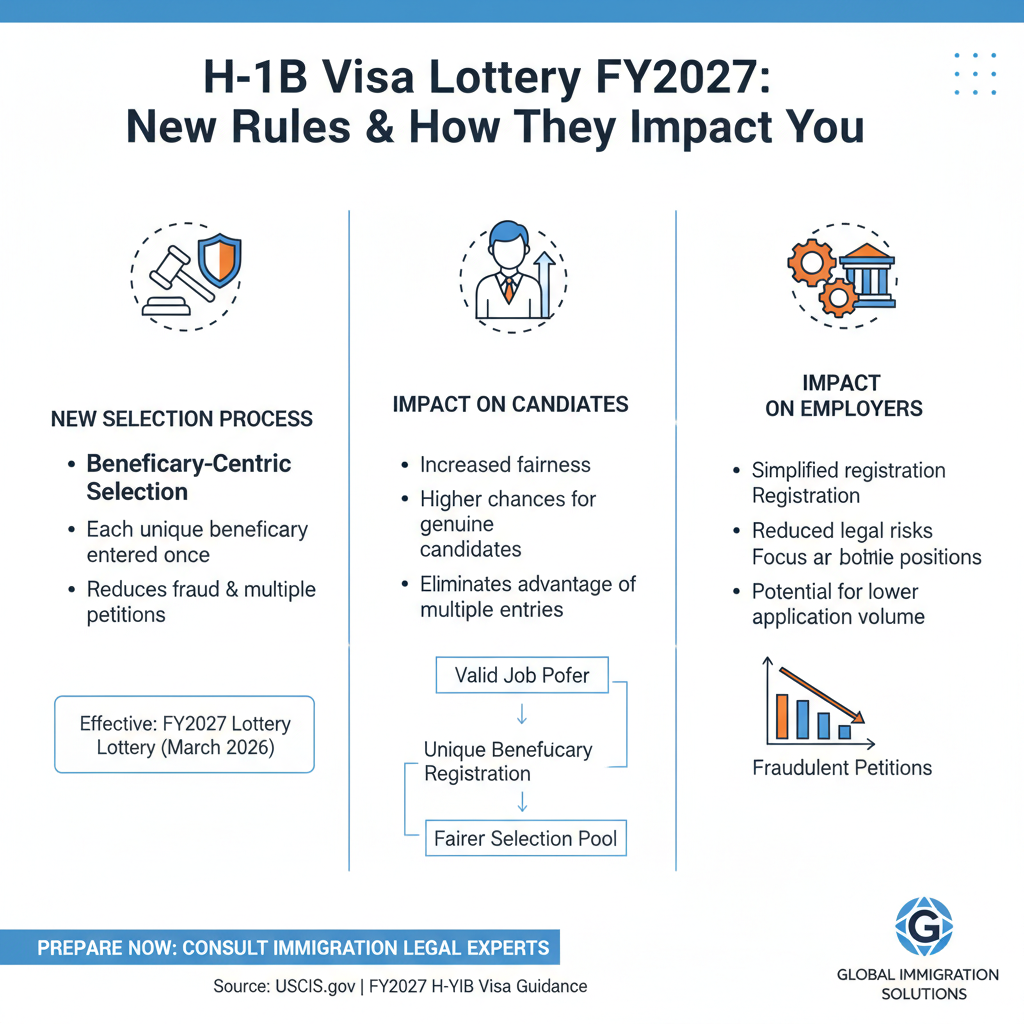
- Increased Fairness: The shift towards a beneficiary-centric selection process, initially implemented in FY2025 and likely refined for FY2027, means that each unique beneficiary has only one chance in the lottery, regardless of how many employers register them. This aims to reduce the advantage previously held by those with multiple registrations, potentially leveling the playing field for all qualified applicants in Orlando and nationwide.
- Heightened Scrutiny: USCIS is intensifying efforts to detect and prevent fraud. This means employers must ensure their job offers are legitimate and that all registrations and petitions are accurate and truthful. For companies in Orlando, this means a greater emphasis on compliance and due diligence.
- Cost Adjustments: USCIS fees are subject to change, and typically, they increase. Anticipate higher registration fees and petition filing fees for FY2027, which will impact both employers and, indirectly, beneficiaries.
- Strategic Planning: Both employers and beneficiaries in Florida will need to adapt their strategies. Employers must focus on finding the best talent and submitting a single, strong registration for each candidate. Beneficiaries must ensure their qualifications are impeccable and work closely with reputable employers.
Understanding these effects early is key to preparing effectively and maximizing your chances of success in the highly competitive H-1B lottery.
What H-1B Visa Lottery Changes for FY2027 Is (and Why It Matters)
The H-1B visa is a non-immigrant visa that allows U.S. employers to temporarily employ foreign workers in specialty occupations. These occupations generally require a bachelor's degree or higher in a specific specialty. The "lottery" comes into play because there's an annual cap on the number of H-1B visas issued each fiscal year, and demand almost always exceeds this supply.
A plain-English definition
Think of the **H-1B visa** as a temporary work permit for highly skilled professionals. If you have a specific degree (like in engineering, IT, medicine, or finance) and a U.S. employer wants to hire you for a job that requires that degree, they can sponsor you for an H-1B visa. However, the government only issues a limited number of these visas each year – currently 85,000. When more people apply than there are visas available (which happens almost every year), USCIS conducts a random selection process, much like a lottery, to decide who gets to apply for the visa. The "changes for FY2027" refer to new rules, procedures, and potentially increased fees that USCIS is implementing to manage this lottery, primarily to make it fairer and prevent abuse.
Key terms you need to know
Navigating the H-1B process requires understanding specific terminology. Here are some key terms:
- USCIS (U.S. Citizenship and Immigration Services): The government agency responsible for processing immigration petitions, including H-1B visas.
- DHS (Department of Homeland Security): The parent department of USCIS, responsible for overall immigration enforcement and policy.
- H-1B Cap: The annual limit on the number of H-1B visas issued. Currently, it's 65,000 regular visas plus an additional 20,000 for those with a U.S. master's degree or higher (the **Master's Cap**).
- Specialty Occupation: An occupation that requires theoretical and practical application of a body of highly specialized knowledge, and a bachelor's degree or higher in the specific specialty, or its equivalent.
- Petitioner: The U.S. employer who files the H-1B petition on behalf of the foreign worker.
- Beneficiary: The foreign worker who is the subject of the H-1B petition.
- LCA (Labor Condition Application): **Form ETA-9035**, filed by the employer with the U.S. Department of Labor (DOL) before filing the H-1B petition. It confirms that the employer will pay the H-1B worker at least the prevailing wage or the actual wage, whichever is higher, and provide working conditions that will not adversely affect other workers.
- Registration Period: The specific window of time (usually in March) when employers must electronically register prospective H-1B beneficiaries for the lottery.
- Selection Rate: The percentage of registered beneficiaries who are selected in the lottery. This has been very low in recent years due to high demand.
- FY (Fiscal Year): The U.S. government's fiscal year runs from October 1st to September 30th. The **FY2027 H-1B cap** visas will be for employment starting on or after October 1, 2026.
- myUSCIS: The online platform used for H-1B electronic registration and other immigration processes.
These changes matter significantly because they directly impact the fairness, accessibility, and integrity of the H-1B program. For employers, they mean a clearer, albeit potentially more stringent, path to securing talent. For beneficiaries, they aim to reduce the frustration of lottery manipulation and ensure that genuine job offers stand a better chance. Understanding these updates is crucial for anyone involved in the H-1B process for FY2027 and beyond.
Navigating the H-1B lottery is complex. Let Imigrar guide you through the new rules. Contact us at +1 786-791-3106 for expert assistance and peace of mind. Se Habla Español.
Current Immigration Law: The Foundation
The H-1B visa program operates under specific sections of the Immigration and Nationality Act (INA) and associated federal regulations. Understanding this legal framework is essential for grasping the significance of the FY2027 changes.
Federal requirements
The authority for the H-1B visa program primarily stems from Section 101(a)(15)(H)(i)(b) and Section 214(g) of the **Immigration and Nationality Act (INA)**. These statutes define the H-1B category and establish the annual cap.
Key federal requirements for an H-1B petition include:
- Specialty Occupation: The job must qualify as a specialty occupation, meaning it requires a theoretical and practical application of a body of highly specialized knowledge and a bachelor's or higher degree in the specific specialty.
- Educational Requirements: The beneficiary must hold at least a bachelor's degree or its equivalent, or possess a license that permits them to practice in a specialty occupation, or have work experience equivalent to a bachelor's degree.
- Employer-Employee Relationship: A valid employer-employee relationship must exist between the petitioning U.S. employer and the H-1B beneficiary.
- Labor Condition Application (LCA): The employer must file and obtain a certified LCA from the U.S. Department of Labor (**Form ETA-9035**) before filing the H-1B petition. This ensures prevailing wage compliance and working conditions. You can find more information at the U.S. Department of Labor (H-1B) website.
- Annual Cap: As mentioned, there's an annual cap of 65,000 H-1B visas, plus an additional 20,000 for beneficiaries with a U.S. master's degree or higher. This cap is a primary reason for the lottery system.
The primary form used for filing an H-1B petition is **Form I-129**, Petition for a Nonimmigrant Worker. If premium processing is desired, **Form I-907**, Request for Premium Processing Service, is also filed. All forms and detailed instructions are available on the USCIS official website, specifically at USCIS Forms.
Florida-specific considerations
While H-1B laws are federal, their application has practical implications for Florida residents and businesses. Florida's robust economy, particularly in sectors like aerospace, information technology, biomedical research, and engineering, creates significant demand for H-1B workers. Tech hubs in Orlando, Tampa, and South Florida actively recruit foreign talent, making the H-1B visa a critical tool for their workforce needs.
For Central Florida residents, including those in Orange County and surrounding areas, understanding that the H-1B petition process is handled by USCIS service centers, not local field offices, is important. While you might interact with the Orlando USCIS Field Office for other immigration matters (like **Adjustment of Status** interviews or biometrics for certain forms), H-1B petitions are typically mailed to or electronically filed with specific USCIS Service Centers (e.g., California Service Center or Vermont Service Center), which process applications nationwide based on the employer's location. However, legal guidance from an Orlando-based firm like Imigrar ensures local accessibility and tailored support for Florida employers and beneficiaries.
How to Navigate the New H-1B Visa Lottery Rules: A Complete Step-by-Step Guide
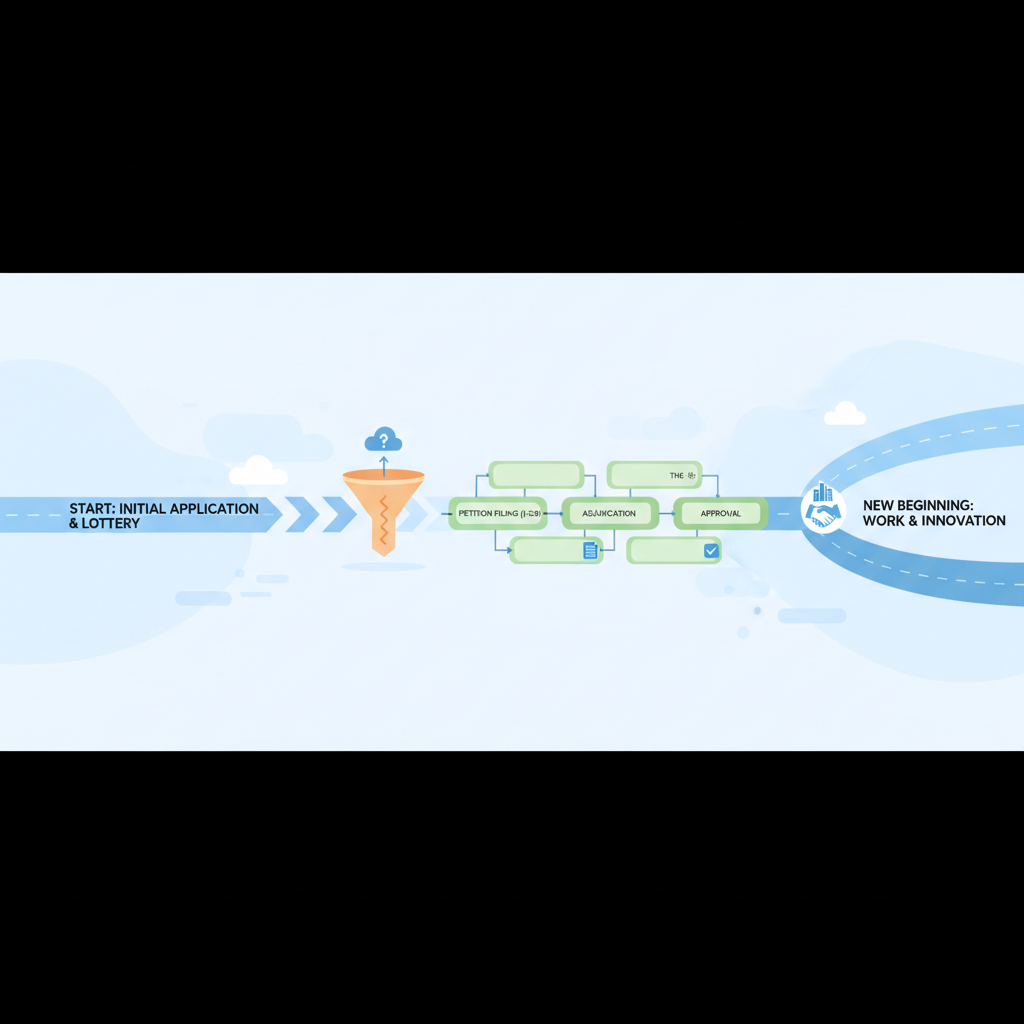
The H-1B visa lottery process for FY2027 will incorporate the new rules, emphasizing integrity, fairness, and a beneficiary-centric approach. Here’s a detailed guide to help you through each step:
1) Understand the New Rules for FY2027
Before any action, both employers and beneficiaries must grasp the specific changes for FY2027. Building on the beneficiary-centric selection introduced in FY2025, USCIS is likely to further tighten anti-fraud measures and implement new fee structures. The most significant change, if you are new to the process, is that each unique beneficiary is entered into the lottery only once, regardless of how many employers register them. This prevents a single individual from gaining an unfair advantage through multiple registrations.
- Action: Review official USCIS announcements, Federal Register notices, and consult with an experienced immigration attorney.
- Required Documents (for review): USCIS policy memos, Federal Register documents.
2) Employer Registration Process
The first practical step is the electronic registration. The employer, known as the **Petitioner**, must register each prospective **Beneficiary** through the **myUSCIS** online portal. This usually occurs during a specific window in March (e.g., early March 2026 for FY2027).
- Action: The employer creates a **myUSCIS** online account, if they don't have one. For each beneficiary, they submit a registration, providing basic information about the company and the beneficiary.
- Important: Ensure all information is accurate. Fraudulent registrations carry severe penalties.
- Required Documents (for registration):
- Employer’s EIN (Employer Identification Number).
- Employer’s legal name, address, and authorized signatory information.
- Beneficiary���s full legal name, date of birth, country of birth, country of citizenship.
- Beneficiary’s passport number.
- Beneficiary’s highest degree obtained, and whether it’s a U.S. master’s or higher degree (for the **Master's Cap**).
3) Lottery Selection and Notification
After the registration period closes, USCIS conducts the random lottery selection. They first select beneficiaries for the **Master's Cap**, then those not selected (and all others) are entered into the regular cap lottery. Notifications are typically sent out in late March or early April.
- Action: Monitor the **myUSCIS** account for selection notifications. Only selected registrations will receive an invitation to file an H-1B petition.
- Timeline Expectation: Selection notifications usually occur within a week or two after the registration period closes.
4) Filing the H-1B Petition (Form I-129)
If a beneficiary is selected, the petitioning employer has a specific **90-day window** to file the complete H-1B petition with USCIS. This is where the bulk of the documentation comes into play.
- Action: The employer, with legal counsel, prepares and submits **Form I-129**, Petition for a Nonimmigrant Worker, along with all supporting documents and the certified **LCA**.
- Required Documents (for petition filing):
- Certified **LCA** (**Form ETA-9035**).
- **Form I-129** and H-1B Supplement.
- Employer financial statements, tax returns, and business licenses to prove ability to pay and legitimate business operations.
- Employer's organizational chart, brochures, and detailed job description.
- Offer letter to the beneficiary.
- Beneficiary’s educational documents (transcripts, diplomas, degree certificates, foreign degree evaluations).
- Beneficiary’s work experience letters and resume.
- Beneficiary’s passport, visa, **Form I-94** (if already in the U.S.), and U.S. immigration history.
- Any licenses required for the specialty occupation.
- Affidavits from experts, if needed, to support specialty occupation claims.
5) Premium Processing or Standard Processing
Employers have the option to pay an additional fee for **Premium Processing


