

The reporting that sparked this guide
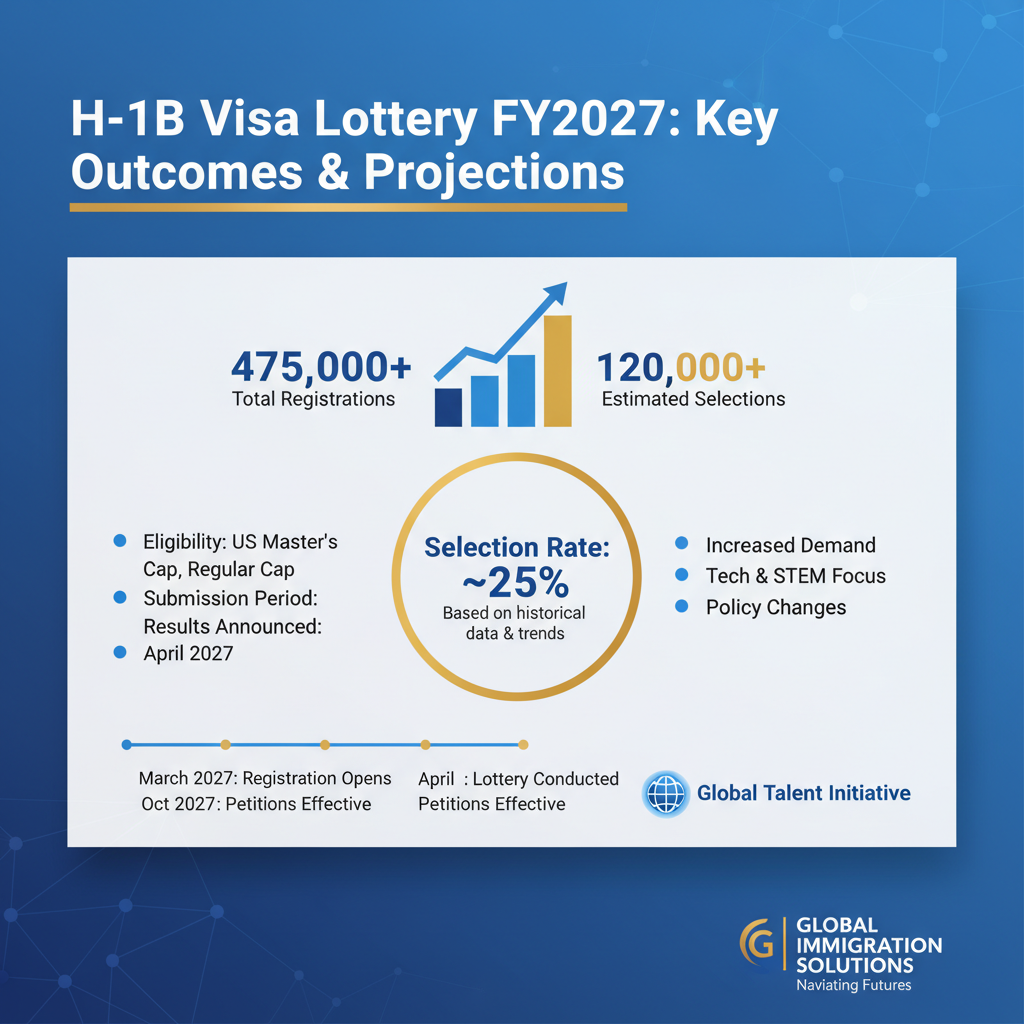
This comprehensive guide is inspired by recent legal news regarding significant updates to the H-1B visa lottery system. Staying informed about these changes is crucial for anyone considering this pathway to work in the United States.
H-1B Visa Lottery Changes for FY2027 (Legal News)What This News Means for Immigrants in Orlando and Across Florida
The landscape of U.S. immigration law is constantly evolving, and few areas see as much change and scrutiny as the H-1B nonimmigrant visa program. For fiscal year 2027 (FY2027), the United States Citizenship and Immigration Services (USCIS) has rolled out pivotal changes to the H-1B visa lottery, a development that carries profound implications for skilled foreign workers and the employers who seek their talent. At Imigrar, our mission is to "Keep Families Together," and understanding these changes is vital to achieving that goal for many.Why this news is showing up now
The H-1B visa program allows U.S. employers to temporarily employ foreign workers in specialty occupations. Due to the annual cap on H-1B visas, demand consistently outstrips supply, necessitating a lottery system. USCIS typically announces changes to the H-1B registration and lottery process well in advance of the new fiscal year's registration period. These announcements are crucial because they dictate how prospective H-1B beneficiaries and their sponsoring employers must prepare and submit their applications. The specific changes for FY2027 stem from USCIS's ongoing efforts to enhance the integrity of the H-1B program, reduce fraud, and ensure a more equitable selection process. The most significant modification, which was introduced for FY2025 and is expected to continue for FY2027, is the shift to a **beneficiary-centric selection process**. This fundamental change directly addresses concerns about petition integrity and attempts by some to game the system by submitting multiple registrations for the same beneficiary through different employers. By implementing these new rules, USCIS aims to level the playing field for all legitimate applicants and employers.How it can affect Florida residents
Florida, particularly Central Florida and the Orlando area, is a vibrant hub for diverse industries that heavily rely on skilled foreign talent. From the burgeoning tech sector along the I-4 corridor to advanced manufacturing, healthcare, and aerospace, companies in our state frequently sponsor H-1B visas. This means that: * **For Skilled Workers in Florida:** If you are an international student graduating from a Florida university (like UCF, UF, USF, FIU) currently on Optional Practical Training (OPT) or Curricular Practical Training (CPT), or if you are a professional already working in Florida on another visa and hoping to transition to H-1B, these changes directly impact your future. The new beneficiary-centric system means that your individual chances in the lottery are no longer influenced by the number of employers who register you. This could simplify your strategy but also places a greater emphasis on having a strong, legitimate job offer. * **For Florida Employers:** Tech companies in Orlando, healthcare providers in Tampa, aerospace firms on the Space Coast, and many other businesses across Florida often depend on H-1B workers to fill critical specialty occupation roles. The new rules require employers to be meticulously diligent in verifying their job offers and ensure they are not part of any fraudulent multiple registration schemes, which could lead to severe penalties. The integrity of the employer-employee relationship is now more paramount than ever during the registration phase. * **Increased Fairness:** The intent of these changes is to create a fairer lottery. While the overall odds of selection remain challenging due to high demand, the new system aims to eliminate unfair advantages, benefiting legitimate applicants and employers in Florida who play by the rules. Understanding these implications is the first step. Navigating them successfully requires expert legal guidance.Need Help? Our Orlando immigration team is ready to assist. Call +1 786-791-3106 for a free consultation, or message us online. Se Habla Español.
What H-1B Visa Lottery Changes for FY2027 Is (and Why It Matters)
The H-1B visa program is a cornerstone of U.S. immigration for skilled foreign workers. It enables U.S. employers to temporarily employ nonimmigrant aliens in specialty occupations. These occupations generally require a bachelor's degree or higher in a specific field. However, due to high demand and an annual cap, the process is competitive and complex, often requiring a lottery. The recent changes directly impact this lottery for FY2027.A plain-English definition
The **H-1B Visa Lottery Changes for FY2027** refer to new rules implemented by USCIS for how the annual H-1B cap-subject visa lottery will be conducted. The most significant change, introduced for FY2025 and expected to continue for FY2027, is the move from an "employer-centric" to a **"beneficiary-centric" selection process**. Previously, if multiple employers registered the same foreign worker, each registration would be entered into the lottery, effectively increasing that worker's chances of selection. This led to concerns about abuse and fraud, where some employers might submit multiple registrations without a genuine job offer, simply to boost an individual's lottery odds. Under the new **beneficiary-centric** system, each unique foreign national (the "beneficiary") is entered into the lottery only **once**, regardless of how many different employers submit registrations on their behalf. If a beneficiary is selected, all employers who submitted a registration for that individual will be notified of the selection. This ensures that the lottery selection is based on the individual's eligibility, not on the number of registrations submitted by various employers. The beneficiary must then choose which employer's petition they wish to pursue. This change is designed to create a fairer, more transparent, and less fraud-prone lottery.Key terms you need to know
Navigating the H-1B process requires understanding specific terminology. Here are some key terms: * **USCIS (United States Citizenship and Immigration Services):** The government agency that oversees lawful immigration to the United States. They administer the H-1B program. * **H-1B Visa:** A nonimmigrant visa that allows U.S. employers to temporarily employ foreign workers in specialty occupations. * **Specialty Occupation:** An occupation that requires a theoretical and practical application of a body of highly specialized knowledge, and a bachelor's or higher degree in the specific specialty (or its equivalent) as a minimum for entry into the occupation in the United States. * **Cap-Subject H-1B:** H-1B visas subject to the annual numerical cap. There are 65,000 regular cap visas and an additional 20,000 for those with a U.S. master's degree or higher (the "Master's Cap"). * **Cap-Exempt H-1B:** Certain employers are exempt from the annual cap, such as institutions of higher education, non-profit organizations affiliated with higher education, and non-profit research organizations or governmental research organizations. * **Beneficiary:** The foreign national who will be employed in the specialty occupation. * **Petitioner:** The U.S. employer who files the H-1B petition on behalf of the beneficiary. * **LCA (Labor Condition Application):** **Form ETA-9035**. An application filed with the Department of Labor by the employer, attesting to certain wage and working conditions for the H-1B worker. This must be certified before filing the H-1B petition with USCIS. * **H-1B Registration Period:** The period during which employers must electronically register prospective H-1B beneficiaries for the annual lottery. This typically occurs in March each year for the fiscal year starting October 1st. * **Selection Notice:** Notification from USCIS that a registered beneficiary has been selected in the lottery, allowing an employer to file a full H-1B petition. * **Petition (Form I-129):** The **Form I-129, Petition for a Nonimmigrant Worker**, filed by the employer with USCIS after a beneficiary has been selected in the lottery. * **Premium Processing:** An optional service offered by USCIS for an additional fee, guaranteeing adjudication of certain petitions within 15 calendar days. * **RFE (Request for Evidence):** A notice from USCIS asking for additional information or documentation to support a petition. These changes matter immensely because they directly impact the fairness and integrity of the H-1B program. For individuals and businesses alike, understanding these definitions and the core change to beneficiary-centric selection is paramount for successful navigation of the FY2027 H-1B lottery.Current Immigration Law: The Foundation
The H-1B visa program is governed by the Immigration and Nationality Act (INA), specifically **Section 101(a)(15)(H)(i)(b)**, which defines the H-1B nonimmigrant category. Further regulations are found in **8 CFR Part 214.2(h)**. These laws establish the framework for specialty occupations, employer responsibilities, and beneficiary qualifications.Federal requirements
To qualify for an H-1B visa, both the employer and the prospective employee (beneficiary) must meet specific federal criteria: * **For the Beneficiary:** * Hold a bachelor's degree or its equivalent, or a higher degree, in a specialty occupation field. * Possess a state license, if required, to practice the occupation. * Have work experience equivalent to a bachelor's degree. * The position must be a "specialty occupation." * **For the Employer (Petitioner):** * Must demonstrate that the position qualifies as a specialty occupation. * Must pay the H-1B worker at least the prevailing wage for the occupation in the geographic area of employment or the actual wage paid to other employees with similar experience and qualifications, whichever is higher. * Must file and receive certification for a **Labor Condition Application (LCA) (Form ETA-9035)** from the Department of Labor before filing the H-1B petition with USCIS. * Must agree to provide the H-1B worker with return transportation costs if the worker is dismissed before the end of their authorized period of stay. The H-1B cap is set at 65,000 visas annually, with an additional 20,000 reserved for those with a U.S. master's degree or higher. This cap is a major reason for the lottery system. USCIS official website is the primary source for all forms, regulations, and updates.Florida-specific considerations
While H-1B laws are federal, their application can have unique nuances in different states. For Florida residents and businesses: * **Diverse Industries:** Florida's economy is incredibly diverse, with high demand for H-1B talent in areas like: * **Technology:** Orlando, Tampa, and Miami are growing tech hubs, attracting software developers, IT specialists, data scientists, and engineers. * **Healthcare:** Hospitals and medical facilities across the state, including in Orlando and Central Florida, frequently sponsor H-1B visas for doctors, nurses (in specialty roles), physical therapists, and medical researchers. * **Aerospace & Defense:** The Space Coast and areas around military bases have a constant need for engineers, scientists, and specialized technicians. * **Hospitality & Tourism (Management/Specialty Roles):** While many tourism jobs are not H-1B eligible, managerial and highly specialized roles within large hospitality corporations can qualify. * **Prevailing Wage:** The prevailing wage determination, a critical component of the LCA, is specific to the geographic area of employment. For a company in Orlando, the prevailing wage will be based on data for the Orlando-Kissimmee-Sanford metropolitan area. This ensures fair compensation for H-1B workers relative to local market standards. * **Local USCIS Presence:** While H-1B petitions are processed centrally, the **Orlando USCIS Field Office** handles certain immigration matters. While not directly involved in H-1B petition adjudication, it serves as a resource for other immigration needs for Central Florida residents. Understanding these federal requirements and how they manifest in the Florida context is essential for a successful H-1B application.How to Navigate the New H-1B Lottery System: A Complete Step-by-Step Guide
The H-1B lottery process for FY2027, with its beneficiary-centric selection, demands careful planning and execution. Here’s a detailed step-by-step guide:1) Understand the New Beneficiary-Centric Selection Process
This is the most critical change. For FY2027, USCIS will select registrations based on the unique beneficiary, not on the number of registrations submitted by employers. * **What it means:** If you have multiple legitimate job offers, each employer can still register you. However, you, the beneficiary, will only have one "ticket" in the lottery. If your unique ticket is selected, all employers who registered you will be notified. * **Actionable Advice:** * Focus on securing genuine job offers from employers committed to sponsoring you. * Communicate clearly with all prospective employers about the new process to avoid misunderstandings. * You will ultimately decide which employer's petition to proceed with if selected.2) Employer Verifies Eligibility and Prepares for Registration
Before the registration period even opens, the employer must ensure both the position and the beneficiary meet H-1B requirements. * **Employer Responsibilities:** * Verify the position qualifies as a **specialty occupation**. * Confirm the beneficiary meets the educational/experiential requirements. * Determine the appropriate prevailing wage for the position and location (e.g., Orlando, FL). * Gather preliminary information about the beneficiary and the company. * **Required Documents (for employer's internal preparation):** * Detailed job description for the specialty occupation. * Beneficiary's resume/CV and educational credentials (degrees, transcripts). * Company's FEIN (Federal Employer Identification Number). * Contact information for both the petitioner and beneficiary.3) The H-1B Electronic Registration Process
This is the initial step for all cap-subject H-1B petitions. The employer (or their attorney) submits an electronic registration for each prospective beneficiary. * **Timeline:** The H-1B electronic registration period typically opens in early March for the fiscal year beginning October 1st. For FY2027, anticipate this in **March 2026**. * **Process:** * The employer creates a **USCIS online account**. * Submits **Form I-129 H-1B Registration** for each beneficiary. * Pays the non-refundable **$10 registration fee** per beneficiary. * Provides basic information about the employer and the beneficiary (name, date of birth, country of birth, passport number, highest degree, etc.). * **Required Information (for registration):** * Beneficiary's full legal name, date of birth, country of birth, country of citizenship, gender. * Beneficiary's passport number. * Beneficiary's highest level of education and institution. * Employer's legal name, mailing address, and FEIN. * Employer's authorized signatory information. * Attorney/representative information (if applicable). * Confirmation of a valid job offer. * **Important:** Under the new rules, each beneficiary should only have one registration submitted per fiscal year to avoid issues, even if multiple employers register them. USCIS will identify duplicate beneficiaries and only consider one entry.4) If Selected: Filing the H-1B Petition
If a beneficiary is selected in the lottery, USCIS will notify the petitioner(s) (employers) of the selection. This typically happens by the end of March. Only then can a full H-1B petition be filed. * **Timeline:** Employers will have a specific filing window (usually 90 days) to submit the complete H-1B petition. For FY2027, this typically runs from **April 1st to June 30th, 2026**. * **Process:** * The employer prepares and files a **Labor Condition Application (LCA) (Form ETA-9035)** with the Department of Labor. This must be certified before filing the H-1B petition. * Once the LCA is certified, the employer files **Form I-129, Petition for a Nonimmigrant Worker**, with USCIS. * Include all supporting documentation, fees, and the LCA. * **Required Documents (for petition filing):** * Certified **LCA (Form ETA-9035)**. * **Form I-129, Petition for a Nonimmigrant Worker**. * H-1B visa supplement (Part B of Form I-129). * Employer's letter of support detailing the job offer, specialty occupation duties, and beneficiary qualifications. * Beneficiary's educational credentials (degrees, transcripts, foreign degree evaluations). * Beneficiary's resume/CV. * Copies of beneficiary's passport, visa, I-94 record, EAD (if applicable). * Employer's financial statements, tax returns, and organizational documents to prove ability to pay and legitimacy. * Evidence that the position qualifies as a specialty occupation (e.g., industry standards, expert opinions). * Checks for USCIS filing fees (base fee, ACWIA fee, fraud prevention and detection fee, public law 114-113 fee if applicable, premium processing fee if requested). * **Reminder:** All foreign language documents must be accompanied by a certified English translation.5) Responding to RFEs and Adjudication
After filing, USCIS will review the petition. They may issue a Request for Evidence (RFE) if they need more information or clarification. * **RFE Process:** * USCIS sends an RFE letter detailing the missing information or areas of concern. * You will have a specific deadline (e.g., **90 days**) to respond. * A strong, well-organized response is crucial. * **Adjudication:** USCIS will make a decision: approval, denial, or RFE. If approved, the beneficiary receives an **I-797 Approval Notice**.6) Visa Interview (if applicable) and Arrival
If the beneficiary is outside the U.S. or needs to travel internationally, they will typically need to attend a visa interview at a U.S. consulate or embassy. * **Consular Processing:** * Schedule an appointment at a U.S. embassy or consulate in your home country. * Attend the interview with all required documents (passport, I-797 Approval Notice, original educational documents, job offer letter, LCA). * If approved, the H-1B visa stamp will be placed in your passport. * **Entry to the U.S.:** * Upon arrival, present your passport with the H-1B visa to a Customs and Border Protection (CBP) officer. * You will receive an **I-94 Arrival/Departure Record** indicating your H-1B status and authorized period of stay.7) Maintaining H-1B Status
Once in H-1B status, it's crucial to maintain compliance with all immigration laws. * **Key Requirements:** * Work only for the sponsoring employer in the approved specialty occupation. * Notify USCIS of any material changes in employment (e.g., new job location, significant change in duties) by filing an amended petition. * Ensure your employer remains compliant with LCA conditions (wage, working conditions). * Depart the U.S. or change to another status before your authorized period of stay expires. Navigating these steps, especially with the new lottery rules, requires diligence and often, the expertise of an experienced immigration attorney. USCIS Processing Times can provide estimates for various stages of the application.Practical Steps You Can Take Today
Even before the FY2027 H-1B registration period begins, there are proactive steps you can take to position yourself for success. * **Actionable Checklist:** * **Research and Understand:** Fully grasp the beneficiary-centric selection process. Read official USCIS announcements. * **Secure Job Offers:** Focus on obtaining strong, legitimate job offers from employers committed to your H-1B sponsorship. Multiple genuine offers are still beneficial as they provide options if selected. * **Organize Your Documents:** Begin gathering all personal and educational documents (degrees, transcripts, resume, passport, previous visa documents, I-94 records). Ensure any foreign documents are translated and certified. * **Evaluate Your Qualifications:** Confirm your educational background and work experience align with the requirements for a specialty occupation. If you have a foreign degree, consider obtaining a U.S. credential evaluation early. * **Consult an Immigration Attorney:** This is perhaps the most crucial step. An attorney can assess your eligibility, advise your employer, prepare all necessary forms, and ensure compliance with the new rules. * **Understand Timelines:** Mark your calendar for the anticipated **March 2026 registration window** and the **April-June 2026 petition filing window**. * **Explore Alternatives:** Discuss potential backup options with your attorney if the H-1B lottery is unsuccessful (e.g., O-1 visa, F-1 OPT extension, L-1 visa if applicable). * **Document Preparation Guidance:** * **Accuracy is Paramount:** Ensure all information on forms and supporting documents is accurate and consistent. Discrepancies can lead to RFEs or denials. * **Certified Translations:** For any document not in English (e.g., academic transcripts, birth certificates), provide a complete and accurate English translation, certified by a competent translator. * **Copies, Not Originals (Initially):** For the initial petition filing, generally send copies of documents unless USCIS specifically requests originals. Keep your originals safe. * **Organize and Label:** Present your documents clearly, logically, and labeled according to USCIS guidelines. * **Timeline Expectations:** * **Early 2026 (Jan-Feb):** Employers should be finalizing job offers and engaging legal counsel. Beneficiaries should be preparing documents. * **March 2026:** H-1B electronic registration period opens (typically a 2-3 week window). * **Late March 2026:** USCIS announces lottery selections. Unselected registrants are notified. * **April 1 – June 30, 2026:** Filing window for selected H-1B petitions. Employers must file LCAs and **Form I-129**. * **October 1, 2026:** FY2027 begins, and approved H-1B petitions become effective. **Warning:** Missing deadlines or submitting incomplete/inaccurate information can jeopardize your application. Professional legal guidance is invaluable.How Imigrar Helps Immigrants in Orlando
At Imigrar, we understand that navigating the complexities of U.S. immigration law, especially with new rules like the FY2027 H-1B lottery changes, can be overwhelming. Our firm is dedicated to providing expert, compassionate, and results-driven legal services to immigrants and their families in Orlando, Central Florida, and nationwide. Our tagline, "Keep Families Together," guides everything we do. * **Our Experience and Expertise:** Our team of seasoned immigration attorneys has extensive experience with H-1B visas, including the intricate lottery process, complex RFEs, and strategic petition preparation. We stay abreast of the latest USCIS regulations and policy changes, ensuring your application is compliant and robust. We have a deep understanding of the local job market in Orlando and how it relates to H-1B specialty occupations. * **Comprehensive H-1B Services:** We assist both employers and beneficiaries through every stage of the H-1B process, including: * Evaluating eligibility for both the employer and the beneficiary. * Preparing and filing the electronic H-1B registration accurately. * Advising on the beneficiary-centric selection process. * Preparing and filing the LCA with the Department of Labor. * Meticulously drafting and submitting the **Form I-129, Petition for a Nonimmigrant Worker**, with all supporting documentation. * Responding to Requests for Evidence (RFEs) with compelling legal arguments and comprehensive evidence. * Guiding beneficiaries through consular processing and visa interviews. * Providing ongoing advice for maintaining H-1B status. * **Personalized Approach:** We recognize that every case is unique. We provide personalized attention, tailoring our strategies to your specific circumstances, whether you're a recent graduate from a Florida university, an experienced professional, or a growing company in the Orlando tech scene. * **Free Consultation Offer:** We believe in making legal help accessible. We offer a **free initial consultation** to discuss your H-1B eligibility, the impact of the new FY2027 changes, and how we can assist you. This is an opportunity to get clear answers and understand your options without obligation. * **Se Habla Español:** Our firm is proud to serve the diverse communities of Florida and beyond. Our team is fully bilingual, ensuring that Spanish-speaking clients receive clear, comprehensive legal advice in their native language. Don't face the H-1B lottery alone. Let Imigrar be your trusted guide. Call us today.Ready to navigate the H-1B changes with confidence? Contact Imigrar in Orlando for expert legal guidance. Call +1 786-791-3106 for your free consultation, or reach out online. Se Habla Español.

Frequently Asked Questions
Q: What exactly is the "beneficiary-centric" selection process for the H-1B lottery?
A: The beneficiary-centric selection process, implemented for FY2025 and continuing for FY2027, means that each unique foreign national (beneficiary) will only be entered into the H-1B lottery once, regardless of how many employers submit a registration on their behalf. Previously, each registration counted as an entry. Now, if multiple employers register you, only one entry tied to your unique passport information will be placed in the lottery pool. If your entry is selected, all employers who registered you will be notified, and you can then choose which employer's petition to proceed with. This aims to reduce fraud and ensure a fairer lottery.
Q: How do the new H-1B rules impact my immigration status if I'm currently on OPT/F-1 visa?
A: If you are on an F-1 visa, particularly on Optional Practical Training (OPT) or a STEM OPT extension, the new rules primarily affect your chances of being selected in the lottery. The beneficiary-centric approach creates a more level playing field. If selected, you would typically apply for a change of status from F-1 to H-1B. If your OPT expires before October 1st (when H-1B status typically begins) and you are selected, you may be eligible for the **"cap-gap" extension**, allowing you to remain in the U.S. and continue working until your H-1B status starts. If you are not selected, you will need to plan for alternative immigration options or depart the U.S. before your F-1 status expires. It's crucial to consult with an attorney to understand your specific cap-gap eligibility and options.
Q: What are the key timelines for the FY2027 H-1B lottery that I need to be aware of?
A: While specific dates are announced by


