


Understanding the January 2026 Visa Bulletin for Adjustment of Status
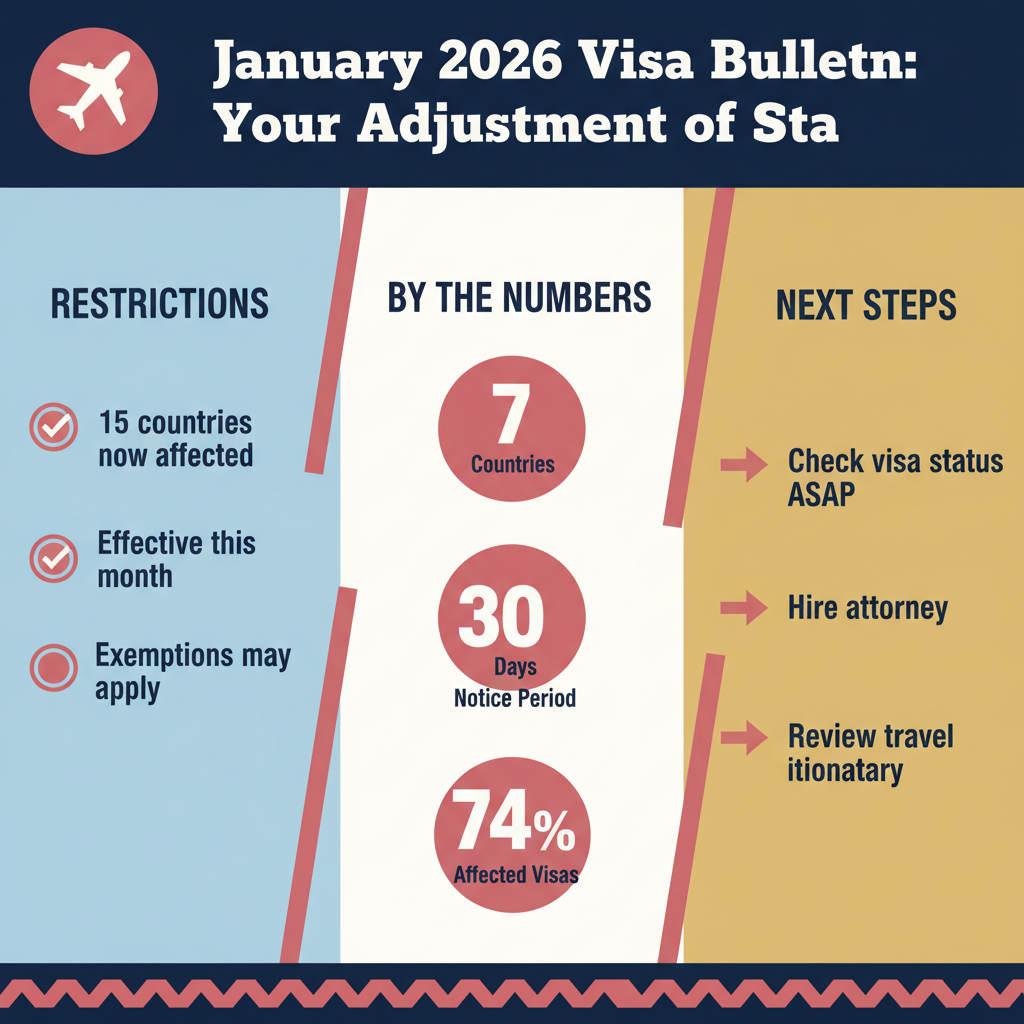
If you're waiting for a green card while living in the United States, the monthly Visa Bulletin is your roadmap to permanent residency. The January 2026 bulletin brings important updates that directly affect when you can file your adjustment of status application—and how quickly you might receive work authorization and travel permission.[1]
Whether you're applying through family sponsorship or employment-based immigration, understanding this bulletin can mean the difference between filing now and waiting months longer. This guide breaks down what changed in January 2026 and exactly what you need to do next.
The Two Critical Charts: Which One Applies to You?
The Visa Bulletin contains two essential charts, and knowing which one to use is fundamental to your filing strategy.[1]
Chart A: Final Action Dates
This chart shows when the USCIS can actually approve your adjustment of status application. Your priority date must fall before the listed date to receive final approval. Think of this as your ultimate deadline for case completion.[1]
Chart B: Dates for Filing
This chart typically allows earlier filing than Chart A. If your priority date is current under this chart, you can submit your I-485 application immediately—even if final approval is years away. This is the critical advantage: filing now gives you work authorization (EAD) and travel permission (advance parole) while you wait for final approval under Chart A.[1]
For January 2026, USCIS has determined that applicants in all family-sponsored preference categories and all employment-based preference categories must use the Dates for Filing chart.[2] This means most applicants currently have the opportunity to file sooner rather than later.
Processing Timelines: What to Expect in 2026
Understanding realistic processing times helps you plan your life while your case moves through the system. In 2026, USCIS processing times remain slow due to record case volumes, limited staffing, and ongoing technology upgrades.[4]
Family-Based Adjustment of Status
If you're filing an I-485 for family-based immigration, expect approximately 9 months for processing. However, this timeline assumes normal circumstances and doesn't account for requests for additional evidence or case complications.[4]
For context, other family-based categories take considerably longer. Spouses or children of permanent residents (F2A category) face 30-35 months of processing time, while immediate relatives of U.S. citizens filing from abroad (CR1/IR1) require 14.8 months.[4]
Employment-Based Adjustment of Status
Employment-based adjustment of status typically takes approximately 7 months for regular processing. If your employer qualifies for premium processing on earlier forms (I-140 or I-129), those stages can be expedited significantly—though premium processing is not available for the I-485 itself.[4]
The complete employment-based timeline often includes additional months for labor certification and other preliminary steps, so the total process from initial petition to green card approval frequently extends well beyond the I-485 processing time alone.
Critical Alert: Know Your Category's Status
While most family-sponsored and employment-based categories show modest forward movement or remain steady, certain categories face extreme delays that demand your immediate attention.[1]
F3 and F4 Categories: Patience Required
F3 and F4 family-sponsored categories experience the slowest progress. F4 applicants from Mexico face particularly extreme delays, with priority dates still at April 2001—representing over 24 years of waiting time. F4 applicants from the Philippines also experienced significant retrogression in December, with priority dates moving backward from July 15, 2006, to March 1, 2005, a setback of 1.4 years.[1]
If you're in these categories, this is not a sign to give up—but rather a signal to work closely with an immigration attorney to understand your specific timeline and ensure you're prepared to file the moment your priority date becomes current.
Your Step-by-Step Action Plan
The Visa Bulletin updates monthly, and visa availability can change. Here's what you should do immediately:
Step 1: Determine Your Priority Date
Your priority date is typically the date your green card application petition was initially filed. Check your USCIS receipt notices, approval notices, or consult with your immigration attorney if you're unsure. This single date determines everything about your timeline.
Step 2: Check If Your Date Is Current for Filing
Visit the USCIS adjustment of status website and compare your priority date to the "Dates for Filing" chart in the January 2026 Visa Bulletin. If your priority date is earlier than the listed date, your date is current, and you can file immediately.[1]
Step 3: Gather Required Documents Immediately
If your priority date is current, don't delay. Begin collecting these essential documents right away:[1]
- Birth certificates (original or certified copies)
- Police clearances from every country where you've lived
- Medical examination completed by a USCIS-approved civil surgeon
- Financial support evidence (Form I-864 Affidavit of Support)
- Marriage certificates, divorce decrees, or other vital records as applicable
- Employment history and tax returns
- Passport and visa documentation
Step 4: Complete Your I-485 and Supporting Forms
The I-485 application itself is complex, but you don't file it alone. Simultaneously complete:[1]
- Form I-765 (Application for Employment Authorization) to get your work permit
- Form I-131 (Application for Travel Document) to obtain advance parole for international travel
- All required supporting documents and declarations
Step 5: Schedule Your Medical Examination
You cannot file your I-485 without a completed medical examination. Find a USCIS-approved civil surgeon in your area and schedule this appointment as soon as your priority date becomes current. The examination typically costs $300-$500 and must be completed using the official USCIS Form I-693.[1]
Step 6: File Your Application as Soon as Possible
Once you have all documents and your medical exam is complete, submit your I-485 package without unnecessary delay. Visa availability can change monthly, and priority dates can move backward (retrogress) if demand exceeds supply. Filing immediately protects you against unexpected changes.[1]
What Happens After You File: The Waiting Period
After submitting your I-485, you enter a critical waiting period. Understanding what to expect helps you stay calm and prepared.
Immediate Benefits After Filing
One of the biggest advantages of filing your I-485 is that you can apply for work authorization and travel permission even while waiting for final approval. This means you can legally work and travel internationally without waiting for your green card to be approved.[1]
Monitoring Your Case for Final Action
After filing, watch the "Final Action Dates" chart closely. When your priority date becomes current for final action, respond immediately to any USCIS requests and ensure your case is ready for approval. Note that final processing might take three to six months after your priority date becomes current, so don't expect instantaneous approval.[1]
Special Considerations for Different Immigration Categories
Your specific immigration category affects both your processing timeline and your strategic options.
Most Countries Remain Current
For most countries and categories, the January 2026 bulletin shows that applicants remain current, meaning no waiting period beyond normal USCIS processing times. This is positive news—it means visa numbers are available and cases are moving forward.[1]
Country-Specific Backlogs
Some countries experience longer wait times due to high demand. If your country has a backlog, cut-off dates may move slower and sometimes move backward (retrogression). Track patterns in your category over multiple months to get a better sense of your realistic timeline.[3]
Why USCIS Processing Times Remain Slow
Understanding the reasons behind delays helps you have realistic expectations and plan accordingly. Backlogs at USCIS and the Department of Homeland Security remain high due to record case volumes, limited staffing, and technology upgrades that haven't fully caught up.[4] Forms like the I-485 and I-765 are especially affected, while employment-based cases face additional delays from Department of Labor processing.
This is not a reflection of individual case quality—it's a systemic challenge affecting thousands of applicants simultaneously.
Actionable Tips to Move Your Case Forward
While you cannot control USCIS processing times, you can control your preparation and responsiveness:
- File early: Don't wait for your priority date to become current under the Final Action Dates chart. File as soon as it's current under the Dates for Filing chart to secure work authorization and travel permission sooner.
- Respond immediately to requests: When USCIS requests additional evidence or information, respond as quickly as possible. Delays in your response directly delay your case approval.
- Keep documents organized: Maintain a clear file with all your documents, receipts, and correspondence. This makes responding to USCIS requests faster and reduces errors.
- Monitor the bulletin monthly: Set a calendar reminder to check the Visa Bulletin each month. Changes could affect your timeline or strategy.
- Consult an immigration attorney: The adjustment of status process is complex. An experienced immigration attorney can identify category-specific strategies and help you avoid costly mistakes.
- Use official sources only: Always check official USCIS.gov and State Department websites for the most current information. Avoid relying on outdated forums or anecdotal reports.[4]
Looking Ahead: What's Next for Your Green Card
The January 2026 Visa Bulletin confirms that adjustment of status applications continue to move forward, though at varying speeds depending on your specific category and country. For most applicants, now is the time to act if your priority date is current.
Your path to permanent residency requires careful planning, thorough documentation, and strategic timing. By understanding the Visa Bulletin, following the action steps outlined above, and staying informed about monthly updates, you position yourself to move through this process as efficiently as possible.
The green card journey is a marathon, not a sprint. But with the right information and preparation, you can navigate it successfully and reach your goal of becoming a U.S. permanent resident.
Need Professional Guidance?
The adjustment of status process involves complex forms, strict deadlines, and category-specific strategies. If you're unsure about your priority date, which chart applies to you, or how to prepare your application, consult with an experienced immigration attorney. At Imigrar in Orlando, Florida, our team specializes in helping families and employment-based applicants navigate the adjustment of status process with confidence and clarity. Contact us today for a consultation about your specific situation.


