


Maryland's Groundbreaking Child Custody Law: What HB1191 Means Now
Maryland's House Bill 1191 (HB1191), signed into law and effective October 1, 2025, fundamentally reshapes child custody determinations by requiring judges to evaluate 16 specific statutory factors.[3][4] This legislation mandates courts to articulate findings on the record or in writing for each factor, promoting consistency and accountability in decisions affecting children's best interests.[3] For families nationwide, including those in Florida navigating interstate custody issues under the Uniform Child Custody Jurisdiction and Enforcement Act (UCCJEA), this development signals a trend toward standardized, transparent custody evaluations.[1][3]
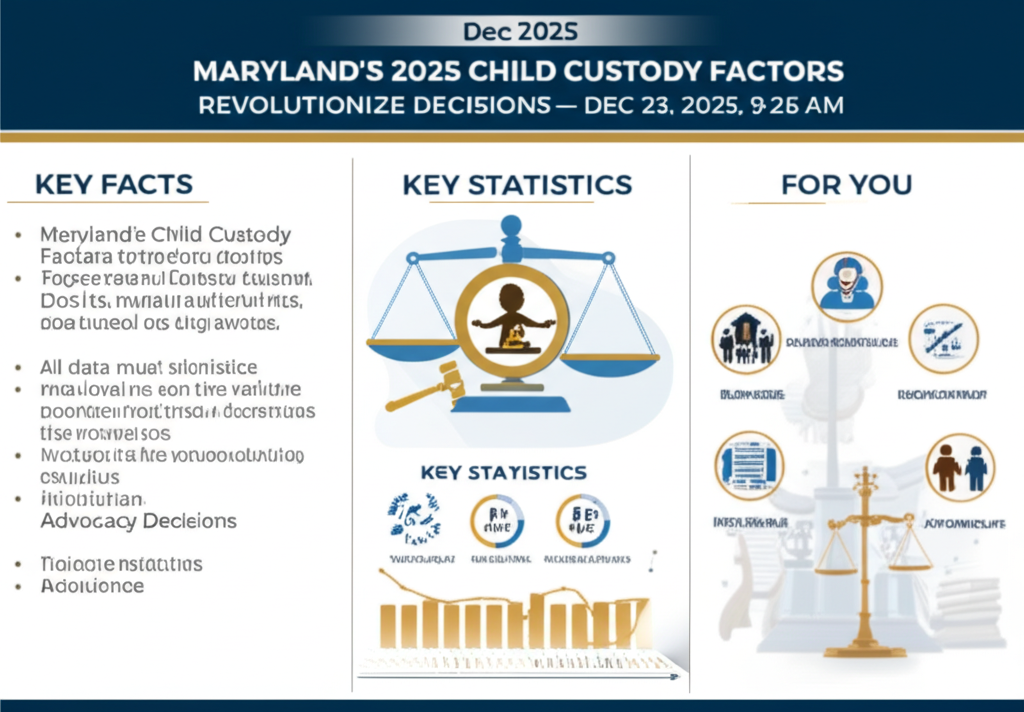
The Core of HB1191: 16 Mandatory Factors for Custody Rulings
Previously, Maryland courts relied heavily on case precedent and broad "best interest" standards, leading to variability in outcomes.[4] HB1191 establishes a clear framework, ensuring judges consider:
- The child's relationship with each parent and siblings.
- Each parent's ability to maintain a stable environment.
- The child's adjustment to home, school, and community.
- Mental and physical health of all involved parties.
- Evidence of domestic violence, abuse, or substance issues.
- The child's safety and stability as paramount concerns.[3][4]
Courts must now explicitly address these and up to 10 additional factors, such as cultural background or willingness to foster the child's relationship with the other parent.[3] This applies to initial custody awards, modifications, and visitation schedules, requiring proof of a "material change in circumstances" for alterations.[3]
Legal Implications: From Maryland Courts to National Precedent
HB1191 elevates child stability and safety, reducing subjective judicial discretion.[4] In practice, this means parents must present evidence aligned with these factors—think school records, therapist reports, or witness testimony on co-parenting ability.[3] For modifications, the "material change" threshold remains, but courts now scrutinize how changes impact listed factors.[3]
Companion changes, like HB275's multifamily adjustment to "adjusted actual income" for child support, allow courts to factor in support for other children, potentially lowering obligations if proven just.[2][4] Cases like Houser v. Houser (2024) and Matter of Marriage of Houser (2025) reinforce that child support cannot be waived, as it's the child's right, not parents'. Courts may deviate only for compelling reasons, such as direct child payments or shared debts.[2]
In Florida, where Imigrar serves Orlando families, these Maryland shifts influence cross-border cases. Florida's UCCJEA prioritizes the child's "home state," but Maryland rulings could sway enforcement if a child has ties there.[1]
Actionable Guidance: Steps for Families Impacted by These Changes
If you're in a custody dispute, divorce, or modification—especially with Maryland connections—act strategically. Here's how:
1. Document Everything Aligned with the 16 Factors
- Gather evidence of your involvement: attendance at school events, medical records, communication logs.
- Highlight stability: proof of consistent housing, employment, and routines.[3][4]
- Address risks proactively: obtain restraining orders or counseling records if abuse is alleged.[3]
2. Prepare for Child Support Recalculations
Under new rules, calculate "adjusted actual income" including multifamily allowances.[2] Use Maryland's guidelines worksheet; if you support other children, petition for inclusion—but it can't be the sole basis.[2] Florida parents: Consult local guidelines, but note interstate reciprocity.[4]
3. File Strategically for Modifications
Prove a material change, like relocation or health issues, and tie it to HB1191 factors.[3] Request emergency hearings if visitation is denied without cause, though related bills like HB1165 didn't pass.[3]
4. Interstate Considerations for Florida Families
Florida courts respect Maryland orders via UCCJEA. If relocating post-divorce, review restrictions—CSG Law notes out-of-state moves require court approval to protect custody.[1] For adoptions or guardianships, align with "best interest" parallels.[1]
Real-World Impact: Case Studies and Trends
Early applications of HB1191 show judges issuing detailed opinions, reducing appeals.[3][4] In child support, Houser cases prevent waivers, even in uncontested divorces, emphasizing judicial oversight.[2] Nationally, Illinois' Lewis v. Kalbhen (2025 IL App (1st) 242110) expanded litigation privileges in family disputes, protecting statements made in court.[5]
Maryland's trends mirror broader 2025 shifts: failed joint custody presumptions (SB521) highlight courts' wariness of mandates without nuance.[3] For holidays, plan parenting time meticulously—winter break disputes are rising.[1][5]
Broader Family Law Context in 2025
Beyond custody, Maryland's HB261 prioritizes child support over other debts, aiding enforcement.[4] Guardianship articles urge careful evaluation for elderly relatives, avoiding hasty decisions.[1] Florida families: Leverage these insights for domestic relations, ensuring compliance with both states' laws.
Why This Matters for Your Family's Future
HB1191's transparency empowers parents, but demands preparation.[3] Divorce checklists emphasize process basics: petitions, disclosures, trials.[1] For Orlando residents, Imigrar attorneys specialize in bridging state lines—schedule a consultation to assess your case against these factors.
Proactive steps today prevent costly battles tomorrow. Contact Imigrar for tailored advice on custody, support, or relocation amid 2025's evolving landscape.[1][2][3][4]
Disclaimer: This article provides general information, not legal advice. Consult a qualified attorney for your situation. Sources verified as of December 2025.[1][2][3][4][5]


