


The journey to obtaining a Green Card is a significant milestone for countless individuals and families seeking to build a new life in the United States. While the application process itself can be complex, one of the most pivotal stages is the Green Card interview. This interview, conducted by U.S. Citizenship and Immigration Services (USCIS) or at a U.S. Embassy/Consulate abroad, is your opportunity to demonstrate your eligibility and provide any necessary clarification regarding your application. It’s a moment that can feel daunting, but with proper preparation, it can be a smooth and successful step towards permanent residency.
At Imigrar, an immigration law firm based in Orlando, Florida, we understand the anxieties and hopes tied to this crucial interview. Our mission is to "Keep Families Together" by providing expert legal guidance and support through every stage of the immigration process. This comprehensive guide is designed to demystify the Green Card interview, offering practical advice, detailed checklists, and insights to help you approach your interview with confidence.
Need Help? Our Orlando immigration team is ready to assist. Call +1 786-791-3106 for a free consultation, or message us online. Se Habla Español.
The reporting that sparked this guide
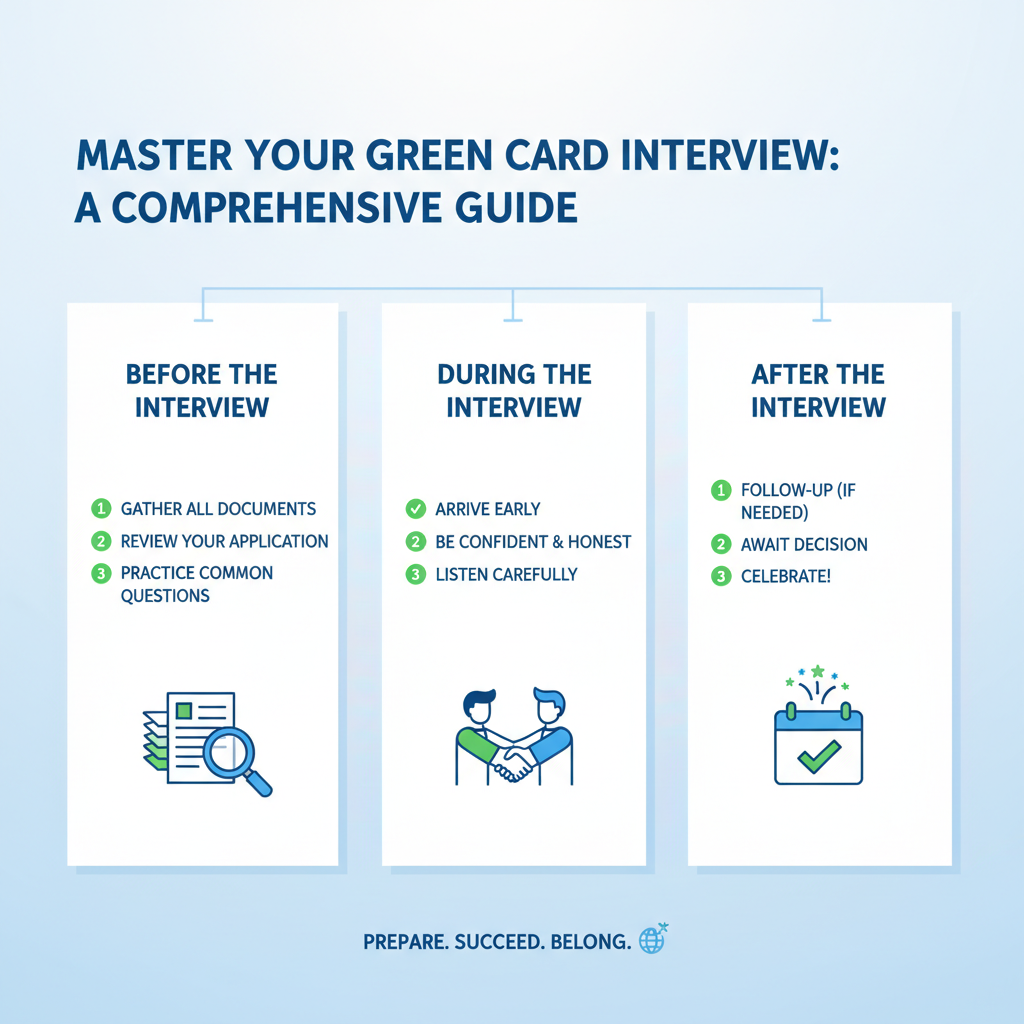
The importance of thorough preparation for immigration interviews is a constant theme in immigration law discussions. Recent reports and ongoing dialogues within the legal community, as highlighted by general Green Card Interview Preparation Tips (Immigration Law), consistently underscore the necessity for applicants to be well-informed and meticulously organized. As of 2026-05-18, the landscape of immigration processing continues to evolve, making up-to-date guidance more critical than ever.
What This News Means for Immigrants in Orlando and Across Florida
Why this news is showing up now
The news regarding the importance of Green Card interview preparation is not new, but it consistently resurfaces because the interview remains a critical, non-negotiable step for most Green Card applicants. USCIS and consular officers rely heavily on these interviews to verify information, assess credibility, and ensure applicants meet all legal requirements for permanent residency. With ongoing changes in immigration policy, evolving security protocols, and fluctuating processing times, the emphasis on a well-prepared interview experience is perpetual. Each year, thousands of individuals attend these interviews, and their success often hinges on how well they anticipate questions, organize documents, and present their case. For this reason, expert advice on interview preparation remains a trending and vital topic within the immigration law sphere.
How it can affect Florida residents
For immigrants residing in Orlando, Central Florida, and throughout the Sunshine State, this emphasis on Green Card interview preparation is particularly relevant. Florida is home to a vast and diverse immigrant population, with many individuals applying for Green Cards through various avenues, including family-based petitions, employment-based visas, and asylum adjustments. If your case is being processed domestically, your interview will likely take place at a local USCIS Field Office, such as the Orlando USCIS Field Office. Understanding the specific procedures and expectations of this office, or any other USCIS office you may be assigned to, is crucial. Delays or denials due to inadequate preparation can have significant impacts on families along the I-4 corridor and across Orange County, disrupting lives and causing undue stress. For those undergoing consular processing abroad, the U.S. Embassies and Consulates abroad also have specific guidelines, making universal preparation tips combined with location-specific knowledge invaluable.
What Green Card Interviews Are (and Why They Matter)
A plain-English definition
Simply put, a Green Card interview is a formal meeting with an immigration officer to discuss your application for lawful permanent residency in the United States. It’s your opportunity to prove that you meet all the eligibility requirements for a Green Card and to clarify any information provided in your application forms. The officer will review your documents, ask questions about your background, your relationship (if family-based), your employment (if employment-based), and your intentions for living in the U.S. Think of it as the final checkpoint before receiving your Green Card. It’s a chance for the government to ensure you are who you say you are, and that your application is truthful and complete.
Key terms you need to know
Navigating the immigration process requires understanding specific terminology. Here are some key terms related to your Green Card interview:
- Green Card: Also known as a Permanent Resident Card, it grants you official authorization to live and work permanently in the United States.
- USCIS: U.S. Citizenship and Immigration Services, the government agency responsible for processing immigration petitions and conducting domestic Green Card interviews.
- Adjustment of Status (AOS): The process of applying for a Green Card while you are already physically present in the United States. This typically involves filing Form I-485.
- Consular Processing: The process of applying for a Green Card through a U.S. Embassy or Consulate in your home country (or another country if eligible).
- Petitioner: The U.S. citizen or lawful permanent resident who files an immigration petition (e.g., Form I-130) on behalf of an immigrant relative.
- Beneficiary: The foreign national who is seeking immigration benefits, such as a Green Card, based on a petition filed by a petitioner.
- Affidavit of Support: A legal document (Form I-864) signed by a sponsor (usually the petitioner) to accept financial responsibility for the immigrant to prevent them from becoming a public charge.
- Priority Date: The date your immigration petition (e.g., Form I-130) was properly filed with USCIS. This date determines when your visa number becomes available for certain categories.
- Request for Evidence (RFE): A letter from USCIS asking for additional documents or information to support your application.
- Notice of Intent to Deny (NOID): A letter from USCIS indicating their intention to deny your application unless you provide specific information or evidence to overcome their concerns.
Need Help? Our Orlando immigration team is ready to assist. Call +1 786-791-3106 for a free consultation, or message us online. Se Habla Español.
Current Immigration Law: The Foundation
The Green Card interview process is rooted in the Immigration and Nationality Act (INA), the body of law governing immigration to the United States. This act outlines who is eligible for a Green Card, the various categories under which one can apply, and the grounds of inadmissibility that might prevent someone from obtaining permanent residency. Understanding the legal framework is essential for a successful interview.
Federal requirements
The primary federal requirements for obtaining a Green Card are established within the INA. Key sections include:
- INA Section 201-204: These sections define the various immigrant visa categories, including family-sponsored, employment-based, and diversity lottery immigrants, and establish annual visa limits.
- INA Section 212: This crucial section outlines the "grounds of inadmissibility." These are factors that can make an individual ineligible for a Green Card, such as certain criminal convictions, health-related issues, immigration violations, and the likelihood of becoming a public charge. During your interview, the officer will assess whether any of these grounds apply to you.
- INA Section 245: This section specifically addresses Adjustment of Status, allowing eligible individuals already in the U.S. to obtain lawful permanent resident status without having to leave the country. This is the legal basis for most domestic Green Card interviews.
- INA Section 213A: This section mandates the Affidavit of Support (Form I-864), requiring U.S. citizen or LPR petitioners to demonstrate sufficient financial means to support the immigrant beneficiary and prevent them from becoming a public charge.
All applicants must demonstrate their eligibility under a specific visa category and prove they are not inadmissible to the United States. The interview serves as the primary mechanism for USCIS or consular officers to verify these federal requirements.
Florida-specific considerations
While federal law governs the fundamental requirements, the practical application often involves local USCIS Field Offices. For Central Florida residents, the Orlando USCIS Field Office handles interviews for applicants adjusting status. This office, like others across the nation, operates under federal guidelines but may have specific logistical nuances. For example, understanding the typical wait times for interviews at the Orlando office, or any specific local document submission preferences, can be beneficial. Local attorneys, like those at Imigrar, often have firsthand experience with the procedures and expectations of the Orlando office, providing an edge in preparation.
You can find more information about these laws and forms on the USCIS official website. Always refer to the most current versions of forms like Form I-130 (Petition for Alien Relative), Form I-485 (Application to Register Permanent Residence or Adjust Status), Form I-765 (Application for Employment Authorization), Form I-131 (Application for Travel Document), and Form I-864 (Affidavit of Support Under Section 213A of the INA).
How to Prepare for Your Green Card Interview: A Complete Step-by-Step Guide
Preparing for your Green Card interview is paramount to its success. This detailed guide will walk you through the essential steps, ensuring you are thoroughly ready for this critical stage.
1) Understand Your Case and Interview Type
Before you even begin gathering documents, you need to have a clear understanding of the basis of your Green Card application and the specific type of interview you will undergo. This will dictate the focus of the questions and the evidence required.
- Family-Based Green Cards: These are the most common and often involve interviews for spouses, parents, children, or siblings of U.S. citizens or lawful permanent residents. For spousal petitions (Form I-130), the interview heavily focuses on the bona fides (genuineness) of the marriage.
- Employment-Based Green Cards: These interviews focus on your qualifications for the job, the job offer, and the sponsoring employer's ability to pay the prevailing wage.
- Asylum/Refugee Adjustments: These interviews revisit your asylum claim and ensure continued eligibility for adjustment of status.
- Diversity Visa Lottery: These interviews verify your eligibility based on the lottery selection and general admissibility criteria.
Actionable Advice: Review your initial petition (e.g., Form I-130) and application (Form I-485) to fully grasp the details of your case. Understand the specific legal requirements for your category. If you are applying for a Green Card based on marriage, for example, prepare to discuss your relationship in detail.
2) Gather and Organize All Required Documents
This is arguably the most crucial step. A well-organized packet of documents demonstrates your preparedness and can expedite the interview process. You must bring both original documents and copies.
Required Documents Checklist (General):
- Interview Appointment Notice: The official letter from USCIS or the Consulate.
- Government-Issued Photo Identification: Passport, driver's license, or state ID.
- All Original Passports and Travel Documents: Current and expired.
- Birth Certificates: For yourself, your petitioner, and any dependent children.
- Marriage Certificate (if applicable): Original, and any previous divorce decrees or death certificates for prior spouses.
- Police Certificates: From all countries you have lived in for certain periods since age 16.
- Medical Examination Report: Sealed in an envelope from a USCIS-approved civil surgeon. Do NOT open this envelope.
- Affidavit of Support (Form I-864) and Supporting Documents:
- Sponsor's most recent federal income tax returns (IRS transcripts preferred).
- Proof of sponsor's income (pay stubs, employment verification letter).
- Proof of assets (bank statements, property deeds) if income alone is insufficient.
- Photographs: Two identical, passport-style color photographs taken within the last 30 days.
- All Forms Filed: Copies of Form I-130, Form I-485, Form I-765, Form I-131, and any other forms you submitted.
- Evidence of Relationship (Family-Based):
- Joint bank accounts, utility bills, leases/mortgages, insurance policies.
- Photos together (dating, wedding, with family/friends).
- Correspondence (emails, texts, cards).
- Children's birth certificates (if applicable).
- Letters from friends/family attesting to the relationship.
- Proof of Lawful Entry and Status: Form I-94 (Arrival/Departure Record), previous visa stamps.
- Arrest Records/Court Dispositions (if applicable): Even for minor offenses, bring certified copies.
Important: Bring ALL original documents, even if you submitted copies. USCIS officers typically want to see the originals for verification. Organize them in a binder with tabs for easy access.
3) Review Your Submitted Applications Thoroughly
The immigration officer will have your entire file in front of them, including all the forms you previously submitted (Form I-130, Form I-485, etc.). It is absolutely critical that you review every answer on every form you submitted. Your interview answers must be consistent with the information you provided in your written application.
Actionable Advice:
- Read through copies of all your forms, attachments, and supporting evidence.
- Note any discrepancies or changes since you filed your application (e.g., new address, new job, new child). Be prepared to explain these clearly and honestly.
- If you made an honest mistake on a form, acknowledge it and be ready to explain the correction.
4) Practice Answering Potential Interview Questions
While you can't predict every question, many common themes emerge. Practicing your answers aloud can boost your confidence and help you articulate clearly.
Common Interview Questions (General):
- "What is your full name and date of birth?"
- "What is the purpose of your interview today?"
- "When did you first enter the U.S.? What was your visa status?"
- "Have you ever been arrested or convicted of a crime?"
- "Have you ever violated any immigration laws?"
- "Do you support the Constitution and form of government of the United States?"
- "Are you willing to take an oath of allegiance to the United States?"
For Family-Based (especially Spousal) Interviews:
- "How and when did you meet your spouse?"
- "Describe your wedding day."
- "Where do you live? Who pays the rent/mortgage?"
- "What are your spouse's daily routines? What do they do for a living?"
- "What did you do last weekend together?"
- "Do you have joint bank accounts? What bills do you share?"
- "Have you met each other's families?"
Reminder: Answer truthfully and directly. Do not volunteer unnecessary information. If you don't understand a question, ask the officer to repeat or rephrase it.
5) Prepare for the Day of the Interview
Logistics matter. A smooth interview day begins with meticulous planning.
- Location: Know the exact address of the USCIS Field Office (e.g., the Orlando USCIS Field Office) or Consulate. Plan your route, considering traffic (especially along the I-4 corridor if coming from outside Orlando).
- Arrival Time: Arrive at least 30 minutes before your scheduled appointment. This allows time for parking, security checks, and finding your waiting area.
- Attire: Dress in neat, conservative, and professional attire. This demonstrates respect for the process and the officer.
- Food/Drink: Bring water and a small snack, especially if you anticipate a long wait.
- Legal Representation: If you are represented by an attorney, ensure they have all necessary documents and arrive with you. An attorney can provide comfort and intervene if necessary.
Warning: Do NOT bring any prohibited items (weapons, large bags, etc.) to a federal building. Check the USCIS website for security guidelines.
6) What to Expect During the Interview
Knowing the typical flow of an interview can reduce anxiety.
- Check-in: You will check in at the front desk, present your appointment notice and ID.
- Waiting Area: You will wait until your name is called. USCIS processing times can vary, so be patient.
- The Interview Room: The officer will call your name and lead you to a private interview room.
- Oath: You will be asked to take an oath to tell the truth.
- Verification of Identity: The officer will verify your identity, take your fingerprints, and sometimes take your photograph.
- Questions: The officer will ask questions based on your application, supporting documents, and personal history. They may ask for original documents.
- Interpreter: If you requested an interpreter (and it was approved by USCIS), they will be present. If you did not, and you struggle with English, USCIS recommends bringing a fluent, adult, unbiased interpreter (not your attorney or petitioner).
- Attorney's Role: Your attorney is there to advise you, clarify questions, ensure fair procedure, and protect your rights. They cannot answer questions for you.
- Duration: Interviews can last anywhere from 15 minutes to over an hour, depending on the complexity of the case.
Key: Be honest, calm, and polite. Maintain eye contact. Answer questions clearly and concisely.
7) Post-Interview Procedures
The interview is not always the final step for a decision.
- Decision: The officer may make a decision on the spot, approve your Green Card, or issue a Request for Evidence (RFE) if they need more information. Sometimes, a decision is mailed to you later.
- RFE: If you receive an RFE, respond promptly and thoroughly with the requested documents.
- Follow-Up Interview: In some complex cases, a second interview may be scheduled.
- Green Card Mailing: If approved, your Green Card will be mailed to your address within a few weeks.
Important: If you move after your interview, immediately update your address with USCIS using Form AR-11.
Need Help? Our Orlando immigration team is ready to assist. Call +1 786-791-3106 for a free consultation, or message us online. Se Habla Español.
Practical Steps You Can Take Today
Don't wait until the last minute to prepare for your Green Card interview. Here are actionable steps you can start taking right now to ensure a smooth process:
Actionable Checklist:
- Create a Master Document Checklist: Go through all the forms you submitted and list every supporting document required or previously provided. Include both originals and copies.
- Start Collecting Evidence Early: Don't wait for the interview notice. Begin gathering original birth certificates, marriage licenses, tax returns, bank statements, and any other relevant evidence. For spousal petitions, continuously collect evidence of your bona fide marriage (photos, joint bills, travel itineraries).
- Review All Past Applications: Obtain copies of every immigration form you've ever filed. Read them carefully to ensure you remember the information provided and can maintain consistency in your answers.
- Practice Interview Questions: Ask a trusted friend or family member to conduct a mock interview with you. Practice answering common questions and those specific to your case type.
- Consult an Immigration Attorney: Even if you started your application independently, a consultation with an experienced immigration lawyer can provide invaluable insights, review your documents, and prepare you for specific challenges.
- Check USCIS Processing Times: Regularly monitor the USCIS Processing Times page for your specific form and field office (e.g., Orlando). This will give you an idea of when to expect your interview notice.
- Confirm Your Address: Ensure your mailing address with USCIS is current to avoid missing important notices, including your interview appointment. Update it via Form AR-11 if needed.
Document Preparation Guidance:
- Organize in a Binder: Use a three-ring binder with dividers and labels for each category of documents (e.g., "Personal ID," "Marriage Evidence," "Financials," "Submitted Forms").
- Make Copies: Always bring a complete set of copies for the immigration officer, even if they only ask for originals.
- Translations: Any document not in English must be accompanied by a certified English translation. The translator must provide a statement certifying their competency and the accuracy of the translation.
- Photos: Place passport-style photos in a small envelope, clearly labeled with your name and A-number.
- Medical Exam: Keep the sealed envelope from the civil surgeon intact. Do not open it.
Timeline Expectations:
The timeline for receiving an interview notice and ultimately a decision can vary significantly. As of 2026-05-18, USCIS processing times can range from several months to several years, depending on the Green Card category, the specific USCIS Field Office (e.g., Orlando), and the volume of applications. After your interview, a decision might be made on the same day, or it could take weeks or even months to receive a final notice. For consular processing, timelines are dictated by the National Visa Center (NVC) and the specific U.S. Embassy or Consulate involved. Patience and proactive follow-up (through your attorney) are key.

How Imigrar Helps Immigrants in Orlando
At Imigrar, we are more than just legal advisors; we are advocates for families. Based in Orlando, Florida, we proudly serve clients not only across Central Florida, including Orange County and the surrounding areas, but also nationwide. We understand the unique challenges faced by immigrants, and our commitment is to provide compassionate, expert legal representation to help you navigate the complex U.S. immigration system.
Our experience and expertise
Our team of dedicated immigration attorneys has extensive experience with all types of Green Card applications, including family-based petitions, employment-based visas, and adjustment of status cases. We have successfully guided countless clients through the Green Card interview process, both at the Orlando USCIS Field Office and through consular processing abroad. Our expertise includes:
- Comprehensive Case Review: We meticulously review your entire application packet to identify potential issues and ensure consistency.
- Document Organization and Preparation: We help you gather, organize, and prepare all necessary original and supporting documents, ensuring nothing is overlooked.
- Personalized Interview Coaching: We conduct mock interviews tailored to your specific case, preparing you for the types of questions you might face and helping you practice clear, confident answers.
- Attorney Representation: One of our experienced attorneys can accompany you to your USCIS interview, providing legal support, clarifying questions, and advocating on your behalf if necessary. This presence can significantly reduce stress and improve outcomes.
- Post-Interview Follow-Up: We assist with responding to RFEs, NOIDs, and follow up with USCIS or the NVC until a final decision is reached.
Our firm’s tagline, "Keep Families Together," is at the heart of everything we do. We are particularly passionate about family-based immigration, understanding the profound impact that Green Cards have on uniting loved ones.
Free consultation offer
The first step towards a successful Green Card interview is often a conversation with an experienced attorney. Imigrar offers a free consultation to discuss your specific situation, evaluate your case, and outline how we can assist you in preparing for your Green Card interview. This no-obligation consultation is an opportunity for you to ask questions, understand your options


