


The journey to obtaining a Green Card, also known as lawful permanent residence, is a significant milestone for countless individuals and families seeking to build a new life in the United States. While the application process involves numerous forms and extensive documentation, for many, the final hurdle is the Green Card interview. This interview is a critical step where a U.S. Citizenship and Immigration Services (USCIS) officer will evaluate your eligibility, verify the information in your application, and ensure you meet all legal requirements for permanent residency. The prospect of an interview can be intimidating, but with thorough preparation and a clear understanding of what to expect, you can approach this crucial meeting with confidence. At Imigrar, we understand the stakes, and our mission is to "Keep Families Together" by guiding you every step of the way.
Need Help? Our Orlando immigration team is ready to assist. Call +1 786-791-3106 for a free consultation, or message us online. Se Habla Español.
The reporting that sparked this guide
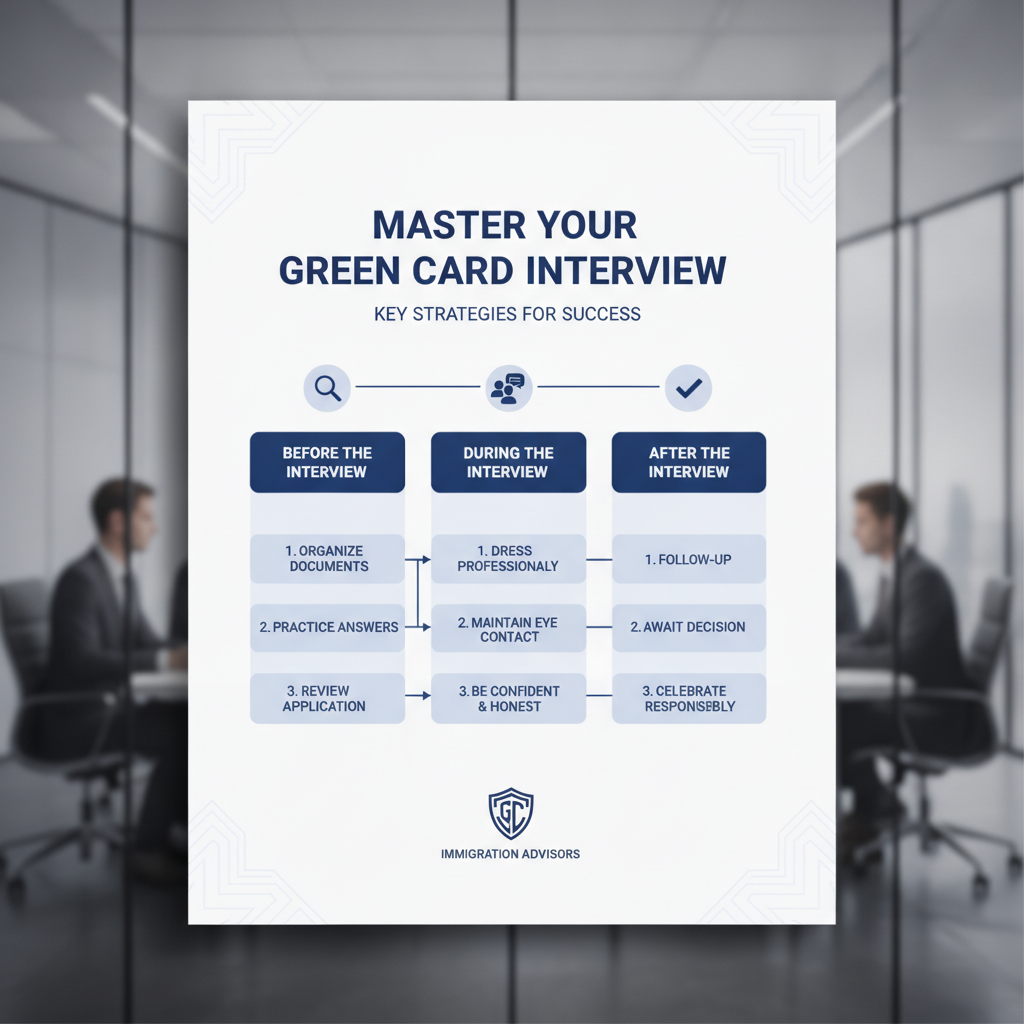
The continuous flow of information and updates within immigration law frequently highlights the importance of proper preparation for critical steps like the Green Card interview. News outlets and legal resources consistently emphasize that a well-prepared applicant stands a much better chance of a successful outcome. This ongoing focus on interview readiness underscores a timeless truth in immigration: diligence and accuracy are paramount. Staying informed through reliable sources, such as those reporting on general Green Card Interview Preparation Tips (Immigration Law), empowers applicants to navigate their journey effectively.
What This News Means for Immigrants in Orlando and Across Florida
The consistent emphasis on Green Card interview preparation resonates deeply with immigrant communities across Florida, including our vibrant home in Orlando. This isn't just a fleeting news item; it's a perennial topic of importance that impacts thousands of individuals and families seeking to formalize their lives in the U.S.
Why this news is showing up now
The focus on Green Card interview preparation is perennially relevant, but its prominence often increases due to several factors. Firstly, as USCIS processing times fluctuate, an interview notice can arrive unexpectedly after a long wait, making immediate, effective preparation crucial. Secondly, policy shifts, even subtle ones, can sometimes lead to more stringent interview scrutiny, prompting legal experts and community advocates to reiterate the importance of readiness. Finally, with the ongoing dedication of USCIS to adjudicate cases efficiently, ensuring applicants are fully prepared helps streamline the process for everyone involved. For individuals on the path to permanent residency, the interview is often the final and most personal step, making it a constant subject of concern and inquiry.
How it can affect Florida residents
For immigrants residing in Florida, particularly those in Central Florida around Orlando, understanding and preparing for the Green Card interview is vital. The Orlando USCIS Field Office, like others across the nation, handles a significant volume of adjustment of status interviews. This means that many of our neighbors, friends, and clients in Orange County and along the I-4 corridor will eventually receive that crucial interview notice. The consistent advice about thorough preparation directly impacts their ability to successfully complete their immigration journey. A well-prepared applicant can help avoid unnecessary delays, requests for additional evidence (RFEs), or even denials, which can be particularly stressful in a state with a large and diverse immigrant population. Moreover, Florida's dynamic economy and diverse communities mean many different types of Green Card applications – from family-based sponsorships to employment-based petitions – are processed here, each with specific interview considerations. Being proactive and informed is key to navigating the local USCIS procedures effectively.
What the Green Card Interview Is (and Why It Matters)
The Green Card interview is a cornerstone of the U.S. immigration process for many aspiring permanent residents. It serves as a personal meeting with a USCIS officer, designed to verify the information submitted in your application, ensure you meet all eligibility requirements, and address any potential concerns or discrepancies. Far from being a mere formality, this interview is a critical step that can determine the success or failure of your Green Card application.
A plain-English definition
Simply put, the Green Card interview is your opportunity to speak directly with a U.S. government official about your application for permanent residency. Think of it as a final review where the officer confirms who you are, why you qualify for a Green Card, and that all your submitted documents and statements are truthful and consistent. For family-based applications, especially marriage-based ones, the interview also assesses the authenticity of your relationship. For employment-based cases, it verifies your qualifications and the legitimacy of your job offer. It’s a chance for USCIS to put a face to the paperwork and ensure everything aligns with immigration law.
Key terms you need to know
Navigating the immigration process requires understanding specific terminology. Here are some key terms related to your Green Card journey and interview:
- Green Card: Officially known as a Permanent Resident Card, it proves your authorization to live and work permanently in the United States.
- Adjustment of Status (AOS): The process of applying for a Green Card while physically present in the United States. This is contrasted with Consular Processing, where one applies from outside the U.S. at a U.S. embassy or consulate.
- USCIS Officer: The official from U.S. Citizenship and Immigration Services who conducts your interview and makes a decision on your application.
- Sponsor/Petitioner: The U.S. citizen or lawful permanent resident who files an immigration petition (e.g., Form I-130) on behalf of an immigrant relative, or an employer who files an employment-based petition.
- Beneficiary: The immigrant who is seeking the Green Card and for whom the petition is filed.
- Affidavit of Support (Form I-864): A legally binding document signed by the sponsor, promising to financially support the immigrant beneficiary to ensure they do not become a public charge in the U.S.
- Inadmissibility: A legal term referring to certain grounds (e.g., criminal history, health issues, past immigration violations, public charge concerns) that can prevent an individual from being admitted to the U.S. or adjusting status.
- Priority Date: The date USCIS receives your immigration petition. It determines your place in the waiting line for a visa in certain preference categories.
- Request for Evidence (RFE): A letter from USCIS requesting additional documents or information to support your application.
- Notice of Intent to Deny (NOID): A letter from USCIS indicating their intention to deny your application and giving you an opportunity to respond with additional evidence.
Current Immigration Law: The Foundation
The Green Card interview process is rooted in federal immigration law, primarily the Immigration and Nationality Act (INA). Understanding these legal underpinnings is crucial for appreciating the purpose and scope of the interview.
Need Help? Our Orlando immigration team is ready to assist. Call +1 786-791-3106 for a free consultation, or message us online. Se Habla Español.
Federal requirements
The Green Card interview primarily serves to ensure compliance with the INA. Key sections of the INA that guide the interview process include:
- INA Section 245 (Adjustment of Status): This section outlines the eligibility requirements for an individual to adjust their status to lawful permanent resident while in the United States. The interview confirms that these criteria, such as lawful entry, maintenance of status (or qualifying waiver), and the immediate availability of a visa, are met.
- INA Section 212 (General Classes of Aliens Ineligible for Visas and Admission): This section details the grounds of inadmissibility. The USCIS officer at the interview will assess whether any of these grounds apply to you, such as criminal convictions, certain health-related conditions, previous immigration violations, or concerns about becoming a public charge. If grounds of inadmissibility are identified, waivers may be available, which often require additional applications and evidence.
- INA Section 204 (Procedure for Granting Immigrant Status): This section governs the filing of immigrant petitions, such as Form I-130 (Petition for Alien Relative) or Form I-140 (Immigrant Petition for Alien Worker). The interview verifies the validity of these underlying petitions and the relationship or employment they represent. For family-based cases, especially marriage-based ones, the interview heavily focuses on confirming the bona fides of the marriage, as required by INA Section 204(c), which addresses marriage fraud.
The USCIS officer will examine all aspects of your application packet, which typically includes the immigrant petition (e.g., Form I-130), the application to register permanent residence or adjust status (Form I-485), the Form I-864 (Affidavit of Support), and the Form I-693 (Report of Medical Examination and Vaccination Record). The interview is where the officer reconciles all these documents with your verbal testimony.
For detailed information on these forms and requirements, always refer to the USCIS official website.
Florida-specific considerations
While there are no Florida-specific immigration laws that govern the Green Card interview process (as immigration is a federal matter), the application of federal law can have local nuances. For residents of Orlando and the surrounding Central Florida region, your interview will likely take place at the Orlando USCIS Field Office. This office handles a high volume of cases, reflecting the diverse immigrant population in the area. Our team at Imigrar is intimately familiar with the procedures and common practices at the Orlando office, allowing us to provide tailored advice to our clients.
Reminder: USCIS field offices may have slightly different interview styles or specific areas of focus based on local demographics and common types of applications processed. For example, in areas with large family-based immigrant communities, officers might be particularly attuned to verifying marital bona fides or family relationships. Our experience serving clients from Orange County, Osceola County, Seminole County, and beyond gives us unique insights into these local considerations.
How to Prepare for Your Green Card Interview: A Complete Step-by-Step Guide
Effective preparation is the single most important factor in a successful Green Card interview. This comprehensive guide breaks down the process into actionable steps, ensuring you are ready for every aspect of your interview.
1) Understand Your Case and Eligibility
Before anything else, you must have a clear grasp of your own application. This foundational step involves reviewing every document you’ve submitted and understanding the legal basis for your Green Card.
- Review Your Entire Application Packet: Go through every form you submitted (Form I-130, Form I-485, Form I-864, Form I-693, etc.) and all supporting documents. Familiarize yourself with every date, address, employer, and answer you provided. Inconsistencies between your testimony and your application can raise red flags.
- Know Your Green Card Category: Understand whether you are applying based on family sponsorship (e.g., marriage to a U.S. citizen, parent-child relationship), employment, or another category. Each category has specific eligibility requirements that the officer will assess.
- Understand the Purpose of the Interview: The officer's goal is to verify your identity, confirm the truthfulness of your application, and ensure you meet all legal requirements and are not inadmissible to the U.S. Knowing this helps you anticipate the types of questions you might face.
2) Gather and Organize All Required Documents
This is arguably the most critical practical step. You must bring all original documents, along with copies, to your interview. Organize them meticulously to present a clear, comprehensive case.
- Originals and Copies: For every document you submit, bring the original and a clear photocopy. USCIS will review the originals and may keep the copies.
- Translations: If any document is not in English, you must provide a certified English translation along with the original document. The translator must certify that they are competent to translate and that the translation is accurate.
- Required Documents Checklist (General):
- Your Interview Notice (Form I-797C, Notice of Action).
- Valid passport and travel documents.
- Birth certificates (for you, your spouse, and any children).
- Marriage certificate (if applicable).
- Divorce decrees or death certificates for any previous marriages (for you and your spouse, if applicable).
- Medical examination report (Form I-693) in a sealed envelope, if not already submitted or if it has expired (valid for 2 years from the date of the civil surgeon's signature).
- Police clearance certificates from all countries where you have lived for 6 months or more since age 16 (if applicable for consular processing, but good to have for AOS if you have criminal history concerns).
- Arrest records, court dispositions, or other criminal records, even if charges were dismissed or expunged.
- Affidavit of Support (Form I-864) from your sponsor, along with their most recent federal income tax returns (IRS transcripts preferred), W-2s, and proof of assets.
- Proof of petitioner's U.S. citizenship or lawful permanent residency (e.g., U.S. passport, birth certificate, Green Card).
- Two passport-style photos meeting USCIS specifications.
- Any other documents specifically requested in your interview notice.
- Additional Documents for Marriage-Based Cases (Proof of Bona Fide Marriage):
- Joint bank account statements (checking, savings).
- Joint credit card statements.
- Joint lease agreements or mortgage statements.
- Utility bills in both names at the same address.
- Birth certificates of children born to the marriage.
- Photos together (dating, wedding, family, vacations).
- Affidavits from friends, family, or employers attesting to the legitimacy of your relationship.
- Life insurance policies, health insurance, or car insurance showing each other as beneficiaries or covered individuals.
- Joint tax returns.
- Any other evidence demonstrating commingling of finances, shared responsibilities, and a genuine life together.
- Additional Documents for Employment-Based Cases:
- Employment verification letter from your employer.
- Recent pay stubs.
- Educational degrees, transcripts, and professional licenses relevant to your petition.
- Any other documents proving your qualifications for the position.
- Organization Tip: Use a binder with dividers and labels for each category of documents. This makes it easy to quickly retrieve specific documents when requested by the officer.
3) Practice Answering Potential Questions
While you can't predict every question, you can anticipate common themes and practice your responses. This helps ensure your answers are consistent, clear, and concise.
- Review Your Application for Key Facts: Be prepared to answer questions about dates, addresses, employers, schools, travel history, and family members exactly as they appear on your forms.
- Common Questions for All Applicants:
- What is your full name and date of birth?
- What is your current address?
- Have you ever been arrested or convicted of a crime?
- Have you ever violated immigration laws?
- Do you understand the oath of truthfulness?
- Are you a member of any organization or political party?
- Do you support the Constitution of the United States?
- Common Questions for Marriage-Based Applicants (often asked separately to both spouses):
- How did you meet? When and where was your first date?
- When did you get married? Where was the ceremony? Who attended?
- What are your spouse's parents' names? Siblings' names?
- What do you do for work? What are your working hours?
- Describe your typical day together.
- Who pays the bills? How do you manage your finances?
- What do you like to do together? What are your hobbies?
- Where do you live? How many bedrooms? What furniture do you have?
- Have you traveled together? Where?
- Do you have children? Are they from this marriage?
- Practice with a Friend or Family Member: Role-play the interview. This can help you feel more comfortable and identify areas where your answers might be unclear or inconsistent.
- Be Truthful: Always tell the truth. Providing false information or misrepresenting facts can lead to a denial and severe immigration consequences.
4) Prepare Your Interpreter (If Needed) and Legal Counsel
If you or your spouse (for marriage-based cases) are not fluent in English, you will need a qualified interpreter. Having legal counsel is also highly advisable.
- Interpreter Requirements:
- Your interpreter must be fluent in both English and your native language.
- They cannot be the petitioning spouse, a witness, or your legal representative.
- They must be a disinterested party.
- They must bring a valid photo ID and a letter confirming their ability to interpret.
- Role of Your Attorney: An experienced immigration attorney from Imigrar can attend the interview with you. Their role is to:
- Provide guidance and support before, during, and after the interview.
- Clarify questions that are unclear or improperly phrased by the officer.
- Ensure that your rights are protected.
- Address any legal issues or concerns that arise during the interview.
- Present additional evidence if needed.
5) Dress Appropriately and Arrive Early
First impressions matter, and punctuality is a sign of respect.
- Dress Code: Dress in clean, neat, and conservative attire, similar to what you would wear for a job interview. This demonstrates respect for the process and the USCIS officer.
- Plan Your Route: For Central Florida residents, plan your travel to the Orlando USCIS Field Office well in advance. Consider traffic, especially on the I-4 corridor, and parking availability.
- Arrive Early: Aim to arrive at least 30-45 minutes before your scheduled interview time. This allows for security checks, finding parking, and settling in without feeling rushed. Being late can lead to your interview being rescheduled or even your application being denied.
6) During the Interview: Be Honest, Calm, and Respectful
How you conduct yourself during the interview can significantly influence the officer's perception of your case.
- Take the Oath Seriously: You will be asked to swear or affirm to tell the truth. Understand the gravity of this oath.
- Listen Carefully: Pay close attention to each question. If you don't understand a question, politely ask the officer to repeat or rephrase it. Do not guess.
- Answer Truthfully and Directly: Provide honest, direct, and concise answers. Avoid volunteering unnecessary information or rambling. Stick to the facts.
- Be Respectful and Courteous: Maintain a polite and cooperative demeanor throughout the interview. Address the officer respectfully.
- Stay Calm: It's natural to be nervous, but try to remain calm. Take a deep breath if you feel overwhelmed. Your attorney can help reassure you.
- Present Documents as Requested: Do not offer documents unless asked. When asked, present them promptly and clearly.
- If You Don't Know an Answer: It's okay to say "I don't know" rather than fabricating an answer. If you can't recall a specific date, you can say "I don't recall the exact date, but it was approximately..."
7) After the Interview: What to Expect Next
The interview is not always the final step. Be prepared for potential follow-ups.
- Immediate Decision: Sometimes, the officer may approve your case on the spot, or inform you that it will be approved shortly.
- Request for Evidence (RFE): If the officer needs more information or documentation, they will issue an RFE, usually by mail. You will have a specific deadline (e.g., 87 days) to respond.
- Notice of Intent to Deny (NOID): If the officer believes your case should be denied, they may issue a NOID, giving you a chance to provide a rebuttal. This is a serious notice and requires immediate attention, ideally with an attorney.
- Further Review: Many cases are not decided immediately. The officer may need time to review your file, conduct background checks, or consult with supervisors. This is normal.
- Green Card Mailing: If approved, your Green Card will typically be mailed to your address within a few weeks.
- Conditional Green Card: For marriage-based Green Cards where the marriage is less than two years old at the time of approval, you will receive a conditional Green Card valid for two years. You'll need to file Form I-751, Petition to Remove Conditions on Residence, within the 90-day window before your conditional Green Card expires.

Practical Steps You Can Take Today
Don't wait until the last minute to prepare. Here are actionable steps you can start taking right now to ensure you're ready for your Green Card interview, especially for those in Orlando and Central Florida.
Actionable Checklist:
- Review Your Entire Application: Pull out all copies of the forms and documents you submitted to USCIS. Read through them carefully, ensuring you remember all details. Highlight any areas where you might need to refresh your memory.
- Compile and Organize Documents: Start gathering all original documents and making clear copies. Create a binder with labeled sections for each type of document (e.g., "Personal IDs," "Marriage Proof," "Financial," "Medical").
- Identify Potential Gaps: As you review your documents, note any missing information or weak areas in your evidence. For example, if your marriage-based application lacks substantial joint financial documents, start gathering more.
- Practice Answering Questions: Have a trusted friend or family member quiz you on your application details and common interview questions. Focus on providing consistent, concise, and truthful answers.
- Consult with an


